Floating in
swimming
Physical education
Exact colleges of asia
What is floating?
• Float is what you do when you’re lying on the
water.
• Floating equips students the ability to roll to their
back and stay at the water’s surface, which places
them in an ideal position to breathe. Floating also
helps the swimmer to conserve energy, which
reduces the chances of drowning from physical
fatigue.
What is difference between floating and
swimming?
•swimming is the process in which we
voluntarily move our hands and legs to
go through water whereas floating is
the process through which we do not do
anything other than floating above the
water without drowning.
3 TYPES OF FLOAT
•SURVIVAL FLOAT
•BACK FLOAT
•TREADING
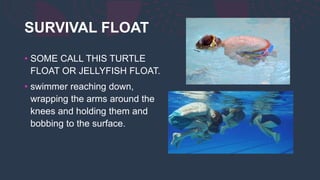
SURVIVAL FLOAT
• SOME CALL THIS TURTLE
FLOAT OR JELLYFISH FLOAT.
• swimmer reaching down,
wrapping the arms around the
knees and holding them and
bobbing to the surface.
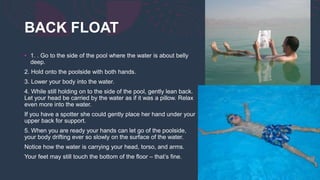
BACK FLOAT
• 1. . Go to the side of the pool where the water is about belly
deep.
2. Hold onto the poolside with both hands.
3. Lower your body into the water.
4. While still holding on to the side of the pool, gently lean back.
Let your head be carried by the water as if it was a pillow. Relax
even more into the water.
If you have a spotter she could gently place her hand under your
upper back for support.
5. When you are ready your hands can let go of the poolside,
your body drifting ever so slowly on the surface of the water.
Notice how the water is carrying your head, torso, and arms.
Your feet may still touch the bottom of the floor – that’s fine.
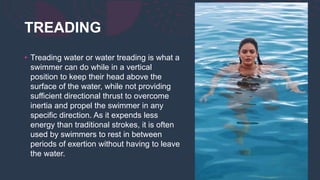
TREADING
• Treading water or water treading is what a
swimmer can do while in a vertical
position to keep their head above the
surface of the water, while not providing
sufficient directional thrust to overcome
inertia and propel the swimmer in any
specific direction. As it expends less
energy than traditional strokes, it is often
used by swimmers to rest in between
periods of exertion without having to leave
the water.

Floating in swimming.pptx

  • 1.
  • 2.
    What is floating? •Float is what you do when you’re lying on the water. • Floating equips students the ability to roll to their back and stay at the water’s surface, which places them in an ideal position to breathe. Floating also helps the swimmer to conserve energy, which reduces the chances of drowning from physical fatigue.
  • 3.
    What is differencebetween floating and swimming? •swimming is the process in which we voluntarily move our hands and legs to go through water whereas floating is the process through which we do not do anything other than floating above the water without drowning.
  • 4.
    3 TYPES OFFLOAT •SURVIVAL FLOAT •BACK FLOAT •TREADING
  • 5.
    SURVIVAL FLOAT • SOMECALL THIS TURTLE FLOAT OR JELLYFISH FLOAT. • swimmer reaching down, wrapping the arms around the knees and holding them and bobbing to the surface.
  • 6.
    BACK FLOAT • 1.. Go to the side of the pool where the water is about belly deep. 2. Hold onto the poolside with both hands. 3. Lower your body into the water. 4. While still holding on to the side of the pool, gently lean back. Let your head be carried by the water as if it was a pillow. Relax even more into the water. If you have a spotter she could gently place her hand under your upper back for support. 5. When you are ready your hands can let go of the poolside, your body drifting ever so slowly on the surface of the water. Notice how the water is carrying your head, torso, and arms. Your feet may still touch the bottom of the floor – that’s fine.
  • 7.
    TREADING • Treading wateror water treading is what a swimmer can do while in a vertical position to keep their head above the surface of the water, while not providing sufficient directional thrust to overcome inertia and propel the swimmer in any specific direction. As it expends less energy than traditional strokes, it is often used by swimmers to rest in between periods of exertion without having to leave the water.