First Aid
PREPARED BY: FERDINAND SAN
BUENAVENTURA
What is First Aid
First Aid is defined as the immediate
treatment given to the accident victim or
sudden illness, quickly and correctly
before medical help is made available.
What is First Aid
Objectives
To
preserve
life
To make
medical
care
available
Relief
from
pain
Prevent
further
injury
Characteristic of a Good First Aider
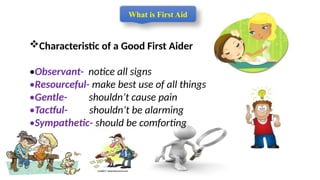
•Observant- notice all signs
•Resourceful- make best use of all things
•Gentle- shouldn’t cause pain
•Tactful- shouldn’t be alarming
•Sympathetic- should be comforting
What is First Aid
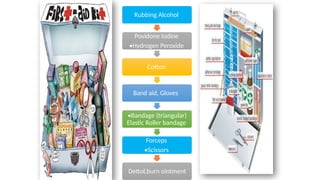
Rubbing Alcohol
Povidone Iodine
•Hydrogen Peroxide
Cotton
Band aid, Gloves
•Bandage (triangular)
Elastic Roller bandage
Forceps
•Scissors
Dettol,burn ointment
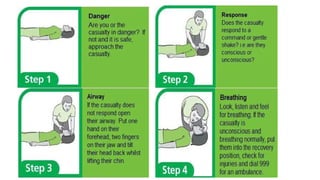
This Action Plan is a vital aid to the first aider in assessing whether the victim has any
life-threatening conditions and if any immediate first aid is necessary. They are
DRABC .
D - Check for DANGER
 To you
 To others
 To victim
R - Check RESPONSE
 Is victim conscious?
 Is victim unconscious?
A - Check AIRWAY
 Is airway clear of objects?
 Is airway open?
Action Plan
B - Check for BREATHING
 Is chest rising and falling?
 Can you hear victim's breathing?
 Can you feel the breath on your cheek?
C - Check for CIRCULATION
 Can you feel a pulse?
 Can you see any obvious signs of life?
Action Plan
Fainting is a brief loss of consciousness and is the result of an interference
with the function of the brain. There are many causes of unconsciousness, the
most common of which are: fainting, head injury, epilepsy, stroke,
poisoning, diabetes and conditions associated with lack of oxygen. If you
have seen a person fainting then:
Don’ts :
 Don’t allow the person who has just fainted to get up
until the victim is fully conscious
 If the area is warm, don’t crowd around the victim
Fainting and losing consciousness
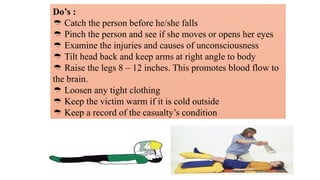
Do’s :
 Catch the person before he/she falls
 Pinch the person and see if she moves or opens her eyes
 Examine the injuries and causes of unconsciousness
 Tilt head back and keep arms at right angle to body
 Raise the legs 8 – 12 inches. This promotes blood flow to
the brain.
 Loosen any tight clothing
 Keep the victim warm if it is cold outside
 Keep a record of the casualty’s condition
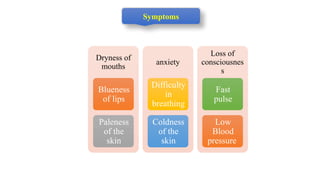
Dryness of
mouths
Blueness
of lips
Paleness
of the
skin
anxiety
Difficulty
in
breathing
Coldness
of the
skin
Loss of
consciousnes
s
Fast
pulse
Low
Blood
pressure
Symptoms
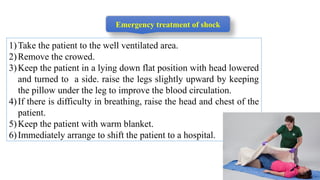
1)Take the patient to the well ventilated area.
2)Remove the crowed.
3)Keep the patient in a lying down flat position with head lowered
and turned to a side. raise the legs slightly upward by keeping
the pillow under the leg to improve the blood circulation.
4)If there is difficulty in breathing, raise the head and chest of the
patient.
5)Keep the patient with warm blanket.
6)Immediately arrange to shift the patient to a hospital.
Emergency treatment of shock
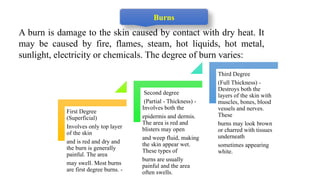
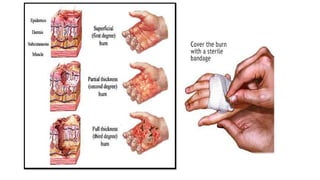
A burn is damage to the skin caused by contact with dry heat. It
may be caused by fire, flames, steam, hot liquids, hot metal,
sunlight, electricity or chemicals. The degree of burn varies:
Burns
First Degree
(Superficial)
Involves only top layer
of the skin
and is red and dry and
the burn is generally
painful. The area
may swell. Most burns
are first degree burns. -
Second degree
(Partial - Thickness) -
Involves both the
epidermis and dermis.
The area is red and
blisters may open
and weep fluid, making
the skin appear wet.
These types of
burns are usually
painful and the area
often swells.
Third Degree
(Full Thickness) -
Destroys both the
layers of the skin with
muscles, bones, blood
vessels and nerves.
These
burns may look brown
or charred with tissues
underneath
sometimes appearing
white.
Do’s :
 Immediately immerse the burnt area in cool water or by applying
clothes soaked in cool water.
 Remove jewellery and constrictive clothing before swelling or blisters
occurs.
 Cover the area with a dry, sterile dressing and not cotton or other fluffy
material.
 Drop, Cover and Roll if caught fire or cover the person
with a blanket immediately
Don’ts :
 Don’t place a burn under extreme water pressure
 Don’t remove the cloth that is stuck to the burnt area.
 Don’t apply butter ointment, oil, ice in the area affected
Snake Bite
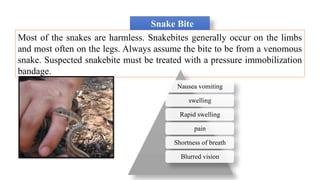
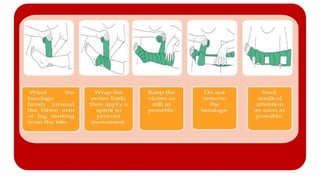
Most of the snakes are harmless. Snakebites generally occur on the limbs
and most often on the legs. Always assume the bite to be from a venomous
snake. Suspected snakebite must be treated with a pressure immobilization
bandage.
Nausea vomiting
swelling
Rapid swelling
pain
Shortness of breath
Blurred vision
First Aid Treatment
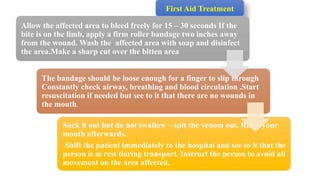
Allow the affected area to bleed freely for 15 – 30 seconds If the
bite is on the limb, apply a firm roller bandage two inches away
from the wound. Wash the affected area with soap and disinfect
the area.Make a sharp cut over the bitten area
The bandage should be loose enough for a finger to slip through
Constantly check airway, breathing and blood circulation .Start
resuscitation if needed but see to it that there are no wounds in
the mouth.
Suck it out but do not swallow – spit the venom out. Rinse your
mouth afterwards.
Shift the patient immediately to the hospital and see to it that the
person is at rest during transport. Instruct the person to avoid all
movement on the area affected.
first aid.pptx.........................................

first aid.pptx.........................................

  • 1.
    First Aid PREPARED BY:FERDINAND SAN BUENAVENTURA
  • 2.
    What is FirstAid First Aid is defined as the immediate treatment given to the accident victim or sudden illness, quickly and correctly before medical help is made available.
  • 3.
    What is FirstAid Objectives To preserve life To make medical care available Relief from pain Prevent further injury
  • 4.
    Characteristic of aGood First Aider •Observant- notice all signs •Resourceful- make best use of all things •Gentle- shouldn’t cause pain •Tactful- shouldn’t be alarming •Sympathetic- should be comforting What is First Aid
  • 5.
    Rubbing Alcohol Povidone Iodine •HydrogenPeroxide Cotton Band aid, Gloves •Bandage (triangular) Elastic Roller bandage Forceps •Scissors Dettol,burn ointment
  • 6.
    This Action Planis a vital aid to the first aider in assessing whether the victim has any life-threatening conditions and if any immediate first aid is necessary. They are DRABC . D - Check for DANGER  To you  To others  To victim R - Check RESPONSE  Is victim conscious?  Is victim unconscious? A - Check AIRWAY  Is airway clear of objects?  Is airway open? Action Plan
  • 7.
    B - Checkfor BREATHING  Is chest rising and falling?  Can you hear victim's breathing?  Can you feel the breath on your cheek? C - Check for CIRCULATION  Can you feel a pulse?  Can you see any obvious signs of life? Action Plan
  • 9.
    Fainting is abrief loss of consciousness and is the result of an interference with the function of the brain. There are many causes of unconsciousness, the most common of which are: fainting, head injury, epilepsy, stroke, poisoning, diabetes and conditions associated with lack of oxygen. If you have seen a person fainting then: Don’ts :  Don’t allow the person who has just fainted to get up until the victim is fully conscious  If the area is warm, don’t crowd around the victim Fainting and losing consciousness
  • 10.
    Do’s :  Catchthe person before he/she falls  Pinch the person and see if she moves or opens her eyes  Examine the injuries and causes of unconsciousness  Tilt head back and keep arms at right angle to body  Raise the legs 8 – 12 inches. This promotes blood flow to the brain.  Loosen any tight clothing  Keep the victim warm if it is cold outside  Keep a record of the casualty’s condition
  • 11.
    Dryness of mouths Blueness of lips Paleness ofthe skin anxiety Difficulty in breathing Coldness of the skin Loss of consciousnes s Fast pulse Low Blood pressure Symptoms
  • 12.
    1)Take the patientto the well ventilated area. 2)Remove the crowed. 3)Keep the patient in a lying down flat position with head lowered and turned to a side. raise the legs slightly upward by keeping the pillow under the leg to improve the blood circulation. 4)If there is difficulty in breathing, raise the head and chest of the patient. 5)Keep the patient with warm blanket. 6)Immediately arrange to shift the patient to a hospital. Emergency treatment of shock
  • 13.
    A burn isdamage to the skin caused by contact with dry heat. It may be caused by fire, flames, steam, hot liquids, hot metal, sunlight, electricity or chemicals. The degree of burn varies: Burns First Degree (Superficial) Involves only top layer of the skin and is red and dry and the burn is generally painful. The area may swell. Most burns are first degree burns. - Second degree (Partial - Thickness) - Involves both the epidermis and dermis. The area is red and blisters may open and weep fluid, making the skin appear wet. These types of burns are usually painful and the area often swells. Third Degree (Full Thickness) - Destroys both the layers of the skin with muscles, bones, blood vessels and nerves. These burns may look brown or charred with tissues underneath sometimes appearing white.
  • 14.
    Do’s :  Immediatelyimmerse the burnt area in cool water or by applying clothes soaked in cool water.  Remove jewellery and constrictive clothing before swelling or blisters occurs.  Cover the area with a dry, sterile dressing and not cotton or other fluffy material.  Drop, Cover and Roll if caught fire or cover the person with a blanket immediately Don’ts :  Don’t place a burn under extreme water pressure  Don’t remove the cloth that is stuck to the burnt area.  Don’t apply butter ointment, oil, ice in the area affected
  • 16.
    Snake Bite Most ofthe snakes are harmless. Snakebites generally occur on the limbs and most often on the legs. Always assume the bite to be from a venomous snake. Suspected snakebite must be treated with a pressure immobilization bandage. Nausea vomiting swelling Rapid swelling pain Shortness of breath Blurred vision
  • 17.
    First Aid Treatment Allowthe affected area to bleed freely for 15 – 30 seconds If the bite is on the limb, apply a firm roller bandage two inches away from the wound. Wash the affected area with soap and disinfect the area.Make a sharp cut over the bitten area The bandage should be loose enough for a finger to slip through Constantly check airway, breathing and blood circulation .Start resuscitation if needed but see to it that there are no wounds in the mouth. Suck it out but do not swallow – spit the venom out. Rinse your mouth afterwards. Shift the patient immediately to the hospital and see to it that the person is at rest during transport. Instruct the person to avoid all movement on the area affected.