Fire Fighters Suit
A fire fighters suit is a suit designed to protect a fire
fighter from high temperatures, especially near fires
of extreme temperature such as aircraft fires.
Fire fighters suits first appeared during the 1930s, and
were originally made of asbestos fabric (hence also
known as the asbestos suit). Today they are
manufactured from aluminized materials that reflect
the high radiant heats produced by the fire.
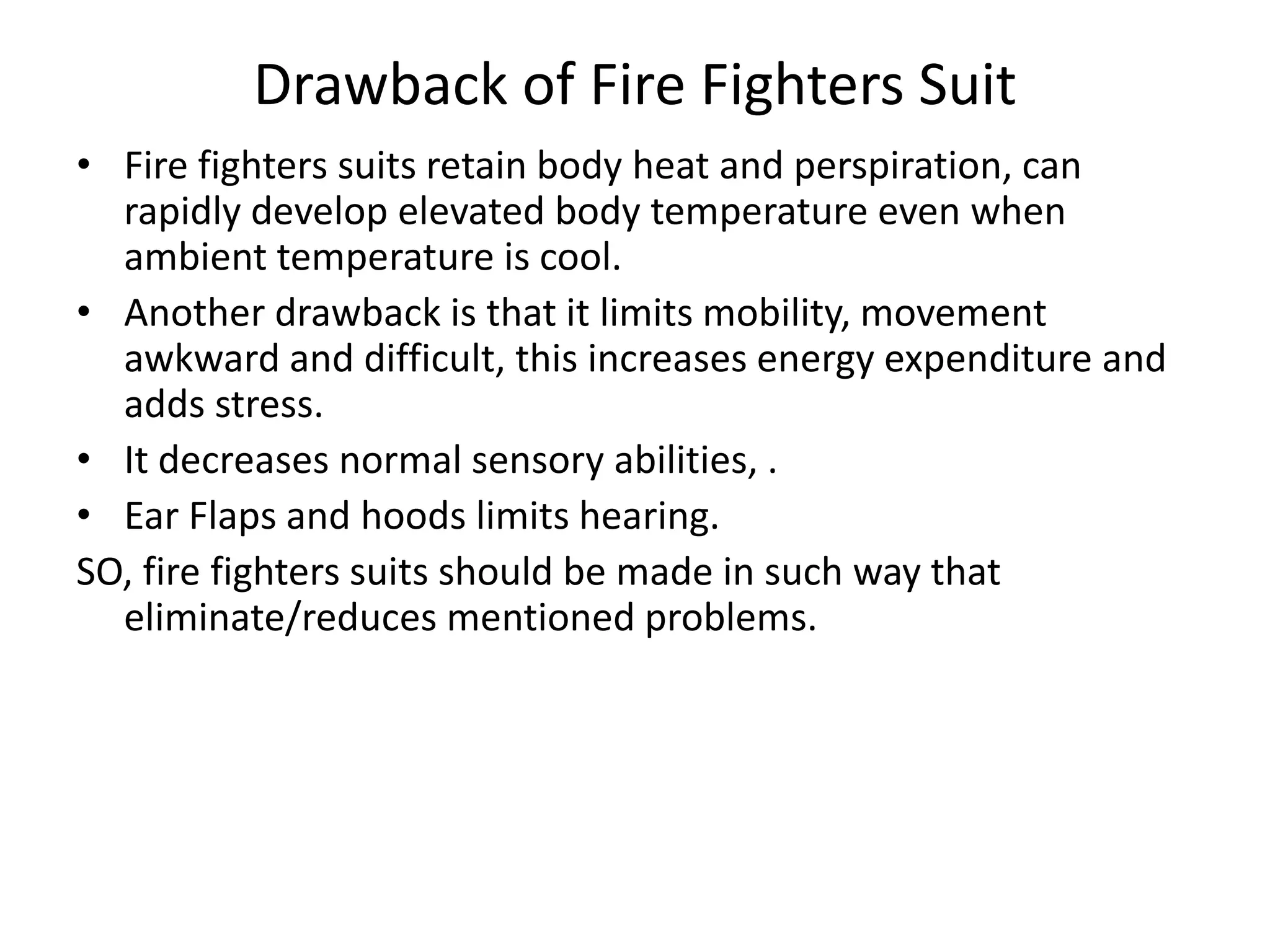
Fire fighters suit
Complete proximity protection requires:
• Aluminized hood or helmet cover with neck
shroud
• Aluminized jacket and pants complete with
vapor barrier insulated liner
• Aluminized lined gloves
• Aluminized AR-FF boots
Fire Fighters suit
Fire fighters suit should be made from three ply
of fabrics.
outer ply should be flame retardant.
middle ply should be vapor barrier.
inner ply should be thermal barrier.
Fire Fighters Suit
• Outer layer should be made from aramid fiber or
blend of aramid and novoloid fiber or blend of FR
cotton and novoloid fiber.
(Novolac: high thermal and flame resistance fiber,
85% cross linked novolac, phenol formaldehyde)
Solid fabric of mentioned fibers are embrittled within
10 seconds, but blends are less brittle in such
condition.
Fire Fighters Suit
• Blends of these can protect body from flame for at
least 28 seconds.
• Outer layer fabric of aramid fiber is not damaged in
such situation.
• The middle layer protect from harmful chemicals and
toxic fumes.
• Middle layer is a barrier for evaporating self
generated sweat and vapor which is harmful as well.
For this reason, European fire fighters dress is made
without middle layer.
Fire Fighters Suit
Another Option of FF suits:
Two ply woolen and one ply cotton fabric is
suitable for fire fighters,
outer ply may be made of wool serge
which is fine and densely woven.
middle layer is coarse and brushed
woolen, works as heat resistant.
inner layer may be made of light weight
cotton fabric, used as lining.
Fire Fighters Suit
• Effectiveness of clothing related to the thickness of
clothing.
• Higher the thickness of the clothing, better the
effectiveness.
• Excessive thickness may be discomfortable for
wearer.
• Component of FF suits is usually Cotton, mixture of
different cellulosic fibers, aramid, wool, lather,
asbestos, glass and ceramic.
• Thickness of fabric is more important than the type
of fibers.
Fire Fighters Suit
• Certain synthetic fabrics may melt in relatively low
temperature, can cause severe burns.
• Clothing contains nylon or polyester, even if they are blended
with natural fibers, MUST NOT be used in a fire fighting suits.
• Clothing made of cotton or wool is generally safer to wear.
• Nylon or polyester may melt but wool or cotton may char or
even burn without melt.
• Fire fighters should be able to don within 60 seconds.
Drawback of Fire Fighters Suit
• Fire fighters suits retain body heat and perspiration, can
rapidly develop elevated body temperature even when
ambient temperature is cool.
• Another drawback is that it limits mobility, movement
awkward and difficult, this increases energy expenditure and
adds stress.
• It decreases normal sensory abilities, .
• Ear Flaps and hoods limits hearing.
SO, fire fighters suits should be made in such way that
eliminate/reduces mentioned problems.
Fire fighters suit
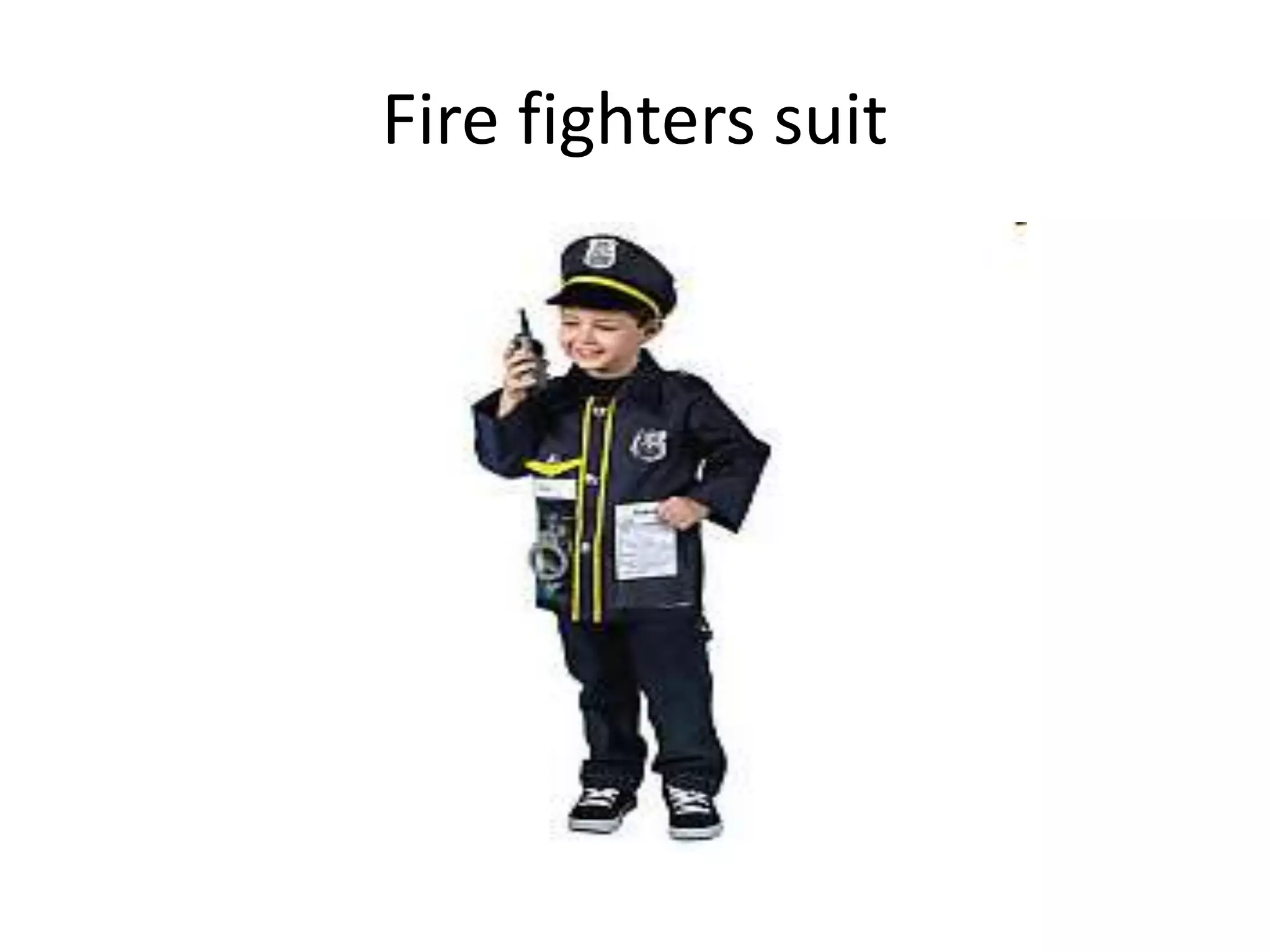
Fire fighters suits
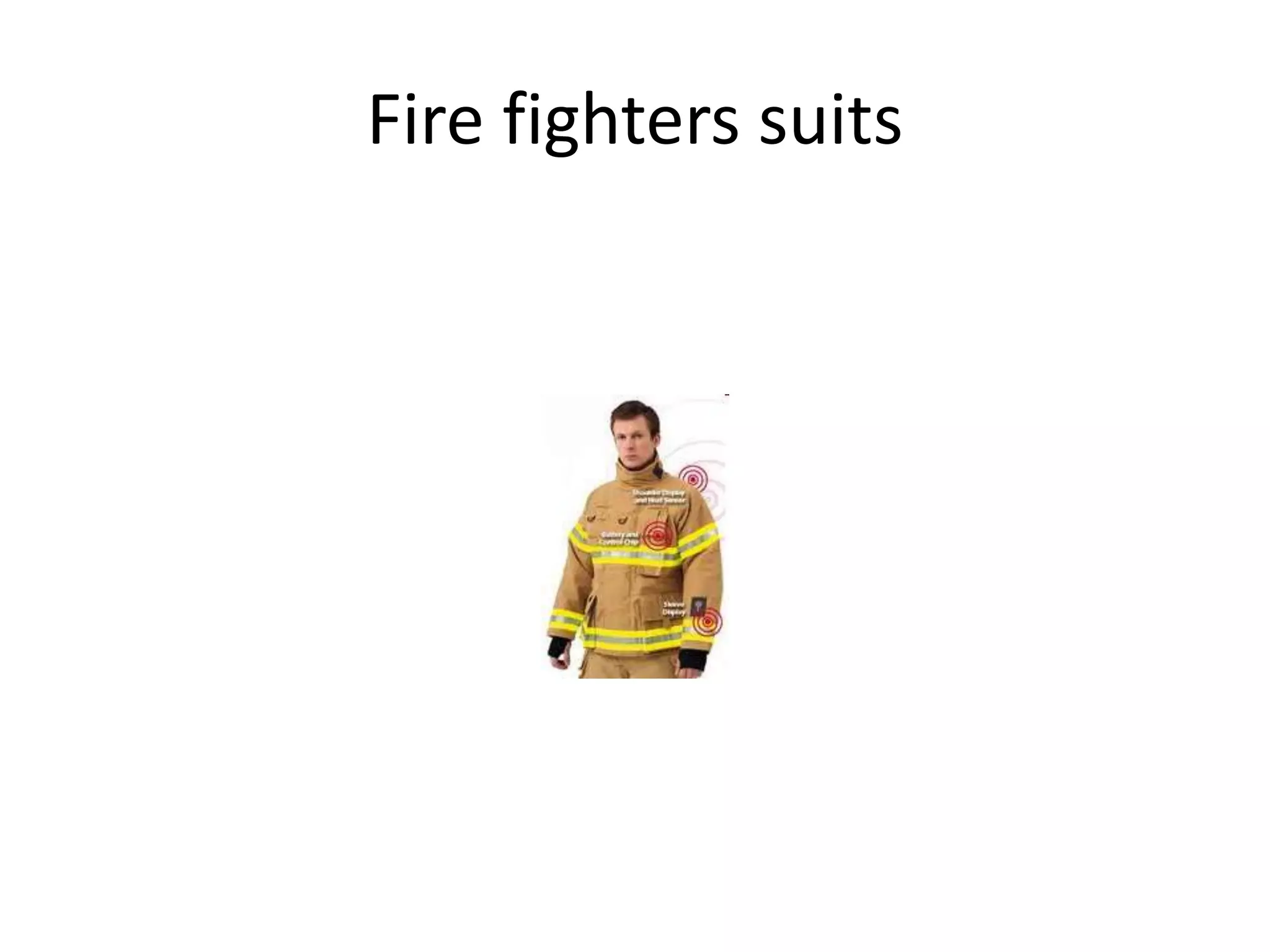
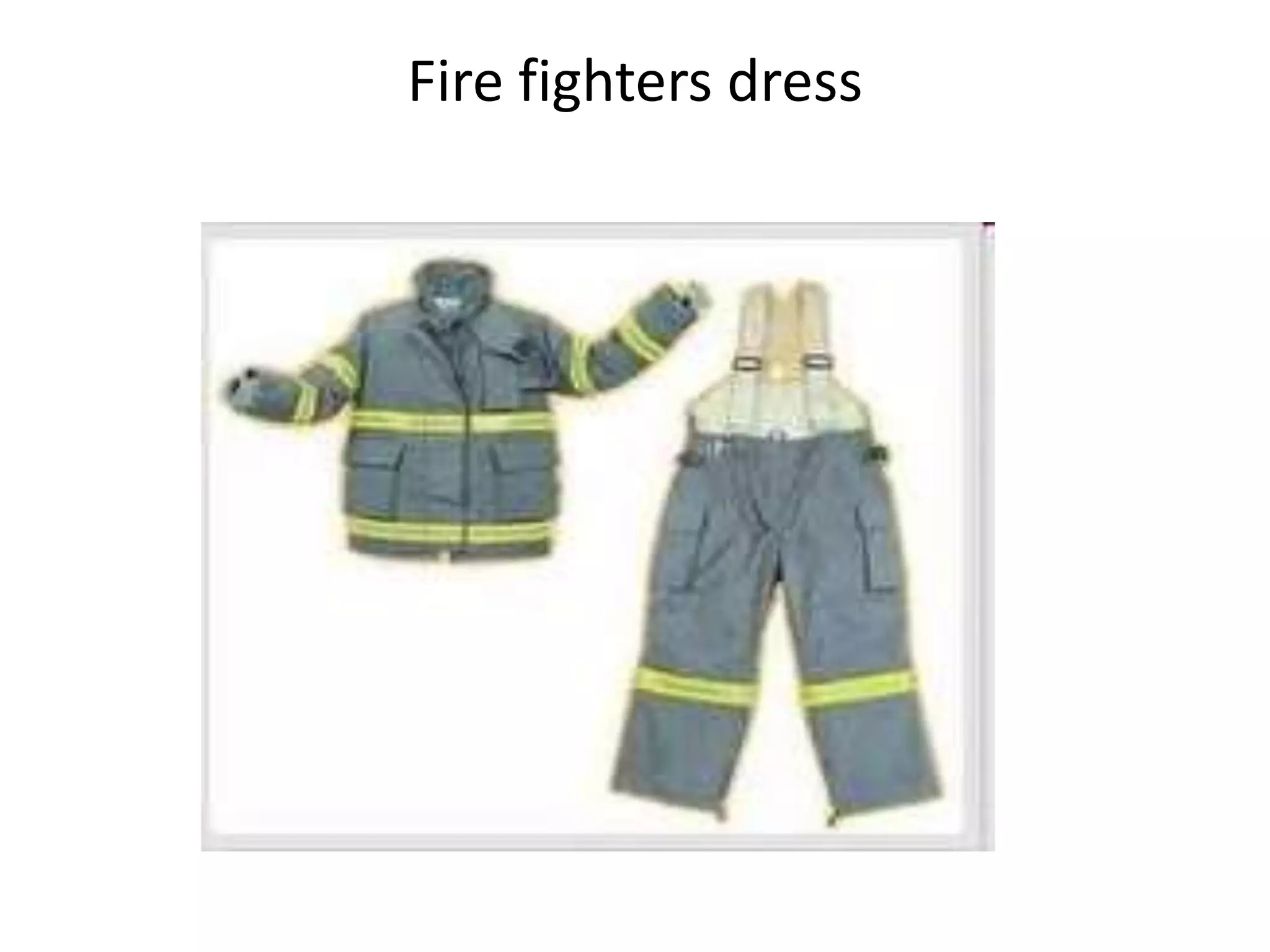
Fire fighters dress
Fire fighters dress
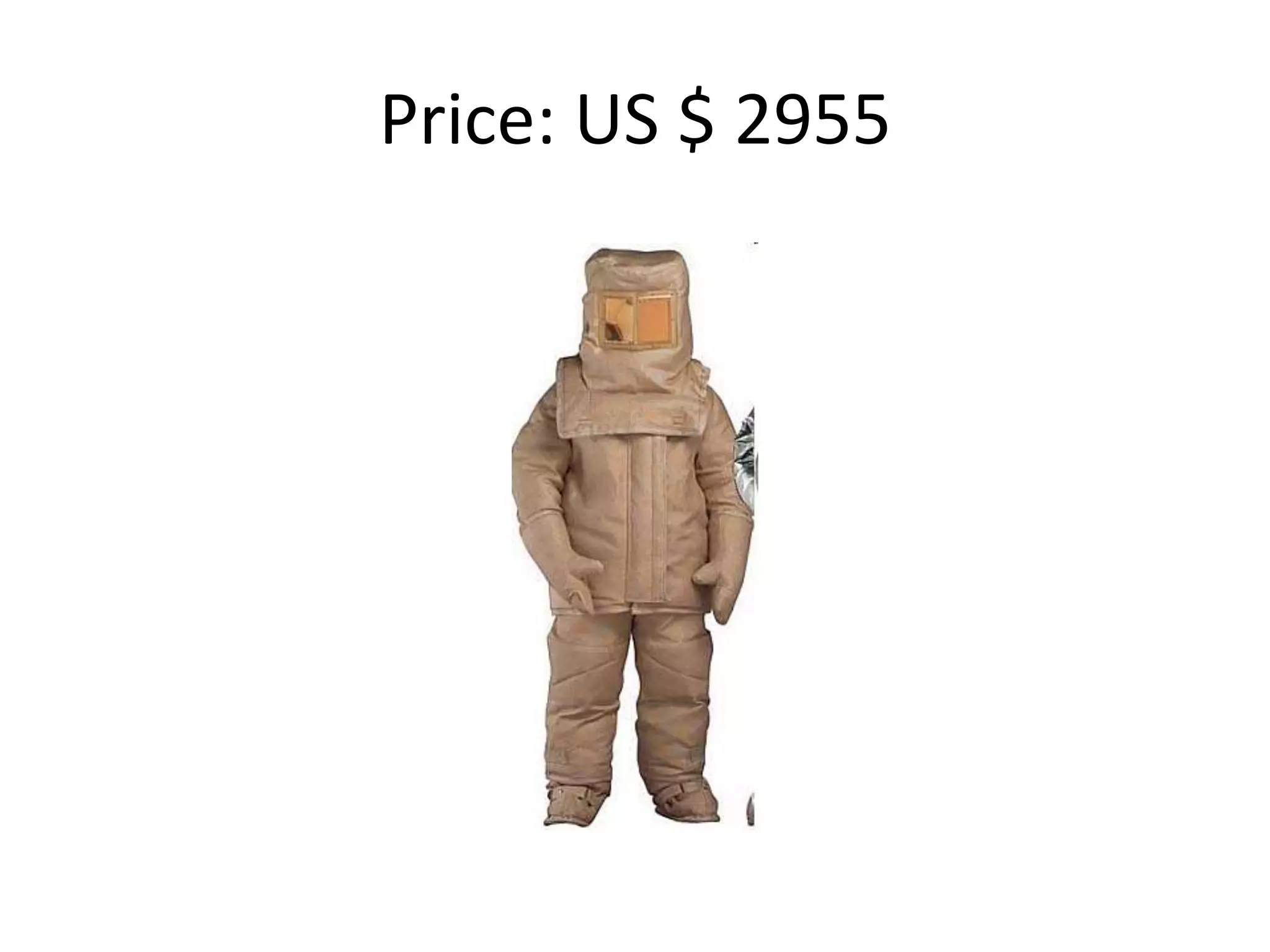
Price: US $ 2955

Fire fighters Suit.ppt

  • 1.
    Fire Fighters Suit Afire fighters suit is a suit designed to protect a fire fighter from high temperatures, especially near fires of extreme temperature such as aircraft fires. Fire fighters suits first appeared during the 1930s, and were originally made of asbestos fabric (hence also known as the asbestos suit). Today they are manufactured from aluminized materials that reflect the high radiant heats produced by the fire.
  • 2.
    Fire fighters suit Completeproximity protection requires: • Aluminized hood or helmet cover with neck shroud • Aluminized jacket and pants complete with vapor barrier insulated liner • Aluminized lined gloves • Aluminized AR-FF boots
  • 3.
    Fire Fighters suit Firefighters suit should be made from three ply of fabrics. outer ply should be flame retardant. middle ply should be vapor barrier. inner ply should be thermal barrier.
  • 4.
    Fire Fighters Suit •Outer layer should be made from aramid fiber or blend of aramid and novoloid fiber or blend of FR cotton and novoloid fiber. (Novolac: high thermal and flame resistance fiber, 85% cross linked novolac, phenol formaldehyde) Solid fabric of mentioned fibers are embrittled within 10 seconds, but blends are less brittle in such condition.
  • 5.
    Fire Fighters Suit •Blends of these can protect body from flame for at least 28 seconds. • Outer layer fabric of aramid fiber is not damaged in such situation. • The middle layer protect from harmful chemicals and toxic fumes. • Middle layer is a barrier for evaporating self generated sweat and vapor which is harmful as well. For this reason, European fire fighters dress is made without middle layer.
  • 6.
    Fire Fighters Suit AnotherOption of FF suits: Two ply woolen and one ply cotton fabric is suitable for fire fighters, outer ply may be made of wool serge which is fine and densely woven. middle layer is coarse and brushed woolen, works as heat resistant. inner layer may be made of light weight cotton fabric, used as lining.
  • 7.
    Fire Fighters Suit •Effectiveness of clothing related to the thickness of clothing. • Higher the thickness of the clothing, better the effectiveness. • Excessive thickness may be discomfortable for wearer. • Component of FF suits is usually Cotton, mixture of different cellulosic fibers, aramid, wool, lather, asbestos, glass and ceramic. • Thickness of fabric is more important than the type of fibers.
  • 8.
    Fire Fighters Suit •Certain synthetic fabrics may melt in relatively low temperature, can cause severe burns. • Clothing contains nylon or polyester, even if they are blended with natural fibers, MUST NOT be used in a fire fighting suits. • Clothing made of cotton or wool is generally safer to wear. • Nylon or polyester may melt but wool or cotton may char or even burn without melt. • Fire fighters should be able to don within 60 seconds.
  • 9.
    Drawback of FireFighters Suit • Fire fighters suits retain body heat and perspiration, can rapidly develop elevated body temperature even when ambient temperature is cool. • Another drawback is that it limits mobility, movement awkward and difficult, this increases energy expenditure and adds stress. • It decreases normal sensory abilities, . • Ear Flaps and hoods limits hearing. SO, fire fighters suits should be made in such way that eliminate/reduces mentioned problems.
  • 10.
  • 11.
  • 12.
  • 13.
  • 14.