mLearning: Habitus and Field
Activities
Day 2:
Review, Assembly, Dissemination
Michael Sean Gallagher
Institute of Education, University of London
http://michaelseangallagher.org/ @mseangallagher
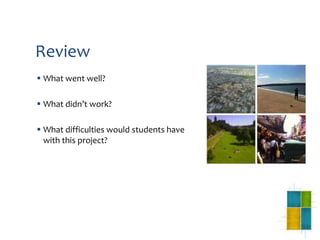
Review
 What went well?
 What didn’t work?
 What difficulties would students have
with this project?
Review
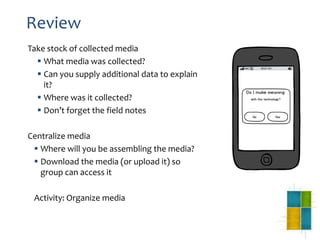
Take stock of collected media
 What media was collected?
 Can you supply additional data to explain
it?
 Where was it collected?
 Don’t forget the field notes
Centralize media
 Where will you be assembling the media?
 Download the media (or upload it) so
group can access it
Activity: Organize media
Review
Tools
• What tools will we
use?
• Do those tools have
export functions?
• Reflect on the
limitations of the
tools. Each tool
limits and enables
some activity.
Activity: Choose tools
Review
Methods of Selection
 What media will you include?
 What container will you choose to
collect that data? Mosaic, map, etc?
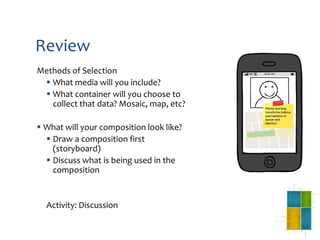
 What will your composition look like?
 Draw a composition first
(storyboard)
 Discuss what is being used in the
composition
Activity: Discussion
Review
Activities:
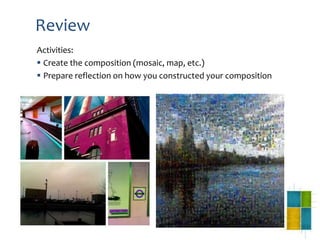
 Create the composition (mosaic, map, etc.)
 Prepare reflection on how you constructed your composition
Review
Assessment
 How can we assess this
composition?
 Formative vs. summative
 Research questions
 Cohesiveness
 Reflection
 Collaboration/Discussion
Activity: create measures for
assessing student compositions
Review
Dissemination
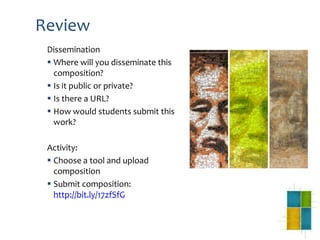
 Where will you disseminate this
composition?
 Is it public or private?
 Is there a URL?
 How would students submit this
work?
Activity:
 Choose a tool and upload
composition
 Submit composition:
http://bit.ly/17zfSfG
mLearning: Habitus and Field
Activities
Day 2:
Review, Assembly, Dissemination
Michael Sean Gallagher
Institute of Education, University of London
http://michaelseangallagher.org/ @mseangallagher

mLearning Field Activities: Day 2 (Review and Questions for Teachers)

  • 1.
    mLearning: Habitus andField Activities Day 2: Review, Assembly, Dissemination Michael Sean Gallagher Institute of Education, University of London http://michaelseangallagher.org/ @mseangallagher
  • 2.
    Review  What wentwell?  What didn’t work?  What difficulties would students have with this project?
  • 3.
    Review Take stock ofcollected media  What media was collected?  Can you supply additional data to explain it?  Where was it collected?  Don’t forget the field notes Centralize media  Where will you be assembling the media?  Download the media (or upload it) so group can access it Activity: Organize media
  • 4.
    Review Tools • What toolswill we use? • Do those tools have export functions? • Reflect on the limitations of the tools. Each tool limits and enables some activity. Activity: Choose tools
  • 5.
    Review Methods of Selection What media will you include?  What container will you choose to collect that data? Mosaic, map, etc?  What will your composition look like?  Draw a composition first (storyboard)  Discuss what is being used in the composition Activity: Discussion
  • 6.
    Review Activities:  Create thecomposition (mosaic, map, etc.)  Prepare reflection on how you constructed your composition
  • 7.
    Review Assessment  How canwe assess this composition?  Formative vs. summative  Research questions  Cohesiveness  Reflection  Collaboration/Discussion Activity: create measures for assessing student compositions
  • 8.
    Review Dissemination  Where willyou disseminate this composition?  Is it public or private?  Is there a URL?  How would students submit this work? Activity:  Choose a tool and upload composition  Submit composition: http://bit.ly/17zfSfG
  • 9.
    mLearning: Habitus andField Activities Day 2: Review, Assembly, Dissemination Michael Sean Gallagher Institute of Education, University of London http://michaelseangallagher.org/ @mseangallagher