Mapping
and
Evaluating
Library
Instruction
Using
Syllabi
FINDING THE GAP
Erin Alcock
Science Research Liaison
Kathryn Rose
Humanities Research Liaison
Memorial University of Newfoundland
Assessment
and
Evaluation
PROJECT: ASSESSING LIBRARY
INSTRUCTION PROGRAM
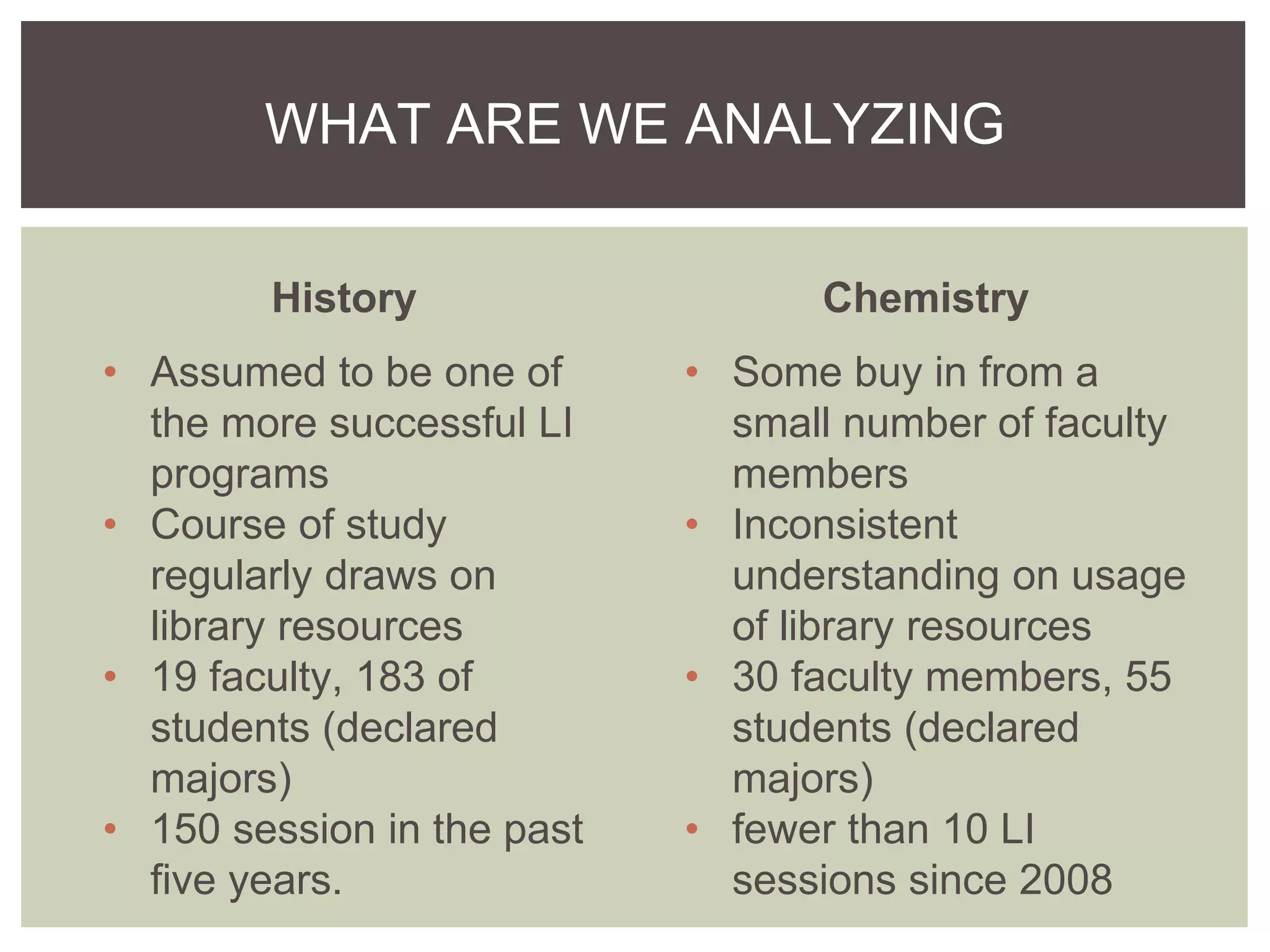
History
• Assumed to be one of
the more successful LI
programs
• Course of study
regularly draws on
library resources
• 19 faculty, 183 of
students (declared
majors)
• 150 session in the past
five years.
Chemistry
• Some buy in from a
small number of faculty
members
• Inconsistent
understanding on usage
of library resources
• 30 faculty members, 55
students (declared
majors)
• fewer than 10 LI
sessions since 2008
WHAT ARE WE ANALYZING
Literature Review
•Boss and Drabinski (2013)
WHERE DID WE START?
“Analysis of syllabi
can deliver data and
provide a clearer
understanding of
curriculum
integration” (352)
Collecting course
syllabi, as a means
to evaluate a library
instruction program,
as a part of
becoming a more
responsive library
Rambler (1982)
•Independent Research
•Independent use of library resources
•Learning outcomes related to critical
thinking?
•Cumulative project?
•Academic Integrity Issues?
Our Starting Point – Boss and Drabinski
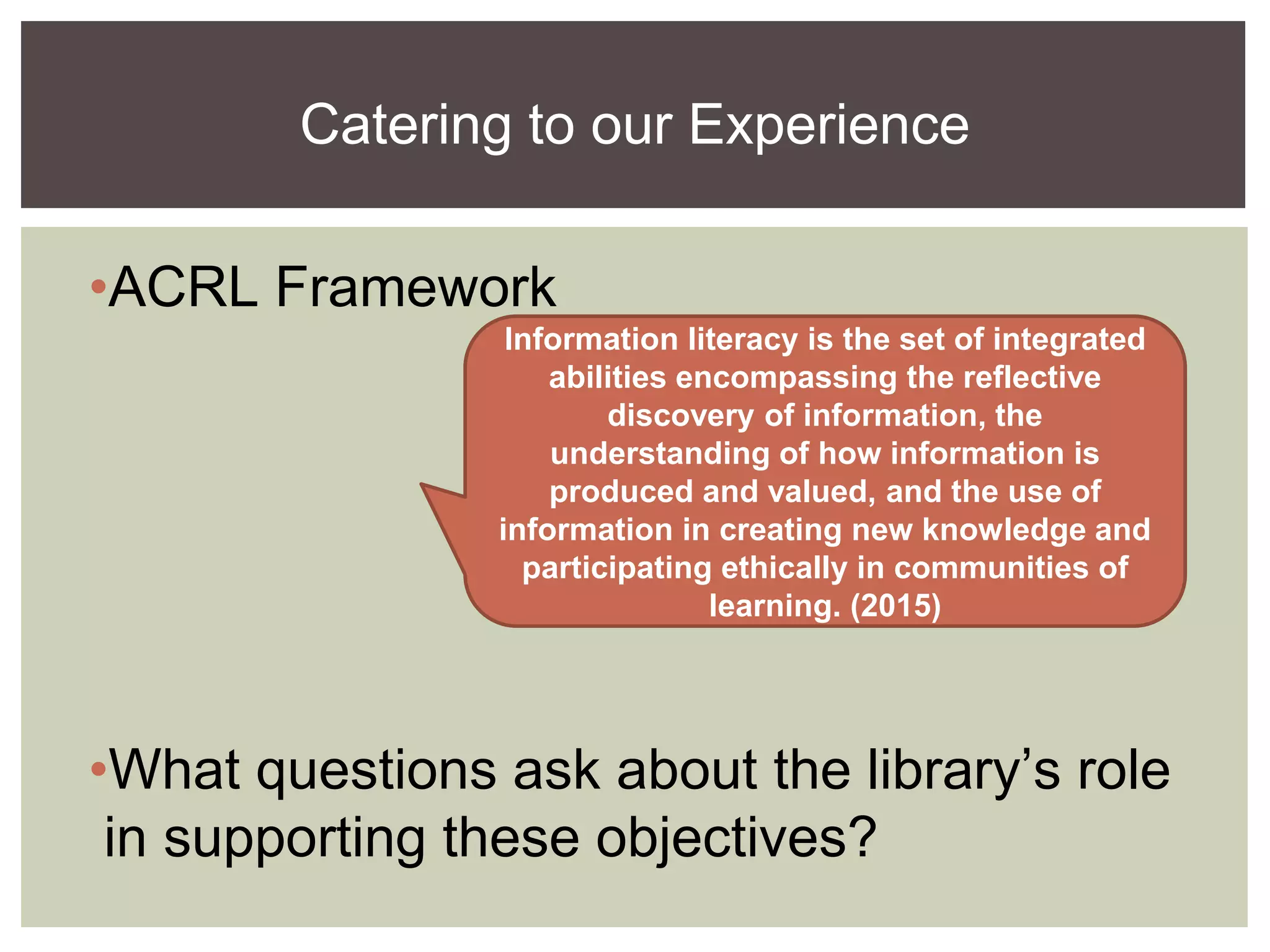
•ACRL Framework
•What questions ask about the library’s role
in supporting these objectives?
Catering to our Experience
Information literacy is the set of integrated
abilities encompassing the reflective
discovery of information, the
understanding of how information is
produced and valued, and the use of
information in creating new knowledge and
participating ethically in communities of
learning. (2015)
Does the syllabus require the student to conduct independent research?
Does the syllabus require the student to independently use library
resources?
Does the syllabus state learning outcomes related to critical thinking?
Does the syllabus include a cumulative project requiring students to
integrate multiple viewpoints or resources from across the course?
Does the syllabus address academic integrity issues (e.g., plagiarism,
intellectual property, the importance of correct citation)?
Is the library mentioned at all?
Is there a scheduled library instruction session?
Is there a Library Assignment?
Is there evidence that the instructor is taking on LI type instruction?
OUR QUESTIONS?
WHAT DID WE FIND?
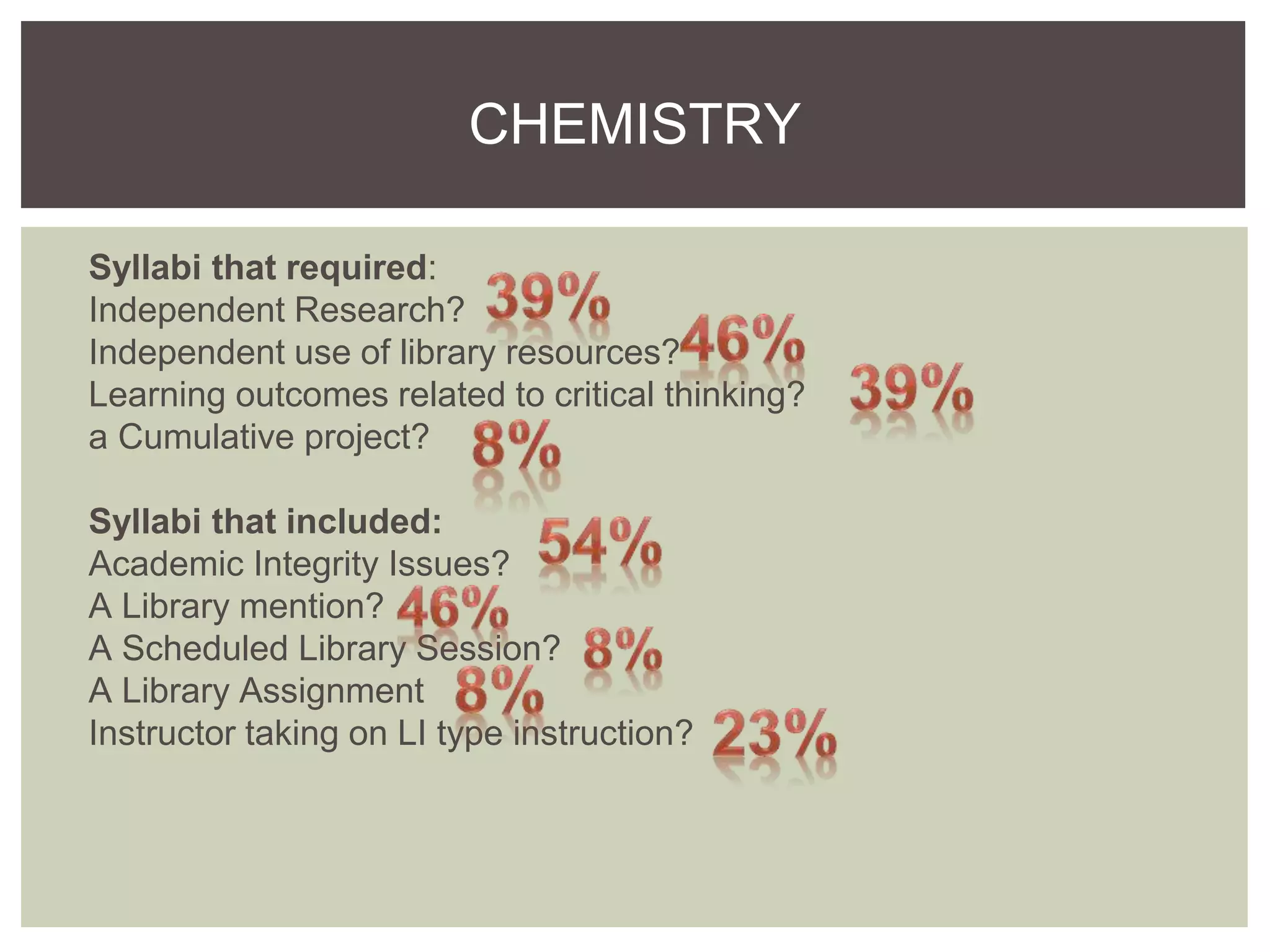
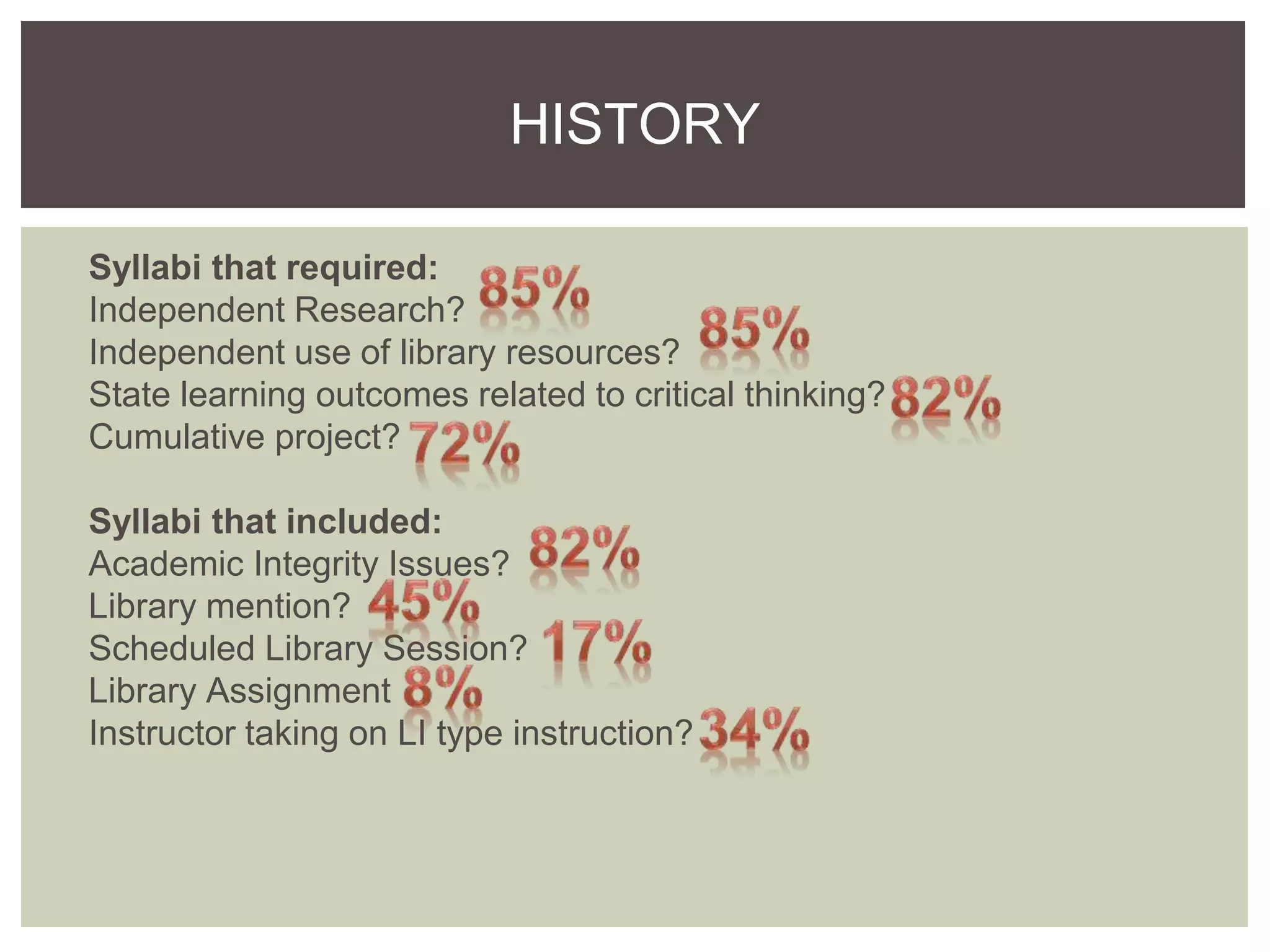
Syllabi that required:
Independent Research?
Independent use of library resources?
Learning outcomes related to critical thinking?
a Cumulative project?
Syllabi that included:
Academic Integrity Issues?
A Library mention?
A Scheduled Library Session?
A Library Assignment
Instructor taking on LI type instruction?
CHEMISTRY
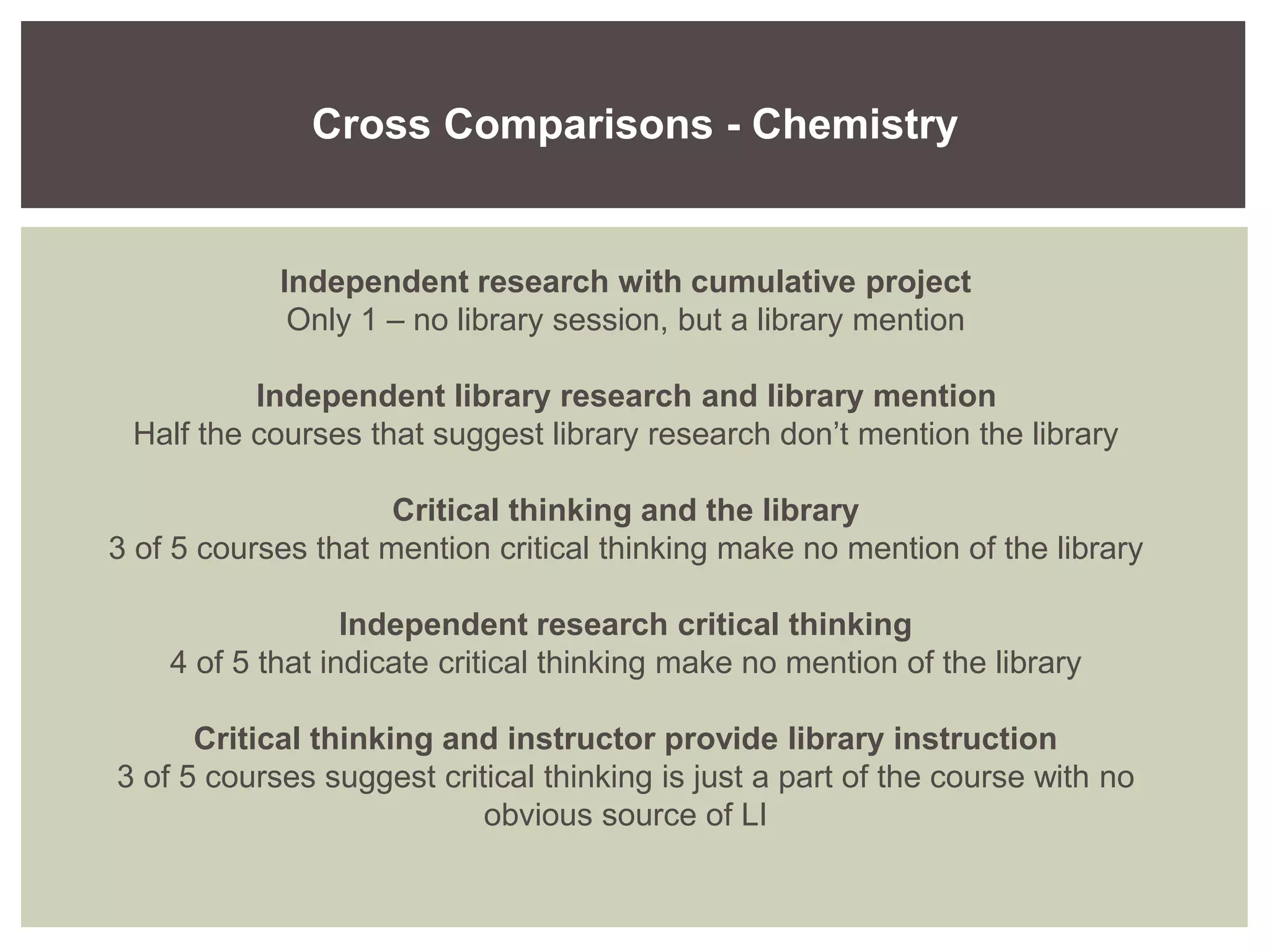
Independent research with cumulative project
Only 1 – no library session, but a library mention
Independent library research and library mention
Half the courses that suggest library research don’t mention the library
Critical thinking and the library
3 of 5 courses that mention critical thinking make no mention of the library
Independent research critical thinking
4 of 5 that indicate critical thinking make no mention of the library
Critical thinking and instructor provide library instruction
3 of 5 courses suggest critical thinking is just a part of the course with no
obvious source of LI
Cross Comparisons - Chemistry
Syllabi that required:
Independent Research?
Independent use of library resources?
State learning outcomes related to critical thinking?
Cumulative project?
Syllabi that included:
Academic Integrity Issues?
Library mention?
Scheduled Library Session?
Library Assignment
Instructor taking on LI type instruction?
HISTORY
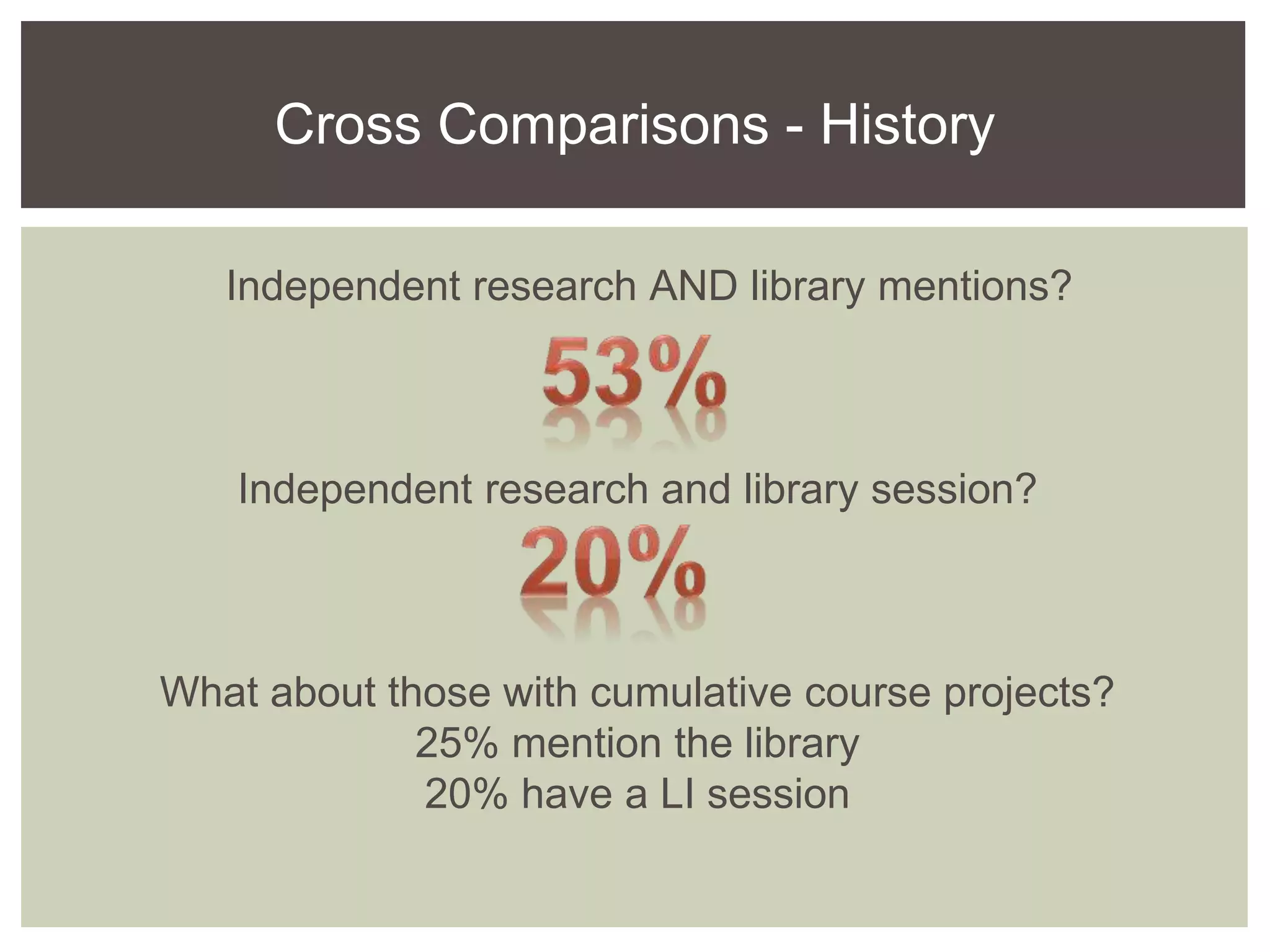
Independent research AND library mentions?
Independent research and library session?
What about those with cumulative course projects?
25% mention the library
20% have a LI session
Cross Comparisons - History
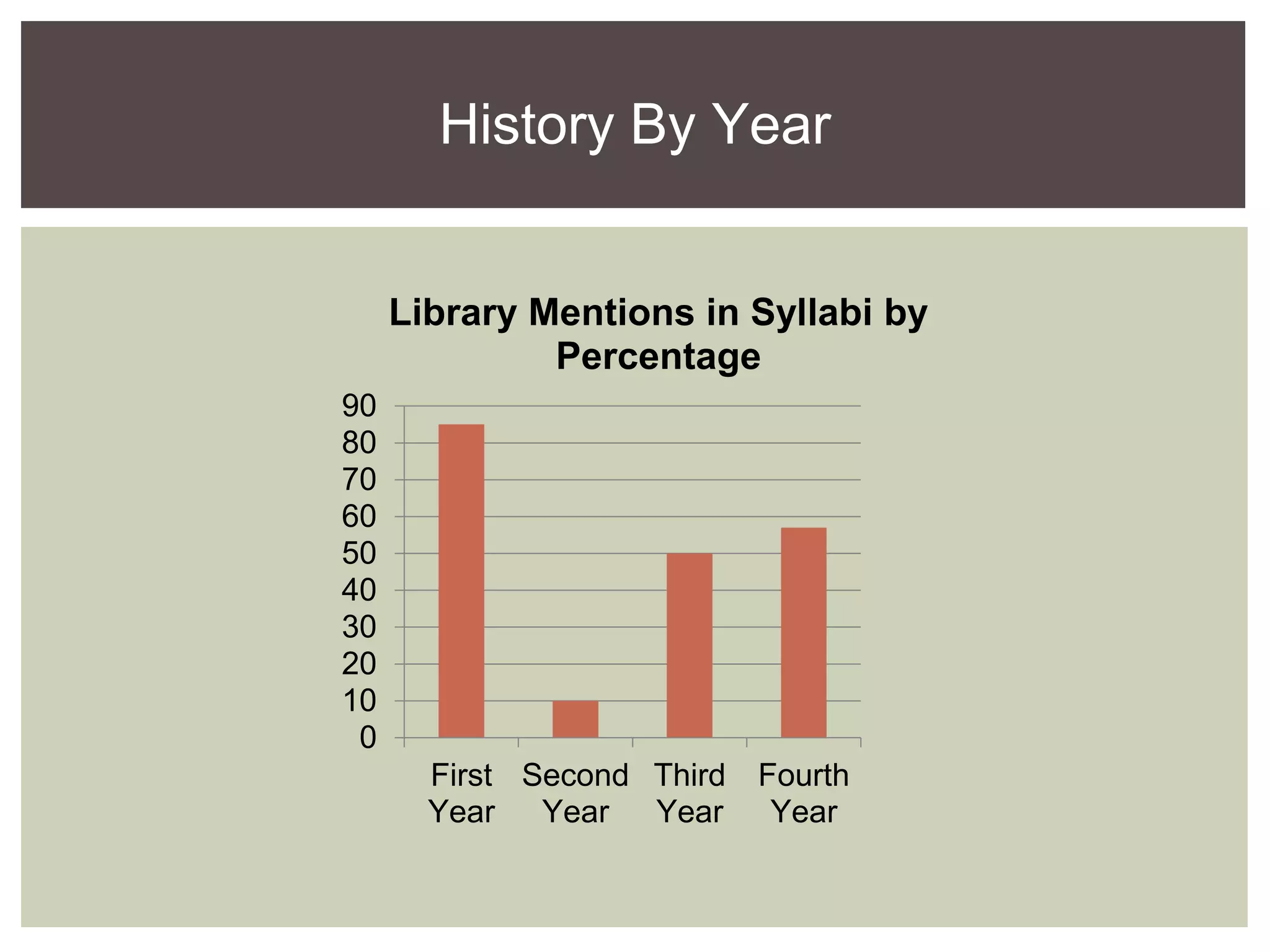
History By Year
0
10
20
30
40
50
60
70
80
90
First
Year
Second
Year
Third
Year
Fourth
Year
Library Mentions in Syllabi by
Percentage
Conclusions
•History
▪First year history courses – successful
▪Inflating the success of the overall LI in the history
courses
▪High statistics don’t mean success
▪Assumption that students only need 1 visit to the library
for a four year degree?
•Chemistry
▪Reflects the buy-in of a few faculty members
WHAT DO WE KNOW NOW?
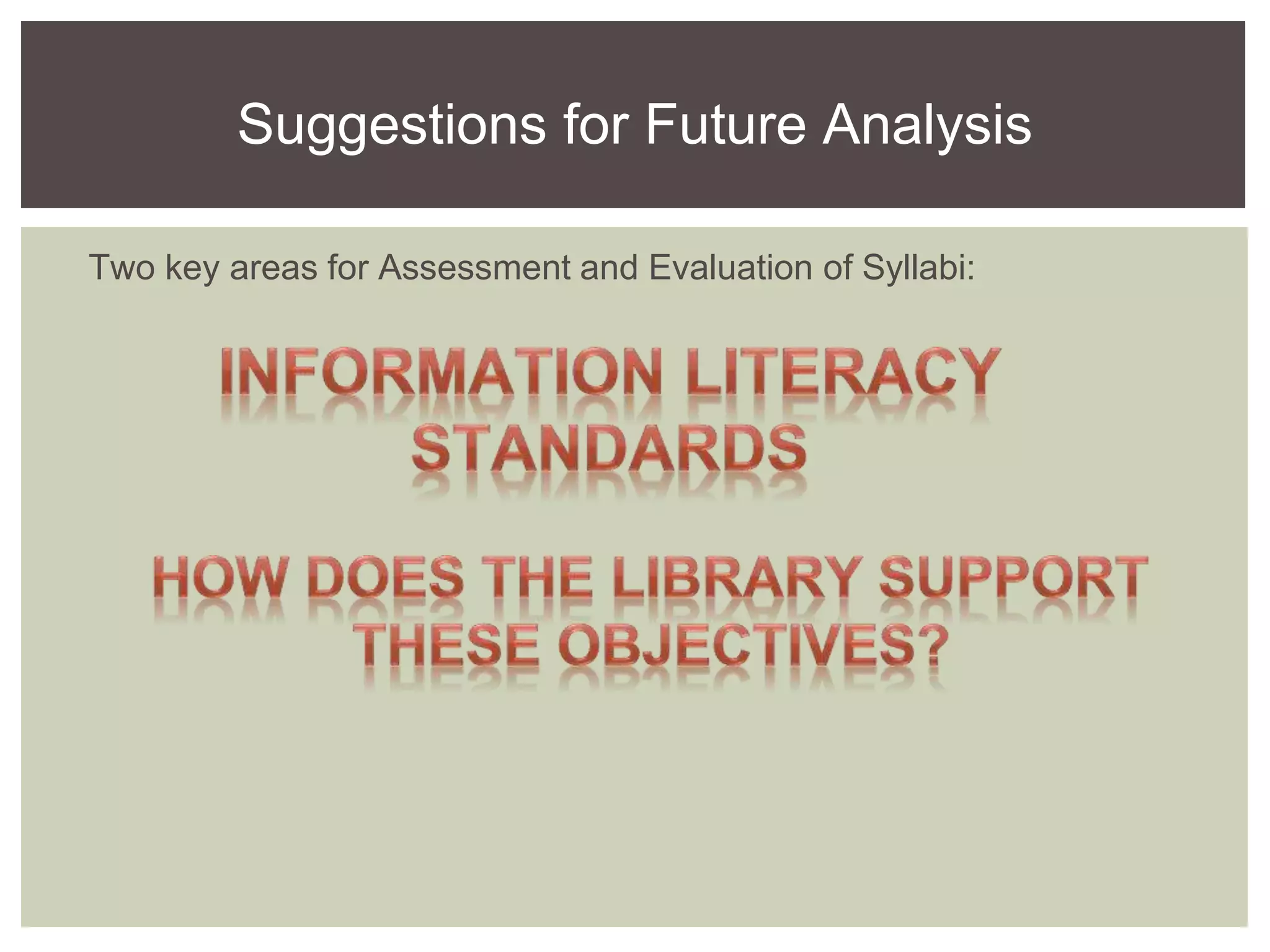
Two key areas for Assessment and Evaluation of Syllabi:
Suggestions for Future Analysis
Questions?

Find the gap: mapping and evaluating library instruction using syllabi - Erin Alcock & Kathryn Rose

  • 1.
    Mapping and Evaluating Library Instruction Using Syllabi FINDING THE GAP ErinAlcock Science Research Liaison Kathryn Rose Humanities Research Liaison Memorial University of Newfoundland
  • 2.
  • 3.
    History • Assumed tobe one of the more successful LI programs • Course of study regularly draws on library resources • 19 faculty, 183 of students (declared majors) • 150 session in the past five years. Chemistry • Some buy in from a small number of faculty members • Inconsistent understanding on usage of library resources • 30 faculty members, 55 students (declared majors) • fewer than 10 LI sessions since 2008 WHAT ARE WE ANALYZING
  • 4.
    Literature Review •Boss andDrabinski (2013) WHERE DID WE START? “Analysis of syllabi can deliver data and provide a clearer understanding of curriculum integration” (352) Collecting course syllabi, as a means to evaluate a library instruction program, as a part of becoming a more responsive library Rambler (1982)
  • 5.
    •Independent Research •Independent useof library resources •Learning outcomes related to critical thinking? •Cumulative project? •Academic Integrity Issues? Our Starting Point – Boss and Drabinski
  • 6.
    •ACRL Framework •What questionsask about the library’s role in supporting these objectives? Catering to our Experience Information literacy is the set of integrated abilities encompassing the reflective discovery of information, the understanding of how information is produced and valued, and the use of information in creating new knowledge and participating ethically in communities of learning. (2015)
  • 7.
    Does the syllabusrequire the student to conduct independent research? Does the syllabus require the student to independently use library resources? Does the syllabus state learning outcomes related to critical thinking? Does the syllabus include a cumulative project requiring students to integrate multiple viewpoints or resources from across the course? Does the syllabus address academic integrity issues (e.g., plagiarism, intellectual property, the importance of correct citation)? Is the library mentioned at all? Is there a scheduled library instruction session? Is there a Library Assignment? Is there evidence that the instructor is taking on LI type instruction? OUR QUESTIONS?
  • 8.
  • 9.
    Syllabi that required: IndependentResearch? Independent use of library resources? Learning outcomes related to critical thinking? a Cumulative project? Syllabi that included: Academic Integrity Issues? A Library mention? A Scheduled Library Session? A Library Assignment Instructor taking on LI type instruction? CHEMISTRY
  • 10.
    Independent research withcumulative project Only 1 – no library session, but a library mention Independent library research and library mention Half the courses that suggest library research don’t mention the library Critical thinking and the library 3 of 5 courses that mention critical thinking make no mention of the library Independent research critical thinking 4 of 5 that indicate critical thinking make no mention of the library Critical thinking and instructor provide library instruction 3 of 5 courses suggest critical thinking is just a part of the course with no obvious source of LI Cross Comparisons - Chemistry
  • 11.
    Syllabi that required: IndependentResearch? Independent use of library resources? State learning outcomes related to critical thinking? Cumulative project? Syllabi that included: Academic Integrity Issues? Library mention? Scheduled Library Session? Library Assignment Instructor taking on LI type instruction? HISTORY
  • 12.
    Independent research ANDlibrary mentions? Independent research and library session? What about those with cumulative course projects? 25% mention the library 20% have a LI session Cross Comparisons - History
  • 13.
  • 14.
  • 15.
    •History ▪First year historycourses – successful ▪Inflating the success of the overall LI in the history courses ▪High statistics don’t mean success ▪Assumption that students only need 1 visit to the library for a four year degree? •Chemistry ▪Reflects the buy-in of a few faculty members WHAT DO WE KNOW NOW?
  • 16.
    Two key areasfor Assessment and Evaluation of Syllabi: Suggestions for Future Analysis
  • 17.