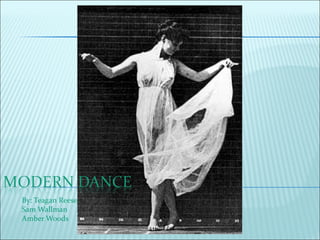
By: Teagan Reese
Sam Wallman
Amber Woods
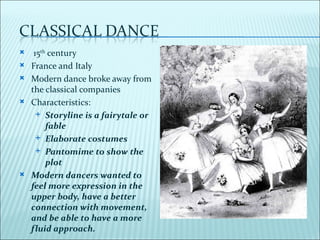
    15th century
   France and Italy
   Modern dance broke away from
    the classical companies
   Characteristics:
       Storyline is a fairytale or
         fable
       Elaborate costumes

       Pantomime to show the
         plot
   Modern dancers wanted to
    feel more expression in the
    upper body, have a better
    connection with movement,
    and be able to have a more
    fluid approach.
 Originated in the early 20th century
 Pioneered a new freer movement style.
     Favoring   bare feet v. pointe shoes.
 Early subject matter was often political or
  psychological.
 Many drew from archaic or exotic sources.

 Rejected structural formality and
  sometimes thematic frivolity.
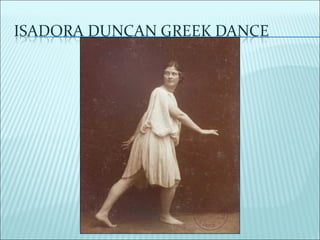
 Was Born 1877 in San Francisco
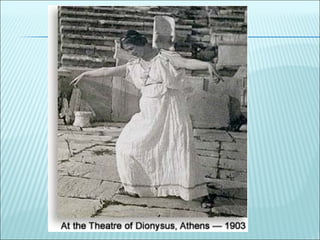
 Was interested in Greek styles of dance

 Emancipated woman ahead of her time

 Given a school by the government of Russia

 Danced to the rhythm of life, this was
  Isadoras dance technique.
 Had a traumatic life which influenced the
  rest of her dance.
http://www.youtube.com/watch?
v=mhzjCSqwL_0&feature=related
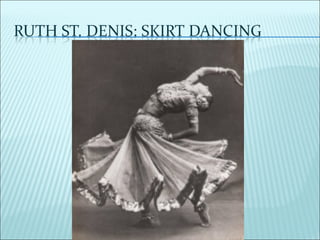
 Started with ballet, skirt dancing and the
  Delsarte technique
 Characteristics of her new style:
   Exotic

   Theatrical

   Spiritual   based
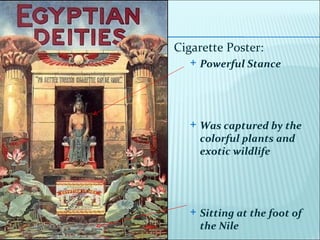
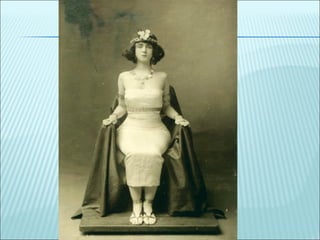
 Inspired by the Egyptian Deities Cigarette
  poster
 Put more religious and spiritual feelings into
  classical dance
 Took movements from Egypt and Asia

 Radha (1906)

 East Indian Nautch Dance (1932)
Cigarette Poster:
      Powerful Stance


      Was captured by the
       colorful plants and
       exotic wildlife


      Sitting at the foot of
       the Nile
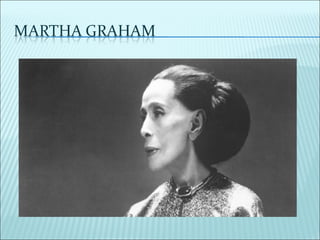
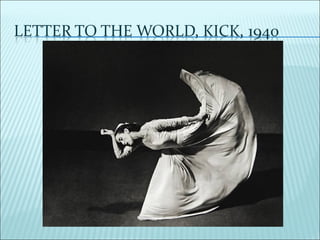
 Was an Influential American dancer, teacher,
  and choreographer of modern dance
 Ballets and other works were intended to
  “reveal the inner man.”
 Became acquainted with oriental art

 Enchanted by the religious mysticism of Ruth
  St. Denis.
 Performed an Aztec Ballet (Xochitl)
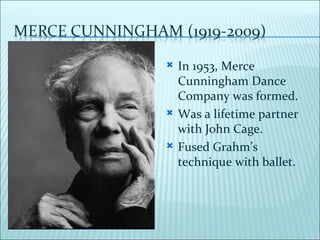
   In 1953, Merce
    Cunningham Dance
    Company was formed.
   Was a lifetime partner
    with John Cage.
   Fused Grahm’s
    technique with ballet.
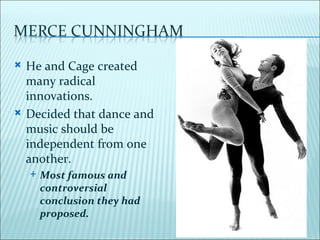
   He and Cage created
    many radical
    innovations.
   Decided that dance and
    music should be
    independent from one
    another.
       Most famous and
        controversial
        conclusion they had
        proposed.
 Stripped dance of it’s literary and narrative
  context.
 Isolated it from it’s musical accompaniment

 By the end of the 20th century, the barriers
  between ballet and modern dance were less
  pronounced.
 Influenced by the idea of chance.
 Located the source of movement in the spine.

 Bare-footed

 Embraced the natural movements
      of running, jumping and falling.
     Unlikeballet, used noise like breathing or foot
     scuffles.
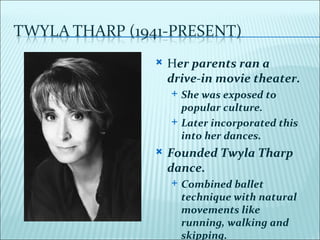
   Her parents ran a
    drive-in movie theater.
       She was exposed to
        popular culture.
       Later incorporated this
        into her dances.
   Founded Twyla Tharp
    dance.
       Combined ballet
        technique with natural
        movements like
        running, walking and
        skipping.
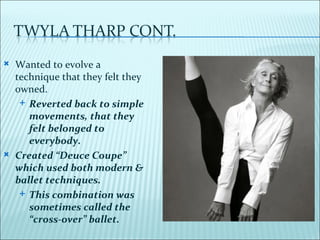
   Wanted to evolve a
    technique that they felt they
    owned.
      Reverted back to simple
       movements, that they
       felt belonged to
       everybody.
   Created “Deuce Coupe”
    which used both modern &
    ballet techniques.
      This combination was
       sometimes called the
       “cross-over” ballet.
 Worked less with contemporary music and more
  with classical, pop, clicking monotones or silence.
    Audiences loved her physical daring and
     jazz roots.
 Caught viewers attention with her 1971 piece,
  The Fugue.
    “no costumes, no music, no lights…”

 Twelve years later she returned to the
  simplicity of The Fugue with In The Upper
  Room.
   Contemporary (Lyrical):
     Fusion of Modern, Ballet, and Jazz
     Conveys emotion of the songs lyrics through body
      movements
     Story throughout the song evolves

   Modern Dance now:
     Has blended with other forms of dance
     Less strictly Modern dancers

     Companies have molded it into their performance
      art
 Modern dance influenced today's ballet
  companies
 Contemporary ballet:
     George   Balanchine- founder of the
      contemporary ballet
     Less classical tutus, flowing costumes, story
      less ballets, prominent role of the corps de
      ballet, developing prominence of the male
      dancer
     Ballet dancers wanted more expression, focus
      to be put on their movements, but were less
      radical than the modern dancers
 Martha Graham Dance Company
 Isadora Duncan Dance Company

 Twyla Tharp Dance

 Merce Cunningham Dance Company


 Alvin Ailey
 Complexions Contemporary Ballet

 Hubbard Street
Finalfinalfinal

Finalfinalfinal

  • 1.
    By: Teagan Reese SamWallman Amber Woods
  • 2.
    15th century  France and Italy  Modern dance broke away from the classical companies  Characteristics:  Storyline is a fairytale or fable  Elaborate costumes  Pantomime to show the plot  Modern dancers wanted to feel more expression in the upper body, have a better connection with movement, and be able to have a more fluid approach.
  • 4.
     Originated inthe early 20th century  Pioneered a new freer movement style.  Favoring bare feet v. pointe shoes.  Early subject matter was often political or psychological.  Many drew from archaic or exotic sources.  Rejected structural formality and sometimes thematic frivolity.
  • 5.
     Was Born1877 in San Francisco  Was interested in Greek styles of dance  Emancipated woman ahead of her time  Given a school by the government of Russia  Danced to the rhythm of life, this was Isadoras dance technique.  Had a traumatic life which influenced the rest of her dance.
  • 7.
  • 10.
     Started withballet, skirt dancing and the Delsarte technique  Characteristics of her new style:  Exotic  Theatrical  Spiritual based
  • 12.
     Inspired bythe Egyptian Deities Cigarette poster  Put more religious and spiritual feelings into classical dance  Took movements from Egypt and Asia  Radha (1906)  East Indian Nautch Dance (1932)
  • 13.
    Cigarette Poster:  Powerful Stance  Was captured by the colorful plants and exotic wildlife  Sitting at the foot of the Nile
  • 16.
     Was anInfluential American dancer, teacher, and choreographer of modern dance  Ballets and other works were intended to “reveal the inner man.”  Became acquainted with oriental art  Enchanted by the religious mysticism of Ruth St. Denis.  Performed an Aztec Ballet (Xochitl)
  • 21.
    In 1953, Merce Cunningham Dance Company was formed.  Was a lifetime partner with John Cage.  Fused Grahm’s technique with ballet.
  • 22.
    He and Cage created many radical innovations.  Decided that dance and music should be independent from one another.  Most famous and controversial conclusion they had proposed.
  • 23.
     Stripped danceof it’s literary and narrative context.  Isolated it from it’s musical accompaniment  By the end of the 20th century, the barriers between ballet and modern dance were less pronounced.
  • 24.
     Influenced bythe idea of chance.  Located the source of movement in the spine.  Bare-footed  Embraced the natural movements of running, jumping and falling.  Unlikeballet, used noise like breathing or foot scuffles.
  • 26.
    Her parents ran a drive-in movie theater.  She was exposed to popular culture.  Later incorporated this into her dances.  Founded Twyla Tharp dance.  Combined ballet technique with natural movements like running, walking and skipping.
  • 27.
    Wanted to evolve a technique that they felt they owned.  Reverted back to simple movements, that they felt belonged to everybody.  Created “Deuce Coupe” which used both modern & ballet techniques.  This combination was sometimes called the “cross-over” ballet.
  • 28.
     Worked lesswith contemporary music and more with classical, pop, clicking monotones or silence.  Audiences loved her physical daring and jazz roots.  Caught viewers attention with her 1971 piece, The Fugue.  “no costumes, no music, no lights…”  Twelve years later she returned to the simplicity of The Fugue with In The Upper Room.
  • 30.
    Contemporary (Lyrical):  Fusion of Modern, Ballet, and Jazz  Conveys emotion of the songs lyrics through body movements  Story throughout the song evolves  Modern Dance now:  Has blended with other forms of dance  Less strictly Modern dancers  Companies have molded it into their performance art
  • 31.
     Modern danceinfluenced today's ballet companies  Contemporary ballet:  George Balanchine- founder of the contemporary ballet  Less classical tutus, flowing costumes, story less ballets, prominent role of the corps de ballet, developing prominence of the male dancer  Ballet dancers wanted more expression, focus to be put on their movements, but were less radical than the modern dancers
  • 32.
     Martha GrahamDance Company  Isadora Duncan Dance Company  Twyla Tharp Dance  Merce Cunningham Dance Company  Alvin Ailey  Complexions Contemporary Ballet  Hubbard Street