1
Product Innovation: An Effective Strategy To
Penetrate Into Small Towns And Rural Markets
A PROJECT STUDY SUBMITTED IN PARTIAL FULFILLMENT FOR THE
REQUIREMENT OF THE TWO YEAR (FULL-TIME) POST GRADUATE DIPLOMA IN
MANAGEMENT 2011-2013
BY
2
Dated……………
CERTIFICATE
Certified that has successfully completed Project Study entitled
“Product Innovation: An Effective Strategy To Penetrate Into Small Towns
And Rural Markets” under my guidance. It is his / her original work, and is
fit for evaluation in partial fulfillment for the requirement of the Two Year
(Full-Time) Post Graduate Diploma in Management.
3
Acknowledgement
A project is never a work of a single person and during the course of working
on this project I was guided by the many people at the right time. Success of
this project is an outcome of sincere efforts put in my many people, efficient
supervision and valuable professional guidance.
Direct and indirect help and guidance was provided by many people and
without them this project would not have achieved its purpose. They provided
me with the necessary recourses and atmosphere conductive for healthy
learning and training. I express my sincere thanks to……..for being my mentor
and guiding me at every stage. Her constant support, cooperation and
motivation were critical for successful completion of this project. Without her
critical evaluation and suggestion at every stage, this project could not have
reached its present form.
Also, I would like to thank all the respondents from Amarpur and Khanpur
villages (District Bulandshahr), Tajpur village (Delhi) and Nowgaon and Tidhni
villages (District Chattarpur) that I visited, for providing me all the relevant
information and being a part of this project. Lastly I would like to thank my
fellow students at LBSIM for helping and supporting me at various stages of
this study.
4
Executive Summary
The aim of this study is to find whether Product Innovation as an effective
strategy to penetrate into small towns and rural markets. This study also tries
to find the factor responsible for success of a product in rural markets.
This study tries to establish the effectiveness of product innovation as a
marketing strategy to cater rural and small torn markets and break the myth
that the needs of such markets are diverse and thus cannot be catered. This
study analyses three products in detail which were innovatively designed
especially to cater to the needs of rural areas and small towns have been
studied and analysed in great details. It can become a good source of learning
for other marketers who want to enter these markets and for those as well
who think that the pockets of growths are concentrated in urban areas.
Qualitative research was done in order to understand the needs of rural
markets and to validate the success of the three products chosen for in-depth
analyses.
5
Table of Contents
1 Introduction and analysis of rural market and the need of innovation.............................1
1.1 Introduction.................................................................................................................1
1.2 Literature Review........................................................................................................5
1.2.1 Rural Marketing in India ......................................................................................5
1.2.2 Frugal Innovations and the Lead Market theory.................................................6
1.2.3 Frugal Innovations for the ‘Unserved’ Customer ................................................7
1.2.4 Capturing rural market with customization of market mix.................................8
1.2.5 Small is big............................................................................................................8
1.2.6 The Fortune at the Bottom of the Pyramid .........................................................9
2 Products analysis ..............................................................................................................11
2.1 Tata Swach ................................................................................................................11
2.2 Nokia 1100 ................................................................................................................14
2.3 Chik Shampoo............................................................................................................16
3 Qualitative Research and Analysis....................................................................................20
3.1 Research Objectives..................................................................................................20
3.2 Research Methodology .............................................................................................20
3.3 Pilot Study .................................................................................................................20
3.4 Research findings based on focus group: .................................................................21
3.5 Research Findings from semi-structured surveys.....................................................23
3.5.1 Respondent Profile ............................................................................................23
3.5.2 Price Sensitivity..................................................................................................25
3.5.3 Perception about Modern Products..................................................................27
3.5.4 In-depth analysis of Tata Swach ........................................................................29
3.5.5 In-depth analysis of Nokia 1100 ........................................................................30
6
3.5.6 In-depth analysis of Chik Shampoo....................................................................32
4 Findings and Recommendations ......................................................................................34
4.1 Implication from in-depth analysis ...........................................................................34
4.1.1 Tata Swach.........................................................................................................34
4.1.2 Nokia 1100 .........................................................................................................34
4.1.3 Chik Shampoo ....................................................................................................34
4.2 Implication from Focus group...................................................................................35
4.3 Implication from semi-structured survey .................................................................35
5 Conclusions.......................................................................................................................37
6 Challenges and Limitations...............................................................................................38
Bibliography .............................................................................................................................39
Annexures ................................................................................................................................40
7
List of Figures
Figure 1: India income Pyramid .................................................................................................1
Figure 2: FMCG growth rates in Rural and Urban India.............................................................2
Figure 3: The Four As .................................................................................................................4
Figure 4: Model for development at the Bottom of the Pyramid ...........................................10
Figure 5: Choice of Shampoo in Focus groups.........................................................................22
Figure 6: Choice of Sachet/Bottle in focus groups...................................................................22
Figure 7: Gender Profile of respondents .................................................................................23
Figure 8: Location Profile of respondents................................................................................24
Figure 9: Age Profile of respondents .......................................................................................24
Figure 10: Income Profile of respondents ...............................................................................25
Figure 11: Price/Quality choice................................................................................................25
Figure 12: Decision making process in buying a product ........................................................26
Figure 13: Price Sensitivity of respondents .............................................................................26
Figure 14: Perception about Daily Use Products.....................................................................27
Figure 15: Understanding of Modern Products.......................................................................27
Figure 16: Perception about Modern Products.......................................................................28
Figure 17: Price Sensitivity for modern products ....................................................................29
Figure 18: Awareness level of Tata Swach...............................................................................29
Figure 19: Perception about Tata Swach.................................................................................30
Figure 20: Awareness level of Nokia 1100...............................................................................30
Figure 21: Reason of Awareness of Nokia 1100 ......................................................................31
Figure 22: Perception about Nokia 1100.................................................................................31
Figure 23: Awareness level of Chik Shampoo and usage form................................................32
8
Figure 25: Reason of Awareness of Chik Shampoo .................................................................32
Figure 26: Perception about Chik shampoo ............................................................................33
Figure 27: Quality Spectrum of Shampoo available in rural markets......................................35
1
1 Introduction and analysis of rural market and the need of
innovation
1.1 Introduction
The Indian Economy
India contains a diversified array of products, brands, lifestyles and cultures. For successful
marketing and launching of a new product India portrays an array of challengers for the
organization entering the Indian subcontinent. One of these challenges portrayed to the
marketers is that of understanding the changing psyche of the Indian consumer. One
another challenge was reaching out to the aspiration-based appeal of the Indian rural
consumer. The aspiration based consumers were the non-users of the shampoo segment in
the rural markets, and reaching out to them was a marketing challenge, and their financial
conditions prevented them from trying and exploring the consumerism phenomenon which
was being experienced by the urban consumer. The products were unaffordable and the
rural population also demanded educating the consumer on product usage.
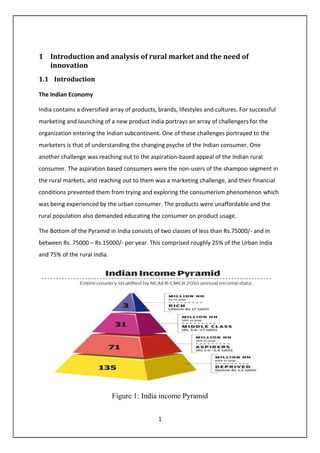
The Bottom of the Pyramid in India consists of two classes of less than Rs.75000/- and in
between Rs. 75000 – Rs.15000/- per year. This comprised roughly 25% of the Urban India
and 75% of the rural India.
Figure 1: India income Pyramid
2
The rural Indian market has seen to have taken a slower troll in pace to change from the
bottom of Pyramid, and It was expected to take another 30 years for the rural India to get
the same salience as that of urban India. Despite being such a large population of total rural
households (about 82%), The BOP contributed to about half the total income of rural India.
The Rural India
The rural Indian market consisted of around 800 million consumers with around 150 million
households, and contributed to 12.2 % of the world’s population. The market was growing
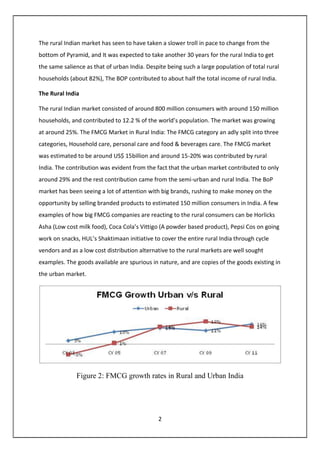
at around 25%. The FMCG Market in Rural India: The FMCG category an adly split into three
categories, Household care, personal care and food & beverages care. The FMCG market
was estimated to be around US$ 15billion and around 15-20% was contributed by rural
India. The contribution was evident from the fact that the urban market contributed to only
around 29% and the rest contribution came from the semi-urban and rural India. The BoP
market has been seeing a lot of attention with big brands, rushing to make money on the
opportunity by selling branded products to estimated 150 million consumers in India. A few
examples of how big FMCG companies are reacting to the rural consumers can be Horlicks
Asha (Low cost milk food), Coca Cola’s Vittigo (A powder based product), Pepsi Cos on going
work on snacks, HUL’s Shaktimaan initiative to cover the entire rural India through cycle
vendors and as a low cost distribution alternative to the rural markets are well sought
examples. The goods available are spurious in nature, and are copies of the goods existing in
the urban market.
Figure 2: FMCG growth rates in Rural and Urban India
3
The Rural Indian Consumer
Rural India was a complete heterogeneous market, but it was homogeneous region wise,
and thus it was bounded by cultural and traditional values of that region. They had a lower
level of traditional education but their awareness levels were moving up with the entering
of media and education of youth and their migration to urban areas. Rural Indian consumers
were believed to be conservative, thus it implied that they were high value conscious. With
low per capita income, the rural consumer is more risk averse, thus does not spend unless
the true value for money is perceived by the person. The increased movement of the
branded goods indicated that the consumer was ready to spend a little extra because he
saw a value added in the good, but was not open to change drastically, but was not limiting
itself to being fully conservative.
Rural households form 72% of the total households. This puts the rural market at roughly
720 million customers. Total income in rural India (about 43% of total national income) is
expected to increase from around US$220 billion in 2004-2005 to US$650 billion by 2014-
2015, a CAGR of 12%. Some 42 million rural households use banking services against 27
million urban households. There are 41 million Kisan credit cardholders [credit cards issued
to farmers for purchase of agricultural goods] against some 22 million card users in urban
markets. Be it automobile, telecom, insurance, retail, real estate or banking, the future
drivers of growth are rural. No marketer can afford to ignore the possibilities of rural India.
Maruti Suzuki, India's leading automobile manufacturer, today sells 7% of its vehicles in the
rural markets. The company expects this number to rise to 15% in the next three years.
The urban markets have started saturating. Godrej, a family-owned conglomerate, saw its
sales of white goods drop by over a tenth in big cities in the past fiscal year. But sales in
towns of less than 100,000 people rose by 19%, and in villages by over 40%. Bajaj, another
conglomerate, says small-town and rural sales have risen handily in recent years, to a
quarter of its home-appliances business. Sales of motorbikes and mopeds have decelerated
more gently than cars, an urban luxury. Be it FMCG (34% share in total FMCG consumption),
Telecom (CAGR of 34%), Retail (40% market share), automobile(50% share of Hero Honda
sales), the rural area is showing a huge growth. Such a huge market should not be left out
due to unavailability of data. This study, thus, tries to provide some information to the
marketers on the factors that are important for success in these areas.
4
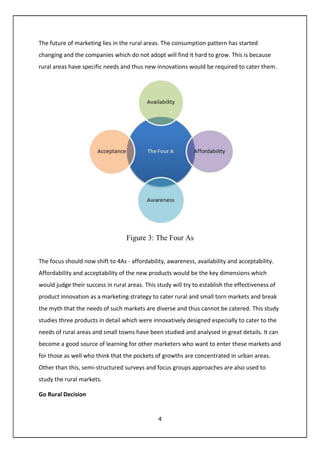
The future of marketing lies in the rural areas. The consumption pattern has started
changing and the companies which do not adopt will find it hard to grow. This is because
rural areas have specific needs and thus new innovations would be required to cater them.
Figure 3: The Four As
The focus should now shift to 4As - affordability, awareness, availability and acceptability.
Affordability and acceptability of the new products would be the key dimensions which
would judge their success in rural areas. This study will try to establish the effectiveness of
product innovation as a marketing strategy to cater rural and small torn markets and break
the myth that the needs of such markets are diverse and thus cannot be catered. This study
studies three products in detail which were innovatively designed especially to cater to the
needs of rural areas and small towns have been studied and analysed in great details. It can
become a good source of learning for other marketers who want to enter these markets and
for those as well who think that the pockets of growths are concentrated in urban areas.
Other than this, semi-structured surveys and focus groups approaches are also used to
study the rural markets.
Go Rural Decision
5
Urban Push Factors – Companies that have so far successfully operated in the urban
markets have found them no longer attractive for the following reasons:
• Saturation Stage: Many products such as soap, detergents, shampoos, fairness
products and consumer durables such as water purifiers, refrigerators etc. have
achieved maturity in the urban markets on account of their high penetration levels.
• Fierce Competition: Urban markets have become congested with too many
competitors. Heavy expenditure on marketing has become necessary as there are
too many brands fighting for a justifiable share. Sustaining brand image and growth
in sales have become difficult and challenging tasks.
Rural Pull factors – The rural pull factors that make rural markets attractive are as follows:
• Rising affordability: Population, Income, Consumption and disposable income are
rising steadily in rural areas.
• Growing Acceptance: Increasing literacy, lifestyle changes due to media explosion
and cinema have led to increasing demand for modern products in rural areas.
• Improving accessibility: Infrastructure is improving rapidly in rural India thus
providing companies with the much needed accessibility.
• Success stories of companies like ITC, HUL, Nirma, etc.
1.2 Literature Review
1.2.1 Rural Marketing in India
This paper (Ajith, P. (2010). 3P Framework: Rural Marketing in India) coins and explains the
term "Urban Myopia," and attempts to present a frame work for rural marketing in India.
The marketing firms are blind to the six lakhs villages in India, perhaps the largest rural
market, owing to urban myopia. The author suggests that these firms should adopt the 3P
Framework of Rural Marketing. This model will not only help the marketing firm to develop
innovative products for rural markets but will help to align the CSR activities to its marketing
activities. To tap the rural market potential in a sustainable way, the marketing firm will
have to adopt the 3P framework in toto. This will bring the rural consumers into the value-
net of the firm and help create innovative and green products (nature friendly) even for
urban consumers.
The 3Ps -
The Push marketing mainly aims at market penetration. Products sold in urban markets are
made available to rural consumers without any modification. Longer, multiple and hybrid
6
channels are adopted to reach the rural markets. Under this approach, though product is
same across the country, the type and mix of channels vary from region to region. Push
approach also involve partnering with many partners (Both for technology and logistics) to
reach the remotest part of the country. Most of the firms adopt this approach to rural
marketing.
The Pull marketing mainly aims at communicating with the rural consumers and reduce
disconnect between what marketing firms offer and what rural consumers want. Vernacular
advertisements, local opinion leaders and ambassadors are used to communicate with rural
consumers. Products sold in rural markets under this approach are not the same? The
products sold in urban markets are modified as per the preferences of rural consumers in
various regions. Majority of the modifications are at the packaging level (smaller packs).Pull
marketing use media, melas and haats as the focal approach to target rural consumers - to
attract, educate and make them brand loyal.
The Pull Up marketing aims at -creation and innovation which involves collaboration with
various organizations (both Govt. and NGOs) as well as close interaction with the rural
consumers to understand their needs better, to empower them(create a source of
livelihood) and also to capture their knowledge, wisdom and innovative ideas in the form of
green products.
1.2.2 Frugal Innovations and the Lead Market theory
The authors (Tiwari R., & Herstatt, C.) of this paper (India – A Lead Market for Frugal
Innovations? Extending the Lead Market Theory to Emerging Economies) have discussed
how India has emerged as a vibrant and versatile source for cost effective, “disruptive
innovations” of various varieties. Price-sensitive consumers in a large and growing market
keep inducing firms to apply “frugal engineering” for creating affordable products and
services without compromising excessively on quality. Such innovations are characterized
by high affordability, robustness, and “good enough” quality in a volume-driven market.
Resource constraints motivate firms and entrepreneurs to think out-of-the-box. The
authors say that the trick lies in creating solutions that are able to circumvent given
environmental constraints in a cost effective way. India’s large and enormously young
7
population faced with limited budgets, but well-endowed with high aspirations, according to
authors, provides an ideal experiment ground for many firms.
Using two anchor-cases of product innovations aimed at price-sensitive segments in India
the authors have generated preliminary evidence to challenge some of the core
assumptions of the “lead market” theory and propose that lead markets can emerge in
developing countries too because market attractiveness (e.g. volume of demand, export
possibilities) and technological capabilities are able to offset many other deficiencies.
Moreover such frugal innovations have huge consumer base especially in rural and small
town markets.
1.2.3 Frugal Innovations for the ‘Unserved’ Customer
Though this paper (Tiwari R., & Herstatt, C. (2012)- Frugal Innovations for the ‘Unserved’
Customer: An Assessment of India’s Attractiveness as a Lead Market for Cost-effective
Products.) is based on India’s potential for frugal innovations and their impact and India’s
Attractiveness as a lead market for cost effective products, this study has discussed 4
products or innovations which have a great potential in rural and small town markets as
they have been designed for their specific requirements. The four products are:
• Small Commercial Vehicle: Tata Ace
• Water Purifier: Tata Swach
• Solar-powered ATMs: Vortex
• Battery-powered Refrigerator: ChotuKool
While one example involves the automobile industry, two are related to the home
appliances sector, and one is a solution from the banking industry targeted at business
customers (banks). All the products can be classified as “frugal innovations” since they
enabled significant reductions in price (30% and above) while concentrating on functionality
(avoiding over-engineering). They can be also termed as “disruptive innovations” since they
sought, and managed to, create new markets by reaching out to non-consumers. The
authors have analysed the product characteristics, its development process and market
success both at home, and where applicable, also abroad. The purpose is to identify factors
that influence India’s lead market potential for this specific category of innovation.
8
1.2.4 Capturing rural market with customization of market mix
The authors of this paper (Joshi, H.,& Srivastava, R.K.(2011)- Capturing rural market with
customization of market mix ) say that the rural market functions in highly complex
environment, therefore it is important for the marketers to formulate tailored strategies for
rural areas. The formulation of strategies depends upon product category, targeted
segment, accessibility to the area etc. It is difficult to understand the mindset of rural
people and to develop products according to their needs. Nevertheless there are many
companies which entered and captured the far flung rural markets and now have trail of
success sagas behind them. They have set examples before their competitors that with
proper understanding of the market and implementing innovative marketing ideas, it is
possible to trap the rural markets. The article explores the various successful marketing
strategies adopted by the companies and what new and revolutionary can further be
introduced.
The paper also discussed various marketing mix strategies to capture rural markets like –
• Product strategies which includes - Design of the product, Features of the products,
Quality and its attributes, Brand name, Packing and packaging, Service- pre and post
sales
• Pricing strategies - Here the author says that there is a notion that rural folks more
likely, prefer products that are low priced. Instead what rural consumers seek is the
value for money. The winner in the rural marketing is that marketer which really
understands the needs of the rural people and provides means and value for money
to meet those needs. Setting prices for the rural market involves prudence on the
part of marketer.
• Promotion strategies like Personal selling in rural region, Proficiency in local
language, Acquaintance with the rural folks etc.
1.2.5 Small is big
This is an article from the book – Consumer India written by Dheeraj Sinha wherein the
author has discussed the growth potential of rural areas and its implication. Power shift has
been discussed from India Shining to Bharat Nirman. The author has also discussed the
difference in the mindsets of the urban and small town-rural areas and impact it has on
marketing. Unlike earlier times, opportunities are not only present for those leaving villages
but are coming to the villages. Many villages have benefitted from urban retailing and
developing market for agriculture based products. This has led to an increase in household
9
income of rural areas and thus correspondingly rural expenditure has increased. Thus this
article forms the base on which further study will be done in this research.
1.2.6 The Fortune at the Bottom of the Pyramid
CK Prahlad in his ground-breaking book 'The Fortune at the Bottom of the Pyramid', speaks
about the need for companies to design and develop innovative products and services, and
help the poor prosper by partnering and engaging with them. He goes on to say that there is
huge consumer potential in rural India and addressing this segment is a win-win partnership
for both companies and the people. The companies benefit by widening their consumer
base and selling more products; the rural people benefit by getting quality goods and
services, which motivate them and raise their self-esteem.
The book suggests replacing traditional notions of government-channeled aid with a new
model for relieving poverty and stimulating development. The new model relies on profit-
making businesses, especially multinational corporations (MNCs). The MNCs have an
economic incentive to tap the great market that exists, all but hidden, at the bottom of the
economic pyramid. The author demonstrates clearly that it is possible to develop business
models that allow the poorest of the poor to participate actively in their own economic
development by becoming entrepreneurs. Although the individuals at the bottom of the
pyramid (referred to as BOP) have little money, collectively they represent a vast pool of
purchasing power. They welcome opportunities to escape their oppressive burdens,
including predatory intermediaries, corrupt governments and the societal "poverty penalty"
that requires them to pay more than the rich for similar services.
The author says that the perception that the bottom of the pyramid is not a viable market
also fails to take into account the growing importance of the informal economy among the
poorest of the poor, which by some estimates accounts for 40 to 60 per cent of all economic
activity in developing countries. Most poor people live in rural villages, or urban slums and
shantytowns, and they usually do not hold legal title or deed to their assets (e.g., dwellings,
farms, businesses). They have little or no formal education and are hard to reach via
conventional distribution, credit, and communications. The quality and quantity of products
and services available in these areas is generally low. Therefore, much like an iceberg with
10
only its tip in plain view, this massive segment of the population — along with its massive
market opportunities — has remained largely invisible to the corporate sector.
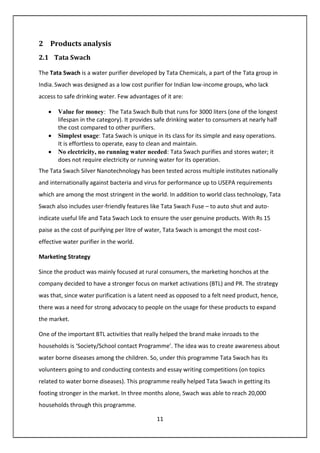
Figure 4: Model for development at the Bottom of the Pyramid
11
2 Products analysis
2.1 Tata Swach
The Tata Swach is a water purifier developed by Tata Chemicals, a part of the Tata group in
India. Swach was designed as a low cost purifier for Indian low-income groups, who lack
access to safe drinking water. Few advantages of it are:
• Value for money: The Tata Swach Bulb that runs for 3000 liters (one of the longest
lifespan in the category). It provides safe drinking water to consumers at nearly half
the cost compared to other purifiers.
• Simplest usage: Tata Swach is unique in its class for its simple and easy operations.
It is effortless to operate, easy to clean and maintain.
• No electricity, no running water needed: Tata Swach purifies and stores water; it
does not require electricity or running water for its operation.
The Tata Swach Silver Nanotechnology has been tested across multiple institutes nationally
and internationally against bacteria and virus for performance up to USEPA requirements
which are among the most stringent in the world. In addition to world class technology, Tata
Swach also includes user-friendly features like Tata Swach Fuse – to auto shut and auto-
indicate useful life and Tata Swach Lock to ensure the user genuine products. With Rs 15
paise as the cost of purifying per litre of water, Tata Swach is amongst the most cost-
effective water purifier in the world.
Marketing Strategy
Since the product was mainly focused at rural consumers, the marketing honchos at the
company decided to have a stronger focus on market activations (BTL) and PR. The strategy
was that, since water purification is a latent need as opposed to a felt need product, hence,
there was a need for strong advocacy to people on the usage for these products to expand
the market.
One of the important BTL activities that really helped the brand make inroads to the
households is ‘Society/School contact Programme’. The idea was to create awareness about
water borne diseases among the children. So, under this programme Tata Swach has its
volunteers going to and conducting contests and essay writing competitions (on topics
related to water borne diseases). This programme really helped Tata Swach in getting its
footing stronger in the market. In three months alone, Swach was able to reach 20,000
households through this programme.
12
Apart from such programmes, the company has been reaching its target consumers through
participation in rural melas, haats, outdoors, activation vans and through road shows.
There is an interesting pattern in the demand of Tata Swach that surfaced. Initially, Tata
Swach was launched with a primary focus at rural consumers. But, later on, it was found
that there was a huge upsurge in the products’ demand from the urban market. Lot of
people from the lower socio-economic strata in the urban market were buying Tata Swach.
When the marketing team at Tata Chemicals realised this, activation activities in the urban
areas were increased too.
Tata Swach is also active on the social media space, especially through Facebook and
Twitter. Now, the natural question that pops in one’s mind is that if the product is primarily
targeted at rural consumers or people from lower socio-economic strata, then how does a
presence on social media helps the brand? Well, the larger idea behind this is to spread
awareness about water borne diseases and also invite volunteers to support the cause.
Another important strategy that helped Tata Swach to reach more consumers has been its
distribution network. Apart from the traditional direct sales to retailers, the company
focused on the indirect channel to reach consumers. For this, it tied up with NGOs and MFIs
to harness the potential of small level entrepreneurs at the village levels.
Tata Chemicals’ new ad campaign for Tata Swach nanotech water purifier uses the famous
tongue twister ‘Chandu ke chacha’ to highlight the benefits of its "advanced silver
nanotechnology".
The film begins with a man reciting his own version of the popular tongue twister ‘Chandu
ke chacha’ while he feeds a small baby (named Chutku) water from a silver bowl and spoon.
He recites, “Chandu ke chacha ne Chandu ke Chutku ko chandi ke chamach se pani pilaya,
bolo kyon?” Chandu answers that because Chutku is thirsty, while an older man says that it’s
because Chachu has nothing else to do. Meanwhile, Chutku’s mother explains that it’s
because silver purifies water and such pure water is healthy for the baby. She further
explains, “Ye naye zamaney ka chaandi hai, jo sach much swach paani deti hai.”
Tata Swach combines technology, performance, design and convenience which makes it
unique and one of the most innovative water purifiers in today’s age. The new ad campaign
aims to connect with the consumers and make them aware about Tata Swach’s use of silver
13
nanotechnology- with silver being a well-known and effective purifying medium- for
providing safe drinking water. The communication through this ad campaign effectively
conveys that Tata Swach is a smart choice for safe drinking water.
STP Analysis
Segmentation: TATA SWACH classified the consumer market into rural and urban
households. According to 2010 stats, more than 75% of the households didn’t have access
to safe drinking water. Tata’s strategy was to enter into this segment since the market
potential was high.
Targeting: TATA SWACH targeted only the rural households. Basically they were more into
rural areas where water borne diseases were very high.
Positioning: TATA started with social awareness programs increasing education levels
among people regarding disadvantages of impure water. TATA SWACH used the help of
NGO’s to spread the awareness levels and schools in rural areas, thus, positioning itself as a
form of need creator.
Comparison on the basis of 4 P’S of Swach, Pureit and Aquasure
Product: TATA Swach purifies 3000L of water with capability to contain 19L of water. PUREIT
purifies 1500L of water with the same capacity as Swach. On the other hand, Aquasure can
purify only 750L of water with capacity to hold 20L of water.
Price: Aimed at providing the cheapest purifier after the world’s cheapest car, TATA Swach
is priced at Rs. 999. In proximity to their need for accessing to the rural household, the price
did full justification in terms of handling, usability and value to the customers (first time
users). Aquasure is priced at Rs. 1500 offering more features like candle filtering, pre water
filtering, justifying their technologically innovative offering. Relatively, Pureit is priced at a
higher price of Rs. 2000, which accounted for its 4 filter stages as its USP.
Promotion: Through competitions in rural schools like essay competitions, role plays; TATA
took the help of NGO in first exposing the rural people to the need for safe drinking water.
In the beginning they relied less on electronic media and more support voluntary groups.
Eureka marketed aggressively in both print as well as electronic media pretty much
following the Selling Concept. They also took the help of celebrity Smriti Irani to spread the
word. HUL relied on its salesmen to convert cold calling into a sale.
14
Place: TATA started with schools and gradually increased the interest of rural people
towards Swach. It chose the rural areas only and with time expanded this product offering
to urban areas due to interest by the lower income class. HUL first launched its product in
Tamil Nadu for testing its product whereas Eureka launched Aquasure on full India scale. It
comes to no surprise that with huge advertising costs, Eureka had to start big.
2.2 Nokia 1100
• The Nokia 1100 is a basic GSM mobile phone produced by Nokia. Two hundred
million 1100s have been sold since its launch in late 2003, making it the world's
bestselling phone handset and the bestselling consumer electronics device in the
world.
• The 1100 achieved its popularity despite being made during a time when more
modern cell phones with more features (e.g., colour screen, internal camera etc.)
were available in the market. It was targeted towards developing countries and users
who do not require advanced features beyond making calls and SMS text messages,
alarm clock, reminders, etc.
• It has been specifically designed for rural areas and small towns: its keypad and front
face have been designed to be as dustproof as possible and its sides are non-slip for
humid weather.
Nokia had a market share of approx. 38% in 2011 compared to 49.3 per cent in 2010 in
India. Its revenues were Rs 12,929 crore in 2010-11 and Rs 12,900 in the 2009-10. The
Indian market accounts for 12 per cent of worldwide sales for Nokia. For Nokia, simple is
successful. Nokia 3210 was a hit too. It sold 160 million units.
Marketing Strategy
The company launched Nokia 1100 after intensive research on the Indian customer's
specific needs. The phones gave an integrated torch, a sheath covered keypad for dust
protection and a slip-free grip. The phones were also introduced in other markets in Asia
and Africa. Nokia's first ‘Made for India’ model, the 1100, is the largest selling model in the
Indian GSM handset market. UNLIKE MOST OTHER mobile phone makers, Nokia's
advertising strategies was aimed at the low end consumer. The Made for India
advertisement for the Nokia 1100 was targeted at the entry-level phone user. It showed the
mobile tied to the fender of a truck that traverses the length of India. The implicit message
is that phone still works at the end of the long, hot, dusty, journey. Nokia's advertisements
15
dwelt on the human angle of mobile technology, rather than emphasise their technical
aspects. The communication strategy of Nokia is to focus mainly on print and TV
advertisements highlighting the emotional aspect to touch the lives of all. Nokia uses
strongly integrated tools. Nokia has a brand personality which attracts customers who want
to project the similar personality. Nokia since years have kept the same tagline –
CONNECTING PEOPLE. Nokia is having a big target audience and so have had many different
kinds of advertisement but never deviated from its main objective.
Others brands like Samsung and LG have started gaining immense popularity but that they
are only restricted to urban. Micromax has in recent times grown into a brand for rural
areas and Nokia is facing stiff competition now. Samsung has also launched a new series
called “Rex” to compete in the lower category range.
The “Nokia” Brand
The most fascinating aspect of this brand is the accessibility and affordability. Whether it is
a beach or a remote hill station, brand “Nokia” is available everywhere. Nokia has planned
its products across all segments of the Indian demographics and they launch at least one
product in each quarter for all its segments. Each such quarter is prepared keeping
demographical, psychological or physiological factors in mind. Thus, Nokia has been able
cater to majority of the Indian population.
Nokia 1100 was part of their connect range. Nokia divides its customers into ranges and
targets each range in a unique way. The connect range is defined by following parameters:
• Income - Lower income families
• Interests - Don’t spend money on frivolous purposes
• Opinion - Strong followers of culture
Nokia also launched an advertisement with the tagline – “For those without pockets” to
target the lower middle class and rural population.
Nokia enjoys approximately 36 % market share and has over 200000 outlets with 700
support centers across 400 towns and cities to ensure that their handsets are available to
their customers. In rural India it enjoys 45% market share considering its high image of
quality and after sales service. The most popular phone of Nokia in the rural market is the
Nokia 1100.
16
2.3 Chik Shampoo
Chik Shampoo is one of India’s oldest and most loved brands. It is the second largest volume
brand in the shampoo category. Chik shampoo is most remembered for one of the first ever
innovations in the Indian personal care industry – sachet packaging.
In addition to an early packaging innovation, Chik shampoo has also been credited with on-
ground activities that were way ahead of their time. Live demonstrations of shampoo
performance helped village dwellers – primarily comprising of shampoo proxy users –
understand a distinctive before-after performance on softness and fragrance. After teaching
how shampoos were used, free samples were given which triggered need for a repeat
experience, pushing sales to approx 3 times.
To the rural and semi urban population of India, it is the preferred daily shampoo.
Marketing Strategy
Positioning:
Chik looked at a regional niche which the multinationals failed to look at thus, filled a gap
for an economical shampoo. They targeted rural and small towns where the consumers
were using bathing soaps to wash their heads; a large number of users were converted to
shampoo users by the innovative strategies applied by CavinKare. These consumers were
not aware of the harmful effects that the soap could have had on the health of the hair.
The strategy adopted by Chik cannot be limited to one purview but a branding, pricing,
product and distribution strategy which took it to the rate of success of the organization on
a whole. These different strategies adopted by Chik can be shown under the different
heads.
Product Strategy:
In order to get a competitive edge of the market CavinKare reduced the quality of the
product, but increased its fragrance as opposed to the other shampoos was supplemented
by French perfume, because of the rural Indian woman wears flowers in the hair, and thus
these fragrances were incorporated. It also launched two sized packages which were first of
its kind in the sachet market. Sachets a form of Low Unit Packs (LUPs) played an important
role in capturing the market, initially with velvet and then with Chik. Single serve sachet
17
gave a boost to the consumption of shampoos in India and was typically suited for the rural
market, this launch brought in a high degree of acceptance in the rural and semi urban
market who could not afford buying a large bottle which was then considered a luxury. Thus
the daily wage earners believed in not stocking up the shampoos, but to use it as in and
when required. Sachets also helped in minimizing the risk of trials and helped in correcting a
wrong decision process, sachets also played an important role for consumers who wanted
to try out different brands.
Pricing Strategy:
The shampoo experience was offered at a price that incited the consumers of a very specific
target audience group, of lower middle class (Sec B2, C, D), as it was observed that the
target market was only buying the shampoo only if it was within the range. A shampoo
sachet of Rs.2 would make the monthly average budget of Rs.40 and thus won’t be
affordable. This led to the idea of creating a 50.p Shampoo which seemed impossible but
with good research and packaging it was launched and was a revolutionary pricing strategy.
Thus Chik decided to launch a 4 ml sachet priced at 50.p, which led to the jump of market
share of Chik from 5.61% in 1999 to over 23% in 2003.Chik made shampoo very affordable
to the rural consumer. This led to the growth of the shampoo market in Rural India grow at
double that of the Urban market. By 2002 the market had grown to 35% from a very low
level of 15%.The results of growth were almost twice than those of the urban centres.
Promotion Strategy:
The company had realized that other than distribution there were other obstacles which
were in the way of adopting the usage of shampoo, because the product was perceived as a
luxury rather than that of necessity. Many of these consumers used shampoo only on
occasions like those of weddings, festivals, functions etc. It was difficult for the marketers to
convince the customers that they should shift from using soap to shampoo. Compared to
other consumer products, shampoos had a very low penetration rate. There was great
potential for driving new users, and in spite of availability of low priced sachets, the
consumers were still finding it very difficult to afford them because of the perception they
had. The advertising strategy was based on the popular appeal of cinemas amongst the
masses, Innovative radio based ads on popular cinema dialogues rather than plain radio
18
jingles of competitors. Popular cinema stars endorsed the shampoo brand, Radio used the
maximum ads, and annual spend. Direct media communication to build knowledge of
product, and also change the soap using habits of the consumers. Chik also used French
perfume in averse to the traditional fragrances used by the competitors. Vans were sent to
distant villages and popular cinemas were organized to the rural consumers, sometimes the
endorsed celebrities also visited villages as part of the road promotions.
Clips were shown on shampoo usage and product benefits, the company understood that
the rural consumers did not know how to use a shampoo, in order to educate the
consumers a trial campaign was introduced. In this campaign volunteers used to go to the
villages and hold on the school going boys and wash their hair and make the crowd
assembled smell the boy and feel his hair. This demo included lather, wash and also comb
hair. This exercise had a great impact on breaking the ice and creating a positive approach
by the consumers. These road shows and education campaigns had an impact on the sales
of Chik from Rs.0.5 Million in 1984 to Rs. 3.8 Million in the next year.
Chik also launched a novel promotional scheme, a consumer could return 5 used shampoo
sachet covers from any brand and exchange it with Chik sachet for free, after a few days the
campaign changed from any shampoo used sachet to only Chik shampoo sachet, thus an
exchange of 5 used chick shampoo sachet would result in a Chik sachet for free.
CavinKare discovered that soap usage was the biggest barrier and people did not see the
need for using Shampoo. Company tried to convey the message to the consumer that soap
usage was bad for the hair and when a product exists specifically for hair it should be used.
Distribution Strategy:
Instead of using the conventional distribution route, they have created a `sachet' sales force
that sells only sachet packs to small retailers including cigarette and paan shops. Separate
hawkers' channel has been created that has moved from neighbourhood to neighbourhood.
The hawker channels exist in all cities where they have a distribution network. CavinKare's
personal products division have moved towards post offices. They are placing products at
post offices, products such as shikakai powder, shampoo and hair dye. They are using such
channels to expand product reach and gain accessibility. Because the unconventional route
it is not expected to become a major revenue generator in the coming years. Apart from
19
unconventional method, the company hired professionals for sales and distribution and
expanded its network beyond South India. CavinKare has its offices in Chennai, Pondicherry,
New Delhi, Mumbai and Kolkata along with 2000 stockists, which supply to six lakh outlets.
Apart from the service charges Cavinkare also gave retailers a Chik Sachet free for every 15
empty sachets they get from the consumer. They give special gift if dealer sale more
products in a particular season. They also give discount on bulk purchasing.
Innovation as a Strategy:
• Focus on innovation was one of the main avenues of Chik, The most prominent
innovations were
• Channel innovation of Periodic Markets like Haaths and Melas.
• Pricing Chik at 50.p.
• Introducing French fragrance to use as a product differentiator.
• Introducing floral fragrances for the first time.
• Creative marketing strategies
• Using of local film stars.
• Innovative radio Advertisements.
Continuous and close engagement with the consumers made Chik a successful product, Chik
understood the Indian consumer, spent time with the consumer in understanding the usage
and apprehensions of the consumer giving it first-hand experience and understanding the
gap even before the competitors could react to the market.
20
3 Qualitative Research and Analysis
3.1 Research Objectives
1. Identify the factors responsible for the success of Tata Swach, Chik Shampoo, and
Nokia 1100.
2. Identify the importance is price for the success of the product in small towns and rural
areas.
3. Determine the potential of products which are sold in urban areas can have salability
in rural areas without undergoing any modification.
4. Determine whether marketers have been successful in understanding the pulse of rural
areas and small towns.
3.2 Research Methodology
This is an exploratory study where in the following methods have been used:
1. Semi Structured survey –
a. Sample Size of 100
b. Sampling method – Convenient sampling
2. Focus group –
a. Number – 2
b. Number of participants in each group – 8
Region of study: North India and Central India
Responses will be collected from the following regions – 4 villages (2 villages – Amarpur and
Khanpur in Bulandhshar district and 1 village – Tajpur in Delhi).
The focus groups were conducted in Nowgaon and Tidhni villages, District Chattarpur, MP.
3.3 Pilot Study
A Pilot study was done in order to evaluate feasibility, time, cost, adverse events, and effect
size (statistical variability) in an attempt to predict an appropriate sample size and improve
upon the study design prior to performance of a full-scale research project. This study was
done on a small sample size of 25 in Amarpur, District Bulandshahr, UP and the
questionnaire was modified to incorporate the changes that were felt necessary.
21
3.4 Research findings based on focus group:
Characteristics of the group
Gender of the participants: all women
Age range: 21- 34 yrs.
Occupation: all the participants were housewives
Education: all were literate but maximum education was senior secondary
Duration of the focus group: 48 minutes
Focus group
The 1st
topic given was Tata Swach and the group was told to discuss the product and the
discussion on this continued for 10 mins. In the 2nd
phase of the focus group the members
were asked to participate in an activity wherein they were told to pick up one sachet from a
basket containing sachets of shampoos and conditioners and then relevant questions were
asked. In the last activity 3 products (1 lifebouy Soap bar, 1 lifebouy liquid soap and 1 hand
sanitizer) were kept on a table and the members were asked to choose 1 product and tell
why did they make that choice.
Findings
The popularity of Tata Swach stems from the following:
• It is a product of the Tata group.
• It does not require electricity as mentioned by one of the participants “ bijli raho ki
nahi yeh toh chalto raho hai”
• Affordable (6 of the respondents were using Tata Swach that costed Rs 1000)
• Most of them bought it because someone in the neighbourhood or extended family
got it and said good things about it.
• The respondents expressed pride in owning the water purifier.
• One of the members on being asked whether she owns the purifier or not
mentioned “humara toh pura parivaar Tata Swach ka hi pani peeta hai”.
The group had a sense of belongingness for the product and felt that taste of water
improves, provides safe drinking water and overall the group was satisfied with the product.
Findings of the activities
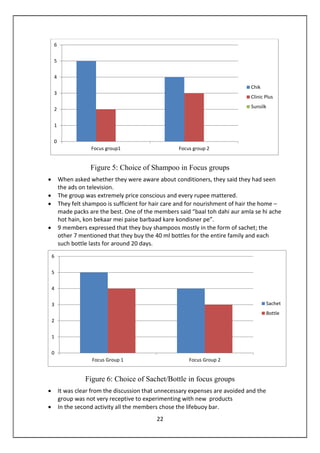
• All the 8 respondents in focus group I and 7 respondents in focus group II, during the
first activity picked up shampoo sachets (Chik and Clinic Plus).No one picked up the
Sunsilk conditioner sachets.
22
Figure 5: Choice of Shampoo in Focus groups
• When asked whether they were aware about conditioners, they said they had seen
the ads on television.
• The group was extremely price conscious and every rupee mattered.
• They felt shampoo is sufficient for hair care and for nourishment of hair the home –
made packs are the best. One of the members said “baal toh dahi aur amla se hi ache
hot hain, kon bekaar mei paise barbaad kare kondisner pe”.
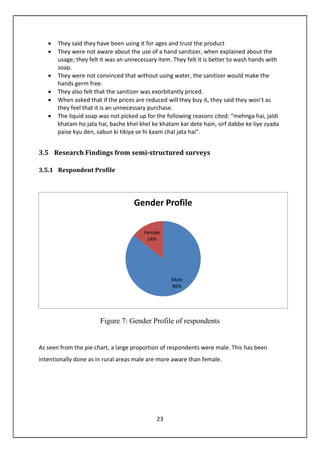
• 9 members expressed that they buy shampoos mostly in the form of sachet; the
other 7 mentioned that they buy the 40 ml bottles for the entire family and each
such bottle lasts for around 20 days.
Figure 6: Choice of Sachet/Bottle in focus groups
• It was clear from the discussion that unnecessary expenses are avoided and the
group was not very receptive to experimenting with new products
• In the second activity all the members chose the lifebuoy bar.
0
1
2
3
4
5
6
Focus group1 Focus group 2
Chik
Clinic Plus
Sunsilk
0
1
2
3
4
5
6
Focus Group 1 Focus Group 2
Sachet
Bottle
23
• They said they have been using it for ages and trust the product
• They were not aware about the use of a hand sanitizer, when explained about the
usage; they felt it was an unnecessary item. They felt it is better to wash hands with
soap.
• They were not convinced that without using water, the sanitizer would make the
hands germ free.
• They also felt that the sanitizer was exorbitantly priced.
• When asked that if the prices are reduced will they buy it, they said they won’t as
they feel that it is an unnecessary purchase.
• The liquid soap was not picked up for the following reasons cited: “mehnga hai, jaldi
khatam ho jata hai, bache khel khel ke khatam kar dete hain, sirf dabbe ke liye zyada
paise kyu den, sabun ki tikiya se hi kaam chal jata hai”.
3.5 Research Findings from semi-structured surveys
3.5.1 Respondent Profile
Figure 7: Gender Profile of respondents
As seen from the pie chart, a large proportion of respondents were male. This has been
intentionally done as in rural areas male are more aware than female.
Male
86%
Female
14%
Gender Profile
24
Figure 8: Location Profile of respondents
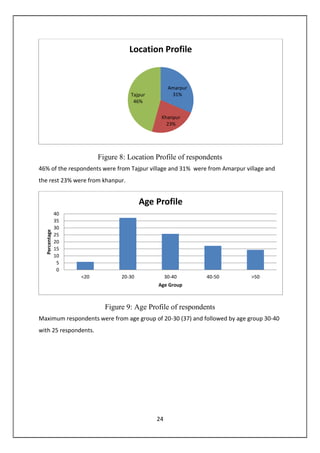
46% of the respondents were from Tajpur village and 31% were from Amarpur village and
the rest 23% were from khanpur.
Figure 9: Age Profile of respondents
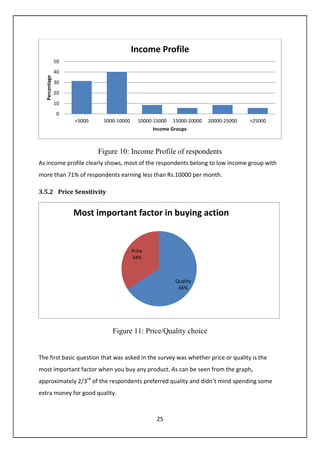
Maximum respondents were from age group of 20-30 (37) and followed by age group 30-40
with 25 respondents.
Amarpur
31%
Khanpur
23%
Tajpur
46%
Location Profile
0
5
10
15
20
25
30
35
40
<20 20-30 30-40 40-50 >50
Percentage
Age Group
Age Profile
25
Figure 10: Income Profile of respondents
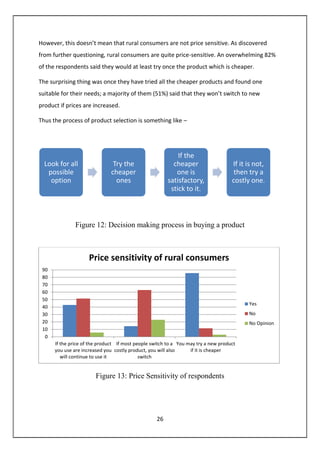
As income profile clearly shows, most of the respondents belong to low income group with
more than 71% of respondents earning less than Rs.10000 per month.
3.5.2 Price Sensitivity
Figure 11: Price/Quality choice
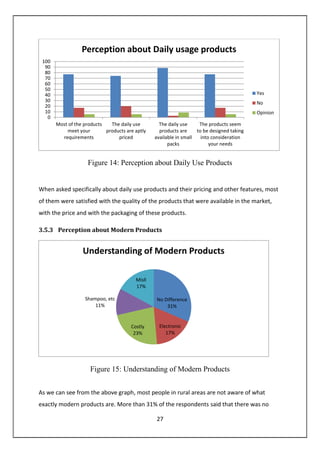
The first basic question that was asked in the survey was whether price or quality is the
most important factor when you buy any product. As can be seen from the graph,
approximately 2/3rd
of the respondents preferred quality and didn’t mind spending some
extra money for good quality.
0
10
20
30
40
50
<5000 5000-10000 10000-15000 15000-20000 20000-25000 >25000
Percentage
Income Groups
Income Profile
Quality
66%
Price
34%
Most important factor in buying action
26
However, this doesn’t mean that rural consumers are not price sensitive. As discovered
from further questioning, rural consumers are quite price-sensitive. An overwhelming 82%
of the respondents said they would at least try once the product which is cheaper.
The surprising thing was once they have tried all the cheaper products and found one
suitable for their needs; a majority of them (51%) said that they won’t switch to new
product if prices are increased.
Thus the process of product selection is something like –
Figure 12: Decision making process in buying a product
Figure 13: Price Sensitivity of respondents
Look for all
possible
option
Try the
cheaper
ones
If the
cheaper
one is
satisfactory,
stick to it.
If it is not,
then try a
costly one.
0
10
20
30
40
50
60
70
80
90
If the price of the product
you use are increased you
will continue to use it
If most people switch to a
costly product, you will also
switch
You may try a new product
if it is cheaper
Price sensitivity of rural consumers
Yes
No
No Opinion
27
Figure 14: Perception about Daily Use Products
When asked specifically about daily use products and their pricing and other features, most
of them were satisfied with the quality of the products that were available in the market,
with the price and with the packaging of these products.
3.5.3 Perception about Modern Products
Figure 15: Understanding of Modern Products
As we can see from the above graph, most people in rural areas are not aware of what
exactly modern products are. More than 31% of the respondents said that there was no
0
10
20
30
40
50
60
70
80
90
100
Most of the products
meet your
requirements
The daily use
products are aptly
priced
The daily use
products are
available in small
packs
The products seem
to be designed taking
into consideration
your needs
Perception about Daily usage products
Yes
No
Opinion
No Difference
31%
Electronic
17%
Costly
23%
Shampoo, etc
11%
Misll
17%
Understanding of Modern Products
28
such segment like modern products and products which are sold in urban areas are also
available in rural areas and another 17% said mobile phones and LCD TV are modern. What
was more surprising was that 23% of the respondents equated modern products with costly
ones.
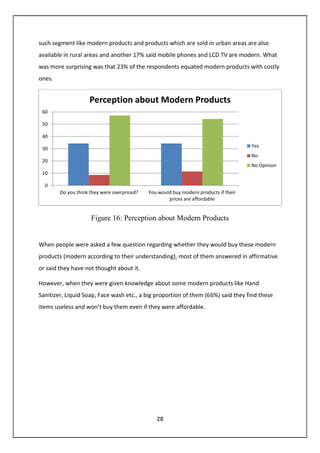
Figure 16: Perception about Modern Products
When people were asked a few question regarding whether they would buy these modern
products (modern according to their understanding), most of them answered in affirmative
or said they have not thought about it.
However, when they were given knowledge about some modern products like Hand
Sanitizer, Liquid Soap, Face wash etc., a big proportion of them (66%) said they find these
items useless and won’t buy them even if they were affordable.
0
10
20
30
40
50
60
Do you think they were overpriced? You would buy modern products if their
prices are affordable
Perception about Modern Products
Yes
No
No Opinion
29
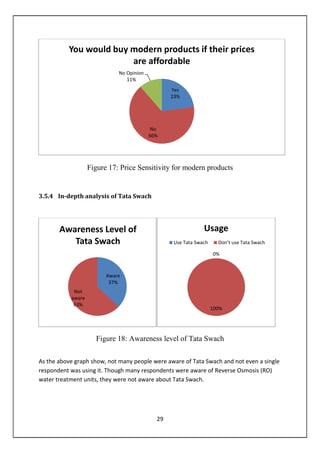
Figure 17: Price Sensitivity for modern products
3.5.4 In-depth analysis of Tata Swach
Figure 18: Awareness level of Tata Swach
As the above graph show, not many people were aware of Tata Swach and not even a single
respondent was using it. Though many respondents were aware of Reverse Osmosis (RO)
water treatment units, they were not aware about Tata Swach.
Yes
23%
No
66%
No Opinion
11%
You would buy modern products if their prices
are affordable
Aware
37%
Not
aware
63%
Awareness Level of
Tata Swach
0%
100%
Usage
Use Tata Swach Don’t use Tata Swach
30
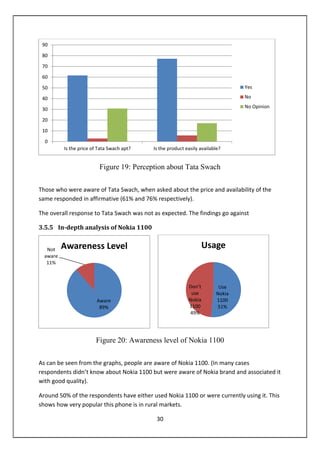
Figure 19: Perception about Tata Swach
Those who were aware of Tata Swach, when asked about the price and availability of the
same responded in affirmative (61% and 76% respectively).
The overall response to Tata Swach was not as expected. The findings go against
3.5.5 In-depth analysis of Nokia 1100
Figure 20: Awareness level of Nokia 1100
As can be seen from the graphs, people are aware of Nokia 1100. (In many cases
respondents didn’t know about Nokia 1100 but were aware of Nokia brand and associated it
with good quality).
Around 50% of the respondents have either used Nokia 1100 or were currently using it. This
shows how very popular this phone is in rural markets.
0
10
20
30
40
50
60
70
80
90
Is the price of Tata Swach apt? Is the product easily available?
Yes
No
No Opinion
Aware
89%
Not
aware
11%
Awareness Level
Use
Nokia
1100
51%
Don’t
use
Nokia
1100
49%
Usage
31
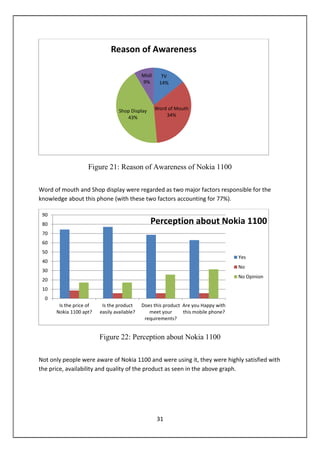
Figure 21: Reason of Awareness of Nokia 1100
Word of mouth and Shop display were regarded as two major factors responsible for the
knowledge about this phone (with these two factors accounting for 77%).
Figure 22: Perception about Nokia 1100
Not only people were aware of Nokia 1100 and were using it, they were highly satisfied with
the price, availability and quality of the product as seen in the above graph.
TV
14%
Word of Mouth
34%
Shop Display
43%
Misll
9%
Reason of Awareness
0
10
20
30
40
50
60
70
80
90
Is the price of
Nokia 1100 apt?
Is the product
easily available?
Does this product
meet your
requirements?
Are you Happy with
this mobile phone?
Perception about Nokia 1100
Yes
No
No Opinion
32
3.5.6 In-depth analysis of Chik Shampoo
Figure 23: Awareness level of Chik Shampoo and usage form
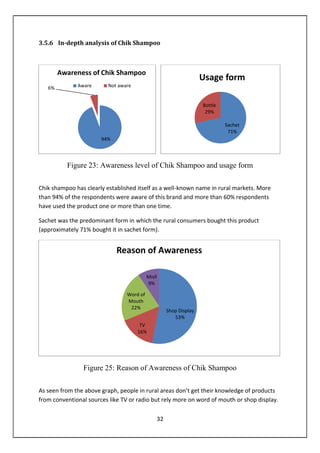
Chik shampoo has clearly established itself as a well-known name in rural markets. More
than 94% of the respondents were aware of this brand and more than 60% respondents
have used the product one or more than one time.
Sachet was the predominant form in which the rural consumers bought this product
(approximately 71% bought it in sachet form).
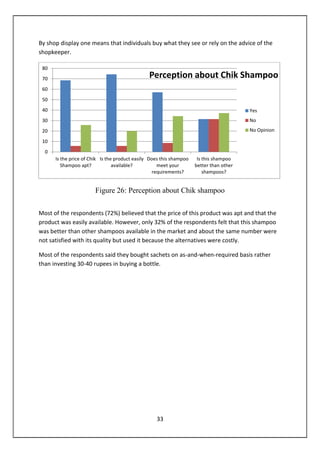
Figure 25: Reason of Awareness of Chik Shampoo
As seen from the above graph, people in rural areas don’t get their knowledge of products
from conventional sources like TV or radio but rely more on word of mouth or shop display.
94%
6%
Awareness of Chik Shampoo
Aware Not aware
Sachet
71%
Bottle
29%
Usage form
Shop Display
53%
TV
16%
Word of
Mouth
22%
Misll
9%
Reason of Awareness
33
By shop display one means that individuals buy what they see or rely on the advice of the
shopkeeper.
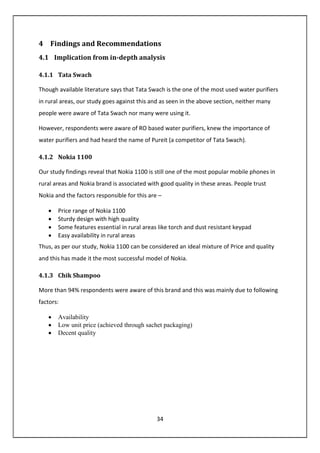
Figure 26: Perception about Chik shampoo
Most of the respondents (72%) believed that the price of this product was apt and that the
product was easily available. However, only 32% of the respondents felt that this shampoo
was better than other shampoos available in the market and about the same number were
not satisfied with its quality but used it because the alternatives were costly.
Most of the respondents said they bought sachets on as-and-when-required basis rather
than investing 30-40 rupees in buying a bottle.
0
10
20
30
40
50
60
70
80
Is the price of Chik
Shampoo apt?
Is the product easily
available?
Does this shampoo
meet your
requirements?
Is this shampoo
better than other
shampoos?
Perception about Chik Shampoo
Yes
No
No Opinion
34
4 Findings and Recommendations
4.1 Implication from in-depth analysis
4.1.1 Tata Swach
Though available literature says that Tata Swach is the one of the most used water purifiers
in rural areas, our study goes against this and as seen in the above section, neither many
people were aware of Tata Swach nor many were using it.
However, respondents were aware of RO based water purifiers, knew the importance of
water purifiers and had heard the name of Pureit (a competitor of Tata Swach).
4.1.2 Nokia 1100
Our study findings reveal that Nokia 1100 is still one of the most popular mobile phones in
rural areas and Nokia brand is associated with good quality in these areas. People trust
Nokia and the factors responsible for this are –
• Price range of Nokia 1100
• Sturdy design with high quality
• Some features essential in rural areas like torch and dust resistant keypad
• Easy availability in rural areas
Thus, as per our study, Nokia 1100 can be considered an ideal mixture of Price and quality
and this has made it the most successful model of Nokia.
4.1.3 Chik Shampoo
More than 94% respondents were aware of this brand and this was mainly due to following
factors:
• Availability
• Low unit price (achieved through sachet packaging)
• Decent quality
35
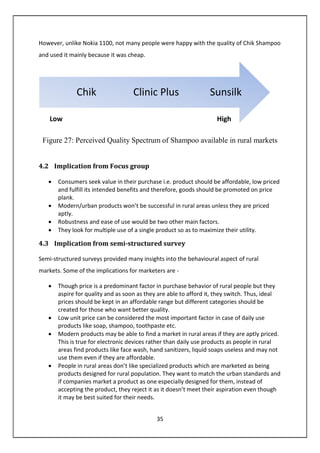
However, unlike Nokia 1100, not many people were happy with the quality of Chik Shampoo
and used it mainly because it was cheap.
Figure 27: Perceived Quality Spectrum of Shampoo available in rural markets
4.2 Implication from Focus group
• Consumers seek value in their purchase i.e. product should be affordable, low priced
and fulfill its intended benefits and therefore, goods should be promoted on price
plank.
• Modern/urban products won’t be successful in rural areas unless they are priced
aptly.
• Robustness and ease of use would be two other main factors.
• They look for multiple use of a single product so as to maximize their utility.
4.3 Implication from semi-structured survey
Semi-structured surveys provided many insights into the behavioural aspect of rural
markets. Some of the implications for marketers are -
• Though price is a predominant factor in purchase behavior of rural people but they
aspire for quality and as soon as they are able to afford it, they switch. Thus, ideal
prices should be kept in an affordable range but different categories should be
created for those who want better quality.
• Low unit price can be considered the most important factor in case of daily use
products like soap, shampoo, toothpaste etc.
• Modern products may be able to find a market in rural areas if they are aptly priced.
This is true for electronic devices rather than daily use products as people in rural
areas find products like face wash, hand sanitizers, liquid soaps useless and may not
use them even if they are affordable.
• People in rural areas don’t like specialized products which are marketed as being
products designed for rural population. They want to match the urban standards and
if companies market a product as one especially designed for them, instead of
accepting the product, they reject it as it doesn’t meet their aspiration even though
it may be best suited for their needs.
SunsilkClinic PlusChik
Low High
36
• People in rural markets don’t think in long term and thus they avoid large
expenditure in short run. This was seen in survey when the respondents said they
bought 30-40 sachets of shampoo for the family over a period of one month but
didn’t buy a bottle of 100ml as it would mean an expenditure of Rs.30 in one go,
though this was an economical option.
• Many companies like CavinKare and Nokia have truly understood the need of rural
markets and successfully catered them. Their experience and innovative strategies
are examples worth emulating. In order to truly understand the pulse of rural
markets, there is a need to know their tastes and preferences, their aspirations and
psychology with respect to each product category.
37
5 Conclusions
This study has made an attempt to understand an untapped market and found a few basic
parameters which play an important role in these markets. With the help of in-depth
analysis of few successful products, semi-structured surveys and focus groups, this study
concluded that price and quality both play an important role though price has a slightly
greater weight in decision making.
The study analysed Nokia 1100 and found that its success can be attributed to robust
designing, low price, easy accessibility and strong marketing. Similarly, success of Chik
Shampoo can be attributed to low unit price and easy availability.
The study concludes that price is not the most important factor in purchase behaviour of
rural people, quality is important too.
The study also finds that unlike popular perception as observed in available literature, rural
population doesn’t want specialised products for their markets, what they want are the
urban products packaged in such a way to meet their financial conditions. Thus, low unit
price is important factor and innovative packaging not different product altogether is
needed to sell it in rural areas.
Many companies like CavinKare and Nokia have truly understood the need of rural markets
and successfully catered them. Their experience and innovative strategies are examples
worth emulating. However, in order to truly understand the pulse of rural markets, there is
a need to know their tastes and preferences, their aspirations and psychology with respect
to each product category and each region. Case-in-point, people in rural areas closer to
metropolitan cities or urban centres have different aspirations and mind-set than people in
villages far away from urban centres.
This study was an attempt in this direction and huge effort is still required to understand
and cater the untapped market of rural India.
38
6 Challenges and Limitations
Challenges:
• Getting the right information from the respondents was a challenge especially
regarding their income.
• Sometimes people don’t give correct information and thus deciphering which
information is correct and which is not was a challenge.
• As hypothesis designing, questionnaire designing, survey etc. were conducted by a
single person, removing experimenter bias was a challenge.
Limitations:
• The sample size of the study was 125 + 2 focus groups of size 8 each. Thus due to the
small size generalization of the findings is a challenge.
• The Study covered only three villages in two regions (UP and Delhi) but people’s
preference changes from one region to another and thus findings cannot be
generalized across India.
• The study was qualitative in nature and thus proper cause-effect relationship cannot
be established and weight cannot be attached to various factors responsible for sale
of a product in rural markets.
39
Bibliography
• Krishnamacharyulu, C.S.G. (2011). Rural Marketing: Text and Cases. Dorling
Kindersley, India
• Prahlad, C.K. (2006). The Fortune at the Bottom of the Pyramid. Dorling Kindersley,
United States
• Sinha, D. (2011). Consumer India. John Wiley & Sons, India
• World, B. (2012) Marketing Whitebook 2012-1. Business World, India
References
Journals
• Ajith, P. (2010). 3P Framework: Rural Marketing in India. SCMS Journal of Indian
Management; Jan2010, Vol. 7 Issue 1, p54-67
• Joshi, H.,& Srivastava, R.K.(2011). Capturing rural market with customization of
market mix. Asian Journal of Technology & Management Research Vol. 01 – Issue:
02
• Tiwari R., & Herstatt, C. (2012). Frugal Innovations for the ‘Unserved’ Customer:
An Assessment of India’s Attractiveness as a Lead Market for Cost-effective
Products. Journal of Indian Business Research, Vol. 4, Issue 2, pp. 97-115
• Tiwari R., & Herstatt, C. (2012). India – A Lead Market for Frugal Innovations?
Extending the Lead Market Theory to Emerging Economies. Working Paper No.
67, Institute of Technology and Innovation Management, Hamburg University of
Technology, Germany.
Internet
• Retrieved from - “Why Companies See Bright Prospects in Rural India”
http://knowledge.wharton.upenn.edu/india/article.cfm?articleid=4386
• Retrieved from – “Reaching out to rural India”
http://www.tata.in/company/articles/inside.aspx?artid=m73PWlDIJmU=
• Retrieved from – “Seducing shoppers in Sticksville”
http://www.economist.com/node/21558631
• Retrieved from – “Innovation in Rural India”
http://www.oifc.in/investing-in-india/investment-info/in-focus/innovation-in-rural-
india-treasures-from-india-bottom-of-pyramid
• Retrieved from – “Indian Rural Market: The Next Big Thing”
http://www.mbaskool.com/business-articles/marketing/2329-indian-rural-market-the-
next-big-thing.html
• Retrieved from – “The Fortune at the Bottom of the Pyramid”
http://www.strategy-business.com/article/11518?pg=all
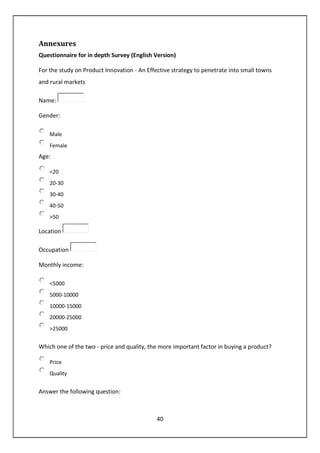
40
Annexures
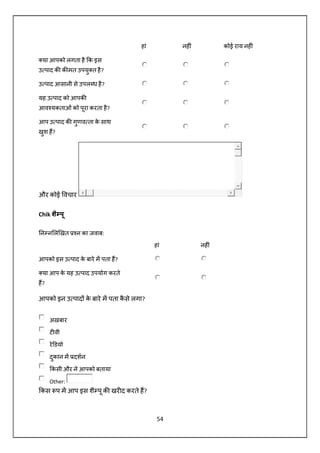
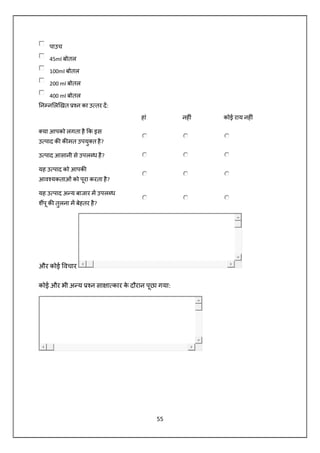
Questionnaire for in depth Survey (English Version)
For the study on Product Innovation - An Effective strategy to penetrate into small towns
and rural markets
Name:
Gender:
Male
Female
Age:
<20
20-30
30-40
40-50
>50
Location
Occupation
Monthly income:
<5000
5000-10000
10000-15000
20000-25000
>25000
Which one of the two - price and quality, the more important factor in buying a product?
Price
Quality
Answer the following question:
41
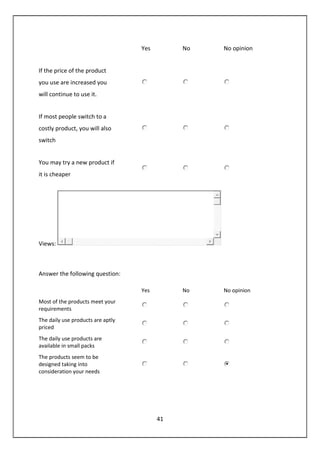
Yes No No opinion
If the price of the product
you use are increased you
will continue to use it.
If most people switch to a
costly product, you will also
switch
You may try a new product if
it is cheaper
Views:
Answer the following question:
Yes No No opinion
Most of the products meet your
requirements
The daily use products are aptly
priced
The daily use products are
available in small packs
The products seem to be
designed taking into
consideration your needs
42
Views:
What do you understand by modern/urban products?
Name at least two products that you think are modern/urban
Have you ever used any of these products?
Why did you use these products?
Answer the following questions:
43
Yes No No opinion
Do you think they were
overpriced?
Did they satisfy you?
Will you buy them again?
From where did you come to know about these products?
Newspaper
TV
Radio
Shop display
Someone using it
Other:
Answer the following question:
Yes No No opinion
You are aware of the new
products available in urban
areas
You would buy such modern
product only when you have
seen someone using it
You would buy modern
products if their prices are
affordable
Modern products are designed
keeping you in mind
Views:
44
Tata Swach
Answer the following questions:
Yes No
Are you aware of the product?
Do you own this product?
Do you know how to use this
product?
How did you come to know about this product?
Newspaper
TV
Radio
Word of mouth
Shop Display
Other:
Who do you think influenced your action of buying this product?
Yourself
Family Member
Neighbours
Co Workers
Retailer
Advertisements
Other:
Answer the following:
Yes No No opinion
Do you think the price of this
product is apt?
Is the product easily available?
Does this product meet your
45
Yes No No opinion
requirements?
Are you happy with the quality
of the product?
More views:
Nokia 1100
Answer the following questions:
Yes No
Are you aware of the product?
Do you own this product?
Do you know how to use this
product?
How did you come to know about this product?
Newspaper
TV
Radio
Word of mouth
Shop Display
Other:
Who do you think influenced your action of buying this product?
Yourself
Family Member
Neighbours
Co Workers
Retailer
46
Advertisements
Other:
Answer the following:
Yes No No opinion
Do you think the price of this
product is apt?
Is the product easily available?
Does this product meet your
requirements?
Are you happy with the quality
of the product?
More views:
Chik Shampoo
Answer the following questions:
Yes No
Are you aware of the product?
Do you use this product?
How did you come to know about this product?
Newspaper
TV
Radio
Word of mouth
Shop Display
Other:
47
In what form do you buy this shampoo?
Sachet
45ml bottle
100ml bottle
200 ml bottle
400 ml bottle
Answer the following:
Yes No No opinion
Do you think the price of this
product is apt?
Is the product easily available?
Does this product meet your
requirements?
Is this product better than other
shampoos available in the
market?
More views:
Any other questions asked during the survey:
48
Questionnaire for in depth Survey (HIndi Version)
सा ा कार के लए नावल
उ पाद नवीनता - छोटे शहर और ामीण बाजार म वेश करने के लए एक भावी रणनी त
नाम:
लंग:
पु ष
म हला
उ :
<20
20-30
30-40
40-50
>50
थान:
यवसाय:
मा सक आय:
<5000
5000-10000
10000-15000
20000-25000
>25000
एक उ पाद को खर दने म अ धक मह वपूण कारक या है?
क मत
गुणव ता
न न ल खत न का उ तर द:
हां नह ं कोई राय नह ं
आप एक नए उ पाद का उपयोग
अगर वह स ता है.
49
हां नह ं कोई राय नह ं
य द उ पाद क क मत म वृ क
गई, आपके लए इसका इ तेमाल
जार रहेगा.
य द यादातर लोग को एक महंगा
उ पाद के लए ले जाते ह, तो आप
यह भी उपयोग शु कर दगे
ि टकोण:
न न ल खत न का उ तर द:
हां नह ं कोई राय नह ं
अ धकांश उ पाद आपक
आव यकताओं को पूरा
दै नक उपयोग के उ पाद को उ चत
क मत ह
दै नक उपयोग के उ पाद के छोटे
पैक म उपल ध ह
उ पाद आपक आव यकताओं को
यान म रखते हुए तैयार कए ह.
ि टकोण:
50
आधु नक / शहर उ पाद से आप या समझते ह?
कम से कम दो उ पाद के नाम लख जो आपको लगता है क आधु नक/ शहर है
या आपने कभी इन उ पाद के कसी भी इ तेमाल कया?
य आप इन उ पाद का उपयोग कया था?
न न ल खत न का उ तर द:
हां नह ं कोई राय नह ं
या आपको लगता है क वे महंगे
थे?
51
हां नह ं कोई राय नह ं
या वे आप को संतु ट करने म
स म थे?
आप उ ह फर से खर द लगे?
आपको इन उ पाद के बारे म पता कै से लगा?
अख़बार
ट वी
रे डयो
दुकान म दशन
कसी और ने आपको बताया
Other:
न न ल खत न का जवाब:
हां नह ं कोई राय नह ं
आपको शहर े म उपल ध
उ पाद के बारे म पता ह
आप इस तरह के आधु नक उ पाद
खर द के वल जब आप इसका
उपयोग कसी को देखा होगा
आप आधु नक उ पाद को खर द
लगे अगर उनक क मत कम को
कया गया
आधु नक उ पाद के डजाइन
आपको यान म रखते हुए होता है
ि टकोण
टाटा Swach
52
न न ल खत न का जवाब:
हां नह ं
आपको इस उ पाद के बारे म पता ह?
या आप के पास यह उ पाद है?
या आप जानते ह क इस उ पाद का
उपयोग कै से कर?
आपको इन उ पाद के बारे म पता कै से लगा?
अख़बार
ट वी
रे डयो
दुकान म दशन
कसी और ने आपको बताया
Other:
आपको या लगता है इस उ पाद को खर दने क आपक कारवाई को कसने भा वत कया है?
वयं
प रवार के सद य
पड़ोसी
सह कायकता
खुदरा व े ता
व ापन
Other:
न न ल खत न का उ तर द:
हां नह ं कोई राय नह ं
या आपको लगता है क इस
उ पाद क क मत उपयु त है?
उ पाद आसानी से उपल ध है?
यह उ पाद को आपक
आव यकताओं को पूरा करता है?
आप उ पाद क गुणव ता के साथ
खुश ह?
53
और कोई वचार
नो कया 1100
न न ल खत न का जवाब:
हां नह ं
आपको इस उ पाद के बारे म पता ह?
या आप के पास यह उ पाद है?
या आप जानते ह क इस उ पाद का
उपयोग कै से कर?
आपको इन उ पाद के बारे म पता कै से लगा?
अख़बार
ट वी
रे डयो
दुकान म दशन
कसी और ने आपको बताया
Other:
आपको या लगता है इस उ पाद को खर दने क आपक कारवाई को कसने भा वत कया है?
वयं
प रवार के सद य
पड़ोसी
सह कायकता
खुदरा व े ता
व ापन
Other:
न न ल खत न का उ तर द:
54
हां नह ं कोई राय नह ं
या आपको लगता है क इस
उ पाद क क मत उपयु त है?
उ पाद आसानी से उपल ध है?
यह उ पाद को आपक
आव यकताओं को पूरा करता है?
आप उ पाद क गुणव ता के साथ
खुश ह?
और कोई वचार
Chik शै पू
न न ल खत न का जवाब:
हां नह ं
आपको इस उ पाद के बारे म पता ह?
या आप के यह उ पाद उपयोग करते
ह?
आपको इन उ पाद के बारे म पता कै से लगा?
अख़बार
ट वी
रे डयो
दुकान म दशन
कसी और ने आपको बताया
Other:
कस प म आप इस शै पू क खर द करते ह?
55
पाउच
45ml बोतल
100ml बोतल
200 ml बोतल
400 ml बोतल
न न ल खत न का उ तर द:
हां नह ं कोई राय नह ं
या आपको लगता है क इस
उ पाद क क मत उपयु त है?
उ पाद आसानी से उपल ध है?
यह उ पाद को आपक
आव यकताओं को पूरा करता है?
यह उ पाद अ य बाजार म उपल ध
शपू क तुलना म बेहतर है?
और कोई वचार
कोई और भी अ य न सा ा कार के दौरान पूछा गया:
56
Remarks

Product Innovation: An Effective Strategy To Penetrate Into Small Towns And Rural Markets

  • 1.
    1 Product Innovation: AnEffective Strategy To Penetrate Into Small Towns And Rural Markets A PROJECT STUDY SUBMITTED IN PARTIAL FULFILLMENT FOR THE REQUIREMENT OF THE TWO YEAR (FULL-TIME) POST GRADUATE DIPLOMA IN MANAGEMENT 2011-2013 BY
  • 2.
    2 Dated…………… CERTIFICATE Certified that hassuccessfully completed Project Study entitled “Product Innovation: An Effective Strategy To Penetrate Into Small Towns And Rural Markets” under my guidance. It is his / her original work, and is fit for evaluation in partial fulfillment for the requirement of the Two Year (Full-Time) Post Graduate Diploma in Management.
  • 3.
    3 Acknowledgement A project isnever a work of a single person and during the course of working on this project I was guided by the many people at the right time. Success of this project is an outcome of sincere efforts put in my many people, efficient supervision and valuable professional guidance. Direct and indirect help and guidance was provided by many people and without them this project would not have achieved its purpose. They provided me with the necessary recourses and atmosphere conductive for healthy learning and training. I express my sincere thanks to……..for being my mentor and guiding me at every stage. Her constant support, cooperation and motivation were critical for successful completion of this project. Without her critical evaluation and suggestion at every stage, this project could not have reached its present form. Also, I would like to thank all the respondents from Amarpur and Khanpur villages (District Bulandshahr), Tajpur village (Delhi) and Nowgaon and Tidhni villages (District Chattarpur) that I visited, for providing me all the relevant information and being a part of this project. Lastly I would like to thank my fellow students at LBSIM for helping and supporting me at various stages of this study.
  • 4.
    4 Executive Summary The aimof this study is to find whether Product Innovation as an effective strategy to penetrate into small towns and rural markets. This study also tries to find the factor responsible for success of a product in rural markets. This study tries to establish the effectiveness of product innovation as a marketing strategy to cater rural and small torn markets and break the myth that the needs of such markets are diverse and thus cannot be catered. This study analyses three products in detail which were innovatively designed especially to cater to the needs of rural areas and small towns have been studied and analysed in great details. It can become a good source of learning for other marketers who want to enter these markets and for those as well who think that the pockets of growths are concentrated in urban areas. Qualitative research was done in order to understand the needs of rural markets and to validate the success of the three products chosen for in-depth analyses.
  • 5.
    5 Table of Contents 1Introduction and analysis of rural market and the need of innovation.............................1 1.1 Introduction.................................................................................................................1 1.2 Literature Review........................................................................................................5 1.2.1 Rural Marketing in India ......................................................................................5 1.2.2 Frugal Innovations and the Lead Market theory.................................................6 1.2.3 Frugal Innovations for the ‘Unserved’ Customer ................................................7 1.2.4 Capturing rural market with customization of market mix.................................8 1.2.5 Small is big............................................................................................................8 1.2.6 The Fortune at the Bottom of the Pyramid .........................................................9 2 Products analysis ..............................................................................................................11 2.1 Tata Swach ................................................................................................................11 2.2 Nokia 1100 ................................................................................................................14 2.3 Chik Shampoo............................................................................................................16 3 Qualitative Research and Analysis....................................................................................20 3.1 Research Objectives..................................................................................................20 3.2 Research Methodology .............................................................................................20 3.3 Pilot Study .................................................................................................................20 3.4 Research findings based on focus group: .................................................................21 3.5 Research Findings from semi-structured surveys.....................................................23 3.5.1 Respondent Profile ............................................................................................23 3.5.2 Price Sensitivity..................................................................................................25 3.5.3 Perception about Modern Products..................................................................27 3.5.4 In-depth analysis of Tata Swach ........................................................................29 3.5.5 In-depth analysis of Nokia 1100 ........................................................................30
  • 6.
    6 3.5.6 In-depth analysisof Chik Shampoo....................................................................32 4 Findings and Recommendations ......................................................................................34 4.1 Implication from in-depth analysis ...........................................................................34 4.1.1 Tata Swach.........................................................................................................34 4.1.2 Nokia 1100 .........................................................................................................34 4.1.3 Chik Shampoo ....................................................................................................34 4.2 Implication from Focus group...................................................................................35 4.3 Implication from semi-structured survey .................................................................35 5 Conclusions.......................................................................................................................37 6 Challenges and Limitations...............................................................................................38 Bibliography .............................................................................................................................39 Annexures ................................................................................................................................40
  • 7.
    7 List of Figures Figure1: India income Pyramid .................................................................................................1 Figure 2: FMCG growth rates in Rural and Urban India.............................................................2 Figure 3: The Four As .................................................................................................................4 Figure 4: Model for development at the Bottom of the Pyramid ...........................................10 Figure 5: Choice of Shampoo in Focus groups.........................................................................22 Figure 6: Choice of Sachet/Bottle in focus groups...................................................................22 Figure 7: Gender Profile of respondents .................................................................................23 Figure 8: Location Profile of respondents................................................................................24 Figure 9: Age Profile of respondents .......................................................................................24 Figure 10: Income Profile of respondents ...............................................................................25 Figure 11: Price/Quality choice................................................................................................25 Figure 12: Decision making process in buying a product ........................................................26 Figure 13: Price Sensitivity of respondents .............................................................................26 Figure 14: Perception about Daily Use Products.....................................................................27 Figure 15: Understanding of Modern Products.......................................................................27 Figure 16: Perception about Modern Products.......................................................................28 Figure 17: Price Sensitivity for modern products ....................................................................29 Figure 18: Awareness level of Tata Swach...............................................................................29 Figure 19: Perception about Tata Swach.................................................................................30 Figure 20: Awareness level of Nokia 1100...............................................................................30 Figure 21: Reason of Awareness of Nokia 1100 ......................................................................31 Figure 22: Perception about Nokia 1100.................................................................................31 Figure 23: Awareness level of Chik Shampoo and usage form................................................32
  • 8.
    8 Figure 25: Reasonof Awareness of Chik Shampoo .................................................................32 Figure 26: Perception about Chik shampoo ............................................................................33 Figure 27: Quality Spectrum of Shampoo available in rural markets......................................35
  • 9.
    1 1 Introduction andanalysis of rural market and the need of innovation 1.1 Introduction The Indian Economy India contains a diversified array of products, brands, lifestyles and cultures. For successful marketing and launching of a new product India portrays an array of challengers for the organization entering the Indian subcontinent. One of these challenges portrayed to the marketers is that of understanding the changing psyche of the Indian consumer. One another challenge was reaching out to the aspiration-based appeal of the Indian rural consumer. The aspiration based consumers were the non-users of the shampoo segment in the rural markets, and reaching out to them was a marketing challenge, and their financial conditions prevented them from trying and exploring the consumerism phenomenon which was being experienced by the urban consumer. The products were unaffordable and the rural population also demanded educating the consumer on product usage. The Bottom of the Pyramid in India consists of two classes of less than Rs.75000/- and in between Rs. 75000 – Rs.15000/- per year. This comprised roughly 25% of the Urban India and 75% of the rural India. Figure 1: India income Pyramid
  • 10.
    2 The rural Indianmarket has seen to have taken a slower troll in pace to change from the bottom of Pyramid, and It was expected to take another 30 years for the rural India to get the same salience as that of urban India. Despite being such a large population of total rural households (about 82%), The BOP contributed to about half the total income of rural India. The Rural India The rural Indian market consisted of around 800 million consumers with around 150 million households, and contributed to 12.2 % of the world’s population. The market was growing at around 25%. The FMCG Market in Rural India: The FMCG category an adly split into three categories, Household care, personal care and food & beverages care. The FMCG market was estimated to be around US$ 15billion and around 15-20% was contributed by rural India. The contribution was evident from the fact that the urban market contributed to only around 29% and the rest contribution came from the semi-urban and rural India. The BoP market has been seeing a lot of attention with big brands, rushing to make money on the opportunity by selling branded products to estimated 150 million consumers in India. A few examples of how big FMCG companies are reacting to the rural consumers can be Horlicks Asha (Low cost milk food), Coca Cola’s Vittigo (A powder based product), Pepsi Cos on going work on snacks, HUL’s Shaktimaan initiative to cover the entire rural India through cycle vendors and as a low cost distribution alternative to the rural markets are well sought examples. The goods available are spurious in nature, and are copies of the goods existing in the urban market. Figure 2: FMCG growth rates in Rural and Urban India
  • 11.
    3 The Rural IndianConsumer Rural India was a complete heterogeneous market, but it was homogeneous region wise, and thus it was bounded by cultural and traditional values of that region. They had a lower level of traditional education but their awareness levels were moving up with the entering of media and education of youth and their migration to urban areas. Rural Indian consumers were believed to be conservative, thus it implied that they were high value conscious. With low per capita income, the rural consumer is more risk averse, thus does not spend unless the true value for money is perceived by the person. The increased movement of the branded goods indicated that the consumer was ready to spend a little extra because he saw a value added in the good, but was not open to change drastically, but was not limiting itself to being fully conservative. Rural households form 72% of the total households. This puts the rural market at roughly 720 million customers. Total income in rural India (about 43% of total national income) is expected to increase from around US$220 billion in 2004-2005 to US$650 billion by 2014- 2015, a CAGR of 12%. Some 42 million rural households use banking services against 27 million urban households. There are 41 million Kisan credit cardholders [credit cards issued to farmers for purchase of agricultural goods] against some 22 million card users in urban markets. Be it automobile, telecom, insurance, retail, real estate or banking, the future drivers of growth are rural. No marketer can afford to ignore the possibilities of rural India. Maruti Suzuki, India's leading automobile manufacturer, today sells 7% of its vehicles in the rural markets. The company expects this number to rise to 15% in the next three years. The urban markets have started saturating. Godrej, a family-owned conglomerate, saw its sales of white goods drop by over a tenth in big cities in the past fiscal year. But sales in towns of less than 100,000 people rose by 19%, and in villages by over 40%. Bajaj, another conglomerate, says small-town and rural sales have risen handily in recent years, to a quarter of its home-appliances business. Sales of motorbikes and mopeds have decelerated more gently than cars, an urban luxury. Be it FMCG (34% share in total FMCG consumption), Telecom (CAGR of 34%), Retail (40% market share), automobile(50% share of Hero Honda sales), the rural area is showing a huge growth. Such a huge market should not be left out due to unavailability of data. This study, thus, tries to provide some information to the marketers on the factors that are important for success in these areas.
  • 12.
    4 The future ofmarketing lies in the rural areas. The consumption pattern has started changing and the companies which do not adopt will find it hard to grow. This is because rural areas have specific needs and thus new innovations would be required to cater them. Figure 3: The Four As The focus should now shift to 4As - affordability, awareness, availability and acceptability. Affordability and acceptability of the new products would be the key dimensions which would judge their success in rural areas. This study will try to establish the effectiveness of product innovation as a marketing strategy to cater rural and small torn markets and break the myth that the needs of such markets are diverse and thus cannot be catered. This study studies three products in detail which were innovatively designed especially to cater to the needs of rural areas and small towns have been studied and analysed in great details. It can become a good source of learning for other marketers who want to enter these markets and for those as well who think that the pockets of growths are concentrated in urban areas. Other than this, semi-structured surveys and focus groups approaches are also used to study the rural markets. Go Rural Decision
  • 13.
    5 Urban Push Factors– Companies that have so far successfully operated in the urban markets have found them no longer attractive for the following reasons: • Saturation Stage: Many products such as soap, detergents, shampoos, fairness products and consumer durables such as water purifiers, refrigerators etc. have achieved maturity in the urban markets on account of their high penetration levels. • Fierce Competition: Urban markets have become congested with too many competitors. Heavy expenditure on marketing has become necessary as there are too many brands fighting for a justifiable share. Sustaining brand image and growth in sales have become difficult and challenging tasks. Rural Pull factors – The rural pull factors that make rural markets attractive are as follows: • Rising affordability: Population, Income, Consumption and disposable income are rising steadily in rural areas. • Growing Acceptance: Increasing literacy, lifestyle changes due to media explosion and cinema have led to increasing demand for modern products in rural areas. • Improving accessibility: Infrastructure is improving rapidly in rural India thus providing companies with the much needed accessibility. • Success stories of companies like ITC, HUL, Nirma, etc. 1.2 Literature Review 1.2.1 Rural Marketing in India This paper (Ajith, P. (2010). 3P Framework: Rural Marketing in India) coins and explains the term "Urban Myopia," and attempts to present a frame work for rural marketing in India. The marketing firms are blind to the six lakhs villages in India, perhaps the largest rural market, owing to urban myopia. The author suggests that these firms should adopt the 3P Framework of Rural Marketing. This model will not only help the marketing firm to develop innovative products for rural markets but will help to align the CSR activities to its marketing activities. To tap the rural market potential in a sustainable way, the marketing firm will have to adopt the 3P framework in toto. This will bring the rural consumers into the value- net of the firm and help create innovative and green products (nature friendly) even for urban consumers. The 3Ps - The Push marketing mainly aims at market penetration. Products sold in urban markets are made available to rural consumers without any modification. Longer, multiple and hybrid
  • 14.
    6 channels are adoptedto reach the rural markets. Under this approach, though product is same across the country, the type and mix of channels vary from region to region. Push approach also involve partnering with many partners (Both for technology and logistics) to reach the remotest part of the country. Most of the firms adopt this approach to rural marketing. The Pull marketing mainly aims at communicating with the rural consumers and reduce disconnect between what marketing firms offer and what rural consumers want. Vernacular advertisements, local opinion leaders and ambassadors are used to communicate with rural consumers. Products sold in rural markets under this approach are not the same? The products sold in urban markets are modified as per the preferences of rural consumers in various regions. Majority of the modifications are at the packaging level (smaller packs).Pull marketing use media, melas and haats as the focal approach to target rural consumers - to attract, educate and make them brand loyal. The Pull Up marketing aims at -creation and innovation which involves collaboration with various organizations (both Govt. and NGOs) as well as close interaction with the rural consumers to understand their needs better, to empower them(create a source of livelihood) and also to capture their knowledge, wisdom and innovative ideas in the form of green products. 1.2.2 Frugal Innovations and the Lead Market theory The authors (Tiwari R., & Herstatt, C.) of this paper (India – A Lead Market for Frugal Innovations? Extending the Lead Market Theory to Emerging Economies) have discussed how India has emerged as a vibrant and versatile source for cost effective, “disruptive innovations” of various varieties. Price-sensitive consumers in a large and growing market keep inducing firms to apply “frugal engineering” for creating affordable products and services without compromising excessively on quality. Such innovations are characterized by high affordability, robustness, and “good enough” quality in a volume-driven market. Resource constraints motivate firms and entrepreneurs to think out-of-the-box. The authors say that the trick lies in creating solutions that are able to circumvent given environmental constraints in a cost effective way. India’s large and enormously young
  • 15.
    7 population faced withlimited budgets, but well-endowed with high aspirations, according to authors, provides an ideal experiment ground for many firms. Using two anchor-cases of product innovations aimed at price-sensitive segments in India the authors have generated preliminary evidence to challenge some of the core assumptions of the “lead market” theory and propose that lead markets can emerge in developing countries too because market attractiveness (e.g. volume of demand, export possibilities) and technological capabilities are able to offset many other deficiencies. Moreover such frugal innovations have huge consumer base especially in rural and small town markets. 1.2.3 Frugal Innovations for the ‘Unserved’ Customer Though this paper (Tiwari R., & Herstatt, C. (2012)- Frugal Innovations for the ‘Unserved’ Customer: An Assessment of India’s Attractiveness as a Lead Market for Cost-effective Products.) is based on India’s potential for frugal innovations and their impact and India’s Attractiveness as a lead market for cost effective products, this study has discussed 4 products or innovations which have a great potential in rural and small town markets as they have been designed for their specific requirements. The four products are: • Small Commercial Vehicle: Tata Ace • Water Purifier: Tata Swach • Solar-powered ATMs: Vortex • Battery-powered Refrigerator: ChotuKool While one example involves the automobile industry, two are related to the home appliances sector, and one is a solution from the banking industry targeted at business customers (banks). All the products can be classified as “frugal innovations” since they enabled significant reductions in price (30% and above) while concentrating on functionality (avoiding over-engineering). They can be also termed as “disruptive innovations” since they sought, and managed to, create new markets by reaching out to non-consumers. The authors have analysed the product characteristics, its development process and market success both at home, and where applicable, also abroad. The purpose is to identify factors that influence India’s lead market potential for this specific category of innovation.
  • 16.
    8 1.2.4 Capturing ruralmarket with customization of market mix The authors of this paper (Joshi, H.,& Srivastava, R.K.(2011)- Capturing rural market with customization of market mix ) say that the rural market functions in highly complex environment, therefore it is important for the marketers to formulate tailored strategies for rural areas. The formulation of strategies depends upon product category, targeted segment, accessibility to the area etc. It is difficult to understand the mindset of rural people and to develop products according to their needs. Nevertheless there are many companies which entered and captured the far flung rural markets and now have trail of success sagas behind them. They have set examples before their competitors that with proper understanding of the market and implementing innovative marketing ideas, it is possible to trap the rural markets. The article explores the various successful marketing strategies adopted by the companies and what new and revolutionary can further be introduced. The paper also discussed various marketing mix strategies to capture rural markets like – • Product strategies which includes - Design of the product, Features of the products, Quality and its attributes, Brand name, Packing and packaging, Service- pre and post sales • Pricing strategies - Here the author says that there is a notion that rural folks more likely, prefer products that are low priced. Instead what rural consumers seek is the value for money. The winner in the rural marketing is that marketer which really understands the needs of the rural people and provides means and value for money to meet those needs. Setting prices for the rural market involves prudence on the part of marketer. • Promotion strategies like Personal selling in rural region, Proficiency in local language, Acquaintance with the rural folks etc. 1.2.5 Small is big This is an article from the book – Consumer India written by Dheeraj Sinha wherein the author has discussed the growth potential of rural areas and its implication. Power shift has been discussed from India Shining to Bharat Nirman. The author has also discussed the difference in the mindsets of the urban and small town-rural areas and impact it has on marketing. Unlike earlier times, opportunities are not only present for those leaving villages but are coming to the villages. Many villages have benefitted from urban retailing and developing market for agriculture based products. This has led to an increase in household
  • 17.
    9 income of ruralareas and thus correspondingly rural expenditure has increased. Thus this article forms the base on which further study will be done in this research. 1.2.6 The Fortune at the Bottom of the Pyramid CK Prahlad in his ground-breaking book 'The Fortune at the Bottom of the Pyramid', speaks about the need for companies to design and develop innovative products and services, and help the poor prosper by partnering and engaging with them. He goes on to say that there is huge consumer potential in rural India and addressing this segment is a win-win partnership for both companies and the people. The companies benefit by widening their consumer base and selling more products; the rural people benefit by getting quality goods and services, which motivate them and raise their self-esteem. The book suggests replacing traditional notions of government-channeled aid with a new model for relieving poverty and stimulating development. The new model relies on profit- making businesses, especially multinational corporations (MNCs). The MNCs have an economic incentive to tap the great market that exists, all but hidden, at the bottom of the economic pyramid. The author demonstrates clearly that it is possible to develop business models that allow the poorest of the poor to participate actively in their own economic development by becoming entrepreneurs. Although the individuals at the bottom of the pyramid (referred to as BOP) have little money, collectively they represent a vast pool of purchasing power. They welcome opportunities to escape their oppressive burdens, including predatory intermediaries, corrupt governments and the societal "poverty penalty" that requires them to pay more than the rich for similar services. The author says that the perception that the bottom of the pyramid is not a viable market also fails to take into account the growing importance of the informal economy among the poorest of the poor, which by some estimates accounts for 40 to 60 per cent of all economic activity in developing countries. Most poor people live in rural villages, or urban slums and shantytowns, and they usually do not hold legal title or deed to their assets (e.g., dwellings, farms, businesses). They have little or no formal education and are hard to reach via conventional distribution, credit, and communications. The quality and quantity of products and services available in these areas is generally low. Therefore, much like an iceberg with
  • 18.
    10 only its tipin plain view, this massive segment of the population — along with its massive market opportunities — has remained largely invisible to the corporate sector. Figure 4: Model for development at the Bottom of the Pyramid
  • 19.
    11 2 Products analysis 2.1Tata Swach The Tata Swach is a water purifier developed by Tata Chemicals, a part of the Tata group in India. Swach was designed as a low cost purifier for Indian low-income groups, who lack access to safe drinking water. Few advantages of it are: • Value for money: The Tata Swach Bulb that runs for 3000 liters (one of the longest lifespan in the category). It provides safe drinking water to consumers at nearly half the cost compared to other purifiers. • Simplest usage: Tata Swach is unique in its class for its simple and easy operations. It is effortless to operate, easy to clean and maintain. • No electricity, no running water needed: Tata Swach purifies and stores water; it does not require electricity or running water for its operation. The Tata Swach Silver Nanotechnology has been tested across multiple institutes nationally and internationally against bacteria and virus for performance up to USEPA requirements which are among the most stringent in the world. In addition to world class technology, Tata Swach also includes user-friendly features like Tata Swach Fuse – to auto shut and auto- indicate useful life and Tata Swach Lock to ensure the user genuine products. With Rs 15 paise as the cost of purifying per litre of water, Tata Swach is amongst the most cost- effective water purifier in the world. Marketing Strategy Since the product was mainly focused at rural consumers, the marketing honchos at the company decided to have a stronger focus on market activations (BTL) and PR. The strategy was that, since water purification is a latent need as opposed to a felt need product, hence, there was a need for strong advocacy to people on the usage for these products to expand the market. One of the important BTL activities that really helped the brand make inroads to the households is ‘Society/School contact Programme’. The idea was to create awareness about water borne diseases among the children. So, under this programme Tata Swach has its volunteers going to and conducting contests and essay writing competitions (on topics related to water borne diseases). This programme really helped Tata Swach in getting its footing stronger in the market. In three months alone, Swach was able to reach 20,000 households through this programme.
  • 20.
    12 Apart from suchprogrammes, the company has been reaching its target consumers through participation in rural melas, haats, outdoors, activation vans and through road shows. There is an interesting pattern in the demand of Tata Swach that surfaced. Initially, Tata Swach was launched with a primary focus at rural consumers. But, later on, it was found that there was a huge upsurge in the products’ demand from the urban market. Lot of people from the lower socio-economic strata in the urban market were buying Tata Swach. When the marketing team at Tata Chemicals realised this, activation activities in the urban areas were increased too. Tata Swach is also active on the social media space, especially through Facebook and Twitter. Now, the natural question that pops in one’s mind is that if the product is primarily targeted at rural consumers or people from lower socio-economic strata, then how does a presence on social media helps the brand? Well, the larger idea behind this is to spread awareness about water borne diseases and also invite volunteers to support the cause. Another important strategy that helped Tata Swach to reach more consumers has been its distribution network. Apart from the traditional direct sales to retailers, the company focused on the indirect channel to reach consumers. For this, it tied up with NGOs and MFIs to harness the potential of small level entrepreneurs at the village levels. Tata Chemicals’ new ad campaign for Tata Swach nanotech water purifier uses the famous tongue twister ‘Chandu ke chacha’ to highlight the benefits of its "advanced silver nanotechnology". The film begins with a man reciting his own version of the popular tongue twister ‘Chandu ke chacha’ while he feeds a small baby (named Chutku) water from a silver bowl and spoon. He recites, “Chandu ke chacha ne Chandu ke Chutku ko chandi ke chamach se pani pilaya, bolo kyon?” Chandu answers that because Chutku is thirsty, while an older man says that it’s because Chachu has nothing else to do. Meanwhile, Chutku’s mother explains that it’s because silver purifies water and such pure water is healthy for the baby. She further explains, “Ye naye zamaney ka chaandi hai, jo sach much swach paani deti hai.” Tata Swach combines technology, performance, design and convenience which makes it unique and one of the most innovative water purifiers in today’s age. The new ad campaign aims to connect with the consumers and make them aware about Tata Swach’s use of silver
  • 21.
    13 nanotechnology- with silverbeing a well-known and effective purifying medium- for providing safe drinking water. The communication through this ad campaign effectively conveys that Tata Swach is a smart choice for safe drinking water. STP Analysis Segmentation: TATA SWACH classified the consumer market into rural and urban households. According to 2010 stats, more than 75% of the households didn’t have access to safe drinking water. Tata’s strategy was to enter into this segment since the market potential was high. Targeting: TATA SWACH targeted only the rural households. Basically they were more into rural areas where water borne diseases were very high. Positioning: TATA started with social awareness programs increasing education levels among people regarding disadvantages of impure water. TATA SWACH used the help of NGO’s to spread the awareness levels and schools in rural areas, thus, positioning itself as a form of need creator. Comparison on the basis of 4 P’S of Swach, Pureit and Aquasure Product: TATA Swach purifies 3000L of water with capability to contain 19L of water. PUREIT purifies 1500L of water with the same capacity as Swach. On the other hand, Aquasure can purify only 750L of water with capacity to hold 20L of water. Price: Aimed at providing the cheapest purifier after the world’s cheapest car, TATA Swach is priced at Rs. 999. In proximity to their need for accessing to the rural household, the price did full justification in terms of handling, usability and value to the customers (first time users). Aquasure is priced at Rs. 1500 offering more features like candle filtering, pre water filtering, justifying their technologically innovative offering. Relatively, Pureit is priced at a higher price of Rs. 2000, which accounted for its 4 filter stages as its USP. Promotion: Through competitions in rural schools like essay competitions, role plays; TATA took the help of NGO in first exposing the rural people to the need for safe drinking water. In the beginning they relied less on electronic media and more support voluntary groups. Eureka marketed aggressively in both print as well as electronic media pretty much following the Selling Concept. They also took the help of celebrity Smriti Irani to spread the word. HUL relied on its salesmen to convert cold calling into a sale.
  • 22.
    14 Place: TATA startedwith schools and gradually increased the interest of rural people towards Swach. It chose the rural areas only and with time expanded this product offering to urban areas due to interest by the lower income class. HUL first launched its product in Tamil Nadu for testing its product whereas Eureka launched Aquasure on full India scale. It comes to no surprise that with huge advertising costs, Eureka had to start big. 2.2 Nokia 1100 • The Nokia 1100 is a basic GSM mobile phone produced by Nokia. Two hundred million 1100s have been sold since its launch in late 2003, making it the world's bestselling phone handset and the bestselling consumer electronics device in the world. • The 1100 achieved its popularity despite being made during a time when more modern cell phones with more features (e.g., colour screen, internal camera etc.) were available in the market. It was targeted towards developing countries and users who do not require advanced features beyond making calls and SMS text messages, alarm clock, reminders, etc. • It has been specifically designed for rural areas and small towns: its keypad and front face have been designed to be as dustproof as possible and its sides are non-slip for humid weather. Nokia had a market share of approx. 38% in 2011 compared to 49.3 per cent in 2010 in India. Its revenues were Rs 12,929 crore in 2010-11 and Rs 12,900 in the 2009-10. The Indian market accounts for 12 per cent of worldwide sales for Nokia. For Nokia, simple is successful. Nokia 3210 was a hit too. It sold 160 million units. Marketing Strategy The company launched Nokia 1100 after intensive research on the Indian customer's specific needs. The phones gave an integrated torch, a sheath covered keypad for dust protection and a slip-free grip. The phones were also introduced in other markets in Asia and Africa. Nokia's first ‘Made for India’ model, the 1100, is the largest selling model in the Indian GSM handset market. UNLIKE MOST OTHER mobile phone makers, Nokia's advertising strategies was aimed at the low end consumer. The Made for India advertisement for the Nokia 1100 was targeted at the entry-level phone user. It showed the mobile tied to the fender of a truck that traverses the length of India. The implicit message is that phone still works at the end of the long, hot, dusty, journey. Nokia's advertisements
  • 23.
    15 dwelt on thehuman angle of mobile technology, rather than emphasise their technical aspects. The communication strategy of Nokia is to focus mainly on print and TV advertisements highlighting the emotional aspect to touch the lives of all. Nokia uses strongly integrated tools. Nokia has a brand personality which attracts customers who want to project the similar personality. Nokia since years have kept the same tagline – CONNECTING PEOPLE. Nokia is having a big target audience and so have had many different kinds of advertisement but never deviated from its main objective. Others brands like Samsung and LG have started gaining immense popularity but that they are only restricted to urban. Micromax has in recent times grown into a brand for rural areas and Nokia is facing stiff competition now. Samsung has also launched a new series called “Rex” to compete in the lower category range. The “Nokia” Brand The most fascinating aspect of this brand is the accessibility and affordability. Whether it is a beach or a remote hill station, brand “Nokia” is available everywhere. Nokia has planned its products across all segments of the Indian demographics and they launch at least one product in each quarter for all its segments. Each such quarter is prepared keeping demographical, psychological or physiological factors in mind. Thus, Nokia has been able cater to majority of the Indian population. Nokia 1100 was part of their connect range. Nokia divides its customers into ranges and targets each range in a unique way. The connect range is defined by following parameters: • Income - Lower income families • Interests - Don’t spend money on frivolous purposes • Opinion - Strong followers of culture Nokia also launched an advertisement with the tagline – “For those without pockets” to target the lower middle class and rural population. Nokia enjoys approximately 36 % market share and has over 200000 outlets with 700 support centers across 400 towns and cities to ensure that their handsets are available to their customers. In rural India it enjoys 45% market share considering its high image of quality and after sales service. The most popular phone of Nokia in the rural market is the Nokia 1100.
  • 24.
    16 2.3 Chik Shampoo ChikShampoo is one of India’s oldest and most loved brands. It is the second largest volume brand in the shampoo category. Chik shampoo is most remembered for one of the first ever innovations in the Indian personal care industry – sachet packaging. In addition to an early packaging innovation, Chik shampoo has also been credited with on- ground activities that were way ahead of their time. Live demonstrations of shampoo performance helped village dwellers – primarily comprising of shampoo proxy users – understand a distinctive before-after performance on softness and fragrance. After teaching how shampoos were used, free samples were given which triggered need for a repeat experience, pushing sales to approx 3 times. To the rural and semi urban population of India, it is the preferred daily shampoo. Marketing Strategy Positioning: Chik looked at a regional niche which the multinationals failed to look at thus, filled a gap for an economical shampoo. They targeted rural and small towns where the consumers were using bathing soaps to wash their heads; a large number of users were converted to shampoo users by the innovative strategies applied by CavinKare. These consumers were not aware of the harmful effects that the soap could have had on the health of the hair. The strategy adopted by Chik cannot be limited to one purview but a branding, pricing, product and distribution strategy which took it to the rate of success of the organization on a whole. These different strategies adopted by Chik can be shown under the different heads. Product Strategy: In order to get a competitive edge of the market CavinKare reduced the quality of the product, but increased its fragrance as opposed to the other shampoos was supplemented by French perfume, because of the rural Indian woman wears flowers in the hair, and thus these fragrances were incorporated. It also launched two sized packages which were first of its kind in the sachet market. Sachets a form of Low Unit Packs (LUPs) played an important role in capturing the market, initially with velvet and then with Chik. Single serve sachet
  • 25.
    17 gave a boostto the consumption of shampoos in India and was typically suited for the rural market, this launch brought in a high degree of acceptance in the rural and semi urban market who could not afford buying a large bottle which was then considered a luxury. Thus the daily wage earners believed in not stocking up the shampoos, but to use it as in and when required. Sachets also helped in minimizing the risk of trials and helped in correcting a wrong decision process, sachets also played an important role for consumers who wanted to try out different brands. Pricing Strategy: The shampoo experience was offered at a price that incited the consumers of a very specific target audience group, of lower middle class (Sec B2, C, D), as it was observed that the target market was only buying the shampoo only if it was within the range. A shampoo sachet of Rs.2 would make the monthly average budget of Rs.40 and thus won’t be affordable. This led to the idea of creating a 50.p Shampoo which seemed impossible but with good research and packaging it was launched and was a revolutionary pricing strategy. Thus Chik decided to launch a 4 ml sachet priced at 50.p, which led to the jump of market share of Chik from 5.61% in 1999 to over 23% in 2003.Chik made shampoo very affordable to the rural consumer. This led to the growth of the shampoo market in Rural India grow at double that of the Urban market. By 2002 the market had grown to 35% from a very low level of 15%.The results of growth were almost twice than those of the urban centres. Promotion Strategy: The company had realized that other than distribution there were other obstacles which were in the way of adopting the usage of shampoo, because the product was perceived as a luxury rather than that of necessity. Many of these consumers used shampoo only on occasions like those of weddings, festivals, functions etc. It was difficult for the marketers to convince the customers that they should shift from using soap to shampoo. Compared to other consumer products, shampoos had a very low penetration rate. There was great potential for driving new users, and in spite of availability of low priced sachets, the consumers were still finding it very difficult to afford them because of the perception they had. The advertising strategy was based on the popular appeal of cinemas amongst the masses, Innovative radio based ads on popular cinema dialogues rather than plain radio
  • 26.
    18 jingles of competitors.Popular cinema stars endorsed the shampoo brand, Radio used the maximum ads, and annual spend. Direct media communication to build knowledge of product, and also change the soap using habits of the consumers. Chik also used French perfume in averse to the traditional fragrances used by the competitors. Vans were sent to distant villages and popular cinemas were organized to the rural consumers, sometimes the endorsed celebrities also visited villages as part of the road promotions. Clips were shown on shampoo usage and product benefits, the company understood that the rural consumers did not know how to use a shampoo, in order to educate the consumers a trial campaign was introduced. In this campaign volunteers used to go to the villages and hold on the school going boys and wash their hair and make the crowd assembled smell the boy and feel his hair. This demo included lather, wash and also comb hair. This exercise had a great impact on breaking the ice and creating a positive approach by the consumers. These road shows and education campaigns had an impact on the sales of Chik from Rs.0.5 Million in 1984 to Rs. 3.8 Million in the next year. Chik also launched a novel promotional scheme, a consumer could return 5 used shampoo sachet covers from any brand and exchange it with Chik sachet for free, after a few days the campaign changed from any shampoo used sachet to only Chik shampoo sachet, thus an exchange of 5 used chick shampoo sachet would result in a Chik sachet for free. CavinKare discovered that soap usage was the biggest barrier and people did not see the need for using Shampoo. Company tried to convey the message to the consumer that soap usage was bad for the hair and when a product exists specifically for hair it should be used. Distribution Strategy: Instead of using the conventional distribution route, they have created a `sachet' sales force that sells only sachet packs to small retailers including cigarette and paan shops. Separate hawkers' channel has been created that has moved from neighbourhood to neighbourhood. The hawker channels exist in all cities where they have a distribution network. CavinKare's personal products division have moved towards post offices. They are placing products at post offices, products such as shikakai powder, shampoo and hair dye. They are using such channels to expand product reach and gain accessibility. Because the unconventional route it is not expected to become a major revenue generator in the coming years. Apart from
  • 27.
    19 unconventional method, thecompany hired professionals for sales and distribution and expanded its network beyond South India. CavinKare has its offices in Chennai, Pondicherry, New Delhi, Mumbai and Kolkata along with 2000 stockists, which supply to six lakh outlets. Apart from the service charges Cavinkare also gave retailers a Chik Sachet free for every 15 empty sachets they get from the consumer. They give special gift if dealer sale more products in a particular season. They also give discount on bulk purchasing. Innovation as a Strategy: • Focus on innovation was one of the main avenues of Chik, The most prominent innovations were • Channel innovation of Periodic Markets like Haaths and Melas. • Pricing Chik at 50.p. • Introducing French fragrance to use as a product differentiator. • Introducing floral fragrances for the first time. • Creative marketing strategies • Using of local film stars. • Innovative radio Advertisements. Continuous and close engagement with the consumers made Chik a successful product, Chik understood the Indian consumer, spent time with the consumer in understanding the usage and apprehensions of the consumer giving it first-hand experience and understanding the gap even before the competitors could react to the market.
  • 28.
    20 3 Qualitative Researchand Analysis 3.1 Research Objectives 1. Identify the factors responsible for the success of Tata Swach, Chik Shampoo, and Nokia 1100. 2. Identify the importance is price for the success of the product in small towns and rural areas. 3. Determine the potential of products which are sold in urban areas can have salability in rural areas without undergoing any modification. 4. Determine whether marketers have been successful in understanding the pulse of rural areas and small towns. 3.2 Research Methodology This is an exploratory study where in the following methods have been used: 1. Semi Structured survey – a. Sample Size of 100 b. Sampling method – Convenient sampling 2. Focus group – a. Number – 2 b. Number of participants in each group – 8 Region of study: North India and Central India Responses will be collected from the following regions – 4 villages (2 villages – Amarpur and Khanpur in Bulandhshar district and 1 village – Tajpur in Delhi). The focus groups were conducted in Nowgaon and Tidhni villages, District Chattarpur, MP. 3.3 Pilot Study A Pilot study was done in order to evaluate feasibility, time, cost, adverse events, and effect size (statistical variability) in an attempt to predict an appropriate sample size and improve upon the study design prior to performance of a full-scale research project. This study was done on a small sample size of 25 in Amarpur, District Bulandshahr, UP and the questionnaire was modified to incorporate the changes that were felt necessary.
  • 29.
    21 3.4 Research findingsbased on focus group: Characteristics of the group Gender of the participants: all women Age range: 21- 34 yrs. Occupation: all the participants were housewives Education: all were literate but maximum education was senior secondary Duration of the focus group: 48 minutes Focus group The 1st topic given was Tata Swach and the group was told to discuss the product and the discussion on this continued for 10 mins. In the 2nd phase of the focus group the members were asked to participate in an activity wherein they were told to pick up one sachet from a basket containing sachets of shampoos and conditioners and then relevant questions were asked. In the last activity 3 products (1 lifebouy Soap bar, 1 lifebouy liquid soap and 1 hand sanitizer) were kept on a table and the members were asked to choose 1 product and tell why did they make that choice. Findings The popularity of Tata Swach stems from the following: • It is a product of the Tata group. • It does not require electricity as mentioned by one of the participants “ bijli raho ki nahi yeh toh chalto raho hai” • Affordable (6 of the respondents were using Tata Swach that costed Rs 1000) • Most of them bought it because someone in the neighbourhood or extended family got it and said good things about it. • The respondents expressed pride in owning the water purifier. • One of the members on being asked whether she owns the purifier or not mentioned “humara toh pura parivaar Tata Swach ka hi pani peeta hai”. The group had a sense of belongingness for the product and felt that taste of water improves, provides safe drinking water and overall the group was satisfied with the product. Findings of the activities • All the 8 respondents in focus group I and 7 respondents in focus group II, during the first activity picked up shampoo sachets (Chik and Clinic Plus).No one picked up the Sunsilk conditioner sachets.
  • 30.
    22 Figure 5: Choiceof Shampoo in Focus groups • When asked whether they were aware about conditioners, they said they had seen the ads on television. • The group was extremely price conscious and every rupee mattered. • They felt shampoo is sufficient for hair care and for nourishment of hair the home – made packs are the best. One of the members said “baal toh dahi aur amla se hi ache hot hain, kon bekaar mei paise barbaad kare kondisner pe”. • 9 members expressed that they buy shampoos mostly in the form of sachet; the other 7 mentioned that they buy the 40 ml bottles for the entire family and each such bottle lasts for around 20 days. Figure 6: Choice of Sachet/Bottle in focus groups • It was clear from the discussion that unnecessary expenses are avoided and the group was not very receptive to experimenting with new products • In the second activity all the members chose the lifebuoy bar. 0 1 2 3 4 5 6 Focus group1 Focus group 2 Chik Clinic Plus Sunsilk 0 1 2 3 4 5 6 Focus Group 1 Focus Group 2 Sachet Bottle
  • 31.
    23 • They saidthey have been using it for ages and trust the product • They were not aware about the use of a hand sanitizer, when explained about the usage; they felt it was an unnecessary item. They felt it is better to wash hands with soap. • They were not convinced that without using water, the sanitizer would make the hands germ free. • They also felt that the sanitizer was exorbitantly priced. • When asked that if the prices are reduced will they buy it, they said they won’t as they feel that it is an unnecessary purchase. • The liquid soap was not picked up for the following reasons cited: “mehnga hai, jaldi khatam ho jata hai, bache khel khel ke khatam kar dete hain, sirf dabbe ke liye zyada paise kyu den, sabun ki tikiya se hi kaam chal jata hai”. 3.5 Research Findings from semi-structured surveys 3.5.1 Respondent Profile Figure 7: Gender Profile of respondents As seen from the pie chart, a large proportion of respondents were male. This has been intentionally done as in rural areas male are more aware than female. Male 86% Female 14% Gender Profile
  • 32.
    24 Figure 8: LocationProfile of respondents 46% of the respondents were from Tajpur village and 31% were from Amarpur village and the rest 23% were from khanpur. Figure 9: Age Profile of respondents Maximum respondents were from age group of 20-30 (37) and followed by age group 30-40 with 25 respondents. Amarpur 31% Khanpur 23% Tajpur 46% Location Profile 0 5 10 15 20 25 30 35 40 <20 20-30 30-40 40-50 >50 Percentage Age Group Age Profile
  • 33.
    25 Figure 10: IncomeProfile of respondents As income profile clearly shows, most of the respondents belong to low income group with more than 71% of respondents earning less than Rs.10000 per month. 3.5.2 Price Sensitivity Figure 11: Price/Quality choice The first basic question that was asked in the survey was whether price or quality is the most important factor when you buy any product. As can be seen from the graph, approximately 2/3rd of the respondents preferred quality and didn’t mind spending some extra money for good quality. 0 10 20 30 40 50 <5000 5000-10000 10000-15000 15000-20000 20000-25000 >25000 Percentage Income Groups Income Profile Quality 66% Price 34% Most important factor in buying action
  • 34.
    26 However, this doesn’tmean that rural consumers are not price sensitive. As discovered from further questioning, rural consumers are quite price-sensitive. An overwhelming 82% of the respondents said they would at least try once the product which is cheaper. The surprising thing was once they have tried all the cheaper products and found one suitable for their needs; a majority of them (51%) said that they won’t switch to new product if prices are increased. Thus the process of product selection is something like – Figure 12: Decision making process in buying a product Figure 13: Price Sensitivity of respondents Look for all possible option Try the cheaper ones If the cheaper one is satisfactory, stick to it. If it is not, then try a costly one. 0 10 20 30 40 50 60 70 80 90 If the price of the product you use are increased you will continue to use it If most people switch to a costly product, you will also switch You may try a new product if it is cheaper Price sensitivity of rural consumers Yes No No Opinion
  • 35.
    27 Figure 14: Perceptionabout Daily Use Products When asked specifically about daily use products and their pricing and other features, most of them were satisfied with the quality of the products that were available in the market, with the price and with the packaging of these products. 3.5.3 Perception about Modern Products Figure 15: Understanding of Modern Products As we can see from the above graph, most people in rural areas are not aware of what exactly modern products are. More than 31% of the respondents said that there was no 0 10 20 30 40 50 60 70 80 90 100 Most of the products meet your requirements The daily use products are aptly priced The daily use products are available in small packs The products seem to be designed taking into consideration your needs Perception about Daily usage products Yes No Opinion No Difference 31% Electronic 17% Costly 23% Shampoo, etc 11% Misll 17% Understanding of Modern Products
  • 36.
    28 such segment likemodern products and products which are sold in urban areas are also available in rural areas and another 17% said mobile phones and LCD TV are modern. What was more surprising was that 23% of the respondents equated modern products with costly ones. Figure 16: Perception about Modern Products When people were asked a few question regarding whether they would buy these modern products (modern according to their understanding), most of them answered in affirmative or said they have not thought about it. However, when they were given knowledge about some modern products like Hand Sanitizer, Liquid Soap, Face wash etc., a big proportion of them (66%) said they find these items useless and won’t buy them even if they were affordable. 0 10 20 30 40 50 60 Do you think they were overpriced? You would buy modern products if their prices are affordable Perception about Modern Products Yes No No Opinion
  • 37.
    29 Figure 17: PriceSensitivity for modern products 3.5.4 In-depth analysis of Tata Swach Figure 18: Awareness level of Tata Swach As the above graph show, not many people were aware of Tata Swach and not even a single respondent was using it. Though many respondents were aware of Reverse Osmosis (RO) water treatment units, they were not aware about Tata Swach. Yes 23% No 66% No Opinion 11% You would buy modern products if their prices are affordable Aware 37% Not aware 63% Awareness Level of Tata Swach 0% 100% Usage Use Tata Swach Don’t use Tata Swach
  • 38.
    30 Figure 19: Perceptionabout Tata Swach Those who were aware of Tata Swach, when asked about the price and availability of the same responded in affirmative (61% and 76% respectively). The overall response to Tata Swach was not as expected. The findings go against 3.5.5 In-depth analysis of Nokia 1100 Figure 20: Awareness level of Nokia 1100 As can be seen from the graphs, people are aware of Nokia 1100. (In many cases respondents didn’t know about Nokia 1100 but were aware of Nokia brand and associated it with good quality). Around 50% of the respondents have either used Nokia 1100 or were currently using it. This shows how very popular this phone is in rural markets. 0 10 20 30 40 50 60 70 80 90 Is the price of Tata Swach apt? Is the product easily available? Yes No No Opinion Aware 89% Not aware 11% Awareness Level Use Nokia 1100 51% Don’t use Nokia 1100 49% Usage
  • 39.
    31 Figure 21: Reasonof Awareness of Nokia 1100 Word of mouth and Shop display were regarded as two major factors responsible for the knowledge about this phone (with these two factors accounting for 77%). Figure 22: Perception about Nokia 1100 Not only people were aware of Nokia 1100 and were using it, they were highly satisfied with the price, availability and quality of the product as seen in the above graph. TV 14% Word of Mouth 34% Shop Display 43% Misll 9% Reason of Awareness 0 10 20 30 40 50 60 70 80 90 Is the price of Nokia 1100 apt? Is the product easily available? Does this product meet your requirements? Are you Happy with this mobile phone? Perception about Nokia 1100 Yes No No Opinion
  • 40.
    32 3.5.6 In-depth analysisof Chik Shampoo Figure 23: Awareness level of Chik Shampoo and usage form Chik shampoo has clearly established itself as a well-known name in rural markets. More than 94% of the respondents were aware of this brand and more than 60% respondents have used the product one or more than one time. Sachet was the predominant form in which the rural consumers bought this product (approximately 71% bought it in sachet form). Figure 25: Reason of Awareness of Chik Shampoo As seen from the above graph, people in rural areas don’t get their knowledge of products from conventional sources like TV or radio but rely more on word of mouth or shop display. 94% 6% Awareness of Chik Shampoo Aware Not aware Sachet 71% Bottle 29% Usage form Shop Display 53% TV 16% Word of Mouth 22% Misll 9% Reason of Awareness
  • 41.
    33 By shop displayone means that individuals buy what they see or rely on the advice of the shopkeeper. Figure 26: Perception about Chik shampoo Most of the respondents (72%) believed that the price of this product was apt and that the product was easily available. However, only 32% of the respondents felt that this shampoo was better than other shampoos available in the market and about the same number were not satisfied with its quality but used it because the alternatives were costly. Most of the respondents said they bought sachets on as-and-when-required basis rather than investing 30-40 rupees in buying a bottle. 0 10 20 30 40 50 60 70 80 Is the price of Chik Shampoo apt? Is the product easily available? Does this shampoo meet your requirements? Is this shampoo better than other shampoos? Perception about Chik Shampoo Yes No No Opinion
  • 42.
    34 4 Findings andRecommendations 4.1 Implication from in-depth analysis 4.1.1 Tata Swach Though available literature says that Tata Swach is the one of the most used water purifiers in rural areas, our study goes against this and as seen in the above section, neither many people were aware of Tata Swach nor many were using it. However, respondents were aware of RO based water purifiers, knew the importance of water purifiers and had heard the name of Pureit (a competitor of Tata Swach). 4.1.2 Nokia 1100 Our study findings reveal that Nokia 1100 is still one of the most popular mobile phones in rural areas and Nokia brand is associated with good quality in these areas. People trust Nokia and the factors responsible for this are – • Price range of Nokia 1100 • Sturdy design with high quality • Some features essential in rural areas like torch and dust resistant keypad • Easy availability in rural areas Thus, as per our study, Nokia 1100 can be considered an ideal mixture of Price and quality and this has made it the most successful model of Nokia. 4.1.3 Chik Shampoo More than 94% respondents were aware of this brand and this was mainly due to following factors: • Availability • Low unit price (achieved through sachet packaging) • Decent quality
  • 43.
    35 However, unlike Nokia1100, not many people were happy with the quality of Chik Shampoo and used it mainly because it was cheap. Figure 27: Perceived Quality Spectrum of Shampoo available in rural markets 4.2 Implication from Focus group • Consumers seek value in their purchase i.e. product should be affordable, low priced and fulfill its intended benefits and therefore, goods should be promoted on price plank. • Modern/urban products won’t be successful in rural areas unless they are priced aptly. • Robustness and ease of use would be two other main factors. • They look for multiple use of a single product so as to maximize their utility. 4.3 Implication from semi-structured survey Semi-structured surveys provided many insights into the behavioural aspect of rural markets. Some of the implications for marketers are - • Though price is a predominant factor in purchase behavior of rural people but they aspire for quality and as soon as they are able to afford it, they switch. Thus, ideal prices should be kept in an affordable range but different categories should be created for those who want better quality. • Low unit price can be considered the most important factor in case of daily use products like soap, shampoo, toothpaste etc. • Modern products may be able to find a market in rural areas if they are aptly priced. This is true for electronic devices rather than daily use products as people in rural areas find products like face wash, hand sanitizers, liquid soaps useless and may not use them even if they are affordable. • People in rural areas don’t like specialized products which are marketed as being products designed for rural population. They want to match the urban standards and if companies market a product as one especially designed for them, instead of accepting the product, they reject it as it doesn’t meet their aspiration even though it may be best suited for their needs. SunsilkClinic PlusChik Low High
  • 44.
    36 • People inrural markets don’t think in long term and thus they avoid large expenditure in short run. This was seen in survey when the respondents said they bought 30-40 sachets of shampoo for the family over a period of one month but didn’t buy a bottle of 100ml as it would mean an expenditure of Rs.30 in one go, though this was an economical option. • Many companies like CavinKare and Nokia have truly understood the need of rural markets and successfully catered them. Their experience and innovative strategies are examples worth emulating. In order to truly understand the pulse of rural markets, there is a need to know their tastes and preferences, their aspirations and psychology with respect to each product category.
  • 45.
    37 5 Conclusions This studyhas made an attempt to understand an untapped market and found a few basic parameters which play an important role in these markets. With the help of in-depth analysis of few successful products, semi-structured surveys and focus groups, this study concluded that price and quality both play an important role though price has a slightly greater weight in decision making. The study analysed Nokia 1100 and found that its success can be attributed to robust designing, low price, easy accessibility and strong marketing. Similarly, success of Chik Shampoo can be attributed to low unit price and easy availability. The study concludes that price is not the most important factor in purchase behaviour of rural people, quality is important too. The study also finds that unlike popular perception as observed in available literature, rural population doesn’t want specialised products for their markets, what they want are the urban products packaged in such a way to meet their financial conditions. Thus, low unit price is important factor and innovative packaging not different product altogether is needed to sell it in rural areas. Many companies like CavinKare and Nokia have truly understood the need of rural markets and successfully catered them. Their experience and innovative strategies are examples worth emulating. However, in order to truly understand the pulse of rural markets, there is a need to know their tastes and preferences, their aspirations and psychology with respect to each product category and each region. Case-in-point, people in rural areas closer to metropolitan cities or urban centres have different aspirations and mind-set than people in villages far away from urban centres. This study was an attempt in this direction and huge effort is still required to understand and cater the untapped market of rural India.
  • 46.
    38 6 Challenges andLimitations Challenges: • Getting the right information from the respondents was a challenge especially regarding their income. • Sometimes people don’t give correct information and thus deciphering which information is correct and which is not was a challenge. • As hypothesis designing, questionnaire designing, survey etc. were conducted by a single person, removing experimenter bias was a challenge. Limitations: • The sample size of the study was 125 + 2 focus groups of size 8 each. Thus due to the small size generalization of the findings is a challenge. • The Study covered only three villages in two regions (UP and Delhi) but people’s preference changes from one region to another and thus findings cannot be generalized across India. • The study was qualitative in nature and thus proper cause-effect relationship cannot be established and weight cannot be attached to various factors responsible for sale of a product in rural markets.
  • 47.
    39 Bibliography • Krishnamacharyulu, C.S.G.(2011). Rural Marketing: Text and Cases. Dorling Kindersley, India • Prahlad, C.K. (2006). The Fortune at the Bottom of the Pyramid. Dorling Kindersley, United States • Sinha, D. (2011). Consumer India. John Wiley & Sons, India • World, B. (2012) Marketing Whitebook 2012-1. Business World, India References Journals • Ajith, P. (2010). 3P Framework: Rural Marketing in India. SCMS Journal of Indian Management; Jan2010, Vol. 7 Issue 1, p54-67 • Joshi, H.,& Srivastava, R.K.(2011). Capturing rural market with customization of market mix. Asian Journal of Technology & Management Research Vol. 01 – Issue: 02 • Tiwari R., & Herstatt, C. (2012). Frugal Innovations for the ‘Unserved’ Customer: An Assessment of India’s Attractiveness as a Lead Market for Cost-effective Products. Journal of Indian Business Research, Vol. 4, Issue 2, pp. 97-115 • Tiwari R., & Herstatt, C. (2012). India – A Lead Market for Frugal Innovations? Extending the Lead Market Theory to Emerging Economies. Working Paper No. 67, Institute of Technology and Innovation Management, Hamburg University of Technology, Germany. Internet • Retrieved from - “Why Companies See Bright Prospects in Rural India” http://knowledge.wharton.upenn.edu/india/article.cfm?articleid=4386 • Retrieved from – “Reaching out to rural India” http://www.tata.in/company/articles/inside.aspx?artid=m73PWlDIJmU= • Retrieved from – “Seducing shoppers in Sticksville” http://www.economist.com/node/21558631 • Retrieved from – “Innovation in Rural India” http://www.oifc.in/investing-in-india/investment-info/in-focus/innovation-in-rural- india-treasures-from-india-bottom-of-pyramid • Retrieved from – “Indian Rural Market: The Next Big Thing” http://www.mbaskool.com/business-articles/marketing/2329-indian-rural-market-the- next-big-thing.html • Retrieved from – “The Fortune at the Bottom of the Pyramid” http://www.strategy-business.com/article/11518?pg=all
  • 48.
    40 Annexures Questionnaire for indepth Survey (English Version) For the study on Product Innovation - An Effective strategy to penetrate into small towns and rural markets Name: Gender: Male Female Age: <20 20-30 30-40 40-50 >50 Location Occupation Monthly income: <5000 5000-10000 10000-15000 20000-25000 >25000 Which one of the two - price and quality, the more important factor in buying a product? Price Quality Answer the following question:
  • 49.
    41 Yes No Noopinion If the price of the product you use are increased you will continue to use it. If most people switch to a costly product, you will also switch You may try a new product if it is cheaper Views: Answer the following question: Yes No No opinion Most of the products meet your requirements The daily use products are aptly priced The daily use products are available in small packs The products seem to be designed taking into consideration your needs
  • 50.
    42 Views: What do youunderstand by modern/urban products? Name at least two products that you think are modern/urban Have you ever used any of these products? Why did you use these products? Answer the following questions:
  • 51.
    43 Yes No Noopinion Do you think they were overpriced? Did they satisfy you? Will you buy them again? From where did you come to know about these products? Newspaper TV Radio Shop display Someone using it Other: Answer the following question: Yes No No opinion You are aware of the new products available in urban areas You would buy such modern product only when you have seen someone using it You would buy modern products if their prices are affordable Modern products are designed keeping you in mind Views:
  • 52.
    44 Tata Swach Answer thefollowing questions: Yes No Are you aware of the product? Do you own this product? Do you know how to use this product? How did you come to know about this product? Newspaper TV Radio Word of mouth Shop Display Other: Who do you think influenced your action of buying this product? Yourself Family Member Neighbours Co Workers Retailer Advertisements Other: Answer the following: Yes No No opinion Do you think the price of this product is apt? Is the product easily available? Does this product meet your
  • 53.
    45 Yes No Noopinion requirements? Are you happy with the quality of the product? More views: Nokia 1100 Answer the following questions: Yes No Are you aware of the product? Do you own this product? Do you know how to use this product? How did you come to know about this product? Newspaper TV Radio Word of mouth Shop Display Other: Who do you think influenced your action of buying this product? Yourself Family Member Neighbours Co Workers Retailer
  • 54.
    46 Advertisements Other: Answer the following: YesNo No opinion Do you think the price of this product is apt? Is the product easily available? Does this product meet your requirements? Are you happy with the quality of the product? More views: Chik Shampoo Answer the following questions: Yes No Are you aware of the product? Do you use this product? How did you come to know about this product? Newspaper TV Radio Word of mouth Shop Display Other:
  • 55.
    47 In what formdo you buy this shampoo? Sachet 45ml bottle 100ml bottle 200 ml bottle 400 ml bottle Answer the following: Yes No No opinion Do you think the price of this product is apt? Is the product easily available? Does this product meet your requirements? Is this product better than other shampoos available in the market? More views: Any other questions asked during the survey:
  • 56.
    48 Questionnaire for indepth Survey (HIndi Version) सा ा कार के लए नावल उ पाद नवीनता - छोटे शहर और ामीण बाजार म वेश करने के लए एक भावी रणनी त नाम: लंग: पु ष म हला उ : <20 20-30 30-40 40-50 >50 थान: यवसाय: मा सक आय: <5000 5000-10000 10000-15000 20000-25000 >25000 एक उ पाद को खर दने म अ धक मह वपूण कारक या है? क मत गुणव ता न न ल खत न का उ तर द: हां नह ं कोई राय नह ं आप एक नए उ पाद का उपयोग अगर वह स ता है.
  • 57.
    49 हां नह ंकोई राय नह ं य द उ पाद क क मत म वृ क गई, आपके लए इसका इ तेमाल जार रहेगा. य द यादातर लोग को एक महंगा उ पाद के लए ले जाते ह, तो आप यह भी उपयोग शु कर दगे ि टकोण: न न ल खत न का उ तर द: हां नह ं कोई राय नह ं अ धकांश उ पाद आपक आव यकताओं को पूरा दै नक उपयोग के उ पाद को उ चत क मत ह दै नक उपयोग के उ पाद के छोटे पैक म उपल ध ह उ पाद आपक आव यकताओं को यान म रखते हुए तैयार कए ह. ि टकोण:
  • 58.
    50 आधु नक /शहर उ पाद से आप या समझते ह? कम से कम दो उ पाद के नाम लख जो आपको लगता है क आधु नक/ शहर है या आपने कभी इन उ पाद के कसी भी इ तेमाल कया? य आप इन उ पाद का उपयोग कया था? न न ल खत न का उ तर द: हां नह ं कोई राय नह ं या आपको लगता है क वे महंगे थे?
  • 59.
    51 हां नह ंकोई राय नह ं या वे आप को संतु ट करने म स म थे? आप उ ह फर से खर द लगे? आपको इन उ पाद के बारे म पता कै से लगा? अख़बार ट वी रे डयो दुकान म दशन कसी और ने आपको बताया Other: न न ल खत न का जवाब: हां नह ं कोई राय नह ं आपको शहर े म उपल ध उ पाद के बारे म पता ह आप इस तरह के आधु नक उ पाद खर द के वल जब आप इसका उपयोग कसी को देखा होगा आप आधु नक उ पाद को खर द लगे अगर उनक क मत कम को कया गया आधु नक उ पाद के डजाइन आपको यान म रखते हुए होता है ि टकोण टाटा Swach
  • 60.
    52 न न लखत न का जवाब: हां नह ं आपको इस उ पाद के बारे म पता ह? या आप के पास यह उ पाद है? या आप जानते ह क इस उ पाद का उपयोग कै से कर? आपको इन उ पाद के बारे म पता कै से लगा? अख़बार ट वी रे डयो दुकान म दशन कसी और ने आपको बताया Other: आपको या लगता है इस उ पाद को खर दने क आपक कारवाई को कसने भा वत कया है? वयं प रवार के सद य पड़ोसी सह कायकता खुदरा व े ता व ापन Other: न न ल खत न का उ तर द: हां नह ं कोई राय नह ं या आपको लगता है क इस उ पाद क क मत उपयु त है? उ पाद आसानी से उपल ध है? यह उ पाद को आपक आव यकताओं को पूरा करता है? आप उ पाद क गुणव ता के साथ खुश ह?
  • 61.
    53 और कोई वचार नोकया 1100 न न ल खत न का जवाब: हां नह ं आपको इस उ पाद के बारे म पता ह? या आप के पास यह उ पाद है? या आप जानते ह क इस उ पाद का उपयोग कै से कर? आपको इन उ पाद के बारे म पता कै से लगा? अख़बार ट वी रे डयो दुकान म दशन कसी और ने आपको बताया Other: आपको या लगता है इस उ पाद को खर दने क आपक कारवाई को कसने भा वत कया है? वयं प रवार के सद य पड़ोसी सह कायकता खुदरा व े ता व ापन Other: न न ल खत न का उ तर द:
  • 62.
    54 हां नह ंकोई राय नह ं या आपको लगता है क इस उ पाद क क मत उपयु त है? उ पाद आसानी से उपल ध है? यह उ पाद को आपक आव यकताओं को पूरा करता है? आप उ पाद क गुणव ता के साथ खुश ह? और कोई वचार Chik शै पू न न ल खत न का जवाब: हां नह ं आपको इस उ पाद के बारे म पता ह? या आप के यह उ पाद उपयोग करते ह? आपको इन उ पाद के बारे म पता कै से लगा? अख़बार ट वी रे डयो दुकान म दशन कसी और ने आपको बताया Other: कस प म आप इस शै पू क खर द करते ह?
  • 63.
    55 पाउच 45ml बोतल 100ml बोतल 200ml बोतल 400 ml बोतल न न ल खत न का उ तर द: हां नह ं कोई राय नह ं या आपको लगता है क इस उ पाद क क मत उपयु त है? उ पाद आसानी से उपल ध है? यह उ पाद को आपक आव यकताओं को पूरा करता है? यह उ पाद अ य बाजार म उपल ध शपू क तुलना म बेहतर है? और कोई वचार कोई और भी अ य न सा ा कार के दौरान पूछा गया:
  • 64.