A Field Visit Report
on Use of ICT
in Kathmandu Valley Traffic Police
Office,
Ramshahpath, Kathmandu
Presented by:
BAT-37,
Bheri Group,
22 Kartik, 2080
Nepal Administrative Staff College
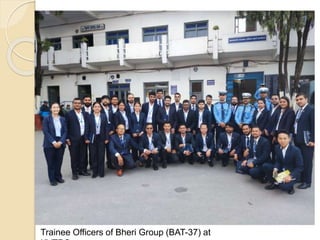
Trainee Officers of Bheri Group (BAT-37) at
Introduction:
 We visited the Kathmandu Valley Traffic
Police Office on 17th Kartik, 2080,
 For the purpose of getting insights about the
Use of ICT in KVTPO,
 Our study was based on ICT and Report
Writing,
 KVTPO was established as Ramdal in 2007
BS,
 It was renamed as Kathmandu Valley Traffic
Police Office in 2078 BS,
 It is actively implementing the ICT and has
been succeeding on its goals.
Objectives:
◦ To know about:
 The use of various ICT tools in
KVTPO,
 The impact of ICT tools in Service
Management,
 The relationship between ICT and
human resources,
 How use of ICT has simplified the
working process of the system.
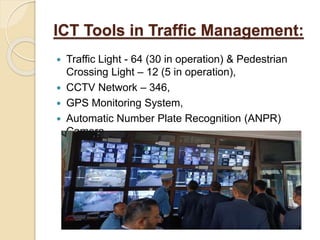
ICT Tools in Traffic Management:
 Traffic Light - 64 (30 in operation) & Pedestrian
Crossing Light – 12 (5 in operation),
 CCTV Network – 346,
 GPS Monitoring System,
 Automatic Number Plate Recognition (ANPR)
Camera,
Continued…
 Traffic Communication App,
 UHF Radio Network,
 Metro FM – 95.5 MHz,
 Telephone Network – 103,
 RADAR & LIDAR Gun,
 Breathalyzer,
Continued…
Drone & Body Worn Camera,
Surveillance Van,
Social Media,
Traffic Violation Record System,
Online Traffic Fine Payment
System & KIOSK Machine,
Online Application System.
Database Storage and Server:
GIDC (Government Integrated Data
Center, Singha Durbar),
Nepal Police Headquarter.
Database Recovery:
Database Recovery Centre in
Hetauda,
Data Back-Up System.
Practices for Enhancement of
IT skills
Beginner level trainings to Non-
IT staffs,
Advance trainings to IT staffs.
The international practices
were studied and researched
(installation and update).
Role of IT Department
 Overall system administration,
 Monitoring CCTVs and GPS
equipment,
 Generating new software and
upgrading existing software,
 Maintaining data security and
privacy,
 Maintaining online record of
revenue,
Role on Traffic Management and
ICT Formulation Policy:
 Provides suggestions for the
formulation of ICT policies,
 Through the use of ICT and its
effective management, it aims at
strengthening its traffic
management system.
Continued…
 ICT related Policies of the Organization:
Information and Communication
Technology Policy, 2072,
Motor Vehicle and Transport
Management Act, 2049:
In section 115, the provision of
controlling speed, RADAR & LIDAR
system.
In section 119, the provision of using
traffic symbol (Parking, Speed Limit,
One-Way)
In section 142, the provision of
controlling Smoking and Drinking
Continued…
CCTV Installation and Operation
Procedural, 2072,
Nagarik App Guidelines, 2078:
Fine Payment System,
License Record System, etc.
Continued…
 ICT System Security:
◦ Digital Forensic Lab,
◦ Data Back-Up System,
◦ Firewall System.
Findings:
 Traffic Violation Record Management
System: To keep integrated record of
traffic violation,
 Awareness programs: To aware about
traffic rules to stakeholders (e. g. Video
class, social media),
 Strong data backup system,
 Provision of traffic management policies,
 Civic engagement for road traffic
management: e.g. Scout, civil society,
students,
Way Forward:
 Real time based application system,
 Up to date websites,
 Intelligent Traffic System (ITS),
 Increasing fine and penal system,
 Ensuring smooth operation of revenue
management system,
 Penalty system to be changed from manual
to electronic,
 Improve Reliability of Public Transport
System by the use of GPS & other ICT
tools,
Continued…
 Managing traffic flow through
combination of Hardware
(Transportation, Road construction,
Electricity) & Software updating method,
 Effective Co-ordination among line
agencies,
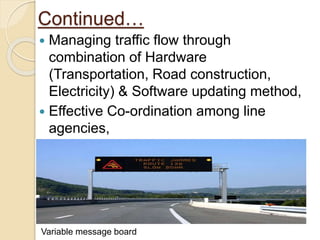
 Variable message boards.
Variable message board
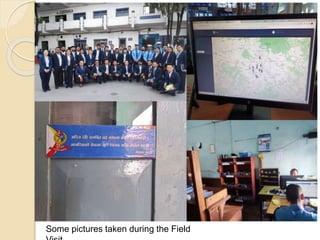
Some pictures taken during the Field
Queries ???
Thank You !!


Final presentation.pptx

  • 1.
    A Field VisitReport on Use of ICT in Kathmandu Valley Traffic Police Office, Ramshahpath, Kathmandu Presented by: BAT-37, Bheri Group, 22 Kartik, 2080 Nepal Administrative Staff College
  • 2.
    Trainee Officers ofBheri Group (BAT-37) at
  • 3.
    Introduction:  We visitedthe Kathmandu Valley Traffic Police Office on 17th Kartik, 2080,  For the purpose of getting insights about the Use of ICT in KVTPO,  Our study was based on ICT and Report Writing,  KVTPO was established as Ramdal in 2007 BS,  It was renamed as Kathmandu Valley Traffic Police Office in 2078 BS,  It is actively implementing the ICT and has been succeeding on its goals.
  • 4.
    Objectives: ◦ To knowabout:  The use of various ICT tools in KVTPO,  The impact of ICT tools in Service Management,  The relationship between ICT and human resources,  How use of ICT has simplified the working process of the system.
  • 5.
    ICT Tools inTraffic Management:  Traffic Light - 64 (30 in operation) & Pedestrian Crossing Light – 12 (5 in operation),  CCTV Network – 346,  GPS Monitoring System,  Automatic Number Plate Recognition (ANPR) Camera,
  • 6.
    Continued…  Traffic CommunicationApp,  UHF Radio Network,  Metro FM – 95.5 MHz,  Telephone Network – 103,  RADAR & LIDAR Gun,  Breathalyzer,
  • 7.
    Continued… Drone & BodyWorn Camera, Surveillance Van, Social Media, Traffic Violation Record System, Online Traffic Fine Payment System & KIOSK Machine, Online Application System.
  • 8.
    Database Storage andServer: GIDC (Government Integrated Data Center, Singha Durbar), Nepal Police Headquarter. Database Recovery: Database Recovery Centre in Hetauda, Data Back-Up System.
  • 9.
    Practices for Enhancementof IT skills Beginner level trainings to Non- IT staffs, Advance trainings to IT staffs. The international practices were studied and researched (installation and update).
  • 10.
    Role of ITDepartment  Overall system administration,  Monitoring CCTVs and GPS equipment,  Generating new software and upgrading existing software,  Maintaining data security and privacy,  Maintaining online record of revenue,
  • 11.
    Role on TrafficManagement and ICT Formulation Policy:  Provides suggestions for the formulation of ICT policies,  Through the use of ICT and its effective management, it aims at strengthening its traffic management system.
  • 12.
    Continued…  ICT relatedPolicies of the Organization: Information and Communication Technology Policy, 2072, Motor Vehicle and Transport Management Act, 2049: In section 115, the provision of controlling speed, RADAR & LIDAR system. In section 119, the provision of using traffic symbol (Parking, Speed Limit, One-Way) In section 142, the provision of controlling Smoking and Drinking
  • 13.
    Continued… CCTV Installation andOperation Procedural, 2072, Nagarik App Guidelines, 2078: Fine Payment System, License Record System, etc.
  • 14.
    Continued…  ICT SystemSecurity: ◦ Digital Forensic Lab, ◦ Data Back-Up System, ◦ Firewall System.
  • 15.
    Findings:  Traffic ViolationRecord Management System: To keep integrated record of traffic violation,  Awareness programs: To aware about traffic rules to stakeholders (e. g. Video class, social media),  Strong data backup system,  Provision of traffic management policies,  Civic engagement for road traffic management: e.g. Scout, civil society, students,
  • 16.
    Way Forward:  Realtime based application system,  Up to date websites,  Intelligent Traffic System (ITS),  Increasing fine and penal system,  Ensuring smooth operation of revenue management system,  Penalty system to be changed from manual to electronic,  Improve Reliability of Public Transport System by the use of GPS & other ICT tools,
  • 17.
    Continued…  Managing trafficflow through combination of Hardware (Transportation, Road construction, Electricity) & Software updating method,  Effective Co-ordination among line agencies,  Variable message boards. Variable message board
  • 18.
    Some pictures takenduring the Field
  • 19.
  • 20.