


Graphic Design Final MA Project
Process Book
ProfessorTrudy Abadie | FinalMAProject
April Biss
Observe. Think. Make.
Problem.
Part 1
Target Audience Exploration & Problem
Examined and Defined
Before I created a questionnaire for the client, I had a
conversation over the phone in regards to the project
details and we were able to discuss the general “wish
list”ofdesignservicesneededtocompletetheproject.
I then created a list of questions pertaining to the
original identity and overall key questions concerning
the essence of the business.
01. How would you describe your business and what it does?
My business designs sustainable home plans using non conventional methods and materials. The main structural element of gdg’s homes
are shipping containers. The goal is to design traditional style and contemporary homes to compete with today’s home builders, but to do
so with affordable and sustainable means such as the aformentioned shipping containers and complementing them with reclaimed and
sustainable materials that will make each home unique.
02. Who is the target audience or intended market?
My target audience would be anyone in the home building industry that I can make an impression upon or gdg’s presence known to.
Also any consumer that is looking to build a modest, sustainable and affordable custom home.
03. Who are your main competitors?
My competitors would be all “mass producing” “cookie cutter” home builders and some smaller scale custom home builders.
04. What makes you different from your competitors?
My goal is to offer a more structurally sound and more affordable sustainable home. The structural elements of gdg’s homes
(shipping containers) are fire proof, mold proof, termite proof and virtually indestructable.
05. How long have you been in business?
I formed the LLC 3 years ago.
06. How many employees do you have?
3 - me, you and Bill! I’m hoping to grow and add a designer once our presence is established.
07. Where is your business primarily run from?
My home in my spare time.
08. How would you sum up your business in 6 words or less?
Cutting edge, revolutionary
09. What keywords best reflect your business?
Resourceful, unique, cutting edge, potential, sustainable, affordable
10. Do you currently have a logo, if so, how long have you had it?
Yes, 6 months. I just rebranded from Sun Greeter Homes LLC to grieder design group.
11. If you do have an existing logo, why are you changing it now?
I wanted something cleaner and more refined. I also wanted a name that I can expand the business under if it grows. I am starting with
residential design but would not rule out using our construction methods in retail, commercial or where ever it can be applied.
current position:
project manager: herschman architects
president/owner: GDG, LLC
12. What type of logo do you require?
Something clean and simple possibly with an industrial flair. I thought about using the corrugations of the container so it
appears that the logo was painted onto the side of a container.
13. What is the exact wording for your logo?
The lower case “g” is the main element with the name, address and phone number below or in a circle around the “g”
14. Is there a tagline to accompany the logo?
“Making sustainable affordable”
15. Do you have existing brand colours?
The black and white for now but I am not against an accent color.
16. Where do you intend to use the logo?
Website, letter head, envelopes, e-mail signatures, title sheets for drawings (can you convert the logo to CAD?)
possibly vinyl graphics for vehicles, shirts and hats.
17. Is there a primary use for the logo?
Not at the moment, I’m hoping that it becomes a staple icon in the construction industry.
18. What logos do you find appealing and why?
Simplelogoslike the Face Book“f”and the Twitter bird, theMcDonald’sarch. Logospeoplecanrecognizewithouthaving
toreadabusiness name.
19. What logos do you find unappealing and why?
Logo’s with company names you have to read and anything that has a leaf or water droplet in it. I think those logos that are
trying to promote sustainability are over saturated.
20. What does the logo need to say about your business?
I want it to be a recognizable icon for the business so when people see the “g” they know its grieder design group’s logo.
21. What images/icons/symbols do you think best represents your business?
Shipping containers, the corrugated sides of the container, homes, neighborhoods, community, families.
22. Would you like further design services, incorporating your new logo?
Yes
Client Questionnaire Continued
Problem.
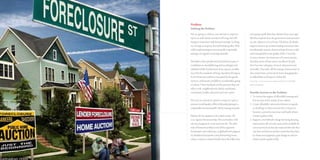
Defining the Problem:
We are going to address and attempt to improve
upon an individuals standard of living and well-
being in connection with homeownership. In doing
so, we hope to improve the individuals quality of life
while implementing environmentally responsible
strategies in regards to reusing materials.
We believe when people live beyond their means, it
contributes to stressfull living and an unhappy and
unbalanced life. Furthermore, these aspects are influ-
enced by the standards of living. Standard of living isa
level of material comfort as measured by the goods,
services, and luxuries available to an individual, group,
or nation. These standards act like pressures that can
affect work, neighborhoods, family and friends,
community, health, education and one’s spirit.
We want to extend an option to improve upon a
person’soverallqualityoflife,whileparticipatingina
responsibleenvironmentallyrolebyreusingmaterials.
Barbara Kiviat explains in the online article, The
Case Against Homeownership, “But our leaders, with
our encouragement, went much too far. The dark
side of homeownership is now all too apparent:
foreclosures and walkaways, neighborhoods plagued
by abandoned properties and plummeting home
values, a nation in which families have $6 trillion less
in housing wealth than they did just three years ago.”
She then explains how the government puts pressure
on our culture to own a home. Therefore, the banks
began to loosen up on their lending restrictions that
hasultimatelycreatedadownwardspiralinourworld
andconsequentlyinourquality of life. Currently
to own a home, one must earn a lot more money,
therefore more of their time is sacrificed. People
then become unhappy, stressed, depressed and
miserable. The trade-offs becoming a homeowner in
this current time can be much more damaging due
to inflexibility in all aspects of their life.
(source: http://www.time.com/time/magazine/article/0,9171,2013850,00.
html#ixzz204o9TvtC)
Possible Answers to the Problem:
1. 	To reverse the stigma of affordable housing and 		
	 low-income in the minds of our culture.
2.	 Create affordable 	universal solutions in regards 		
	 to dwellings, so that everyone has a chance to 		
	 become a proud homeowner and finally obtain
	 a better quality of life.
3.	 Support a new lifestyle change by having housing 		
	 options that will not only assist and be available for 	
	 every income level, but also transcend the idea that 	
	 one does not have to sacrifice more than they have 		
	 to obtain true happiness, great design in order to
	 obtain a better quality of life.
tomarketandbringawarenesstoanewwayofliving
withanemphasisonimprovinguponanindividuals
standardsofliving.ThegoalistoimplementGDG’s
uniquesustainablehomeplansusingnon-conventional
methodsandmaterialsinanaffordablewaythatwill
consequentlymakehomeownershipmoreaccessible
andeasierforeveryonewithoutsacrificinggooddesign.
A newly designed website will be used as a major
marketing tool as well as a place to purchase plans.
Outcomes.
Anew identitywillbeestablishedforGDG’sproduct
aswellasawebsitethatwillactasamarketingtoolfor
consumers,builders,manufacturersanddesigners.A
deliverableofsortswillalsobeproduced.
Deliverables.
–	 Service/Name of Product identity will be 		
	 developed and designed for this system
–	Website
–	Deliverable
Production Time.
Deadline – August 19, 2012 (5-6 weeks total)
Budget.
$300-$500 estimation
Objective.
GDG’s overall goal is to design alternative affordable
spaces to compete with today’s home builders, but to
do so with affordable and sustainable means by using
reclaimed and sustainable materials that will make
each space unique. The main focus will be a first solu-
tion to obtaining a space to call home without taking
more than you actually need in regards to materials.
This minimilistic approach will appeal towards
alternative solutions for newly weds and families
who are recovering from the economic down turn by
designing a space that anyone can afford without the
stigma of low-income or affording living and having
to sacrifice aesthetics.
Part of this objective is to create an identity to adhere
with the target audience and overall objective, while
making a positive name in the industry by creating
sustainable and affordable solutions that are universal.
Thelogo/type/markwillbecleanandsimpleand
willembodyasenseof “moderntraditional,”in
regardstostyle.Thegoalistocreateanidentitythat
becomessuccessfullyrecognizablewithinthemarket
demographicsandtargetaudience.Theidentitymust
beversatileandadaptableinordertoembracefuture
growthandexpansionpossibilities.Theidentity
mustreflectthefollowingqualities;resourcefulness,
uniqueness,innovativeness,usefulness,sustainablil-
ity,cost-effectiveness,andoriginality.Theintentionis
Research.
Part 2
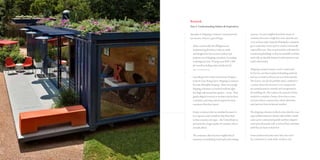
“Reusing the old containers
is an inexpensive, efficient,
and environmentally friendly
way to build homes that can be
used by low-income residents
or as temporary housing
following a natural disaster.”
– AmericaProgress.org
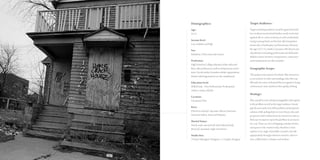
Demographics:
Age: 	
22-55
Income level: 	
Low, medium and high
Sex: 	
Suburban/Urban men and women
Profession: 	
HighSchooltoCollegeeducated,whitecollarand
bluecollarprofessionaswellasentrepreneursandre-
tiree’s.Socialworkers,homelessshelterorganizations,
disasterrelieforganizationsarealsoemphasized.
Education level:
Skilled trade - Non-Professionals. Professionals
within a variety of fields.
Location: 	
Cleveland, Ohio
Race: 	
Diverse to include Caucasian, African American,
American Indian, Asian and Hispanic
Marital Status:	
Newly weds, married with and without family,
divorced, separated, single and retirees.
Studio Size: 	
2 Project Managers/Designers + 1 Graphic Designer
Target Audience:
Target marketing audience would be geared towards
low-medium income level families, newly weds start-
ing their life in a slow economy, as well as individuals
trying to just get back on their feet after losing their
homes due to bankruptcy and foreclosure. Between
the ages of 22-55, mainly Caucasian with diverse area
of professions including professional and skill trades.
Builders, future investors, entrepreneurs, contractors
and manufacturers are also included.
Geographic Scope:
ThisprojectisfocusedinCleveland,Ohio,howeverit
isnotexclusivetoothersurroundingscitiesthatmay
fallunderthesamewickedprobleminregardstobeing
ahomeownerandadeclineintheirqualityofliving.
Strategy:
Placemyselfineverysituationimaginablewithregards
to the problem as well as the target audience. Investi-
gate the pro’s and con’s of the problem and proposed
solution while poking holes in every theory, idea and
perspective that I obtain from my research in order to
find ways to improve upon this problem in an innova-
tive way. There are a lot of shipping container homes
and spaces in the market today, therefore I must
explore every angle of possible concepts and edit
appropriately through extensive research, observa-
tion, collaboration, critiques and analysis.
Research.
Part 2: Understanding Subject & Inspiration
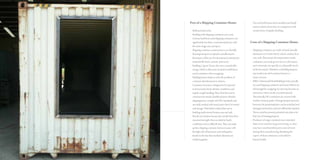
Specialize in Shipping Container Construction for
low income (why it’s a good thing):
–	 Many countries like the Philippines are
	 implementing dormitory’s that are made
	 and designed for low-income workers and 	
	 students out of shipping containers. According 	
	 to Springwise.com, “Pricing is just PHP 1,500 	
	 per month including water and electricity.”
	 (http://www.springwise.com)
–	 According to the Center of American Progress,
	 in the It’s Easy Being Green: Shipping Containers 	
	 Provide Affordable Housing, “There are enough 	
	 shipping containers on earth to build an eight-
	 foot high wall around the equator—twice. Most 	
	 goods shipped overseas or by train travel in these
	 containers, and many nations import far more
	 containers than they export.
	 Empty containers then accumulate because it is
	 too expensive and wasteful to ship them back 	
	 to their countries of origin—the United States in 	
	 particular has a large surplus of containers due to 	
	 its trade deficit.
	 The containers often become neighborhood 	
	 nuisances,accumulatingintallstacksandcreating
eyesores. In some neighborhoods the stacks of 	
containers become so high they even cause the sun
to set an hour earlier. Instead of letting the containers
go to waste, they can be used in creative and socially
responsible ways. They are particularly well suited for
constructing buildings, as they are stackable and their
steel walls are durable, fireproof, and resistant to rust,
mold, and termites.
Shipping container homes can be constructed
for far less cost than traditional building methods
and use as much as 80 percent recycled materials.
The homes can also be prefabricated, a method or
a system where the structure or its components
are manufactured at a facility and transported to
the building site. This reduces the amount of time
needed to complete a house, drives down costs,
and uses indoor construction, which eliminates
interruptions from inclement weather.
The shipping container method is also ideal for creat-
ing portable temporary disaster relief shelters. Small
units can be constructed quickly and then shipped
out to provide people with a roof and basic amenities
until they are back on their feet.
Some architectural innovators have also used
the containers to create sleek, modern, and
architecturally stunning homes, apartments, and
office buildings. California architect Peter DeMaria
built the first two-story shipping container home
in the United States in 2006 using recycled steel
containers and a combination of conventional stick
frame construction and prefabricated assemblies.
The result was a Redondo, CA Beach Home that
won the 2007 American Institute of Architects
Award for Design Excellence/Special Innovation.
The design resembles the geometric focus, simplic-
ity, and openness of Frank Lloyd Wright.
The shipping container trend is young and
gaining fast momentum. A combination of
a slumping housing market and the need for
temporary housing following disasters as well as
low-cost construction has caused homes, offices,
apartments, and hotels made from the recycled
containers to spring up around the world.
Projects such as Aquentium’s hold tremendous
promise to provide a place to live for those struck
by hurricanes and floods, and the container homes
could also play a role in creating green affordable
housing for low-income residents, which could help
prevent homelessness and reduce the environmental
impact from construction. In the future, don’t be
surprised if you see more container homes popping
up wherever they’re needed.
(http://www.americanprogress.org/issues/2009/04/ebg_040109.html)
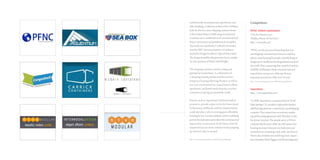
Competitors
PFNC Global communities
(“PorFinNuestraCasa”–
“Finally,aHomeofOurOwn.”)
http://www.pfnc.net/
“PFNC is in the process of launching their one-
unit shipping container home business, and they
plan to create housing for people currently living in
dangerous or insufficient housing situations around
the world. They can put together a unit for less than
$10,000, and Business Week even took note and
named their concept one of the top 20 most
important innovations of the next 10 years.”
(http://www.americanprogress.org/issues/2009/04/ebg_040109.html)
Aquentium
http://www.aquentium.com
“In 2006, Aquentium, a company based in North
Palm Springs, CA, unveiled a deployable disaster-
relief housing structure created from a used shipping
container. They entered into an exclusive market-
ing and licensing agreement with Theodore Ciotti,
the homes’ inventor. The sample unit is a 20-foot
container that became a fold-out, 450-square-foot
housing structure. It features two bedrooms and
one bathroom containing a sink, toilet, and shower.
There’s also a kitchen area and living room. Aquen-
tium President Mark Taggatz said the housing units
can be used “for any disaster—tsunamis, hurricanes,
floods, fires” and that the company also plans to be
competitive in the low-income housing market.”
(http://www.americanprogress.org/issues/2009/04/ebg_040109.html)
Sea Box
http://www.seabox.com/
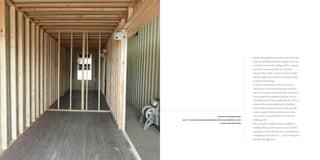
According to Sea Box, “By utilizing ISO shipping
containers to build shelters, units can be transported
quickly and efficiently, by land, sea or rail, to your
required destination. Housing Unit Interior Once on-
site, these shelters can be rapidly fitted out using un-
skilled labor and connected to local power supplies.
In addition to being easily handled and transported,
they offer high insulation values and require minimal
modification to the container.”
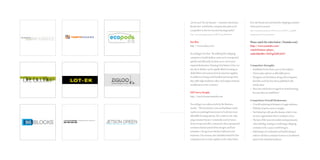
DIY Savvy People
http://articles.businessinsider.com
“According to an online article by the Business
Insider, “The foreclosure crisis and lackluster rental
market are pushing homeowners to look into more
affordable housing options. The coolest so far: ship-
ping container homes. Commonly used to house
Army troops and other contractors, these repurposed
containers feature pared-down designs and basic
amenities: a living room, kitchen, bathroom and
bedroom. One woman, who identifies herself to Fair-
companies.com as Lulu, explains in the video below
how she found and renovated her shipping container
home post-recession.”
(http://articles.businessinsider.com/2012-03-21/news/31218677_1_affordable-
housing-options-lulu-21st-century-homes}
Please watch the video below: (Youtube.com)
http://www.youtube.com/
watch?feature=player_
embedded&v=DsVxgOjNLbA#!
Competitor Strengths:
•	 Established more than a year in the industry
•	 Various plan options at affordable prices
•	 Designers and Architects along with companies 	
	 that they work for have been published with
	 similar ideas
•	 Have less risk factors in regards to manufacturing 	
	 because they are established
Competitors Overall Weaknesses:
•	 Overall marketing techniques to target audience
•	 Website is hard to read or navigate
•	 Not linked up with specific disaster relief or low-	
	 income organizations that I can find as of yet
•	 Thelackofthesenseofcomfortandspaciousness 	
	 when labeling, naming or marketing a shipping 	
	 container to be a space worth living in.
•	 Marketing is too industrial and hard looking in 	
	 order to sell these container homes as a traditional 	
	 space to the intended audience.
•	 Competitors attempts to persuade an audience 	
	 with industrial aesthetics – the industrial 	
	 aesthetic approach doesn’t appeal to everyone 	
	 when marketed in this way.
GDG’s Overall Opportunities:
• 	 Target DIY individuals on how to easily create a 	
	 living space using shipping containers through 	
	 easy to read instructions or plans
• 	 Link system with an actual organization that deals 	
	 with disaster relief and/or low-income options to 	
	 create an efficient way to access the containers
• 	 Has experience in project management and
	 connections with current possible investors
•	 Focus on the intended audience and market
	 these spaces in the opposite way the competitors 	
	 have done currently – do so in a more softer and 	
	 traditional approach.
•	 To create an awareness of a new way of living, a 	
	 new lifestyle that can improve one’s quality of life.
•	 Market towards traditional home owners in a way 	
	 that hasn’t been done before
•	 Opportunity to change the way people view 	
	 “affordable living and low-income individuals
	 and overall living solutions
GDG’s Overall Threats:
• 	 Oversaturated market
• 	 Budget constraints
•	 Building codes
• 	 Not differentiated enough to stand out
•	 Not having a model or prototype to expand and 	
	 set more accurate specifications
•	 Not enough money to market with various
	 deliverables to get the word out
•	 Time
•	 Connotations that may come from the whole idea 	
	 of living in a shipping container
GDG’s Weaknesses:
–	 Small business which could have a connotation 	
	 of being amateur
–	 Not widely recognized
–	 Marketing and advertising primarily
	 based on personal networks
–	 Specifications of plans not yet created
–	 Shipping container housing is not a unique idea 	
	 and has been around for a long time
– 	Many various ideas and plans offered by
	 designers that relate to shipping containers 	
	 saturate the market already.
–	 Small budget and time constraints
–	 Possible issues with design codes
GDG’s Strengths:
–	 Small business ≠ no overhead costs
–	 Owner works within this industry and has an 	
	 extensive amount of connections in the 		
	 construction and manufacturing fields.
–	 Collaboration with other “forward thinking” 	
	 designers and architects
Differentiation:	
How GDG’s product will differentiate
itself from it’s competitor’s?
We will revitalize urban districts instead of just
placing them in a development out in the suburbs.
The majority of the consumers complaints has to
do with the psychological aspects of “living in a
shipping container” home, therefore will change the
perception of using this method of construction for
private residence through marketing and design.
Keeping the overall design of the shipping container
smaller than competitor designs, will help to align
itself with the majority of the population and will
keep the product affordable and accessible to the
consumer. “Good” design will be universal.
Instead of only offering on style and/or aesthetic,
we provide various design options that offer both
traditional and contemporary design aesthetics.
We believe that everyone should be able to
afford “good” design, making it obtainable and
therefore universal to all. In doing so, we won’t
just be building sustainable and affordable housing
options like all the rest, however we will be
establishing a design and environmentally
conscious culture within a community.
Pros of a Shipping Container Home:
– 	Bold and innovative
– 	Building with shipping containers save costs.
	 A house built from used shipping containers cost 	
	 significantly less than a conventional house with 	
	 the same usage area and space.
–	 Shipping container construction is eco-friendly. 	
	 Reusing transport receptacles actually lessens 	
	 the impact of the use of conventional construction 	
	 materials like brick, cement, and wood.
– 	Building a “green” home also saves considerable 	
	 energy which is otherwise needed to meld down 	
	 metal containers when scrapping.
– 	Building houses helps to solve the problem of 	
	 container abandonment in nations.
– 	Container structure is designed to be exposed
	 to heavy loads, harsh climatic conditions, and 	
	 regular rough handling. Thus, their later use in 	
	 construction ensures durable projects. Besides, 	
	 shipping boxes comply with ISO standards, and 	
	 are easily stacked with many layers (tiers) in transit 	
	 and storage. That feature makes their use in
	 building multi-storied houses easy and safe.
– 	Benefit of container houses also results from their
	 structural strength: they are ideal for harsh
	 conditions and on difficult sites. They can make 	
	 perfect shipping container homes in areas with
	 the high risk of hurricanes and earthquakes
	 thanks to the fact that modular elements are 	
	 welded together.
– 	You can build houses from modular and sturdy 	
	 units in relative short time, in comparison with 	
	 construction of regular dwellings.
Cons of a Shipping Container Home:
–	 Shipping containers are made of metal (usually 	
	 aluminum or Corten Steel), which conduct heat 	
	 very well. That means the temperature inside 	
	 containers can easily go too low in cold season, 	
	 and conversely, rise quickly to unbearable levels 	
	 inthehotseason.Therefore,controllingtempera-	
	 tureinsideyoursteelcontainerhouseisa
	 majorconcern.
–	 ISBUs (Intermodal Steel Building Units) actually 	
	 are used shipping containers and most of them are 	
	 old enough for scrapping. So rust may become an
	 annoyance when use the recycled material.
	 Theoretically, ISO containers are covered with 	
	 weather resistant paints. During transport process, 	
	 however, the protecting layer can be scratched and 	
	 damaged somewhere and not sufficiently repaired. 	
	 Those scratches present potential rusty places for 	
	 later use in housing purpose.
–	 Producers of cargo containers never intended 	
	 them to be used for long-term living, so they 	
	 may have used harmful paints and solvents
	 during their manufacturing. Breathing the
	 vapors of those substances is harmful to
	 human health.
–	 Besides, shipping boxes in transit carry many types 	
	 of goods, including dangerous cargoes, even toxic 	
	 or radioactive materials. Spillage of those cargoes 	
	 may leave contaminants that are not easily 	
	 detected. That will be a risk if you don’t carefully 	
	 and thoroughly strip and clean used boxes before 	
	 using them for housing.
–	 In many residential areas, there are rules (e.g. 	
	 zoning rules) which restrict the types of homes 	
	 that can be constructed. Steel homes, particularly 	
	 those created from shipping containers, are not 	
	 commonly built in these neighborhoods. This can 	
	 cause problems when applying for a building 	
	 permit within residential zoning. Thus, you will 	
	 need to consult with local authorities to make
	 sure your new container home meets all local 	
	 building codes.
–	 There must be enough free space available for 	
	 handling during construction, because modular 	
	 containers (with needed necessary modifications 	
	 of appearance, structure, etc…) need moving and 	
	 placing in the right place.
source of information:
http://www.container-transportation.com/shipping-con-
tainer-housing.html
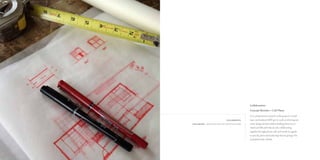
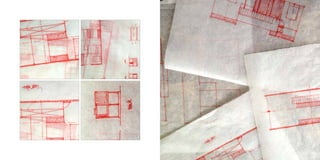
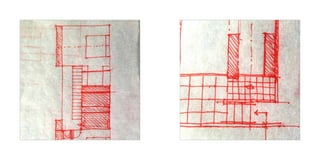
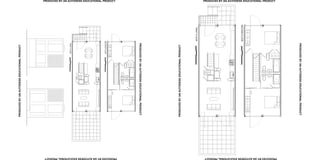
Collaboration
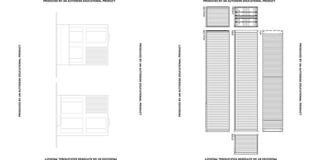
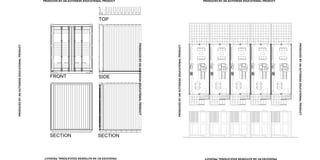
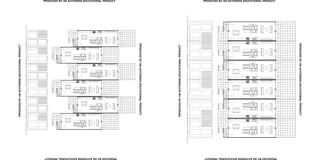
Concept Sketches + CAD Plans
As I continued my research on the project’s overall
topic, my husband (Bill) got to work on drawing out
some design sketches before drafting them out in
AutoCad. Bill and Dale are also collaborating
together through phone calls and emails in regards
to specific plans and renderings that are going to be
included on the website.
collaboratee:
william biss – design educator ; art institute of tampa
Analyze.
Part 4: Feedback (Unit 2)
AfterresearchingcompetitorsofGDG,Irealizedthat
Ihavetwoidentity’sthatIamgoingtoberevamping.
Thisisimpossiblefortheamountoftimeneededand
Ihavetoredirecttheprojectinordertofocusonone
identityanditsdeliverablestosuccessfullycomplete
theprojectontime.
Therefore,afterspeakingwiththeclientandmyprofes-
sorontheiropiniononwhatroadtotake,Ihavecome
tothedecisionthatitwouldbebettertoredirectthe
focusonbrandingthecontainersystemitselfandthen
continuingontocreatingawebsiteanddeliverablesfor
thebrand.GDGwillbelinkedtothebrand,however
itwon’tbetheprimaryfocusoftheproject.Thebrand
identitywillhaveanameandaestheticthatwillmarket
theshippingcontainersystemitselfaswellasitsown
domainnameandwebsite.
Pleaseseethelistofreviseddeliverablesbelow.
Deliverables.
–	 Service/Name of Product identity will be 		
	 developed and designed for this system (brand)
–	 Website Created for new brand
–	 Possible launch deliverable
Brainstorm.
Part 3
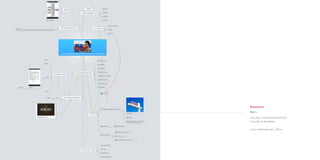
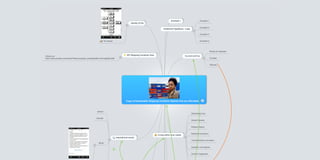
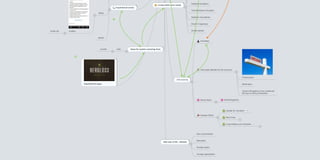
Lists, Maps, Team Brainstorm, What if?,
Crazy Ideas & Thumbnails
source: mindmeister app – iPhone
Copy of Sustainable Shipping Container Spaces that are affordable
Traditional Typefaces - Logo
Example 1
Example 4
Example 3
Example 2
Inspirational logos
Ideas for system name/tag linesuniteyounite
Living within your needs
Rebuilding lives
Simple Spaces
Modest Means
Modest Innovations
Transformative Innovation
Systemic Innovations
Dwell in happiness
simple senses
Inspirational words
enliven
Elevate
Mods
modestsimpli-city
abode
Sustainability
Reuse of materials
Durable
Efficient
Example 1
Quality of life
To include:
DIY Shipping Container User
Check out 
http://www.youtube.com/watch?feature=player_embedded&v=DsVxgOjNLbA#!
New way of life - lifestyle
Non-consumeristic
Minimalist
Socially aware
Younger generations
Affordability
Homeless
Individuals affected by the economy
Foreclosures
Bankruptcy
Anyone Struggling to live a balanced
life due to money constraints
Newly Weds
 Bridal Registries
Disaster Relief
Habitat for Humanity
Red Cross
Local shelters and ministries
Copy of Sustainable Shipping Container Spaces that are affordable
Traditional Typefaces - Logo
Example 1
Example 4
Example 3
Example 2
Living within your needs
Rebuilding lives
Simple Spaces
Modest Means
Modest Innovations
Transformative Innovation
Systemic Innovations
Dwell in happiness
Inspirational words
enliven
Elevate
Mods
Sustainability
Reuse of materials
Durable
Efficient
Example 1
Quality of life
To include:
DIY Shipping Container User
Check out 
http://www.youtube.com/watch?feature=player_embedded&v=DsVxgOjNLbA#!
Inspirational logos
Ideas for system name/tag linesuniteyounite
Living within your needs
Modest Innovations
Transformative Innovation
Systemic Innovations
Dwell in happiness
simple senses
Inspirational words
Mods
modestsimpli-city
abode
New way of life - lifestyle
Non-consumeristic
Minimalist
Socially aware
Younger generations
Affordability
Homeless
Individuals affected by the economy
Foreclosures
Bankruptcy
Anyone Struggling to live a balanced
life due to money constraints
Newly Weds
 Bridal Registries
Disaster Relief
Habitat for Humanity
Red Cross
Local shelters and ministries
Defer Judgment
A no boundry approach to fear of judgement and to
restrictive outside influences that block the mind of
creative and innovative thinking, I start to unlock my
mind and let the ideas flow freely.
Brainstorming in Teams.
Part 2
Meeting with Dale, Bill and myself about the overall
objective of the project.
Group
Phone Meeting
7/7/2012
Click here to listen to
part of our meeting

MODAL3 Brand Identity + New Business Campaign Launch

  • 1.
    Graphic Design FinalMA Project Process Book ProfessorTrudy Abadie | FinalMAProject April Biss Observe. Think. Make.
  • 2.
    Problem. Part 1 Target AudienceExploration & Problem Examined and Defined Before I created a questionnaire for the client, I had a conversation over the phone in regards to the project details and we were able to discuss the general “wish list”ofdesignservicesneededtocompletetheproject. I then created a list of questions pertaining to the original identity and overall key questions concerning the essence of the business. 01. How would you describe your business and what it does? My business designs sustainable home plans using non conventional methods and materials. The main structural element of gdg’s homes are shipping containers. The goal is to design traditional style and contemporary homes to compete with today’s home builders, but to do so with affordable and sustainable means such as the aformentioned shipping containers and complementing them with reclaimed and sustainable materials that will make each home unique. 02. Who is the target audience or intended market? My target audience would be anyone in the home building industry that I can make an impression upon or gdg’s presence known to. Also any consumer that is looking to build a modest, sustainable and affordable custom home. 03. Who are your main competitors? My competitors would be all “mass producing” “cookie cutter” home builders and some smaller scale custom home builders. 04. What makes you different from your competitors? My goal is to offer a more structurally sound and more affordable sustainable home. The structural elements of gdg’s homes (shipping containers) are fire proof, mold proof, termite proof and virtually indestructable. 05. How long have you been in business? I formed the LLC 3 years ago. 06. How many employees do you have? 3 - me, you and Bill! I’m hoping to grow and add a designer once our presence is established. 07. Where is your business primarily run from? My home in my spare time. 08. How would you sum up your business in 6 words or less? Cutting edge, revolutionary 09. What keywords best reflect your business? Resourceful, unique, cutting edge, potential, sustainable, affordable 10. Do you currently have a logo, if so, how long have you had it? Yes, 6 months. I just rebranded from Sun Greeter Homes LLC to grieder design group. 11. If you do have an existing logo, why are you changing it now? I wanted something cleaner and more refined. I also wanted a name that I can expand the business under if it grows. I am starting with residential design but would not rule out using our construction methods in retail, commercial or where ever it can be applied. current position: project manager: herschman architects president/owner: GDG, LLC
  • 3.
    12. What typeof logo do you require? Something clean and simple possibly with an industrial flair. I thought about using the corrugations of the container so it appears that the logo was painted onto the side of a container. 13. What is the exact wording for your logo? The lower case “g” is the main element with the name, address and phone number below or in a circle around the “g” 14. Is there a tagline to accompany the logo? “Making sustainable affordable” 15. Do you have existing brand colours? The black and white for now but I am not against an accent color. 16. Where do you intend to use the logo? Website, letter head, envelopes, e-mail signatures, title sheets for drawings (can you convert the logo to CAD?) possibly vinyl graphics for vehicles, shirts and hats. 17. Is there a primary use for the logo? Not at the moment, I’m hoping that it becomes a staple icon in the construction industry. 18. What logos do you find appealing and why? Simplelogoslike the Face Book“f”and the Twitter bird, theMcDonald’sarch. Logospeoplecanrecognizewithouthaving toreadabusiness name. 19. What logos do you find unappealing and why? Logo’s with company names you have to read and anything that has a leaf or water droplet in it. I think those logos that are trying to promote sustainability are over saturated. 20. What does the logo need to say about your business? I want it to be a recognizable icon for the business so when people see the “g” they know its grieder design group’s logo. 21. What images/icons/symbols do you think best represents your business? Shipping containers, the corrugated sides of the container, homes, neighborhoods, community, families. 22. Would you like further design services, incorporating your new logo? Yes Client Questionnaire Continued
  • 4.
    Problem. Defining the Problem: Weare going to address and attempt to improve upon an individuals standard of living and well- being in connection with homeownership. In doing so, we hope to improve the individuals quality of life while implementing environmentally responsible strategies in regards to reusing materials. We believe when people live beyond their means, it contributes to stressfull living and an unhappy and unbalanced life. Furthermore, these aspects are influ- enced by the standards of living. Standard of living isa level of material comfort as measured by the goods, services, and luxuries available to an individual, group, or nation. These standards act like pressures that can affect work, neighborhoods, family and friends, community, health, education and one’s spirit. We want to extend an option to improve upon a person’soverallqualityoflife,whileparticipatingina responsibleenvironmentallyrolebyreusingmaterials. Barbara Kiviat explains in the online article, The Case Against Homeownership, “But our leaders, with our encouragement, went much too far. The dark side of homeownership is now all too apparent: foreclosures and walkaways, neighborhoods plagued by abandoned properties and plummeting home values, a nation in which families have $6 trillion less in housing wealth than they did just three years ago.” She then explains how the government puts pressure on our culture to own a home. Therefore, the banks began to loosen up on their lending restrictions that hasultimatelycreatedadownwardspiralinourworld andconsequentlyinourquality of life. Currently to own a home, one must earn a lot more money, therefore more of their time is sacrificed. People then become unhappy, stressed, depressed and miserable. The trade-offs becoming a homeowner in this current time can be much more damaging due to inflexibility in all aspects of their life. (source: http://www.time.com/time/magazine/article/0,9171,2013850,00. html#ixzz204o9TvtC) Possible Answers to the Problem: 1. To reverse the stigma of affordable housing and low-income in the minds of our culture. 2. Create affordable universal solutions in regards to dwellings, so that everyone has a chance to become a proud homeowner and finally obtain a better quality of life. 3. Support a new lifestyle change by having housing options that will not only assist and be available for every income level, but also transcend the idea that one does not have to sacrifice more than they have to obtain true happiness, great design in order to obtain a better quality of life.
  • 5.
    tomarketandbringawarenesstoanewwayofliving withanemphasisonimprovinguponanindividuals standardsofliving.ThegoalistoimplementGDG’s uniquesustainablehomeplansusingnon-conventional methodsandmaterialsinanaffordablewaythatwill consequentlymakehomeownershipmoreaccessible andeasierforeveryonewithoutsacrificinggooddesign. A newly designedwebsite will be used as a major marketing tool as well as a place to purchase plans. Outcomes. Anew identitywillbeestablishedforGDG’sproduct aswellasawebsitethatwillactasamarketingtoolfor consumers,builders,manufacturersanddesigners.A deliverableofsortswillalsobeproduced. Deliverables. – Service/Name of Product identity will be developed and designed for this system – Website – Deliverable Production Time. Deadline – August 19, 2012 (5-6 weeks total) Budget. $300-$500 estimation Objective. GDG’s overall goal is to design alternative affordable spaces to compete with today’s home builders, but to do so with affordable and sustainable means by using reclaimed and sustainable materials that will make each space unique. The main focus will be a first solu- tion to obtaining a space to call home without taking more than you actually need in regards to materials. This minimilistic approach will appeal towards alternative solutions for newly weds and families who are recovering from the economic down turn by designing a space that anyone can afford without the stigma of low-income or affording living and having to sacrifice aesthetics. Part of this objective is to create an identity to adhere with the target audience and overall objective, while making a positive name in the industry by creating sustainable and affordable solutions that are universal. Thelogo/type/markwillbecleanandsimpleand willembodyasenseof “moderntraditional,”in regardstostyle.Thegoalistocreateanidentitythat becomessuccessfullyrecognizablewithinthemarket demographicsandtargetaudience.Theidentitymust beversatileandadaptableinordertoembracefuture growthandexpansionpossibilities.Theidentity mustreflectthefollowingqualities;resourcefulness, uniqueness,innovativeness,usefulness,sustainablil- ity,cost-effectiveness,andoriginality.Theintentionis
  • 6.
    Research. Part 2 “Reusing theold containers is an inexpensive, efficient, and environmentally friendly way to build homes that can be used by low-income residents or as temporary housing following a natural disaster.” – AmericaProgress.org
  • 7.
    Demographics: Age: 22-55 Income level: Low, medium and high Sex: Suburban/Urban men and women Profession: HighSchooltoCollegeeducated,whitecollarand bluecollarprofessionaswellasentrepreneursandre- tiree’s.Socialworkers,homelessshelterorganizations, disasterrelieforganizationsarealsoemphasized. Education level: Skilled trade - Non-Professionals. Professionals within a variety of fields. Location: Cleveland, Ohio Race: Diverse to include Caucasian, African American, American Indian, Asian and Hispanic Marital Status: Newly weds, married with and without family, divorced, separated, single and retirees. Studio Size: 2 Project Managers/Designers + 1 Graphic Designer Target Audience: Target marketing audience would be geared towards low-medium income level families, newly weds start- ing their life in a slow economy, as well as individuals trying to just get back on their feet after losing their homes due to bankruptcy and foreclosure. Between the ages of 22-55, mainly Caucasian with diverse area of professions including professional and skill trades. Builders, future investors, entrepreneurs, contractors and manufacturers are also included. Geographic Scope: ThisprojectisfocusedinCleveland,Ohio,howeverit isnotexclusivetoothersurroundingscitiesthatmay fallunderthesamewickedprobleminregardstobeing ahomeownerandadeclineintheirqualityofliving. Strategy: Placemyselfineverysituationimaginablewithregards to the problem as well as the target audience. Investi- gate the pro’s and con’s of the problem and proposed solution while poking holes in every theory, idea and perspective that I obtain from my research in order to find ways to improve upon this problem in an innova- tive way. There are a lot of shipping container homes and spaces in the market today, therefore I must explore every angle of possible concepts and edit appropriately through extensive research, observa- tion, collaboration, critiques and analysis.
  • 8.
    Research. Part 2: UnderstandingSubject & Inspiration Specialize in Shipping Container Construction for low income (why it’s a good thing): – Many countries like the Philippines are implementing dormitory’s that are made and designed for low-income workers and students out of shipping containers. According to Springwise.com, “Pricing is just PHP 1,500 per month including water and electricity.” (http://www.springwise.com) – According to the Center of American Progress, in the It’s Easy Being Green: Shipping Containers Provide Affordable Housing, “There are enough shipping containers on earth to build an eight- foot high wall around the equator—twice. Most goods shipped overseas or by train travel in these containers, and many nations import far more containers than they export. Empty containers then accumulate because it is too expensive and wasteful to ship them back to their countries of origin—the United States in particular has a large surplus of containers due to its trade deficit. The containers often become neighborhood nuisances,accumulatingintallstacksandcreating eyesores. In some neighborhoods the stacks of containers become so high they even cause the sun to set an hour earlier. Instead of letting the containers go to waste, they can be used in creative and socially responsible ways. They are particularly well suited for constructing buildings, as they are stackable and their steel walls are durable, fireproof, and resistant to rust, mold, and termites. Shipping container homes can be constructed for far less cost than traditional building methods and use as much as 80 percent recycled materials. The homes can also be prefabricated, a method or a system where the structure or its components are manufactured at a facility and transported to the building site. This reduces the amount of time needed to complete a house, drives down costs, and uses indoor construction, which eliminates interruptions from inclement weather. The shipping container method is also ideal for creat- ing portable temporary disaster relief shelters. Small units can be constructed quickly and then shipped out to provide people with a roof and basic amenities until they are back on their feet. Some architectural innovators have also used the containers to create sleek, modern, and
  • 9.
    architecturally stunning homes,apartments, and office buildings. California architect Peter DeMaria built the first two-story shipping container home in the United States in 2006 using recycled steel containers and a combination of conventional stick frame construction and prefabricated assemblies. The result was a Redondo, CA Beach Home that won the 2007 American Institute of Architects Award for Design Excellence/Special Innovation. The design resembles the geometric focus, simplic- ity, and openness of Frank Lloyd Wright. The shipping container trend is young and gaining fast momentum. A combination of a slumping housing market and the need for temporary housing following disasters as well as low-cost construction has caused homes, offices, apartments, and hotels made from the recycled containers to spring up around the world. Projects such as Aquentium’s hold tremendous promise to provide a place to live for those struck by hurricanes and floods, and the container homes could also play a role in creating green affordable housing for low-income residents, which could help prevent homelessness and reduce the environmental impact from construction. In the future, don’t be surprised if you see more container homes popping up wherever they’re needed. (http://www.americanprogress.org/issues/2009/04/ebg_040109.html) Competitors PFNC Global communities (“PorFinNuestraCasa”– “Finally,aHomeofOurOwn.”) http://www.pfnc.net/ “PFNC is in the process of launching their one- unit shipping container home business, and they plan to create housing for people currently living in dangerous or insufficient housing situations around the world. They can put together a unit for less than $10,000, and Business Week even took note and named their concept one of the top 20 most important innovations of the next 10 years.” (http://www.americanprogress.org/issues/2009/04/ebg_040109.html) Aquentium http://www.aquentium.com “In 2006, Aquentium, a company based in North Palm Springs, CA, unveiled a deployable disaster- relief housing structure created from a used shipping container. They entered into an exclusive market- ing and licensing agreement with Theodore Ciotti, the homes’ inventor. The sample unit is a 20-foot container that became a fold-out, 450-square-foot housing structure. It features two bedrooms and one bathroom containing a sink, toilet, and shower. There’s also a kitchen area and living room. Aquen- tium President Mark Taggatz said the housing units
  • 10.
    can be used“for any disaster—tsunamis, hurricanes, floods, fires” and that the company also plans to be competitive in the low-income housing market.” (http://www.americanprogress.org/issues/2009/04/ebg_040109.html) Sea Box http://www.seabox.com/ According to Sea Box, “By utilizing ISO shipping containers to build shelters, units can be transported quickly and efficiently, by land, sea or rail, to your required destination. Housing Unit Interior Once on- site, these shelters can be rapidly fitted out using un- skilled labor and connected to local power supplies. In addition to being easily handled and transported, they offer high insulation values and require minimal modification to the container.” DIY Savvy People http://articles.businessinsider.com “According to an online article by the Business Insider, “The foreclosure crisis and lackluster rental market are pushing homeowners to look into more affordable housing options. The coolest so far: ship- ping container homes. Commonly used to house Army troops and other contractors, these repurposed containers feature pared-down designs and basic amenities: a living room, kitchen, bathroom and bedroom. One woman, who identifies herself to Fair- companies.com as Lulu, explains in the video below how she found and renovated her shipping container home post-recession.” (http://articles.businessinsider.com/2012-03-21/news/31218677_1_affordable- housing-options-lulu-21st-century-homes} Please watch the video below: (Youtube.com) http://www.youtube.com/ watch?feature=player_ embedded&v=DsVxgOjNLbA#! Competitor Strengths: • Established more than a year in the industry • Various plan options at affordable prices • Designers and Architects along with companies that they work for have been published with similar ideas • Have less risk factors in regards to manufacturing because they are established Competitors Overall Weaknesses: • Overall marketing techniques to target audience • Website is hard to read or navigate • Not linked up with specific disaster relief or low- income organizations that I can find as of yet • Thelackofthesenseofcomfortandspaciousness when labeling, naming or marketing a shipping container to be a space worth living in. • Marketing is too industrial and hard looking in order to sell these container homes as a traditional space to the intended audience.
  • 11.
    • Competitors attemptsto persuade an audience with industrial aesthetics – the industrial aesthetic approach doesn’t appeal to everyone when marketed in this way. GDG’s Overall Opportunities: • Target DIY individuals on how to easily create a living space using shipping containers through easy to read instructions or plans • Link system with an actual organization that deals with disaster relief and/or low-income options to create an efficient way to access the containers • Has experience in project management and connections with current possible investors • Focus on the intended audience and market these spaces in the opposite way the competitors have done currently – do so in a more softer and traditional approach. • To create an awareness of a new way of living, a new lifestyle that can improve one’s quality of life. • Market towards traditional home owners in a way that hasn’t been done before • Opportunity to change the way people view “affordable living and low-income individuals and overall living solutions GDG’s Overall Threats: • Oversaturated market • Budget constraints • Building codes • Not differentiated enough to stand out • Not having a model or prototype to expand and set more accurate specifications • Not enough money to market with various deliverables to get the word out • Time • Connotations that may come from the whole idea of living in a shipping container GDG’s Weaknesses: – Small business which could have a connotation of being amateur – Not widely recognized – Marketing and advertising primarily based on personal networks – Specifications of plans not yet created – Shipping container housing is not a unique idea and has been around for a long time – Many various ideas and plans offered by designers that relate to shipping containers saturate the market already. – Small budget and time constraints – Possible issues with design codes GDG’s Strengths: – Small business ≠ no overhead costs – Owner works within this industry and has an extensive amount of connections in the construction and manufacturing fields. – Collaboration with other “forward thinking” designers and architects
  • 12.
    Differentiation: How GDG’s productwill differentiate itself from it’s competitor’s? We will revitalize urban districts instead of just placing them in a development out in the suburbs. The majority of the consumers complaints has to do with the psychological aspects of “living in a shipping container” home, therefore will change the perception of using this method of construction for private residence through marketing and design. Keeping the overall design of the shipping container smaller than competitor designs, will help to align itself with the majority of the population and will keep the product affordable and accessible to the consumer. “Good” design will be universal. Instead of only offering on style and/or aesthetic, we provide various design options that offer both traditional and contemporary design aesthetics. We believe that everyone should be able to afford “good” design, making it obtainable and therefore universal to all. In doing so, we won’t just be building sustainable and affordable housing options like all the rest, however we will be establishing a design and environmentally conscious culture within a community.
  • 13.
    Pros of aShipping Container Home: – Bold and innovative – Building with shipping containers save costs. A house built from used shipping containers cost significantly less than a conventional house with the same usage area and space. – Shipping container construction is eco-friendly. Reusing transport receptacles actually lessens the impact of the use of conventional construction materials like brick, cement, and wood. – Building a “green” home also saves considerable energy which is otherwise needed to meld down metal containers when scrapping. – Building houses helps to solve the problem of container abandonment in nations. – Container structure is designed to be exposed to heavy loads, harsh climatic conditions, and regular rough handling. Thus, their later use in construction ensures durable projects. Besides, shipping boxes comply with ISO standards, and are easily stacked with many layers (tiers) in transit and storage. That feature makes their use in building multi-storied houses easy and safe. – Benefit of container houses also results from their structural strength: they are ideal for harsh conditions and on difficult sites. They can make perfect shipping container homes in areas with the high risk of hurricanes and earthquakes thanks to the fact that modular elements are welded together. – You can build houses from modular and sturdy units in relative short time, in comparison with construction of regular dwellings. Cons of a Shipping Container Home: – Shipping containers are made of metal (usually aluminum or Corten Steel), which conduct heat very well. That means the temperature inside containers can easily go too low in cold season, and conversely, rise quickly to unbearable levels inthehotseason.Therefore,controllingtempera- tureinsideyoursteelcontainerhouseisa majorconcern. – ISBUs (Intermodal Steel Building Units) actually are used shipping containers and most of them are old enough for scrapping. So rust may become an annoyance when use the recycled material. Theoretically, ISO containers are covered with weather resistant paints. During transport process, however, the protecting layer can be scratched and damaged somewhere and not sufficiently repaired. Those scratches present potential rusty places for later use in housing purpose. – Producers of cargo containers never intended them to be used for long-term living, so they may have used harmful paints and solvents during their manufacturing. Breathing the vapors of those substances is harmful to human health.
  • 14.
    – Besides, shippingboxes in transit carry many types of goods, including dangerous cargoes, even toxic or radioactive materials. Spillage of those cargoes may leave contaminants that are not easily detected. That will be a risk if you don’t carefully and thoroughly strip and clean used boxes before using them for housing. – In many residential areas, there are rules (e.g. zoning rules) which restrict the types of homes that can be constructed. Steel homes, particularly those created from shipping containers, are not commonly built in these neighborhoods. This can cause problems when applying for a building permit within residential zoning. Thus, you will need to consult with local authorities to make sure your new container home meets all local building codes. – There must be enough free space available for handling during construction, because modular containers (with needed necessary modifications of appearance, structure, etc…) need moving and placing in the right place. source of information: http://www.container-transportation.com/shipping-con- tainer-housing.html
  • 15.
    Collaboration Concept Sketches +CAD Plans As I continued my research on the project’s overall topic, my husband (Bill) got to work on drawing out some design sketches before drafting them out in AutoCad. Bill and Dale are also collaborating together through phone calls and emails in regards to specific plans and renderings that are going to be included on the website. collaboratee: william biss – design educator ; art institute of tampa
  • 22.
    Analyze. Part 4: Feedback(Unit 2) AfterresearchingcompetitorsofGDG,Irealizedthat Ihavetwoidentity’sthatIamgoingtoberevamping. Thisisimpossiblefortheamountoftimeneededand Ihavetoredirecttheprojectinordertofocusonone identityanditsdeliverablestosuccessfullycomplete theprojectontime. Therefore,afterspeakingwiththeclientandmyprofes- sorontheiropiniononwhatroadtotake,Ihavecome tothedecisionthatitwouldbebettertoredirectthe focusonbrandingthecontainersystemitselfandthen continuingontocreatingawebsiteanddeliverablesfor thebrand.GDGwillbelinkedtothebrand,however itwon’tbetheprimaryfocusoftheproject.Thebrand identitywillhaveanameandaestheticthatwillmarket theshippingcontainersystemitselfaswellasitsown domainnameandwebsite. Pleaseseethelistofreviseddeliverablesbelow. Deliverables. – Service/Name of Product identity will be developed and designed for this system (brand) – Website Created for new brand – Possible launch deliverable
  • 23.
    Brainstorm. Part 3 Lists, Maps,Team Brainstorm, What if?, Crazy Ideas & Thumbnails source: mindmeister app – iPhone Copy of Sustainable Shipping Container Spaces that are affordable Traditional Typefaces - Logo Example 1 Example 4 Example 3 Example 2 Inspirational logos Ideas for system name/tag linesuniteyounite Living within your needs Rebuilding lives Simple Spaces Modest Means Modest Innovations Transformative Innovation Systemic Innovations Dwell in happiness simple senses Inspirational words enliven Elevate Mods modestsimpli-city abode Sustainability Reuse of materials Durable Efficient Example 1 Quality of life To include: DIY Shipping Container User Check out http://www.youtube.com/watch?feature=player_embedded&v=DsVxgOjNLbA#! New way of life - lifestyle Non-consumeristic Minimalist Socially aware Younger generations Affordability Homeless Individuals affected by the economy Foreclosures Bankruptcy Anyone Struggling to live a balanced life due to money constraints Newly Weds Bridal Registries Disaster Relief Habitat for Humanity Red Cross Local shelters and ministries
  • 24.
    Copy of SustainableShipping Container Spaces that are affordable Traditional Typefaces - Logo Example 1 Example 4 Example 3 Example 2 Living within your needs Rebuilding lives Simple Spaces Modest Means Modest Innovations Transformative Innovation Systemic Innovations Dwell in happiness Inspirational words enliven Elevate Mods Sustainability Reuse of materials Durable Efficient Example 1 Quality of life To include: DIY Shipping Container User Check out http://www.youtube.com/watch?feature=player_embedded&v=DsVxgOjNLbA#!
  • 25.
    Inspirational logos Ideas forsystem name/tag linesuniteyounite Living within your needs Modest Innovations Transformative Innovation Systemic Innovations Dwell in happiness simple senses Inspirational words Mods modestsimpli-city abode New way of life - lifestyle Non-consumeristic Minimalist Socially aware Younger generations Affordability Homeless Individuals affected by the economy Foreclosures Bankruptcy Anyone Struggling to live a balanced life due to money constraints Newly Weds Bridal Registries Disaster Relief Habitat for Humanity Red Cross Local shelters and ministries
  • 26.
    Defer Judgment A noboundry approach to fear of judgement and to restrictive outside influences that block the mind of creative and innovative thinking, I start to unlock my mind and let the ideas flow freely.
  • 27.
    Brainstorming in Teams. Part2 Meeting with Dale, Bill and myself about the overall objective of the project. Group Phone Meeting 7/7/2012 Click here to listen to part of our meeting