Chart Helping Keep Your Home In Shape: An easy way to reduce costs, save energy and  protect your real estate investment  Presented by:
Proactive Home Maintenance
The Value of Proactive  Home Maintenance Reduces Costs  Reduces Health/Safety Hazards Reduces Energy Consumption Protects Your Investment
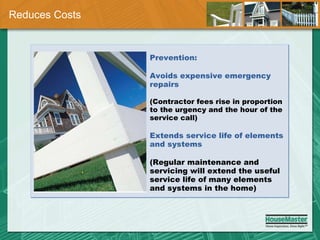
Reduces Costs Prevention: Avoids expensive emergency repairs (Contractor fees rise in proportion to the urgency and the hour of the service call) Extends service life of elements and systems  (Regular maintenance and servicing will extend the useful service life of many elements and systems in the home)
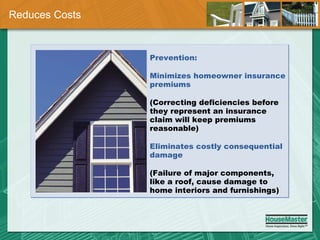
Reduces Costs Prevention: Minimizes homeowner insurance premiums (Correcting deficiencies before they represent an insurance claim will keep premiums reasonable) Eliminates costly consequential damage (Failure of major components, like a roof, cause damage to home interiors and furnishings)
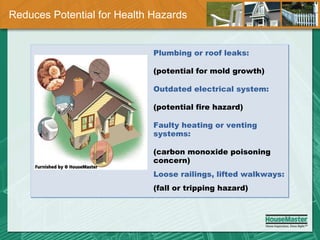
Reduces Potential for Health Hazards Plumbing or roof leaks: (potential for mold growth) Outdated electrical system: (potential fire hazard) Faulty heating or venting systems: (carbon monoxide poisoning concern) Loose railings, lifted walkways: (fall or tripping hazard)
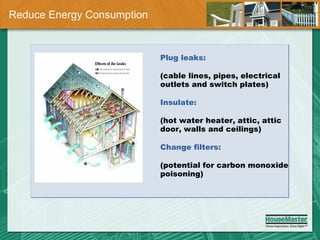
Reduce Energy Consumption Plug leaks: (cable lines, pipes, electrical outlets and switch plates)  Insulate:  (hot water heater, attic, attic door, walls and ceilings) Change filters: (potential for carbon monoxide poisoning)
Protect Your Investment Homes in good condition sell at higher prices than neglected counterparts!
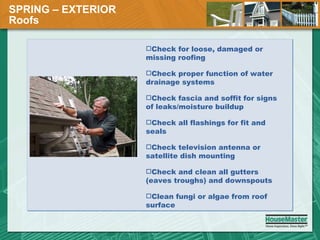
SPRING – EXTERIOR  Roofs Check for loose, damaged or missing roofing Check proper function of water drainage systems Check fascia and soffit for signs of leaks/moisture buildup Check all flashings for fit and seals Check television antenna or satellite dish mounting Check and clean all gutters (eaves troughs) and downspouts Clean fungi or algae from roof surface
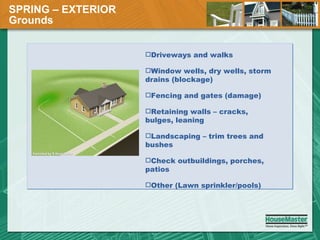
SPRING – EXTERIOR  Grounds Driveways and walks Window wells, dry wells, storm drains (blockage) Fencing and gates (damage) Retaining walls – cracks, bulges, leaning Landscaping – trim trees and bushes Check outbuildings, porches, patios Other (Lawn sprinkler/pools)
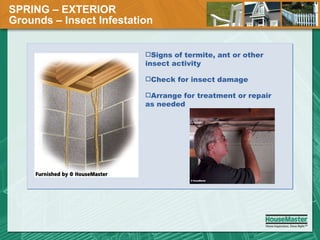
SPRING – EXTERIOR  Grounds – Insect Infestation Signs of termite, ant or other insect activity Check for insect damage Arrange for treatment or repair as needed
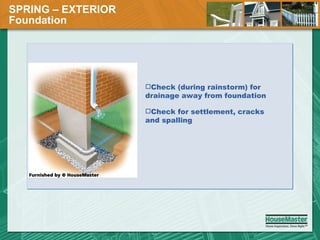
SPRING – EXTERIOR  Foundation Check (during rainstorm) for drainage away from foundation Check for settlement, cracks and spalling
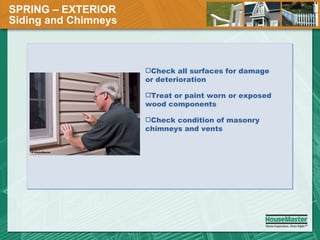
SPRING – EXTERIOR  Siding and Chimneys Check all surfaces for damage or deterioration Treat or paint worn or exposed wood components Check condition of masonry chimneys and vents
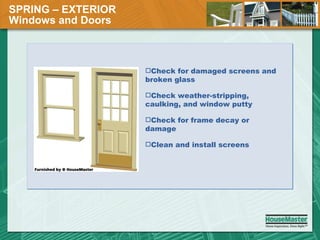
SPRING – EXTERIOR  Windows and Doors Check for damaged screens and broken glass Check weather-stripping, caulking, and window putty Check for frame decay or damage Clean and install screens
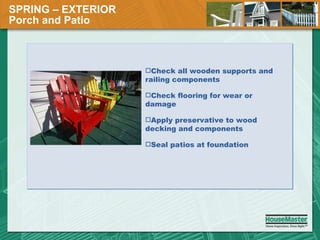
SPRING – EXTERIOR  Porch and Patio Check all wooden supports and railing components Check flooring for wear or damage Apply preservative to wood decking and components Seal patios at foundation
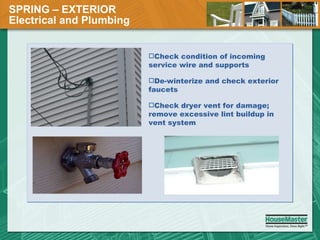
SPRING – EXTERIOR  Electrical and Plumbing Check condition of incoming service wire and supports De-winterize and check exterior faucets Check dryer vent for damage; remove excessive lint buildup in vent system
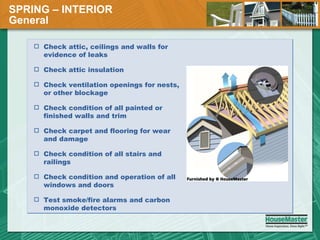
SPRING – INTERIOR General  Check attic, ceilings and walls for evidence of leaks Check attic insulation Check ventilation openings for nests, or other blockage Check condition of all painted or finished walls and trim Check carpet and flooring for wear and damage Check condition of all stairs and railings Check condition and operation of all windows and doors Test smoke/fire alarms and carbon monoxide detectors
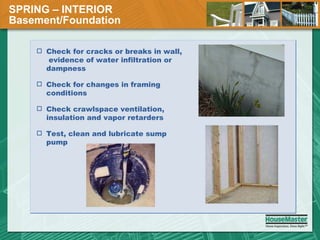
SPRING – INTERIOR  Basement/Foundation Check for cracks or breaks in wall,  evidence of water infiltration or dampness Check for changes in framing conditions Check crawlspace ventilation, insulation and vapor retarders Test, clean and lubricate sump pump
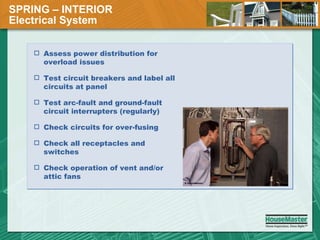
SPRING – INTERIOR  Electrical System Assess power distribution for overload issues Test circuit breakers and label all circuits at panel Test arc-fault and ground-fault circuit interrupters (regularly) Check circuits for over-fusing Check all receptacles and switches Check operation of vent and/or attic fans
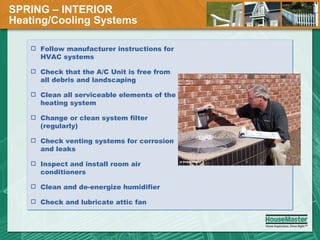
SPRING – INTERIOR  Heating/Cooling Systems Follow manufacturer instructions for HVAC systems Check that the A/C Unit is free from all debris and landscaping  Clean all serviceable elements of the heating system Change or clean system filter (regularly) Check venting systems for corrosion and leaks Inspect and install room air conditioners Clean and de-energize humidifier Check and lubricate attic fan
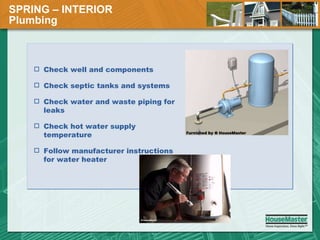
SPRING – INTERIOR  Plumbing Check well and components Check septic tanks and systems Check water and waste piping for leaks Check hot water supply temperature Follow manufacturer instructions for water heater
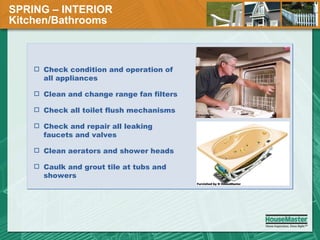
SPRING – INTERIOR  Kitchen/Bathrooms Check condition and operation of all appliances Clean and change range fan filters Check all toilet flush mechanisms Check and repair all leaking faucets and valves Clean aerators and shower heads Caulk and grout tile at tubs and showers
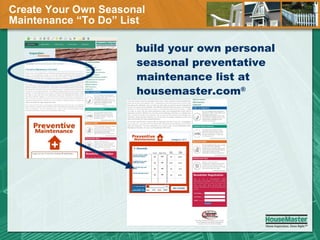
Create Your Own Seasonal  Maintenance “To Do” List build your own personal seasonal preventative maintenance list at housemaster.com ®
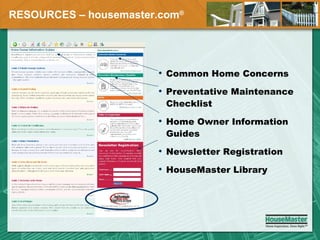
RESOURCES – housemaster.com ® Common Home Concerns Preventative Maintenance Checklist Home Owner Information Guides Newsletter Registration HouseMaster Library
Need Help?
MASTERING MAINTENANCE Trained and annually tested inspectors (NIBI®) Easy to understand, comprehensive reports Universal, on-line access to report Professional liability insurance HouseMaster Inspection Resource Guide® HouseMaster Written Guarantee* * Review terms and limitations.  Where permitted
“ The Right Home Inspector is Key” Sweepstakes $30,000 in Monthly Prizes  Four $5000 Cash prizes Seventy $100 HouseMaster MasterCards ®   Forty $250 HouseMaster Gift Cards Go to  www.housemaster.com/doneright  and register today!
See you in the fall with more maintenance tips!

Final Keepingyourhomeinshapespring2008

  • 1.
    Chart Helping KeepYour Home In Shape: An easy way to reduce costs, save energy and protect your real estate investment Presented by:
  • 2.
  • 3.
    The Value ofProactive Home Maintenance Reduces Costs Reduces Health/Safety Hazards Reduces Energy Consumption Protects Your Investment
  • 4.
    Reduces Costs Prevention:Avoids expensive emergency repairs (Contractor fees rise in proportion to the urgency and the hour of the service call) Extends service life of elements and systems (Regular maintenance and servicing will extend the useful service life of many elements and systems in the home)
  • 5.
    Reduces Costs Prevention:Minimizes homeowner insurance premiums (Correcting deficiencies before they represent an insurance claim will keep premiums reasonable) Eliminates costly consequential damage (Failure of major components, like a roof, cause damage to home interiors and furnishings)
  • 6.
    Reduces Potential forHealth Hazards Plumbing or roof leaks: (potential for mold growth) Outdated electrical system: (potential fire hazard) Faulty heating or venting systems: (carbon monoxide poisoning concern) Loose railings, lifted walkways: (fall or tripping hazard)
  • 7.
    Reduce Energy ConsumptionPlug leaks: (cable lines, pipes, electrical outlets and switch plates) Insulate: (hot water heater, attic, attic door, walls and ceilings) Change filters: (potential for carbon monoxide poisoning)
  • 8.
    Protect Your InvestmentHomes in good condition sell at higher prices than neglected counterparts!
  • 9.
    SPRING – EXTERIOR Roofs Check for loose, damaged or missing roofing Check proper function of water drainage systems Check fascia and soffit for signs of leaks/moisture buildup Check all flashings for fit and seals Check television antenna or satellite dish mounting Check and clean all gutters (eaves troughs) and downspouts Clean fungi or algae from roof surface
  • 10.
    SPRING – EXTERIOR Grounds Driveways and walks Window wells, dry wells, storm drains (blockage) Fencing and gates (damage) Retaining walls – cracks, bulges, leaning Landscaping – trim trees and bushes Check outbuildings, porches, patios Other (Lawn sprinkler/pools)
  • 11.
    SPRING – EXTERIOR Grounds – Insect Infestation Signs of termite, ant or other insect activity Check for insect damage Arrange for treatment or repair as needed
  • 12.
    SPRING – EXTERIOR Foundation Check (during rainstorm) for drainage away from foundation Check for settlement, cracks and spalling
  • 13.
    SPRING – EXTERIOR Siding and Chimneys Check all surfaces for damage or deterioration Treat or paint worn or exposed wood components Check condition of masonry chimneys and vents
  • 14.
    SPRING – EXTERIOR Windows and Doors Check for damaged screens and broken glass Check weather-stripping, caulking, and window putty Check for frame decay or damage Clean and install screens
  • 15.
    SPRING – EXTERIOR Porch and Patio Check all wooden supports and railing components Check flooring for wear or damage Apply preservative to wood decking and components Seal patios at foundation
  • 16.
    SPRING – EXTERIOR Electrical and Plumbing Check condition of incoming service wire and supports De-winterize and check exterior faucets Check dryer vent for damage; remove excessive lint buildup in vent system
  • 17.
    SPRING – INTERIORGeneral Check attic, ceilings and walls for evidence of leaks Check attic insulation Check ventilation openings for nests, or other blockage Check condition of all painted or finished walls and trim Check carpet and flooring for wear and damage Check condition of all stairs and railings Check condition and operation of all windows and doors Test smoke/fire alarms and carbon monoxide detectors
  • 18.
    SPRING – INTERIOR Basement/Foundation Check for cracks or breaks in wall, evidence of water infiltration or dampness Check for changes in framing conditions Check crawlspace ventilation, insulation and vapor retarders Test, clean and lubricate sump pump
  • 19.
    SPRING – INTERIOR Electrical System Assess power distribution for overload issues Test circuit breakers and label all circuits at panel Test arc-fault and ground-fault circuit interrupters (regularly) Check circuits for over-fusing Check all receptacles and switches Check operation of vent and/or attic fans
  • 20.
    SPRING – INTERIOR Heating/Cooling Systems Follow manufacturer instructions for HVAC systems Check that the A/C Unit is free from all debris and landscaping Clean all serviceable elements of the heating system Change or clean system filter (regularly) Check venting systems for corrosion and leaks Inspect and install room air conditioners Clean and de-energize humidifier Check and lubricate attic fan
  • 21.
    SPRING – INTERIOR Plumbing Check well and components Check septic tanks and systems Check water and waste piping for leaks Check hot water supply temperature Follow manufacturer instructions for water heater
  • 22.
    SPRING – INTERIOR Kitchen/Bathrooms Check condition and operation of all appliances Clean and change range fan filters Check all toilet flush mechanisms Check and repair all leaking faucets and valves Clean aerators and shower heads Caulk and grout tile at tubs and showers
  • 23.
    Create Your OwnSeasonal Maintenance “To Do” List build your own personal seasonal preventative maintenance list at housemaster.com ®
  • 24.
    RESOURCES – housemaster.com® Common Home Concerns Preventative Maintenance Checklist Home Owner Information Guides Newsletter Registration HouseMaster Library
  • 25.
  • 26.
    MASTERING MAINTENANCE Trainedand annually tested inspectors (NIBI®) Easy to understand, comprehensive reports Universal, on-line access to report Professional liability insurance HouseMaster Inspection Resource Guide® HouseMaster Written Guarantee* * Review terms and limitations. Where permitted
  • 27.
    “ The RightHome Inspector is Key” Sweepstakes $30,000 in Monthly Prizes Four $5000 Cash prizes Seventy $100 HouseMaster MasterCards ® Forty $250 HouseMaster Gift Cards Go to www.housemaster.com/doneright and register today!
  • 28.
    See you inthe fall with more maintenance tips!