Group Members
1. Tarun Rohra
2. Himanshu Phatnani
3. Yogesh Prajapati
4. Atharva Nandurdikar
5. Atharva Ponkshe
Mentored by: Prof. Monali Chaudhari
Overview:
 Introduction
 Major Manufacturing Industries in India
 Role of Stake Holders In Textile Industries
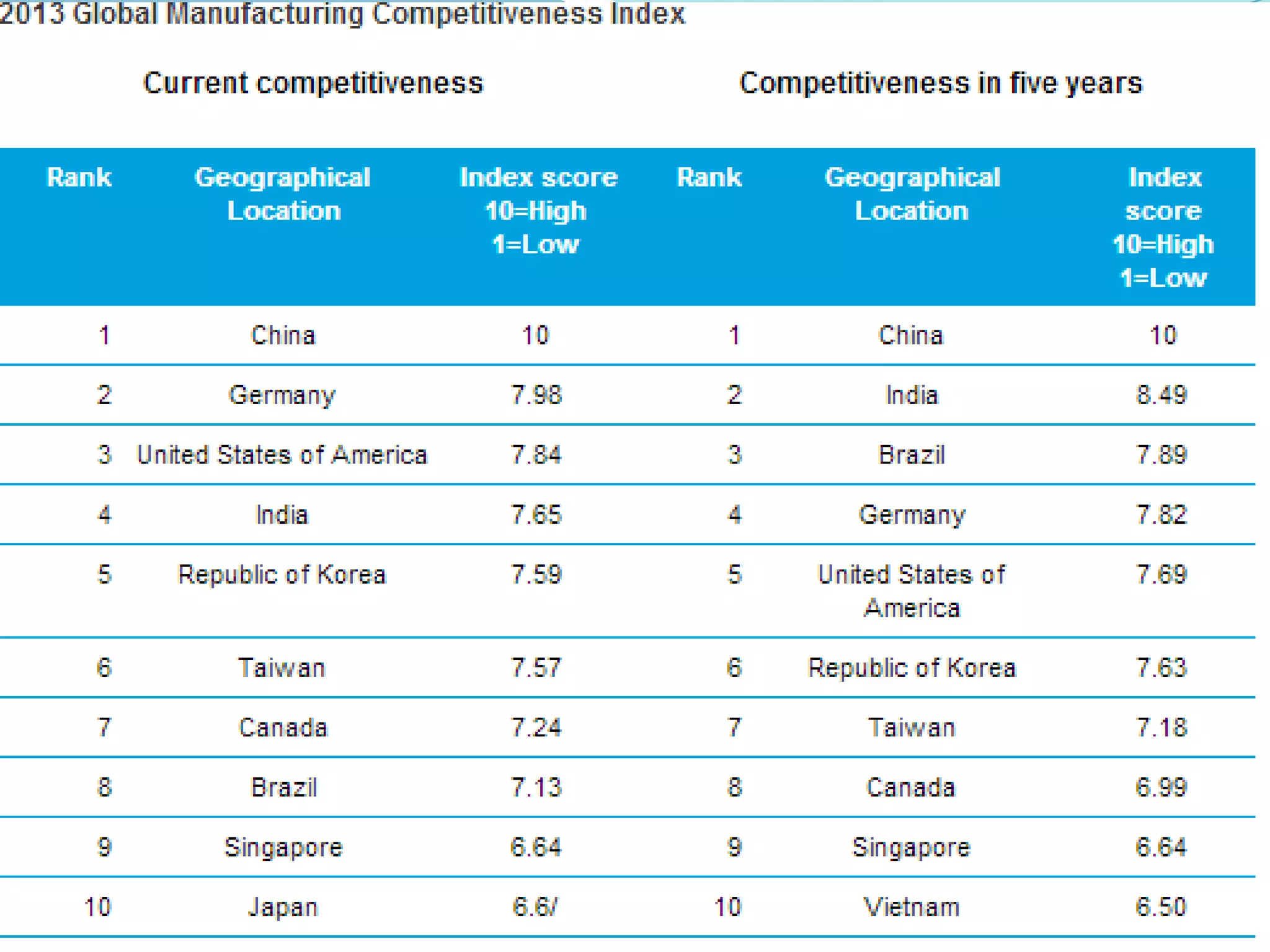
 GMCI Report
 Weakness of Indian Manufacturing Sector
 Role of stake holders in making India a Global
Manufacturing Hub
What is a Manufacturing Hub ?
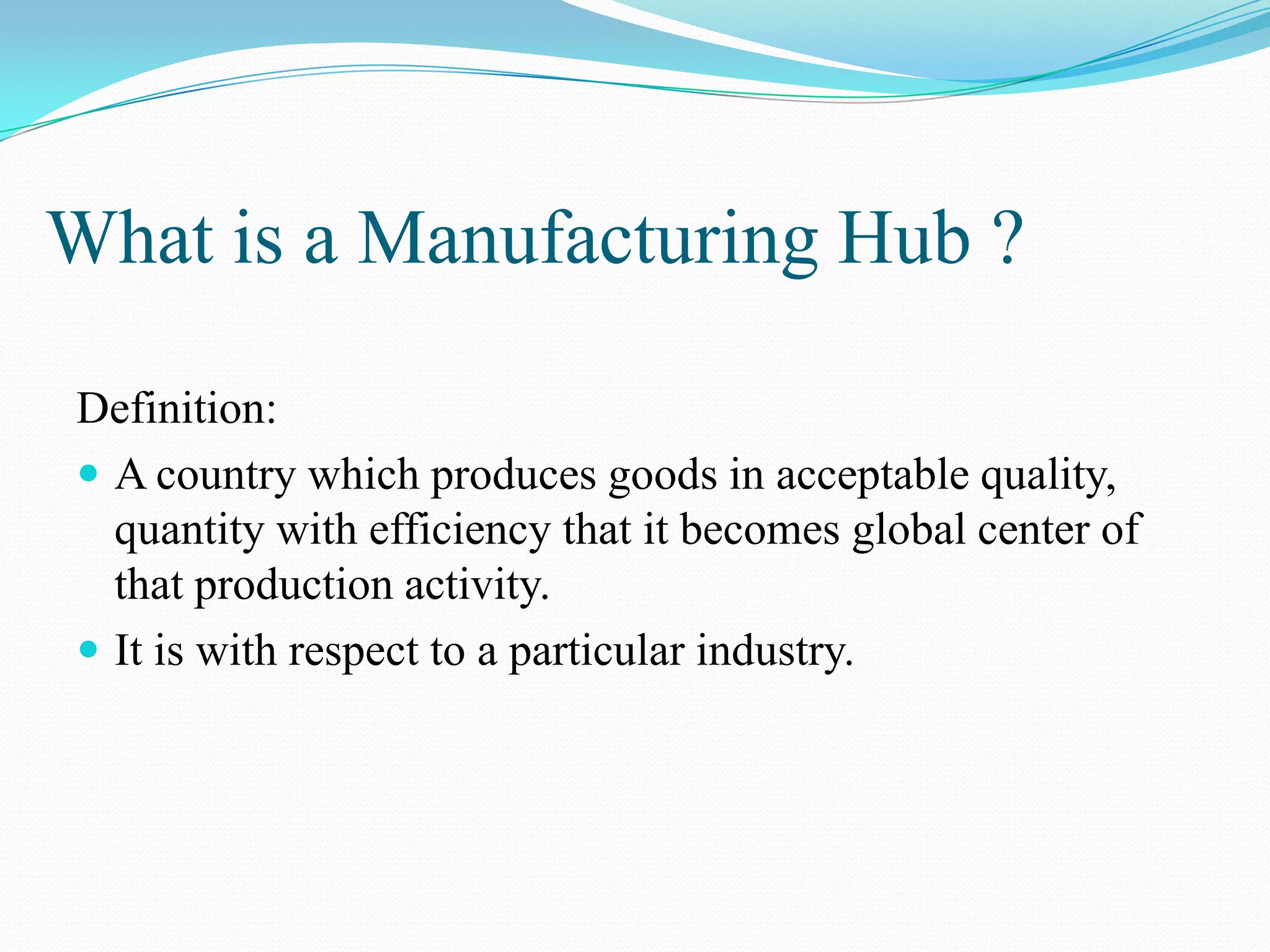
Definition:
 A country which produces goods in acceptable quality,
quantity with efficiency that it becomes global center of
that production activity.
 It is with respect to a particular industry.
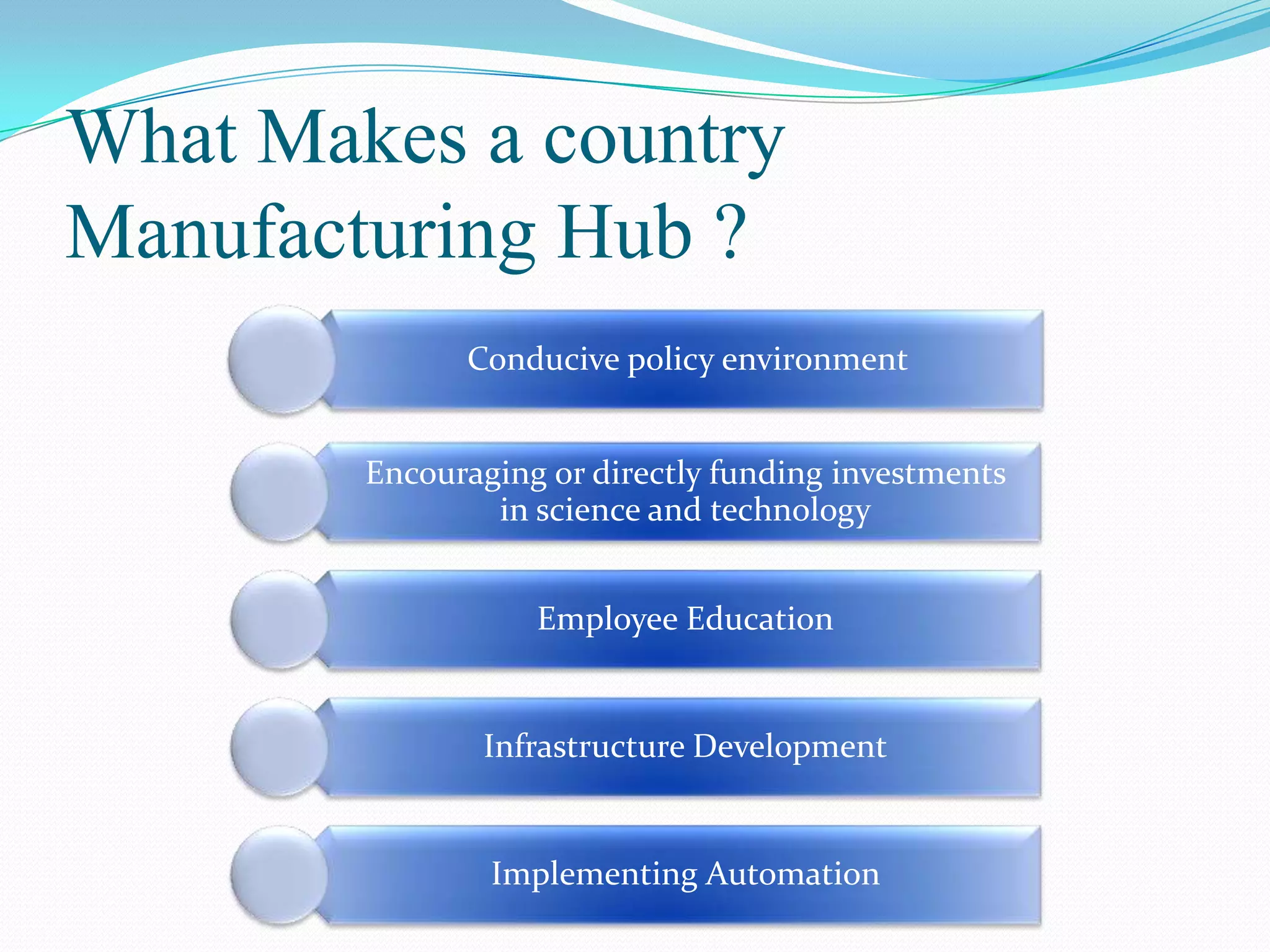
What Makes a country
Manufacturing Hub ?
Conducive policy environment
Encouraging or directly funding investments
in science and technology
Employee Education
Infrastructure Development
Implementing Automation
What is a Stake Holder ?
 Stakeholders are those who have an interest in what an
Organisation or particular sector of economy is doing
because they will be affected or may influence its
activities.
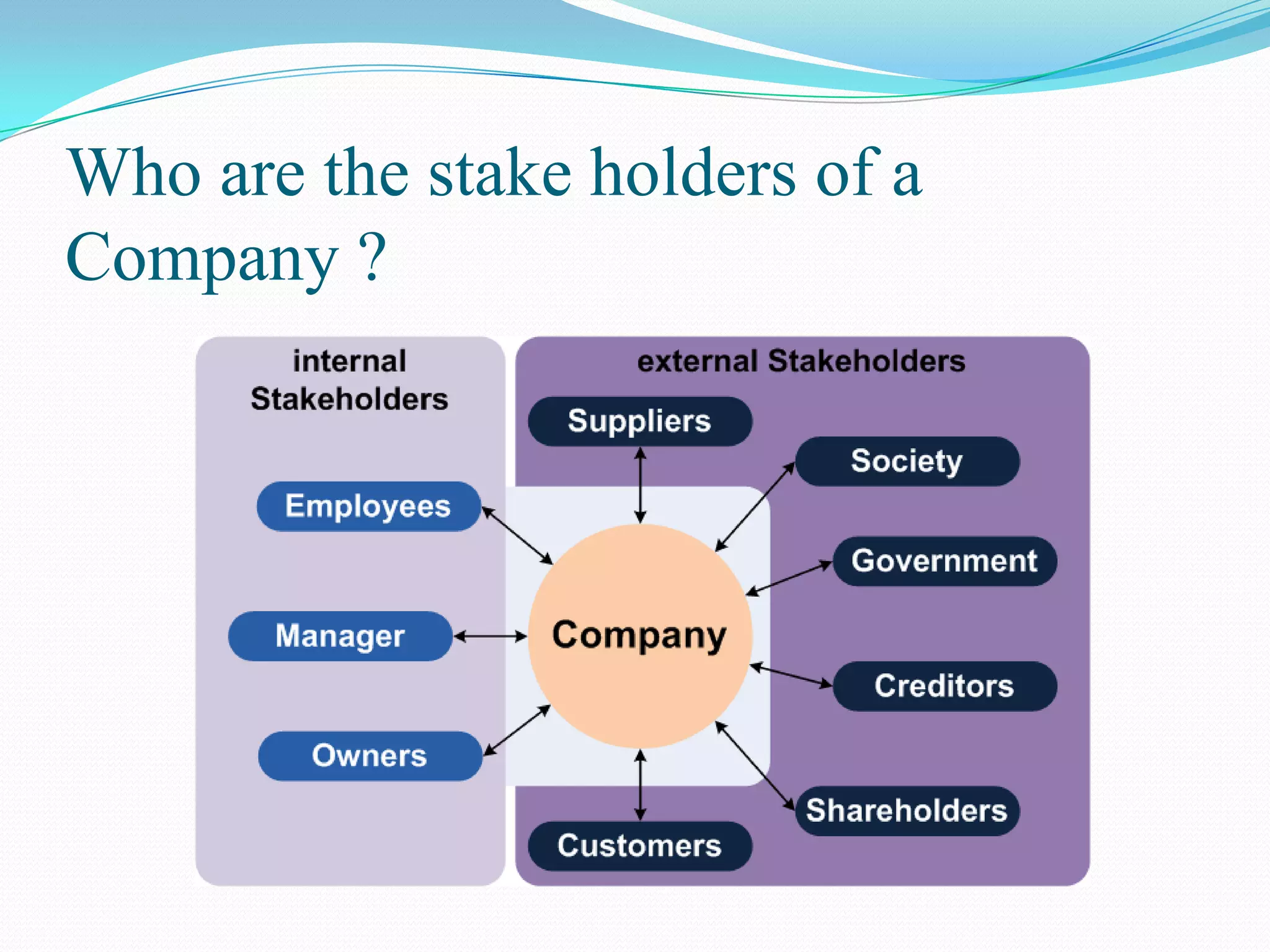
Who are the stake holders of a
Company ?
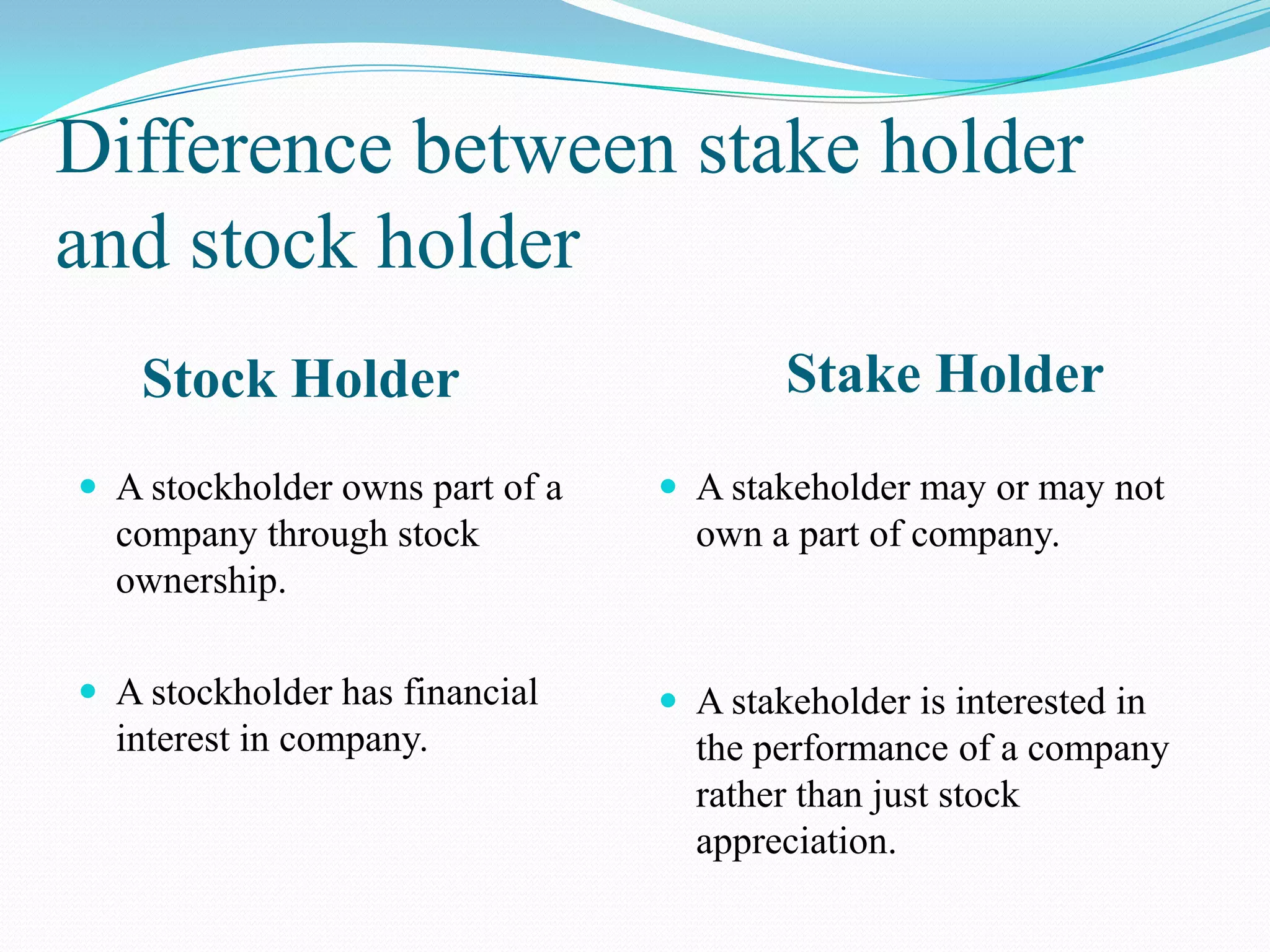
Difference between stake holder
and stock holder
Stock Holder Stake Holder
 A stockholder owns part of a
company through stock
ownership.
 A stockholder has financial
interest in company.
 A stakeholder may or may not
own a part of company.
 A stakeholder is interested in
the performance of a company
rather than just stock
appreciation.
Major Industries in India
India can be called a Global manufacturing hub for the industries
like:
 Textiles
 Chemicals
 Food Processing
 Steel
 Mining
 Petroleum
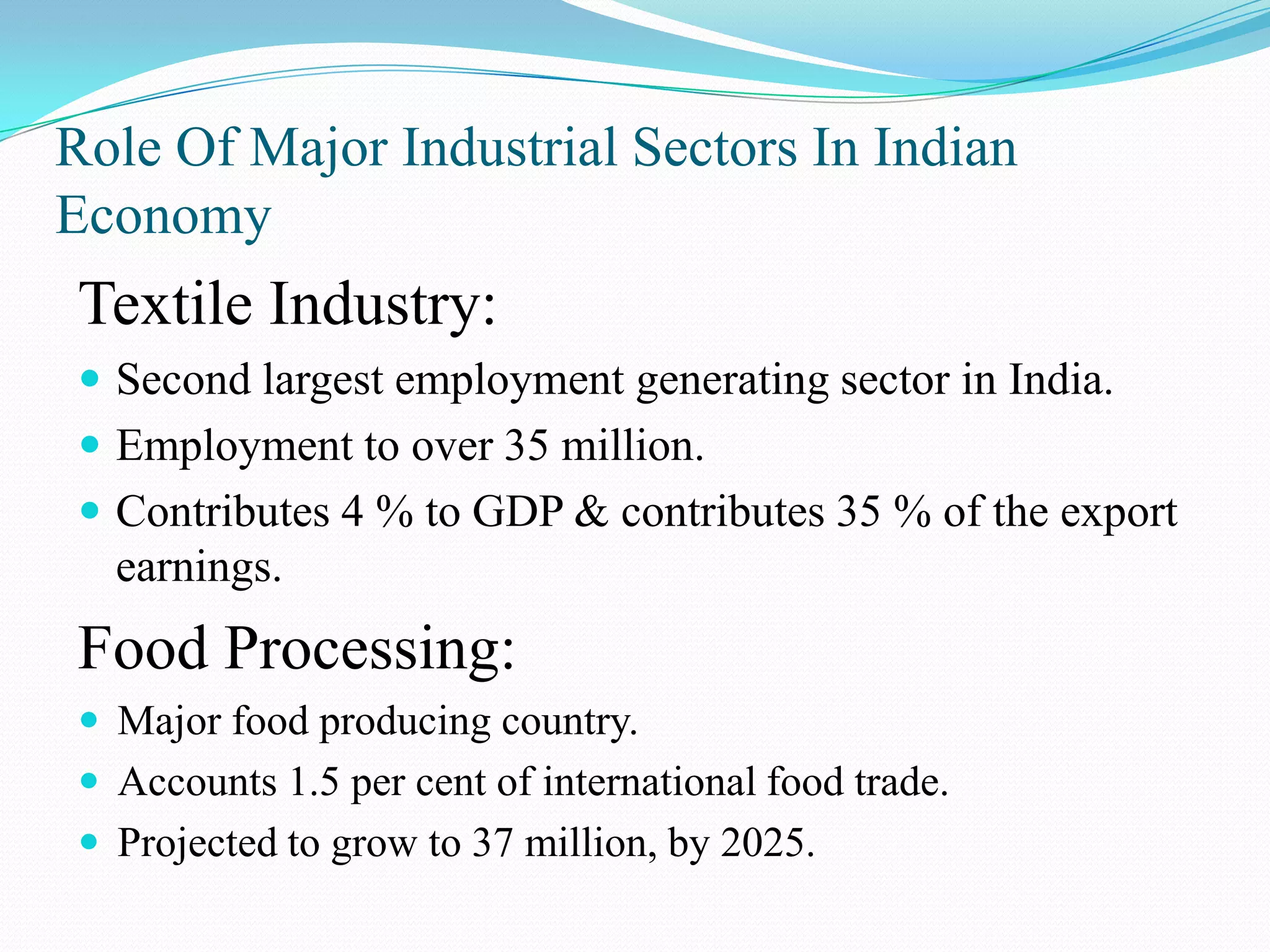
Role Of Major Industrial Sectors In Indian
Economy
Textile Industry:
 Second largest employment generating sector in India.
 Employment to over 35 million.
 Contributes 4 % to GDP & contributes 35 % of the export
earnings.
Food Processing:
 Major food producing country.
 Accounts 1.5 per cent of international food trade.
 Projected to grow to 37 million, by 2025.
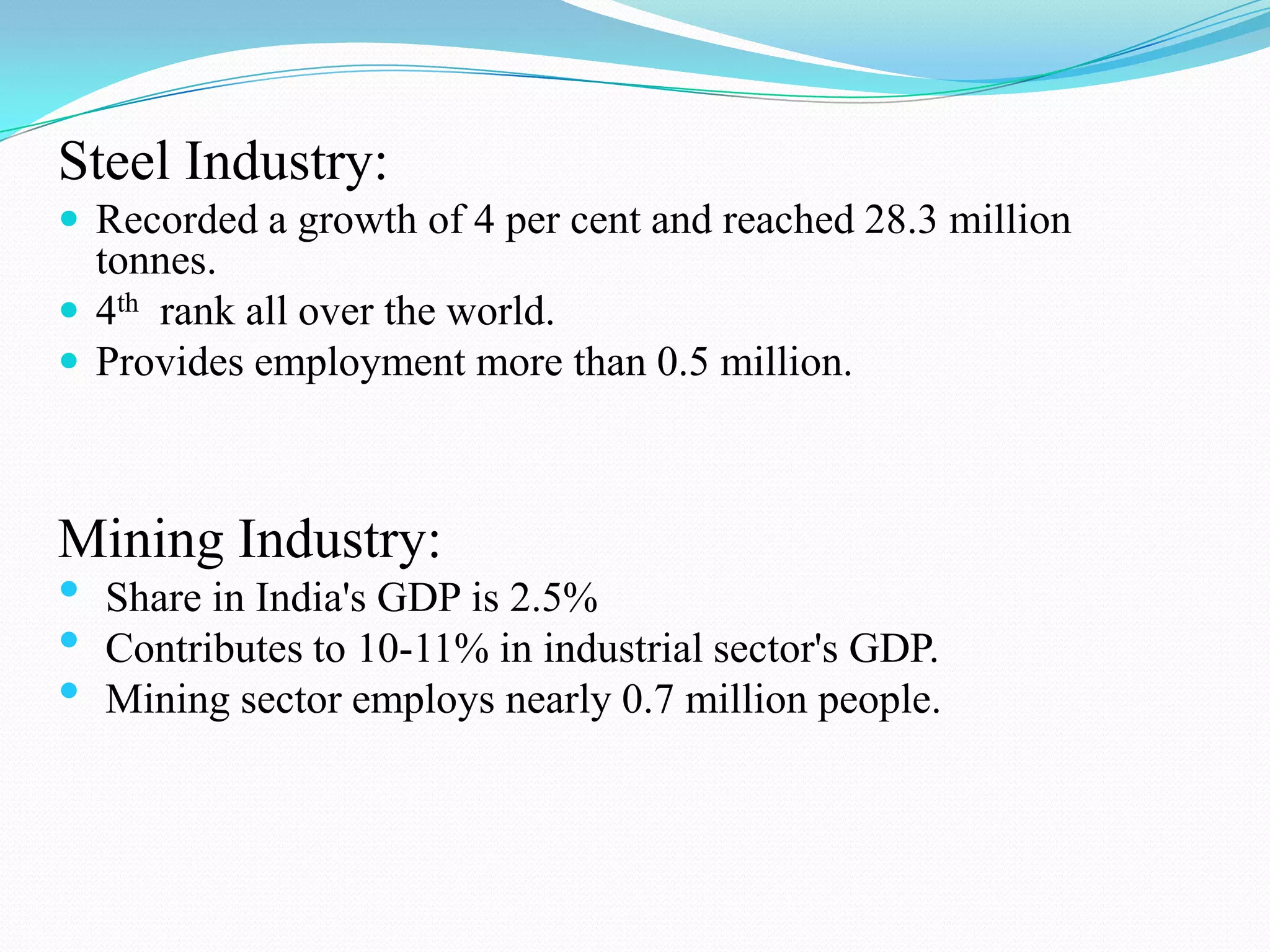
Steel Industry:
 Recorded a growth of 4 per cent and reached 28.3 million
tonnes.
 4th rank all over the world.
 Provides employment more than 0.5 million.
Mining Industry:
• Share in India's GDP is 2.5%
• Contributes to 10-11% in industrial sector's GDP.
• Mining sector employs nearly 0.7 million people.
Role of stake holders in the Indian
textile industry
Government
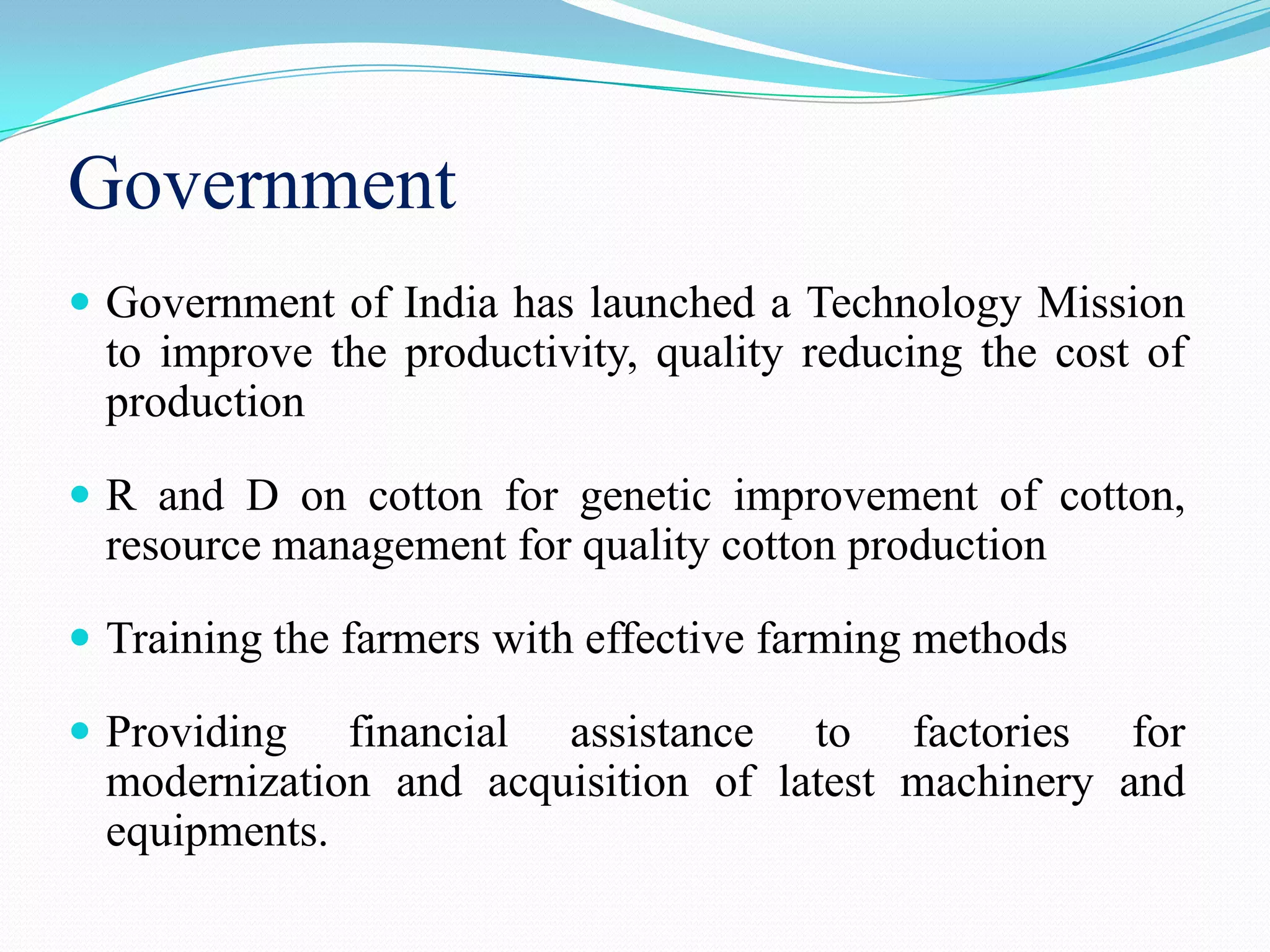
 Government of India has launched a Technology Mission
to improve the productivity, quality reducing the cost of
production
 R and D on cotton for genetic improvement of cotton,
resource management for quality cotton production
 Training the farmers with effective farming methods
 Providing financial assistance to factories for
modernization and acquisition of latest machinery and
equipments.
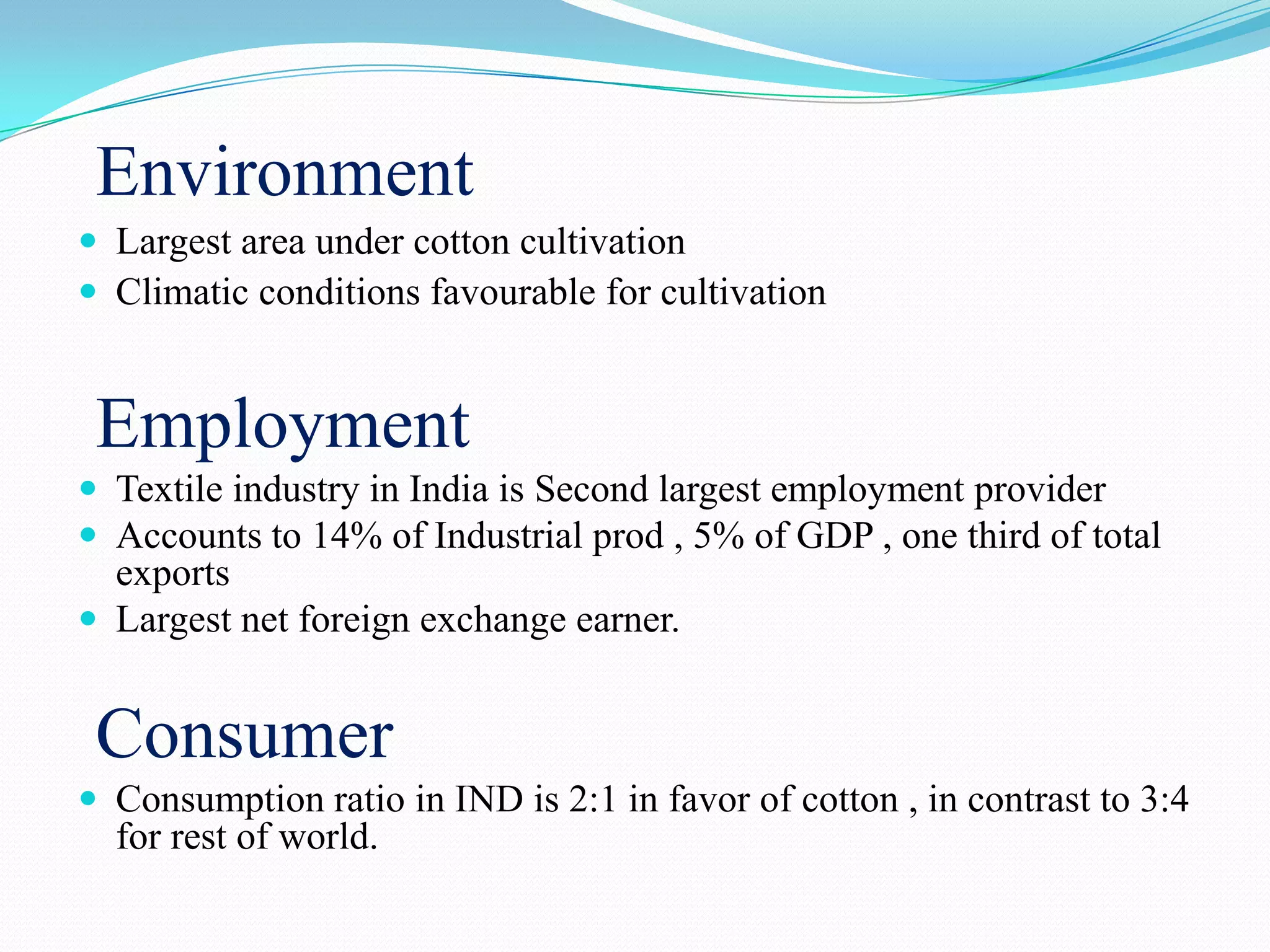
Environment
 Largest area under cotton cultivation
 Climatic conditions favourable for cultivation
Employment
 Textile industry in India is Second largest employment provider
 Accounts to 14% of Industrial prod , 5% of GDP , one third of total
exports
 Largest net foreign exchange earner.
Consumer
 Consumption ratio in IND is 2:1 in favor of cotton , in contrast to 3:4
for rest of world.
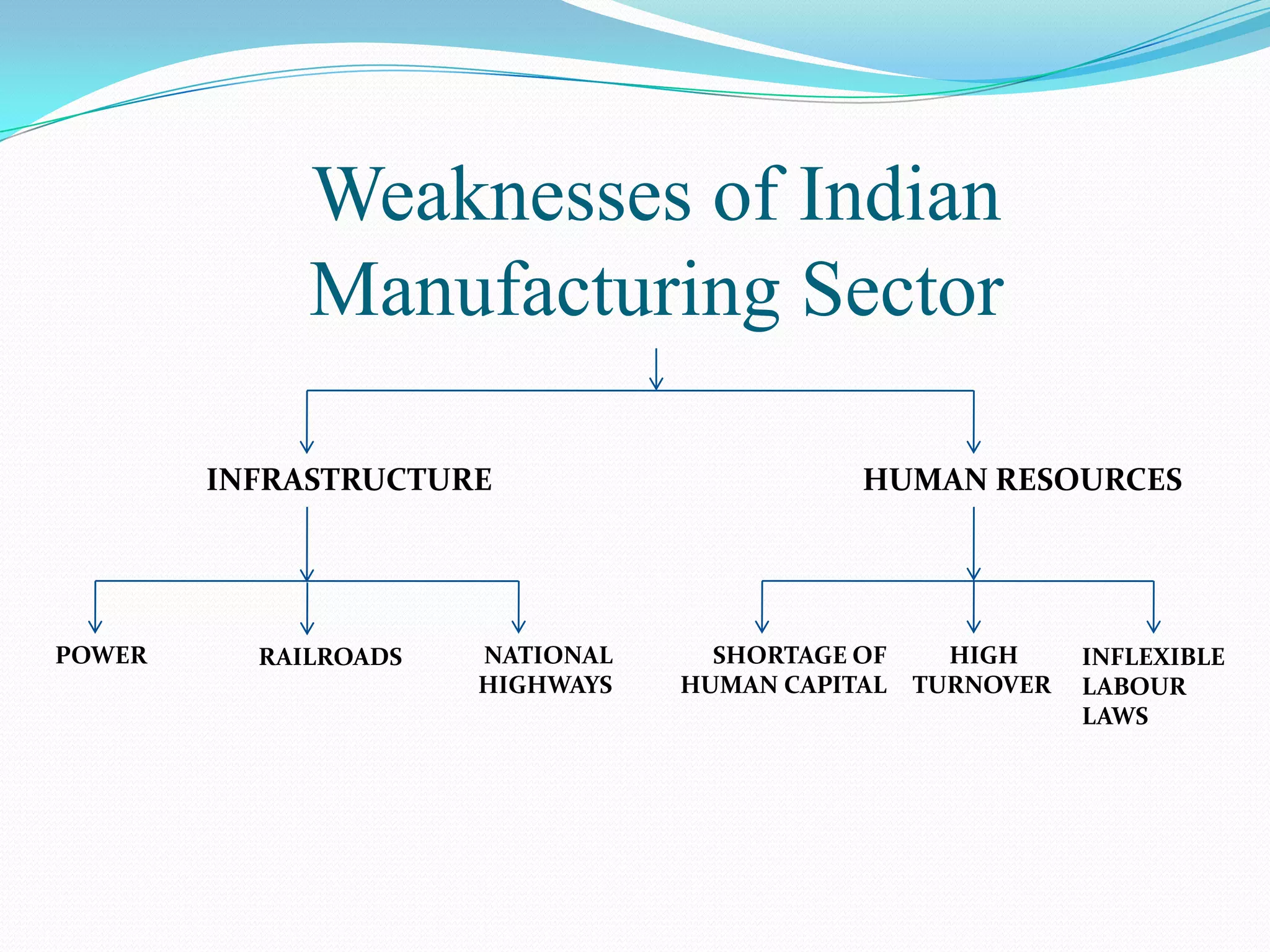
Weaknesses of Indian
Manufacturing Sector
INFRASTRUCTURE HUMAN RESOURCES
POWER RAILROADS NATIONAL
HIGHWAYS
SHORTAGE OF
HUMAN CAPITAL
HIGH
TURNOVER
INFLEXIBLE
LABOUR
LAWS
Comparing with China…
 India is famous for their quality driven approach, but
China has quantity driven approach.
 India has high costing compare to low costing by
China.
 India has more stringent laws than China.
Policy
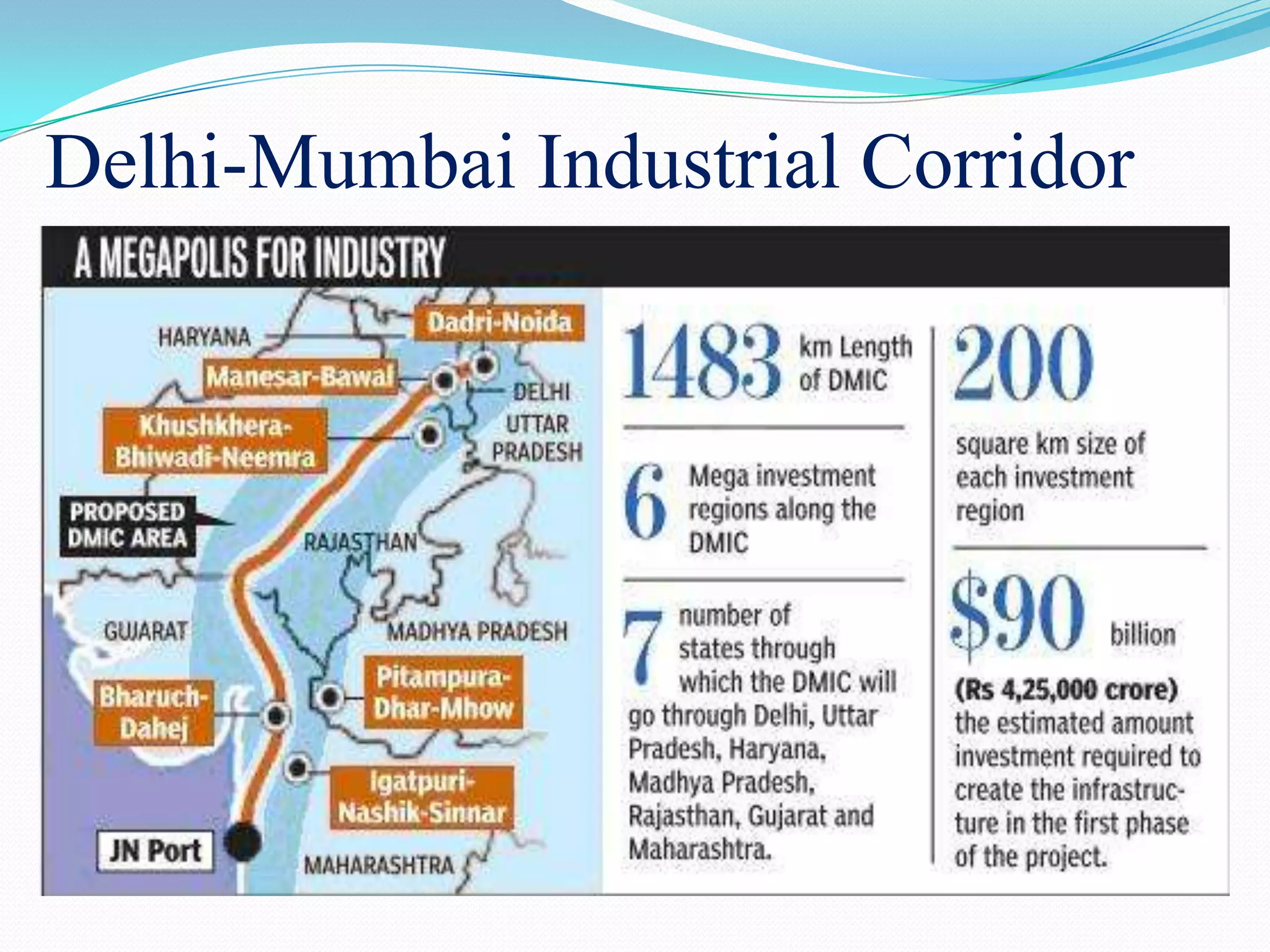
Delhi-Mumbai Industrial Corridor
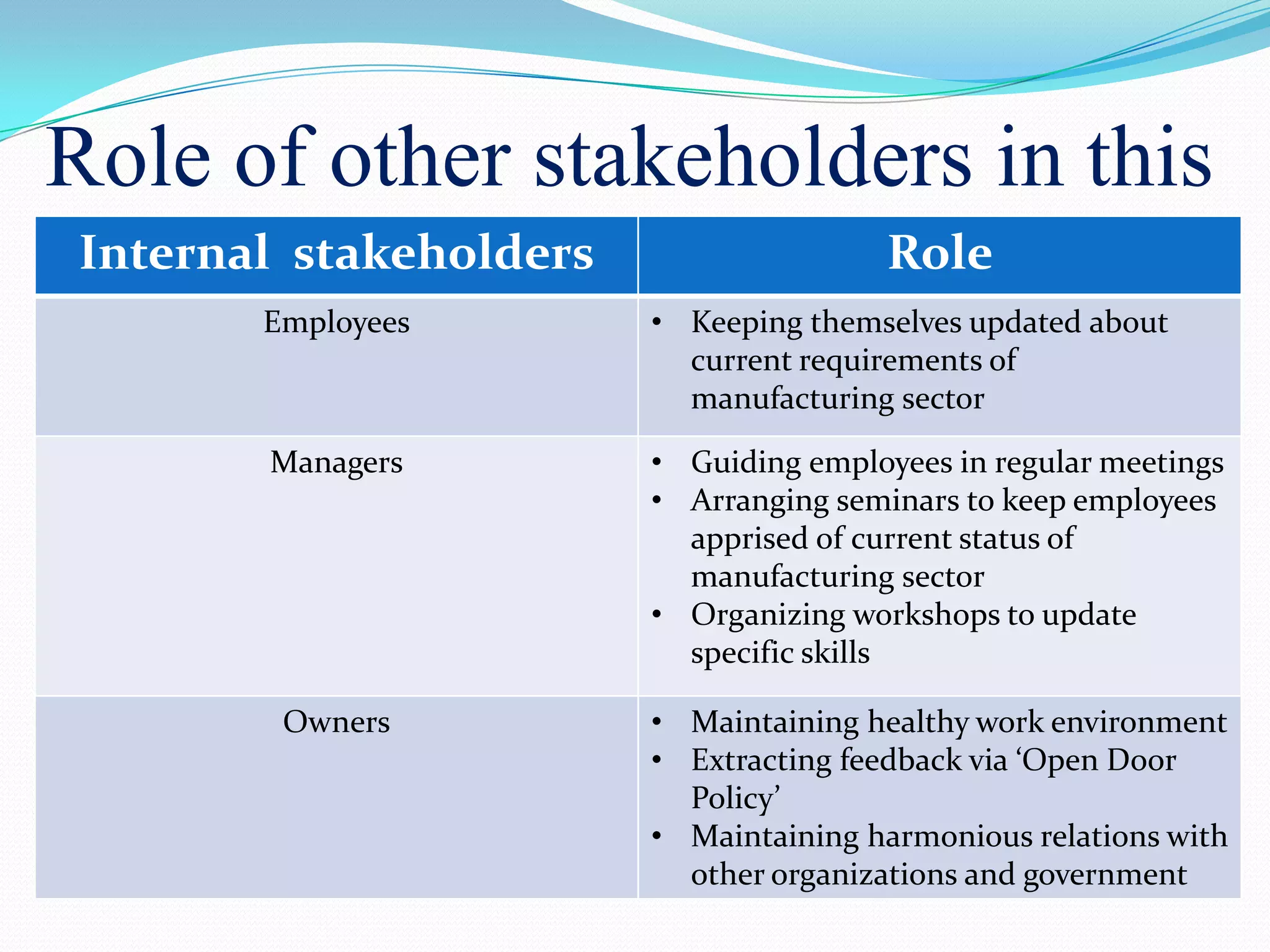
Role of other stakeholders in this
Internal stakeholders Role
Employees • Keeping themselves updated about
current requirements of
manufacturing sector
Managers • Guiding employees in regular meetings
• Arranging seminars to keep employees
apprised of current status of
manufacturing sector
• Organizing workshops to update
specific skills
Owners • Maintaining healthy work environment
• Extracting feedback via ‘Open Door
Policy’
• Maintaining harmonious relations with
other organizations and government
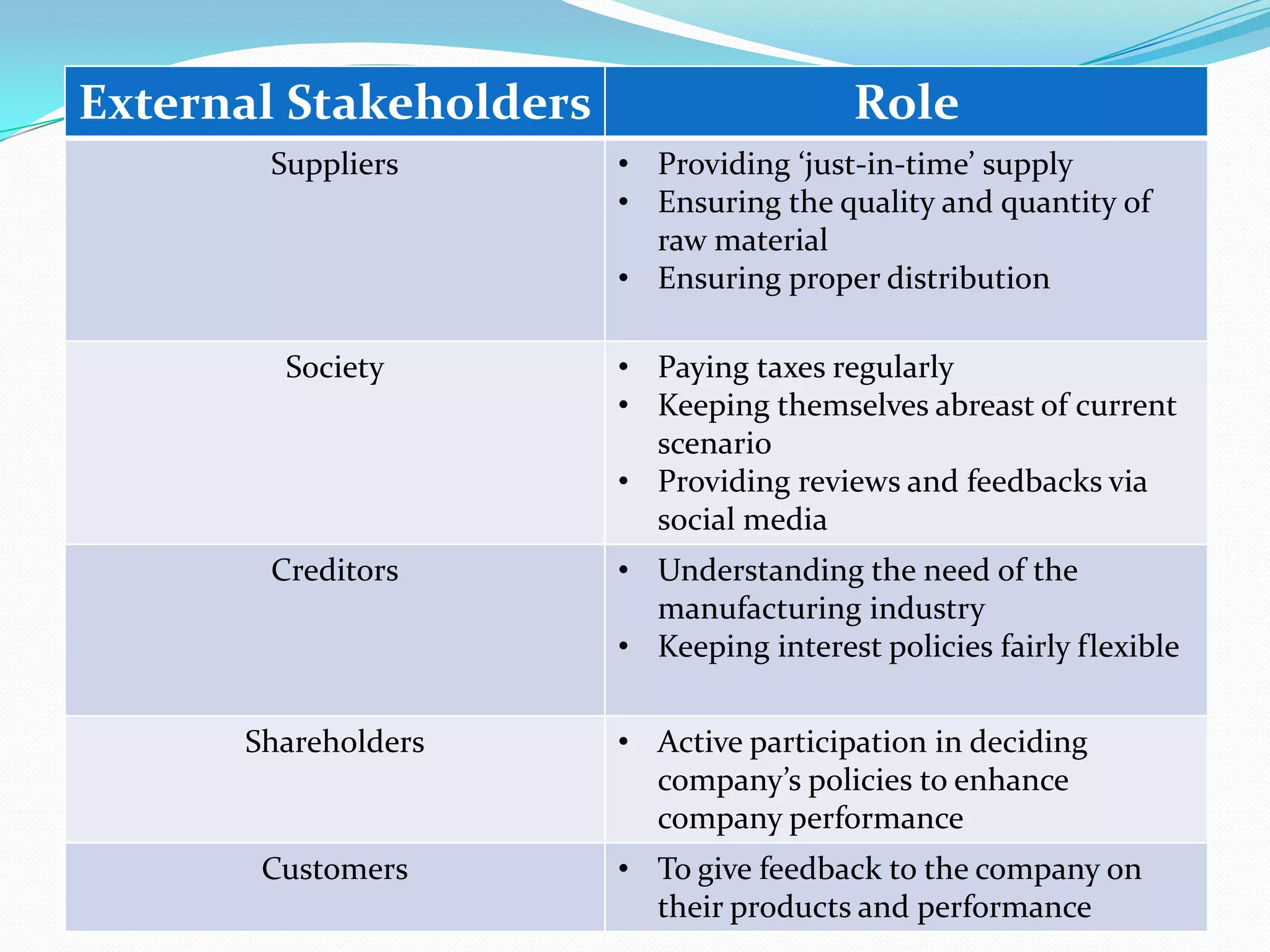
External Stakeholders Role
Suppliers • Providing ‘just-in-time’ supply
• Ensuring the quality and quantity of
raw material
• Ensuring proper distribution
Society • Paying taxes regularly
• Keeping themselves abreast of current
scenario
• Providing reviews and feedbacks via
social media
Creditors • Understanding the need of the
manufacturing industry
• Keeping interest policies fairly flexible
Shareholders • Active participation in deciding
company’s policies to enhance
company performance
Customers • To give feedback to the company on
their products and performance
References
 www.ibef.org
 www.economictimes.com
 www.wikipedia.com
 www.global-innovation.net
Thank you!

Final edifice 3 rd oct 2013

  • 2.
    Group Members 1. TarunRohra 2. Himanshu Phatnani 3. Yogesh Prajapati 4. Atharva Nandurdikar 5. Atharva Ponkshe Mentored by: Prof. Monali Chaudhari
  • 3.
    Overview:  Introduction  MajorManufacturing Industries in India  Role of Stake Holders In Textile Industries  GMCI Report  Weakness of Indian Manufacturing Sector  Role of stake holders in making India a Global Manufacturing Hub
  • 4.
    What is aManufacturing Hub ? Definition:  A country which produces goods in acceptable quality, quantity with efficiency that it becomes global center of that production activity.  It is with respect to a particular industry.
  • 5.
    What Makes acountry Manufacturing Hub ? Conducive policy environment Encouraging or directly funding investments in science and technology Employee Education Infrastructure Development Implementing Automation
  • 6.
    What is aStake Holder ?  Stakeholders are those who have an interest in what an Organisation or particular sector of economy is doing because they will be affected or may influence its activities.
  • 7.
    Who are thestake holders of a Company ?
  • 8.
    Difference between stakeholder and stock holder Stock Holder Stake Holder  A stockholder owns part of a company through stock ownership.  A stockholder has financial interest in company.  A stakeholder may or may not own a part of company.  A stakeholder is interested in the performance of a company rather than just stock appreciation.
  • 9.
    Major Industries inIndia India can be called a Global manufacturing hub for the industries like:  Textiles  Chemicals  Food Processing  Steel  Mining  Petroleum
  • 10.
    Role Of MajorIndustrial Sectors In Indian Economy Textile Industry:  Second largest employment generating sector in India.  Employment to over 35 million.  Contributes 4 % to GDP & contributes 35 % of the export earnings. Food Processing:  Major food producing country.  Accounts 1.5 per cent of international food trade.  Projected to grow to 37 million, by 2025.
  • 11.
    Steel Industry:  Recordeda growth of 4 per cent and reached 28.3 million tonnes.  4th rank all over the world.  Provides employment more than 0.5 million. Mining Industry: • Share in India's GDP is 2.5% • Contributes to 10-11% in industrial sector's GDP. • Mining sector employs nearly 0.7 million people.
  • 12.
    Role of stakeholders in the Indian textile industry
  • 13.
    Government  Government ofIndia has launched a Technology Mission to improve the productivity, quality reducing the cost of production  R and D on cotton for genetic improvement of cotton, resource management for quality cotton production  Training the farmers with effective farming methods  Providing financial assistance to factories for modernization and acquisition of latest machinery and equipments.
  • 14.
    Environment  Largest areaunder cotton cultivation  Climatic conditions favourable for cultivation Employment  Textile industry in India is Second largest employment provider  Accounts to 14% of Industrial prod , 5% of GDP , one third of total exports  Largest net foreign exchange earner. Consumer  Consumption ratio in IND is 2:1 in favor of cotton , in contrast to 3:4 for rest of world.
  • 16.
    Weaknesses of Indian ManufacturingSector INFRASTRUCTURE HUMAN RESOURCES POWER RAILROADS NATIONAL HIGHWAYS SHORTAGE OF HUMAN CAPITAL HIGH TURNOVER INFLEXIBLE LABOUR LAWS
  • 17.
    Comparing with China… India is famous for their quality driven approach, but China has quantity driven approach.  India has high costing compare to low costing by China.  India has more stringent laws than China.
  • 18.
  • 19.
  • 20.
    Role of otherstakeholders in this Internal stakeholders Role Employees • Keeping themselves updated about current requirements of manufacturing sector Managers • Guiding employees in regular meetings • Arranging seminars to keep employees apprised of current status of manufacturing sector • Organizing workshops to update specific skills Owners • Maintaining healthy work environment • Extracting feedback via ‘Open Door Policy’ • Maintaining harmonious relations with other organizations and government
  • 21.
    External Stakeholders Role Suppliers• Providing ‘just-in-time’ supply • Ensuring the quality and quantity of raw material • Ensuring proper distribution Society • Paying taxes regularly • Keeping themselves abreast of current scenario • Providing reviews and feedbacks via social media Creditors • Understanding the need of the manufacturing industry • Keeping interest policies fairly flexible Shareholders • Active participation in deciding company’s policies to enhance company performance Customers • To give feedback to the company on their products and performance
  • 22.
    References  www.ibef.org  www.economictimes.com www.wikipedia.com  www.global-innovation.net
  • 23.