By Alex Dibble
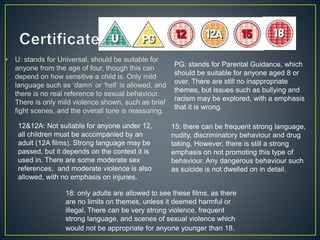
• U: stands for Universal, should be suitable for 
anyone from the age of four, though this can 
depend on how sensitive a child is. Only mild 
language such as ‘damn’ or ‘hell’ is allowed, and 
there is no real reference to sexual behaviour. 
There is only mild violence shown, such as brief 
fight scenes, and the overall tone is reassuring. 
PG: stands for Parental Guidance, which 
should be suitable for anyone aged 8 or 
over. There are still no inappropriate 
themes, but issues such as bullying and 
racism may be explored, with a emphasis 
that it is wrong. 
12&12A: Not suitable for anyone under 12, 
all children must be accompanied by an 
adult (12A films). Strong language may be 
passed, but it depends on the context it is 
used in. There are some moderate sex 
references, and moderate violence is also 
allowed, with no emphasis on injuries. 
15: there can be frequent strong language, 
nudity, discriminatory behaviour and drug 
taking. However, there is still a strong 
emphasis on not promoting this type of 
behaviour. Any dangerous behaviour such 
as suicide is not dwelled on in detail. 
18: only adults are allowed to see these films, as there 
are no limits on themes, unless it deemed harmful or 
illegal. There can be very strong violence, frequent 
strong language, and scenes of sexual violence which 
would not be appropriate for anyone younger than 18.
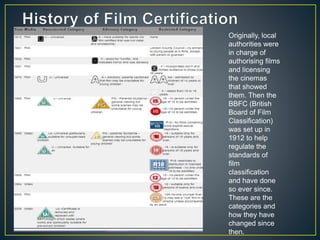
Originally, local 
authorities were 
in charge of 
authorising films 
and licensing 
the cinemas 
that showed 
them. Then the 
BBFC (British 
Board of Film 
Classification) 
was set up in 
1912 to help 
regulate the 
standards of 
film 
classification 
and have done 
so ever since. 
These are the 
categories and 
how they have 
changed since 
then.
• The BBFC watches any film made, certifies and gives it a 
rating which is appropriate for the content in the film. This 
is to make sure that any audience watches what is 
appropriate for their age range, and that nothing 
unsuitable is included in it. 
• This classification, along with a synopsis of the film, is 
usually given prior to it’s release so any potential 
audience members can decide whether or not the film is 
appropriate for them, or for any children they may be 
accompanying. 
• Also, they will make sure that they have assessed the 
potential impact upon the target audience before release. 
This means in for example children’s films, any negative 
behaviour such as violence and racism that might be 
shown has a strong emphasis on it being inappropriate.
• In some countries, film distributors, who bring the films to 
the cinemas, will allow a certain film to be shown under a 
higher film rating in one country and a lower one in 
another. This is because the various different age ratings 
differ in each country, and also they may have more strict 
guidelines on what can be shown. 
• In Commonwealth countries such as Australia, laws such 
as the Commonwealth Classification Act 1995 are 
followed which have restrictive guidelines so that only 
appropriate material may be shown. However, in 
Australia they have different states and territories that 
can make their own additional legislations on films.
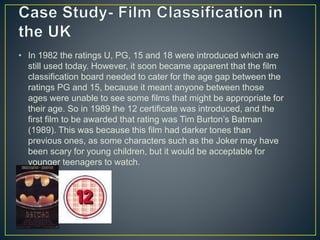
• In 1982 the ratings U, PG, 15 and 18 were introduced which are 
still used today. However, it soon became apparent that the film 
classification board needed to cater for the age gap between the 
ratings PG and 15, because it meant anyone between those 
ages were unable to see some films that might be appropriate for 
their age. So in 1989 the 12 certificate was introduced, and the 
first film to be awarded that rating was Tim Burton’s Batman 
(1989). This was because this film had darker tones than 
previous ones, as some characters such as the Joker may have 
been scary for young children, but it would be acceptable for 
younger teenagers to watch.

Film classification

  • 1.
  • 2.
    • U: standsfor Universal, should be suitable for anyone from the age of four, though this can depend on how sensitive a child is. Only mild language such as ‘damn’ or ‘hell’ is allowed, and there is no real reference to sexual behaviour. There is only mild violence shown, such as brief fight scenes, and the overall tone is reassuring. PG: stands for Parental Guidance, which should be suitable for anyone aged 8 or over. There are still no inappropriate themes, but issues such as bullying and racism may be explored, with a emphasis that it is wrong. 12&12A: Not suitable for anyone under 12, all children must be accompanied by an adult (12A films). Strong language may be passed, but it depends on the context it is used in. There are some moderate sex references, and moderate violence is also allowed, with no emphasis on injuries. 15: there can be frequent strong language, nudity, discriminatory behaviour and drug taking. However, there is still a strong emphasis on not promoting this type of behaviour. Any dangerous behaviour such as suicide is not dwelled on in detail. 18: only adults are allowed to see these films, as there are no limits on themes, unless it deemed harmful or illegal. There can be very strong violence, frequent strong language, and scenes of sexual violence which would not be appropriate for anyone younger than 18.
  • 3.
    Originally, local authoritieswere in charge of authorising films and licensing the cinemas that showed them. Then the BBFC (British Board of Film Classification) was set up in 1912 to help regulate the standards of film classification and have done so ever since. These are the categories and how they have changed since then.
  • 4.
    • The BBFCwatches any film made, certifies and gives it a rating which is appropriate for the content in the film. This is to make sure that any audience watches what is appropriate for their age range, and that nothing unsuitable is included in it. • This classification, along with a synopsis of the film, is usually given prior to it’s release so any potential audience members can decide whether or not the film is appropriate for them, or for any children they may be accompanying. • Also, they will make sure that they have assessed the potential impact upon the target audience before release. This means in for example children’s films, any negative behaviour such as violence and racism that might be shown has a strong emphasis on it being inappropriate.
  • 5.
    • In somecountries, film distributors, who bring the films to the cinemas, will allow a certain film to be shown under a higher film rating in one country and a lower one in another. This is because the various different age ratings differ in each country, and also they may have more strict guidelines on what can be shown. • In Commonwealth countries such as Australia, laws such as the Commonwealth Classification Act 1995 are followed which have restrictive guidelines so that only appropriate material may be shown. However, in Australia they have different states and territories that can make their own additional legislations on films.
  • 6.
    • In 1982the ratings U, PG, 15 and 18 were introduced which are still used today. However, it soon became apparent that the film classification board needed to cater for the age gap between the ratings PG and 15, because it meant anyone between those ages were unable to see some films that might be appropriate for their age. So in 1989 the 12 certificate was introduced, and the first film to be awarded that rating was Tim Burton’s Batman (1989). This was because this film had darker tones than previous ones, as some characters such as the Joker may have been scary for young children, but it would be acceptable for younger teenagers to watch.