



An unpredictable event which
transforms a huge negative impact
Common characteristics of Crisis:
• Difficult situation pops up unexpectedly
• Threats of losses
• Time is very short
• Quick decisions are expected
• Pressure builds over time
• Reputation suffers
• Demands are made to identify someone to
blame
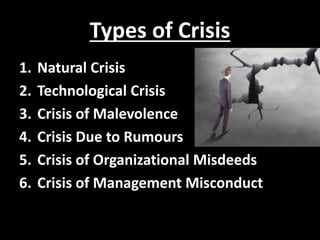
Types of Crisis
1. Natural Crisis
2. Technological Crisis
3. Crisis of Malevolence
4. Crisis Due to Rumours
5. Crisis of Organizational Misdeeds
6. Crisis of Management Misconduct
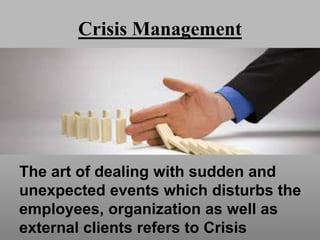
Crisis Management
The art of dealing with sudden and
unexpected events which disturbs the
employees, organization as well as
external clients refers to Crisis
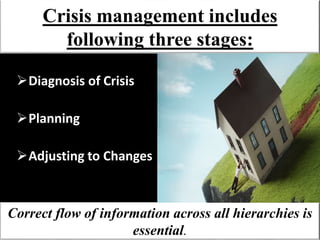
Crisis management includes
following three stages:
Diagnosis of Crisis
Planning
Adjusting to Changes
Correct flow of information across all hierarchies is
essential.
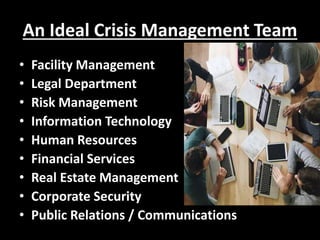
An Ideal Crisis Management Team
• Facility Management
• Legal Department
• Risk Management
• Information Technology
• Human Resources
• Financial Services
• Real Estate Management
• Corporate Security
• Public Relations / Communications
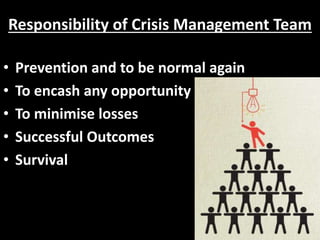
Responsibility of Crisis Management Team
• Prevention and to be normal again
• To encash any opportunity
• To minimise losses
• Successful Outcomes
• Survival
Essential Qualities of Crisis Team
Members
• Well informed and authoritative
• Experienced
• Polite and Patience
• Positive approach
• Effective Communicator
• Risk Manager
• Problem Identifier
• Able to work in stress
• Trustworthy
Conclusion
Benefits of Crisis Management Team:
• Proactive & Precautionary measures
• Enhanced safety for Company and Customers
• Increased confidence & moral in organisation
• Protected and often enhanced reputation
• Reduces Risks
Crisis management

Crisis management

  • 3.
    An unpredictable eventwhich transforms a huge negative impact
  • 4.
    Common characteristics ofCrisis: • Difficult situation pops up unexpectedly • Threats of losses • Time is very short • Quick decisions are expected • Pressure builds over time • Reputation suffers • Demands are made to identify someone to blame
  • 5.
    Types of Crisis 1.Natural Crisis 2. Technological Crisis 3. Crisis of Malevolence 4. Crisis Due to Rumours 5. Crisis of Organizational Misdeeds 6. Crisis of Management Misconduct
  • 6.
    Crisis Management The artof dealing with sudden and unexpected events which disturbs the employees, organization as well as external clients refers to Crisis
  • 7.
    Crisis management includes followingthree stages: Diagnosis of Crisis Planning Adjusting to Changes Correct flow of information across all hierarchies is essential.
  • 8.
    An Ideal CrisisManagement Team • Facility Management • Legal Department • Risk Management • Information Technology • Human Resources • Financial Services • Real Estate Management • Corporate Security • Public Relations / Communications
  • 9.
    Responsibility of CrisisManagement Team • Prevention and to be normal again • To encash any opportunity • To minimise losses • Successful Outcomes • Survival
  • 10.
    Essential Qualities ofCrisis Team Members • Well informed and authoritative • Experienced • Polite and Patience • Positive approach • Effective Communicator • Risk Manager • Problem Identifier • Able to work in stress • Trustworthy
  • 11.
    Conclusion Benefits of CrisisManagement Team: • Proactive & Precautionary measures • Enhanced safety for Company and Customers • Increased confidence & moral in organisation • Protected and often enhanced reputation • Reduces Risks