ENVIRONMENTAL SCIENCE 13e
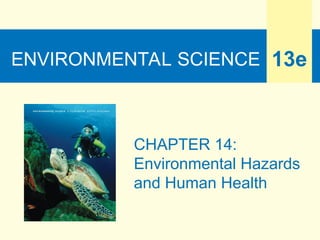
CHAPTER 14:
Environmental Hazards
and Human Health
Core Case Study: BPA
Controversy (1)
• Hormones
• Hormone mimics
• Estrogen mimics
• Bisphenol A, an estrogen mimic
Core Case Study: BPA
Controversy (2)
• Found in hardened plastics
–Baby bottles
–Sipping cups
–Reusable water bottles
–Sports drink and juice bottles
–Microwave dishes
–Food storage containers
–Nearly all canned food liners
Core Case Study: BPA
Controversy (3)
• 93% of Americans have BPA in their
bodies
• Controversy over health risk
–Human health
–Fetuses
–Infants
14-1 What Major Health
Hazards Do We Face?
• Concept 14-1 People face health
hazards from biological, chemical,
physical, and cultural factors, and
from the lifestyle choices they make.
Risk and Hazards
• Risk
–Probability
• Risk assessment
• Risk management
Major Types of Hazards
• Biological
• Chemical
• Physical
• Cultural
• Lifestyle
14-2 What Types of Biological
Hazards Do We Face?
• Concept 14-2 The most serious
infectious diseases are flu, AIDS,
tuberculosis, diarrheal diseases, and
malaria.
Biological Hazards
• Nontransmissible diseases
• Transmissible (infectious) disease
–Pathogens
• Epidemic
• Pandemic
Case Study: the Tuberculosis
Threat (1)
• TB spreading rapidly
• 1 in 3 infected; 5-10% will eventually
develop it
• 2008: 9.3 million active cases
–Poor countries in Asia and Africa
–~ 1.6 million will die
Case Study: the Tuberculosis
Threat (2)
• Inadequate screening
• Increased resistance to antibiotics
• Increased person-to-person contacts
• Inadequate treatment
• Multidrug resistant TB
Science Focus:
Growing Resistance to Antibiotics
• High bacterial reproductive rate
• Genetic resistance
• Global travel
• Use of pesticides
• Overuse of antibiotics
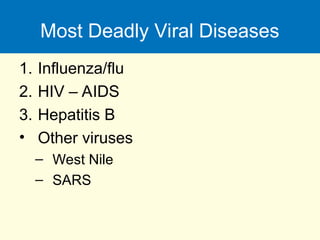
Most Deadly Viral Diseases
1. Influenza/flu
2. HIV – AIDS
3. Hepatitis B
• Other viruses
– West Nile
– SARS
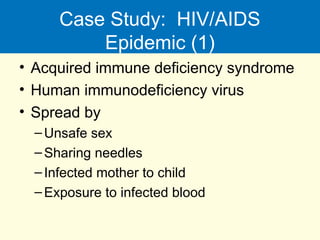
Case Study: HIV/AIDS
Epidemic (1)
• Acquired immune deficiency syndrome
• Human immunodeficiency virus
• Spread by
–Unsafe sex
–Sharing needles
–Infected mother to child
–Exposure to infected blood
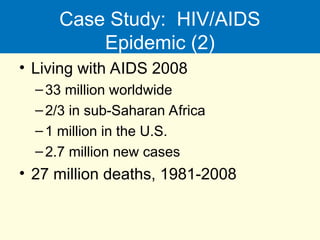
Case Study: HIV/AIDS
Epidemic (2)
• Living with AIDS 2008
–33 million worldwide
–2/3 in sub-Saharan Africa
–1 million in the U.S.
–2.7 million new cases
• 27 million deaths, 1981-2008
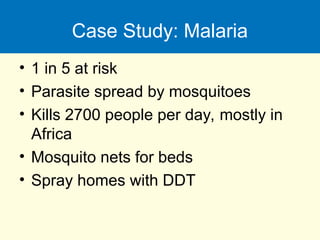
Case Study: Malaria
• 1 in 5 at risk
• Parasite spread by mosquitoes
• Kills 2700 people per day, mostly in
Africa
• Mosquito nets for beds
• Spray homes with DDT
14-3 What Types of Chemical
Hazards Do We Face?
• Concept 14-3 There is growing
concern about chemicals that can
cause cancer and birth defects and
disrupt the human immune, nervous,
and endocrine systems.
Chemical Hazards (1)
• Toxic chemicals
• Carcinogens
• Mutagens
• Teratogens
Chemical Hazards (2)
• Immune system disruptors
• Neurotoxins
• Hormonally active agents (HAA)
–DDT, PCBs, atrazine, aluminum, mercury,
BPA, PCBs
–Males of many species becoming more
feminine
–BPA of special concern
Science Focus: Mercury (1)
• Nerve and organ damage
• Birth defects
• Natural sources
• Human activities
–Coal burning
Science Focus: Mercury (2)
• Humans exposed through
–Inhaling vaporized mercury and mercury
compounds
–Contaminated fish
–High fructose corn syrup
• 30,000 to 60,000 U.S. newborns likely have
reduced IQ
• Need to end coal burning and waste
incineration
14-4 How Can We Evaluate
Chemical Hazards?
• Concept 14-4A Scientists use live
laboratory animals, case reports of
poisonings, and epidemiological studies to
estimate the toxicity of chemicals, but these
methods have limitations.
• Concept 14-4B We can reduce the major
risks we face by becoming informed,
thinking critically about risks, and making
careful choices.
Determining Chemical Safety
• Toxicology
• Toxicity
• Dose
• Water and fat soluble toxins
• Persistence
• Biological magnification
Type and Severity of Health
Damage
• Response – dose dependent
–Acute effect
–Chronic effect
Case Study: Protecting Children
from Toxic Chemicals
• Toxic chemicals in newborns’ blood
• Infants and children more susceptible
–Increased intake of air, water, food for
their body weights
–Put contaminated objects in their
mouths
–Less-developed immune systems
Estimating Toxicity
• Test on live animals
• Dose-response curve
–Lethal dose
–Median lethal dose (LD50)
• Extrapolation from data
Protection against Harmful
Chemicals
• Pollution prevention
• Precautionary principle
• Persistent organic pollutants (POPs)
–The dirty dozen
Individuals Matter: Ray Turner
• CFCs harm the ozone layer
• Ray Turner worked at Hughes Aircraft
• Developed citrus-based compounds
to clean electronics instead of CFC-
based compounds
14-5 How Do We Perceive Risks and
How Can We Avoid the Worst of Them?
• Concept 14-5 We can reduce the
major risks we face by becoming
informed, thinking critically about
risks, and making careful choices.
Evaluating Risks (1)
• Risk analysis (risk assessment)
• Comparative risk analysis
• Risk management
• Risk communication
• Poverty – the greatest risk
Evaluating Risks (2)
• Risks from lifestyles
–Don’t smoke
–Lose excess weight
–Eat healthy foods
–Exercise regularly
–Little or no alcohol
–Avoid excess sunlight
–Practice safe sex
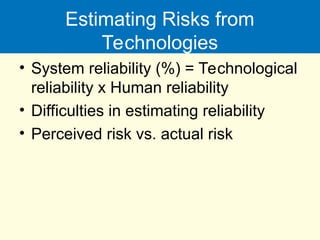
Estimating Risks from
Technologies
• System reliability (%) = Technological
reliability x Human reliability
• Difficulties in estimating reliability
• Perceived risk vs. actual risk
Improving Risk Evaluation
• Compare risks
• Determine how much risk you are
willing to accept
• Determine the actual risk involved
• Concentrate on evaluating and
carefully making important lifestyle
choices
Three Big Ideas from This
Chapter - #1
We face significant hazards from
infectious diseases such as flu, AIDS,
tuberculosis, diarrheal diseases, and
malaria, and from exposure to
chemicals that can cause cancers
and birth defects and disrupt the
human immune, nervous, and
endocrine systems.
Three Big Ideas from This
Chapter - #2
Because of the difficulty in evaluating
the harm caused by exposure to
chemicals, many health scientists call
for much greater emphasis on
pollution prevention.
Three Big Ideas from This
Chapter - #3
Becoming informed, thinking critically
about risks, and making careful
choices can reduce the major risks
we face.

FFINAPRESENTATION REGARDING ENVIROMENTAL

  • 1.
    ENVIRONMENTAL SCIENCE 13e CHAPTER14: Environmental Hazards and Human Health
  • 2.
    Core Case Study:BPA Controversy (1) • Hormones • Hormone mimics • Estrogen mimics • Bisphenol A, an estrogen mimic
  • 3.
    Core Case Study:BPA Controversy (2) • Found in hardened plastics –Baby bottles –Sipping cups –Reusable water bottles –Sports drink and juice bottles –Microwave dishes –Food storage containers –Nearly all canned food liners
  • 4.
    Core Case Study:BPA Controversy (3) • 93% of Americans have BPA in their bodies • Controversy over health risk –Human health –Fetuses –Infants
  • 5.
    14-1 What MajorHealth Hazards Do We Face? • Concept 14-1 People face health hazards from biological, chemical, physical, and cultural factors, and from the lifestyle choices they make.
  • 6.
    Risk and Hazards •Risk –Probability • Risk assessment • Risk management
  • 7.
    Major Types ofHazards • Biological • Chemical • Physical • Cultural • Lifestyle
  • 8.
    14-2 What Typesof Biological Hazards Do We Face? • Concept 14-2 The most serious infectious diseases are flu, AIDS, tuberculosis, diarrheal diseases, and malaria.
  • 9.
    Biological Hazards • Nontransmissiblediseases • Transmissible (infectious) disease –Pathogens • Epidemic • Pandemic
  • 10.
    Case Study: theTuberculosis Threat (1) • TB spreading rapidly • 1 in 3 infected; 5-10% will eventually develop it • 2008: 9.3 million active cases –Poor countries in Asia and Africa –~ 1.6 million will die
  • 11.
    Case Study: theTuberculosis Threat (2) • Inadequate screening • Increased resistance to antibiotics • Increased person-to-person contacts • Inadequate treatment • Multidrug resistant TB
  • 12.
    Science Focus: Growing Resistanceto Antibiotics • High bacterial reproductive rate • Genetic resistance • Global travel • Use of pesticides • Overuse of antibiotics
  • 13.
    Most Deadly ViralDiseases 1. Influenza/flu 2. HIV – AIDS 3. Hepatitis B • Other viruses – West Nile – SARS
  • 14.
    Case Study: HIV/AIDS Epidemic(1) • Acquired immune deficiency syndrome • Human immunodeficiency virus • Spread by –Unsafe sex –Sharing needles –Infected mother to child –Exposure to infected blood
  • 15.
    Case Study: HIV/AIDS Epidemic(2) • Living with AIDS 2008 –33 million worldwide –2/3 in sub-Saharan Africa –1 million in the U.S. –2.7 million new cases • 27 million deaths, 1981-2008
  • 16.
    Case Study: Malaria •1 in 5 at risk • Parasite spread by mosquitoes • Kills 2700 people per day, mostly in Africa • Mosquito nets for beds • Spray homes with DDT
  • 17.
    14-3 What Typesof Chemical Hazards Do We Face? • Concept 14-3 There is growing concern about chemicals that can cause cancer and birth defects and disrupt the human immune, nervous, and endocrine systems.
  • 18.
    Chemical Hazards (1) •Toxic chemicals • Carcinogens • Mutagens • Teratogens
  • 19.
    Chemical Hazards (2) •Immune system disruptors • Neurotoxins • Hormonally active agents (HAA) –DDT, PCBs, atrazine, aluminum, mercury, BPA, PCBs –Males of many species becoming more feminine –BPA of special concern
  • 20.
    Science Focus: Mercury(1) • Nerve and organ damage • Birth defects • Natural sources • Human activities –Coal burning
  • 21.
    Science Focus: Mercury(2) • Humans exposed through –Inhaling vaporized mercury and mercury compounds –Contaminated fish –High fructose corn syrup • 30,000 to 60,000 U.S. newborns likely have reduced IQ • Need to end coal burning and waste incineration
  • 22.
    14-4 How CanWe Evaluate Chemical Hazards? • Concept 14-4A Scientists use live laboratory animals, case reports of poisonings, and epidemiological studies to estimate the toxicity of chemicals, but these methods have limitations. • Concept 14-4B We can reduce the major risks we face by becoming informed, thinking critically about risks, and making careful choices.
  • 23.
    Determining Chemical Safety •Toxicology • Toxicity • Dose • Water and fat soluble toxins • Persistence • Biological magnification
  • 24.
    Type and Severityof Health Damage • Response – dose dependent –Acute effect –Chronic effect
  • 25.
    Case Study: ProtectingChildren from Toxic Chemicals • Toxic chemicals in newborns’ blood • Infants and children more susceptible –Increased intake of air, water, food for their body weights –Put contaminated objects in their mouths –Less-developed immune systems
  • 26.
    Estimating Toxicity • Teston live animals • Dose-response curve –Lethal dose –Median lethal dose (LD50) • Extrapolation from data
  • 27.
    Protection against Harmful Chemicals •Pollution prevention • Precautionary principle • Persistent organic pollutants (POPs) –The dirty dozen
  • 28.
    Individuals Matter: RayTurner • CFCs harm the ozone layer • Ray Turner worked at Hughes Aircraft • Developed citrus-based compounds to clean electronics instead of CFC- based compounds
  • 29.
    14-5 How DoWe Perceive Risks and How Can We Avoid the Worst of Them? • Concept 14-5 We can reduce the major risks we face by becoming informed, thinking critically about risks, and making careful choices.
  • 30.
    Evaluating Risks (1) •Risk analysis (risk assessment) • Comparative risk analysis • Risk management • Risk communication • Poverty – the greatest risk
  • 31.
    Evaluating Risks (2) •Risks from lifestyles –Don’t smoke –Lose excess weight –Eat healthy foods –Exercise regularly –Little or no alcohol –Avoid excess sunlight –Practice safe sex
  • 32.
    Estimating Risks from Technologies •System reliability (%) = Technological reliability x Human reliability • Difficulties in estimating reliability • Perceived risk vs. actual risk
  • 33.
    Improving Risk Evaluation •Compare risks • Determine how much risk you are willing to accept • Determine the actual risk involved • Concentrate on evaluating and carefully making important lifestyle choices
  • 34.
    Three Big Ideasfrom This Chapter - #1 We face significant hazards from infectious diseases such as flu, AIDS, tuberculosis, diarrheal diseases, and malaria, and from exposure to chemicals that can cause cancers and birth defects and disrupt the human immune, nervous, and endocrine systems.
  • 35.
    Three Big Ideasfrom This Chapter - #2 Because of the difficulty in evaluating the harm caused by exposure to chemicals, many health scientists call for much greater emphasis on pollution prevention.
  • 36.
    Three Big Ideasfrom This Chapter - #3 Becoming informed, thinking critically about risks, and making careful choices can reduce the major risks we face.