By
Dr Salihi Abdulmalik
National Orthopaedic Hospital-Dala, Kano
12th December, 2020
 Proximal femur abuts acetabulum with range
of motion
 There is reduced ROM of the hip due to
uneven surfaces of the head of femur or
acetabulum or both
 Common cause of early onset hip dysfunction
and secondary osteoarthritis
 Acetabulum
◦ 45 degrees caudally
◦ 15 degrees anteriorly
◦ Allows 170 degrees coverage for the femoral head
 Femoral head
◦ inclines at 125 degrees
◦ Anteversion of 15 degrees
 Ball and socket joint
 Covered by hyaline cartilage
 Minimal gliding resistance even during peak
loading with good ROM
 ROM
◦ Head-neck ratio
◦ Size of the head
◦ Acetabular socket orientation
◦ Proximal femur orientation
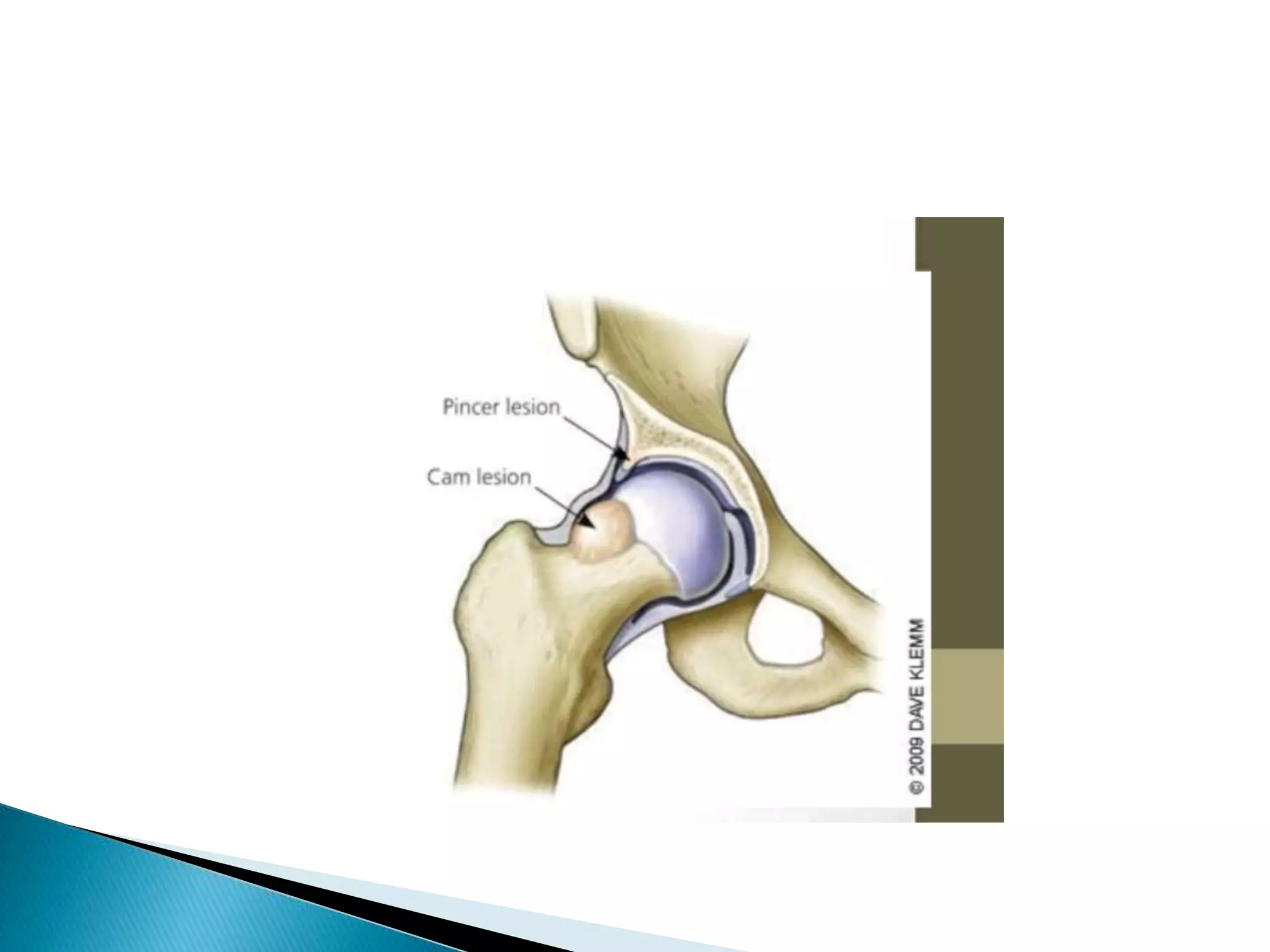
 Pincer
 Cam
 Mixed
 Acetabular based disorder with
◦ Global over coverage of the femoral head (coxa
profunda or protrusio)
◦ Local over coverage of the femoral head anterioly
by a retroverted acetabulum or anteriosuperior
acetabular overhang
 Femoral head makes contact with the
acetabulum
 Labral lesion occurs first and subsequent
articualr cartilage
 Labrum is crushed causing intrasubstance
tears and sometimes para labaral cysts
 Healing of labrum forms an ossified rim
which further worsens acetabular coverage
 Increased shearing forces mostly in the
posterior part of the joint during medial
rotation
 Proximal femoral disorder
◦ Bony bump at the head neck junction (aspherical
femoral head
◦ Decrease head-neck ratio
◦ Femoral neck retroversion
◦ Decrease femoral head offset
 Pincer/CAM
 Mostly unknown
 Congenital
◦ Retroversion
 Acquired
◦ SCFE
◦ Perthes disease
◦ Post femoral/acetabular osteotomy
◦ Post traumatic - #NOF
◦ ? Rigorous physical activity during skeletal
development
 Groin pain
◦ Excessive demand
◦ Prolonged sitting
 Limited motion
 Difficulty sitting
 Antalgic gait
 Externally rotated limb-SCFE
 Limited hip flexion (<90 degrees) with
internal rotation (<5 degrees)
 Anterior impingement test (flexion,
adduction, internal rotation) elicits pain
 Typical patient with pincer
◦ Woman
◦ 30-40 years
◦ Pain can be marked from labral injury
◦ Cartilage damage may be moderate
 Typical CAM
◦ Male
◦ 20-30 years
◦ Muscular and athletic
◦ Pain less dramatic
◦ Substantial cartilage damage
 PINCER
 Pelvic AP
◦ Pincer
 Cross over sign
 Posterior wall sign
 Cross table lateral
◦ Anterior lateral abnormalities
 Acetabular fossa
medial to ilioischial
line
 CAM
◦ Cross leg lateral view
◦ Circle drawn over femoral head should show
smooth contour, any lesion outside indicate CAM
lesion
◦ Measure alpha angle
 normal is 42 degrees
 >50.5 degrees is diagnostic
◦
 1st line – center of
femoral head and
center of femoral
neck
 2nd line – center of
femoral head to the
point on the
anterolateral head-
neck junction where
prominence begins
 CT scan
 MRI
◦ Labral tears
◦ Paralabral cysts
◦ Articular cartilage defects
◦ Ossification of acetabular rim
◦ Loss of spherity of femoral head due to fibrocystic
changes
 Non operative
◦ Indications
 Minimally symptomatic patients
 No mechanical symptoms
◦ Physical therapy
◦ Restriction of athletic activities
◦ NSAIDS
◦ Benefits questionable
◦ Delays surgical correction
◦ Premature OA
 Surgical
◦ Periacetabular osteotomy
 Indication:
 structural deformity of acetabulum with poor coverage of
femoral head
 Retroversion
 Coxa profunda
 Technique: osteotomy and fixation
 Open surgical hip dislocation and trimming of
CAM and pincer lesions
◦ Indications
 Preserved articular cartilage
 Correctable deformity
 Reasonable expectations
◦ Contraindications
 >55 years
 Morbid obesity
 Advanced joint disease
◦ THR
 Age >60 years with end stage hip
◦ Correction by arthroscopy
 Femoral neck fracture
 Heterotropc ossification
 Failure to preserve

Femoral acetabular impingement sydrome

  • 1.
    By Dr Salihi Abdulmalik NationalOrthopaedic Hospital-Dala, Kano 12th December, 2020
  • 2.
     Proximal femurabuts acetabulum with range of motion  There is reduced ROM of the hip due to uneven surfaces of the head of femur or acetabulum or both  Common cause of early onset hip dysfunction and secondary osteoarthritis
  • 4.
     Acetabulum ◦ 45degrees caudally ◦ 15 degrees anteriorly ◦ Allows 170 degrees coverage for the femoral head  Femoral head ◦ inclines at 125 degrees ◦ Anteversion of 15 degrees
  • 5.
     Ball andsocket joint  Covered by hyaline cartilage  Minimal gliding resistance even during peak loading with good ROM  ROM ◦ Head-neck ratio ◦ Size of the head ◦ Acetabular socket orientation ◦ Proximal femur orientation
  • 6.
  • 7.
     Acetabular baseddisorder with ◦ Global over coverage of the femoral head (coxa profunda or protrusio) ◦ Local over coverage of the femoral head anterioly by a retroverted acetabulum or anteriosuperior acetabular overhang  Femoral head makes contact with the acetabulum
  • 8.
     Labral lesionoccurs first and subsequent articualr cartilage  Labrum is crushed causing intrasubstance tears and sometimes para labaral cysts  Healing of labrum forms an ossified rim which further worsens acetabular coverage  Increased shearing forces mostly in the posterior part of the joint during medial rotation
  • 10.
     Proximal femoraldisorder ◦ Bony bump at the head neck junction (aspherical femoral head ◦ Decrease head-neck ratio ◦ Femoral neck retroversion ◦ Decrease femoral head offset
  • 12.
  • 14.
     Mostly unknown Congenital ◦ Retroversion  Acquired ◦ SCFE ◦ Perthes disease ◦ Post femoral/acetabular osteotomy ◦ Post traumatic - #NOF ◦ ? Rigorous physical activity during skeletal development
  • 15.
     Groin pain ◦Excessive demand ◦ Prolonged sitting  Limited motion  Difficulty sitting
  • 16.
     Antalgic gait Externally rotated limb-SCFE  Limited hip flexion (<90 degrees) with internal rotation (<5 degrees)  Anterior impingement test (flexion, adduction, internal rotation) elicits pain
  • 17.
     Typical patientwith pincer ◦ Woman ◦ 30-40 years ◦ Pain can be marked from labral injury ◦ Cartilage damage may be moderate
  • 18.
     Typical CAM ◦Male ◦ 20-30 years ◦ Muscular and athletic ◦ Pain less dramatic ◦ Substantial cartilage damage
  • 19.
     PINCER  PelvicAP ◦ Pincer  Cross over sign  Posterior wall sign  Cross table lateral ◦ Anterior lateral abnormalities
  • 22.
     Acetabular fossa medialto ilioischial line
  • 24.
     CAM ◦ Crossleg lateral view ◦ Circle drawn over femoral head should show smooth contour, any lesion outside indicate CAM lesion ◦ Measure alpha angle  normal is 42 degrees  >50.5 degrees is diagnostic ◦
  • 26.
     1st line– center of femoral head and center of femoral neck  2nd line – center of femoral head to the point on the anterolateral head- neck junction where prominence begins
  • 27.
     CT scan MRI ◦ Labral tears ◦ Paralabral cysts ◦ Articular cartilage defects ◦ Ossification of acetabular rim ◦ Loss of spherity of femoral head due to fibrocystic changes
  • 28.
     Non operative ◦Indications  Minimally symptomatic patients  No mechanical symptoms ◦ Physical therapy ◦ Restriction of athletic activities ◦ NSAIDS ◦ Benefits questionable ◦ Delays surgical correction ◦ Premature OA
  • 29.
     Surgical ◦ Periacetabularosteotomy  Indication:  structural deformity of acetabulum with poor coverage of femoral head  Retroversion  Coxa profunda  Technique: osteotomy and fixation
  • 30.
     Open surgicalhip dislocation and trimming of CAM and pincer lesions ◦ Indications  Preserved articular cartilage  Correctable deformity  Reasonable expectations ◦ Contraindications  >55 years  Morbid obesity  Advanced joint disease
  • 31.
    ◦ THR  Age>60 years with end stage hip ◦ Correction by arthroscopy
  • 32.
     Femoral neckfracture  Heterotropc ossification  Failure to preserve