z
Female
Infertility
CAUSES OF
Dr. Laveinya Balaji
z
INFERTILITY
 Infertility is “a disease of the reproductive system defined by the
failure to achieve a clinical pregnancy after 12 months or more of
regular unprotected sexual intercourse (WHO-ICMART glossary*).
There are two kinds of infertility – primary and secondary:
 Primary infertility means that the couple has never conceived.
Secondary infertility means that the couple has experienced a
pregnancy before and failed to conceive later. Globally, most
infertile couples suffer from primary infertility.
z
ETIOLOGY
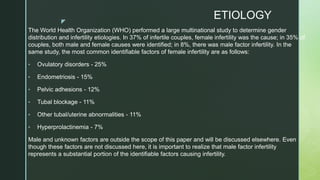
The World Health Organization (WHO) performed a large multinational study to determine gender
distribution and infertility etiologies. In 37% of infertile couples, female infertility was the cause; in 35% of
couples, both male and female causes were identified; in 8%, there was male factor infertility. In the
same study, the most common identifiable factors of female infertility are as follows:
• Ovulatory disorders - 25%
• Endometriosis - 15%
• Pelvic adhesions - 12%
• Tubal blockage - 11%
• Other tubal/uterine abnormalities - 11%
• Hyperprolactinemia - 7%
Male and unknown factors are outside the scope of this paper and will be discussed elsewhere. Even
though these factors are not discussed here, it is important to realize that male factor infertility
represents a substantial portion of the identifiable factors causing infertility.

z
EPIDEMIOLOGY
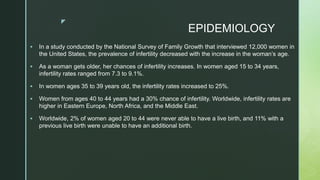
 In a study conducted by the National Survey of Family Growth that interviewed 12,000 women in
the United States, the prevalence of infertility decreased with the increase in the woman’s age.
 As a woman gets older, her chances of infertility increases. In women aged 15 to 34 years,
infertility rates ranged from 7.3 to 9.1%.
 In women ages 35 to 39 years old, the infertility rates increased to 25%.
 Women from ages 40 to 44 years had a 30% chance of infertility. Worldwide, infertility rates are
higher in Eastern Europe, North Africa, and the Middle East.
 Worldwide, 2% of women aged 20 to 44 were never able to have a live birth, and 11% with a
previous live birth were unable to have an additional birth.
z
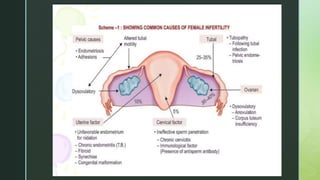
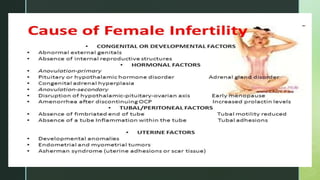
Causes of female infertility
z
z
PATHOPHYSIOLOGY
z
CONGENITAL/ DEVELOPMENTAL FACTORS
 Absence of vagina
 Vulval agenesis
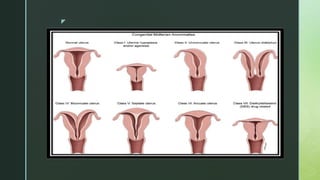
 Uterine malformation
 Fallopian tube and ovarian causes
z
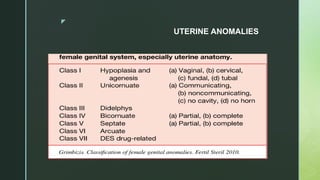
UTERINE ANOMALIES
z
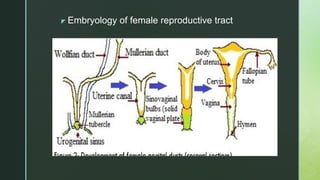
z Embryology of female reproductive tract
z
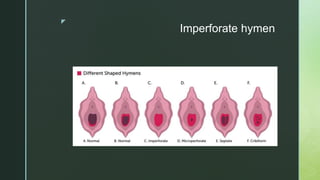
Imperforate hymen
z
Hormonal Factors
Anovulation
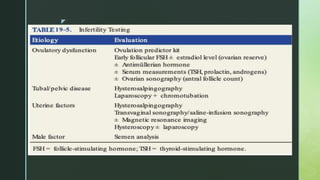
Ovulatory disorders make up 25% of the known causes of female infertility. Oligo-ovulation or
anovulation results in infertility because no oocyte will be released monthly. In the absence of an
oocyte, there is no opportunity for fertilization and pregnancy. To help with treatment and further
classification, the World Health Organization subdivided ovulatory disorders into four classes:
1. Hypogonadotropic hypogonadal anovulation: i.e., hypothalamic amenorrhea
2. Normogonadotropic normoestrogenic anovulation: i.e., polycystic ovarian syndrome (PCOS)
3. Hypergonadotropic hypoestrogenic anovulation: i.e., premature ovarian failure
4. Hyperprolactinemic anovulation: i.e., pituitary adenoma
z
Hypogonadotropic Hypogonadal Anovulation:
 Hypothalamic amenorrhea or functional hypothalamic amenorrhea (FHA) is
associated with eating disorders and excessive exercise, which results in a
decrease in hypothalamic GnRH secretion. The decreased caloric intake,
associated weight loss, or excessive exercise leads to elevated cortisol, which
causes a suppression of GnRH.
 The decreased or absent pulsatility of GnRH results in a decrease in the release
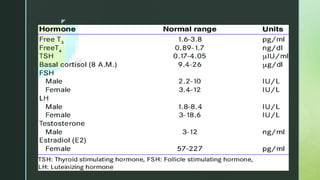
of gonadotropins, follicle-stimulating hormone (FSH), and luteinizing hormone
(LH) from the anterior pituitary gland. These two deficiencies result in abnormal
follicle growth, anovulation, and low estrogen levels.
 The FSH and LH will have variations ranging from normal to low, but the
hormone ratio will resemble a prepubertal female, with FSH higher than LH.
z
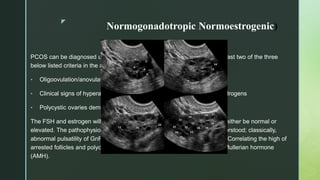
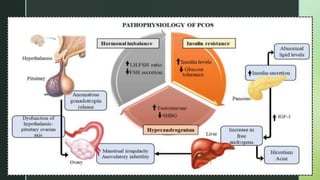
Normogonadotropic Normoestrogenic)
PCOS can be diagnosed using the Rotterdam criteria, which requires at least two of the three
below listed criteria in the absence of other pathological causes
• Oligoovulation/anovulation
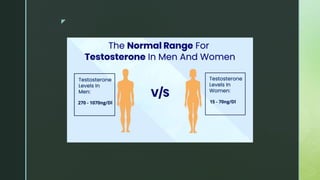
• Clinical signs of hyperandrogenism and/or serological elevations of androgens
• Polycystic ovaries demonstrated with ultrasound
The FSH and estrogen will be within normal laboratory limits. The LH can either be normal or
elevated. The pathophysiology behind PCOS and infertility is not well understood; classically,
abnormal pulsatility of GnRH is described as a possible underlying cause. Correlating the high of
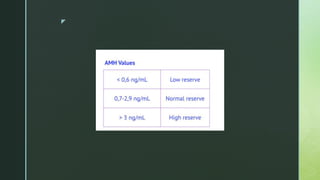
arrested follicles and polycystic appearing ovaries is the elevation of anti-Mullerian hormone
(AMH).
z
z
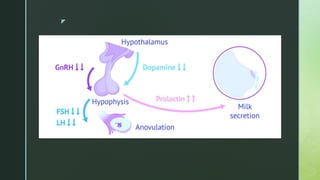
Hyperprolactinemic Anovulation
 The WHO recognizes hyperprolactinemia as a leading cause of female infertility;
however, the ASRM recently published guidelines that the initial workup does not
need to include prolactin.
 Prolactin causes suppression of hypothalamic GnRH secretion leading to a low
LH, resulting in anovulation, corresponding oligomenorrhea, or amenorrhea.
 Prolactin serum values of 20 to 50 ng/mL cause insufficient progesterone release
from the corpus luteum, which shortens the luteal phase.
 A concentration greater than 100 ng/mL are associated with overt hypogonadism
and amenorrhea and most commonly associated with pituitary adenomas.
z
z
Hypergonadotropic Hypoestrogenic
Anovulation
 Premature ovarian failure (POF) is the cessation of ovarian function before 40 years of age. The
term refers to the condition when the ovaries have lost their germinative and hormonal functions
because of the exhaustion of the number of ovarian follicles prior to the typical age for
physiological menopause,
 The medical history of patients with POF usually reveals a normal age of menarche and regular
menstrual cycles, followed by oligomenorrhoea or sudden amenorrhoea. In some cases,
secondary loss of menses is diagnosed after stopping contraceptive pills . Most frequently,
women suffer from hot flushes, excessive sweating, hair loss, as well as skin and mucous
membrane dryness.
 Tests reveal a hypergonadotropic-hypogonadic hormone profile which is characterised by low
oestradiol (E2) levels (< 20 pg/ml), elevated gonadotropin levels (follicle-stimulating hormone
[FSH] > 20 IU/l), low anti-Müllerian hormone (AMH) levels – < 0.5 ng/ml (< 1 ng/ml), and low
inhibin B levels
z
Other Factors
z
Fallopian/ Tubal Factors
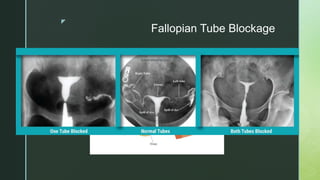
 Among infertile women, 30%-40% have fallopian tube-related diseases that
cause infertility. Fallopian tube disease is one of the most common factors
causing female infertility and represents the need for infertility treatment.
 The pathogenesis is complex, including tubal inflammation, tubal tuberculosis,
endometriosis, postoperative pelvic injury and adhesions, and congenital
hypoplasia.
 One-third of tubal infertility is caused by non-specific salpingitis and is the most
frequent cause of tubal blockage
z
Fallopian Tube Blockage
z PELVIC/ UTERINE CAUSES
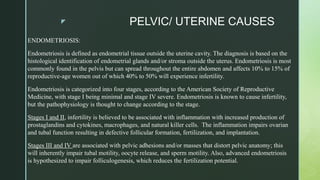
ENDOMETRIOSIS:
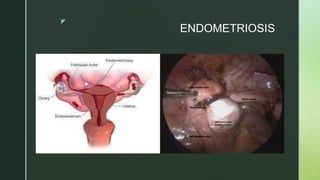
Endometriosis is defined as endometrial tissue outside the uterine cavity. The diagnosis is based on the
histological identification of endometrial glands and/or stroma outside the uterus. Endometriosis is most
commonly found in the pelvis but can spread throughout the entire abdomen and affects 10% to 15% of
reproductive-age women out of which 40% to 50% will experience infertility.
Endometriosis is categorized into four stages, according to the American Society of Reproductive
Medicine, with stage I being minimal and stage IV severe. Endometriosis is known to cause infertility,
but the pathophysiology is thought to change according to the stage.
Stages I and II, infertility is believed to be associated with inflammation with increased production of
prostaglandins and cytokines, macrophages, and natural killer cells. The inflammation impairs ovarian
and tubal function resulting in defective follicular formation, fertilization, and implantation.
Stages III and IV are associated with pelvic adhesions and/or masses that distort pelvic anatomy; this
will inherently impair tubal motility, oocyte release, and sperm motility. Also, advanced endometriosis
is hypothesized to impair folliculogenesis, which reduces the fertilization potential.
z
ENDOMETRIOSIS
z
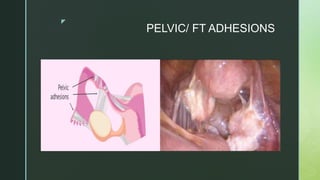
PELVIC/ TUBAL ADHESIONS
 Pelvic and tubal adhesions, along with uterine and tubal abnormalities, account for a large
portion of female infertility. Infectious processes within the abdomen are the leading cause of
pelvic/tubal adhesions; the most common infectious process to affect infertility is pelvic
inflammatory disease (PID). The microorganism that carries the greatest risk of infertility in
association with PID is Chlamydia trachomatis.
 Hydrosalpinges, are a tubal abnormality caused by acute and chronic inflammation that
damages the structural integrity of the fallopian. This damage leads to tubal obstruction, which
blocks the distribution of physiologic fluid in the fallopian tube and results in fluid
accumulation.
 The belief is that hydrosalpinges impair fertility through the retrograde flow of toxins and
prostaglandins into the endometrium, creating a hostile environment for implantation by
impairing endometrial receptivity
z
PELVIC/ FT ADHESIONS
z
 There are many diagnostic methods for detecting fallopian tube obstruction, such as
imaging (HSG and HyCoSy), hysteroscopy, and laparoscopy. The endoscope can
visually observe the state of the fallopian tube mucosa and, more importantly, is used
to assess the prognosis and for therapeutic purposes.
 Laparoscopy is the most reliable method of inspection. However, it is expensive and
invasive, but it is the most commonly used method and is a daycare surgery with
minimal incision and maximum diagnostic and therapeutic value. HSG is the primary
diagnostic method for obstructive tubal infertility, and sometimes it can have a
therapeutic effect
z
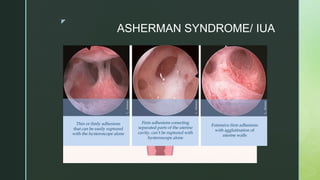
INTRAUTERINE ADHESIONS
 In addition to menstrual abnormalities and recurrent abortion, some women may
not be able to conceive because of the presence of intrauterine adhesions
(IUAs).
 Women with IUAs have had a previous curettage of the uterine cavity, usually
during or shortly following a pregnancy. If the only abnormal finding in the
infertility investigation is the presence of IUAs, the prognosis for conception after
hysteroscopic lysis of the adhesions is good.
 March and Israel have reported that of 69 infertile women with IUAs and no other
infertility factors, 52 (75%) conceived after hysteroscopic treatment.
z
ASHERMAN SYNDROME/ IUA
z
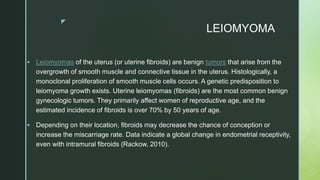
LEIOMYOMA
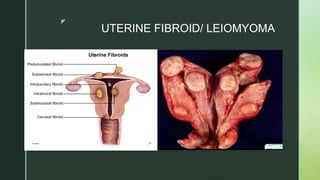
 Leiomyomas of the uterus (or uterine fibroids) are benign tumors that arise from the
overgrowth of smooth muscle and connective tissue in the uterus. Histologically, a
monoclonal proliferation of smooth muscle cells occurs. A genetic predisposition to
leiomyoma growth exists. Uterine leiomyomas (fibroids) are the most common benign
gynecologic tumors. They primarily affect women of reproductive age, and the
estimated incidence of fibroids is over 70% by 50 years of age.
 Depending on their location, fibroids may decrease the chance of conception or
increase the miscarriage rate. Data indicate a global change in endometrial receptivity,
even with intramural fibroids (Rackow, 2010).
z
UTERINE FIBROID/ LEIOMYOMA
z
TUBERCULOSIS
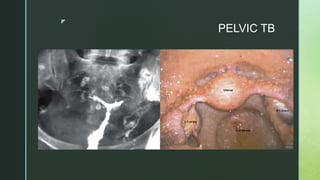
 Although rare in the United States, genital tuberculosis should be kept in mind. If
HSG reveals findings consistent with pelvic tuberculosis, endometrial biopsy and
culture should be performed to confirm the diagnosis.
 Appropriate antituberculosis medication should be initiated, but women with pelvic
tuberculosis should be considered sterile, because pregnancies after therapy are
rare. Tubal reconstructive surgical procedures are therefore not indicated. If
tuberculosis is present in the tube but not in the uterus, pregnancies have been
reported following IVF (Parikh, 1997)
z
PELVIC TB
z
z
ADDITIONAL NFORMATION
z
z
z
z
REFERENCES
 Walker MH, Tobler KJ. Female Infertility. [Updated 2022 May 26]. In: StatPearls [Internet]. Treasure Island (FL): StatPearls Publishing; 2022 Jan-. Available from:
https://www.ncbi.nlm.nih.gov/books/NBK556033/
 Williams Gynecology, Third Edition John O. Schorge, Lisa M. Halvorson, Joseph I. Schaffer · 2016 ·
 EPIDEMIOLOGY : Chandra A, Copen CE, Stephen EH. Infertility and impaired fecundity in the United States, 1982-2010: data from the National Survey of Family Growth. Natl Health Stat Report. 2013
Aug 14;(67):1-18, 1 p following 19. [PubMed]
 Mascarenhas MN, Flaxman SR, Boerma T, Vanderpoel S, Stevens GA. National, regional, and global trends in infertility prevalence since 1990: a systematic analysis of 277 health surveys. PLoS
Med. 2012;9(12):e1001356. [PMC free article] [PubMed]
 Grimbizis, Grigoris F. and Rudi Campo. “Congenital malformations of the female genital tract: the need for a new classification system.” Fertility and sterility 94 2 (2010): 401-7 .
 Jankowska K. Premature ovarian failure. Prz Menopauzalny. 2017 Jun;16(2):51-56. doi: 10.5114/pm.2017.68592. Epub 2017 Jun 30. PMID: 28721130; PMCID: PMC5509972.
 Infertility Workup for the Women's Health Specialist: ACOG Committee Opinion, Number 781. Obstet Gynecol. 2019 Jun;133(6):e377-e384. [PubMed]
 Seppälä M, Ranta T, Hirvonen E. Hyperprolactinaemia and luteal insufficiency. Lancet. 1976 Jan 31;1(7953):229-30. [PubMed]
 Comprehensive Gynecology Rogerio A. Lobo, David M Gershenson, Gretchen M Lentz · 2016
 Charles M. March, INTRAUTERINE ADHESIONS, Obstetrics and Gynecology Clinics of North America, Volume 22, Issue 3,1995,
 K Dreyer, R van Eekelen, RI Tjon-Kon-Fat, JW van der Steeg, P Steures, MJC Eijkemans, F van der Veen, PGA Hompes, BWJ Mol, N van Geloven,The therapeutic effect of
hysterosalpingography in couples with unexplained subfertility: a post-hoc analysis of a prospective multi-centre cohort study, Reproductive BioMedicine Online,Volume 38, Issue
2,2019,
 Jeshica Bulsara, Priyanshi Patel, Arun Soni, Sanjeev Acharya,A review: Brief insight into Polycystic Ovarian syndrome,Endocrine and Metabolic Science,Volume 3,2021,

Female infertility and its causes

  • 1.
  • 2.
    z INFERTILITY  Infertility is“a disease of the reproductive system defined by the failure to achieve a clinical pregnancy after 12 months or more of regular unprotected sexual intercourse (WHO-ICMART glossary*). There are two kinds of infertility – primary and secondary:  Primary infertility means that the couple has never conceived. Secondary infertility means that the couple has experienced a pregnancy before and failed to conceive later. Globally, most infertile couples suffer from primary infertility.
  • 3.
    z ETIOLOGY The World HealthOrganization (WHO) performed a large multinational study to determine gender distribution and infertility etiologies. In 37% of infertile couples, female infertility was the cause; in 35% of couples, both male and female causes were identified; in 8%, there was male factor infertility. In the same study, the most common identifiable factors of female infertility are as follows: • Ovulatory disorders - 25% • Endometriosis - 15% • Pelvic adhesions - 12% • Tubal blockage - 11% • Other tubal/uterine abnormalities - 11% • Hyperprolactinemia - 7% Male and unknown factors are outside the scope of this paper and will be discussed elsewhere. Even though these factors are not discussed here, it is important to realize that male factor infertility represents a substantial portion of the identifiable factors causing infertility. 
  • 4.
    z EPIDEMIOLOGY  In astudy conducted by the National Survey of Family Growth that interviewed 12,000 women in the United States, the prevalence of infertility decreased with the increase in the woman’s age.  As a woman gets older, her chances of infertility increases. In women aged 15 to 34 years, infertility rates ranged from 7.3 to 9.1%.  In women ages 35 to 39 years old, the infertility rates increased to 25%.  Women from ages 40 to 44 years had a 30% chance of infertility. Worldwide, infertility rates are higher in Eastern Europe, North Africa, and the Middle East.  Worldwide, 2% of women aged 20 to 44 were never able to have a live birth, and 11% with a previous live birth were unable to have an additional birth.
  • 5.
    z Causes of femaleinfertility
  • 6.
  • 7.
  • 8.
    z CONGENITAL/ DEVELOPMENTAL FACTORS Absence of vagina  Vulval agenesis  Uterine malformation  Fallopian tube and ovarian causes
  • 9.
  • 10.
  • 11.
    z Embryology offemale reproductive tract
  • 12.
  • 13.
    z Hormonal Factors Anovulation Ovulatory disordersmake up 25% of the known causes of female infertility. Oligo-ovulation or anovulation results in infertility because no oocyte will be released monthly. In the absence of an oocyte, there is no opportunity for fertilization and pregnancy. To help with treatment and further classification, the World Health Organization subdivided ovulatory disorders into four classes: 1. Hypogonadotropic hypogonadal anovulation: i.e., hypothalamic amenorrhea 2. Normogonadotropic normoestrogenic anovulation: i.e., polycystic ovarian syndrome (PCOS) 3. Hypergonadotropic hypoestrogenic anovulation: i.e., premature ovarian failure 4. Hyperprolactinemic anovulation: i.e., pituitary adenoma
  • 14.
    z Hypogonadotropic Hypogonadal Anovulation: Hypothalamic amenorrhea or functional hypothalamic amenorrhea (FHA) is associated with eating disorders and excessive exercise, which results in a decrease in hypothalamic GnRH secretion. The decreased caloric intake, associated weight loss, or excessive exercise leads to elevated cortisol, which causes a suppression of GnRH.  The decreased or absent pulsatility of GnRH results in a decrease in the release of gonadotropins, follicle-stimulating hormone (FSH), and luteinizing hormone (LH) from the anterior pituitary gland. These two deficiencies result in abnormal follicle growth, anovulation, and low estrogen levels.  The FSH and LH will have variations ranging from normal to low, but the hormone ratio will resemble a prepubertal female, with FSH higher than LH.
  • 15.
    z Normogonadotropic Normoestrogenic) PCOS canbe diagnosed using the Rotterdam criteria, which requires at least two of the three below listed criteria in the absence of other pathological causes • Oligoovulation/anovulation • Clinical signs of hyperandrogenism and/or serological elevations of androgens • Polycystic ovaries demonstrated with ultrasound The FSH and estrogen will be within normal laboratory limits. The LH can either be normal or elevated. The pathophysiology behind PCOS and infertility is not well understood; classically, abnormal pulsatility of GnRH is described as a possible underlying cause. Correlating the high of arrested follicles and polycystic appearing ovaries is the elevation of anti-Mullerian hormone (AMH).
  • 16.
  • 17.
    z Hyperprolactinemic Anovulation  TheWHO recognizes hyperprolactinemia as a leading cause of female infertility; however, the ASRM recently published guidelines that the initial workup does not need to include prolactin.  Prolactin causes suppression of hypothalamic GnRH secretion leading to a low LH, resulting in anovulation, corresponding oligomenorrhea, or amenorrhea.  Prolactin serum values of 20 to 50 ng/mL cause insufficient progesterone release from the corpus luteum, which shortens the luteal phase.  A concentration greater than 100 ng/mL are associated with overt hypogonadism and amenorrhea and most commonly associated with pituitary adenomas.
  • 18.
  • 19.
    z Hypergonadotropic Hypoestrogenic Anovulation  Prematureovarian failure (POF) is the cessation of ovarian function before 40 years of age. The term refers to the condition when the ovaries have lost their germinative and hormonal functions because of the exhaustion of the number of ovarian follicles prior to the typical age for physiological menopause,  The medical history of patients with POF usually reveals a normal age of menarche and regular menstrual cycles, followed by oligomenorrhoea or sudden amenorrhoea. In some cases, secondary loss of menses is diagnosed after stopping contraceptive pills . Most frequently, women suffer from hot flushes, excessive sweating, hair loss, as well as skin and mucous membrane dryness.  Tests reveal a hypergonadotropic-hypogonadic hormone profile which is characterised by low oestradiol (E2) levels (< 20 pg/ml), elevated gonadotropin levels (follicle-stimulating hormone [FSH] > 20 IU/l), low anti-Müllerian hormone (AMH) levels – < 0.5 ng/ml (< 1 ng/ml), and low inhibin B levels
  • 20.
  • 21.
    z Fallopian/ Tubal Factors Among infertile women, 30%-40% have fallopian tube-related diseases that cause infertility. Fallopian tube disease is one of the most common factors causing female infertility and represents the need for infertility treatment.  The pathogenesis is complex, including tubal inflammation, tubal tuberculosis, endometriosis, postoperative pelvic injury and adhesions, and congenital hypoplasia.  One-third of tubal infertility is caused by non-specific salpingitis and is the most frequent cause of tubal blockage
  • 22.
  • 23.
    z PELVIC/ UTERINECAUSES ENDOMETRIOSIS: Endometriosis is defined as endometrial tissue outside the uterine cavity. The diagnosis is based on the histological identification of endometrial glands and/or stroma outside the uterus. Endometriosis is most commonly found in the pelvis but can spread throughout the entire abdomen and affects 10% to 15% of reproductive-age women out of which 40% to 50% will experience infertility. Endometriosis is categorized into four stages, according to the American Society of Reproductive Medicine, with stage I being minimal and stage IV severe. Endometriosis is known to cause infertility, but the pathophysiology is thought to change according to the stage. Stages I and II, infertility is believed to be associated with inflammation with increased production of prostaglandins and cytokines, macrophages, and natural killer cells. The inflammation impairs ovarian and tubal function resulting in defective follicular formation, fertilization, and implantation. Stages III and IV are associated with pelvic adhesions and/or masses that distort pelvic anatomy; this will inherently impair tubal motility, oocyte release, and sperm motility. Also, advanced endometriosis is hypothesized to impair folliculogenesis, which reduces the fertilization potential.
  • 24.
  • 25.
    z PELVIC/ TUBAL ADHESIONS Pelvic and tubal adhesions, along with uterine and tubal abnormalities, account for a large portion of female infertility. Infectious processes within the abdomen are the leading cause of pelvic/tubal adhesions; the most common infectious process to affect infertility is pelvic inflammatory disease (PID). The microorganism that carries the greatest risk of infertility in association with PID is Chlamydia trachomatis.  Hydrosalpinges, are a tubal abnormality caused by acute and chronic inflammation that damages the structural integrity of the fallopian. This damage leads to tubal obstruction, which blocks the distribution of physiologic fluid in the fallopian tube and results in fluid accumulation.  The belief is that hydrosalpinges impair fertility through the retrograde flow of toxins and prostaglandins into the endometrium, creating a hostile environment for implantation by impairing endometrial receptivity
  • 26.
  • 27.
    z  There aremany diagnostic methods for detecting fallopian tube obstruction, such as imaging (HSG and HyCoSy), hysteroscopy, and laparoscopy. The endoscope can visually observe the state of the fallopian tube mucosa and, more importantly, is used to assess the prognosis and for therapeutic purposes.  Laparoscopy is the most reliable method of inspection. However, it is expensive and invasive, but it is the most commonly used method and is a daycare surgery with minimal incision and maximum diagnostic and therapeutic value. HSG is the primary diagnostic method for obstructive tubal infertility, and sometimes it can have a therapeutic effect
  • 28.
    z INTRAUTERINE ADHESIONS  Inaddition to menstrual abnormalities and recurrent abortion, some women may not be able to conceive because of the presence of intrauterine adhesions (IUAs).  Women with IUAs have had a previous curettage of the uterine cavity, usually during or shortly following a pregnancy. If the only abnormal finding in the infertility investigation is the presence of IUAs, the prognosis for conception after hysteroscopic lysis of the adhesions is good.  March and Israel have reported that of 69 infertile women with IUAs and no other infertility factors, 52 (75%) conceived after hysteroscopic treatment.
  • 29.
  • 30.
    z LEIOMYOMA  Leiomyomas ofthe uterus (or uterine fibroids) are benign tumors that arise from the overgrowth of smooth muscle and connective tissue in the uterus. Histologically, a monoclonal proliferation of smooth muscle cells occurs. A genetic predisposition to leiomyoma growth exists. Uterine leiomyomas (fibroids) are the most common benign gynecologic tumors. They primarily affect women of reproductive age, and the estimated incidence of fibroids is over 70% by 50 years of age.  Depending on their location, fibroids may decrease the chance of conception or increase the miscarriage rate. Data indicate a global change in endometrial receptivity, even with intramural fibroids (Rackow, 2010).
  • 31.
  • 32.
    z TUBERCULOSIS  Although rarein the United States, genital tuberculosis should be kept in mind. If HSG reveals findings consistent with pelvic tuberculosis, endometrial biopsy and culture should be performed to confirm the diagnosis.  Appropriate antituberculosis medication should be initiated, but women with pelvic tuberculosis should be considered sterile, because pregnancies after therapy are rare. Tubal reconstructive surgical procedures are therefore not indicated. If tuberculosis is present in the tube but not in the uterus, pregnancies have been reported following IVF (Parikh, 1997)
  • 33.
  • 34.
  • 35.
  • 36.
  • 37.
  • 38.
  • 39.
    z REFERENCES  Walker MH,Tobler KJ. Female Infertility. [Updated 2022 May 26]. In: StatPearls [Internet]. Treasure Island (FL): StatPearls Publishing; 2022 Jan-. Available from: https://www.ncbi.nlm.nih.gov/books/NBK556033/  Williams Gynecology, Third Edition John O. Schorge, Lisa M. Halvorson, Joseph I. Schaffer · 2016 ·  EPIDEMIOLOGY : Chandra A, Copen CE, Stephen EH. Infertility and impaired fecundity in the United States, 1982-2010: data from the National Survey of Family Growth. Natl Health Stat Report. 2013 Aug 14;(67):1-18, 1 p following 19. [PubMed]  Mascarenhas MN, Flaxman SR, Boerma T, Vanderpoel S, Stevens GA. National, regional, and global trends in infertility prevalence since 1990: a systematic analysis of 277 health surveys. PLoS Med. 2012;9(12):e1001356. [PMC free article] [PubMed]  Grimbizis, Grigoris F. and Rudi Campo. “Congenital malformations of the female genital tract: the need for a new classification system.” Fertility and sterility 94 2 (2010): 401-7 .  Jankowska K. Premature ovarian failure. Prz Menopauzalny. 2017 Jun;16(2):51-56. doi: 10.5114/pm.2017.68592. Epub 2017 Jun 30. PMID: 28721130; PMCID: PMC5509972.  Infertility Workup for the Women's Health Specialist: ACOG Committee Opinion, Number 781. Obstet Gynecol. 2019 Jun;133(6):e377-e384. [PubMed]  Seppälä M, Ranta T, Hirvonen E. Hyperprolactinaemia and luteal insufficiency. Lancet. 1976 Jan 31;1(7953):229-30. [PubMed]  Comprehensive Gynecology Rogerio A. Lobo, David M Gershenson, Gretchen M Lentz · 2016  Charles M. March, INTRAUTERINE ADHESIONS, Obstetrics and Gynecology Clinics of North America, Volume 22, Issue 3,1995,  K Dreyer, R van Eekelen, RI Tjon-Kon-Fat, JW van der Steeg, P Steures, MJC Eijkemans, F van der Veen, PGA Hompes, BWJ Mol, N van Geloven,The therapeutic effect of hysterosalpingography in couples with unexplained subfertility: a post-hoc analysis of a prospective multi-centre cohort study, Reproductive BioMedicine Online,Volume 38, Issue 2,2019,  Jeshica Bulsara, Priyanshi Patel, Arun Soni, Sanjeev Acharya,A review: Brief insight into Polycystic Ovarian syndrome,Endocrine and Metabolic Science,Volume 3,2021,