Providing The Best
For Your Pet:
Topics In Feline
Healthcare
Kristi Lively, DVM, DABVP
Village Veterinary Clinic
Farragut, TN
Feline Healthcare
Today we will discuss the basics of routine
feline healthcare to help you meet the needs
of your feline companions, including:
– Home care
– Nutrition
– Behavior
– Veterinary care
– Lifestyle & age related
needs
Home Care
Many facets of appropriate care in the home:
• Housing
• Exercise
• Sensory input/
output
• Nutrition
• Behavior
Appropriate Housing
• Be sure all windows and doors close and
lock
• Secure screens in all windows
• Protect electrical cords from chewing
• Healthier inside vs. outside
• Toxic plants
• Litter boxes = # of cats +1
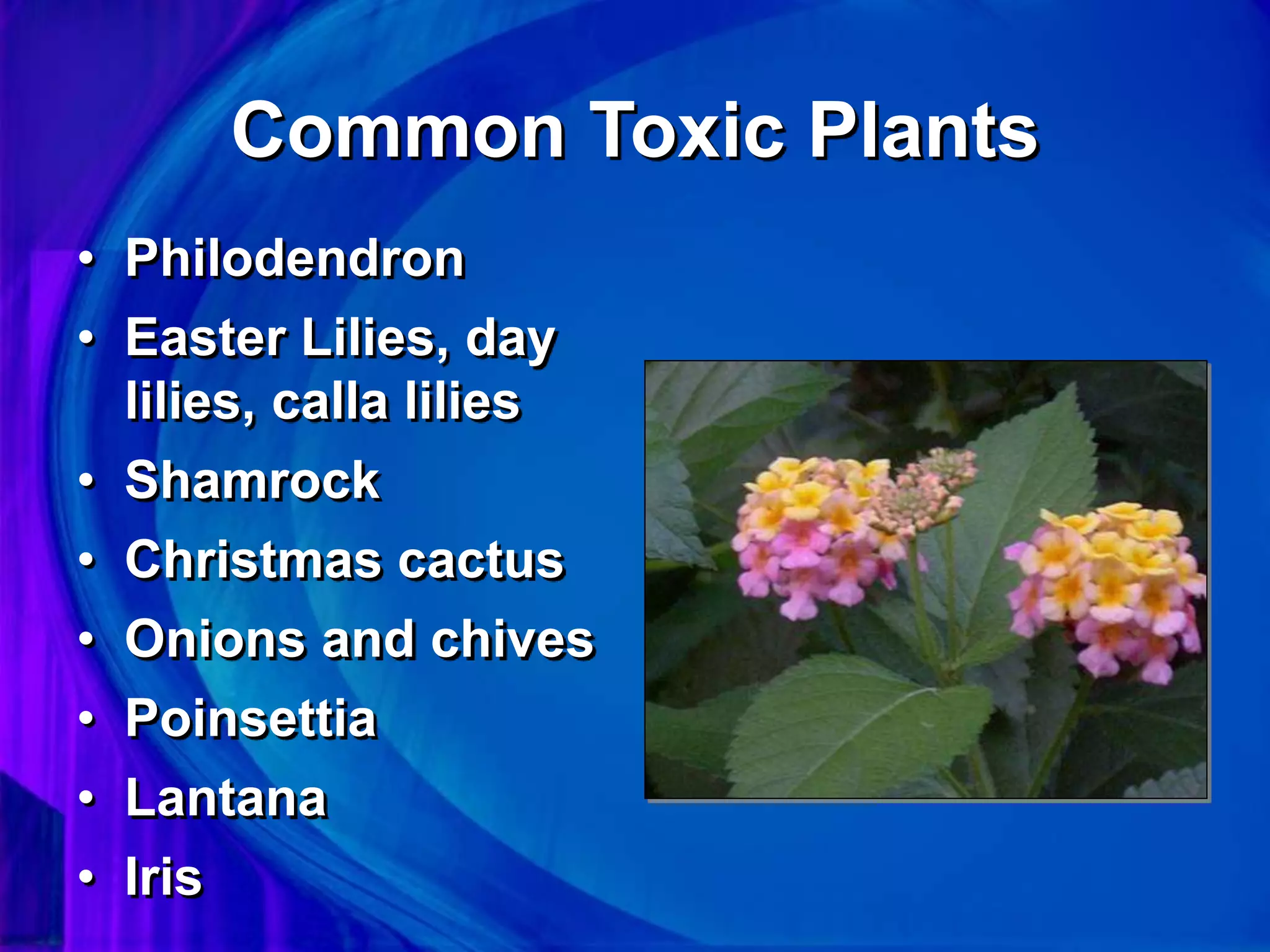
Common Toxic Plants
• Philodendron
• Easter Lilies, day
lilies, calla lilies
• Shamrock
• Christmas cactus
• Onions and chives
• Poinsettia
• Lantana
• Iris
Inside vs. Outside
Outdoor cats are more susceptible to:
• Vehicular trauma
• Bite wounds from other cats, and thus
viral diseases such as Feline Leukemia
Virus and Feline Immunodeficiency Virus
• Parasites- fleas, ticks, toxoplasmosis
• Attack by larger animals
• Get lost or wander off
• Indoor cats live longer, healthier lives
Litter Boxes
• # of cats plus one
• Locate in a quiet, private
area
• Use a baby gate to keep
dogs out of the area
• Clean daily
• Be consistent with litter
brand/type
Exercise
• Often overlooked
with cats more so
than with dogs
• Laser lights
• Feather toys
• Rolling balls
Sensory Input/Output
• Cats are social animals
• Windows with
bird feeders
• Fish tanks
• Videos
• Play time daily
Nutrition
• High quality cat food
• Controlled, measured feeding
• Twice a day, 10 minutes
• Body condition score
• It is VERY difficult to get
weight off an obese cats,
easier to prevent!
Obesity
• Diet or light formulas available, but weight
loss in cats is very difficult
• They don’t exercise as easily as walking a
dog
• Obese cats are predisposed to developing
diabetes, arthritis, and
dermatitis if they cannot
groom themselves
• Easier to prevent than
to reverse
Nutrition Continued
Home dental care:
• Diets made to
aide in cleaning
of the teeth
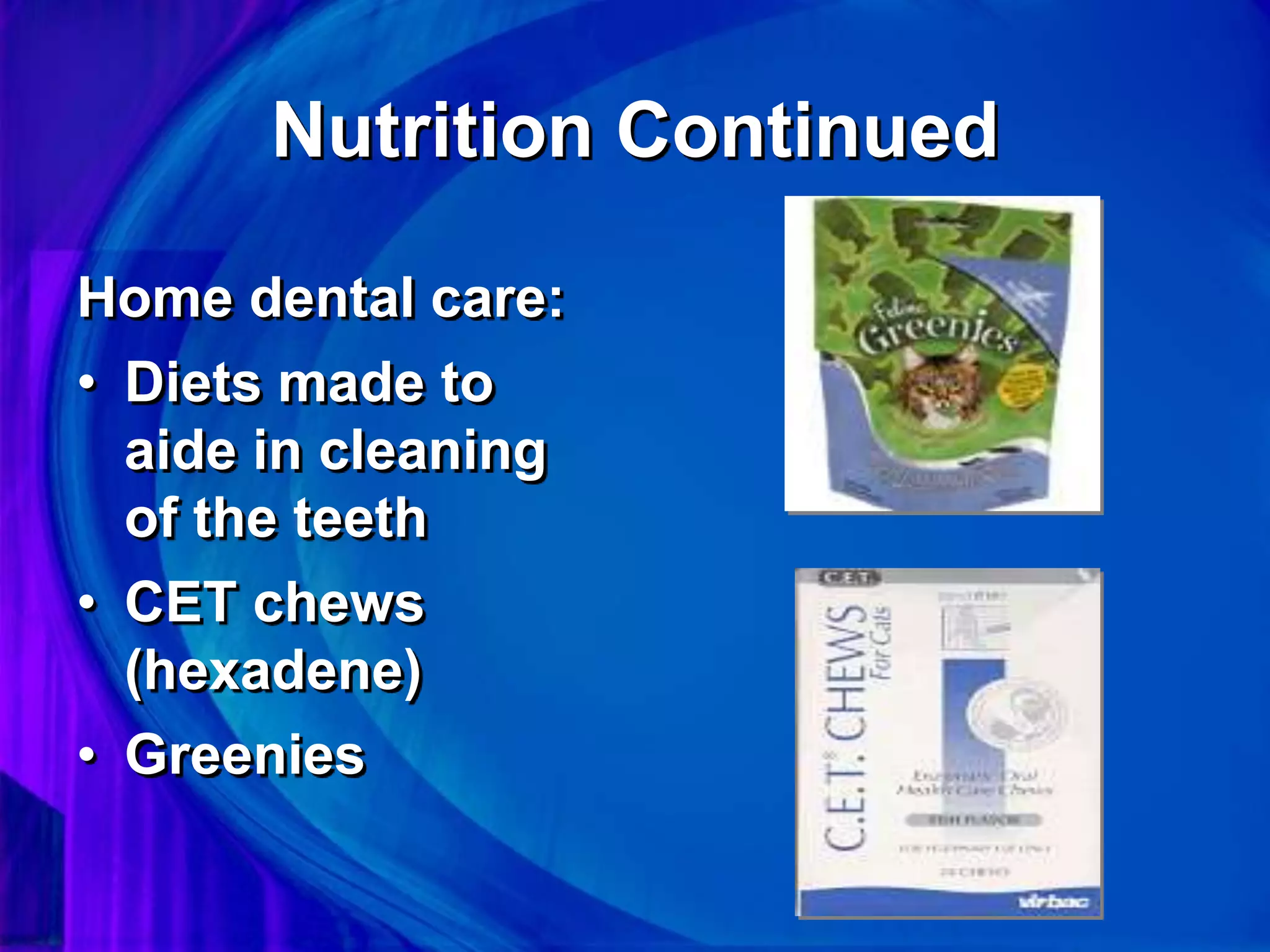
• CET chews
(hexadene)
• Greenies
Feline Behavior
The most common cause for owner
surrender of cats
• House soiling
• Clawing/scratching
furniture
House Soiling
Urine spraying:
• Identify and treat this early for best
prognosis!
• Spay/Neuter all cats in the household
• Rule out medical reasons such as UTI,
cystitis
• Adequate # of litter boxes
• Limit sight contact with outdoor cats
• Reduce stressors (don’t yell at them for it)
Urine Spraying Continued
• Clean area with an ammonia free
product
• Avoidance tactics for areas being soiled
such as tin foil, food bowls, boxes
• Having more than 3 cats increases your
risk for inappropriate elimination due to
territorial issues
• Anti-anxiety medications
• Confinement
Inappropriate Scratching
Behavior
• Natural for most cats to want to scratch
• Territorial activity
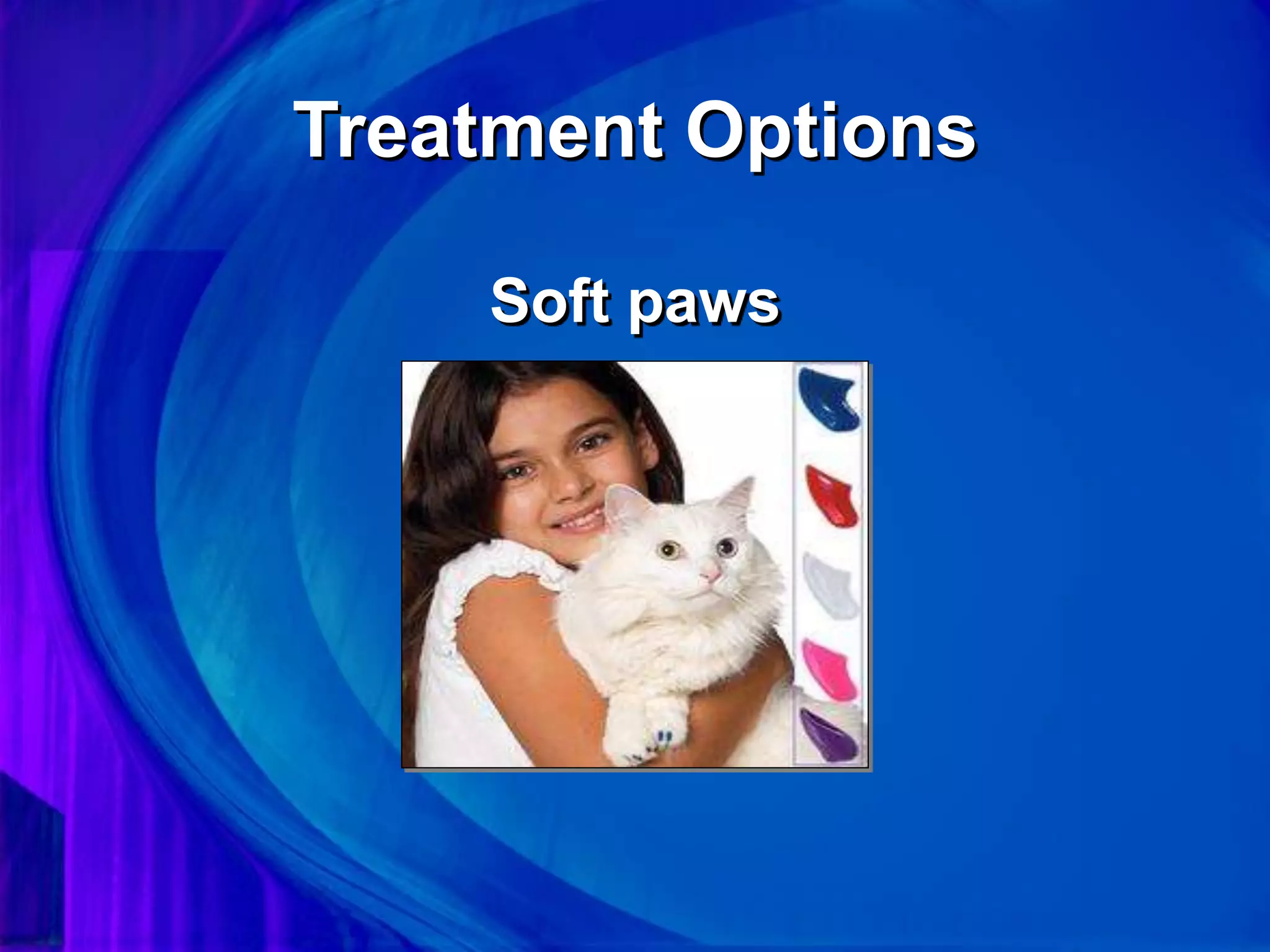
Treatment Options
Soft paws
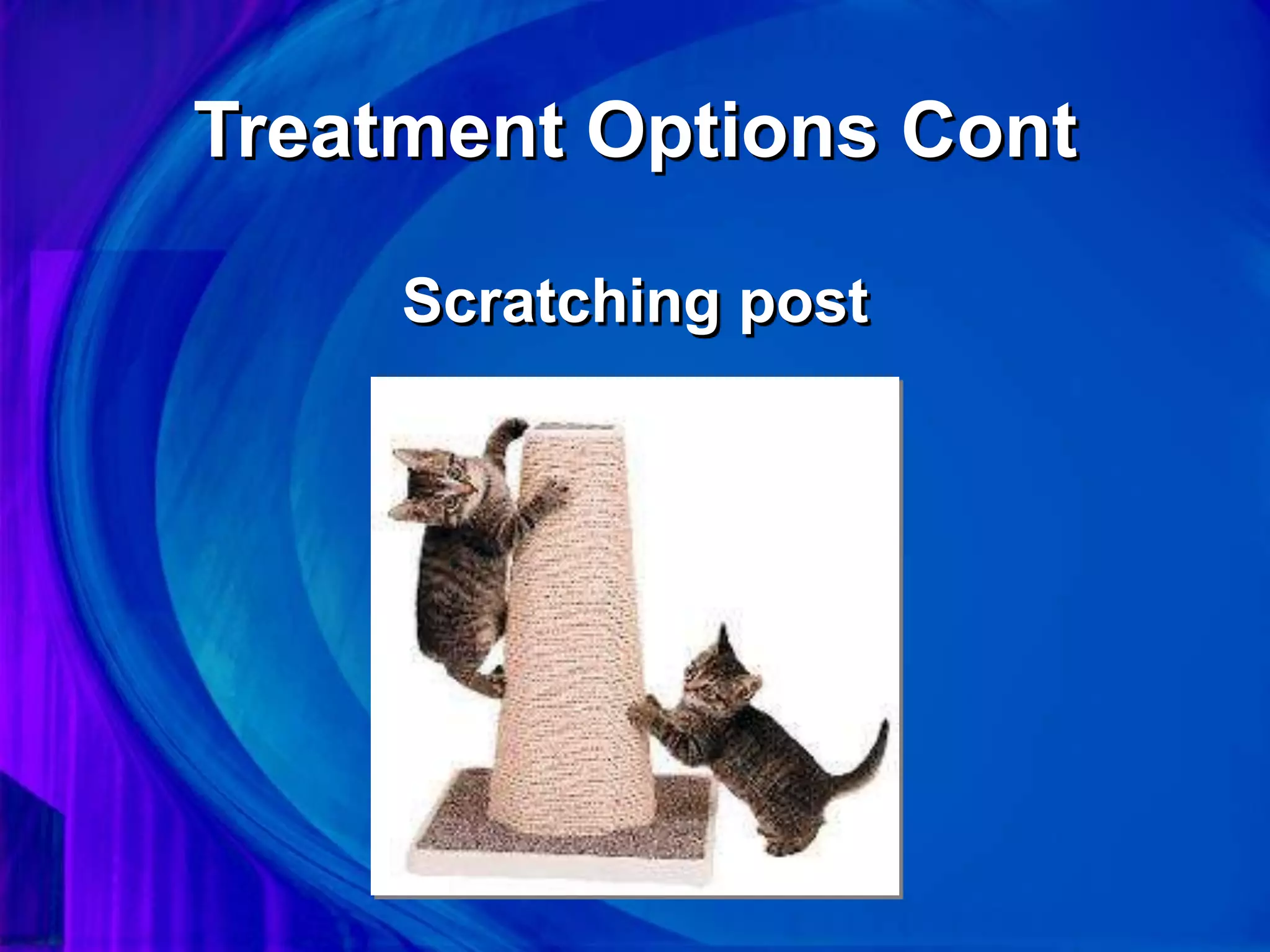
Treatment Options Cont
Scratching post
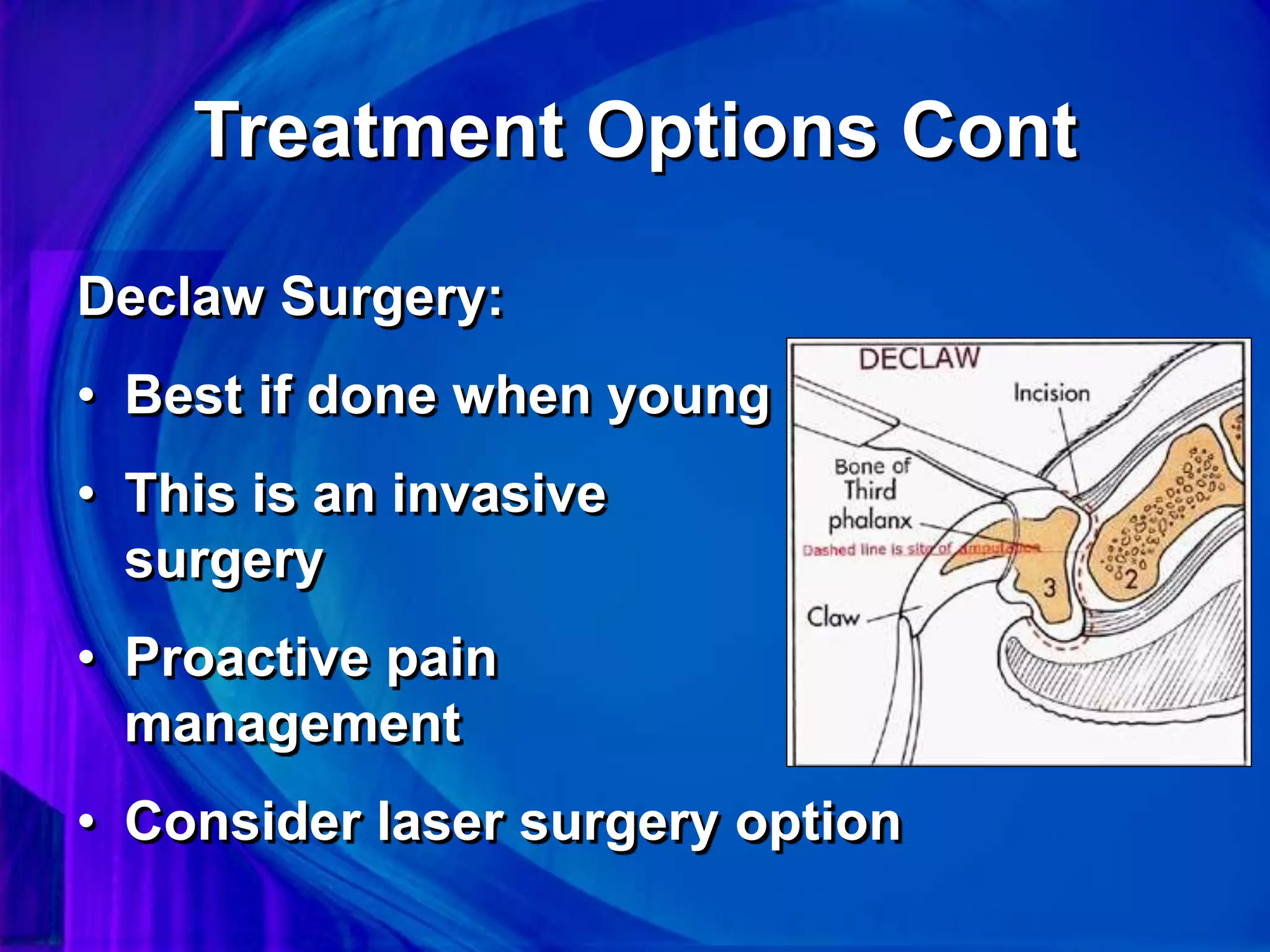
Declaw Surgery:
• Best if done when young
• This is an invasive
surgery
• Proactive pain
management
• Consider laser surgery option
Treatment Options Cont
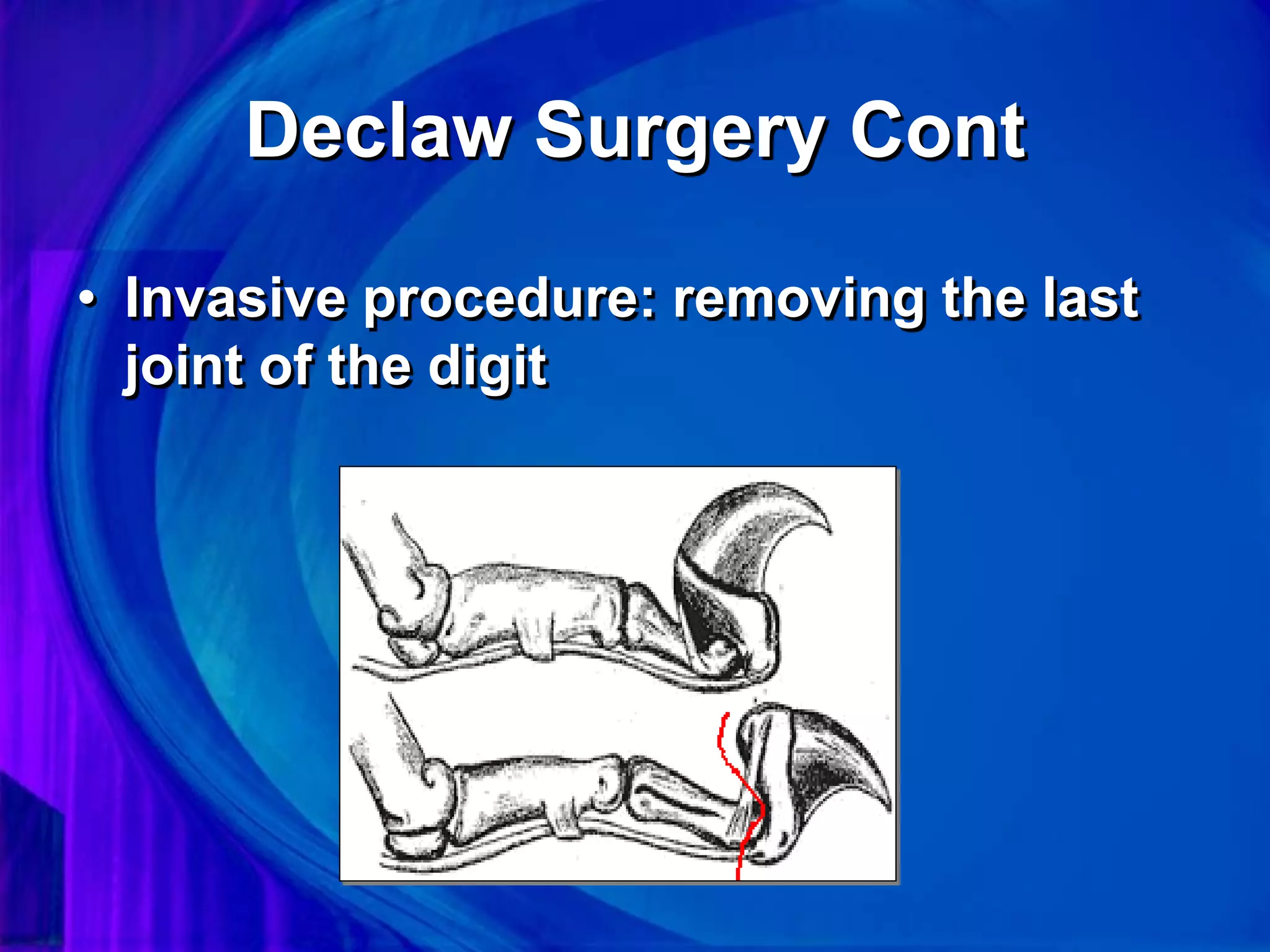
Declaw Surgery Cont
• Invasive procedure: removing the last
joint of the digit
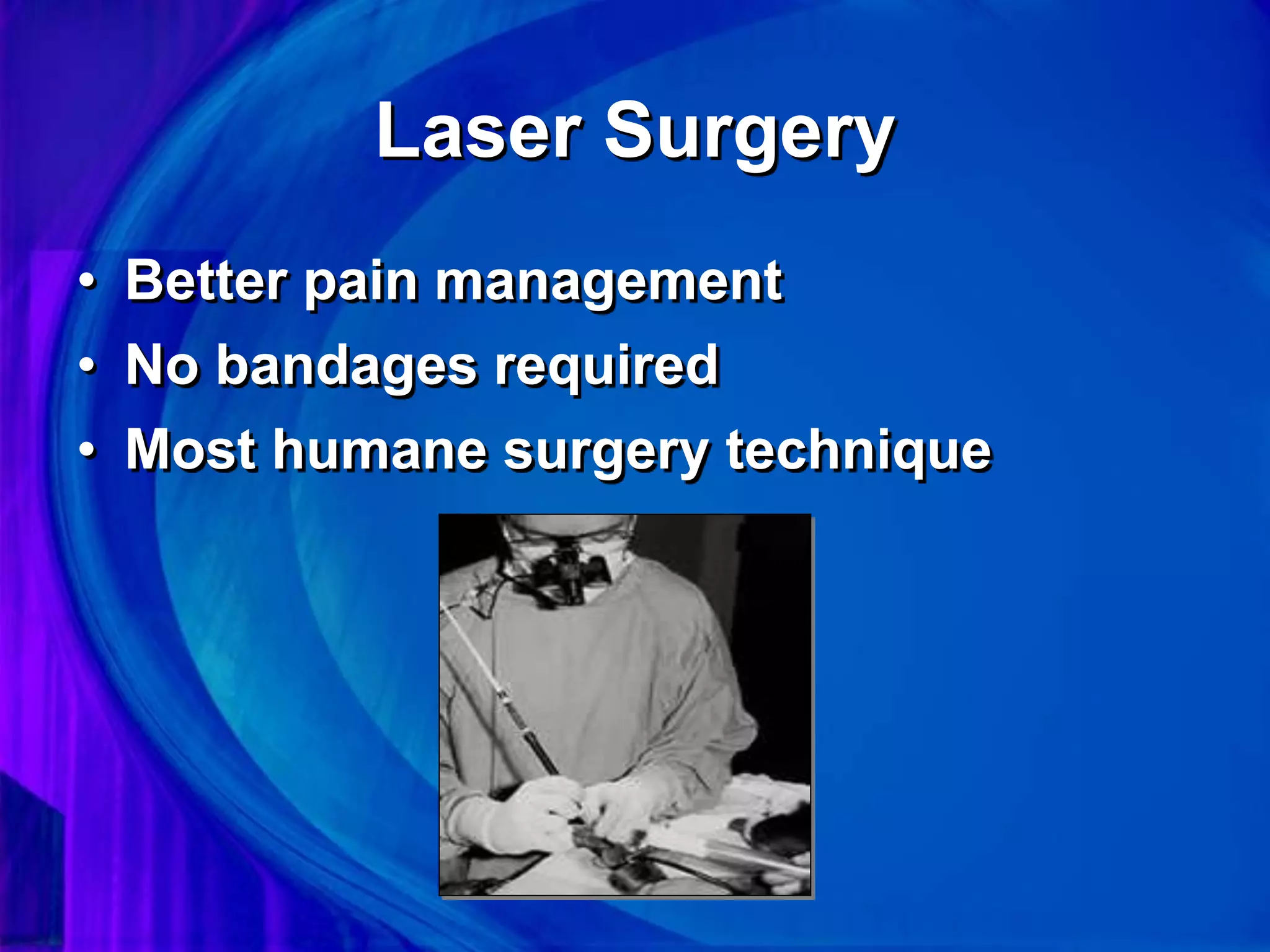
Laser Surgery
• Better pain management
• No bandages required
• Most humane surgery technique
Veterinary Care
• Cats need to have annual or semi-annual
exams
• Vaccines related to lifestyle
• Heartworm prevention- not just for dogs
• Fecal exams
• Flea and tick control
• Routine urine and blood work screening
• Spay and neuter!
Vaccines
• Rabies
• Rhinotracheitis
• Calici virus
• Chlamydia
• Panleukopenia
• +/- FeLV
• +/- FIV ??
Heartworm Prevention
• Transmitted by mosquitoes
• Infection causes heart and lung disease
• Indoor and outdoor cats are all at risk
• Heartworm preventive should be given
year round
• Can cause sudden
unexplained death
in a cat
Parasite Screening
• Fecal parasite exams are recommended
by the CDC twice per year
• Intestinal parasites in cats can be
transmitted to people
• Monthly heartworm preventives can help
control intestinal parasites as well
Flea and Tick Control
• In East TN, we see many fleas and ticks
• Cat scratch fever
• Tick borne infections being identified in
cats
• Excellent topical products are available
(Frontline, Advantage)
rom your veterinarian
Spay and Neuter
• It is healthier for pets to be
spayed or neutered
• Cancer
• Behavior problems- urine
spraying
• Reproductive tract infections
• Overpopulation problem
• Do it because you care
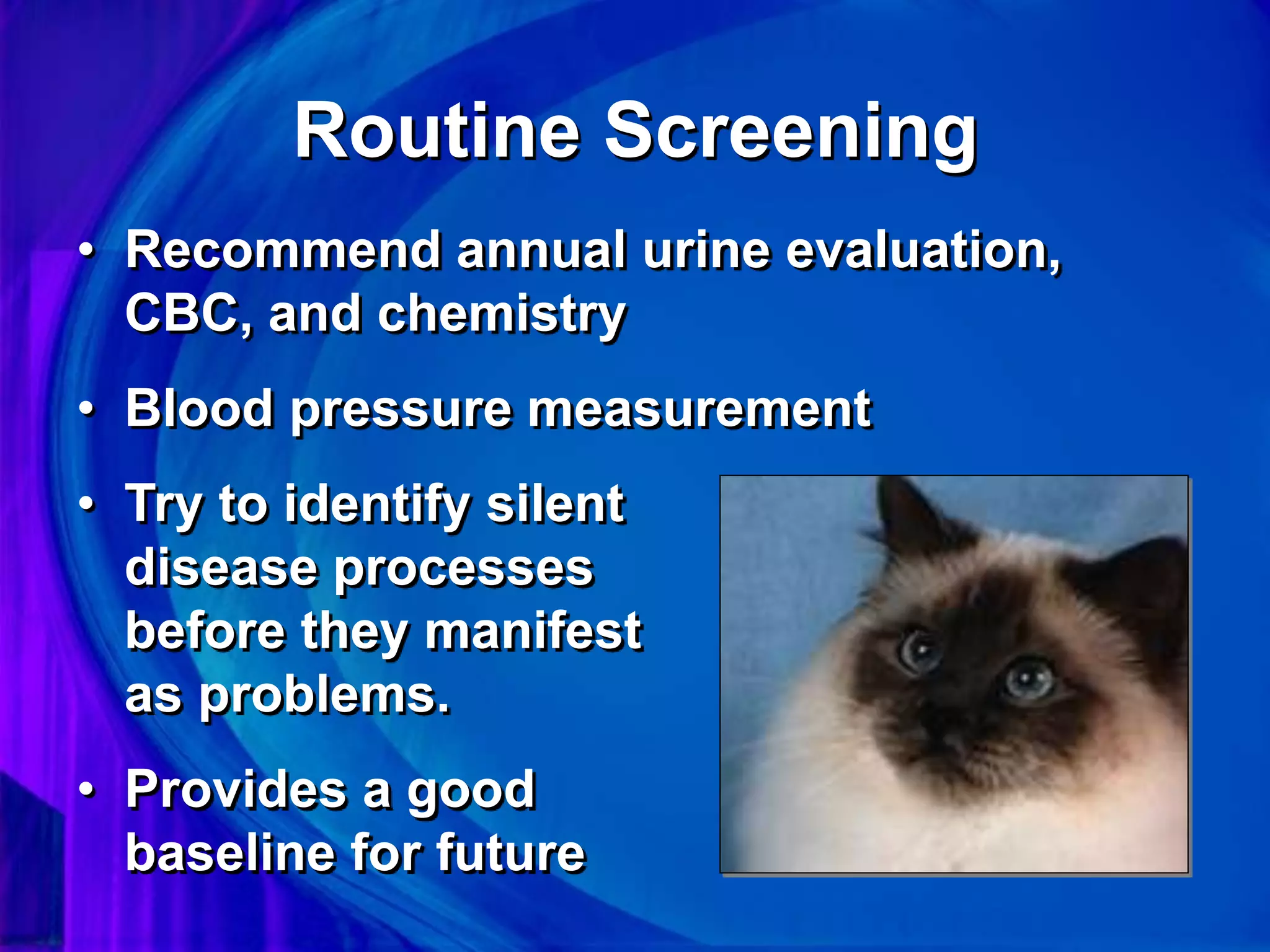
Routine Screening
• Recommend annual urine evaluation,
CBC, and chemistry
• Blood pressure measurement
• Try to identify silent
disease processes
before they manifest
as problems.
• Provides a good
baseline for future
Common Conditions
In Senior Cats
• Kidney disease
• Hyperthyroidism
• Dental disease
• Arthritis
• Liver disease
• Cancer
Seniors
• As cats age, their needs change:
• Diet
• Exercise
• Proactive veterinary
care
• Pain management
Remember
• If your pet is an integral part of the family,
you will be more able to meet your pet’s
needs socially, emotionally and medically.
• A pet is for a life time. It is not a right, but
a privilege, and we must remember we
took responsibility for their well being
when we brought them into our home
How
• Proper home care
• Proper nutrition
• Behavior management
• Proactive veterinary care
• Remembering lifestyle and age related
needs
Why?
• Talk to your veterinarian
• Talk with your family
• Teach responsible pet ownership to
children
• You will be
rewarded with
unconditional love
Rewarded For Years To Come
Unconditional love
For more information,
please contact CAIT
www.vet.utk.edu/cait
cait@utk.edu
865-755-2276

Feline_Healthcare.ppt

  • 1.
    Providing The Best ForYour Pet: Topics In Feline Healthcare Kristi Lively, DVM, DABVP Village Veterinary Clinic Farragut, TN
  • 2.
    Feline Healthcare Today wewill discuss the basics of routine feline healthcare to help you meet the needs of your feline companions, including: – Home care – Nutrition – Behavior – Veterinary care – Lifestyle & age related needs
  • 3.
    Home Care Many facetsof appropriate care in the home: • Housing • Exercise • Sensory input/ output • Nutrition • Behavior
  • 4.
    Appropriate Housing • Besure all windows and doors close and lock • Secure screens in all windows • Protect electrical cords from chewing • Healthier inside vs. outside • Toxic plants • Litter boxes = # of cats +1
  • 5.
    Common Toxic Plants •Philodendron • Easter Lilies, day lilies, calla lilies • Shamrock • Christmas cactus • Onions and chives • Poinsettia • Lantana • Iris
  • 6.
    Inside vs. Outside Outdoorcats are more susceptible to: • Vehicular trauma • Bite wounds from other cats, and thus viral diseases such as Feline Leukemia Virus and Feline Immunodeficiency Virus • Parasites- fleas, ticks, toxoplasmosis • Attack by larger animals • Get lost or wander off • Indoor cats live longer, healthier lives
  • 7.
    Litter Boxes • #of cats plus one • Locate in a quiet, private area • Use a baby gate to keep dogs out of the area • Clean daily • Be consistent with litter brand/type
  • 8.
    Exercise • Often overlooked withcats more so than with dogs • Laser lights • Feather toys • Rolling balls
  • 9.
    Sensory Input/Output • Catsare social animals • Windows with bird feeders • Fish tanks • Videos • Play time daily
  • 10.
    Nutrition • High qualitycat food • Controlled, measured feeding • Twice a day, 10 minutes • Body condition score • It is VERY difficult to get weight off an obese cats, easier to prevent!
  • 11.
    Obesity • Diet orlight formulas available, but weight loss in cats is very difficult • They don’t exercise as easily as walking a dog • Obese cats are predisposed to developing diabetes, arthritis, and dermatitis if they cannot groom themselves • Easier to prevent than to reverse
  • 13.
    Nutrition Continued Home dentalcare: • Diets made to aide in cleaning of the teeth • CET chews (hexadene) • Greenies
  • 14.
    Feline Behavior The mostcommon cause for owner surrender of cats • House soiling • Clawing/scratching furniture
  • 15.
    House Soiling Urine spraying: •Identify and treat this early for best prognosis! • Spay/Neuter all cats in the household • Rule out medical reasons such as UTI, cystitis • Adequate # of litter boxes • Limit sight contact with outdoor cats • Reduce stressors (don’t yell at them for it)
  • 16.
    Urine Spraying Continued •Clean area with an ammonia free product • Avoidance tactics for areas being soiled such as tin foil, food bowls, boxes • Having more than 3 cats increases your risk for inappropriate elimination due to territorial issues • Anti-anxiety medications • Confinement
  • 17.
    Inappropriate Scratching Behavior • Naturalfor most cats to want to scratch • Territorial activity
  • 18.
  • 19.
  • 20.
    Declaw Surgery: • Bestif done when young • This is an invasive surgery • Proactive pain management • Consider laser surgery option Treatment Options Cont
  • 21.
    Declaw Surgery Cont •Invasive procedure: removing the last joint of the digit
  • 22.
    Laser Surgery • Betterpain management • No bandages required • Most humane surgery technique
  • 23.
    Veterinary Care • Catsneed to have annual or semi-annual exams • Vaccines related to lifestyle • Heartworm prevention- not just for dogs • Fecal exams • Flea and tick control • Routine urine and blood work screening • Spay and neuter!
  • 24.
    Vaccines • Rabies • Rhinotracheitis •Calici virus • Chlamydia • Panleukopenia • +/- FeLV • +/- FIV ??
  • 25.
    Heartworm Prevention • Transmittedby mosquitoes • Infection causes heart and lung disease • Indoor and outdoor cats are all at risk • Heartworm preventive should be given year round • Can cause sudden unexplained death in a cat
  • 26.
    Parasite Screening • Fecalparasite exams are recommended by the CDC twice per year • Intestinal parasites in cats can be transmitted to people • Monthly heartworm preventives can help control intestinal parasites as well
  • 27.
    Flea and TickControl • In East TN, we see many fleas and ticks • Cat scratch fever • Tick borne infections being identified in cats • Excellent topical products are available (Frontline, Advantage) rom your veterinarian
  • 28.
    Spay and Neuter •It is healthier for pets to be spayed or neutered • Cancer • Behavior problems- urine spraying • Reproductive tract infections • Overpopulation problem • Do it because you care
  • 29.
    Routine Screening • Recommendannual urine evaluation, CBC, and chemistry • Blood pressure measurement • Try to identify silent disease processes before they manifest as problems. • Provides a good baseline for future
  • 30.
    Common Conditions In SeniorCats • Kidney disease • Hyperthyroidism • Dental disease • Arthritis • Liver disease • Cancer
  • 31.
    Seniors • As catsage, their needs change: • Diet • Exercise • Proactive veterinary care • Pain management
  • 32.
    Remember • If yourpet is an integral part of the family, you will be more able to meet your pet’s needs socially, emotionally and medically. • A pet is for a life time. It is not a right, but a privilege, and we must remember we took responsibility for their well being when we brought them into our home
  • 33.
    How • Proper homecare • Proper nutrition • Behavior management • Proactive veterinary care • Remembering lifestyle and age related needs
  • 34.
    Why? • Talk toyour veterinarian • Talk with your family • Teach responsible pet ownership to children • You will be rewarded with unconditional love
  • 35.
    Rewarded For YearsTo Come Unconditional love
  • 36.
    For more information, pleasecontact CAIT www.vet.utk.edu/cait cait@utk.edu 865-755-2276