UNIT – I
INTRODUCTION TO MANAGEMENT &
ORGANIZATIONS
PREPARED BY
M.RAGHUATHI M.E.,
ASSISTANT PROFESSOR,
MECHANICAL ENGINEERING.
1
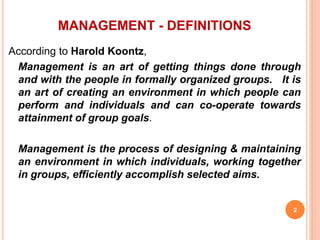
MANAGEMENT - DEFINITIONS
According to Harold Koontz,
Management is an art of getting things done through
and with the people in formally organized groups. It is
an art of creating an environment in which people can
perform and individuals and can co-operate towards
attainment of group goals.
Management is the process of designing & maintaining
an environment in which individuals, working together
in groups, efficiently accomplish selected aims.
2
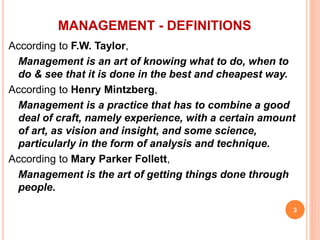
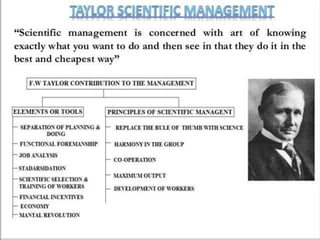
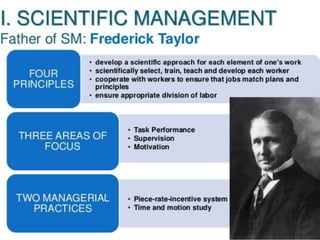
According to F.W. Taylor,
Management is an art of knowing what to do, when to
do & see that it is done in the best and cheapest way.
According to Henry Mintzberg,
Management is a practice that has to combine a good
deal of craft, namely experience, with a certain amount
of art, as vision and insight, and some science,
particularly in the form of analysis and technique.
According to Mary Parker Follett,
Management is the art of getting things done through
people.
MANAGEMENT - DEFINITIONS
3
MANAGEMENT - DEFINITIONS
According to George R. Terry,
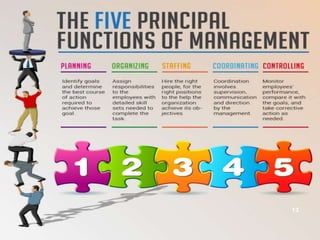
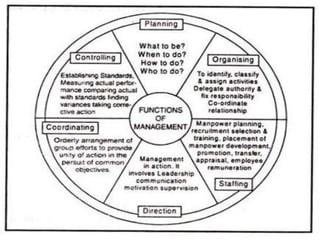
Management is a process consisting of planning,
organizing, actuating and controlling, performed to
determine and accomplish the objectives by the use of
people and resources.
According to Henry Fayol,
Management is to forecast, to plan, to organize, to
command, to coordinate and control activities of others.
According to Peter Drucker,
Management is a multipurpose organ that manage a
business and manages managers and manages
workers and work.
4
5
CHARACTERISTICS / NATURE / FEATURES OF
MANAGEMENT:
The main characteristics of management are as follows:
I. Management is an activity: Management is an activity which
is concerned with the efficient utilization of human and non-
human resources of production.
II. Invisible Force: Management is an invisible force. Its
existence can be felt through the enterprise or institution it is
managing.
III. Goal Oriented: Management is goal oriented as it aims to
achieve some definite goals and objectives. According to the
Haimann, “Effective management is always management by
objectives”. Managers and other personnel officers apply their
knowledge, experience and skills to achieve the desired
objectives.
6
IV. Accomplishment through the efforts of Others: Managers
cannot do everything themselves. They must have the necessary
ability and skills to get work accomplished through the efforts of
others.
V. Universal activity: Management is universal. Management is
required in all types or organizations. Wherever there are some
activities, there is management. The basic principles of
management are universal and can be applied anywhere and in
every field, such as business, social, religious, cultural, sports,
administration, educational, politics or military.
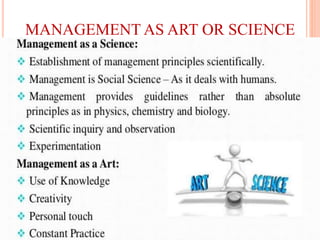
VI. Art as well as Science: Management is both an art and a
science. It is a science as it has an organized body of knowledge
which contains certain universal truths and an art as managing
requires certain skills which apply more or less in every situation.
CHARACTERISTICS / NATURE / FEATURES OF
MANAGEMENT:
7
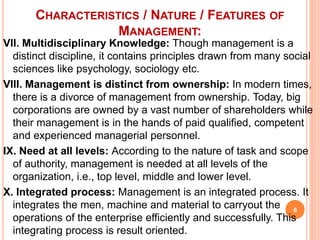
VII. Multidisciplinary Knowledge: Though management is a
distinct discipline, it contains principles drawn from many social
sciences like psychology, sociology etc.
VIII. Management is distinct from ownership: In modern times,
there is a divorce of management from ownership. Today, big
corporations are owned by a vast number of shareholders while
their management is in the hands of paid qualified, competent
and experienced managerial personnel.
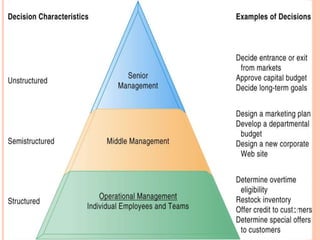
IX. Need at all levels: According to the nature of task and scope
of authority, management is needed at all levels of the
organization, i.e., top level, middle and lower level.
X. Integrated process: Management is an integrated process. It
integrates the men, machine and material to carryout the
operations of the enterprise efficiently and successfully. This
integrating process is result oriented.
CHARACTERISTICS / NATURE / FEATURES OF
MANAGEMENT:
8
9
10
11
12
13
14
MANAGEMENT AS ART OR SCIENCE
15
16
17
18
19
20
21
22
23
24
25
26
27
28
29
30
31
32
33
34
35
36
37
38
39
40
41
42
43
44
45
46
47
48
49
50
51
52
53
54
55
56
57
58
59
60
61
62
63
64
65
66
67
68
69
70
71
72
73
74
75
76
77
78
79
80
81
82
83
84
85
86
87
88
89
90
91
92
93
94
95
96
97
98
99
100
101
102
103
104
105
106
107
108
109
110
111
112
113
114
115
116
117
118
119
120
121
122
123
124
125
126
127
128
129
130
131
132
133
134
135
136
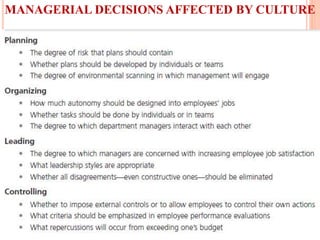
MANAGERIAL DECISIONS AFFECTED BY CULTURE
137
138
139
140
141
142
143

POM_UNIT_I_Introduction to Management.pptx

  • 1.
    UNIT – I INTRODUCTIONTO MANAGEMENT & ORGANIZATIONS PREPARED BY M.RAGHUATHI M.E., ASSISTANT PROFESSOR, MECHANICAL ENGINEERING. 1
  • 2.
    MANAGEMENT - DEFINITIONS Accordingto Harold Koontz, Management is an art of getting things done through and with the people in formally organized groups. It is an art of creating an environment in which people can perform and individuals and can co-operate towards attainment of group goals. Management is the process of designing & maintaining an environment in which individuals, working together in groups, efficiently accomplish selected aims. 2
  • 3.
    According to F.W.Taylor, Management is an art of knowing what to do, when to do & see that it is done in the best and cheapest way. According to Henry Mintzberg, Management is a practice that has to combine a good deal of craft, namely experience, with a certain amount of art, as vision and insight, and some science, particularly in the form of analysis and technique. According to Mary Parker Follett, Management is the art of getting things done through people. MANAGEMENT - DEFINITIONS 3
  • 4.
    MANAGEMENT - DEFINITIONS Accordingto George R. Terry, Management is a process consisting of planning, organizing, actuating and controlling, performed to determine and accomplish the objectives by the use of people and resources. According to Henry Fayol, Management is to forecast, to plan, to organize, to command, to coordinate and control activities of others. According to Peter Drucker, Management is a multipurpose organ that manage a business and manages managers and manages workers and work. 4
  • 5.
  • 6.
    CHARACTERISTICS / NATURE/ FEATURES OF MANAGEMENT: The main characteristics of management are as follows: I. Management is an activity: Management is an activity which is concerned with the efficient utilization of human and non- human resources of production. II. Invisible Force: Management is an invisible force. Its existence can be felt through the enterprise or institution it is managing. III. Goal Oriented: Management is goal oriented as it aims to achieve some definite goals and objectives. According to the Haimann, “Effective management is always management by objectives”. Managers and other personnel officers apply their knowledge, experience and skills to achieve the desired objectives. 6
  • 7.
    IV. Accomplishment throughthe efforts of Others: Managers cannot do everything themselves. They must have the necessary ability and skills to get work accomplished through the efforts of others. V. Universal activity: Management is universal. Management is required in all types or organizations. Wherever there are some activities, there is management. The basic principles of management are universal and can be applied anywhere and in every field, such as business, social, religious, cultural, sports, administration, educational, politics or military. VI. Art as well as Science: Management is both an art and a science. It is a science as it has an organized body of knowledge which contains certain universal truths and an art as managing requires certain skills which apply more or less in every situation. CHARACTERISTICS / NATURE / FEATURES OF MANAGEMENT: 7
  • 8.
    VII. Multidisciplinary Knowledge:Though management is a distinct discipline, it contains principles drawn from many social sciences like psychology, sociology etc. VIII. Management is distinct from ownership: In modern times, there is a divorce of management from ownership. Today, big corporations are owned by a vast number of shareholders while their management is in the hands of paid qualified, competent and experienced managerial personnel. IX. Need at all levels: According to the nature of task and scope of authority, management is needed at all levels of the organization, i.e., top level, middle and lower level. X. Integrated process: Management is an integrated process. It integrates the men, machine and material to carryout the operations of the enterprise efficiently and successfully. This integrating process is result oriented. CHARACTERISTICS / NATURE / FEATURES OF MANAGEMENT: 8
  • 9.
  • 10.
  • 11.
  • 12.
  • 13.
  • 14.
  • 15.
    MANAGEMENT AS ARTOR SCIENCE 15
  • 16.
  • 17.
  • 18.
  • 19.
  • 20.
  • 21.
  • 22.
  • 23.
  • 24.
  • 25.
  • 26.
  • 27.
  • 28.
  • 29.
  • 30.
  • 31.
  • 32.
  • 33.
  • 34.
  • 35.
  • 36.
  • 37.
  • 38.
  • 39.
  • 40.
  • 41.
  • 42.
  • 43.
  • 44.
  • 45.
  • 46.
  • 47.
  • 48.
  • 49.
  • 50.
  • 51.
  • 52.
  • 53.
  • 54.
  • 55.
  • 56.
  • 57.
  • 58.
  • 59.
  • 60.
  • 61.
  • 62.
  • 63.
  • 64.
  • 65.
  • 66.
  • 67.
  • 68.
  • 69.
  • 70.
  • 71.
  • 72.
  • 73.
  • 74.
  • 75.
  • 76.
  • 77.
  • 78.
  • 79.
  • 80.
  • 81.
  • 82.
  • 83.
  • 84.
  • 85.
  • 86.
  • 87.
  • 88.
  • 89.
  • 90.
  • 91.
  • 92.
  • 93.
  • 94.
  • 95.
  • 96.
  • 97.
  • 98.
  • 99.
  • 100.
  • 101.
  • 102.
  • 103.
  • 104.
  • 105.
  • 106.
  • 107.
  • 108.
  • 109.
  • 110.
  • 111.
  • 112.
  • 113.
  • 114.
  • 115.
  • 116.
  • 117.
  • 118.
  • 119.
  • 120.
  • 121.
  • 122.
  • 123.
  • 124.
  • 125.
  • 126.
  • 127.
  • 128.
  • 129.
  • 130.
  • 131.
  • 132.
  • 133.
  • 134.
  • 135.
  • 136.
  • 137.
  • 138.
  • 139.
  • 140.
  • 141.
  • 142.
  • 143.