A presentation on Business Communication
Submitted to
Abdul Kaium Masud
Lecturer
Dept. of Business
Administration, NSTU
Submitted By
Group Name: FIRE FLY
Members of the group
 Abdullah Al Rumman ASH1310009M
 Badrul Haidar ASH1310039M
 Jamil Rahman ASH1310018M
 Jasmin Akhter BKH1310066M
 Jobayada Begum BKH1310079M
 Saifur Rahman ASH1310010M
 Tazrin Jahan BKH1310051F
 Tanjilal Johra BKH1310059M
 Md. Mhibbullah ASH1310052M
 Wasim Jamil(L) ASH1310028M
Topics of the presentation
1. Effective communication
2. Informal communication
3. Feedback
4. How to be an effective communicator
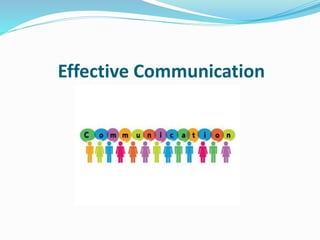
Effective Communication
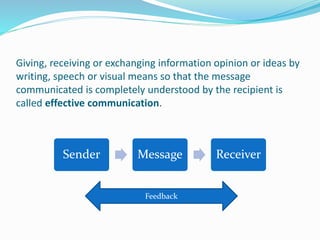
Giving, receiving or exchanging information opinion or ideas by
writing, speech or visual means so that the message
communicated is completely understood by the recipient is
called effective communication.
Sender Message Receiver
Feedback
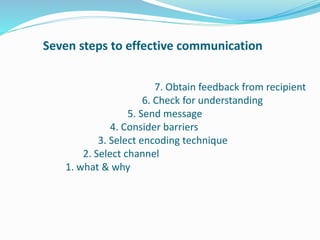
Seven steps to effective communication
7. Obtain feedback from recipient
6. Check for understanding
5. Send message
4. Consider barriers
3. Select encoding technique
2. Select channel
1. what & why
Benefits of Effective communication
1. Stronger decision making & problem solving
2. Upturn productivity
3. Convincing & compelling corporate materials
4. Clearer, more streamlined workflow
5. Enhanced professional image
6. Sound business relationships
7. Successful response ensured
Barriers to communication
1. Non-verbal signals
2. Language
3. Listening
4. Pre-judgement
5. Relationships
6. Emotional responses
7. Systems
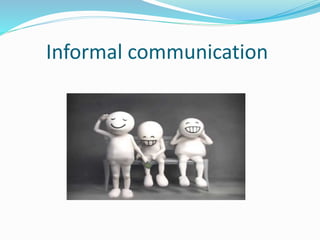
Informal communication
‘Informal communication is the flow of information
without regard for the formal organizational
structures, hierarchical or reporting relationship.’
Bovee & His associates.
The important characteristics of informal
communication are as follows:
1. Un-official channel of communication
2. Not controlled by management
3. More reliable information
4. Flexibility
5. Oral way of communication
6. Rapid communication
7. Distortion of meaning
8. Influential
Feedback
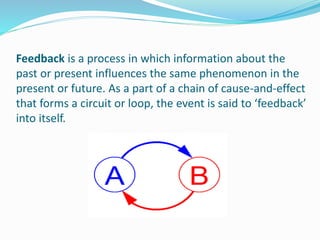
Feedback is a process in which information about the
past or present influences the same phenomenon in the
present or future. As a part of a chain of cause-and-effect
that forms a circuit or loop, the event is said to ‘feedback’
into itself.
Synonym for feedback:
1. Feedback signal
2. Feedback mechanism
3. Feedback loop
There are mainly two types of feedback:
1. Positive feedback
2. Negative feedback
Another have two types of feedback:
1. Internal
2. External
External feedback has some differences. Such as:
1. Verbal
2. Written
3. Visual
4. Knowledge of results
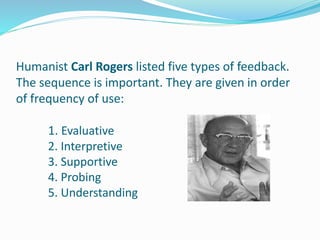
Humanist Carl Rogers listed five types of feedback.
The sequence is important. They are given in order
of frequency of use:
1. Evaluative
2. Interpretive
3. Supportive
4. Probing
5. Understanding
How to be an effective communicator
There are so many communication skills.
Improving those kinds of skills, a person can be an
effective communicator. Some are given below:
1. Be aware of other peoples emotions
2. Empathies
3. Encourage
4. Focus on the meaning of what you want to
communicate
There are another five types of communication skill:
1. Use humor
2. Treat people equally
3. Attempt to resolve conflict
4. Maintain a positive attitude and smile
5. Minimize stress
The End

Business communication

  • 3.
    A presentation onBusiness Communication Submitted to Abdul Kaium Masud Lecturer Dept. of Business Administration, NSTU Submitted By Group Name: FIRE FLY Members of the group  Abdullah Al Rumman ASH1310009M  Badrul Haidar ASH1310039M  Jamil Rahman ASH1310018M  Jasmin Akhter BKH1310066M  Jobayada Begum BKH1310079M  Saifur Rahman ASH1310010M  Tazrin Jahan BKH1310051F  Tanjilal Johra BKH1310059M  Md. Mhibbullah ASH1310052M  Wasim Jamil(L) ASH1310028M
  • 4.
    Topics of thepresentation 1. Effective communication 2. Informal communication 3. Feedback 4. How to be an effective communicator
  • 5.
  • 6.
    Giving, receiving orexchanging information opinion or ideas by writing, speech or visual means so that the message communicated is completely understood by the recipient is called effective communication. Sender Message Receiver Feedback
  • 7.
    Seven steps toeffective communication 7. Obtain feedback from recipient 6. Check for understanding 5. Send message 4. Consider barriers 3. Select encoding technique 2. Select channel 1. what & why
  • 8.
    Benefits of Effectivecommunication 1. Stronger decision making & problem solving 2. Upturn productivity 3. Convincing & compelling corporate materials 4. Clearer, more streamlined workflow 5. Enhanced professional image 6. Sound business relationships 7. Successful response ensured
  • 9.
    Barriers to communication 1.Non-verbal signals 2. Language 3. Listening 4. Pre-judgement 5. Relationships 6. Emotional responses 7. Systems
  • 10.
  • 11.
    ‘Informal communication isthe flow of information without regard for the formal organizational structures, hierarchical or reporting relationship.’ Bovee & His associates.
  • 12.
    The important characteristicsof informal communication are as follows: 1. Un-official channel of communication 2. Not controlled by management 3. More reliable information 4. Flexibility 5. Oral way of communication 6. Rapid communication 7. Distortion of meaning 8. Influential
  • 13.
  • 14.
    Feedback is aprocess in which information about the past or present influences the same phenomenon in the present or future. As a part of a chain of cause-and-effect that forms a circuit or loop, the event is said to ‘feedback’ into itself.
  • 15.
    Synonym for feedback: 1.Feedback signal 2. Feedback mechanism 3. Feedback loop There are mainly two types of feedback: 1. Positive feedback 2. Negative feedback
  • 16.
    Another have twotypes of feedback: 1. Internal 2. External External feedback has some differences. Such as: 1. Verbal 2. Written 3. Visual 4. Knowledge of results
  • 17.
    Humanist Carl Rogerslisted five types of feedback. The sequence is important. They are given in order of frequency of use: 1. Evaluative 2. Interpretive 3. Supportive 4. Probing 5. Understanding
  • 18.
    How to bean effective communicator
  • 19.
    There are somany communication skills. Improving those kinds of skills, a person can be an effective communicator. Some are given below: 1. Be aware of other peoples emotions 2. Empathies 3. Encourage 4. Focus on the meaning of what you want to communicate
  • 20.
    There are anotherfive types of communication skill: 1. Use humor 2. Treat people equally 3. Attempt to resolve conflict 4. Maintain a positive attitude and smile 5. Minimize stress
  • 21.