FAMILY ADOPTION PROGRAMME
Dr.Archana Patnaik
Prof.&HOD,Dept.of Community Medicine,
IMS & SUM Hospital ,Campus-II,Phulnakhara
Date-16/11/2024
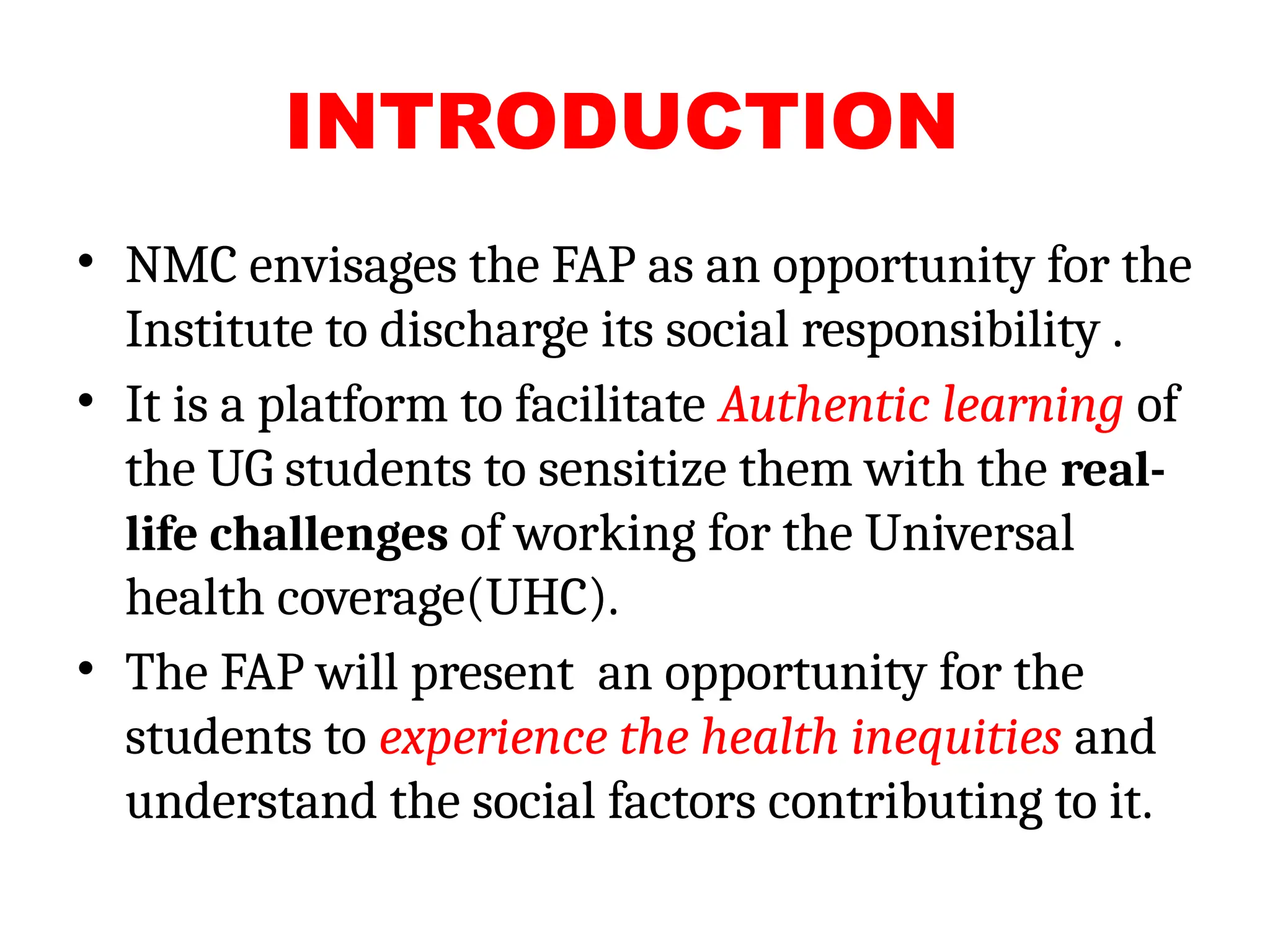
INTRODUCTION
• NMC envisages the FAP as an opportunity for the
Institute to discharge its social responsibility .
• It is a platform to facilitate Authentic learning of
the UG students to sensitize them with the real-
life challenges of working for the Universal
health coverage(UHC).
• The FAP will present an opportunity for the
students to experience the health inequities and
understand the social factors contributing to it.
• Each student shall adopt minimum 3
families/households and preferably five
families in a village.
AIM OF FAP
Family adoption program aims to provide an
experiential learning opportunity to Indian
Medical graduates community based health care
and thereby enhance equity in health.
OBJECTIVES OF THE PROGRAM
1. Orient the learner towards primary health care.
2. Create health related awareness within the
community.
3. Function as a first point of contact for any health
issues within the community.
4. Act as a conduit between the population and relevant
health care facility.
5. Generate and analyze the relevant data for
improving the health outcomes and evidence based
clinical practice.
Targets-Phase1
1. Rapport building and connect with the families.
2. Learning communication skills and gain confidence
amongst families.
3. Understands the dynamics of community set-up of that
region.
4. Mobilize families for participation in Screening programs
.
5. Undertake detailed family study and prepare the family
diagnosis to identify diseases/ill health/malnutrition of
allotted families/risk factors/scope for health promotion.
6. Formulate objectives to be achieved for each family.
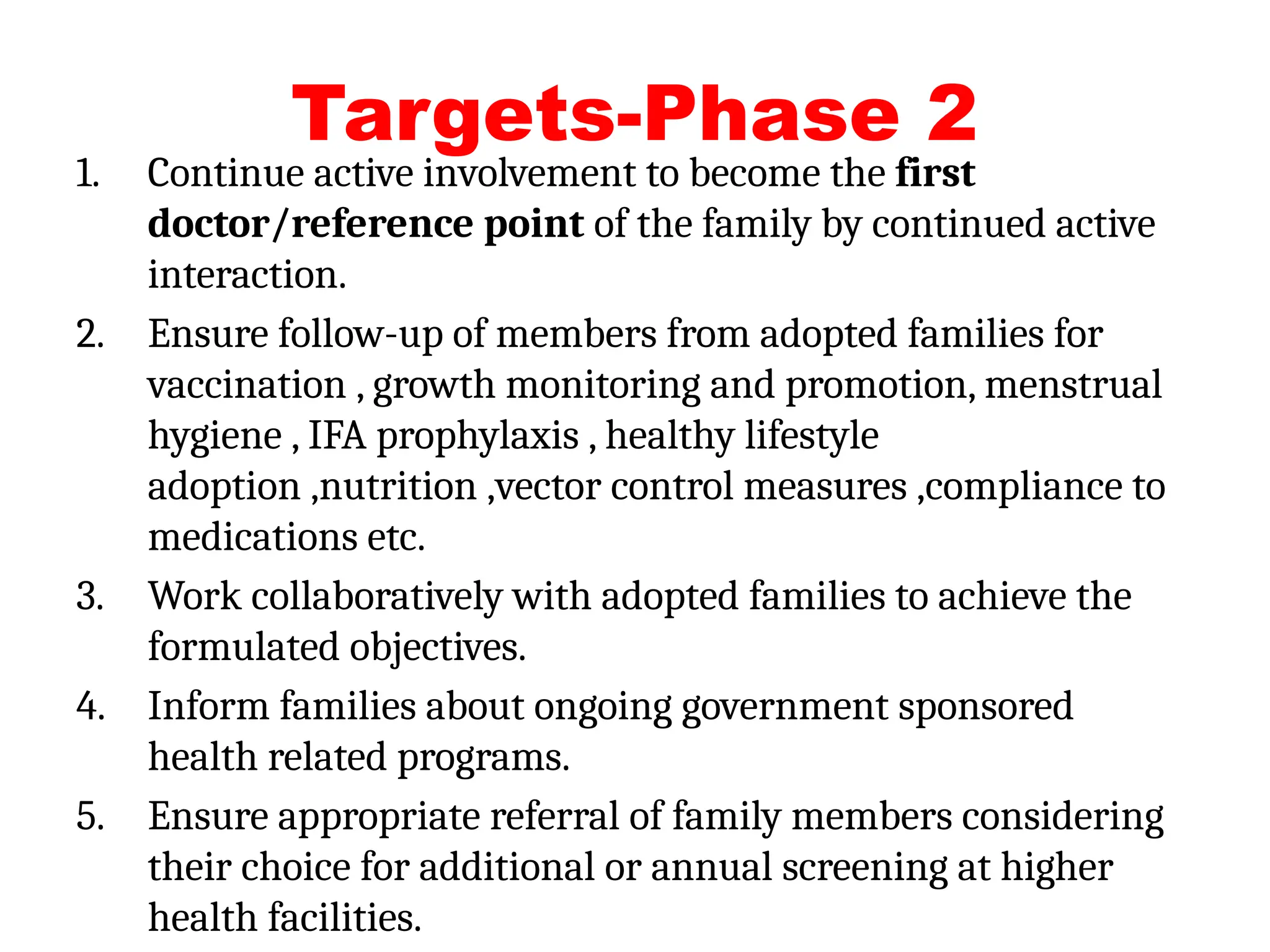
Targets-Phase 2
1. Continue active involvement to become the first
doctor/reference point of the family by continued active
interaction.
2. Ensure follow-up of members from adopted families for
vaccination , growth monitoring and promotion, menstrual
hygiene , IFA prophylaxis , healthy lifestyle
adoption ,nutrition ,vector control measures ,compliance to
medications etc.
3. Work collaboratively with adopted families to achieve the
formulated objectives.
4. Inform families about ongoing government sponsored
health related programs.
5. Ensure appropriate referral of family members considering
their choice for additional or annual screening at higher
health facilities.
Target-Phase 3
1. Work collaboratively with the adopted families to achieve the formulated
objectives.
2. Observation of services delivered at community level during Village
Health Nutrition Days (VHND),Community based events(CBEs) ,Health
and Wellness Centres (HWC) camps under the different national health
program.
3. Build understanding regarding work of frontline workers
(ANM,ASHA/USHA,AWW,MPW) through interaction.
4. Build understanding around intersectoral action for health through
Local self governing bodies ,NGOs,SHGs etc. for health promotion.
5. Undertake short term action projects for improving health in the
adopted families or community
6. Analysis of their own involvement and impact on improving the health
conditions in the adopted families
Prepare a report to be submitted in
department
1. Improvement in overall health of the family.
2. Immunization
3. Sanitation
4. De-addiction
5. Whether healthy lifestyles like reading good books ,Sports/yoga
activities have been inculcated in the house-holds.
6. Improvement in anemia and other disease control.
7. Health awareness
8. Any other issues
9. Role of student in supporting family during illness/medical emergency.
10. Social responsibility in form of environment protection programme like
plantation drive(medicinal plants ,trees ), cleanliness and sanitation
drive by students.
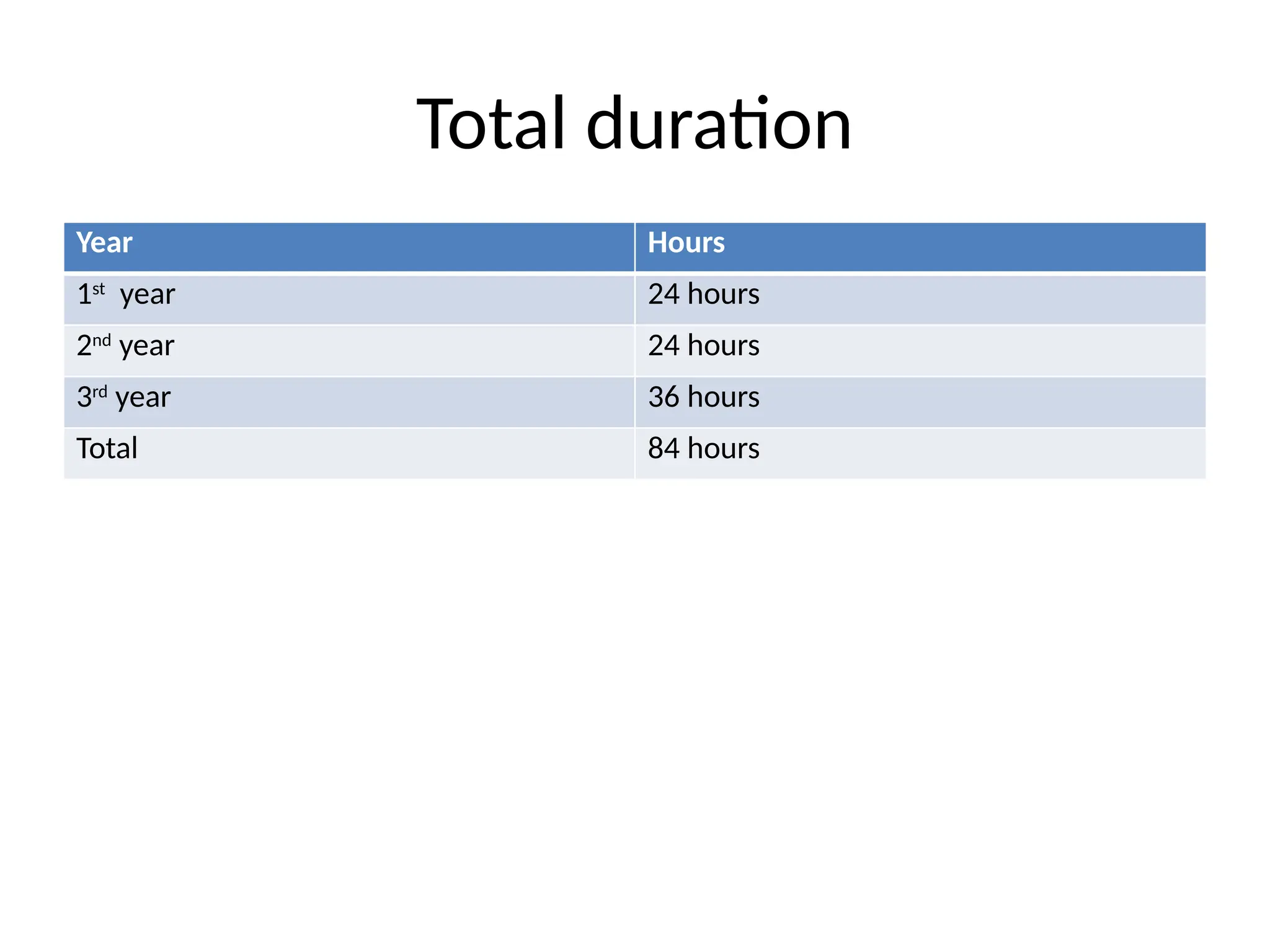
Total duration
Year Hours
1st
year 24 hours
2nd
year 24 hours
3rd
year 36 hours
Total 84 hours
Process
• A special visit to the village may be organized
after deciding suitable time with the village
head/Mukhiya.
• Introduction of the village out-reach,FAP should
be done by addressing Gram Sabhas.(Senior
faculties/MSW).
• Introduction to the families by the mentors.
• Sensitize the villagers and gain their confidence.
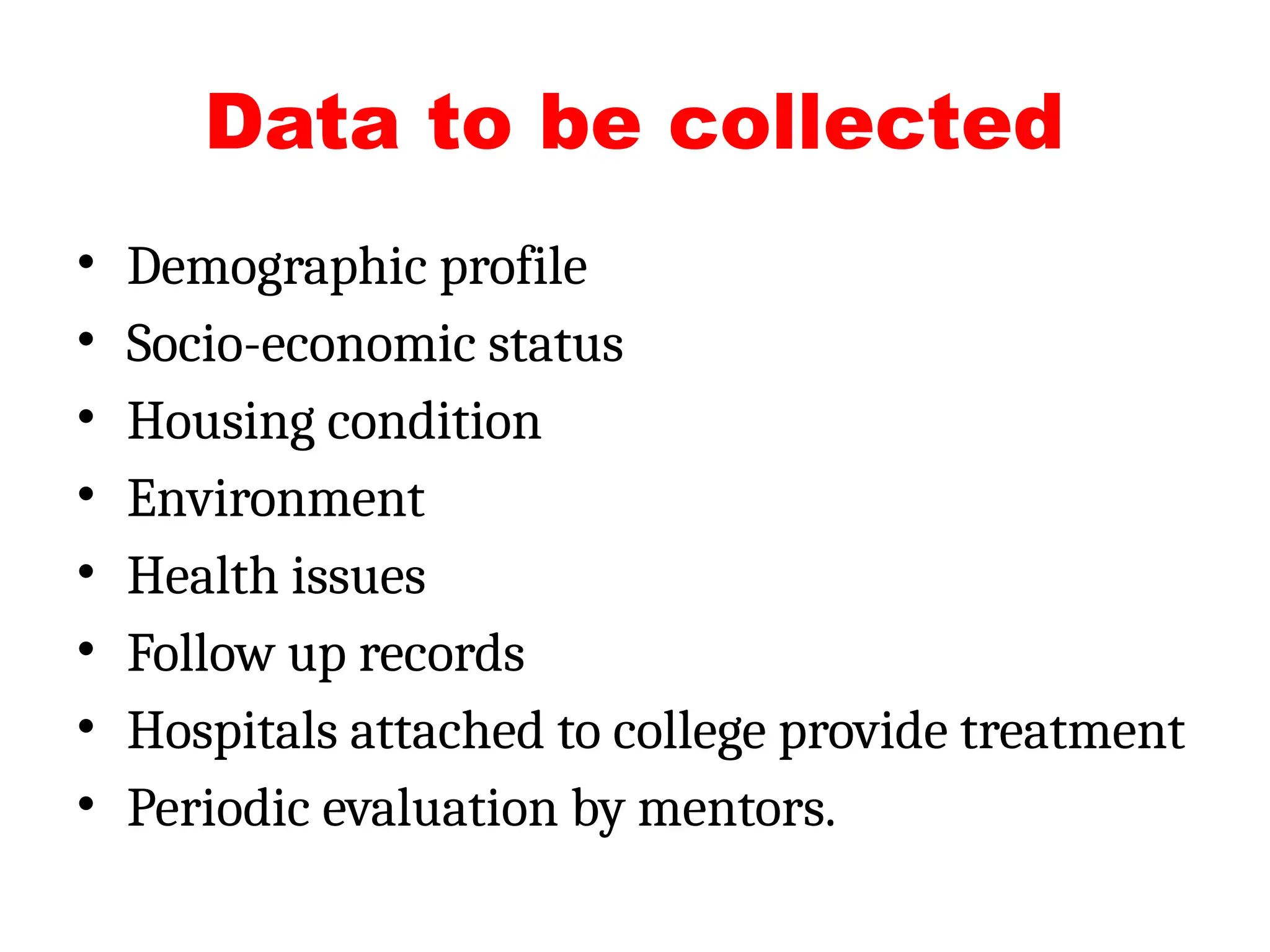
Data to be collected
• Demographic profile
• Socio-economic status
• Housing condition
• Environment
• Health issues
• Follow up records
• Hospitals attached to college provide treatment
• Periodic evaluation by mentors.
Follow up
• The entire data sheet may be prepared by
every student and submitted to department
for evaluation .
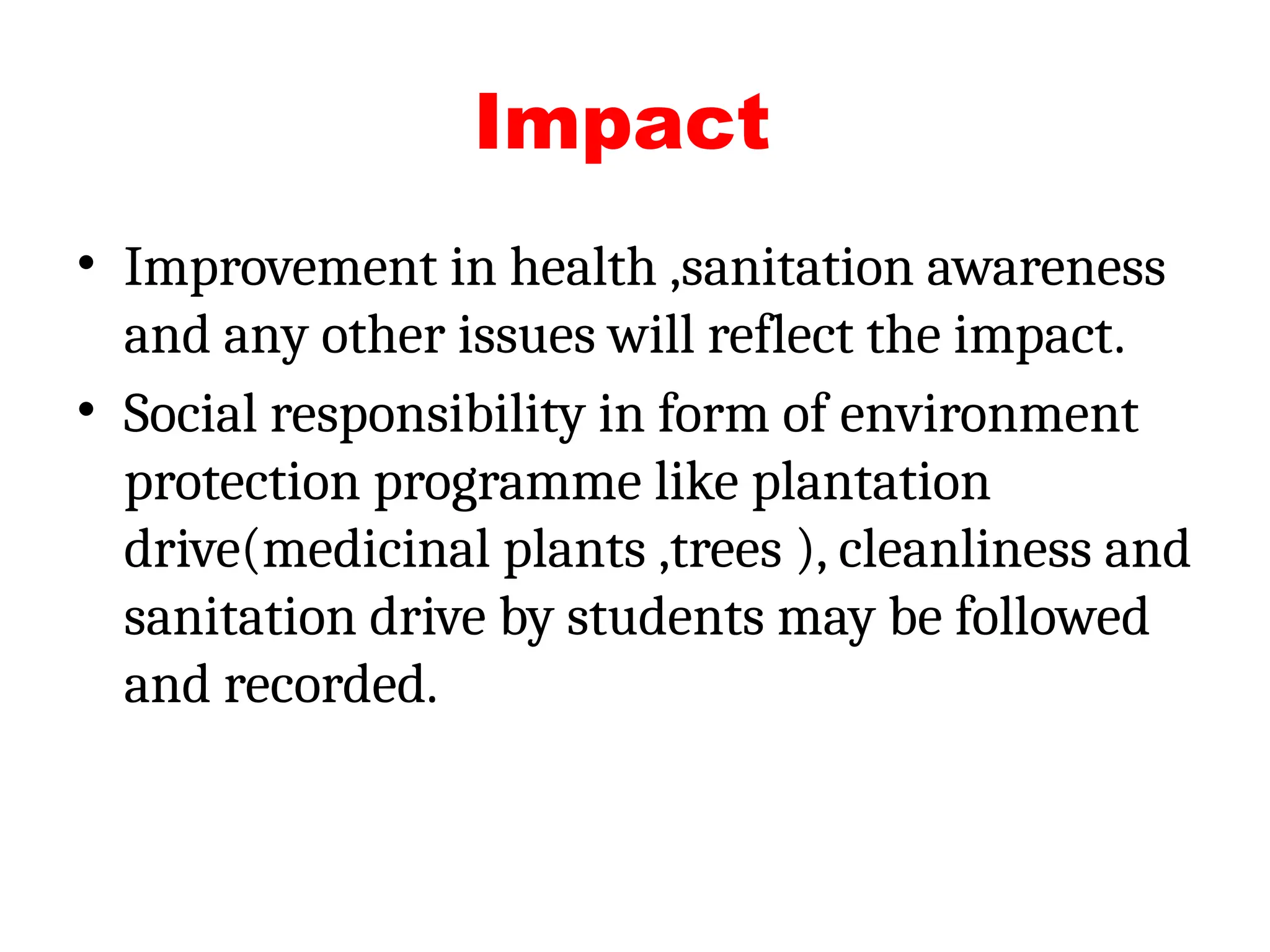
Impact
• Improvement in health ,sanitation awareness
and any other issues will reflect the impact.
• Social responsibility in form of environment
protection programme like plantation
drive(medicinal plants ,trees ), cleanliness and
sanitation drive by students may be followed
and recorded.
THANK YOU

FAMILY ADOPTION PROGRAMME.pptx IMS&SUM Hospital

  • 1.
    FAMILY ADOPTION PROGRAMME Dr.ArchanaPatnaik Prof.&HOD,Dept.of Community Medicine, IMS & SUM Hospital ,Campus-II,Phulnakhara Date-16/11/2024
  • 2.
    INTRODUCTION • NMC envisagesthe FAP as an opportunity for the Institute to discharge its social responsibility . • It is a platform to facilitate Authentic learning of the UG students to sensitize them with the real- life challenges of working for the Universal health coverage(UHC). • The FAP will present an opportunity for the students to experience the health inequities and understand the social factors contributing to it.
  • 3.
    • Each studentshall adopt minimum 3 families/households and preferably five families in a village.
  • 4.
    AIM OF FAP Familyadoption program aims to provide an experiential learning opportunity to Indian Medical graduates community based health care and thereby enhance equity in health.
  • 5.
    OBJECTIVES OF THEPROGRAM 1. Orient the learner towards primary health care. 2. Create health related awareness within the community. 3. Function as a first point of contact for any health issues within the community. 4. Act as a conduit between the population and relevant health care facility. 5. Generate and analyze the relevant data for improving the health outcomes and evidence based clinical practice.
  • 6.
    Targets-Phase1 1. Rapport buildingand connect with the families. 2. Learning communication skills and gain confidence amongst families. 3. Understands the dynamics of community set-up of that region. 4. Mobilize families for participation in Screening programs . 5. Undertake detailed family study and prepare the family diagnosis to identify diseases/ill health/malnutrition of allotted families/risk factors/scope for health promotion. 6. Formulate objectives to be achieved for each family.
  • 7.
    Targets-Phase 2 1. Continueactive involvement to become the first doctor/reference point of the family by continued active interaction. 2. Ensure follow-up of members from adopted families for vaccination , growth monitoring and promotion, menstrual hygiene , IFA prophylaxis , healthy lifestyle adoption ,nutrition ,vector control measures ,compliance to medications etc. 3. Work collaboratively with adopted families to achieve the formulated objectives. 4. Inform families about ongoing government sponsored health related programs. 5. Ensure appropriate referral of family members considering their choice for additional or annual screening at higher health facilities.
  • 8.
    Target-Phase 3 1. Workcollaboratively with the adopted families to achieve the formulated objectives. 2. Observation of services delivered at community level during Village Health Nutrition Days (VHND),Community based events(CBEs) ,Health and Wellness Centres (HWC) camps under the different national health program. 3. Build understanding regarding work of frontline workers (ANM,ASHA/USHA,AWW,MPW) through interaction. 4. Build understanding around intersectoral action for health through Local self governing bodies ,NGOs,SHGs etc. for health promotion. 5. Undertake short term action projects for improving health in the adopted families or community 6. Analysis of their own involvement and impact on improving the health conditions in the adopted families
  • 9.
    Prepare a reportto be submitted in department 1. Improvement in overall health of the family. 2. Immunization 3. Sanitation 4. De-addiction 5. Whether healthy lifestyles like reading good books ,Sports/yoga activities have been inculcated in the house-holds. 6. Improvement in anemia and other disease control. 7. Health awareness 8. Any other issues 9. Role of student in supporting family during illness/medical emergency. 10. Social responsibility in form of environment protection programme like plantation drive(medicinal plants ,trees ), cleanliness and sanitation drive by students.
  • 10.
    Total duration Year Hours 1st year24 hours 2nd year 24 hours 3rd year 36 hours Total 84 hours
  • 11.
    Process • A specialvisit to the village may be organized after deciding suitable time with the village head/Mukhiya. • Introduction of the village out-reach,FAP should be done by addressing Gram Sabhas.(Senior faculties/MSW). • Introduction to the families by the mentors. • Sensitize the villagers and gain their confidence.
  • 12.
    Data to becollected • Demographic profile • Socio-economic status • Housing condition • Environment • Health issues • Follow up records • Hospitals attached to college provide treatment • Periodic evaluation by mentors.
  • 13.
    Follow up • Theentire data sheet may be prepared by every student and submitted to department for evaluation .
  • 14.
    Impact • Improvement inhealth ,sanitation awareness and any other issues will reflect the impact. • Social responsibility in form of environment protection programme like plantation drive(medicinal plants ,trees ), cleanliness and sanitation drive by students may be followed and recorded.
  • 15.