FAKE
INFORMATION
&WORD-OF-
MOUTH
BEHAVIOR
GROUP 10
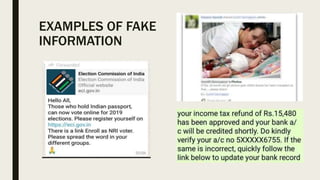
EXAMPLES OF FAKE
INFORMATION
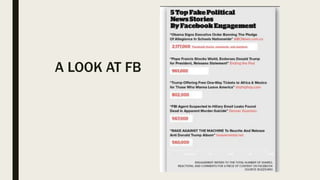
A LOOK AT FB
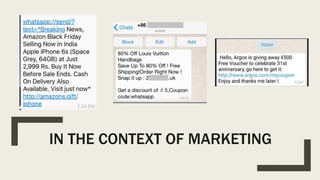
IN THE CONTEXT OF MARKETING
CATEGORIES –PRODUCT &MEDIUM
ā–  PRODUCT
ā–  MEDIUM
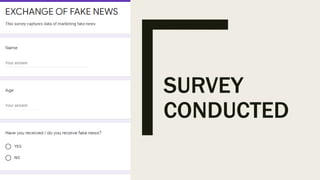
SURVEY
CONDUCTED
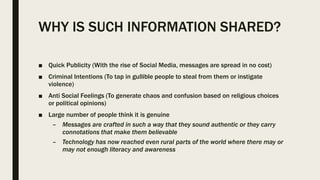
WHY IS SUCH INFORMATION SHARED?
ā–  Quick Publicity (With the rise of Social Media, messages are spread in no cost)
ā–  Criminal Intentions (To tap in gullible people to steal from them or instigate
violence)
ā–  Anti Social Feelings (To generate chaos and confusion based on religious choices
or political opinions)
ā–  Large number of people think it is genuine
– Messages are crafted in such a way that they sound authentic or they carry
connotations that make them believable
– Technology has now reached even rural parts of the world where there may or
may not enough literacy and awareness
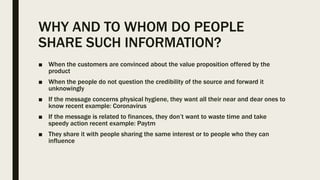
WHY AND TO WHOM DO PEOPLE
SHARE SUCH INFORMATION?
ā–  When the customers are convinced about the value proposition offered by the
product
ā–  When the people do not question the credibility of the source and forward it
unknowingly
ā–  If the message concerns physical hygiene, they want all their near and dear ones to
know recent example: Coronavirus
ā–  If the message is related to finances, they don’t want to waste time and take
speedy action recent example: Paytm
ā–  They share it with people sharing the same interest or to people who they can
influence
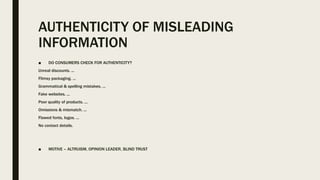
AUTHENTICITY OF MISLEADING
INFORMATION
ā–  DO CONSUMERS CHECK FOR AUTHENTICITY?
Unreal discounts. ...
Flimsy packaging. ...
Grammatical & spelling mistakes. ...
Fake websites. ...
Poor quality of products. ...
Omissions & mismatch. ...
Flawed fonts, logos. ...
No contact details.
ā–  MOTIVE – ALTRUISM, OPINION LEADER, BLIND TRUST
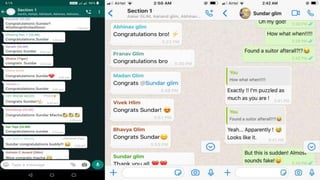
EXPERIMENT CONDUCTED
ā–  Sharing fake news about group mate Sundar getting married
ā–  #gettinghitchedsoon
ā–  Reach -110 people
ā–  Responses- 56
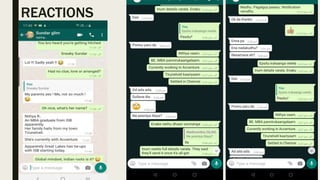
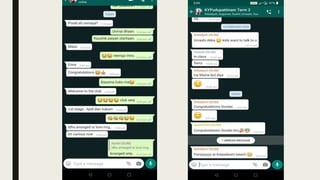
REACTIONS
THANK YOU

FAKE INFORMATION & WORD-OF-MOUTH BEHAVIOR

  • 1.
  • 2.
  • 3.
  • 4.
    IN THE CONTEXTOF MARKETING
  • 5.
  • 6.
  • 7.
    WHY IS SUCHINFORMATION SHARED? ā–  Quick Publicity (With the rise of Social Media, messages are spread in no cost) ā–  Criminal Intentions (To tap in gullible people to steal from them or instigate violence) ā–  Anti Social Feelings (To generate chaos and confusion based on religious choices or political opinions) ā–  Large number of people think it is genuine – Messages are crafted in such a way that they sound authentic or they carry connotations that make them believable – Technology has now reached even rural parts of the world where there may or may not enough literacy and awareness
  • 8.
    WHY AND TOWHOM DO PEOPLE SHARE SUCH INFORMATION? ā–  When the customers are convinced about the value proposition offered by the product ā–  When the people do not question the credibility of the source and forward it unknowingly ā–  If the message concerns physical hygiene, they want all their near and dear ones to know recent example: Coronavirus ā–  If the message is related to finances, they don’t want to waste time and take speedy action recent example: Paytm ā–  They share it with people sharing the same interest or to people who they can influence
  • 9.
    AUTHENTICITY OF MISLEADING INFORMATION ā– DO CONSUMERS CHECK FOR AUTHENTICITY? Unreal discounts. ... Flimsy packaging. ... Grammatical & spelling mistakes. ... Fake websites. ... Poor quality of products. ... Omissions & mismatch. ... Flawed fonts, logos. ... No contact details. ā–  MOTIVE – ALTRUISM, OPINION LEADER, BLIND TRUST
  • 10.
    EXPERIMENT CONDUCTED ā–  Sharingfake news about group mate Sundar getting married ā–  #gettinghitchedsoon ā–  Reach -110 people ā–  Responses- 56
  • 12.
  • 14.