Young Workers andHeat Illness
Heat is a serious workplace hazard
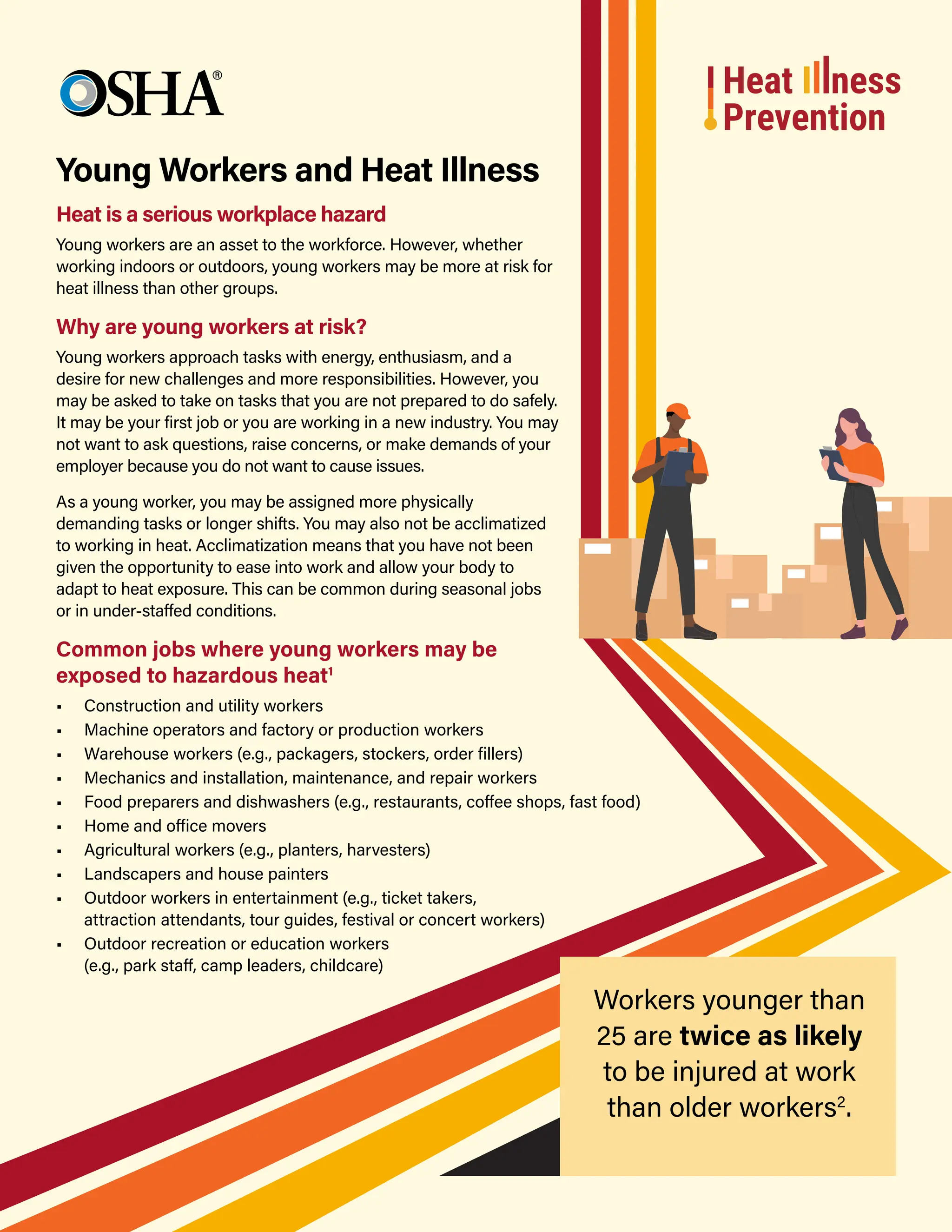
Young workers are an asset to the workforce. However, whether
working indoors or outdoors, young workers may be more at risk for
heat illness than other groups.
Why are young workers at risk?
Young workers approach tasks with energy, enthusiasm, and a
desire for new challenges and more responsibilities. However, you
may be asked to take on tasks that you are not prepared to do safely.
It may be your first job or you are working in a new industry. You may
not want to ask questions, raise concerns, or make demands of your
employer because you do not want to cause issues.
As a young worker, you may be assigned more physically
demanding tasks or longer shifts. You may also not be acclimatized
to working in heat. Acclimatization means that you have not been
given the opportunity to ease into work and allow your body to
adapt to heat exposure. This can be common during seasonal jobs
or in under‑staffed conditions.
Common jobs where young workers may be
exposed to hazardous heat1
• Construction and utility workers
• Machine operators and factory or production workers
• Warehouse workers (e.g., packagers, stockers, order fillers)
• Mechanics and installation, maintenance, and repair workers
• Food preparers and dishwashers (e.g., restaurants, coffee shops, fast food)
• Home and office movers
• Agricultural workers (e.g., planters, harvesters)
Landscapers and house painters
• Outdoor workers in entertainment (e.g., ticket takers,
attraction attendants, tour guides, festival or concert workers)
•
• Outdoor recreation or education workers
(e.g., park staff, camp leaders, childcare)
Workers younger than
25 are twice as likely
to be injured at work
than older workers2
.
2.
Watch out foreach other
What feels like a regular shift can turn deadly quickly. Watch for the signs of heat illness in yourself and your
coworkers. Act quickly when signs appear to save lives. When in doubt, call 911.
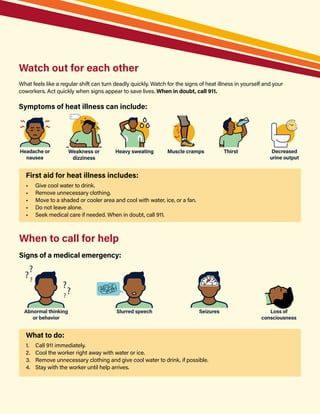
Symptoms of heat illness can include:
First aid for heat illness includes:
•
• Remove unnecessary clothing.
• Move to a shaded or cooler area and cool with water, ice, or a fan.
• Do not leave alone.
• Seek medical care if needed. When in doubt, call 911.
When to call for help
Signs of a medical emergency:
What to do:
1. Call 911 immediately.
2. Cool the worker right away with water or ice.
3. Remove unnecessary clothing and give cool water to drink, if possible.
4. Stay with the worker until help arrives.
3.
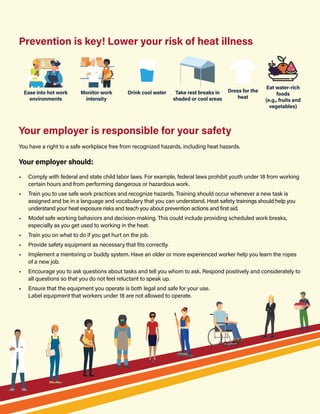
Prevention is key!Lower your risk of heat illness
Your employer is responsible for your safety
You have a right to a safe workplace free from recognized hazards, including heat hazards.
Your employer should:
•
• Train you to use safe work practices and recognize hazards. Training should occur whenever a new task is
assigned and be in a language and vocabulary that you can understand. Heat safety trainings should help you
understand your heat exposure risks and teach you about prevention actions and first aid.
•
•
•
•
•
•
4.
Resources
Young Workers: https://www.osha.gov/Young-Workers
HeatIllness Prevention: https://www.osha.gov/Heat
Talking Safety: https://www.cdc.gov/niosh/TalkingSafety/
Footnotes
1. Federal child labor laws prohibit employment in certain
occupations and require restrictions for youth under 18,
for more information visit: YouthRules.gov.
2. Source: CDC: Nonfatal Occupational Injuries to Younger
Workers — United States, 2012–2018. https://www.
cdc.gov/mmwr/volumes/69/wr/mm6935a3.htm?s_
cid=mm6935a3_w
OSHA is here to help!
The Occupational Safety and Health Administration (OSHA)
is the agency of the Department of Labor (DOL) that protects
workers from dangers on the job that can cause injuries or
illnesses. Federal law entitles workers to a safe workplace.
Workers have the right to speak up about hazards without
fear of retaliation. Call or visit www.osha.gov/workers for
information about how to file an online confidential complaint
with OSHA and ask for an inspection.
1‑800‑321‑OSHA (6742) | TTY 1‑877‑889‑5627
osha.gov/workers
OSHA 4481-05 2025