A​ ​Beginner’s​ ​Guide
to​ ​Successful​ ​Email
Marketing
“You’ve​ ​got​ ​mail.”
Do​ ​you​ ​remember​ ​hearing​ ​that?​ ​It’s​ ​one​ ​of​ ​those​ ​legendary​ ​pieces​ ​of​ ​Internet​ ​history​ ​formed​ ​when
the​ ​road​ ​was​ ​still​ ​being​ ​paved​ ​and​ ​we​ ​were​ ​foraging​ ​our​ ​way​ ​through​ ​the​ ​wilderness​ ​of​ ​what​ ​was​ ​the
original​ ​World​ ​Wide​ ​Web.
Although​ ​times​ ​have​ ​changed​ ​and​ ​AOL​ ​no​ ​longer​ ​sends​ ​CD’s​ ​in​ ​the​ ​mail,​ ​we​ ​can​ ​still​ ​thank​ ​them​ ​for
introducing​ ​us​ ​to​ ​email​ ​and​ ​our​ ​addiction​ ​to​ ​it.
These​ ​days,​ ​we’ve​ ​replaced​ ​that​ ​message​ ​with​ ​Tweets,​ ​likes,​ ​and​ ​status​ ​updates,​ ​but​ ​that​ ​doesn’t
mean​ ​that​ ​our​ ​affinity​ ​for​ ​email​ ​is​ ​any​ ​less.​ ​In​ ​fact,​ ​because​ ​of​ ​the​ ​noise​ ​that​ ​is​ ​social​ ​media,​ ​one
could​ ​argue​ ​that​ ​the​ ​inbox​ ​has​ ​become​ ​our​ ​virtual​ ​dojo,​ ​our​ ​place​ ​of​ ​solitude​ ​amongst​ ​the​ ​chaos.
This​ ​is​ ​why,​ ​as​ ​an​ ​entrepreneur,​ ​I​ ​believe​ ​that​ ​building​ ​successful​ ​email​ ​marketing​ ​campaigns​ ​has
never​ ​been​ ​more​ ​important​ ​than​ ​it​ ​is​ ​now.​ ​But​ ​there’s​ ​a​ ​problem;​ ​most​ ​people​ ​don’t​ ​know​ ​how​ ​to​ ​do
it​ ​right.​ ​So​ ​in​ ​the​ ​interest​ ​of​ ​furthering​ ​best​ ​practices​ ​and​ ​helping​ ​you​ ​succeed​ ​as​ ​a​ ​business​ ​owner,
let’s​ ​get​ ​back​ ​to​ ​the​ ​basics​ ​and​ ​talk​ ​about​ ​​how​ ​a​ ​great​ ​email​ ​campaign​ ​is​ ​built​,​ ​from​ ​the​ ​ground​ ​up.
You’re​ ​in​ ​their​ ​house
People​ ​are​ ​inundated​ ​with​ ​interruption,​ ​pitches,​ ​and​ ​advertisements​ ​everywhere​ ​they​ ​look,​ ​and
though​ ​you​ ​might​ ​think​ ​yours​ ​is​ ​special,​ ​there’s​ ​a​ ​high​ ​probability​ ​that​ ​to​ ​the​ ​reader,​ ​it​ ​looks​ ​the​ ​same
as​ ​the​ ​rest.​ ​This​ ​is​ ​why​ ​it’s​ ​important​ ​to​ ​remember​ ​where​ ​you​ ​are,​ ​and​ ​use​ ​your​ ​good​ ​manners​ ​as​ ​a
result.
Getting​ ​into​ ​someone’s​ ​inbox​ ​is​ ​like​ ​being​ ​invited​ ​to​ ​their​ ​home​ ​for​ ​dinner.​ ​If​ ​they​ ​ask​ ​you​ ​to​ ​take
your​ ​shoes​ ​off,​ ​you​ ​respectfully​ ​do​ ​so.​ ​It’s​ ​the​ ​same​ ​with​ ​email​ ​marketing,​ ​so​ ​before​ ​we​ ​begin​ ​I’d
simply​ ​like​ ​to​ ​remind​ ​you​ ​to​ ​be​ ​on​ ​your​ ​best​ ​behavior​ ​at​ ​all​ ​times​ ​and​ ​remember…you’re​ ​in​ ​their
house.
Phase​ ​I:​ ​Getting​ ​Permission
Of​ ​course,​ ​no​ ​email​ ​campaign​ ​was​ ​ever​ ​built​ ​without​ ​getting​ ​permission​ ​to​ ​get​ ​started,​ ​so​ ​first​ ​we’ll
need​ ​to​ ​focus​ ​on​ ​building​ ​a​ ​sizable​ ​email​ ​list.
There​ ​are​ ​many​ ​ways​ ​you​ ​can​ ​do​ ​this​ ​of​ ​course.​ ​Some​ ​prefer​ ​to​ ​give​ ​something​ ​away​ ​for​ ​free​ ​while
others​ ​simply​ ​offer​ ​a​ ​newsletter​ ​or​ ​product​ ​updates.
I​ ​can’t​ ​tell​ ​you​ ​which​ ​is​ ​the​ ​right​ ​or​ ​wrong​ ​answer​ ​in​ ​this​ ​case,​ ​but​ ​I​ ​can​ ​tell​ ​you​ ​that​ ​it’s​ ​important​ ​to
have​ ​a​ ​clear​ ​purpose​ ​when​ ​asking​ ​for​ ​an​ ​address.​ ​This​ ​is​ ​where​ ​a​ ​strong​ ​call​ ​to​ ​action​ ​comes​ ​into
play,​ ​and​ ​copywriting​ ​is​ ​super​ ​important.
● What​ ​do​ ​I​ ​get​ ​when​ ​I​ ​give​ ​you​ ​my​ ​email​ ​address?
● Are​ ​you​ ​going​ ​to​ ​spam​ ​me?
● How​ ​often​ ​will​ ​you​ ​email​ ​me?
● Will​ ​I​ ​get​ ​discounts?
● Will​ ​I​ ​get​ ​a​ ​first​ ​crack​ ​at​ ​your​ ​beta?
● Will​ ​you​ ​send​ ​me​ ​relevant​ ​offers​ ​or​ ​more​ ​junk?
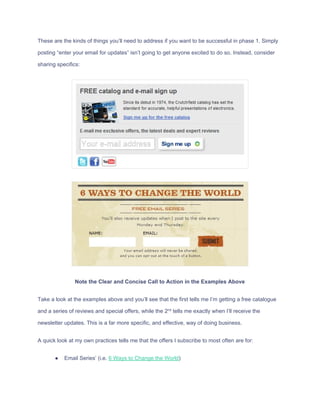
These​ ​are​ ​the​ ​kinds​ ​of​ ​things​ ​you’ll​ ​need​ ​to​ ​address​ ​if​ ​you​ ​want​ ​to​ ​be​ ​successful​ ​in​ ​phase​ ​1.​ ​Simply
posting​ ​“enter​ ​your​ ​email​ ​for​ ​updates”​ ​isn’t​ ​going​ ​to​ ​get​ ​anyone​ ​excited​ ​to​ ​do​ ​so.​ ​Instead,​ ​consider
sharing​ ​specifics:
Note​ ​the​ ​Clear​ ​and​ ​Concise​ ​Call​ ​to​ ​Action​ ​in​ ​the​ ​Examples​ ​Above
Take​ ​a​ ​look​ ​at​ ​the​ ​examples​ ​above​ ​and​ ​you’ll​ ​see​ ​that​ ​the​ ​first​ ​tells​ ​me​ ​I’m​ ​getting​ ​a​ ​free​ ​catalogue
and​ ​a​ ​series​ ​of​ ​reviews​ ​and​ ​special​ ​offers,​ ​while​ ​the​ ​2​nd​
​ ​tells​ ​me​ ​exactly​ ​when​ ​I’ll​ ​receive​ ​the
newsletter​ ​updates.​ ​This​ ​is​ ​a​ ​far​ ​more​ ​specific,​ ​and​ ​effective,​ ​way​ ​of​ ​doing​ ​business.
A​ ​quick​ ​look​ ​at​ ​my​ ​own​ ​practices​ ​tells​ ​me​ ​that​ ​the​ ​offers​ ​I​ ​subscribe​ ​to​ ​most​ ​often​ ​are​ ​for:
● Email​ ​Series’​ ​(i.e.​ ​​6​ ​Ways​ ​to​ ​Change​ ​the​ ​World​)
● Free​ ​Downloads
● Free​ ​White​ ​Papers​ ​or​ ​eBooks
● Update​ ​Lists​ ​(New​ ​Issue​ ​Notifications,​ ​Product​ ​Updates,​ ​New​ ​Releases)
Lastly,​ ​and​ ​Amazon​ ​does​ ​this​ ​really​ ​well,​ ​your​ ​customers​ ​make​ ​great​ ​candidates,​ ​so​ ​don’t​ ​forget​ ​to
integrate​ ​some​ ​form​ ​of​ ​registration​ ​or​ ​email​ ​subscription​ ​as​ ​part​ ​of​ ​your​ ​purchasing​ ​process.​ ​Just
remember​ ​to​ ​treat​ ​these​ ​addresses​ ​with​ ​special​ ​regard,​ ​which​ ​we’ll​ ​talk​ ​about​ ​in​ ​phase​ ​2.
Get​ ​Whitelisted
While​ ​almost​ ​all​ ​reputable​ ​email​ ​service​ ​providers​ ​work​ ​very​ ​hard​ ​to​ ​make​ ​sure​ ​that​ ​your​ ​emails​ ​are
not​ ​blocked​ ​by​ ​major​ ​ISP’s,​ ​they​ ​can’t​ ​control​ ​whether​ ​or​ ​not​ ​your​ ​emails​ ​hit​ ​the​ ​inbox​ ​or​ ​the​ ​spam
box.​ ​Although​ ​most​ ​will​ ​help​ ​you​ ​by​ ​providing​ ​a​ ​quality​ ​score​ ​to​ ​help​ ​you​ ​determine​ ​availability,
getting​ ​whitelisted​ ​is​ ​the​ ​most​ ​effective​ ​way​ ​to​ ​ensure​ ​that​ ​your​ ​emails​ ​get​ ​delivered​ ​properly.
Essentially,​ ​getting​ ​whitelisted​ ​is​ ​equivalent​ ​to​ ​being​ ​marked​ ​as​ ​a​ ​friend,​ ​and​ ​the​ ​best​ ​way​ ​to​ ​achieve
this​ ​is​ ​by​ ​being​ ​added​ ​to​ ​the​ ​recipient’s​ ​address​ ​book.​ ​The​ ​best​ ​way​ ​to​ ​do​ ​this​ ​is​ ​by​ ​providing
instructions​ ​to​ ​do​ ​so​ ​at​ ​the​ ​top​ ​of​ ​each​ ​email,​ ​especially​ ​on​ ​the​ ​initial​ ​thank​ ​you​ ​and​ ​first​ ​follow-up
email.
Furthermore,​ ​here​ ​are​ ​instructions​ ​from​ ​some​ ​of​ ​the​ ​more​ ​popular​ ​online​ ​providers:
● AWeber
● Mailchimp
● Constant​ ​Contact
● Campaign​ ​Monitor
● Blue​ ​Sky​ ​Factory
● Emma
Phase​ ​II:​ ​Playing​ ​the​ ​Numbers​ ​Game
Manage​ ​Expectations​ ​with​ ​Follow-Up​ ​Efforts
Email​ ​marketing​ ​is​ ​all​ ​about​ ​expectations,​ ​and​ ​it’s​ ​up​ ​to​ ​you​ ​to​ ​set​ ​them.​ ​If​ ​your​ ​call​ ​to​ ​action​ ​is
strong,​ ​and​ ​your​ ​follow-up​ ​is​ ​consistent,​ ​then​ ​you​ ​can​ ​count​ ​on​ ​a​ ​positive​ ​campaign.​ ​However,​ ​if​ ​you
promise​ ​to​ ​send​ ​one​ ​email​ ​per​ ​week​ ​and​ ​instead​ ​send​ ​them​ ​daily,​ ​then​ ​you’re​ ​setting​ ​yourself​ ​up​ ​for
failure.​ ​On​ ​the​ ​contrary,​ ​if​ ​someone​ ​is​ ​expecting​ ​daily​ ​updates​ ​or​ ​critical​ ​product​ ​updates​ ​and​ ​you
don’t’​ ​deliver,​ ​then​ ​they​ ​are​ ​likely​ ​to​ ​be​ ​just​ ​as​ ​upset​ ​in​ ​that​ ​case​ ​too.
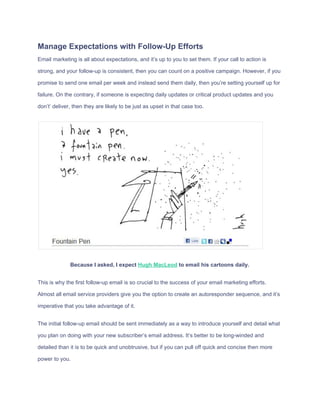
Because​ ​I​ ​asked,​ ​I​ ​expect​ ​​Hugh​ ​MacLeod​​ ​to​ ​email​ ​his​ ​cartoons​ ​daily.
This​ ​is​ ​why​ ​the​ ​first​ ​follow-up​ ​email​ ​is​ ​so​ ​crucial​ ​to​ ​the​ ​success​ ​of​ ​your​ ​email​ ​marketing​ ​efforts.
Almost​ ​all​ ​email​ ​service​ ​providers​ ​give​ ​you​ ​the​ ​option​ ​to​ ​create​ ​an​ ​autoresponder​ ​sequence,​ ​and​ ​it’s
imperative​ ​that​ ​you​ ​take​ ​advantage​ ​of​ ​it.
The​ ​initial​ ​follow-up​ ​email​ ​should​ ​be​ ​sent​ ​immediately​ ​as​ ​a​ ​way​ ​to​ ​introduce​ ​yourself​ ​and​ ​detail​ ​what
you​ ​plan​ ​on​ ​doing​ ​with​ ​your​ ​new​ ​subscriber’s​ ​email​ ​address.​ ​It’s​ ​better​ ​to​ ​be​ ​long-winded​ ​and
detailed​ ​than​ ​it​ ​is​ ​to​ ​be​ ​quick​ ​and​ ​unobtrusive,​ ​but​ ​if​ ​you​ ​can​ ​pull​ ​off​ ​quick​ ​and​ ​concise​ ​then​ ​more
power​ ​to​ ​you.
From​ ​here,​ ​it’s​ ​simply​ ​a​ ​matter​ ​of​ ​living​ ​up​ ​to​ ​their​ ​expectations.
When​ ​to​ ​Pitch
If​ ​you’re​ ​going​ ​to​ ​get​ ​in​ ​the​ ​habit​ ​of​ ​pitching​ ​often,​ ​try​ ​to​ ​put​ ​yourself​ ​in​ ​the​ ​reader’s​ ​shoes.​ ​Ask
yourself​ ​if​ ​your​ ​messaging​ ​is​ ​consistent​ ​with​ ​the​ ​expectations​ ​you’ve​ ​set.​ ​As​ ​I​ ​said​ ​before,​ ​Amazon
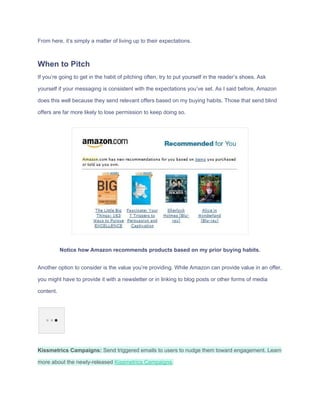
does​ ​this​ ​well​ ​because​ ​they​ ​send​ ​relevant​ ​offers​ ​based​ ​on​ ​my​ ​buying​ ​habits.​ ​Those​ ​that​ ​send​ ​blind
offers​ ​are​ ​far​ ​more​ ​likely​ ​to​ ​lose​ ​permission​ ​to​ ​keep​ ​doing​ ​so.
Notice​ ​how​ ​Amazon​ ​recommends​ ​products​ ​based​ ​on​ ​my​ ​prior​ ​buying​ ​habits.
Another​ ​option​ ​to​ ​consider​ ​is​ ​the​ ​value​ ​you’re​ ​providing.​ ​While​ ​Amazon​ ​can​ ​provide​ ​value​ ​in​ ​an​ ​offer,
you​ ​might​ ​have​ ​to​ ​provide​ ​it​ ​with​ ​a​ ​newsletter​ ​or​ ​in​ ​linking​ ​to​ ​blog​ ​posts​ ​or​ ​other​ ​forms​ ​of​ ​media
content.
Kissmetrics​ ​Campaigns:​​ ​Send​ ​triggered​ ​emails​ ​to​ ​users​ ​to​ ​nudge​ ​them​ ​toward​ ​engagement.​ ​Learn
more​ ​about​ ​the​ ​newly-released​ ​​Kissmetrics​ ​Campaigns​.
Again,​ ​each​ ​business​ ​has​ ​different​ ​needs,​ ​and​ ​there​ ​aren’t​ ​any​ ​hard​ ​and​ ​fast​ ​rules​ ​as​ ​to​ ​how​ ​often
you​ ​can​ ​pitch​ ​or​ ​provide​ ​content,​ ​but​ ​remember​ ​that​ ​an​ ​email​ ​list​ ​is​ ​a​ ​permission​ ​asset​ ​and​ ​it’s​ ​better
to​ ​err​ ​on​ ​the​ ​side​ ​of​ ​caution​ ​than​ ​to​ ​play​ ​it​ ​loose​ ​and​ ​reckless.
What’s​ ​in​ ​a​ ​Newsletter
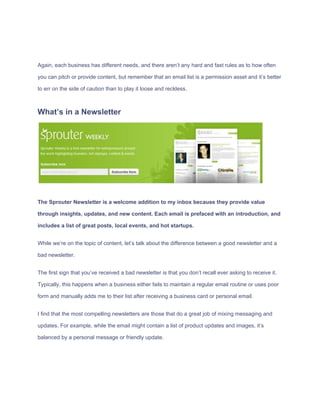
The​ ​Sprouter​ ​Newsletter​ ​is​ ​a​ ​welcome​ ​addition​ ​to​ ​my​ ​inbox​ ​because​ ​they​ ​provide​ ​value
through​ ​insights,​ ​updates,​ ​and​ ​new​ ​content.​ ​Each​ ​email​ ​is​ ​prefaced​ ​with​ ​an​ ​introduction,​ ​and
includes​ ​a​ ​list​ ​of​ ​great​ ​posts,​ ​local​ ​events,​ ​and​ ​hot​ ​startups.
While​ ​we’re​ ​on​ ​the​ ​topic​ ​of​ ​content,​ ​let’s​ ​talk​ ​about​ ​the​ ​difference​ ​between​ ​a​ ​good​ ​newsletter​ ​and​ ​a
bad​ ​newsletter.
The​ ​first​ ​sign​ ​that​ ​you’ve​ ​received​ ​a​ ​bad​ ​newsletter​ ​is​ ​that​ ​you​ ​don’t​ ​recall​ ​ever​ ​asking​ ​to​ ​receive​ ​it.
Typically,​ ​this​ ​happens​ ​when​ ​a​ ​business​ ​either​ ​fails​ ​to​ ​maintain​ ​a​ ​regular​ ​email​ ​routine​ ​or​ ​uses​ ​poor
form​ ​and​ ​manually​ ​adds​ ​me​ ​to​ ​their​ ​list​ ​after​ ​receiving​ ​a​ ​business​ ​card​ ​or​ ​personal​ ​email.
I​ ​find​ ​that​ ​the​ ​most​ ​compelling​ ​newsletters​ ​are​ ​those​ ​that​ ​do​ ​a​ ​great​ ​job​ ​of​ ​mixing​ ​messaging​ ​and
updates.​ ​For​ ​example,​ ​while​ ​the​ ​email​ ​might​ ​contain​ ​a​ ​list​ ​of​ ​product​ ​updates​ ​and​ ​images,​ ​it’s
balanced​ ​by​ ​a​ ​personal​ ​message​ ​or​ ​friendly​ ​update.
As​ ​a​ ​rule​ ​of​ ​thumb,​ ​try​ ​to​ ​use​ ​your​ ​newsletter​ ​as​ ​a​ ​way​ ​to​ ​further​ ​your​ ​relationship​ ​with​ ​the
reader/customer​ ​rather​ ​than​ ​to​ ​pitch​ ​them.​ ​Save​ ​the​ ​pitch​ ​for​ ​unique​ ​updates,​ ​offers,​ ​and
announcements.
Using​ ​the​ ​Autoresponder
As​ ​a​ ​marketer​ ​myself,​ ​one​ ​of​ ​the​ ​issues​ ​I​ ​run​ ​into​ ​most​ ​often​ ​is​ ​that​ ​I​ ​forget​ ​to​ ​talk​ ​to​ ​my​ ​list​ ​until​ ​I
have​ ​something​ ​to​ ​sell.​ ​Obviously,​ ​this​ ​is​ ​not​ ​ideal.
This​ ​is​ ​where​ ​an​ ​​autoresponder​​ ​can​ ​save​ ​you,​ ​and​ ​why​ ​I​ ​recommend​ ​scheduling​ ​content​ ​to​ ​be
delivered​ ​on​ ​a​ ​consistent​ ​basis​ ​over​ ​the​ ​course​ ​of​ ​several​ ​months.
For​ ​example,​ ​Copyblogger​ ​offers​ ​a​ ​newsletter​ ​titled​ ​“​Internet​ ​Marketing​ ​for​ ​Smart​ ​People​,”​ ​and​ ​it
contains​ ​a​ ​dozen​ ​plus​ ​great​ ​pieces​ ​on​ ​how​ ​to​ ​market​ ​better​ ​as​ ​an​ ​online​ ​entrepreneur.​ ​I​ ​can’t
remember​ ​when​ ​I​ ​signed​ ​up,​ ​but​ ​I​ ​do​ ​know​ ​that​ ​I’ve​ ​received​ ​an​ ​occasional​ ​email​ ​at​ ​least​ ​once​ ​per
month​ ​over​ ​the​ ​past​ ​6​ ​months.
The​ ​benefit​ ​of​ ​that​ ​is​ ​when​ ​you​ ​do​ ​need​ ​to​ ​announce​ ​a​ ​new​ ​product​ ​or​ ​sale,​ ​you​ ​can​ ​count​ ​on​ ​the
fact​ ​that​ ​you’ve​ ​already​ ​been​ ​in​ ​touch,​ ​having​ ​built​ ​a​ ​relationship​ ​over​ ​several​ ​weeks/months,​ ​and
are​ ​much​ ​less​ ​likely​ ​to​ ​annoy​ ​your​ ​readers.​ ​Of​ ​course,​ ​it’s​ ​important​ ​to​ ​schedule​ ​your​ ​autoresponder
sequence​ ​on​ ​specific​ ​days​ ​so​ ​that​ ​you​ ​know​ ​when​ ​you​ ​can​ ​afford​ ​to​ ​send​ ​an​ ​email.​ ​More​ ​than​ ​one
per​ ​day​ ​and​ ​you’re​ ​probably​ ​mailing​ ​too​ ​much.
If​ ​you​ ​find​ ​yourself​ ​asking​ ​“will​ ​this​ ​email​ ​be​ ​one​ ​too​ ​many?”​ ​then​ ​it’s​ ​probably​ ​one​ ​too​ ​many.
Phase​ ​III:​ ​Segmentation​ ​and​ ​Analytics
Analytics
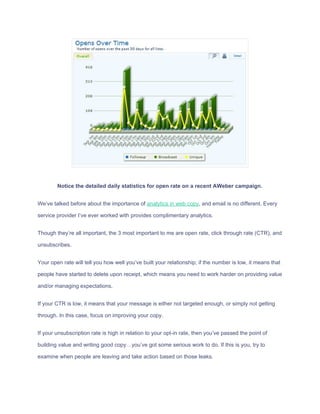
Notice​ ​the​ ​detailed​ ​daily​ ​statistics​ ​for​ ​open​ ​rate​ ​on​ ​a​ ​recent​ ​AWeber​ ​campaign.
We’ve​ ​talked​ ​before​ ​about​ ​the​ ​importance​ ​of​ ​​analytics​ ​in​ ​web​ ​copy​,​ ​and​ ​email​ ​is​ ​no​ ​different.​ ​Every
service​ ​provider​ ​I’ve​ ​ever​ ​worked​ ​with​ ​provides​ ​complimentary​ ​analytics.
Though​ ​they’re​ ​all​ ​important,​ ​the​ ​3​ ​most​ ​important​ ​to​ ​me​ ​are​ ​open​ ​rate,​ ​click​ ​through​ ​rate​ ​(CTR),​ ​and
unsubscribes.
Your​ ​open​ ​rate​ ​will​ ​tell​ ​you​ ​how​ ​well​ ​you’ve​ ​built​ ​your​ ​relationship;​ ​if​ ​the​ ​number​ ​is​ ​low,​ ​it​ ​means​ ​that
people​ ​have​ ​started​ ​to​ ​delete​ ​upon​ ​receipt,​ ​which​ ​means​ ​you​ ​need​ ​to​ ​work​ ​harder​ ​on​ ​providing​ ​value
and/or​ ​managing​ ​expectations.
If​ ​your​ ​CTR​ ​is​ ​low,​ ​it​ ​means​ ​that​ ​your​ ​message​ ​is​ ​either​ ​not​ ​targeted​ ​enough,​ ​or​ ​simply​ ​not​ ​getting
through.​ ​In​ ​this​ ​case,​ ​focus​ ​on​ ​improving​ ​your​ ​copy.
If​ ​your​ ​unsubscription​ ​rate​ ​is​ ​high​ ​in​ ​relation​ ​to​ ​your​ ​opt-in​ ​rate,​ ​then​ ​you’ve​ ​passed​ ​the​ ​point​ ​of
building​ ​value​ ​and​ ​writing​ ​good​ ​copy…you’ve​ ​got​ ​some​ ​serious​ ​work​ ​to​ ​do.​ ​If​ ​this​ ​is​ ​you,​ ​try​ ​to
examine​ ​when​ ​people​ ​are​ ​leaving​ ​and​ ​take​ ​action​ ​based​ ​on​ ​those​ ​leaks.
If​ ​they’re​ ​leaving​ ​after​ ​a​ ​certain​ ​autoresponder​ ​email,​ ​then​ ​re-work​ ​it.​ ​If​ ​they’re​ ​leaving​ ​after
marketing​ ​messages,​ ​then​ ​re-work​ ​the​ ​way​ ​you​ ​present​ ​offers.​ ​If​ ​they’re​ ​leaving​ ​early​ ​on​ ​in​ ​your
funnel,​ ​then​ ​you​ ​need​ ​to​ ​fix​ ​your​ ​original​ ​call​ ​to​ ​action​ ​so​ ​that​ ​it’s​ ​in​ ​harmony​ ​with​ ​what​ ​you’re
sending.
Email​ ​analytics​ ​are​ ​critical​ ​in​ ​that​ ​if​ ​you’re​ ​paying​ ​attention,​ ​they’ll​ ​give​ ​you​ ​very​ ​specific​ ​clues​ ​as​ ​to
what​ ​you’re​ ​doing​ ​wrong.​ ​Of​ ​course​ ​the​ ​key​ ​variable​ ​here​ ​is​ ​“paying​ ​attention.”
Segmentation
If​ ​you’re​ ​unfamiliar​ ​with​ ​the​ ​term,​ ​segmentation​ ​is​ ​the​ ​practice​ ​of​ ​splitting​ ​up​ ​your​ ​email​ ​list​ ​into​ ​more
targeted​ ​groups.
For​ ​example,​ ​the​ ​following​ ​are​ ​ways​ ​to​ ​segment​ ​a​ ​larger,​ ​more​ ​unified​ ​list:
● Customer​ ​List​ ​(in​ ​comparison​ ​to​ ​leads)
● Product​ ​Updates​ ​(in​ ​comparison​ ​to​ ​a​ ​customer​ ​list)
● Newsletter
● Daily​ ​Email​ ​List​ ​(in​ ​comparison​ ​to​ ​weekly,​ ​bi-weekly,​ ​monthly,​ ​etc)
● HTML​ ​(yes,​ ​some​ ​people​ ​prefer​ ​the​ ​option​ ​for​ ​text)
In​ ​dividing​ ​your​ ​list​ ​in​ ​this​ ​manner,​ ​you​ ​give​ ​yourself​ ​the​ ​ability​ ​to​ ​send​ ​more​ ​targeted
communication.​ ​Some​ ​customers​ ​want​ ​both​ ​product​ ​and​ ​sales​ ​updates,​ ​while​ ​others​ ​might​ ​only​ ​want
to​ ​hear​ ​about​ ​new​ ​versions.​ ​If​ ​you​ ​don’t​ ​give​ ​them​ ​the​ ​chance​ ​to​ ​choose,​ ​you​ ​risk​ ​losing​ ​them
all-together.​ ​Since​ ​customers​ ​make​ ​the​ ​best​ ​buyers,​ ​it’s​ ​fairly​ ​obvious​ ​why​ ​you​ ​want​ ​to​ ​keep​ ​them
subscribed​ ​to​ ​your​ ​customer​ ​email​ ​list.
With​ ​segmentation,​ ​you​ ​can​ ​send​ ​a​ ​broadcast​ ​only​ ​to​ ​those​ ​that​ ​didn’t​ ​open​ ​your​ ​last​ ​message​ ​(ask
them​ ​why),​ ​or​ ​to​ ​those​ ​that​ ​showed​ ​interest​ ​(a​ ​2​nd​
​ ​pitch).​ ​You​ ​can​ ​also​ ​split​ ​test​ ​messaging​ ​amongst
different​ ​groups​ ​in​ ​order​ ​to​ ​refine​ ​your​ ​best​ ​practices.
As​ ​you​ ​can​ ​see,​ ​segmentation​ ​isn’t​ ​rocket​ ​science,​ ​but​ ​it​ ​is​ ​work,​ ​which​ ​is​ ​why​ ​most​ ​don’t​ ​take​ ​the
time​ ​to​ ​do​ ​it​ ​right.​ ​If​ ​you​ ​do,​ ​you’ll​ ​immediately​ ​separate​ ​yourself​ ​from​ ​the​ ​pack.
The​ ​Value​ ​of​ ​Your​ ​List
In​ ​the​ ​future,​ ​we’ll​ ​talk​ ​about​ ​more​ ​advanced​ ​techniques,​ ​such​ ​as​ ​measuring​ ​the​ ​cost​ ​of​ ​lead
acquisition,​ ​but​ ​for​ ​now​ ​know​ ​this:​ ​your​ ​email​ ​list​ ​is​ ​one​ ​of​ ​your​ ​most​ ​valuable​ ​resources,​ ​and​ ​if​ ​you
learn​ ​how​ ​to​ ​treat​ ​it​ ​right,​ ​the​ ​cost​ ​of​ ​doing​ ​so​ ​will​ ​pay​ ​for​ ​itself.
If​ ​you​ ​can​ ​imagine​ ​that​ ​each​ ​person​ ​on​ ​your​ ​list​ ​is​ ​worth​ ​a​ ​set​ ​value,​ ​say​ ​$5,​ ​then​ ​you​ ​can
understand​ ​immediately​ ​how​ ​losing​ ​several​ ​hundred​ ​could​ ​be​ ​dangerous​ ​to​ ​your​ ​bottom​ ​line.

A beginner’s guide to successful email marketing

  • 2.
    A​ ​Beginner’s​ ​Guide to​​Successful​ ​Email Marketing “You’ve​ ​got​ ​mail.” Do​ ​you​ ​remember​ ​hearing​ ​that?​ ​It’s​ ​one​ ​of​ ​those​ ​legendary​ ​pieces​ ​of​ ​Internet​ ​history​ ​formed​ ​when the​ ​road​ ​was​ ​still​ ​being​ ​paved​ ​and​ ​we​ ​were​ ​foraging​ ​our​ ​way​ ​through​ ​the​ ​wilderness​ ​of​ ​what​ ​was​ ​the original​ ​World​ ​Wide​ ​Web. Although​ ​times​ ​have​ ​changed​ ​and​ ​AOL​ ​no​ ​longer​ ​sends​ ​CD’s​ ​in​ ​the​ ​mail,​ ​we​ ​can​ ​still​ ​thank​ ​them​ ​for introducing​ ​us​ ​to​ ​email​ ​and​ ​our​ ​addiction​ ​to​ ​it. These​ ​days,​ ​we’ve​ ​replaced​ ​that​ ​message​ ​with​ ​Tweets,​ ​likes,​ ​and​ ​status​ ​updates,​ ​but​ ​that​ ​doesn’t mean​ ​that​ ​our​ ​affinity​ ​for​ ​email​ ​is​ ​any​ ​less.​ ​In​ ​fact,​ ​because​ ​of​ ​the​ ​noise​ ​that​ ​is​ ​social​ ​media,​ ​one could​ ​argue​ ​that​ ​the​ ​inbox​ ​has​ ​become​ ​our​ ​virtual​ ​dojo,​ ​our​ ​place​ ​of​ ​solitude​ ​amongst​ ​the​ ​chaos. This​ ​is​ ​why,​ ​as​ ​an​ ​entrepreneur,​ ​I​ ​believe​ ​that​ ​building​ ​successful​ ​email​ ​marketing​ ​campaigns​ ​has never​ ​been​ ​more​ ​important​ ​than​ ​it​ ​is​ ​now.​ ​But​ ​there’s​ ​a​ ​problem;​ ​most​ ​people​ ​don’t​ ​know​ ​how​ ​to​ ​do it​ ​right.​ ​So​ ​in​ ​the​ ​interest​ ​of​ ​furthering​ ​best​ ​practices​ ​and​ ​helping​ ​you​ ​succeed​ ​as​ ​a​ ​business​ ​owner, let’s​ ​get​ ​back​ ​to​ ​the​ ​basics​ ​and​ ​talk​ ​about​ ​​how​ ​a​ ​great​ ​email​ ​campaign​ ​is​ ​built​,​ ​from​ ​the​ ​ground​ ​up. You’re​ ​in​ ​their​ ​house
  • 3.
    People​ ​are​ ​inundated​​with​ ​interruption,​ ​pitches,​ ​and​ ​advertisements​ ​everywhere​ ​they​ ​look,​ ​and though​ ​you​ ​might​ ​think​ ​yours​ ​is​ ​special,​ ​there’s​ ​a​ ​high​ ​probability​ ​that​ ​to​ ​the​ ​reader,​ ​it​ ​looks​ ​the​ ​same as​ ​the​ ​rest.​ ​This​ ​is​ ​why​ ​it’s​ ​important​ ​to​ ​remember​ ​where​ ​you​ ​are,​ ​and​ ​use​ ​your​ ​good​ ​manners​ ​as​ ​a result. Getting​ ​into​ ​someone’s​ ​inbox​ ​is​ ​like​ ​being​ ​invited​ ​to​ ​their​ ​home​ ​for​ ​dinner.​ ​If​ ​they​ ​ask​ ​you​ ​to​ ​take your​ ​shoes​ ​off,​ ​you​ ​respectfully​ ​do​ ​so.​ ​It’s​ ​the​ ​same​ ​with​ ​email​ ​marketing,​ ​so​ ​before​ ​we​ ​begin​ ​I’d simply​ ​like​ ​to​ ​remind​ ​you​ ​to​ ​be​ ​on​ ​your​ ​best​ ​behavior​ ​at​ ​all​ ​times​ ​and​ ​remember…you’re​ ​in​ ​their house. Phase​ ​I:​ ​Getting​ ​Permission Of​ ​course,​ ​no​ ​email​ ​campaign​ ​was​ ​ever​ ​built​ ​without​ ​getting​ ​permission​ ​to​ ​get​ ​started,​ ​so​ ​first​ ​we’ll need​ ​to​ ​focus​ ​on​ ​building​ ​a​ ​sizable​ ​email​ ​list. There​ ​are​ ​many​ ​ways​ ​you​ ​can​ ​do​ ​this​ ​of​ ​course.​ ​Some​ ​prefer​ ​to​ ​give​ ​something​ ​away​ ​for​ ​free​ ​while others​ ​simply​ ​offer​ ​a​ ​newsletter​ ​or​ ​product​ ​updates. I​ ​can’t​ ​tell​ ​you​ ​which​ ​is​ ​the​ ​right​ ​or​ ​wrong​ ​answer​ ​in​ ​this​ ​case,​ ​but​ ​I​ ​can​ ​tell​ ​you​ ​that​ ​it’s​ ​important​ ​to have​ ​a​ ​clear​ ​purpose​ ​when​ ​asking​ ​for​ ​an​ ​address.​ ​This​ ​is​ ​where​ ​a​ ​strong​ ​call​ ​to​ ​action​ ​comes​ ​into play,​ ​and​ ​copywriting​ ​is​ ​super​ ​important. ● What​ ​do​ ​I​ ​get​ ​when​ ​I​ ​give​ ​you​ ​my​ ​email​ ​address? ● Are​ ​you​ ​going​ ​to​ ​spam​ ​me? ● How​ ​often​ ​will​ ​you​ ​email​ ​me? ● Will​ ​I​ ​get​ ​discounts? ● Will​ ​I​ ​get​ ​a​ ​first​ ​crack​ ​at​ ​your​ ​beta? ● Will​ ​you​ ​send​ ​me​ ​relevant​ ​offers​ ​or​ ​more​ ​junk?
  • 4.
    These​ ​are​ ​the​​kinds​ ​of​ ​things​ ​you’ll​ ​need​ ​to​ ​address​ ​if​ ​you​ ​want​ ​to​ ​be​ ​successful​ ​in​ ​phase​ ​1.​ ​Simply posting​ ​“enter​ ​your​ ​email​ ​for​ ​updates”​ ​isn’t​ ​going​ ​to​ ​get​ ​anyone​ ​excited​ ​to​ ​do​ ​so.​ ​Instead,​ ​consider sharing​ ​specifics: Note​ ​the​ ​Clear​ ​and​ ​Concise​ ​Call​ ​to​ ​Action​ ​in​ ​the​ ​Examples​ ​Above Take​ ​a​ ​look​ ​at​ ​the​ ​examples​ ​above​ ​and​ ​you’ll​ ​see​ ​that​ ​the​ ​first​ ​tells​ ​me​ ​I’m​ ​getting​ ​a​ ​free​ ​catalogue and​ ​a​ ​series​ ​of​ ​reviews​ ​and​ ​special​ ​offers,​ ​while​ ​the​ ​2​nd​ ​ ​tells​ ​me​ ​exactly​ ​when​ ​I’ll​ ​receive​ ​the newsletter​ ​updates.​ ​This​ ​is​ ​a​ ​far​ ​more​ ​specific,​ ​and​ ​effective,​ ​way​ ​of​ ​doing​ ​business. A​ ​quick​ ​look​ ​at​ ​my​ ​own​ ​practices​ ​tells​ ​me​ ​that​ ​the​ ​offers​ ​I​ ​subscribe​ ​to​ ​most​ ​often​ ​are​ ​for: ● Email​ ​Series’​ ​(i.e.​ ​​6​ ​Ways​ ​to​ ​Change​ ​the​ ​World​)
  • 5.
    ● Free​ ​Downloads ●Free​ ​White​ ​Papers​ ​or​ ​eBooks ● Update​ ​Lists​ ​(New​ ​Issue​ ​Notifications,​ ​Product​ ​Updates,​ ​New​ ​Releases) Lastly,​ ​and​ ​Amazon​ ​does​ ​this​ ​really​ ​well,​ ​your​ ​customers​ ​make​ ​great​ ​candidates,​ ​so​ ​don’t​ ​forget​ ​to integrate​ ​some​ ​form​ ​of​ ​registration​ ​or​ ​email​ ​subscription​ ​as​ ​part​ ​of​ ​your​ ​purchasing​ ​process.​ ​Just remember​ ​to​ ​treat​ ​these​ ​addresses​ ​with​ ​special​ ​regard,​ ​which​ ​we’ll​ ​talk​ ​about​ ​in​ ​phase​ ​2. Get​ ​Whitelisted While​ ​almost​ ​all​ ​reputable​ ​email​ ​service​ ​providers​ ​work​ ​very​ ​hard​ ​to​ ​make​ ​sure​ ​that​ ​your​ ​emails​ ​are not​ ​blocked​ ​by​ ​major​ ​ISP’s,​ ​they​ ​can’t​ ​control​ ​whether​ ​or​ ​not​ ​your​ ​emails​ ​hit​ ​the​ ​inbox​ ​or​ ​the​ ​spam box.​ ​Although​ ​most​ ​will​ ​help​ ​you​ ​by​ ​providing​ ​a​ ​quality​ ​score​ ​to​ ​help​ ​you​ ​determine​ ​availability, getting​ ​whitelisted​ ​is​ ​the​ ​most​ ​effective​ ​way​ ​to​ ​ensure​ ​that​ ​your​ ​emails​ ​get​ ​delivered​ ​properly. Essentially,​ ​getting​ ​whitelisted​ ​is​ ​equivalent​ ​to​ ​being​ ​marked​ ​as​ ​a​ ​friend,​ ​and​ ​the​ ​best​ ​way​ ​to​ ​achieve this​ ​is​ ​by​ ​being​ ​added​ ​to​ ​the​ ​recipient’s​ ​address​ ​book.​ ​The​ ​best​ ​way​ ​to​ ​do​ ​this​ ​is​ ​by​ ​providing instructions​ ​to​ ​do​ ​so​ ​at​ ​the​ ​top​ ​of​ ​each​ ​email,​ ​especially​ ​on​ ​the​ ​initial​ ​thank​ ​you​ ​and​ ​first​ ​follow-up email. Furthermore,​ ​here​ ​are​ ​instructions​ ​from​ ​some​ ​of​ ​the​ ​more​ ​popular​ ​online​ ​providers: ● AWeber ● Mailchimp ● Constant​ ​Contact ● Campaign​ ​Monitor ● Blue​ ​Sky​ ​Factory ● Emma Phase​ ​II:​ ​Playing​ ​the​ ​Numbers​ ​Game
  • 6.
    Manage​ ​Expectations​ ​with​​Follow-Up​ ​Efforts Email​ ​marketing​ ​is​ ​all​ ​about​ ​expectations,​ ​and​ ​it’s​ ​up​ ​to​ ​you​ ​to​ ​set​ ​them.​ ​If​ ​your​ ​call​ ​to​ ​action​ ​is strong,​ ​and​ ​your​ ​follow-up​ ​is​ ​consistent,​ ​then​ ​you​ ​can​ ​count​ ​on​ ​a​ ​positive​ ​campaign.​ ​However,​ ​if​ ​you promise​ ​to​ ​send​ ​one​ ​email​ ​per​ ​week​ ​and​ ​instead​ ​send​ ​them​ ​daily,​ ​then​ ​you’re​ ​setting​ ​yourself​ ​up​ ​for failure.​ ​On​ ​the​ ​contrary,​ ​if​ ​someone​ ​is​ ​expecting​ ​daily​ ​updates​ ​or​ ​critical​ ​product​ ​updates​ ​and​ ​you don’t’​ ​deliver,​ ​then​ ​they​ ​are​ ​likely​ ​to​ ​be​ ​just​ ​as​ ​upset​ ​in​ ​that​ ​case​ ​too. Because​ ​I​ ​asked,​ ​I​ ​expect​ ​​Hugh​ ​MacLeod​​ ​to​ ​email​ ​his​ ​cartoons​ ​daily. This​ ​is​ ​why​ ​the​ ​first​ ​follow-up​ ​email​ ​is​ ​so​ ​crucial​ ​to​ ​the​ ​success​ ​of​ ​your​ ​email​ ​marketing​ ​efforts. Almost​ ​all​ ​email​ ​service​ ​providers​ ​give​ ​you​ ​the​ ​option​ ​to​ ​create​ ​an​ ​autoresponder​ ​sequence,​ ​and​ ​it’s imperative​ ​that​ ​you​ ​take​ ​advantage​ ​of​ ​it. The​ ​initial​ ​follow-up​ ​email​ ​should​ ​be​ ​sent​ ​immediately​ ​as​ ​a​ ​way​ ​to​ ​introduce​ ​yourself​ ​and​ ​detail​ ​what you​ ​plan​ ​on​ ​doing​ ​with​ ​your​ ​new​ ​subscriber’s​ ​email​ ​address.​ ​It’s​ ​better​ ​to​ ​be​ ​long-winded​ ​and detailed​ ​than​ ​it​ ​is​ ​to​ ​be​ ​quick​ ​and​ ​unobtrusive,​ ​but​ ​if​ ​you​ ​can​ ​pull​ ​off​ ​quick​ ​and​ ​concise​ ​then​ ​more power​ ​to​ ​you.
  • 7.
    From​ ​here,​ ​it’s​​simply​ ​a​ ​matter​ ​of​ ​living​ ​up​ ​to​ ​their​ ​expectations. When​ ​to​ ​Pitch If​ ​you’re​ ​going​ ​to​ ​get​ ​in​ ​the​ ​habit​ ​of​ ​pitching​ ​often,​ ​try​ ​to​ ​put​ ​yourself​ ​in​ ​the​ ​reader’s​ ​shoes.​ ​Ask yourself​ ​if​ ​your​ ​messaging​ ​is​ ​consistent​ ​with​ ​the​ ​expectations​ ​you’ve​ ​set.​ ​As​ ​I​ ​said​ ​before,​ ​Amazon does​ ​this​ ​well​ ​because​ ​they​ ​send​ ​relevant​ ​offers​ ​based​ ​on​ ​my​ ​buying​ ​habits.​ ​Those​ ​that​ ​send​ ​blind offers​ ​are​ ​far​ ​more​ ​likely​ ​to​ ​lose​ ​permission​ ​to​ ​keep​ ​doing​ ​so. Notice​ ​how​ ​Amazon​ ​recommends​ ​products​ ​based​ ​on​ ​my​ ​prior​ ​buying​ ​habits. Another​ ​option​ ​to​ ​consider​ ​is​ ​the​ ​value​ ​you’re​ ​providing.​ ​While​ ​Amazon​ ​can​ ​provide​ ​value​ ​in​ ​an​ ​offer, you​ ​might​ ​have​ ​to​ ​provide​ ​it​ ​with​ ​a​ ​newsletter​ ​or​ ​in​ ​linking​ ​to​ ​blog​ ​posts​ ​or​ ​other​ ​forms​ ​of​ ​media content. Kissmetrics​ ​Campaigns:​​ ​Send​ ​triggered​ ​emails​ ​to​ ​users​ ​to​ ​nudge​ ​them​ ​toward​ ​engagement.​ ​Learn more​ ​about​ ​the​ ​newly-released​ ​​Kissmetrics​ ​Campaigns​.
  • 8.
    Again,​ ​each​ ​business​​has​ ​different​ ​needs,​ ​and​ ​there​ ​aren’t​ ​any​ ​hard​ ​and​ ​fast​ ​rules​ ​as​ ​to​ ​how​ ​often you​ ​can​ ​pitch​ ​or​ ​provide​ ​content,​ ​but​ ​remember​ ​that​ ​an​ ​email​ ​list​ ​is​ ​a​ ​permission​ ​asset​ ​and​ ​it’s​ ​better to​ ​err​ ​on​ ​the​ ​side​ ​of​ ​caution​ ​than​ ​to​ ​play​ ​it​ ​loose​ ​and​ ​reckless. What’s​ ​in​ ​a​ ​Newsletter The​ ​Sprouter​ ​Newsletter​ ​is​ ​a​ ​welcome​ ​addition​ ​to​ ​my​ ​inbox​ ​because​ ​they​ ​provide​ ​value through​ ​insights,​ ​updates,​ ​and​ ​new​ ​content.​ ​Each​ ​email​ ​is​ ​prefaced​ ​with​ ​an​ ​introduction,​ ​and includes​ ​a​ ​list​ ​of​ ​great​ ​posts,​ ​local​ ​events,​ ​and​ ​hot​ ​startups. While​ ​we’re​ ​on​ ​the​ ​topic​ ​of​ ​content,​ ​let’s​ ​talk​ ​about​ ​the​ ​difference​ ​between​ ​a​ ​good​ ​newsletter​ ​and​ ​a bad​ ​newsletter. The​ ​first​ ​sign​ ​that​ ​you’ve​ ​received​ ​a​ ​bad​ ​newsletter​ ​is​ ​that​ ​you​ ​don’t​ ​recall​ ​ever​ ​asking​ ​to​ ​receive​ ​it. Typically,​ ​this​ ​happens​ ​when​ ​a​ ​business​ ​either​ ​fails​ ​to​ ​maintain​ ​a​ ​regular​ ​email​ ​routine​ ​or​ ​uses​ ​poor form​ ​and​ ​manually​ ​adds​ ​me​ ​to​ ​their​ ​list​ ​after​ ​receiving​ ​a​ ​business​ ​card​ ​or​ ​personal​ ​email. I​ ​find​ ​that​ ​the​ ​most​ ​compelling​ ​newsletters​ ​are​ ​those​ ​that​ ​do​ ​a​ ​great​ ​job​ ​of​ ​mixing​ ​messaging​ ​and updates.​ ​For​ ​example,​ ​while​ ​the​ ​email​ ​might​ ​contain​ ​a​ ​list​ ​of​ ​product​ ​updates​ ​and​ ​images,​ ​it’s balanced​ ​by​ ​a​ ​personal​ ​message​ ​or​ ​friendly​ ​update.
  • 9.
    As​ ​a​ ​rule​​of​ ​thumb,​ ​try​ ​to​ ​use​ ​your​ ​newsletter​ ​as​ ​a​ ​way​ ​to​ ​further​ ​your​ ​relationship​ ​with​ ​the reader/customer​ ​rather​ ​than​ ​to​ ​pitch​ ​them.​ ​Save​ ​the​ ​pitch​ ​for​ ​unique​ ​updates,​ ​offers,​ ​and announcements. Using​ ​the​ ​Autoresponder As​ ​a​ ​marketer​ ​myself,​ ​one​ ​of​ ​the​ ​issues​ ​I​ ​run​ ​into​ ​most​ ​often​ ​is​ ​that​ ​I​ ​forget​ ​to​ ​talk​ ​to​ ​my​ ​list​ ​until​ ​I have​ ​something​ ​to​ ​sell.​ ​Obviously,​ ​this​ ​is​ ​not​ ​ideal. This​ ​is​ ​where​ ​an​ ​​autoresponder​​ ​can​ ​save​ ​you,​ ​and​ ​why​ ​I​ ​recommend​ ​scheduling​ ​content​ ​to​ ​be delivered​ ​on​ ​a​ ​consistent​ ​basis​ ​over​ ​the​ ​course​ ​of​ ​several​ ​months. For​ ​example,​ ​Copyblogger​ ​offers​ ​a​ ​newsletter​ ​titled​ ​“​Internet​ ​Marketing​ ​for​ ​Smart​ ​People​,”​ ​and​ ​it contains​ ​a​ ​dozen​ ​plus​ ​great​ ​pieces​ ​on​ ​how​ ​to​ ​market​ ​better​ ​as​ ​an​ ​online​ ​entrepreneur.​ ​I​ ​can’t remember​ ​when​ ​I​ ​signed​ ​up,​ ​but​ ​I​ ​do​ ​know​ ​that​ ​I’ve​ ​received​ ​an​ ​occasional​ ​email​ ​at​ ​least​ ​once​ ​per month​ ​over​ ​the​ ​past​ ​6​ ​months. The​ ​benefit​ ​of​ ​that​ ​is​ ​when​ ​you​ ​do​ ​need​ ​to​ ​announce​ ​a​ ​new​ ​product​ ​or​ ​sale,​ ​you​ ​can​ ​count​ ​on​ ​the fact​ ​that​ ​you’ve​ ​already​ ​been​ ​in​ ​touch,​ ​having​ ​built​ ​a​ ​relationship​ ​over​ ​several​ ​weeks/months,​ ​and are​ ​much​ ​less​ ​likely​ ​to​ ​annoy​ ​your​ ​readers.​ ​Of​ ​course,​ ​it’s​ ​important​ ​to​ ​schedule​ ​your​ ​autoresponder sequence​ ​on​ ​specific​ ​days​ ​so​ ​that​ ​you​ ​know​ ​when​ ​you​ ​can​ ​afford​ ​to​ ​send​ ​an​ ​email.​ ​More​ ​than​ ​one per​ ​day​ ​and​ ​you’re​ ​probably​ ​mailing​ ​too​ ​much. If​ ​you​ ​find​ ​yourself​ ​asking​ ​“will​ ​this​ ​email​ ​be​ ​one​ ​too​ ​many?”​ ​then​ ​it’s​ ​probably​ ​one​ ​too​ ​many. Phase​ ​III:​ ​Segmentation​ ​and​ ​Analytics Analytics
  • 10.
    Notice​ ​the​ ​detailed​​daily​ ​statistics​ ​for​ ​open​ ​rate​ ​on​ ​a​ ​recent​ ​AWeber​ ​campaign. We’ve​ ​talked​ ​before​ ​about​ ​the​ ​importance​ ​of​ ​​analytics​ ​in​ ​web​ ​copy​,​ ​and​ ​email​ ​is​ ​no​ ​different.​ ​Every service​ ​provider​ ​I’ve​ ​ever​ ​worked​ ​with​ ​provides​ ​complimentary​ ​analytics. Though​ ​they’re​ ​all​ ​important,​ ​the​ ​3​ ​most​ ​important​ ​to​ ​me​ ​are​ ​open​ ​rate,​ ​click​ ​through​ ​rate​ ​(CTR),​ ​and unsubscribes. Your​ ​open​ ​rate​ ​will​ ​tell​ ​you​ ​how​ ​well​ ​you’ve​ ​built​ ​your​ ​relationship;​ ​if​ ​the​ ​number​ ​is​ ​low,​ ​it​ ​means​ ​that people​ ​have​ ​started​ ​to​ ​delete​ ​upon​ ​receipt,​ ​which​ ​means​ ​you​ ​need​ ​to​ ​work​ ​harder​ ​on​ ​providing​ ​value and/or​ ​managing​ ​expectations. If​ ​your​ ​CTR​ ​is​ ​low,​ ​it​ ​means​ ​that​ ​your​ ​message​ ​is​ ​either​ ​not​ ​targeted​ ​enough,​ ​or​ ​simply​ ​not​ ​getting through.​ ​In​ ​this​ ​case,​ ​focus​ ​on​ ​improving​ ​your​ ​copy. If​ ​your​ ​unsubscription​ ​rate​ ​is​ ​high​ ​in​ ​relation​ ​to​ ​your​ ​opt-in​ ​rate,​ ​then​ ​you’ve​ ​passed​ ​the​ ​point​ ​of building​ ​value​ ​and​ ​writing​ ​good​ ​copy…you’ve​ ​got​ ​some​ ​serious​ ​work​ ​to​ ​do.​ ​If​ ​this​ ​is​ ​you,​ ​try​ ​to examine​ ​when​ ​people​ ​are​ ​leaving​ ​and​ ​take​ ​action​ ​based​ ​on​ ​those​ ​leaks.
  • 11.
    If​ ​they’re​ ​leaving​​after​ ​a​ ​certain​ ​autoresponder​ ​email,​ ​then​ ​re-work​ ​it.​ ​If​ ​they’re​ ​leaving​ ​after marketing​ ​messages,​ ​then​ ​re-work​ ​the​ ​way​ ​you​ ​present​ ​offers.​ ​If​ ​they’re​ ​leaving​ ​early​ ​on​ ​in​ ​your funnel,​ ​then​ ​you​ ​need​ ​to​ ​fix​ ​your​ ​original​ ​call​ ​to​ ​action​ ​so​ ​that​ ​it’s​ ​in​ ​harmony​ ​with​ ​what​ ​you’re sending. Email​ ​analytics​ ​are​ ​critical​ ​in​ ​that​ ​if​ ​you’re​ ​paying​ ​attention,​ ​they’ll​ ​give​ ​you​ ​very​ ​specific​ ​clues​ ​as​ ​to what​ ​you’re​ ​doing​ ​wrong.​ ​Of​ ​course​ ​the​ ​key​ ​variable​ ​here​ ​is​ ​“paying​ ​attention.” Segmentation If​ ​you’re​ ​unfamiliar​ ​with​ ​the​ ​term,​ ​segmentation​ ​is​ ​the​ ​practice​ ​of​ ​splitting​ ​up​ ​your​ ​email​ ​list​ ​into​ ​more targeted​ ​groups. For​ ​example,​ ​the​ ​following​ ​are​ ​ways​ ​to​ ​segment​ ​a​ ​larger,​ ​more​ ​unified​ ​list: ● Customer​ ​List​ ​(in​ ​comparison​ ​to​ ​leads) ● Product​ ​Updates​ ​(in​ ​comparison​ ​to​ ​a​ ​customer​ ​list) ● Newsletter ● Daily​ ​Email​ ​List​ ​(in​ ​comparison​ ​to​ ​weekly,​ ​bi-weekly,​ ​monthly,​ ​etc) ● HTML​ ​(yes,​ ​some​ ​people​ ​prefer​ ​the​ ​option​ ​for​ ​text) In​ ​dividing​ ​your​ ​list​ ​in​ ​this​ ​manner,​ ​you​ ​give​ ​yourself​ ​the​ ​ability​ ​to​ ​send​ ​more​ ​targeted communication.​ ​Some​ ​customers​ ​want​ ​both​ ​product​ ​and​ ​sales​ ​updates,​ ​while​ ​others​ ​might​ ​only​ ​want to​ ​hear​ ​about​ ​new​ ​versions.​ ​If​ ​you​ ​don’t​ ​give​ ​them​ ​the​ ​chance​ ​to​ ​choose,​ ​you​ ​risk​ ​losing​ ​them all-together.​ ​Since​ ​customers​ ​make​ ​the​ ​best​ ​buyers,​ ​it’s​ ​fairly​ ​obvious​ ​why​ ​you​ ​want​ ​to​ ​keep​ ​them subscribed​ ​to​ ​your​ ​customer​ ​email​ ​list. With​ ​segmentation,​ ​you​ ​can​ ​send​ ​a​ ​broadcast​ ​only​ ​to​ ​those​ ​that​ ​didn’t​ ​open​ ​your​ ​last​ ​message​ ​(ask them​ ​why),​ ​or​ ​to​ ​those​ ​that​ ​showed​ ​interest​ ​(a​ ​2​nd​ ​ ​pitch).​ ​You​ ​can​ ​also​ ​split​ ​test​ ​messaging​ ​amongst different​ ​groups​ ​in​ ​order​ ​to​ ​refine​ ​your​ ​best​ ​practices.
  • 12.
    As​ ​you​ ​can​​see,​ ​segmentation​ ​isn’t​ ​rocket​ ​science,​ ​but​ ​it​ ​is​ ​work,​ ​which​ ​is​ ​why​ ​most​ ​don’t​ ​take​ ​the time​ ​to​ ​do​ ​it​ ​right.​ ​If​ ​you​ ​do,​ ​you’ll​ ​immediately​ ​separate​ ​yourself​ ​from​ ​the​ ​pack. The​ ​Value​ ​of​ ​Your​ ​List In​ ​the​ ​future,​ ​we’ll​ ​talk​ ​about​ ​more​ ​advanced​ ​techniques,​ ​such​ ​as​ ​measuring​ ​the​ ​cost​ ​of​ ​lead acquisition,​ ​but​ ​for​ ​now​ ​know​ ​this:​ ​your​ ​email​ ​list​ ​is​ ​one​ ​of​ ​your​ ​most​ ​valuable​ ​resources,​ ​and​ ​if​ ​you learn​ ​how​ ​to​ ​treat​ ​it​ ​right,​ ​the​ ​cost​ ​of​ ​doing​ ​so​ ​will​ ​pay​ ​for​ ​itself. If​ ​you​ ​can​ ​imagine​ ​that​ ​each​ ​person​ ​on​ ​your​ ​list​ ​is​ ​worth​ ​a​ ​set​ ​value,​ ​say​ ​$5,​ ​then​ ​you​ ​can understand​ ​immediately​ ​how​ ​losing​ ​several​ ​hundred​ ​could​ ​be​ ​dangerous​ ​to​ ​your​ ​bottom​ ​line.