Atty. Prackie Jay T. Acaylar, CPA, JD, MPA, PhD-BM, FRILL, PD-TQM
Cost Reduction
 Cost Reduction:
Cost reduction is the reduction
in unit cost of goods or
services without impairing
suitability for the use
intended, i.e. without reducing
value to the customer.
 Cost:
the monetary value of
expenditures for supplies,
services, labor, products,
equipment and other items
purchased for use by a
business or other accounting
entity.
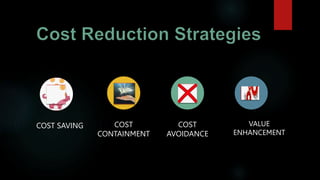
COST
CONTAINMENT
COST
AVOIDANCE
COST SAVING VALUE
ENHANCEMENT
Cost Saving
 Cost saving methods will help
businesses save money by
evaluating current
expenditures and finding
ways to cut internal costs.
When businesses incorporate
cost saving methods into their
organizational strategies, they
can gain a financial advantage
and reach their bottom line.
Cost
Avoidance
Cost avoidance has to do
with any action that avoids
having to incur costs in the
future. In a business setting,
the cost avoidance is a
measure that lowers
potential increased
expenses as a way of
decreasing a company's
future costs.
Cost
Containment
 It is a process of maintaining
organizational costs within a
specified budget restraining
expenditures to meet
organizational or project financial
targets. It also refers as an action
when an organization keeps costs
low, or within a limit that has been
planned.
Value
Enhancement
For any service or offering to have
financial value, the organization
must have been willing to pay for it
out of pocket or must have already
been paying for it in a way that can
be measured on the organization’s
income statement. This
understanding is required for any
discussion of legitimate cost
avoidance.
Cost control
Cost control essentially involves the setting of targets for
cost centre managers and then monitoring performance
against those targets.
Impotant note:
• Effective delegation of authority and assignment of responsibility for
costs.
• An agreed plan that sets up clearly defined and agreed goals.
• Motivation to encourage individuals to reach the goals established and
agreed.
• Timely reporting with alternative suggestions how to reduce costs.
• Recommendations and action which must be followed.
• Effective follow-up system to ensure that corrective measures are being
effectively implemented.
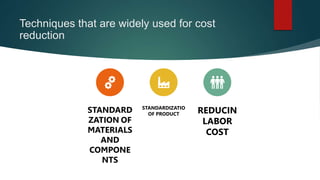
Techniques that are widely used for cost
reduction
STANDARD
ZATION OF
MATERIALS
AND
COMPONE
NTS
STANDARDIZATIO
OF PRODUCT REDUCIN
LABOR
COST
Standardization of materials and
components
This relates to a policy of reducing the variety and range of materials and
components purchased by the manufacturer and of components produced.
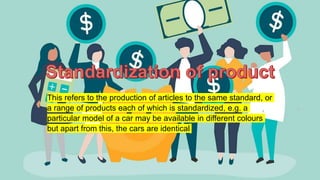
This refers to the production of articles to the same standard, or
a range of products each of which is standardized, e.g. a
particular model of a car may be available in different colours
but apart from this, the cars are identical
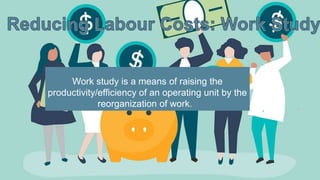
Work study is a means of raising the
productivity/efficiency of an operating unit by the
reorganization of work.
Value analysis implies analyzing existing products
and evaluating them to improve their functioning or
reduce cost. A step-by-step plan helps assess
different aspects of a product, such as functions,
alternative components, design, and costs.
Three value analysis Techniques
1. Be specific
2. Obtain data from authentic sources
3. Use creativity
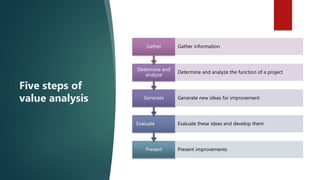
Five steps of
value analysis
Present Present improvements
Evaluate Evaluate these ideas and develop them
Generate Generate new ideas for improvement
Determine and
analyze
Determine and analyze the function of a project
Gather Gather information
4 types of
Value
 Cost Value
 Exhange Value
 Use Value
 Esteem Value
F3. Cost Reductions and Value Enhancement.pptx

F3. Cost Reductions and Value Enhancement.pptx

  • 1.
    Atty. Prackie JayT. Acaylar, CPA, JD, MPA, PhD-BM, FRILL, PD-TQM
  • 2.
    Cost Reduction  CostReduction: Cost reduction is the reduction in unit cost of goods or services without impairing suitability for the use intended, i.e. without reducing value to the customer.  Cost: the monetary value of expenditures for supplies, services, labor, products, equipment and other items purchased for use by a business or other accounting entity.
  • 3.
  • 4.
    Cost Saving  Costsaving methods will help businesses save money by evaluating current expenditures and finding ways to cut internal costs. When businesses incorporate cost saving methods into their organizational strategies, they can gain a financial advantage and reach their bottom line.
  • 5.
    Cost Avoidance Cost avoidance hasto do with any action that avoids having to incur costs in the future. In a business setting, the cost avoidance is a measure that lowers potential increased expenses as a way of decreasing a company's future costs.
  • 6.
    Cost Containment  It isa process of maintaining organizational costs within a specified budget restraining expenditures to meet organizational or project financial targets. It also refers as an action when an organization keeps costs low, or within a limit that has been planned.
  • 7.
    Value Enhancement For any serviceor offering to have financial value, the organization must have been willing to pay for it out of pocket or must have already been paying for it in a way that can be measured on the organization’s income statement. This understanding is required for any discussion of legitimate cost avoidance.
  • 8.
    Cost control Cost controlessentially involves the setting of targets for cost centre managers and then monitoring performance against those targets. Impotant note: • Effective delegation of authority and assignment of responsibility for costs. • An agreed plan that sets up clearly defined and agreed goals. • Motivation to encourage individuals to reach the goals established and agreed. • Timely reporting with alternative suggestions how to reduce costs. • Recommendations and action which must be followed. • Effective follow-up system to ensure that corrective measures are being effectively implemented.
  • 9.
    Techniques that arewidely used for cost reduction STANDARD ZATION OF MATERIALS AND COMPONE NTS STANDARDIZATIO OF PRODUCT REDUCIN LABOR COST
  • 10.
    Standardization of materialsand components This relates to a policy of reducing the variety and range of materials and components purchased by the manufacturer and of components produced.
  • 11.
    This refers tothe production of articles to the same standard, or a range of products each of which is standardized, e.g. a particular model of a car may be available in different colours but apart from this, the cars are identical
  • 12.
    Work study isa means of raising the productivity/efficiency of an operating unit by the reorganization of work.
  • 15.
    Value analysis impliesanalyzing existing products and evaluating them to improve their functioning or reduce cost. A step-by-step plan helps assess different aspects of a product, such as functions, alternative components, design, and costs. Three value analysis Techniques 1. Be specific 2. Obtain data from authentic sources 3. Use creativity
  • 16.
    Five steps of valueanalysis Present Present improvements Evaluate Evaluate these ideas and develop them Generate Generate new ideas for improvement Determine and analyze Determine and analyze the function of a project Gather Gather information
  • 17.
    4 types of Value Cost Value  Exhange Value  Use Value  Esteem Value