SOFTSKILLS - PRESENTATION
TOPIC – EYE CONTACT
KEERTHIKA T S
II M.SC(COMPUTER SCIENCE)
22E4901
SELF IMAGE:
Self-image refers to a person’s perception
of themselves, including their thoughts, feelings, and beliefs
about their own personality traits, abilities, and physical
appearance.
PROJECTING POSITIVE SELF IMAGE:
A positive self-image is important
for mental and emotional well-being, as it can lead
to greater self-confidence, self-esteem, and
resilience. On the other hand, a negative self-image
can contribute to feelings of inadequacy, low self-
worth, and self-doubt. There are a few terms that
come under the self-image topic. They are:
• Body language
• Eye contact
• Social etiquette
• Manners in conversation.
EYE CONTACT:
The topic that we are about to see is “EYE
CONTACT”.
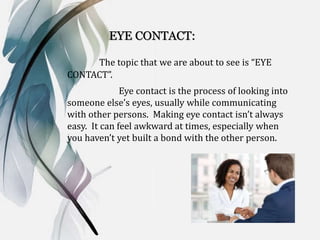
Eye contact is the process of looking into
someone else’s eyes, usually while communicating
with other persons. Making eye contact isn’t always
easy. It can feel awkward at times, especially when
you haven’t yet built a bond with the other person.
IMPORTANCE OF EYE CONTACT:
What does eye contact mean?
Eye contact is what happens when two people
look at each other’s eyes at the same time. This is
a form of nonverbal communication that humans use to
communicate many forms of emotions.
Let’s see the four reasons why eye contact
communication is important:
• Confidence and Presence
• Trustworthiness
• Active Listening
• Non-Verbal Communication
TIPS TO IMPROVE EYE CONTACT:
1. Practice Regularly: Like any skill, practice is key. Start by consciously
making an effort to maintain eye contact during everyday interactions,
whether with friends, family, or colleagues.
2. Practice with a Mirror: Stand in front of a mirror and practice
maintaining eye contact with your reflection. This can help you
become more accustomed to making eye contact and allow you to
observe your own expressions.
3. Manage Nervousness: Sometimes avoiding eye contact can stem from
nervousness or anxiety. Work on managing these emotions through
relaxation techniques, deep breathing, or visualization exercises.
4. Focus on the Triangle Technique: Use the triangle technique to engage
effectively in group conversations. Rotate your eye contact between
the eyes of different participants in a triangular pattern. This ensures
that you connect with everyone involved, making the interaction feel
inclusive and engaging.
5. Eye contact when making a speech: The secret to
eye contact when making a speech is to make the audience feel like
you’re engaging with them but not picking anyone out specifically.
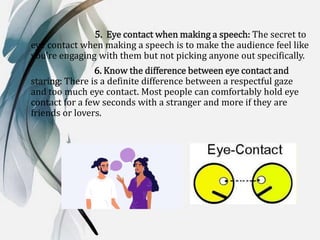
6. Know the difference between eye contact and
staring: There is a definite difference between a respectful gaze
and too much eye contact. Most people can comfortably hold eye
contact for a few seconds with a stranger and more if they are
friends or lovers.
AVOIDING EYE CONTACT:
1.Nervousness or Anxiety: One of the most common reasons
people avoid eye contact is due to feelings of nervousness
or anxiety. When someone is anxious, they may find it
difficult to maintain eye contact as it can feel intimidating
or overwhelming.
2.Lack of Confidence: A lack of confidence can also lead to
avoiding eye contact. People who are unsure of themselves
or their abilities might naturally shy away from making
direct eye contact, as it exposes them to potential scrutiny.
3.Discomfort : If a person feels uncomfortable or disagrees
with what's being said, they might instinctively avoid eye
contact as a way to distance themselves from the situation.
4. Focus and Concentration: In certain
situations, avoiding eye contact can be a sign of deep
concentration or intense focus. This is often observed when
someone is engrossed in a task or activity.
5. Introversion: Introverted individuals might
naturally avoid eye contact as a way to protect their
personal space and conserve their energy in social
interactions.
6. Social Awkwardness: People who are socially
awkward or inexperienced in social situations may avoid eye
contact as a way to cope with the discomfort they feel.
CONCLUSION:
I conclude here by saying eye contact is a
powerful aspect of interpersonal communication that
significantly influences how individuals are perceived
and how they engage with others. This non-verbal
form of interaction goes beyond mere visual contact,
serving as a window into emotions, intentions, and
personality traits. Whether maintained or avoided,
eye contact communicates a wealth of information
that impacts relationships, social dynamics, and
personal development.
THANK YOU !

eye contact.pptx

  • 1.
    SOFTSKILLS - PRESENTATION TOPIC– EYE CONTACT KEERTHIKA T S II M.SC(COMPUTER SCIENCE) 22E4901
  • 2.
    SELF IMAGE: Self-image refersto a person’s perception of themselves, including their thoughts, feelings, and beliefs about their own personality traits, abilities, and physical appearance.
  • 3.
    PROJECTING POSITIVE SELFIMAGE: A positive self-image is important for mental and emotional well-being, as it can lead to greater self-confidence, self-esteem, and resilience. On the other hand, a negative self-image can contribute to feelings of inadequacy, low self- worth, and self-doubt. There are a few terms that come under the self-image topic. They are: • Body language • Eye contact • Social etiquette • Manners in conversation.
  • 4.
    EYE CONTACT: The topicthat we are about to see is “EYE CONTACT”. Eye contact is the process of looking into someone else’s eyes, usually while communicating with other persons. Making eye contact isn’t always easy. It can feel awkward at times, especially when you haven’t yet built a bond with the other person.
  • 5.
    IMPORTANCE OF EYECONTACT: What does eye contact mean? Eye contact is what happens when two people look at each other’s eyes at the same time. This is a form of nonverbal communication that humans use to communicate many forms of emotions. Let’s see the four reasons why eye contact communication is important: • Confidence and Presence • Trustworthiness • Active Listening • Non-Verbal Communication
  • 6.
    TIPS TO IMPROVEEYE CONTACT: 1. Practice Regularly: Like any skill, practice is key. Start by consciously making an effort to maintain eye contact during everyday interactions, whether with friends, family, or colleagues. 2. Practice with a Mirror: Stand in front of a mirror and practice maintaining eye contact with your reflection. This can help you become more accustomed to making eye contact and allow you to observe your own expressions. 3. Manage Nervousness: Sometimes avoiding eye contact can stem from nervousness or anxiety. Work on managing these emotions through relaxation techniques, deep breathing, or visualization exercises. 4. Focus on the Triangle Technique: Use the triangle technique to engage effectively in group conversations. Rotate your eye contact between the eyes of different participants in a triangular pattern. This ensures that you connect with everyone involved, making the interaction feel inclusive and engaging.
  • 7.
    5. Eye contactwhen making a speech: The secret to eye contact when making a speech is to make the audience feel like you’re engaging with them but not picking anyone out specifically. 6. Know the difference between eye contact and staring: There is a definite difference between a respectful gaze and too much eye contact. Most people can comfortably hold eye contact for a few seconds with a stranger and more if they are friends or lovers.
  • 8.
    AVOIDING EYE CONTACT: 1.Nervousnessor Anxiety: One of the most common reasons people avoid eye contact is due to feelings of nervousness or anxiety. When someone is anxious, they may find it difficult to maintain eye contact as it can feel intimidating or overwhelming. 2.Lack of Confidence: A lack of confidence can also lead to avoiding eye contact. People who are unsure of themselves or their abilities might naturally shy away from making direct eye contact, as it exposes them to potential scrutiny. 3.Discomfort : If a person feels uncomfortable or disagrees with what's being said, they might instinctively avoid eye contact as a way to distance themselves from the situation.
  • 9.
    4. Focus andConcentration: In certain situations, avoiding eye contact can be a sign of deep concentration or intense focus. This is often observed when someone is engrossed in a task or activity. 5. Introversion: Introverted individuals might naturally avoid eye contact as a way to protect their personal space and conserve their energy in social interactions. 6. Social Awkwardness: People who are socially awkward or inexperienced in social situations may avoid eye contact as a way to cope with the discomfort they feel.
  • 10.
    CONCLUSION: I conclude hereby saying eye contact is a powerful aspect of interpersonal communication that significantly influences how individuals are perceived and how they engage with others. This non-verbal form of interaction goes beyond mere visual contact, serving as a window into emotions, intentions, and personality traits. Whether maintained or avoided, eye contact communicates a wealth of information that impacts relationships, social dynamics, and personal development.
  • 11.