Exploring the
Fascinating World of
Virus Replication
Cycle
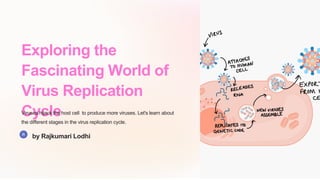
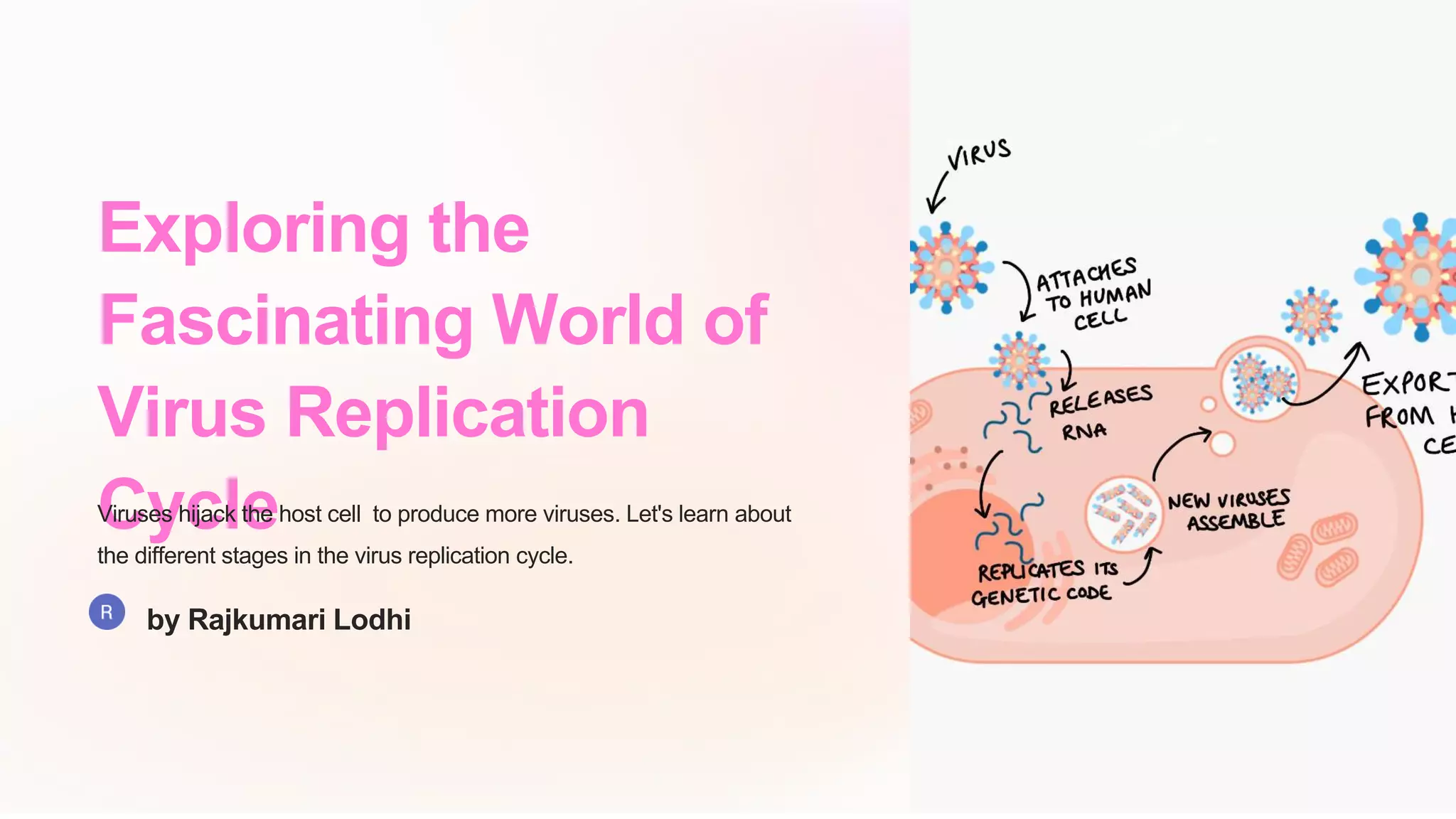
Viruses hijack the host cell to produce more viruses. Let's learn about
the different stages in the virus replication cycle.
by Rajkumari Lodhi
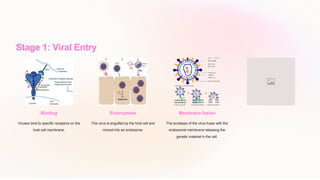
Stage 1: Viral Entry
Binding
Viruses bind to specific receptors on the
host cell membrane.
Endocytosis
The virus is engulfed by the host cell and
moved into an endosome.
Membrane fusion
The envelope of the virus fuses with the
endosomal membrane releasing the
genetic material in the cell.
Stage 2: Uncoating
Capsid Disassembly
The capsid of the virus is
disassembled, and the viral
genome is released.
Endosomal Escape
The viral genome escapes the
endosome and moves towards
the nucleus.
Nuclear Transport
The viral genome enters the
nucleus and begins the process of
replication.
Host Cell Replication Machinery
The virus hijacks the host cell replication machinery to replicate its genome.
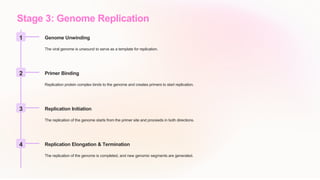
Stage 3: Genome Replication
1 Genome Unwinding
The viral genome is unwound to serve as a template for replication.
2 Primer Binding
Replication protein complex binds to the genome and creates primers to start replication.
3 Replication Initiation
The replication of the genome starts from the primer site and proceeds in both directions.
4 Replication Elongation & Termination
The replication of the genome is completed, and new genomic segments are generated.
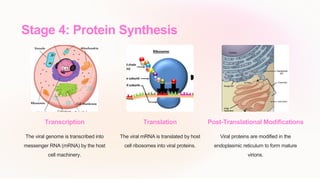
Stage 4: Protein Synthesis
Transcription
The viral genome is transcribed into
messenger RNA (mRNA) by the host
cell machinery.
Translation
The viral mRNA is translated by host
cell ribosomes into viral proteins.
Post-Translational Modifications
Viral proteins are modified in the
endoplasmic reticulum to form mature
virions.
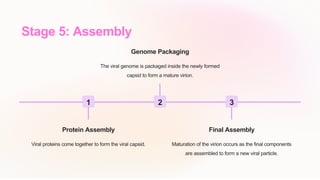
Stage 5: Assembly
1
Protein Assembly
Viral proteins come together to form the viral capsid.
2
Genome Packaging
The viral genome is packaged inside the newly formed
capsid to form a mature virion.
3
Final Assembly
Maturation of the virion occurs as the final components
are assembled to form a new viral particle.
Stage 6: Release
Apoptosis
The host cell undergoes programmed cell death, and
the newly formed virions are released into the
extracellular space.
Budding
Viral particles bud off from the host cell membrane, and
the process is repeated on other host cells.
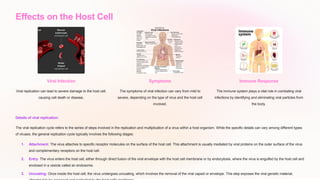
Effects on the Host Cell
Viral Infection
Viral replication can lead to severe damage to the host cell,
causing cell death or disease.
Symptoms
The symptoms of viral infection can vary from mild to
severe, depending on the type of virus and the host cell
involved.
Immune Response
The immune system plays a vital role in combating viral
infections by identifying and eliminating viral particles from
the body.
Details of viral replication:
The viral replication cycle refers to the series of steps involved in the replication and multiplication of a virus within a host organism. While the specific details can vary among different types
of viruses, the general replication cycle typically involves the following stages:
1. Attachment: The virus attaches to specific receptor molecules on the surface of the host cell. This attachment is usually mediated by viral proteins on the outer surface of the virus
and complementary receptors on the host cell.
2. Entry: The virus enters the host cell, either through direct fusion of the viral envelope with the host cell membrane or by endocytosis, where the virus is engulfed by the host cell and
enclosed in a vesicle called an endosome.
3. Uncoating: Once inside the host cell, the virus undergoes uncoating, which involves the removal of the viral capsid or envelope. This step exposes the viral genetic material,

Exploring-the-Fascinating-World-of-Virus-Replication-Cycle (1).pptx

  • 1.
    Exploring the Fascinating Worldof Virus Replication Cycle Viruses hijack the host cell to produce more viruses. Let's learn about the different stages in the virus replication cycle. by Rajkumari Lodhi
  • 2.
    Stage 1: ViralEntry Binding Viruses bind to specific receptors on the host cell membrane. Endocytosis The virus is engulfed by the host cell and moved into an endosome. Membrane fusion The envelope of the virus fuses with the endosomal membrane releasing the genetic material in the cell.
  • 3.
    Stage 2: Uncoating CapsidDisassembly The capsid of the virus is disassembled, and the viral genome is released. Endosomal Escape The viral genome escapes the endosome and moves towards the nucleus. Nuclear Transport The viral genome enters the nucleus and begins the process of replication. Host Cell Replication Machinery The virus hijacks the host cell replication machinery to replicate its genome.
  • 4.
    Stage 3: GenomeReplication 1 Genome Unwinding The viral genome is unwound to serve as a template for replication. 2 Primer Binding Replication protein complex binds to the genome and creates primers to start replication. 3 Replication Initiation The replication of the genome starts from the primer site and proceeds in both directions. 4 Replication Elongation & Termination The replication of the genome is completed, and new genomic segments are generated.
  • 5.
    Stage 4: ProteinSynthesis Transcription The viral genome is transcribed into messenger RNA (mRNA) by the host cell machinery. Translation The viral mRNA is translated by host cell ribosomes into viral proteins. Post-Translational Modifications Viral proteins are modified in the endoplasmic reticulum to form mature virions.
  • 6.
    Stage 5: Assembly 1 ProteinAssembly Viral proteins come together to form the viral capsid. 2 Genome Packaging The viral genome is packaged inside the newly formed capsid to form a mature virion. 3 Final Assembly Maturation of the virion occurs as the final components are assembled to form a new viral particle.
  • 7.
    Stage 6: Release Apoptosis Thehost cell undergoes programmed cell death, and the newly formed virions are released into the extracellular space. Budding Viral particles bud off from the host cell membrane, and the process is repeated on other host cells.
  • 8.
    Effects on theHost Cell Viral Infection Viral replication can lead to severe damage to the host cell, causing cell death or disease. Symptoms The symptoms of viral infection can vary from mild to severe, depending on the type of virus and the host cell involved. Immune Response The immune system plays a vital role in combating viral infections by identifying and eliminating viral particles from the body. Details of viral replication: The viral replication cycle refers to the series of steps involved in the replication and multiplication of a virus within a host organism. While the specific details can vary among different types of viruses, the general replication cycle typically involves the following stages: 1. Attachment: The virus attaches to specific receptor molecules on the surface of the host cell. This attachment is usually mediated by viral proteins on the outer surface of the virus and complementary receptors on the host cell. 2. Entry: The virus enters the host cell, either through direct fusion of the viral envelope with the host cell membrane or by endocytosis, where the virus is engulfed by the host cell and enclosed in a vesicle called an endosome. 3. Uncoating: Once inside the host cell, the virus undergoes uncoating, which involves the removal of the viral capsid or envelope. This step exposes the viral genetic material,