EXPLORING INDIAN
ARCHITECTURE
LESSON VIII
The Architecture of the British
Raj, The Architecture of
Repression
Last week, we discussed a great empire – The
Moghul Civilisation
• However, after 400 years of fighting, building, conquering and
  change, like all empires, the Moghuls had to fall. Another
  larger, more powerful and incredibly wealthy empire was ready to
  take its place, and change India forever.
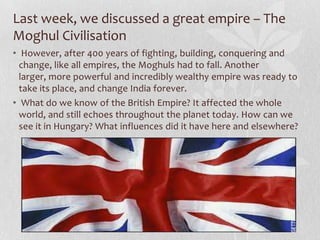
• What do we know of the British Empire? It affected the whole
  world, and still echoes throughout the planet today. How can we
  see it in Hungary? What influences did it have here and elsewhere?
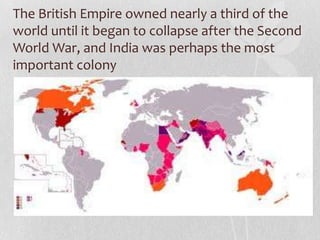
The British Empire owned nearly a third of the
world until it began to collapse after the Second
World War, and India was perhaps the most
important colony
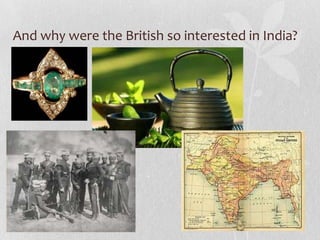
And why were the British so interested in India?
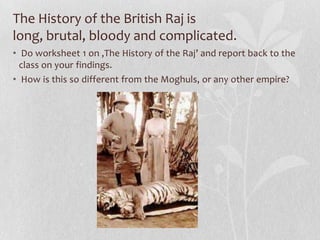
The History of the British Raj is
long, brutal, bloody and complicated.
• Do worksheet 1 on ‚The History of the Raj’ and report back to the
  class on your findings.
• How is this so different from the Moghuls, or any other empire?
But the differences between India and the UK are
huge, and so the planners and architects who travelled
there to create the English settlements had to think of
many different things
• Perhaps the most obvious is the climate. Most of India is
  unbearably hot for English people. What could town planners do to
  overcome this problem? Where might we expect the most ‚Raj’
  style towns to be?
• The simplest answer was the most widely used: At high altitudes
  and on the coast. Here, the weather does not reach such extremes.
  Indeed, in the Raj fort town of Mahabhaleshwar, the mountaintops
  are so mild in temperature, the English even started growing
  strawberries there to have with their afternoon tea.
The main feature of Raj architecture was to
intimidate and frighten the Indian people
• How could you create „frightening” or „intimidating” architecture?
  What is the purpose of this?
• They wanted to show the Indian people that they were more
  powerful, more technologically advanced, more wealthy and
  generally superior to them in every way.
• Not only this, but they wanted to „re-write” history – to
  pretend, through architecture, that they had been there for
  thousands of years. How could you show all of this in a building?
• Religion is important, too. As with all empires, the British wanted
  to force their religion on the native people. Architecture is a hugely
  powerful and enduring tool for doing just this.
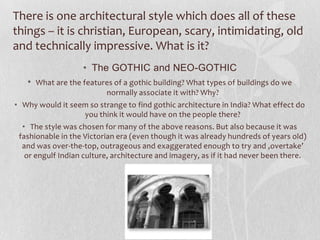
There is one architectural style which does all of these
things – it is christian, European, scary, intimidating, old
and technically impressive. What is it?
                   • The GOTHIC and NEO-GOTHIC
   • What are the features of a gothic building? What types of buildings do we
                          normally associate it with? Why?
• Why would it seem so strange to find gothic architecture in India? What effect do
                  you think it would have on the people there?
  • The style was chosen for many of the above reasons. But also because it was
 fashionable in the Victorian era (even though it was already hundreds of years old)
  and was over-the-top, outrageous and exaggerated enough to try and ‚overtake’
   or engulf Indian culture, architecture and imagery, as if it had never been there.
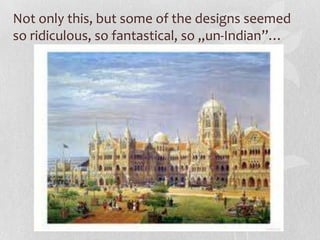
Not only this, but some of the designs seemed
so ridiculous, so fantastical, so „un-Indian”…
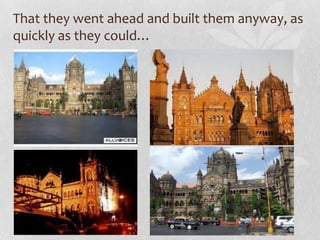
That they went ahead and built them anyway, as
quickly as they could…
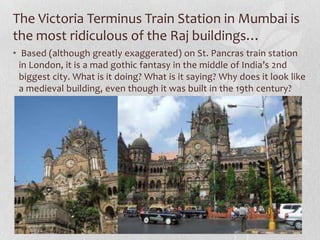
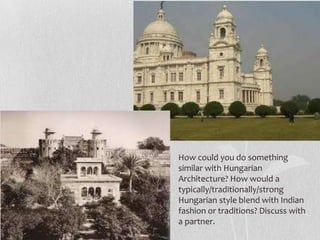
The Victoria Terminus Train Station in Mumbai is
the most ridiculous of the Raj buildings…
• Based (although greatly exaggerated) on St. Pancras train station
  in London, it is a mad gothic fantasy in the middle of India’s 2nd
  biggest city. What is it doing? What is it saying? Why does it look like
  a medieval building, even though it was built in the 19th century?
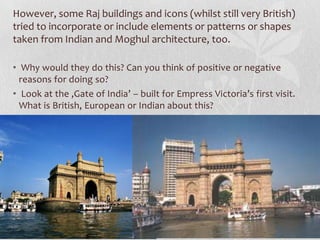
However, some Raj buildings and icons (whilst still very British)
tried to incorporate or include elements or patterns or shapes
taken from Indian and Moghul architecture, too.

• Why would they do this? Can you think of positive or negative
  reasons for doing so?
• Look at the ‚Gate of India’ – built for Empress Victoria’s first visit.
  What is British, European or Indian about this?
How could you do something
similar with Hungarian
Architecture? How would a
typically/traditionally/strong
Hungarian style blend with Indian
fashion or traditions? Discuss with
a partner.
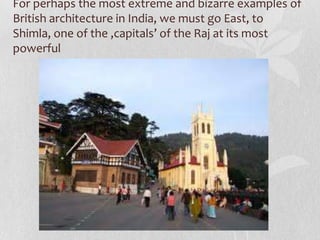
For perhaps the most extreme and bizarre examples of
British architecture in India, we must go East, to
Shimla, one of the ‚capitals’ of the Raj at its most
powerful
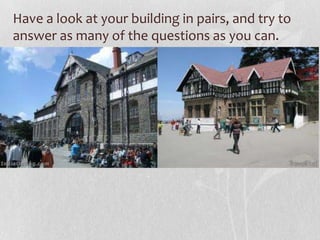
Have a look at your building in pairs, and try to
answer as many of the questions as you can.
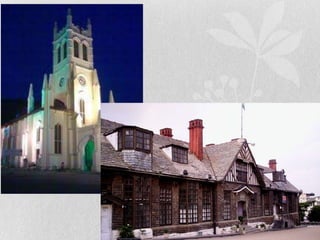
What can we say about Shimla? Should it be treated as a joke, or
can we learn something of the identity of India through it? Are
the buildings here any less valid or „Indian” than the Taj Mahal?

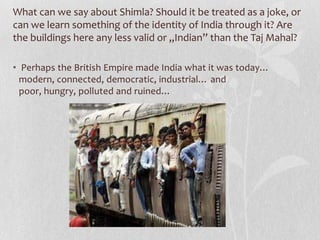
• Perhaps the British Empire made India what it was today…
  modern, connected, democratic, industrial… and
  poor, hungry, polluted and ruined…
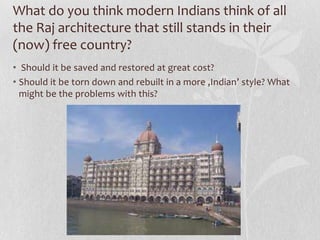
What do you think modern Indians think of all
the Raj architecture that still stands in their
(now) free country?
• Should it be saved and restored at great cost?
• Should it be torn down and rebuilt in a more ‚Indian’ style? What
  might be the problems with this?

Exploring indian architecture lesson viii

  • 1.
    EXPLORING INDIAN ARCHITECTURE LESSON VIII TheArchitecture of the British Raj, The Architecture of Repression
  • 2.
    Last week, wediscussed a great empire – The Moghul Civilisation • However, after 400 years of fighting, building, conquering and change, like all empires, the Moghuls had to fall. Another larger, more powerful and incredibly wealthy empire was ready to take its place, and change India forever. • What do we know of the British Empire? It affected the whole world, and still echoes throughout the planet today. How can we see it in Hungary? What influences did it have here and elsewhere?
  • 3.
    The British Empireowned nearly a third of the world until it began to collapse after the Second World War, and India was perhaps the most important colony
  • 4.
    And why werethe British so interested in India?
  • 5.
    The History ofthe British Raj is long, brutal, bloody and complicated. • Do worksheet 1 on ‚The History of the Raj’ and report back to the class on your findings. • How is this so different from the Moghuls, or any other empire?
  • 6.
    But the differencesbetween India and the UK are huge, and so the planners and architects who travelled there to create the English settlements had to think of many different things • Perhaps the most obvious is the climate. Most of India is unbearably hot for English people. What could town planners do to overcome this problem? Where might we expect the most ‚Raj’ style towns to be? • The simplest answer was the most widely used: At high altitudes and on the coast. Here, the weather does not reach such extremes. Indeed, in the Raj fort town of Mahabhaleshwar, the mountaintops are so mild in temperature, the English even started growing strawberries there to have with their afternoon tea.
  • 7.
    The main featureof Raj architecture was to intimidate and frighten the Indian people • How could you create „frightening” or „intimidating” architecture? What is the purpose of this? • They wanted to show the Indian people that they were more powerful, more technologically advanced, more wealthy and generally superior to them in every way. • Not only this, but they wanted to „re-write” history – to pretend, through architecture, that they had been there for thousands of years. How could you show all of this in a building? • Religion is important, too. As with all empires, the British wanted to force their religion on the native people. Architecture is a hugely powerful and enduring tool for doing just this.
  • 8.
    There is onearchitectural style which does all of these things – it is christian, European, scary, intimidating, old and technically impressive. What is it? • The GOTHIC and NEO-GOTHIC • What are the features of a gothic building? What types of buildings do we normally associate it with? Why? • Why would it seem so strange to find gothic architecture in India? What effect do you think it would have on the people there? • The style was chosen for many of the above reasons. But also because it was fashionable in the Victorian era (even though it was already hundreds of years old) and was over-the-top, outrageous and exaggerated enough to try and ‚overtake’ or engulf Indian culture, architecture and imagery, as if it had never been there.
  • 9.
    Not only this,but some of the designs seemed so ridiculous, so fantastical, so „un-Indian”…
  • 10.
    That they wentahead and built them anyway, as quickly as they could…
  • 11.
    The Victoria TerminusTrain Station in Mumbai is the most ridiculous of the Raj buildings… • Based (although greatly exaggerated) on St. Pancras train station in London, it is a mad gothic fantasy in the middle of India’s 2nd biggest city. What is it doing? What is it saying? Why does it look like a medieval building, even though it was built in the 19th century?
  • 12.
    However, some Rajbuildings and icons (whilst still very British) tried to incorporate or include elements or patterns or shapes taken from Indian and Moghul architecture, too. • Why would they do this? Can you think of positive or negative reasons for doing so? • Look at the ‚Gate of India’ – built for Empress Victoria’s first visit. What is British, European or Indian about this?
  • 13.
    How could youdo something similar with Hungarian Architecture? How would a typically/traditionally/strong Hungarian style blend with Indian fashion or traditions? Discuss with a partner.
  • 14.
    For perhaps themost extreme and bizarre examples of British architecture in India, we must go East, to Shimla, one of the ‚capitals’ of the Raj at its most powerful
  • 15.
    Have a lookat your building in pairs, and try to answer as many of the questions as you can.
  • 17.
    What can wesay about Shimla? Should it be treated as a joke, or can we learn something of the identity of India through it? Are the buildings here any less valid or „Indian” than the Taj Mahal? • Perhaps the British Empire made India what it was today… modern, connected, democratic, industrial… and poor, hungry, polluted and ruined…
  • 18.
    What do youthink modern Indians think of all the Raj architecture that still stands in their (now) free country? • Should it be saved and restored at great cost? • Should it be torn down and rebuilt in a more ‚Indian’ style? What might be the problems with this?