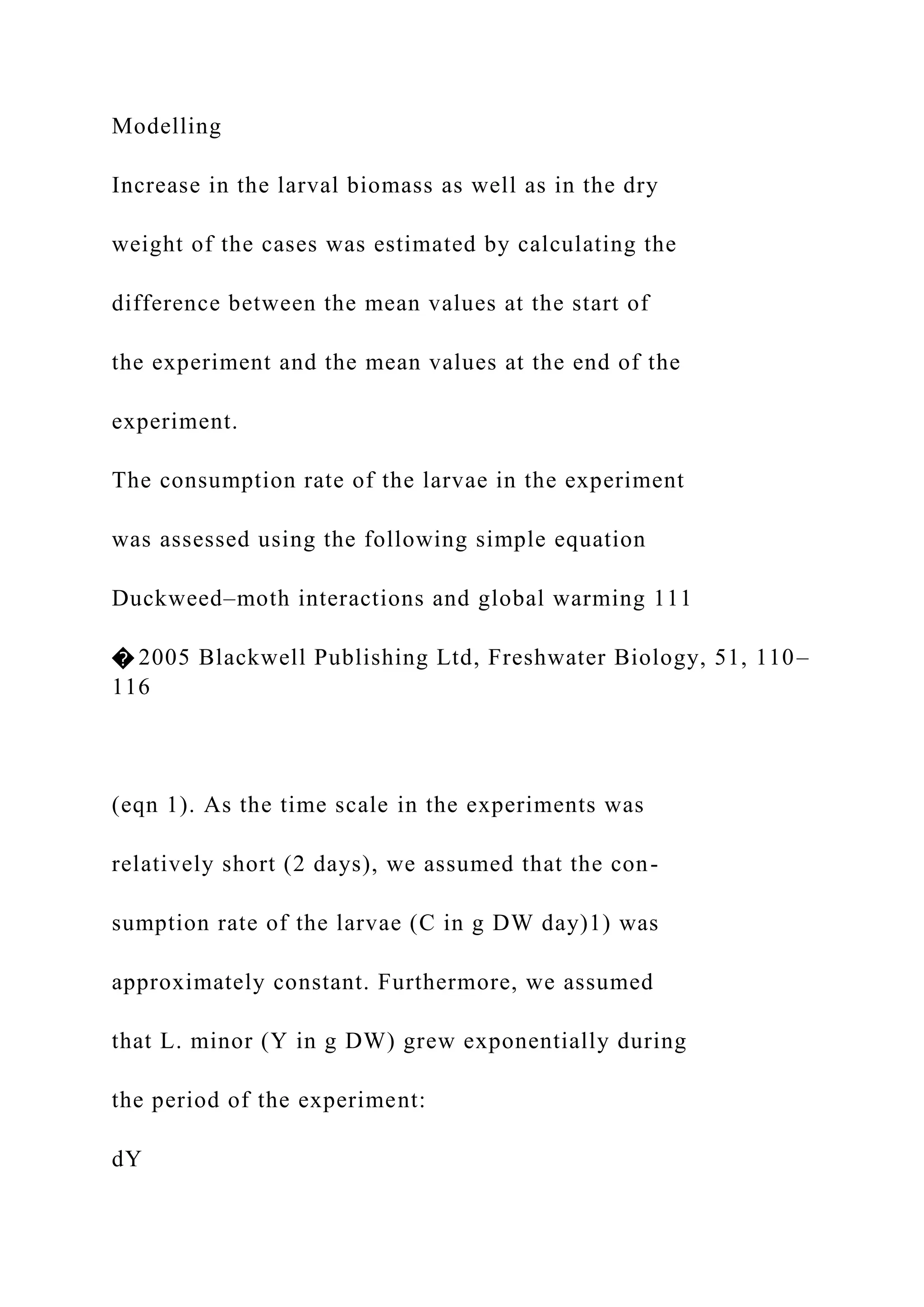
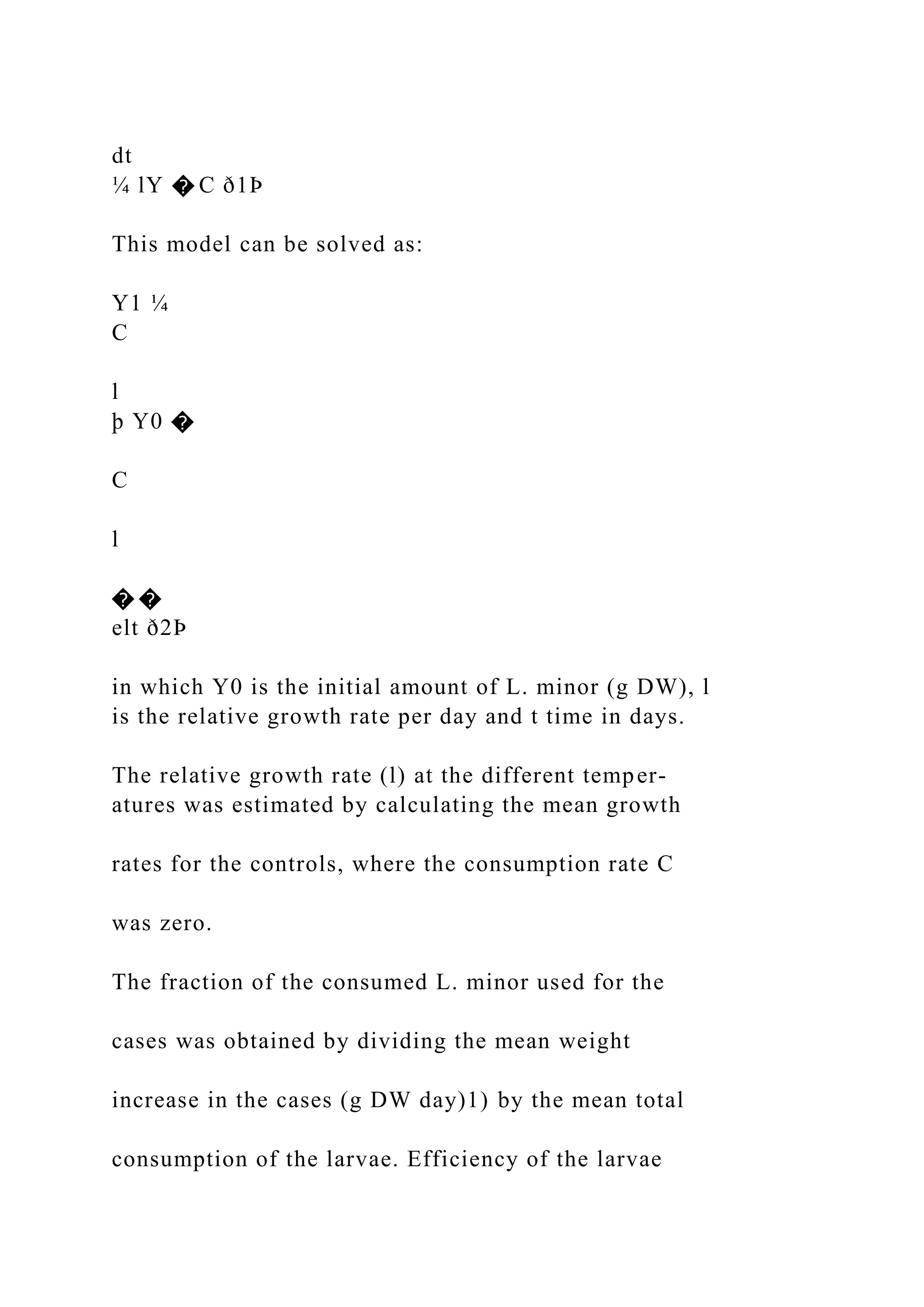
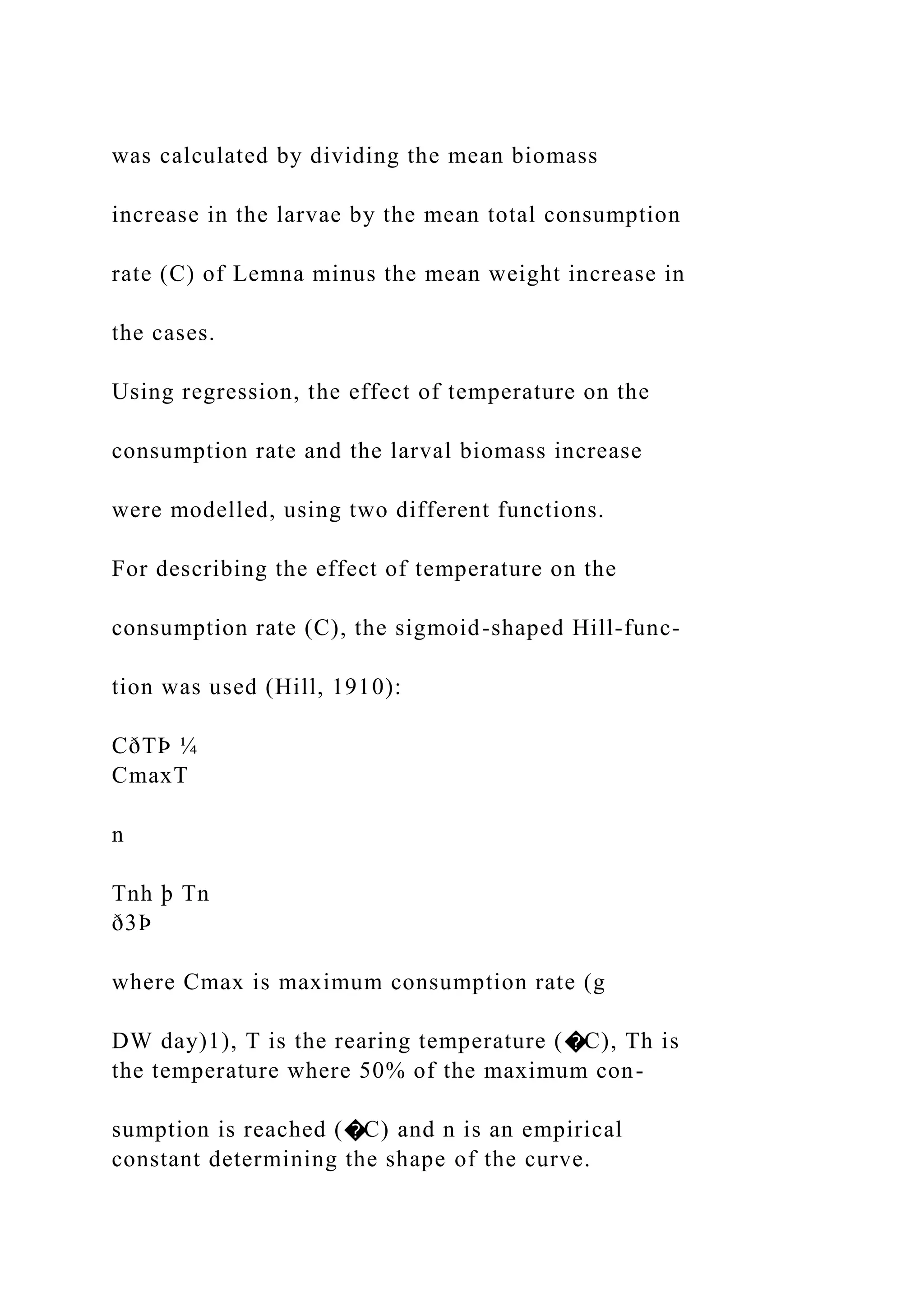
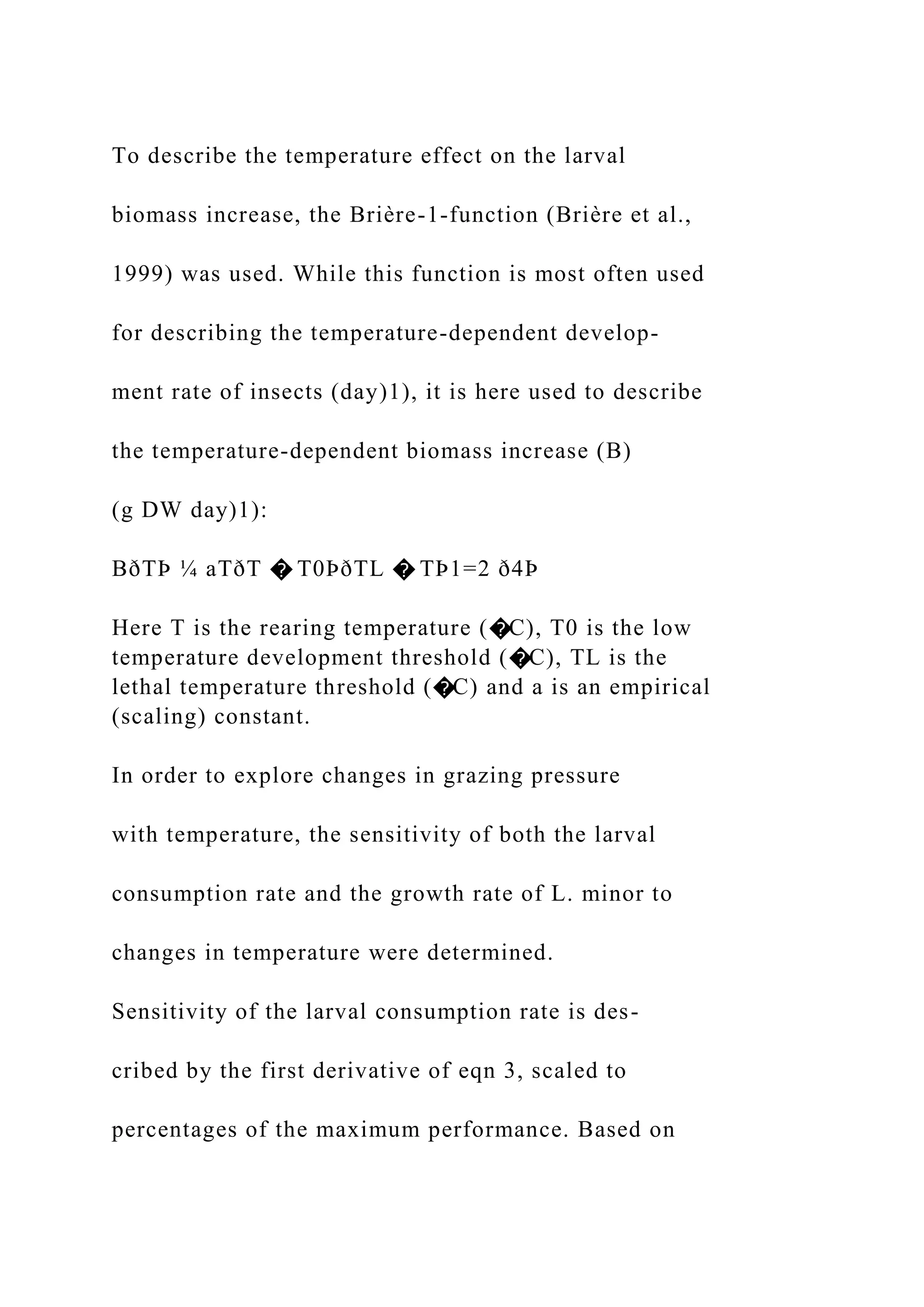
Research on the interaction between the small china-mark moth and duckweed suggests that rising temperatures due to global warming might not increase herbivory as previously assumed. Laboratory experiments indicated that while the moth's grazing rates increased sigmoidal with temperature, the growth rates of duckweed (lemna minor) also rose, leading to a decrease in overall grazing pressure at lower temperatures. Thus, increased temperatures may benefit duckweed more than herbivorous insects, contradicting earlier hypotheses about herbivory and climate change.
![China-mark moth (Cataclysta lemnata) are capable of
removing large parts of floating cover of Lemnaceae
covers (Wesenberg-Lund, 1943). Duckweed is not
only used as food source, but also as building material
Correspondence: Rudi M. M. Roijackers, Department of
Environmental Sciences, Aquatic Ecology and Water Quality
Management group, Wageningen University, PO Box 8080,
NL-6700 DD Wageningen, The Netherlands.
E-mail: [email protected]
Freshwater Biology (2006) 51, 110–116 doi:10.1111/j.1365-
2427.2005.01479.x
110 � 2005 Blackwell Publishing Ltd
for the cases for the larvae and pupae (Petrischak,
2000). The moth lays eggs on the undersides of
duckweeds. After approximately 1 week caterpillars
hatch and they immediately start building cases to
protect their bodies. After a few weeks pupation takes
place in floating cases of duckweed fronds.](https://image.slidesharecdn.com/experimentswithduckweedmothsystemssuggestthatglobalwa-221013081847-33a7bd38/75/Experiments-with-duckweed-moth-systems-suggest-thatglobal-wa-docx-4-2048.jpg)