
Download to read offline



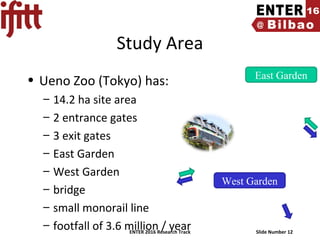
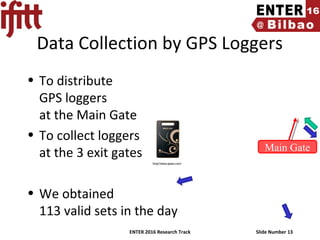
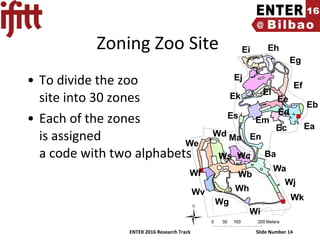
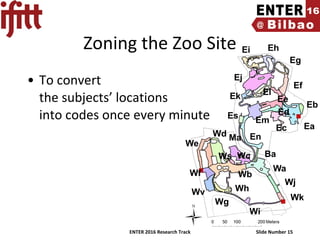
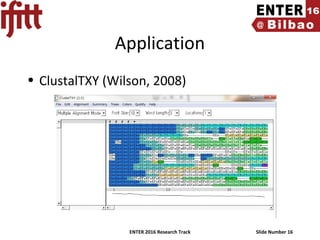
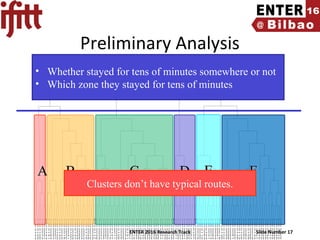
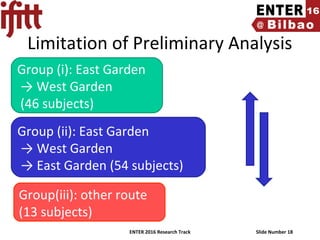
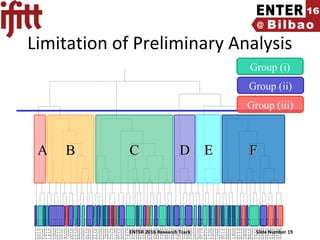
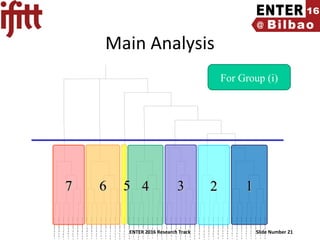
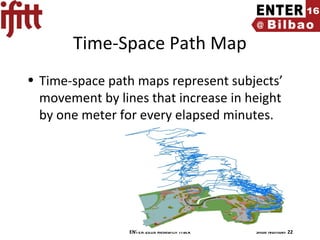
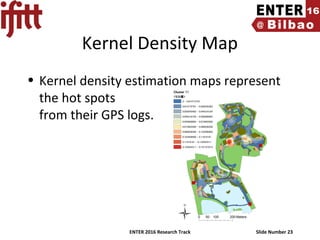
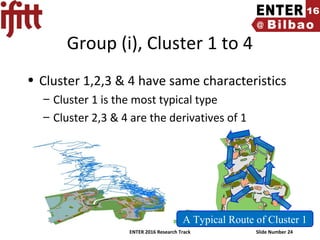
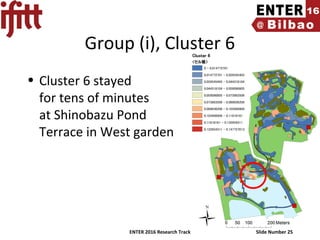
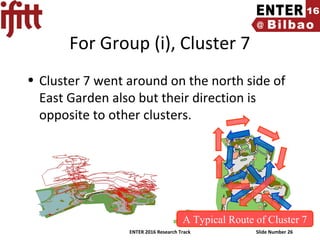
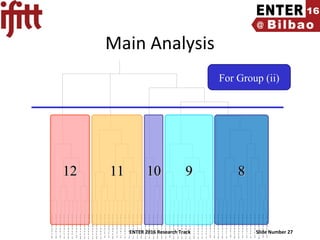
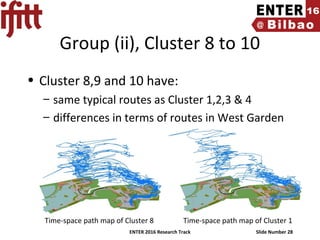
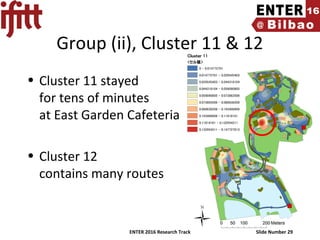
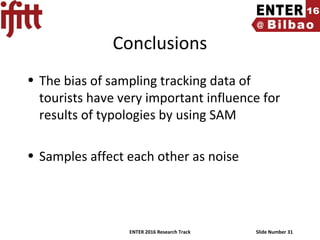
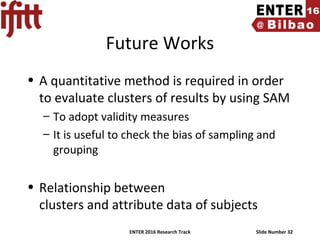
The document presents research using sequence alignment methods (SAM) to analyze GPS tracking data from visitors to Ueno Zoo in Tokyo, Japan. 113 visitors were tracked and their movements divided into sequences of 30 zones within the zoo. SAM was used to cluster visitors into groups based on similarities in their movement sequences. Several clusters emerged that represented typical routes through the zoo. However, limitations were identified in the preliminary analysis due to potential biases from the sample tracking data. The researchers propose future work to quantitatively evaluate the clustering results and examine relationships between clusters and visitor attribute data.


