Downloaded 20 times
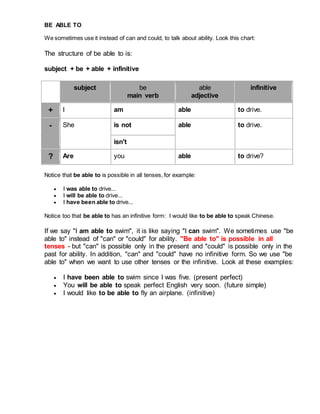
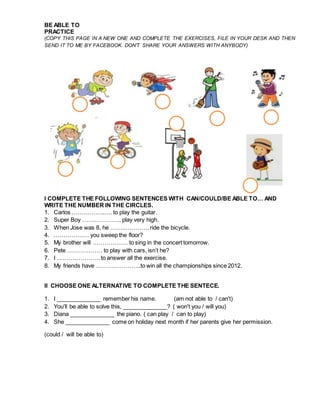

This document discusses the use of "be able to" to express ability in English. It notes that "be able to" can be used instead of "can" and "could" and provides examples of its structure and use in different tenses. Key points include: - "Be able to" has the structure of subject + be + able + infinitive - It can be used in all tenses like the present ("I am able to drive") and past ("I was able to drive") - It also has an infinitive form ("I would like to be able to speak Chinese") - "Be able to" is useful when wanting to express ability in other tenses or using the infinitive


