Exercise in diabetes
By
Dr. Amr Omar
01
02
03
04
05
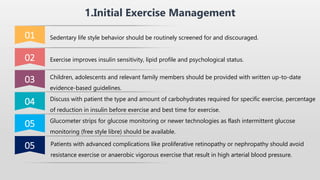
Sedentary life style behavior should be routinely screened for and discouraged.
Exercise improves insulin sensitivity, lipid profile and psychological status.
Children, adolescents and relevant family members should be provided with written up-to-date
evidence-based guidelines.
Discuss with patient the type and amount of carbohydrates required for specific exercise, percentage
of reduction in insulin before exercise and best time for exercise.
Glucometer strips for glucose monitoring or newer technologies as flash intermittent glucose
monitoring (free style libre) should be available.
05 Patients with advanced complications like proliferative retinopathy or nephropathy should avoid
resistance exercise or anaerobic vigorous exercise that result in high arterial blood pressure.
1.Initial Exercise Management
01
03
04
05
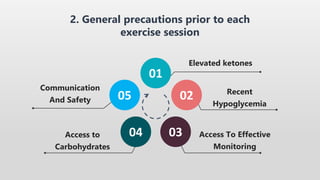
Elevated ketones
Access To Effective
Monitoring
Recent
Hypoglycemia
Access to
Carbohydrates
02
Communication
And Safety
2. General precautions prior to each
exercise session
04
03
02
01
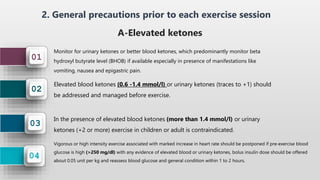
2. General precautions prior to each exercise session
A-Elevated ketones
Monitor for urinary ketones or better blood ketones, which predominantly monitor beta
hydroxyl butyrate level (BHOB) if available especially in presence of manifestations like
vomiting, nausea and epigastric pain.
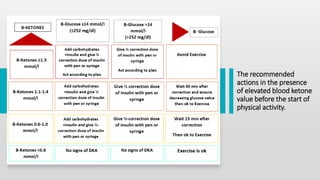
Elevated blood ketones (0.6 -1.4 mmol/l) or urinary ketones (traces to +1) should
be addressed and managed before exercise.
In the presence of elevated blood ketones (more than 1.4 mmol/l) or urinary
ketones (+2 or more) exercise in children or adult is contraindicated.
Vigorous or high intensity exercise associated with marked increase in heart rate should be postponed if pre-exercise blood
glucose is high (>250 mg/dl) with any evidence of elevated blood or urinary ketones, bolus insulin dose should be offered
about 0.05 unit per kg and reassess blood glucose and general condition within 1 to 2 hours.
The recommended
actions in the presence
of elevated blood ketone
value before the start of
physical activity.
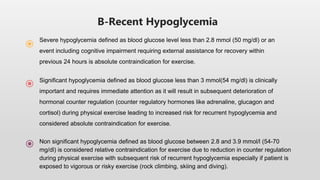
B-Recent Hypoglycemia
Severe hypoglycemia defined as blood glucose level less than 2.8 mmol (50 mg/dl) or an
event including cognitive impairment requiring external assistance for recovery within
previous 24 hours is absolute contraindication for exercise.
Significant hypoglycemia defined as blood glucose less than 3 mmol(54 mg/dl) is clinically
important and requires immediate attention as it will result in subsequent deterioration of
hormonal counter regulation (counter regulatory hormones like adrenaline, glucagon and
cortisol) during physical exercise leading to increased risk for recurrent hypoglycemia and
considered absolute contraindication for exercise.
Non significant hypoglycemia defined as blood glucose between 2.8 and 3.9 mmol/l (54-70
mg/dl) is considered relative contraindication for exercise due to reduction in counter regulation
during physical exercise with subsequent risk of recurrent hypoglycemia especially if patient is
exposed to vigorous or risky exercise (rock climbing, skiing and diving).
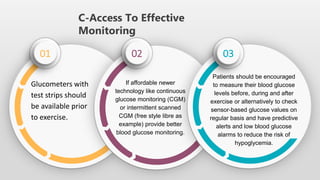
C-Access To Effective
Monitoring
01 02 03
Glucometers with
test strips should
be available prior
to exercise.
If affordable newer
technology like continuous
glucose monitoring (CGM)
or intermittent scanned
CGM (free style libre as
example) provide better
blood glucose monitoring.
Patients should be encouraged
to measure their blood glucose
levels before, during and after
exercise or alternatively to check
sensor-based glucose values on
regular basis and have predictive
alerts and low blood glucose
alarms to reduce the risk of
hypoglycemia.
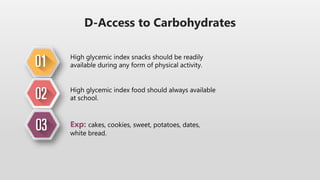
D-Access to Carbohydrates
High glycemic index snacks should be readily
available during any form of physical activity.
High glycemic index food should always available
at school.
Exp: cakes, cookies, sweet, potatoes, dates,
white bread.
E-Communication And
Safety
Counseling should include consideration of access
to mobile or alternative communication in case of
urgent help is required.
Advice about safety should be given, children and
adolescent should be encouraged to wear ID when
exercise is performed in absence of responsible adult.
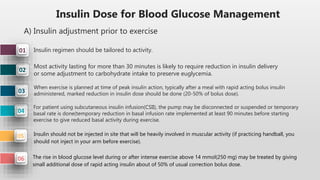
Insulin Dose for Blood Glucose Management
A) Insulin adjustment prior to exercise
04
03
02
01 Insulin regimen should be tailored to activity.
Most activity lasting for more than 30 minutes is likely to require reduction in insulin delivery
or some adjustment to carbohydrate intake to preserve euglycemia.
When exercise is planned at time of peak insulin action, typically after a meal with rapid acting bolus insulin
administered, marked reduction in insulin dose should be done (20-50% of bolus dose).
For patient using subcutaneous insulin infusion(CSII), the pump may be disconnected or suspended or temporary
basal rate is done(temporary reduction in basal infusion rate implemented at least 90 minutes before starting
exercise to give reduced basal activity during exercise.
05 Insulin should not be injected in site that will be heavily involved in muscular activity (if practicing handball, you
should not inject in your arm before exercise).
The rise in blood glucose level during or after intense exercise above 14 mmol(250 mg) may be treated by giving
small additional dose of rapid acting insulin about of 50% of usual correction bolus dose.
06
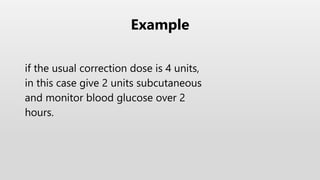
if the usual correction dose is 4 units,
in this case give 2 units subcutaneous
and monitor blood glucose over 2
hours.
Example
B)Insulin Adjustments For The Afternoon Or Late
Evening After Exercise
03
02
01
Similarly, morning exercise tends to lower insulin needs in the early afternoon. Two or more
activity sessions in a single day (camps, tournaments, intensive training) promotes increased

risk for hypoglycemia, and in particular nocturnal hypoglycemia.
In CSII treatment, a temporary basal reduction of approximately 20% at bedtime for 6 hours
helps reduce the risk of nocturnal hypoglycemia.
In Multiple Daily Injections (MDI) treatment, a 20% dose reduction of basal analogue (e.g., insulin
glargine, detemir, neutral protamine Hagedorn [NPH]) on the day of exercise together with a
carbohydrate snack at bedtime, corresponding to 0.4 g carbohydrates/kg reduces the risk of
hypoglycemia.
The risk of nocturnal hypoglycemia is increased after afternoon exercise.
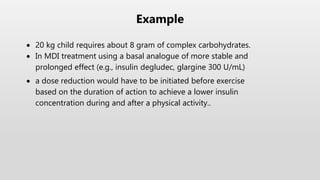
 20 kg child requires about 8 gram of complex carbohydrates.
 In MDI treatment using a basal analogue of more stable and
prolonged effect (e.g., insulin degludec, glargine 300 U/mL)
 a dose reduction would have to be initiated before exercise
based on the duration of action to achieve a lower insulin
concentration during and after a physical activity..
Example
Carbohydrate Intake For Blood Glucose Management
A) Carbohydrate intake prior to and during exercise:
The type and amount of carbohydrates required should be tailored to specific
activities.
Carbohydrate intake may not be required prior to moderate intensity exercise if of
short duration (30 minutes’ duration under basal insulin conditions, 0.2 to 0.5 g/kg/h
may be required to maintain euglycemia, but in some circumstances, or for optimal
performance, 1 g/kg/h may be required to avoid hyperglycemia.
Under hyperinsulinemia conditions where pre-exercise bolus insulin remains
active or is peaking, we recommend 1 to 1.5 g/kg/h.
Carbohydrate Intake For Blood Glucose Management
B) Carbohydrate Intake After Exercise:
Meals with appropriate carbohydrate and protein content should be consumed within
1 to 2 hours of exercise, taking advantage of the period of heightened insulin sensitivity
to help replenish glycogen stores and limit post exercise hypoglycemia risk.
Bolus dose reductions after prolonged aerobic exercise may be needed if post exercise
hypoglycemia typically occurs.
A 50% reduced correction bolus dose may be needed in case of post exercise
hyperglycemia.
Carbohydrate Intake For Blood Glucose Management
B) Carbohydrate Intake After Exercise:
Alcohol consumption inhibits gluconeogenesis and thus increases hypoglycemia risk in
fasting individuals.
For this reason, alcohol consumption should be avoided. After exercise if alcohol is to
be consumed it should be combined with a high Glycaemic Index (GI) carbohydrate
meal and this should be extremely discouraged.
Dehydration associated with exercise is a risk unless water or sugar-free fluids
also are consumed during and after exercise.
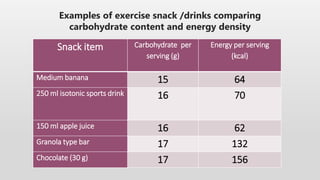
Examples of exercise snack /drinks comparing
carbohydrate content and energy density
Snack item Carbohydrate per
serving (g)
Energy per serving
(kcal)
Medium banana 15 64
250 ml isotonic sports drink 16 70
150 ml apple juice 16 62
Granola type bar 17 132
Chocolate (30 g) 17 156
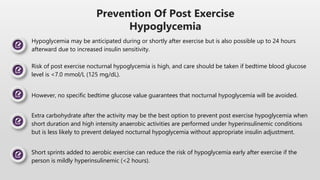
Risk of post exercise nocturnal hypoglycemia is high, and care should be taken if bedtime blood glucose
level is <7.0 mmol/L (125 mg/dL).
Extra carbohydrate after the activity may be the best option to prevent post exercise hypoglycemia when
short duration and high intensity anaerobic activities are performed under hyperinsulinemic conditions
but is less likely to prevent delayed nocturnal hypoglycemia without appropriate insulin adjustment.
However, no specific bedtime glucose value guarantees that nocturnal hypoglycemia will be avoided.
Short sprints added to aerobic exercise can reduce the risk of hypoglycemia early after exercise if the
person is mildly hyperinsulinemic (<2 hours).
Prevention Of Post Exercise
Hypoglycemia
Hypoglycemia may be anticipated during or shortly after exercise but is also possible up to 24 hours
afterward due to increased insulin sensitivity.
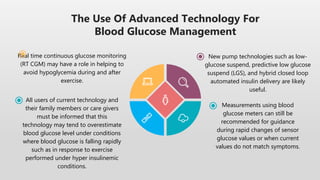
The Use Of Advanced Technology For
Blood Glucose Management
Measurements using blood
glucose meters can still be
recommended for guidance
during rapid changes of sensor
glucose values or when current
values do not match symptoms.
Real time continuous glucose monitoring
(RT CGM) may have a role in helping to
avoid hypoglycemia during and after
exercise.
New pump technologies such as low-
glucose suspend, predictive low glucose
suspend (LGS), and hybrid closed loop
automated insulin delivery are likely
useful.
All users of current technology and
their family members or care givers
must be informed that this
technology may tend to overestimate
blood glucose level under conditions
where blood glucose is falling rapidly
such as in response to exercise
performed under hyper insulinemic
conditions.
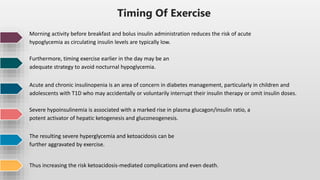
Timing Of Exercise
Morning activity before breakfast and bolus insulin administration reduces the risk of acute
hypoglycemia as circulating insulin levels are typically low.
Furthermore, timing exercise earlier in the day may be an
adequate strategy to avoid nocturnal hypoglycemia.
Acute and chronic insulinopenia is an area of concern in diabetes management, particularly in children and
adolescents with T1D who may accidentally or voluntarily interrupt their insulin therapy or omit insulin doses.
Severe hypoinsulinemia is associated with a marked rise in plasma glucagon/insulin ratio, a
potent activator of hepatic ketogenesis and gluconeogenesis.
The resulting severe hyperglycemia and ketoacidosis can be
further aggravated by exercise.
Thus increasing the risk ketoacidosis-mediated complications and even death.
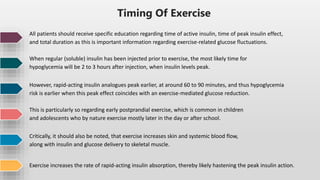
Timing Of Exercise
All patients should receive specific education regarding time of active insulin, time of peak insulin effect,
and total duration as this is important information regarding exercise-related glucose fluctuations.
When regular (soluble) insulin has been injected prior to exercise, the most likely time for
hypoglycemia will be 2 to 3 hours after injection, when insulin levels peak.
However, rapid-acting insulin analogues peak earlier, at around 60 to 90 minutes, and thus hypoglycemia
risk is earlier when this peak effect coincides with an exercise-mediated glucose reduction.
This is particularly so regarding early postprandial exercise, which is common in children
and adolescents who by nature exercise mostly later in the day or after school.
Critically, it should also be noted, that exercise increases skin and systemic blood flow,
along with insulin and glucose delivery to skeletal muscle.
Exercise increases the rate of rapid-acting insulin absorption, thereby likely hastening the peak insulin action.
Timing Of Exercise
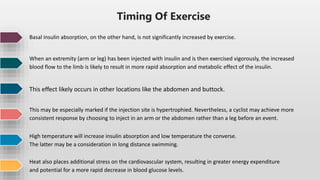
Basal insulin absorption, on the other hand, is not significantly increased by exercise.
When an extremity (arm or leg) has been injected with insulin and is then exercised vigorously, the increased
blood flow to the limb is likely to result in more rapid absorption and metabolic effect of the insulin.
This effect likely occurs in other locations like the abdomen and buttock.
This may be especially marked if the injection site is hypertrophied. Nevertheless, a cyclist may achieve more
consistent response by choosing to inject in an arm or the abdomen rather than a leg before an event.
High temperature will increase insulin absorption and low temperature the converse.
The latter may be a consideration in long distance swimming.
Heat also places additional stress on the cardiovascular system, resulting in greater energy expenditure
and potential for a more rapid decrease in blood glucose levels.
Types of Exercise
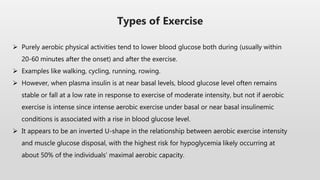
 Purely aerobic physical activities tend to lower blood glucose both during (usually within
20-60 minutes after the onset) and after the exercise.
 Examples like walking, cycling, running, rowing.
 However, when plasma insulin is at near basal levels, blood glucose level often remains
stable or fall at a low rate in response to exercise of moderate intensity, but not if aerobic
exercise is intense since intense aerobic exercise under basal or near basal insulinemic
conditions is associated with a rise in blood glucose level.
 It appears to be an inverted U-shape in the relationship between aerobic exercise intensity
and muscle glucose disposal, with the highest risk for hypoglycemia likely occurring at
about 50% of the individuals’ maximal aerobic capacity.
Types of Exercise
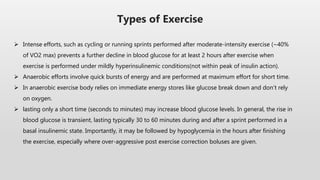
 Intense efforts, such as cycling or running sprints performed after moderate-intensity exercise (~40%
of VO2 max) prevents a further decline in blood glucose for at least 2 hours after exercise when
exercise is performed under mildly hyperinsulinemic conditions(not within peak of insulin action).
 Anaerobic efforts involve quick bursts of energy and are performed at maximum effort for short time.
 In anaerobic exercise body relies on immediate energy stores like glucose break down and don’t rely
on oxygen.
 lasting only a short time (seconds to minutes) may increase blood glucose levels. In general, the rise in
blood glucose is transient, lasting typically 30 to 60 minutes during and after a sprint performed in a
basal insulinemic state. Importantly, it may be followed by hypoglycemia in the hours after finishing
the exercise, especially where over-aggressive post exercise correction boluses are given.
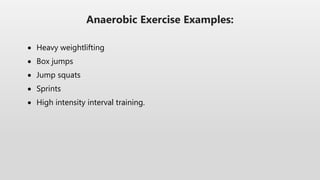
 Heavy weightlifting
 Box jumps
 Jump squats
 Sprints
 High intensity interval training.
Anaerobic Exercise Examples:
 The need for food intake prior to exercise depends on the timing of activity in relation to
insulin delivery and the type and purpose of activity.
 A meal or snack is not required in all situations for routine physical activity, particularly if the
activity is limited to less than 30 minutes.
 In most cases, however, good nutrition and timely snacks support more prolonged activities
that may or may not be competitive in nature. Advice on sports nutrition with the aim to
maximize performance will include information about type and amount of food/carbohydrates
as well as timing of the intake.
 For children and adolescents undertaking daily activities associated with health
(i.e., 60 minutes of Moderate and Vigorous Physical Activity daily), daily food intake should be
sufficient to meet the demands of the activity provided meals are distributed regularly across
the day and an age appropriate amount of carbohydrate and energy are consumed. Country-
specific guidelines on energy and macronutrient intake exist in many parts of the world and, in
general, increased energy requirements are linked to increased activity levels.
Type and Timing of Food
 Children and adolescents should be advised to consume regular meals
based on healthy food choices with additional snacks prior to exercise
if indicated by blood glucose level.
 Advice on hypoglycemia prevention should not increase total energy
intake above expenditure and the use of snacks should not decrease
dietary quality.
 It is recommended that a pre activity meal is consumed 3 to 4 hours
prior to prolonged exercise to maximize muscle and liver glycogen
stores, this is impractical for many and timing of meals and snacks will
often depend on the school routine.
Type and Timing of Food
 It is more likely that meals will be consumed 1 to 3 hours before most activity in a typical
day, though additional snacks may be needed prior to exercise at the end of the school
day.
 Additional carbohydrate may be needed just prior to and during exercise guided by blood
glucose levels and insulin adjustment as well as type and duration of exercise/activity.
 This is more likely to be needed when exercise is unplanned, and insulin has not been
adjusted as advised previously.
 Carbohydrate type and hypoglycemia prevention has not been well studied in children and
adolescents with T1D.
 However, it is important to suggest that carbohydrate with a high glycemic index value and
low-fat content is consumed just prior to (or perhaps during once the glucose reaches a
targeted range) exercise. Acceptability and tolerance of carbohydrate sources is as
important as the type of carbohydrate.
Type and Timing of Food
 Attention should be paid to the health value of the foods suggested to offset
hypoglycemia.
 Advice about the prevention of dental caries should also be given to children and
adolescents. An isotonic beverage containing 6% simple sugar (i.e., sucrose, fructose,
dextrose) provides optimal absorption compared with other more concentrated beverages
with more than 8% to 10% glucose, such as juice or carbonated drinks that delay gastric
absorption and cause stomach upset.
 For activities that last 60 minutes or longer, additional carbohydrate may be needed during
exercise dependent on blood glucose responses but also on the goal of the exercise.
 Up to 1.5 g of carbohydrate per kilogram of body mass per hour of exercise can be
tolerated.
Type and Timing of Food
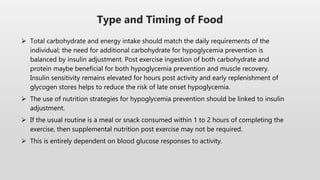
 Total carbohydrate and energy intake should match the daily requirements of the
individual; the need for additional carbohydrate for hypoglycemia prevention is
balanced by insulin adjustment. Post exercise ingestion of both carbohydrate and
protein maybe beneficial for both hypoglycemia prevention and muscle recovery.
Insulin sensitivity remains elevated for hours post activity and early replenishment of
glycogen stores helps to reduce the risk of late onset hypoglycemia.
 The use of nutrition strategies for hypoglycemia prevention should be linked to insulin
adjustment.
 If the usual routine is a meal or snack consumed within 1 to 2 hours of completing the
exercise, then supplemental nutrition post exercise may not be required.
 This is entirely dependent on blood glucose responses to activity.
Type and Timing of Food
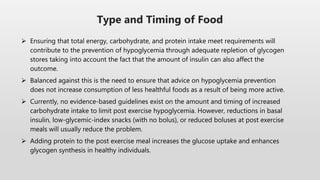
 Ensuring that total energy, carbohydrate, and protein intake meet requirements will
contribute to the prevention of hypoglycemia through adequate repletion of glycogen
stores taking into account the fact that the amount of insulin can also affect the
outcome.
 Balanced against this is the need to ensure that advice on hypoglycemia prevention
does not increase consumption of less healthful foods as a result of being more active.
 Currently, no evidence-based guidelines exist on the amount and timing of increased
carbohydrate intake to limit post exercise hypoglycemia. However, reductions in basal
insulin, low-glycemic-index snacks (with no bolus), or reduced boluses at post exercise
meals will usually reduce the problem.
 Adding protein to the post exercise meal increases the glucose uptake and enhances
glycogen synthesis in healthy individuals.
Type and Timing of Food
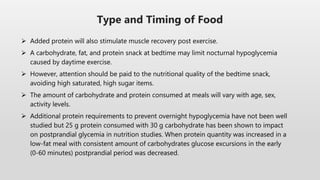
 Added protein will also stimulate muscle recovery post exercise.
 A carbohydrate, fat, and protein snack at bedtime may limit nocturnal hypoglycemia
caused by daytime exercise.
 However, attention should be paid to the nutritional quality of the bedtime snack,
avoiding high saturated, high sugar items.
 The amount of carbohydrate and protein consumed at meals will vary with age, sex,
activity levels.
 Additional protein requirements to prevent overnight hypoglycemia have not been well
studied but 25 g protein consumed with 30 g carbohydrate has been shown to impact
on postprandial glycemia in nutrition studies. When protein quantity was increased in a
low-fat meal with consistent amount of carbohydrates glucose excursions in the early
(0-60 minutes) postprandial period was decreased.
Type and Timing of Food
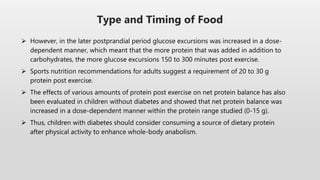
 However, in the later postprandial period glucose excursions was increased in a dose-
dependent manner, which meant that the more protein that was added in addition to
carbohydrates, the more glucose excursions 150 to 300 minutes post exercise.
 Sports nutrition recommendations for adults suggest a requirement of 20 to 30 g
protein post exercise.
 The effects of various amounts of protein post exercise on net protein balance has also
been evaluated in children without diabetes and showed that net protein balance was
increased in a dose-dependent manner within the protein range studied (0-15 g).
 Thus, children with diabetes should consider consuming a source of dietary protein
after physical activity to enhance whole-body anabolism.
Type and Timing of Food
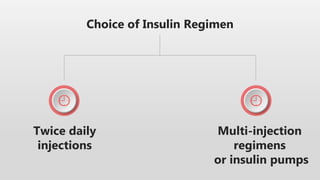
Choice of Insulin Regimen
Multi-injection
regimens
or insulin pumps
Twice daily
injections
Twice daily injections
 It may be difficult to maintain very strict
blood glucose control on these regimens
especially with different levels of exercise
throughout the week, but the essential
requirements of taking various forms of
carbohydrate before, during, and after
exercise may be even more important than
for more adjustable insulin regimens and
not recommended at all.
Multi-injection regimens
or insuline pumps
These regimens afford greater flexibility for serious training and competitive events.
Both pre exercise bolus and basal rates can be reduced before, during, and after
exercise to help increase hepatic glucose production and limit hypoglycemia.
The choice of insulin regimen is always influenced by many different factors including
the availability of various insulins (and pumps), professional and personal expertise,
and in the ideal world should be influenced by the nature of the sport.
There is little doubt that being able to reduce the training day into manageable of
4 to 6 hours makes management of blood glucose much more straightforward, with
the potential to move training/competitive periods around in the day and being able
to adjust the appropriate bolus (and perhaps basal) insulin doses.
Multi-injection regimens
or insuline pumps
In general, if basal rates are to be reduced for exercise, then the reduction should
occur approximately 90 minutes before the onset of the activity to allow the
circulating insulin levels to drop sufficiently before the exercise starts.
With current insulin pump technology, low glucose suspension (LGS) function
was first added followed by predicted low glucose mode(PLGM) with the goal
of basal insulin suspension at predicted hypoglycemia.
The level at which PLGM is activated can be individually set allowing adjustment of
threshold levels, for example, during competitions and subsequent nights to prevent
or reduce time spent in the hypoglycemic range.
There is a greater need for reduction of rapid-acting insulin when the dose is
given within 1 hour of the exercise, while the need of reduction is greater for
later exercise (3 hours post meal) when using regular insulin.
Multi-injection regimens
or insuline pumps
For evening exercise, it may be sensible to reduce the rapid analogue before the
evening meal by 25% to 75%, as well as taking 10 to 15 g of fast acting carbohydrate
before the activity.
Advice should be given about reducing basal insulin by approximately 20% (e.g., a
reduction in overnight long-acting/basal insulin or basal rate in pump or reductions
in subsequent mealtime boluses), and/or extra low glycemic index snacks following
the activity is prudent.
With all-day or unusual activities such as camps, long-distance walking, skiing,
water sports, etc. consider a 30% to 50% reduction of long-acting insulin the
night before and on the day of the activity, or a 30% to 50% reduction in the
pump's basal insulin throughout the day. And the activity
Multi-injection regimens
or insuline pumps
High excitement amusement parks and fairs may be more likely
to raise BG because of adrenalin surges.
It should be obvious from the above that individuals vary in their
response to different types of exercise, so the most important thing
is for patients and families to be aware of the broad themes and to
use this knowledge coupled with good record keeping finding what
works for them.
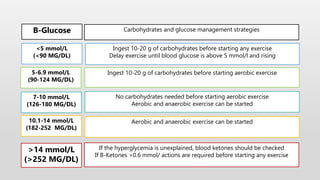
B-Glucose Carbohydrates and glucose management strategies
<5 mmol/L
(<90 MG/DL)
Ingest 10-20 g of carbohydrates before starting any exercise
Delay exercise until blood glucose is above 5 mmol/l and rising
7-10 mmol/L
(126-180 MG/DL)
No carbohydrates needed before starting aerobic exercise
Aerobic and anaerobic exercise can be started
10.1-14 mmol/L
(182-252 MG/DL)
Aerobic and anaerobic exercise can be started
>14 mmol/L
(>252 MG/DL)
If the hyperglycemia is unexplained, blood ketones should be checked
If B-Ketones >0.6 mmol/ actions are required before starting any exercise
5-6.9 mmol/L
(90-124 MG/DL)
Ingest 10-20 g of carbohydrates before starting aerobic exercise
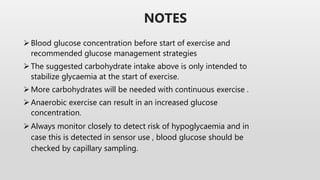
Blood glucose concentration before start of exercise and
recommended glucose management strategies
The suggested carbohydrate intake above is only intended to
stabilize glycaemia at the start of exercise.
More carbohydrates will be needed with continuous exercise .
Anaerobic exercise can result in an increased glucose
concentration.
Always monitor closely to detect risk of hypoglycaemia and in
case this is detected in sensor use , blood glucose should be
checked by capillary sampling.
NOTES
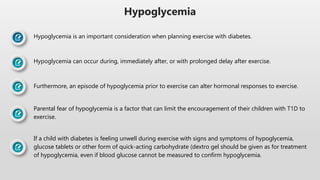
Hypoglycemia
Hypoglycemia is an important consideration when planning exercise with diabetes.
Hypoglycemia can occur during, immediately after, or with prolonged delay after exercise.
Furthermore, an episode of hypoglycemia prior to exercise can alter hormonal responses to exercise.
Parental fear of hypoglycemia is a factor that can limit the encouragement of their children with T1D to
exercise.
If a child with diabetes is feeling unwell during exercise with signs and symptoms of hypoglycemia,
glucose tablets or other form of quick-acting carbohydrate (dextro gel should be given as for treatment
of hypoglycemia, even if blood glucose cannot be measured to confirm hypoglycemia.
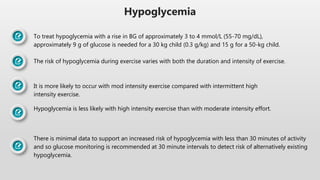
Hypoglycemia
To treat hypoglycemia with a rise in BG of approximately 3 to 4 mmol/L (55-70 mg/dL),
approximately 9 g of glucose is needed for a 30 kg child (0.3 g/kg) and 15 g for a 50-kg child.
The risk of hypoglycemia during exercise varies with both the duration and intensity of exercise.
It is more likely to occur with mod intensity exercise compared with intermittent high
intensity exercise.
Hypoglycemia is less likely with high intensity exercise than with moderate intensity effort.
There is minimal data to support an increased risk of hypoglycemia with less than 30 minutes of activity
and so glucose monitoring is recommended at 30 minute intervals to detect risk of alternatively existing
hypoglycemia.
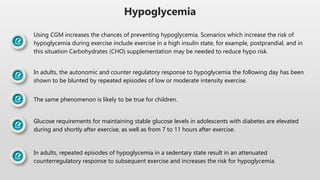
Hypoglycemia
Using CGM increases the chances of preventing hypoglycemia. Scenarios which increase the risk of
hypoglycemia during exercise include exercise in a high insulin state, for example, postprandial, and in
this situation Carbohydrates (CHO) supplementation may be needed to reduce hypo risk.
In adults, the autonomic and counter regulatory response to hypoglycemia the following day has been
shown to be blunted by repeated episodes of low or moderate intensity exercise.
The same phenomenon is likely to be true for children.
Glucose requirements for maintaining stable glucose levels in adolescents with diabetes are elevated
during and shortly after exercise, as well as from 7 to 11 hours after exercise.
In adults, repeated episodes of hypoglycemia in a sedentary state result in an attenuated
counterregulatory response to subsequent exercise and increases the risk for hypoglycemia.
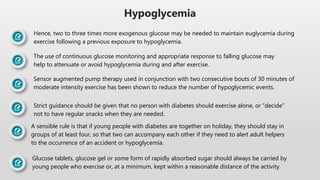
Hypoglycemia
Hence, two to three times more exogenous glucose may be needed to maintain euglycemia during
exercise following a previous exposure to hypoglycemia.
The use of continuous glucose monitoring and appropriate response to falling glucose may
help to attenuate or avoid hypoglycemia during and after exercise.
Sensor augmented pump therapy used in conjunction with two consecutive bouts of 30 minutes of
moderate intensity exercise has been shown to reduce the number of hypoglycemic events.
Strict guidance should be given that no person with diabetes should exercise alone, or “decide”
not to have regular snacks when they are needed.
A sensible rule is that if young people with diabetes are together on holiday, they should stay in
groups of at least four, so that two can accompany each other if they need to alert adult helpers
to the occurrence of an accident or hypoglycemia.
Glucose tablets, glucose gel or some form of rapidly absorbed sugar should always be carried by
young people who exercise or, at a minimum, kept within a reasonable distance of the activity.
Hypoglycemia
Hence, two to three times more exogenous glucose may be needed to maintain euglycemia during
exercise following a previous exposure to hypoglycemia.
The use of continuous glucose monitoring and appropriate response to falling glucose may
help to attenuate or avoid hypoglycemia during and after exercise.
Sensor augmented pump therapy used in conjunction with two consecutive bouts of 30 minutes of
moderate intensity exercise has been shown to reduce the number of hypoglycemic events.
Strict guidance should be given that no person with diabetes should exercise alone, or “decide”
not to have regular snacks when they are needed.
A sensible rule is that if young people with diabetes are together on holiday, they should stay in
groups of at least four, so that two can accompany each other if they need to alert adult helpers
to the occurrence of an accident or hypoglycemia.
Glucose tablets, glucose gel or some form of rapidly absorbed sugar should always be carried by
young people who exercise or, at a minimum, kept within a reasonable distance of the activity.
Late Hypoglycemia
Hypoglycemia may occur several hours after exercise, especially when
this has been prolonged and of moderate or high intensity.
This is due to the late effect of increased insulin sensitivity, delay in
replenishing liver and muscle glycogen stores and attenuated glucose
counter regulatory hormone responses, especially during the night.
A single bout of exercise can increase glucose transport into skeletal muscle
tissue for at least 16 hours post exercise in non-diabetic and diabetic subjects.
Data from adults suggests that late hypoglycemia is still common after intermittent
high intensity exercise, even when hypoglycemia occurs during exercise, perhaps
due to the greater need for glycogen replenishment for the next 24 hours. Indeed,
the likelihood of late hypoglycemia may be greater after intermittent high intensity
than lower/moderate intensity exercise.
Insulin Pump
For certain types of exercise (like contact sports), it may be appropriate to
disconnect prior to the start of the activity and remain disconnected for up to 1 to
2 hours during an event.
In these situations, patients may require a 50% bolus correction afterwards (i.e.,
50% of the missed basal insulin while disconnected), if needed, to reduce any
resulting post exercise hyperglycemia.
To get a significant lowering of the basal insulin effect during the exercise, the pump needs
to be disconnected at least 60 minutes before starting the exercise, but many centers
advise that the pump should not be disconnected for more than 2 hours due to risks of
ketosis.
The safer option may be to set a temporary basal rate 90 minutes before the activity (50%-
80% reduction depending upon the intensity and duration of the activity), lasting until the
end of exercise.
Insulin Pump
Even if the pump is removed during exercise, hyperglycemia can still
occur for several hours after the end of the activity.
After a short period of intense exercise (≥80% VO2 max), marked
catecholamine responses lead to hyperglycemia which lasts for
approximately 2 hours post exercise in adults with T1D.
Even when pre exercise plasma glucose was normal, post exercise hyperglycemia
lasted for 2 hours post exhaustion in pump patients.
This reaction may be exaggerated if the pump has been disconnected during
exercise.
Insulin Pump
The rise in blood glucose may be prevented by giving a small
additional dose of rapid-acting insulin at half-time or
immediately after the exercise is finished.
New insulin pump technology may offer better opportunities
to avoid hypoglycemia associated with exercise.
Mostly maintained within the target range, without an increased risk
of hypoglycemia.
Exercise in diabetes...pptx

Exercise in diabetes...pptx

  • 1.
  • 2.
    01 02 03 04 05 Sedentary life stylebehavior should be routinely screened for and discouraged. Exercise improves insulin sensitivity, lipid profile and psychological status. Children, adolescents and relevant family members should be provided with written up-to-date evidence-based guidelines. Discuss with patient the type and amount of carbohydrates required for specific exercise, percentage of reduction in insulin before exercise and best time for exercise. Glucometer strips for glucose monitoring or newer technologies as flash intermittent glucose monitoring (free style libre) should be available. 05 Patients with advanced complications like proliferative retinopathy or nephropathy should avoid resistance exercise or anaerobic vigorous exercise that result in high arterial blood pressure. 1.Initial Exercise Management
  • 3.
    01 03 04 05 Elevated ketones Access ToEffective Monitoring Recent Hypoglycemia Access to Carbohydrates 02 Communication And Safety 2. General precautions prior to each exercise session
  • 4.
    04 03 02 01 2. General precautionsprior to each exercise session A-Elevated ketones Monitor for urinary ketones or better blood ketones, which predominantly monitor beta hydroxyl butyrate level (BHOB) if available especially in presence of manifestations like vomiting, nausea and epigastric pain. Elevated blood ketones (0.6 -1.4 mmol/l) or urinary ketones (traces to +1) should be addressed and managed before exercise. In the presence of elevated blood ketones (more than 1.4 mmol/l) or urinary ketones (+2 or more) exercise in children or adult is contraindicated. Vigorous or high intensity exercise associated with marked increase in heart rate should be postponed if pre-exercise blood glucose is high (>250 mg/dl) with any evidence of elevated blood or urinary ketones, bolus insulin dose should be offered about 0.05 unit per kg and reassess blood glucose and general condition within 1 to 2 hours.
  • 5.
    The recommended actions inthe presence of elevated blood ketone value before the start of physical activity.
  • 6.
    B-Recent Hypoglycemia Severe hypoglycemiadefined as blood glucose level less than 2.8 mmol (50 mg/dl) or an event including cognitive impairment requiring external assistance for recovery within previous 24 hours is absolute contraindication for exercise. Significant hypoglycemia defined as blood glucose less than 3 mmol(54 mg/dl) is clinically important and requires immediate attention as it will result in subsequent deterioration of hormonal counter regulation (counter regulatory hormones like adrenaline, glucagon and cortisol) during physical exercise leading to increased risk for recurrent hypoglycemia and considered absolute contraindication for exercise. Non significant hypoglycemia defined as blood glucose between 2.8 and 3.9 mmol/l (54-70 mg/dl) is considered relative contraindication for exercise due to reduction in counter regulation during physical exercise with subsequent risk of recurrent hypoglycemia especially if patient is exposed to vigorous or risky exercise (rock climbing, skiing and diving).
  • 7.
    C-Access To Effective Monitoring 0102 03 Glucometers with test strips should be available prior to exercise. If affordable newer technology like continuous glucose monitoring (CGM) or intermittent scanned CGM (free style libre as example) provide better blood glucose monitoring. Patients should be encouraged to measure their blood glucose levels before, during and after exercise or alternatively to check sensor-based glucose values on regular basis and have predictive alerts and low blood glucose alarms to reduce the risk of hypoglycemia.
  • 8.
    D-Access to Carbohydrates Highglycemic index snacks should be readily available during any form of physical activity. High glycemic index food should always available at school. Exp: cakes, cookies, sweet, potatoes, dates, white bread.
  • 9.
    E-Communication And Safety Counseling shouldinclude consideration of access to mobile or alternative communication in case of urgent help is required. Advice about safety should be given, children and adolescent should be encouraged to wear ID when exercise is performed in absence of responsible adult.
  • 10.
    Insulin Dose forBlood Glucose Management A) Insulin adjustment prior to exercise 04 03 02 01 Insulin regimen should be tailored to activity. Most activity lasting for more than 30 minutes is likely to require reduction in insulin delivery or some adjustment to carbohydrate intake to preserve euglycemia. When exercise is planned at time of peak insulin action, typically after a meal with rapid acting bolus insulin administered, marked reduction in insulin dose should be done (20-50% of bolus dose). For patient using subcutaneous insulin infusion(CSII), the pump may be disconnected or suspended or temporary basal rate is done(temporary reduction in basal infusion rate implemented at least 90 minutes before starting exercise to give reduced basal activity during exercise. 05 Insulin should not be injected in site that will be heavily involved in muscular activity (if practicing handball, you should not inject in your arm before exercise). The rise in blood glucose level during or after intense exercise above 14 mmol(250 mg) may be treated by giving small additional dose of rapid acting insulin about of 50% of usual correction bolus dose. 06
  • 11.
    if the usualcorrection dose is 4 units, in this case give 2 units subcutaneous and monitor blood glucose over 2 hours. Example
  • 12.
    B)Insulin Adjustments ForThe Afternoon Or Late Evening After Exercise 03 02 01 Similarly, morning exercise tends to lower insulin needs in the early afternoon. Two or more activity sessions in a single day (camps, tournaments, intensive training) promotes increased risk for hypoglycemia, and in particular nocturnal hypoglycemia. In CSII treatment, a temporary basal reduction of approximately 20% at bedtime for 6 hours helps reduce the risk of nocturnal hypoglycemia. In Multiple Daily Injections (MDI) treatment, a 20% dose reduction of basal analogue (e.g., insulin glargine, detemir, neutral protamine Hagedorn [NPH]) on the day of exercise together with a carbohydrate snack at bedtime, corresponding to 0.4 g carbohydrates/kg reduces the risk of hypoglycemia. The risk of nocturnal hypoglycemia is increased after afternoon exercise.
  • 13.
     20 kgchild requires about 8 gram of complex carbohydrates.  In MDI treatment using a basal analogue of more stable and prolonged effect (e.g., insulin degludec, glargine 300 U/mL)  a dose reduction would have to be initiated before exercise based on the duration of action to achieve a lower insulin concentration during and after a physical activity.. Example
  • 14.
    Carbohydrate Intake ForBlood Glucose Management A) Carbohydrate intake prior to and during exercise: The type and amount of carbohydrates required should be tailored to specific activities. Carbohydrate intake may not be required prior to moderate intensity exercise if of short duration (30 minutes’ duration under basal insulin conditions, 0.2 to 0.5 g/kg/h may be required to maintain euglycemia, but in some circumstances, or for optimal performance, 1 g/kg/h may be required to avoid hyperglycemia. Under hyperinsulinemia conditions where pre-exercise bolus insulin remains active or is peaking, we recommend 1 to 1.5 g/kg/h.
  • 15.
    Carbohydrate Intake ForBlood Glucose Management B) Carbohydrate Intake After Exercise: Meals with appropriate carbohydrate and protein content should be consumed within 1 to 2 hours of exercise, taking advantage of the period of heightened insulin sensitivity to help replenish glycogen stores and limit post exercise hypoglycemia risk. Bolus dose reductions after prolonged aerobic exercise may be needed if post exercise hypoglycemia typically occurs. A 50% reduced correction bolus dose may be needed in case of post exercise hyperglycemia.
  • 16.
    Carbohydrate Intake ForBlood Glucose Management B) Carbohydrate Intake After Exercise: Alcohol consumption inhibits gluconeogenesis and thus increases hypoglycemia risk in fasting individuals. For this reason, alcohol consumption should be avoided. After exercise if alcohol is to be consumed it should be combined with a high Glycaemic Index (GI) carbohydrate meal and this should be extremely discouraged. Dehydration associated with exercise is a risk unless water or sugar-free fluids also are consumed during and after exercise.
  • 17.
    Examples of exercisesnack /drinks comparing carbohydrate content and energy density Snack item Carbohydrate per serving (g) Energy per serving (kcal) Medium banana 15 64 250 ml isotonic sports drink 16 70 150 ml apple juice 16 62 Granola type bar 17 132 Chocolate (30 g) 17 156
  • 18.
    Risk of postexercise nocturnal hypoglycemia is high, and care should be taken if bedtime blood glucose level is <7.0 mmol/L (125 mg/dL). Extra carbohydrate after the activity may be the best option to prevent post exercise hypoglycemia when short duration and high intensity anaerobic activities are performed under hyperinsulinemic conditions but is less likely to prevent delayed nocturnal hypoglycemia without appropriate insulin adjustment. However, no specific bedtime glucose value guarantees that nocturnal hypoglycemia will be avoided. Short sprints added to aerobic exercise can reduce the risk of hypoglycemia early after exercise if the person is mildly hyperinsulinemic (<2 hours). Prevention Of Post Exercise Hypoglycemia Hypoglycemia may be anticipated during or shortly after exercise but is also possible up to 24 hours afterward due to increased insulin sensitivity.
  • 19.
    The Use OfAdvanced Technology For Blood Glucose Management Measurements using blood glucose meters can still be recommended for guidance during rapid changes of sensor glucose values or when current values do not match symptoms. Real time continuous glucose monitoring (RT CGM) may have a role in helping to avoid hypoglycemia during and after exercise. New pump technologies such as low- glucose suspend, predictive low glucose suspend (LGS), and hybrid closed loop automated insulin delivery are likely useful. All users of current technology and their family members or care givers must be informed that this technology may tend to overestimate blood glucose level under conditions where blood glucose is falling rapidly such as in response to exercise performed under hyper insulinemic conditions.
  • 20.
    Timing Of Exercise Morningactivity before breakfast and bolus insulin administration reduces the risk of acute hypoglycemia as circulating insulin levels are typically low. Furthermore, timing exercise earlier in the day may be an adequate strategy to avoid nocturnal hypoglycemia. Acute and chronic insulinopenia is an area of concern in diabetes management, particularly in children and adolescents with T1D who may accidentally or voluntarily interrupt their insulin therapy or omit insulin doses. Severe hypoinsulinemia is associated with a marked rise in plasma glucagon/insulin ratio, a potent activator of hepatic ketogenesis and gluconeogenesis. The resulting severe hyperglycemia and ketoacidosis can be further aggravated by exercise. Thus increasing the risk ketoacidosis-mediated complications and even death.
  • 21.
    Timing Of Exercise Allpatients should receive specific education regarding time of active insulin, time of peak insulin effect, and total duration as this is important information regarding exercise-related glucose fluctuations. When regular (soluble) insulin has been injected prior to exercise, the most likely time for hypoglycemia will be 2 to 3 hours after injection, when insulin levels peak. However, rapid-acting insulin analogues peak earlier, at around 60 to 90 minutes, and thus hypoglycemia risk is earlier when this peak effect coincides with an exercise-mediated glucose reduction. This is particularly so regarding early postprandial exercise, which is common in children and adolescents who by nature exercise mostly later in the day or after school. Critically, it should also be noted, that exercise increases skin and systemic blood flow, along with insulin and glucose delivery to skeletal muscle. Exercise increases the rate of rapid-acting insulin absorption, thereby likely hastening the peak insulin action.
  • 22.
    Timing Of Exercise Basalinsulin absorption, on the other hand, is not significantly increased by exercise. When an extremity (arm or leg) has been injected with insulin and is then exercised vigorously, the increased blood flow to the limb is likely to result in more rapid absorption and metabolic effect of the insulin. This effect likely occurs in other locations like the abdomen and buttock. This may be especially marked if the injection site is hypertrophied. Nevertheless, a cyclist may achieve more consistent response by choosing to inject in an arm or the abdomen rather than a leg before an event. High temperature will increase insulin absorption and low temperature the converse. The latter may be a consideration in long distance swimming. Heat also places additional stress on the cardiovascular system, resulting in greater energy expenditure and potential for a more rapid decrease in blood glucose levels.
  • 23.
    Types of Exercise Purely aerobic physical activities tend to lower blood glucose both during (usually within 20-60 minutes after the onset) and after the exercise.  Examples like walking, cycling, running, rowing.  However, when plasma insulin is at near basal levels, blood glucose level often remains stable or fall at a low rate in response to exercise of moderate intensity, but not if aerobic exercise is intense since intense aerobic exercise under basal or near basal insulinemic conditions is associated with a rise in blood glucose level.  It appears to be an inverted U-shape in the relationship between aerobic exercise intensity and muscle glucose disposal, with the highest risk for hypoglycemia likely occurring at about 50% of the individuals’ maximal aerobic capacity.
  • 24.
    Types of Exercise Intense efforts, such as cycling or running sprints performed after moderate-intensity exercise (~40% of VO2 max) prevents a further decline in blood glucose for at least 2 hours after exercise when exercise is performed under mildly hyperinsulinemic conditions(not within peak of insulin action).  Anaerobic efforts involve quick bursts of energy and are performed at maximum effort for short time.  In anaerobic exercise body relies on immediate energy stores like glucose break down and don’t rely on oxygen.  lasting only a short time (seconds to minutes) may increase blood glucose levels. In general, the rise in blood glucose is transient, lasting typically 30 to 60 minutes during and after a sprint performed in a basal insulinemic state. Importantly, it may be followed by hypoglycemia in the hours after finishing the exercise, especially where over-aggressive post exercise correction boluses are given.
  • 25.
     Heavy weightlifting Box jumps  Jump squats  Sprints  High intensity interval training. Anaerobic Exercise Examples:
  • 26.
     The needfor food intake prior to exercise depends on the timing of activity in relation to insulin delivery and the type and purpose of activity.  A meal or snack is not required in all situations for routine physical activity, particularly if the activity is limited to less than 30 minutes.  In most cases, however, good nutrition and timely snacks support more prolonged activities that may or may not be competitive in nature. Advice on sports nutrition with the aim to maximize performance will include information about type and amount of food/carbohydrates as well as timing of the intake.  For children and adolescents undertaking daily activities associated with health (i.e., 60 minutes of Moderate and Vigorous Physical Activity daily), daily food intake should be sufficient to meet the demands of the activity provided meals are distributed regularly across the day and an age appropriate amount of carbohydrate and energy are consumed. Country- specific guidelines on energy and macronutrient intake exist in many parts of the world and, in general, increased energy requirements are linked to increased activity levels. Type and Timing of Food
  • 27.
     Children andadolescents should be advised to consume regular meals based on healthy food choices with additional snacks prior to exercise if indicated by blood glucose level.  Advice on hypoglycemia prevention should not increase total energy intake above expenditure and the use of snacks should not decrease dietary quality.  It is recommended that a pre activity meal is consumed 3 to 4 hours prior to prolonged exercise to maximize muscle and liver glycogen stores, this is impractical for many and timing of meals and snacks will often depend on the school routine. Type and Timing of Food
  • 28.
     It ismore likely that meals will be consumed 1 to 3 hours before most activity in a typical day, though additional snacks may be needed prior to exercise at the end of the school day.  Additional carbohydrate may be needed just prior to and during exercise guided by blood glucose levels and insulin adjustment as well as type and duration of exercise/activity.  This is more likely to be needed when exercise is unplanned, and insulin has not been adjusted as advised previously.  Carbohydrate type and hypoglycemia prevention has not been well studied in children and adolescents with T1D.  However, it is important to suggest that carbohydrate with a high glycemic index value and low-fat content is consumed just prior to (or perhaps during once the glucose reaches a targeted range) exercise. Acceptability and tolerance of carbohydrate sources is as important as the type of carbohydrate. Type and Timing of Food
  • 29.
     Attention shouldbe paid to the health value of the foods suggested to offset hypoglycemia.  Advice about the prevention of dental caries should also be given to children and adolescents. An isotonic beverage containing 6% simple sugar (i.e., sucrose, fructose, dextrose) provides optimal absorption compared with other more concentrated beverages with more than 8% to 10% glucose, such as juice or carbonated drinks that delay gastric absorption and cause stomach upset.  For activities that last 60 minutes or longer, additional carbohydrate may be needed during exercise dependent on blood glucose responses but also on the goal of the exercise.  Up to 1.5 g of carbohydrate per kilogram of body mass per hour of exercise can be tolerated. Type and Timing of Food
  • 30.
     Total carbohydrateand energy intake should match the daily requirements of the individual; the need for additional carbohydrate for hypoglycemia prevention is balanced by insulin adjustment. Post exercise ingestion of both carbohydrate and protein maybe beneficial for both hypoglycemia prevention and muscle recovery. Insulin sensitivity remains elevated for hours post activity and early replenishment of glycogen stores helps to reduce the risk of late onset hypoglycemia.  The use of nutrition strategies for hypoglycemia prevention should be linked to insulin adjustment.  If the usual routine is a meal or snack consumed within 1 to 2 hours of completing the exercise, then supplemental nutrition post exercise may not be required.  This is entirely dependent on blood glucose responses to activity. Type and Timing of Food
  • 31.
     Ensuring thattotal energy, carbohydrate, and protein intake meet requirements will contribute to the prevention of hypoglycemia through adequate repletion of glycogen stores taking into account the fact that the amount of insulin can also affect the outcome.  Balanced against this is the need to ensure that advice on hypoglycemia prevention does not increase consumption of less healthful foods as a result of being more active.  Currently, no evidence-based guidelines exist on the amount and timing of increased carbohydrate intake to limit post exercise hypoglycemia. However, reductions in basal insulin, low-glycemic-index snacks (with no bolus), or reduced boluses at post exercise meals will usually reduce the problem.  Adding protein to the post exercise meal increases the glucose uptake and enhances glycogen synthesis in healthy individuals. Type and Timing of Food
  • 32.
     Added proteinwill also stimulate muscle recovery post exercise.  A carbohydrate, fat, and protein snack at bedtime may limit nocturnal hypoglycemia caused by daytime exercise.  However, attention should be paid to the nutritional quality of the bedtime snack, avoiding high saturated, high sugar items.  The amount of carbohydrate and protein consumed at meals will vary with age, sex, activity levels.  Additional protein requirements to prevent overnight hypoglycemia have not been well studied but 25 g protein consumed with 30 g carbohydrate has been shown to impact on postprandial glycemia in nutrition studies. When protein quantity was increased in a low-fat meal with consistent amount of carbohydrates glucose excursions in the early (0-60 minutes) postprandial period was decreased. Type and Timing of Food
  • 33.
     However, inthe later postprandial period glucose excursions was increased in a dose- dependent manner, which meant that the more protein that was added in addition to carbohydrates, the more glucose excursions 150 to 300 minutes post exercise.  Sports nutrition recommendations for adults suggest a requirement of 20 to 30 g protein post exercise.  The effects of various amounts of protein post exercise on net protein balance has also been evaluated in children without diabetes and showed that net protein balance was increased in a dose-dependent manner within the protein range studied (0-15 g).  Thus, children with diabetes should consider consuming a source of dietary protein after physical activity to enhance whole-body anabolism. Type and Timing of Food
  • 34.
    Choice of InsulinRegimen Multi-injection regimens or insulin pumps Twice daily injections
  • 35.
    Twice daily injections It may be difficult to maintain very strict blood glucose control on these regimens especially with different levels of exercise throughout the week, but the essential requirements of taking various forms of carbohydrate before, during, and after exercise may be even more important than for more adjustable insulin regimens and not recommended at all.
  • 36.
    Multi-injection regimens or insulinepumps These regimens afford greater flexibility for serious training and competitive events. Both pre exercise bolus and basal rates can be reduced before, during, and after exercise to help increase hepatic glucose production and limit hypoglycemia. The choice of insulin regimen is always influenced by many different factors including the availability of various insulins (and pumps), professional and personal expertise, and in the ideal world should be influenced by the nature of the sport. There is little doubt that being able to reduce the training day into manageable of 4 to 6 hours makes management of blood glucose much more straightforward, with the potential to move training/competitive periods around in the day and being able to adjust the appropriate bolus (and perhaps basal) insulin doses.
  • 37.
    Multi-injection regimens or insulinepumps In general, if basal rates are to be reduced for exercise, then the reduction should occur approximately 90 minutes before the onset of the activity to allow the circulating insulin levels to drop sufficiently before the exercise starts. With current insulin pump technology, low glucose suspension (LGS) function was first added followed by predicted low glucose mode(PLGM) with the goal of basal insulin suspension at predicted hypoglycemia. The level at which PLGM is activated can be individually set allowing adjustment of threshold levels, for example, during competitions and subsequent nights to prevent or reduce time spent in the hypoglycemic range. There is a greater need for reduction of rapid-acting insulin when the dose is given within 1 hour of the exercise, while the need of reduction is greater for later exercise (3 hours post meal) when using regular insulin.
  • 38.
    Multi-injection regimens or insulinepumps For evening exercise, it may be sensible to reduce the rapid analogue before the evening meal by 25% to 75%, as well as taking 10 to 15 g of fast acting carbohydrate before the activity. Advice should be given about reducing basal insulin by approximately 20% (e.g., a reduction in overnight long-acting/basal insulin or basal rate in pump or reductions in subsequent mealtime boluses), and/or extra low glycemic index snacks following the activity is prudent. With all-day or unusual activities such as camps, long-distance walking, skiing, water sports, etc. consider a 30% to 50% reduction of long-acting insulin the night before and on the day of the activity, or a 30% to 50% reduction in the pump's basal insulin throughout the day. And the activity
  • 39.
    Multi-injection regimens or insulinepumps High excitement amusement parks and fairs may be more likely to raise BG because of adrenalin surges. It should be obvious from the above that individuals vary in their response to different types of exercise, so the most important thing is for patients and families to be aware of the broad themes and to use this knowledge coupled with good record keeping finding what works for them.
  • 40.
    B-Glucose Carbohydrates andglucose management strategies <5 mmol/L (<90 MG/DL) Ingest 10-20 g of carbohydrates before starting any exercise Delay exercise until blood glucose is above 5 mmol/l and rising 7-10 mmol/L (126-180 MG/DL) No carbohydrates needed before starting aerobic exercise Aerobic and anaerobic exercise can be started 10.1-14 mmol/L (182-252 MG/DL) Aerobic and anaerobic exercise can be started >14 mmol/L (>252 MG/DL) If the hyperglycemia is unexplained, blood ketones should be checked If B-Ketones >0.6 mmol/ actions are required before starting any exercise 5-6.9 mmol/L (90-124 MG/DL) Ingest 10-20 g of carbohydrates before starting aerobic exercise
  • 41.
    Blood glucose concentrationbefore start of exercise and recommended glucose management strategies The suggested carbohydrate intake above is only intended to stabilize glycaemia at the start of exercise. More carbohydrates will be needed with continuous exercise . Anaerobic exercise can result in an increased glucose concentration. Always monitor closely to detect risk of hypoglycaemia and in case this is detected in sensor use , blood glucose should be checked by capillary sampling. NOTES
  • 42.
    Hypoglycemia Hypoglycemia is animportant consideration when planning exercise with diabetes. Hypoglycemia can occur during, immediately after, or with prolonged delay after exercise. Furthermore, an episode of hypoglycemia prior to exercise can alter hormonal responses to exercise. Parental fear of hypoglycemia is a factor that can limit the encouragement of their children with T1D to exercise. If a child with diabetes is feeling unwell during exercise with signs and symptoms of hypoglycemia, glucose tablets or other form of quick-acting carbohydrate (dextro gel should be given as for treatment of hypoglycemia, even if blood glucose cannot be measured to confirm hypoglycemia.
  • 43.
    Hypoglycemia To treat hypoglycemiawith a rise in BG of approximately 3 to 4 mmol/L (55-70 mg/dL), approximately 9 g of glucose is needed for a 30 kg child (0.3 g/kg) and 15 g for a 50-kg child. The risk of hypoglycemia during exercise varies with both the duration and intensity of exercise. It is more likely to occur with mod intensity exercise compared with intermittent high intensity exercise. Hypoglycemia is less likely with high intensity exercise than with moderate intensity effort. There is minimal data to support an increased risk of hypoglycemia with less than 30 minutes of activity and so glucose monitoring is recommended at 30 minute intervals to detect risk of alternatively existing hypoglycemia.
  • 44.
    Hypoglycemia Using CGM increasesthe chances of preventing hypoglycemia. Scenarios which increase the risk of hypoglycemia during exercise include exercise in a high insulin state, for example, postprandial, and in this situation Carbohydrates (CHO) supplementation may be needed to reduce hypo risk. In adults, the autonomic and counter regulatory response to hypoglycemia the following day has been shown to be blunted by repeated episodes of low or moderate intensity exercise. The same phenomenon is likely to be true for children. Glucose requirements for maintaining stable glucose levels in adolescents with diabetes are elevated during and shortly after exercise, as well as from 7 to 11 hours after exercise. In adults, repeated episodes of hypoglycemia in a sedentary state result in an attenuated counterregulatory response to subsequent exercise and increases the risk for hypoglycemia.
  • 45.
    Hypoglycemia Hence, two tothree times more exogenous glucose may be needed to maintain euglycemia during exercise following a previous exposure to hypoglycemia. The use of continuous glucose monitoring and appropriate response to falling glucose may help to attenuate or avoid hypoglycemia during and after exercise. Sensor augmented pump therapy used in conjunction with two consecutive bouts of 30 minutes of moderate intensity exercise has been shown to reduce the number of hypoglycemic events. Strict guidance should be given that no person with diabetes should exercise alone, or “decide” not to have regular snacks when they are needed. A sensible rule is that if young people with diabetes are together on holiday, they should stay in groups of at least four, so that two can accompany each other if they need to alert adult helpers to the occurrence of an accident or hypoglycemia. Glucose tablets, glucose gel or some form of rapidly absorbed sugar should always be carried by young people who exercise or, at a minimum, kept within a reasonable distance of the activity.
  • 46.
    Hypoglycemia Hence, two tothree times more exogenous glucose may be needed to maintain euglycemia during exercise following a previous exposure to hypoglycemia. The use of continuous glucose monitoring and appropriate response to falling glucose may help to attenuate or avoid hypoglycemia during and after exercise. Sensor augmented pump therapy used in conjunction with two consecutive bouts of 30 minutes of moderate intensity exercise has been shown to reduce the number of hypoglycemic events. Strict guidance should be given that no person with diabetes should exercise alone, or “decide” not to have regular snacks when they are needed. A sensible rule is that if young people with diabetes are together on holiday, they should stay in groups of at least four, so that two can accompany each other if they need to alert adult helpers to the occurrence of an accident or hypoglycemia. Glucose tablets, glucose gel or some form of rapidly absorbed sugar should always be carried by young people who exercise or, at a minimum, kept within a reasonable distance of the activity.
  • 47.
    Late Hypoglycemia Hypoglycemia mayoccur several hours after exercise, especially when this has been prolonged and of moderate or high intensity. This is due to the late effect of increased insulin sensitivity, delay in replenishing liver and muscle glycogen stores and attenuated glucose counter regulatory hormone responses, especially during the night. A single bout of exercise can increase glucose transport into skeletal muscle tissue for at least 16 hours post exercise in non-diabetic and diabetic subjects. Data from adults suggests that late hypoglycemia is still common after intermittent high intensity exercise, even when hypoglycemia occurs during exercise, perhaps due to the greater need for glycogen replenishment for the next 24 hours. Indeed, the likelihood of late hypoglycemia may be greater after intermittent high intensity than lower/moderate intensity exercise.
  • 48.
    Insulin Pump For certaintypes of exercise (like contact sports), it may be appropriate to disconnect prior to the start of the activity and remain disconnected for up to 1 to 2 hours during an event. In these situations, patients may require a 50% bolus correction afterwards (i.e., 50% of the missed basal insulin while disconnected), if needed, to reduce any resulting post exercise hyperglycemia. To get a significant lowering of the basal insulin effect during the exercise, the pump needs to be disconnected at least 60 minutes before starting the exercise, but many centers advise that the pump should not be disconnected for more than 2 hours due to risks of ketosis. The safer option may be to set a temporary basal rate 90 minutes before the activity (50%- 80% reduction depending upon the intensity and duration of the activity), lasting until the end of exercise.
  • 49.
    Insulin Pump Even ifthe pump is removed during exercise, hyperglycemia can still occur for several hours after the end of the activity. After a short period of intense exercise (≥80% VO2 max), marked catecholamine responses lead to hyperglycemia which lasts for approximately 2 hours post exercise in adults with T1D. Even when pre exercise plasma glucose was normal, post exercise hyperglycemia lasted for 2 hours post exhaustion in pump patients. This reaction may be exaggerated if the pump has been disconnected during exercise.
  • 50.
    Insulin Pump The risein blood glucose may be prevented by giving a small additional dose of rapid-acting insulin at half-time or immediately after the exercise is finished. New insulin pump technology may offer better opportunities to avoid hypoglycemia associated with exercise. Mostly maintained within the target range, without an increased risk of hypoglycemia.