Type 1 Diabetes in Children & Adolescents: Update
​Abdulmoein Eid Al-Agha, FRCPCH
Professor of Pediatric Endocrinology,
Head, Pediatric Endocrinology & Diabetes ,
King Abdulaziz University Hospital,
Pediatric Department,
E-mail: aagha@kau.edu.sa
Website: http://aagha.kau.edu.sa
Introduction
• Diabetes is a relatively common chronic disease of
childhood.
• Type 1 diabetes is a chronic illness characterized by
insulin deficiency due to autoimmune destruction of
the β - cells in the pancreas.
• Onset most often occurs in childhood, but the
disease can also develop in adults in their late 30s.
• Not preventable disease.
• Children are not little adults.
• Prevalence worldwide is increasing, especially in
younger age group, with no clear explanation!
• Incidence significantly increased in all age-groups
including those less than 4 years old.
• Prevalence of type 2 diabetes in children, increased
30.5% for the last 20 years in all ethnicities owing to
increasing prevalence of obesity.
Prevalence of Type 1 Diabetes
Diagnosis
• Diagnostic criteria by the American Diabetes Association
in a patient with classic symptoms of polyurea, polydipsia
and unexplained weight loss in addition to the following:
• Fasting plasma glucose level ≥126 mg/dL (7.0
mmol/L) or
• A 2-hour plasma glucose level ≥200 mg/dL (11.1
mmol/L) during a 75-g oral glucose tolerance test
(OGTT) or
• A random plasma glucose ≥ 200 mg/dL (11.1
mmol/L).
• Glycosylated HbA1c ≥ 6.5 %
Stages of Type 1 Diabetes
According to a new staging classification system, type 1
diabetes develops in three stages:
• Stage 1 is defined as the presence of β-cell autoimmunity as
evident by ≥ 2 autoantibodies with normoglycemia & patient
is pre-symptomatic.
• Stage 2 is defined as the presence of β-cell autoimmunity as
evident by ≥ 2 autoantibodies with dysglycemia but still
patient is pre-symptomatic.
• Stage 3 is defined as the presence of β-cell autoimmunity as
evident by ≥ 2 autoantibodies with dysglycemia but the
patient is symptomatic resulting from insulin deficiency.
It is essential to classify which type of diabetes
your patient has got??
• Distinguishing between type 1 , type 2 diabetes,
monogenic diabetes & other forms of diabetes is
based on history, patient characteristics &
laboratory tests, including autoantibodies profile is
essential for method of treatment & prognosis.
• Type 1 diabetes is the major type in children and
young patients less than 25 years of age in 90% of
cases.
• The other 10% could be other types of diabetes.
Characteristics of various types of diabetes in children
Stress - induced hyperglycemia
• The incidental discovery of hyperglycemia without
classic symptoms does not necessarily indicate new-
onset diabetes, especially in young children with
acute illness who may experience “stress – induced
hyperglycemia.”
• The risk of eventually developing diabetes, however,
may be increased in some children, especially those
with immunological, metabolic, or genetic markers
for type 1 diabetes.
• Consultation with pediatric endocrinologist is
indicated.
Management pillars of Type 1 DM
• Education the child / caregivers fully.
• Healthy diet.
• Exercise.
• Insulin therapy.
• Frequent glucose monitoring (SMBG / CGMS).
• Behavioral / psychological supports.
• Screening for associated autoimmune diseases.
• Screening for complications.
The best approach to healthy eating is within the
context of the family, focusing on healthy eating
for all members.
Nutrition therapy
• Comprehensive nutrition education at diagnosis.
• Individualized medical nutrition therapy is recommended.
• Monitoring carbohydrate intake, whether by carbohydrate
counting or experience-based estimation, is key to
achieving optimal glycemic control.
• Dietary management should be individualized depending
on family habits, food preferences, religious or cultural
needs, physical activity, and the patient’s and family’s
abilities in numeracy, literacy.
• Carbohydrate intake from vegetables, fruits, legumes,
whole grains, and dairy products, with an emphasis on
foods higher in fiber and lower in glycemic load, is preferred
over other sources, especially those containing added
sugars.
Physical Activity & Exercise
• Exercise is recommended for all youth with type 1 diabetes with the goal of
60 min of moderate- to vigorous intensity aerobic activity daily at least 3
days per week.
• Education about prevention and management of potential hypoglycemia
during and after exercise is essential, including pre-exercise glucose levels of
90–250 mg/dl and accessible carbohydrates, individualized according to the
type/intensity of the planned physical activity.
• Strategies to prevent hypoglycemia during exercise, after exercise, and
overnight following exercise include:
• reducing prandial insulin dosing for the meal/snack preceding exercise,
• increasing carbohydrate intake,
• eating bedtime snacks,
• using CGM,
• reducing basal insulin doses.
• Frequent glucose monitoring before, during, and after exercise, with or
without CGM use, is important to prevent, detect, and treat hypoglycemia
and hyperglycemia with exercise.
Behavioral aspects of self management
• At diagnosis and during routine follow-up care, assess
psychosocial issues and family stresses that could impact
diabetes management and provide appropriate referrals to
trained mental health professionals, preferably experienced
in childhood diabetes.
• Providers should consider asking youth and their parents
about social adjustment (peer relationships) and school
performance to determine whether further evaluation is
needed.
• Providers should encourage family involvement in diabetes
management tasks for children and adolescents,
recognizing that premature transfer of diabetes care to the
child may result in poor self-management behaviors and
deterioration in glycemic control.
• Maintain near-normal glycaemia.
• Avoid short-term crisis.
• Minimize long-term complications.
• Improve quality of life.
Goals of insulin therapy
Treat The Target !......
Don’t go around it…… ?
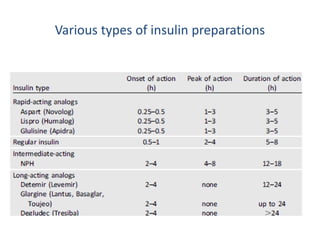
Various types of insulin preparations
Long (Detemir)
Rapid (Lispro, Aspart, Glulisine)
Hours
Long (Glargine)
0 2 4 6 8 10 12 14 16 18 20 22 24
Short (Regular)
Hours after injection
Insulinlevel
(Degludec)
Various types of insulin preparations
Everyone has different needs !!
Basal -Bolus insulin therapy
Patients for multiple injection therapy should:
• be selected carefully.
• understand the relationship between insulin, food
and physical exercise.
• be motivated & have family support.
• be willing to measure blood glucose several times
each day.
• be willing to inject insulin at school.
Glycemic control
• HbA1C should be measured in every 3-month
intervals to assess their overall glycemic control.
• An A1C target of 7.5% should be considered in
children and adolescents with type 1 diabetes.
• With increasing use of CGM devices, outcomes
other than A1C, such as “time with glucose in
target range” and frequency of hypoglycemia/
hyperglycemia” should be considered in the
overall assessment of glycemic control.
Adjunctive therapy to treat obese type 1 diabetes
• Diabetes, primarily targeting insulin resistance (during
puberty and with obesity), have been investigated to
assess potential benefit of adding metformin.
• Controversial usage of metformin as adjunctive therapy,
however, some studies have shown weight loss and/or
reductions in insulin requirements and cardiovascular
disease (CVD) risk factors with adjunctive metformin.
• Glucagonlike peptide 1 receptor agonists (e.g., liraglutide,
exenatide) or sodium–glucose cotransporter 2 inhibitors,
have been thoroughly studied in the pediatric population
with type 1 diabetes.
Self-monitoring of blood glucose levels (SMBG)
• Is essential component of treatment of type 1 diabetes in children.
• All children and adolescents with type 1 diabetes should have blood
glucose levels monitored multiple times daily (up to 6–10
times/day), including:
• pre-meals.
• pre-bedtime.
• as needed for safety in specific situations such as exercise,
driving, illness, or the presence of symptoms of hypoglycemia.
• SMBG is necessary for determination of insulin dose (e.g.,
mealtime), assessment of safety (e.g., corrective action for or
prevention of hyper- or hypoglycemia), and longer term adjustment
in insulin dosing regimens based on blood glucose patterns and
trends.
Real-time CGM
• Is increasingly used for routine diabetes care in
children & adolescents with type 1 diabetes.
• Should be considered in all children & adolescents
with type 1 diabetes, whether using injections or
insulin pump therapy, as an additional tool to help
improve glycemic control.
• Benefits of CGM correlate with adherence to ongoing
use of the device.
• For most CGM systems, confirmatory SMBG is
required to make treatment decisions.
Interstitial Fluid Glucose Measurement
Interstitial fluid glucose (G2) is almost always comparable
with blood glucose (G1)
Availability of various CGMS
Continuous Subcutaneous Insulin Infusion
• Continuous subcutaneous insulin infusion, or insulin
pump therapy, is often used for children with type 1
diabetes.
• Insulin pump studies that incorporate continuous
glucose monitoring (CGM) devices used continuously
demonstrate significant improvement in both
glycemic control and hypoglycemia reduction in
pediatric patients with suboptimal blood glucose
control at baseline to guide insulin therapy, prevent
or reverse metabolic decompensating.
Various insulin pumps available
Sensor Augmented Insulin Pumps
(SAP)
• The combination of continuous glucose sensors with
insulin pumps has enabled the development of
automated insulin delivery systems (“closed-loop” or
“artificial pancreas” devices).
• A controller algorithm adjusts insulin delivery rates based
on a continuous stream of glucose sensor data.
• Suspending basal insulin delivery for low sensor glucose
levels has been shown to markedly reduce hypoglycemia
without worsening glycaemia.
• Sensor-augmented pumps that preemptively suspend
insulin delivery when sensor glucose levels are predicted
to be low show promise in minimizing hypoglycemia.
‘SMARTGUARDTM TECHNOLOGY PROVIDES ADVANCED PROTECTION
AGAINST HYPOGLYCEMIA (AUTO SUSPENSION & AUTO-RESUME OF
INSULIN)
The Hybrid Closed-Loop System
• Achievement of well-controlled blood glucose is essential for
preventing complications in patients with type 1 diabetes.
• In 2017, Medtronic began marketing the 670G insulin pump
with Guardian 3 sensor.
• When in auto mode, this is a hybrid closed-loop insulin
delivery system that automatically adjusts basal insulin
delivery every 5 min based on sensor glucose to maintain
blood glucose levels as close to a specific target as possible.
• Patients receive prandial insulin by entering carbohydrate
amount into the bolus calculator.
• Initial safety trials showed no occurrence of diabetic
ketoacidosis or hypoglycemia.
• The utility of this device is limited by blood glucose targets of
120 and 150 mg/dL that are unacceptably high for some
patients.
FDA Approves the MiniMed 670G System, World’s First
Hybrid Closed Loop System
September 28, 2016
Diabetes & immunizations
• Children with diabetes should receive all immunizations
in accordance with the recommendations of Centers for
Disease Control .
• Preventive vaccination, including annual vaccination
against influenza for children with diabetes who are at
least 6 months of age.
• Large studies have shown no causal relationship
between childhood vaccination and type 1 diabetes.
Growth & Diabetes
• Normal linear growth and appropriate weight gain
throughout childhood & adolescence are excellent
indexes of general health & reasonable markers of
metabolic control.
• Height & weight should be measured at each visit
and tracked via appropriate height and weight
growth charts.
• Overweight and obesity are emerging issues in youth
with type 1 diabetes and should be considered as
part of dietary counseling.
Complications & comorbidities
Acute Complications:
DKA:
• Individuals and caregivers of individuals with type 1 diabetes
should be educated on DKA prevention, including sick-day
management, the importance of insulin administration, and
glucose and ketone level monitoring.
• All individuals with type 1 diabetes should have access to an
uninterrupted supply of insulin.
• Lack of access and insulin omissions are major causes of DKA.
• Patients and families with type 1 diabetes should have
continual access to medical support to assist with sick-day
management.
• Standard pediatric-specific protocols for DKA treatment should
be available in emergency departments and hospitals.
Complications & comorbidities
Acute Complications:
Hypoglycemia:
• Individuals with type 1 diabetes, or their caregivers, should be
asked about symptomatic and asymptomatic hypoglycemia
• Glucose (15 g) is the preferred treatment for the conscious
individual with hypoglycemia (blood glucose ,70 mg/dL,
although any form of carbohydrate may be used.
• If the SMBG result 15 min after treatment shows continued
hypoglycemia, the treatment should be repeated.
• Once blood glucose concentration returns to normal, the
individual should consider a meal or snack and/or reduce
insulin to prevent hypoglycemia recurrence.
• Glucagon should be prescribed for all individuals with type 1
diabetes.
Microvascular Complications
• Retinopathy, diabetic kidney disease (DKD)
(previously referred to as “nephropathy”) &
neuropathy are rarely reported in prepubertal
children and children with diabetes duration of only
1–2 years.
• Complications may occur after the onset of puberty
or after 5–10 years of diabetes.
• It is recommended that clinicians with expertise in
diabetes management should counsel the pediatric
patient and family on the importance of early
prevention and intervention.
DKD (Diabetes kidney disease)
• Annual screening for albuminuria with a random
(morning sample preferred to avoid effects of exercise)
• Spot urine sample for albumin-to-creatinine ratio should
be considered at puberty or at age10 years, whichever is
earlier or once the child has had diabetes for 5 years.
• ACE inhibitor or an angiotensin receptor blocker (ARB),
titrated to normalization of albumin excretion, may be
considered when elevated urinary albumin-to-creatinine
ratio is documented (two of three urine samples
obtained over 6-month interval following efforts to
improve glycemic control and normalize blood pressure).
Retinopathy:
• An initial dilated and comprehensive eye examination is
recommended at age 10 years or after puberty has started,
whichever is earlier, once the youth has had diabetes for 3–5
years.
• After the initial examination, annual routine follow-up is
generally recommended.
Neuropathy:
• Consider an annual comprehensive foot exam for the adolescent
at the start of puberty or at age 10 years, whichever is earlier,
once the youth has had type 1 diabetes for 5 years.
• A comprehensive foot exam, including inspection, palpation of
dorsalis pedis and posterior tibial pulses, assessment of the
patellar and Achilles reflexes, and determination of
proprioception, vibration, and monofilament sensation, should
be performed annually along with assessment of symptoms of
neuropathic pain.
Macrovascular Complications
• Very rare in children and adolescents.
• Factors contributing to atherosclerosis and elevated
plasma lipid concentrations in children and youth
include smoking, hypertension, obesity, family
history of heart disease, and diabetes.
• Diabetes is an independent risk factor for CVD in
adults, conferring a two- to fourfold increased
incidence of CVD.
Hypertension
• Blood pressure should be measured at each routine visit.
• Initial treatment of high-normal blood pressure (systolic blood
pressure or diastolic blood pressure consistently at the 90th
percentile for age, sex, and height) includes dietary
modification and increased exercise, if appropriate, aimed at
weight control.
• If target blood pressure is not reached with 3–6 months of
initiating lifestyle intervention, pharmacologic treatment
should be considered.
• In addition to lifestyle modification, pharmacologic treatment
of hypertension , ACE inhibitors or ARBs should be considered
for the initial pharmacologic treatment of hypertension,
following reproductive counseling because of the potential
teratogenicity effects of both drug classes.
Dyslipidemia
• Obtain a fasting lipid profile in children 10 years of age or older as soon as
convenient after the diagnosis of diabetes (once glycemic control has been
established).
• If LDL cholesterol values are within the accepted risk level (,100 mg/ dL
[2.6 mmol/L]), a lipid profile repeated every 3–5 years is reasonable.
• If lipids are abnormal, initial therapy should consist of optimizing glucose
control and medical nutrition therapy diet that restricts saturated fat to 7%
of total calories and dietary cholesterol to 200 mg/day, which is safe and
does not interfere with normal growth and development.
• After 10 years of age, consider adding a statin in patients who, despite
medical nutrition therapy and lifestyle changes for 6 months, continue to
have LDL cholesterol 160 mg/dL (4.1 mmol/L) or LDL cholesterol 130
mg/dL (3.4 mmol/L) and one or more CVD risk factors, following
reproductive counseling because of the potential teratogenicity effects of
statins
• Therapy goal is an LDL cholesterol value ,100 mg/dL (2.6 mmol/L).
Associated autoimmune Conditions
Thyroiditis screening:
• Consider testing children with type 1 diabetes for
antithyroid peroxidase and antithyroglobulin antibodies
soon after the diagnosis.
• Measure thyroid-stimulating hormone concentrations at
diagnosis when clinically stable or soon after glycemic
control has been established.
• If normal, suggest rechecking every 1–2 years or sooner if
the patient develops symptoms or signs suggestive of
thyroid dysfunction, thyromegaly, an abnormal growth
rate, or unexplained glycemic variability.
Associated autoimmune Conditions
Celiac Disease
• Screen children with type 1 diabetes for celiac disease by
measuring IgA tissue transglutaminase (tTG) antibodies, with
documentation of normal total serum IgA levels, soon after the
diagnosis of diabetes, or IgG to tTG and deamidated gliadin
antibodies if IgA deficient.
• Repeat screening within 2 years of initial screening and then
again 5 years thereafter and consider more frequent screening
in children who have symptoms or a first-degree relative with
celiac disease.
• Children with biopsy-confirmed celiac disease should be
placed on a gluten-free diet and have a consultation with a
dietitian experienced in managing both diabetes and celiac
disease.
Conclusions
• Glycated hemoglobin (A1C) targets of ≤7.5% can be safely achieved
without an increase in the risk of severe hypoglycemia in children
less than 6 years of age.
• In some follow-up studies, episodes of severe hypoglycemia have
been associated with poorer cognitive function, such as with
memory and learning.
• Other studies have found that chronic hyperglycemia and glycemic
variability in young children (ages 4 to 10 years) are associated
with white matter structural changes and poorer overall cognitive
performance.
• Although the DCCT did not include young children (the lower age
limit at enrollment was 13 years), the general messaged optimize
blood glucose control while avoiding hypoglycemia has been
clinically applied to young children.
• Furthermore, recent data from cross-sectional neuroimaging
studies in young children appear to reinforce the importance of
aiming for blood glucose levels in range and avoiding hypo- and
hyperglycemia.
Thanks

type 1 diabetes: update

  • 1.
    Type 1 Diabetesin Children & Adolescents: Update ​Abdulmoein Eid Al-Agha, FRCPCH Professor of Pediatric Endocrinology, Head, Pediatric Endocrinology & Diabetes , King Abdulaziz University Hospital, Pediatric Department, E-mail: aagha@kau.edu.sa Website: http://aagha.kau.edu.sa
  • 2.
    Introduction • Diabetes isa relatively common chronic disease of childhood. • Type 1 diabetes is a chronic illness characterized by insulin deficiency due to autoimmune destruction of the β - cells in the pancreas. • Onset most often occurs in childhood, but the disease can also develop in adults in their late 30s. • Not preventable disease. • Children are not little adults.
  • 3.
    • Prevalence worldwideis increasing, especially in younger age group, with no clear explanation! • Incidence significantly increased in all age-groups including those less than 4 years old. • Prevalence of type 2 diabetes in children, increased 30.5% for the last 20 years in all ethnicities owing to increasing prevalence of obesity.
  • 4.
  • 5.
    Diagnosis • Diagnostic criteriaby the American Diabetes Association in a patient with classic symptoms of polyurea, polydipsia and unexplained weight loss in addition to the following: • Fasting plasma glucose level ≥126 mg/dL (7.0 mmol/L) or • A 2-hour plasma glucose level ≥200 mg/dL (11.1 mmol/L) during a 75-g oral glucose tolerance test (OGTT) or • A random plasma glucose ≥ 200 mg/dL (11.1 mmol/L). • Glycosylated HbA1c ≥ 6.5 %
  • 6.
    Stages of Type1 Diabetes According to a new staging classification system, type 1 diabetes develops in three stages: • Stage 1 is defined as the presence of β-cell autoimmunity as evident by ≥ 2 autoantibodies with normoglycemia & patient is pre-symptomatic. • Stage 2 is defined as the presence of β-cell autoimmunity as evident by ≥ 2 autoantibodies with dysglycemia but still patient is pre-symptomatic. • Stage 3 is defined as the presence of β-cell autoimmunity as evident by ≥ 2 autoantibodies with dysglycemia but the patient is symptomatic resulting from insulin deficiency.
  • 7.
    It is essentialto classify which type of diabetes your patient has got?? • Distinguishing between type 1 , type 2 diabetes, monogenic diabetes & other forms of diabetes is based on history, patient characteristics & laboratory tests, including autoantibodies profile is essential for method of treatment & prognosis. • Type 1 diabetes is the major type in children and young patients less than 25 years of age in 90% of cases. • The other 10% could be other types of diabetes.
  • 8.
    Characteristics of varioustypes of diabetes in children
  • 9.
    Stress - inducedhyperglycemia • The incidental discovery of hyperglycemia without classic symptoms does not necessarily indicate new- onset diabetes, especially in young children with acute illness who may experience “stress – induced hyperglycemia.” • The risk of eventually developing diabetes, however, may be increased in some children, especially those with immunological, metabolic, or genetic markers for type 1 diabetes. • Consultation with pediatric endocrinologist is indicated.
  • 10.
    Management pillars ofType 1 DM • Education the child / caregivers fully. • Healthy diet. • Exercise. • Insulin therapy. • Frequent glucose monitoring (SMBG / CGMS). • Behavioral / psychological supports. • Screening for associated autoimmune diseases. • Screening for complications.
  • 11.
    The best approachto healthy eating is within the context of the family, focusing on healthy eating for all members. Nutrition therapy
  • 12.
    • Comprehensive nutritioneducation at diagnosis. • Individualized medical nutrition therapy is recommended. • Monitoring carbohydrate intake, whether by carbohydrate counting or experience-based estimation, is key to achieving optimal glycemic control. • Dietary management should be individualized depending on family habits, food preferences, religious or cultural needs, physical activity, and the patient’s and family’s abilities in numeracy, literacy. • Carbohydrate intake from vegetables, fruits, legumes, whole grains, and dairy products, with an emphasis on foods higher in fiber and lower in glycemic load, is preferred over other sources, especially those containing added sugars.
  • 13.
    Physical Activity &Exercise • Exercise is recommended for all youth with type 1 diabetes with the goal of 60 min of moderate- to vigorous intensity aerobic activity daily at least 3 days per week. • Education about prevention and management of potential hypoglycemia during and after exercise is essential, including pre-exercise glucose levels of 90–250 mg/dl and accessible carbohydrates, individualized according to the type/intensity of the planned physical activity. • Strategies to prevent hypoglycemia during exercise, after exercise, and overnight following exercise include: • reducing prandial insulin dosing for the meal/snack preceding exercise, • increasing carbohydrate intake, • eating bedtime snacks, • using CGM, • reducing basal insulin doses. • Frequent glucose monitoring before, during, and after exercise, with or without CGM use, is important to prevent, detect, and treat hypoglycemia and hyperglycemia with exercise.
  • 14.
    Behavioral aspects ofself management • At diagnosis and during routine follow-up care, assess psychosocial issues and family stresses that could impact diabetes management and provide appropriate referrals to trained mental health professionals, preferably experienced in childhood diabetes. • Providers should consider asking youth and their parents about social adjustment (peer relationships) and school performance to determine whether further evaluation is needed. • Providers should encourage family involvement in diabetes management tasks for children and adolescents, recognizing that premature transfer of diabetes care to the child may result in poor self-management behaviors and deterioration in glycemic control.
  • 15.
    • Maintain near-normalglycaemia. • Avoid short-term crisis. • Minimize long-term complications. • Improve quality of life. Goals of insulin therapy Treat The Target !...... Don’t go around it…… ?
  • 19.
    Various types ofinsulin preparations
  • 20.
    Long (Detemir) Rapid (Lispro,Aspart, Glulisine) Hours Long (Glargine) 0 2 4 6 8 10 12 14 16 18 20 22 24 Short (Regular) Hours after injection Insulinlevel (Degludec) Various types of insulin preparations
  • 21.
  • 22.
    Basal -Bolus insulintherapy Patients for multiple injection therapy should: • be selected carefully. • understand the relationship between insulin, food and physical exercise. • be motivated & have family support. • be willing to measure blood glucose several times each day. • be willing to inject insulin at school.
  • 23.
    Glycemic control • HbA1Cshould be measured in every 3-month intervals to assess their overall glycemic control. • An A1C target of 7.5% should be considered in children and adolescents with type 1 diabetes. • With increasing use of CGM devices, outcomes other than A1C, such as “time with glucose in target range” and frequency of hypoglycemia/ hyperglycemia” should be considered in the overall assessment of glycemic control.
  • 26.
    Adjunctive therapy totreat obese type 1 diabetes • Diabetes, primarily targeting insulin resistance (during puberty and with obesity), have been investigated to assess potential benefit of adding metformin. • Controversial usage of metformin as adjunctive therapy, however, some studies have shown weight loss and/or reductions in insulin requirements and cardiovascular disease (CVD) risk factors with adjunctive metformin. • Glucagonlike peptide 1 receptor agonists (e.g., liraglutide, exenatide) or sodium–glucose cotransporter 2 inhibitors, have been thoroughly studied in the pediatric population with type 1 diabetes.
  • 27.
    Self-monitoring of bloodglucose levels (SMBG) • Is essential component of treatment of type 1 diabetes in children. • All children and adolescents with type 1 diabetes should have blood glucose levels monitored multiple times daily (up to 6–10 times/day), including: • pre-meals. • pre-bedtime. • as needed for safety in specific situations such as exercise, driving, illness, or the presence of symptoms of hypoglycemia. • SMBG is necessary for determination of insulin dose (e.g., mealtime), assessment of safety (e.g., corrective action for or prevention of hyper- or hypoglycemia), and longer term adjustment in insulin dosing regimens based on blood glucose patterns and trends.
  • 28.
    Real-time CGM • Isincreasingly used for routine diabetes care in children & adolescents with type 1 diabetes. • Should be considered in all children & adolescents with type 1 diabetes, whether using injections or insulin pump therapy, as an additional tool to help improve glycemic control. • Benefits of CGM correlate with adherence to ongoing use of the device. • For most CGM systems, confirmatory SMBG is required to make treatment decisions.
  • 29.
    Interstitial Fluid GlucoseMeasurement Interstitial fluid glucose (G2) is almost always comparable with blood glucose (G1)
  • 30.
  • 31.
    Continuous Subcutaneous InsulinInfusion • Continuous subcutaneous insulin infusion, or insulin pump therapy, is often used for children with type 1 diabetes. • Insulin pump studies that incorporate continuous glucose monitoring (CGM) devices used continuously demonstrate significant improvement in both glycemic control and hypoglycemia reduction in pediatric patients with suboptimal blood glucose control at baseline to guide insulin therapy, prevent or reverse metabolic decompensating.
  • 32.
  • 34.
    Sensor Augmented InsulinPumps (SAP) • The combination of continuous glucose sensors with insulin pumps has enabled the development of automated insulin delivery systems (“closed-loop” or “artificial pancreas” devices). • A controller algorithm adjusts insulin delivery rates based on a continuous stream of glucose sensor data. • Suspending basal insulin delivery for low sensor glucose levels has been shown to markedly reduce hypoglycemia without worsening glycaemia. • Sensor-augmented pumps that preemptively suspend insulin delivery when sensor glucose levels are predicted to be low show promise in minimizing hypoglycemia.
  • 35.
    ‘SMARTGUARDTM TECHNOLOGY PROVIDESADVANCED PROTECTION AGAINST HYPOGLYCEMIA (AUTO SUSPENSION & AUTO-RESUME OF INSULIN)
  • 36.
    The Hybrid Closed-LoopSystem • Achievement of well-controlled blood glucose is essential for preventing complications in patients with type 1 diabetes. • In 2017, Medtronic began marketing the 670G insulin pump with Guardian 3 sensor. • When in auto mode, this is a hybrid closed-loop insulin delivery system that automatically adjusts basal insulin delivery every 5 min based on sensor glucose to maintain blood glucose levels as close to a specific target as possible. • Patients receive prandial insulin by entering carbohydrate amount into the bolus calculator. • Initial safety trials showed no occurrence of diabetic ketoacidosis or hypoglycemia. • The utility of this device is limited by blood glucose targets of 120 and 150 mg/dL that are unacceptably high for some patients.
  • 37.
    FDA Approves theMiniMed 670G System, World’s First Hybrid Closed Loop System September 28, 2016
  • 38.
    Diabetes & immunizations •Children with diabetes should receive all immunizations in accordance with the recommendations of Centers for Disease Control . • Preventive vaccination, including annual vaccination against influenza for children with diabetes who are at least 6 months of age. • Large studies have shown no causal relationship between childhood vaccination and type 1 diabetes.
  • 39.
    Growth & Diabetes •Normal linear growth and appropriate weight gain throughout childhood & adolescence are excellent indexes of general health & reasonable markers of metabolic control. • Height & weight should be measured at each visit and tracked via appropriate height and weight growth charts. • Overweight and obesity are emerging issues in youth with type 1 diabetes and should be considered as part of dietary counseling.
  • 40.
    Complications & comorbidities AcuteComplications: DKA: • Individuals and caregivers of individuals with type 1 diabetes should be educated on DKA prevention, including sick-day management, the importance of insulin administration, and glucose and ketone level monitoring. • All individuals with type 1 diabetes should have access to an uninterrupted supply of insulin. • Lack of access and insulin omissions are major causes of DKA. • Patients and families with type 1 diabetes should have continual access to medical support to assist with sick-day management. • Standard pediatric-specific protocols for DKA treatment should be available in emergency departments and hospitals.
  • 41.
    Complications & comorbidities AcuteComplications: Hypoglycemia: • Individuals with type 1 diabetes, or their caregivers, should be asked about symptomatic and asymptomatic hypoglycemia • Glucose (15 g) is the preferred treatment for the conscious individual with hypoglycemia (blood glucose ,70 mg/dL, although any form of carbohydrate may be used. • If the SMBG result 15 min after treatment shows continued hypoglycemia, the treatment should be repeated. • Once blood glucose concentration returns to normal, the individual should consider a meal or snack and/or reduce insulin to prevent hypoglycemia recurrence. • Glucagon should be prescribed for all individuals with type 1 diabetes.
  • 42.
    Microvascular Complications • Retinopathy,diabetic kidney disease (DKD) (previously referred to as “nephropathy”) & neuropathy are rarely reported in prepubertal children and children with diabetes duration of only 1–2 years. • Complications may occur after the onset of puberty or after 5–10 years of diabetes. • It is recommended that clinicians with expertise in diabetes management should counsel the pediatric patient and family on the importance of early prevention and intervention.
  • 43.
    DKD (Diabetes kidneydisease) • Annual screening for albuminuria with a random (morning sample preferred to avoid effects of exercise) • Spot urine sample for albumin-to-creatinine ratio should be considered at puberty or at age10 years, whichever is earlier or once the child has had diabetes for 5 years. • ACE inhibitor or an angiotensin receptor blocker (ARB), titrated to normalization of albumin excretion, may be considered when elevated urinary albumin-to-creatinine ratio is documented (two of three urine samples obtained over 6-month interval following efforts to improve glycemic control and normalize blood pressure).
  • 44.
    Retinopathy: • An initialdilated and comprehensive eye examination is recommended at age 10 years or after puberty has started, whichever is earlier, once the youth has had diabetes for 3–5 years. • After the initial examination, annual routine follow-up is generally recommended. Neuropathy: • Consider an annual comprehensive foot exam for the adolescent at the start of puberty or at age 10 years, whichever is earlier, once the youth has had type 1 diabetes for 5 years. • A comprehensive foot exam, including inspection, palpation of dorsalis pedis and posterior tibial pulses, assessment of the patellar and Achilles reflexes, and determination of proprioception, vibration, and monofilament sensation, should be performed annually along with assessment of symptoms of neuropathic pain.
  • 45.
    Macrovascular Complications • Veryrare in children and adolescents. • Factors contributing to atherosclerosis and elevated plasma lipid concentrations in children and youth include smoking, hypertension, obesity, family history of heart disease, and diabetes. • Diabetes is an independent risk factor for CVD in adults, conferring a two- to fourfold increased incidence of CVD.
  • 46.
    Hypertension • Blood pressureshould be measured at each routine visit. • Initial treatment of high-normal blood pressure (systolic blood pressure or diastolic blood pressure consistently at the 90th percentile for age, sex, and height) includes dietary modification and increased exercise, if appropriate, aimed at weight control. • If target blood pressure is not reached with 3–6 months of initiating lifestyle intervention, pharmacologic treatment should be considered. • In addition to lifestyle modification, pharmacologic treatment of hypertension , ACE inhibitors or ARBs should be considered for the initial pharmacologic treatment of hypertension, following reproductive counseling because of the potential teratogenicity effects of both drug classes.
  • 47.
    Dyslipidemia • Obtain afasting lipid profile in children 10 years of age or older as soon as convenient after the diagnosis of diabetes (once glycemic control has been established). • If LDL cholesterol values are within the accepted risk level (,100 mg/ dL [2.6 mmol/L]), a lipid profile repeated every 3–5 years is reasonable. • If lipids are abnormal, initial therapy should consist of optimizing glucose control and medical nutrition therapy diet that restricts saturated fat to 7% of total calories and dietary cholesterol to 200 mg/day, which is safe and does not interfere with normal growth and development. • After 10 years of age, consider adding a statin in patients who, despite medical nutrition therapy and lifestyle changes for 6 months, continue to have LDL cholesterol 160 mg/dL (4.1 mmol/L) or LDL cholesterol 130 mg/dL (3.4 mmol/L) and one or more CVD risk factors, following reproductive counseling because of the potential teratogenicity effects of statins • Therapy goal is an LDL cholesterol value ,100 mg/dL (2.6 mmol/L).
  • 48.
    Associated autoimmune Conditions Thyroiditisscreening: • Consider testing children with type 1 diabetes for antithyroid peroxidase and antithyroglobulin antibodies soon after the diagnosis. • Measure thyroid-stimulating hormone concentrations at diagnosis when clinically stable or soon after glycemic control has been established. • If normal, suggest rechecking every 1–2 years or sooner if the patient develops symptoms or signs suggestive of thyroid dysfunction, thyromegaly, an abnormal growth rate, or unexplained glycemic variability.
  • 49.
    Associated autoimmune Conditions CeliacDisease • Screen children with type 1 diabetes for celiac disease by measuring IgA tissue transglutaminase (tTG) antibodies, with documentation of normal total serum IgA levels, soon after the diagnosis of diabetes, or IgG to tTG and deamidated gliadin antibodies if IgA deficient. • Repeat screening within 2 years of initial screening and then again 5 years thereafter and consider more frequent screening in children who have symptoms or a first-degree relative with celiac disease. • Children with biopsy-confirmed celiac disease should be placed on a gluten-free diet and have a consultation with a dietitian experienced in managing both diabetes and celiac disease.
  • 50.
    Conclusions • Glycated hemoglobin(A1C) targets of ≤7.5% can be safely achieved without an increase in the risk of severe hypoglycemia in children less than 6 years of age. • In some follow-up studies, episodes of severe hypoglycemia have been associated with poorer cognitive function, such as with memory and learning. • Other studies have found that chronic hyperglycemia and glycemic variability in young children (ages 4 to 10 years) are associated with white matter structural changes and poorer overall cognitive performance. • Although the DCCT did not include young children (the lower age limit at enrollment was 13 years), the general messaged optimize blood glucose control while avoiding hypoglycemia has been clinically applied to young children. • Furthermore, recent data from cross-sectional neuroimaging studies in young children appear to reinforce the importance of aiming for blood glucose levels in range and avoiding hypo- and hyperglycemia.
  • 51.