EXCITATION-CONTRACTION
COUPLING AND MOLECULAR BASIS
OF MUSCLE CONTRACTION AND
RELAXATION
1
LEARNING OBJECTIVES
• Describe excitation-contraction coupling in skeletal muscle
• Understand cross-bridge cycling
• Correlate action potential with muscle contraction
• Differentiate types of muscle contraction
2
• Based on the principle that the sliding motion of
the filaments
• Cross-bridge theory
• Ratchet theory
3
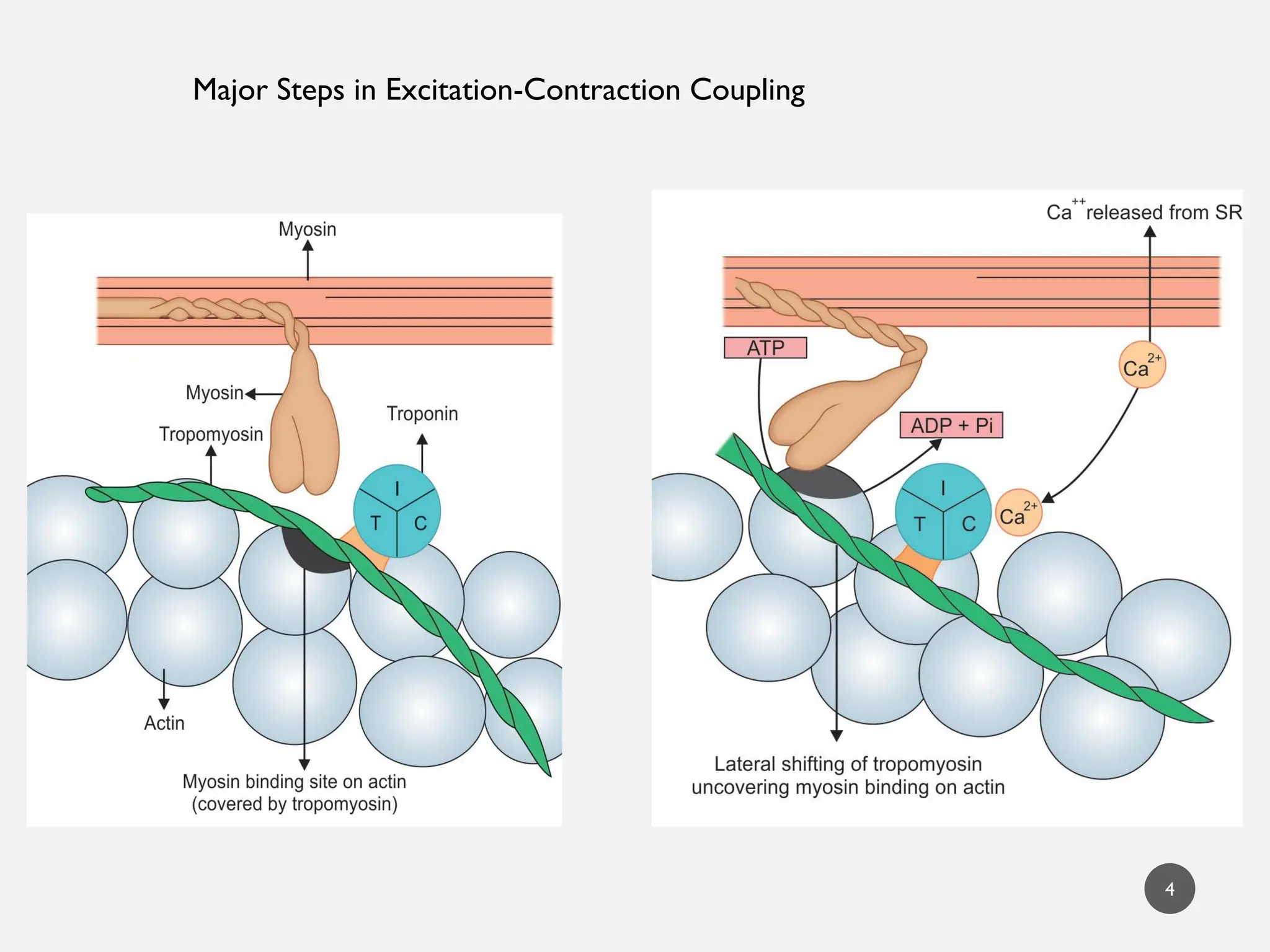
4
Major Steps in Excitation-Contraction Coupling
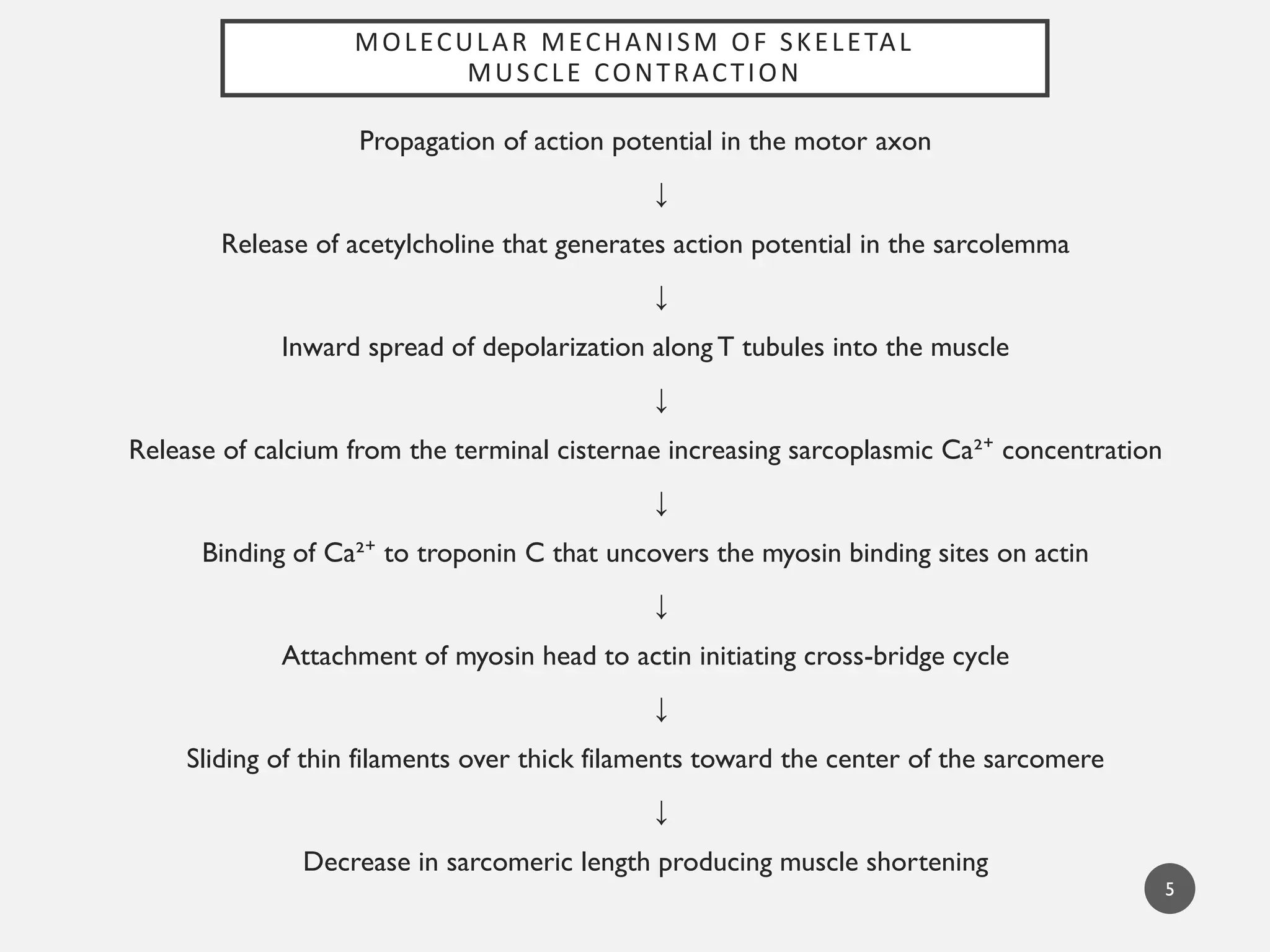
MOLECULAR MECHANISM OF SKELETAL
MUSCLE CONTRACTION
5
Propagation of action potential in the motor axon
↓
Release of acetylcholine that generates action potential in the sarcolemma
↓
Inward spread of depolarization along T tubules into the muscle
↓
Release of calcium from the terminal cisternae increasing sarcoplasmic Ca²⁺ concentration
↓
Binding of Ca²⁺ to troponin C that uncovers the myosin binding sites on actin
↓
Attachment of myosin head to actin initiating cross-bridge cycle
↓
Sliding of thin filaments over thick filaments toward the center of the sarcomere
↓
Decrease in sarcomeric length producing muscle shortening
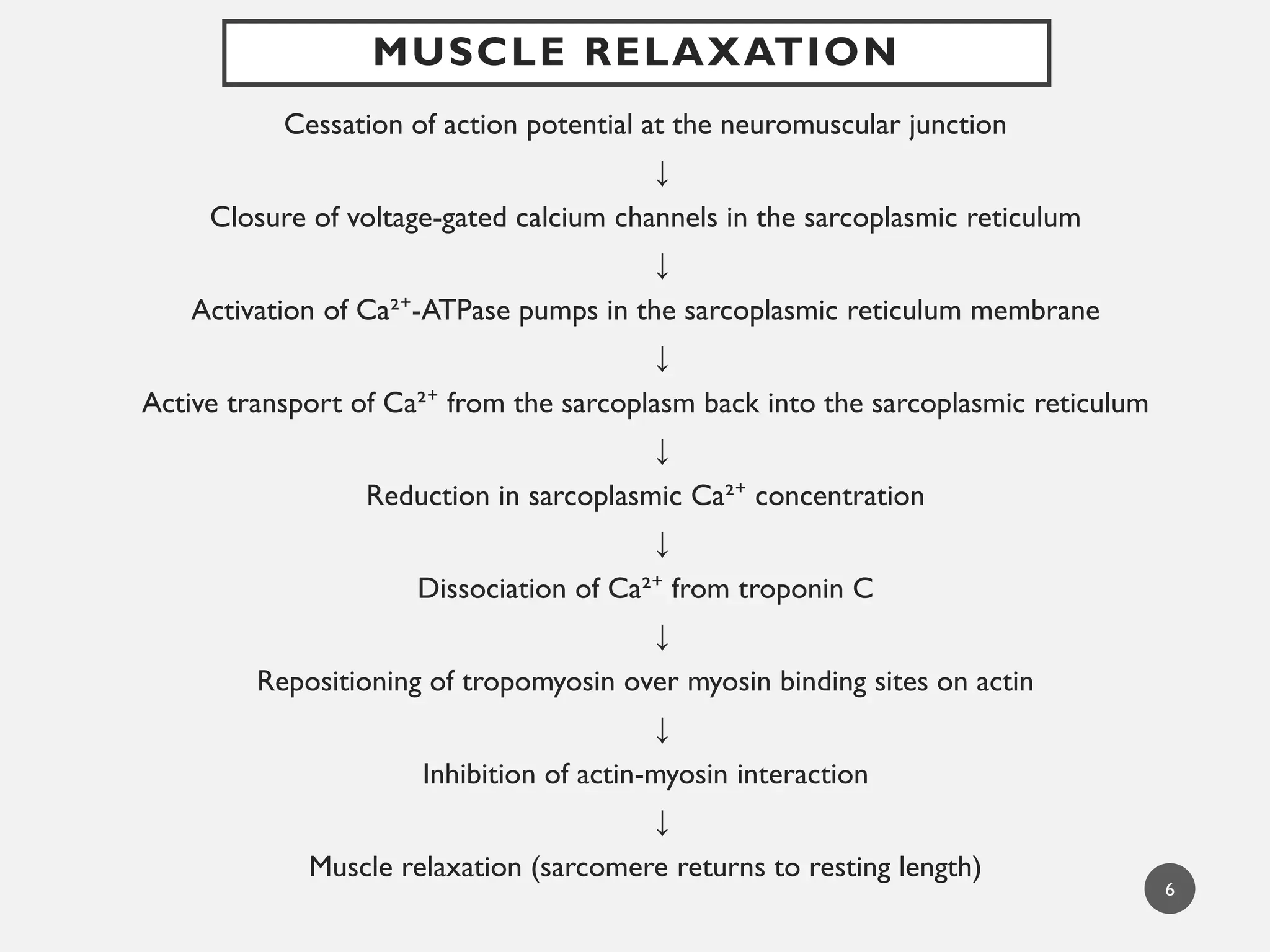
MUSCLE RELAXATION
Cessation of action potential at the neuromuscular junction
↓
Closure of voltage-gated calcium channels in the sarcoplasmic reticulum
↓
Activation of Ca²⁺-ATPase pumps in the sarcoplasmic reticulum membrane
↓
Active transport of Ca²⁺ from the sarcoplasm back into the sarcoplasmic reticulum
↓
Reduction in sarcoplasmic Ca²⁺ concentration
↓
Dissociation of Ca²⁺ from troponin C
↓
Repositioning of tropomyosin over myosin binding sites on actin
↓
Inhibition of actin-myosin interaction
↓
Muscle relaxation (sarcomere returns to resting length)
6
EXCITATION-CONTRACTION
COUPLING
7
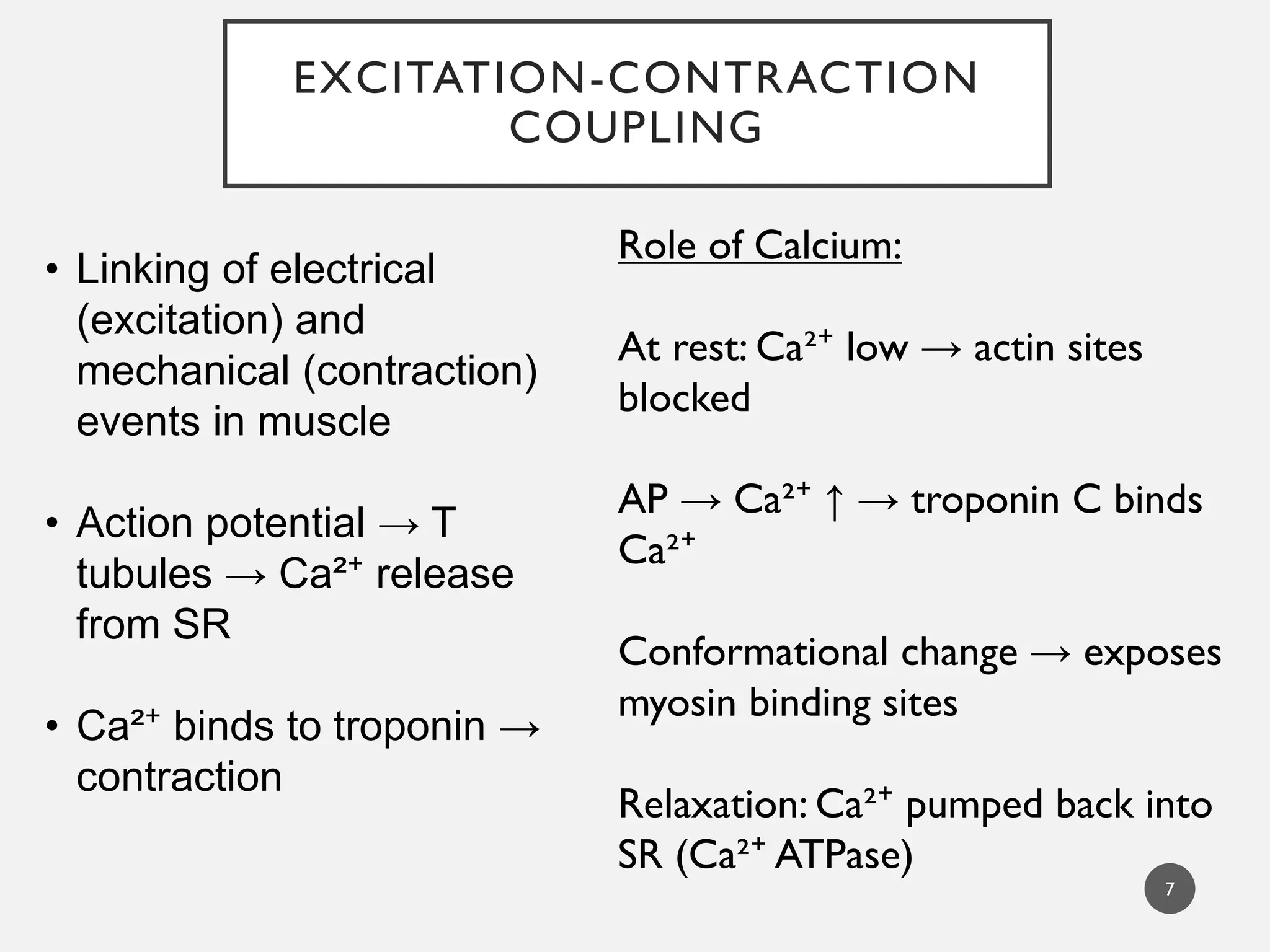
• Linking of electrical
(excitation) and
mechanical (contraction)
events in muscle
• Action potential → T
tubules → Ca²⁺ release
from SR
• Ca²⁺ binds to troponin →
contraction
Role of Calcium:
At rest: Ca²⁺ low → actin sites
blocked
AP → Ca²⁺ ↑ → troponin C binds
Ca²⁺
Conformational change → exposes
myosin binding sites
Relaxation: Ca²⁺ pumped back into
SR (Ca²⁺ ATPase)
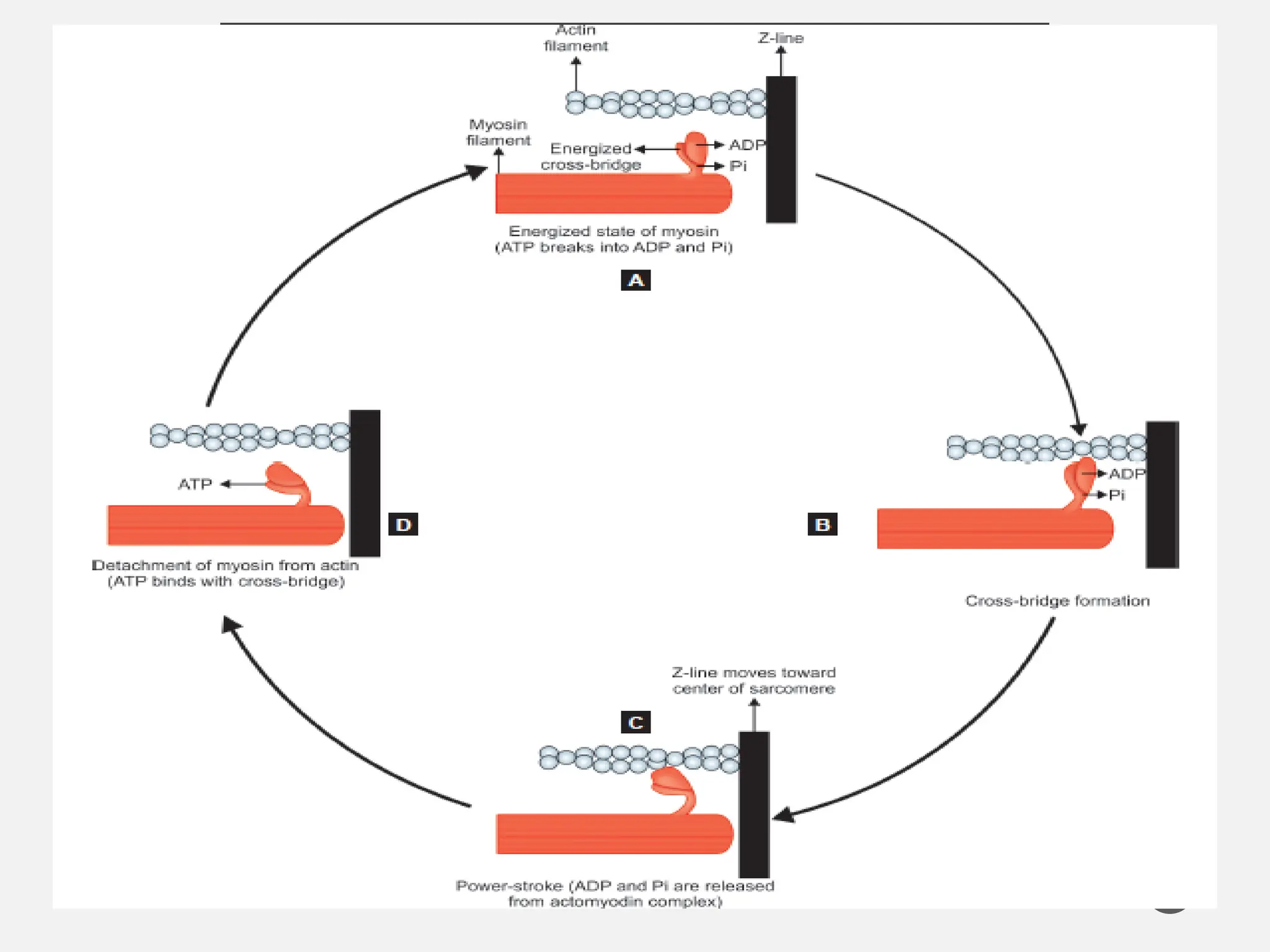
CROSS-BRIDGE CYCLE
8
RIGOR MORTIS
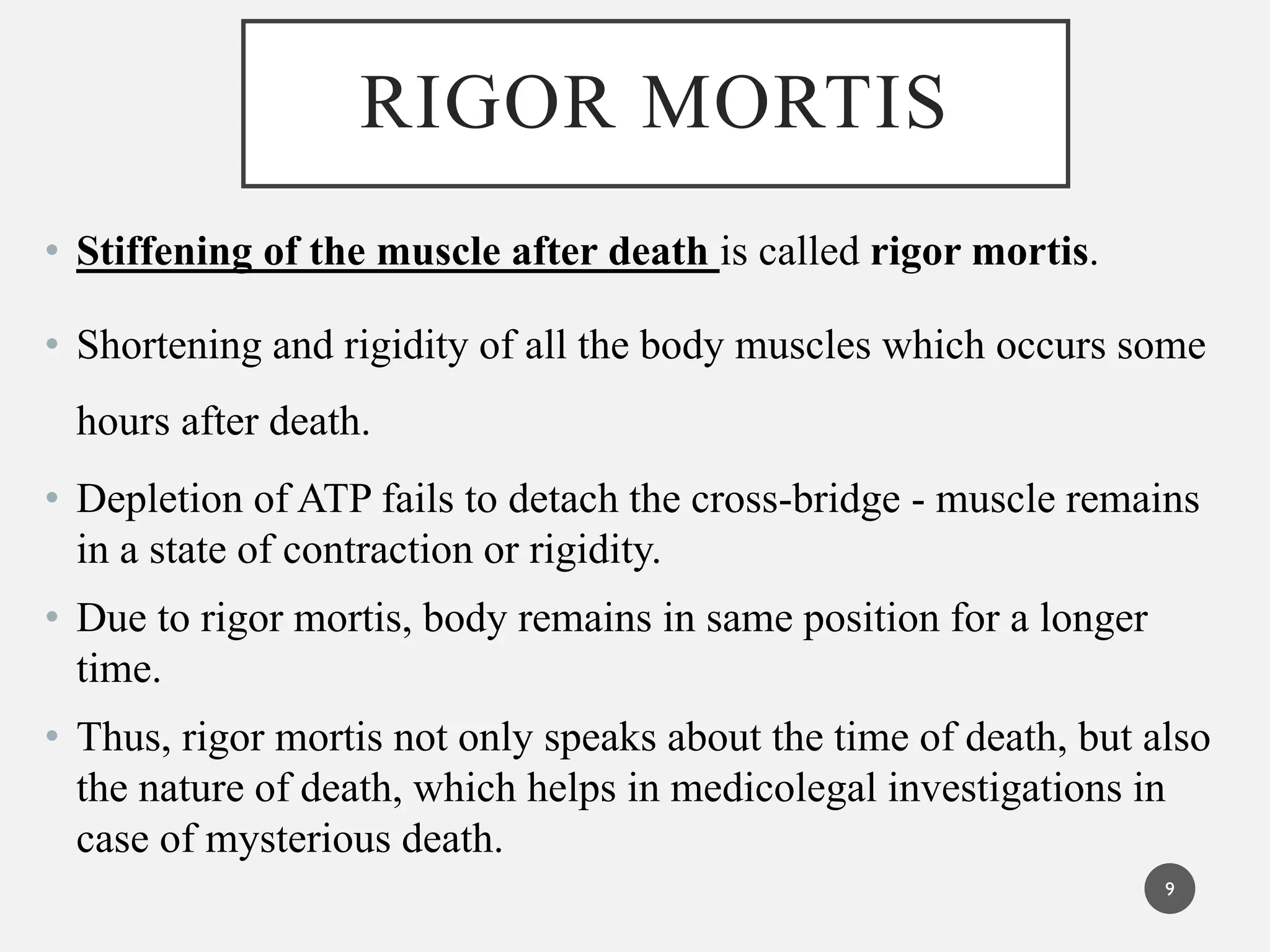
• Stiffening of the muscle after death is called rigor mortis.
• Shortening and rigidity of all the body muscles which occurs some
hours after death.
• Depletion of ATP fails to detach the cross-bridge - muscle remains
in a state of contraction or rigidity.
• Due to rigor mortis, body remains in same position for a longer
time.
• Thus, rigor mortis not only speaks about the time of death, but also
the nature of death, which helps in medicolegal investigations in
case of mysterious death.
9
10
?
Excitation-Contraction Coupling and Molecular Basis of Muscle Contraction and Relaxation.pdf

Excitation-Contraction Coupling and Molecular Basis of Muscle Contraction and Relaxation.pdf

  • 1.
    EXCITATION-CONTRACTION COUPLING AND MOLECULARBASIS OF MUSCLE CONTRACTION AND RELAXATION 1
  • 2.
    LEARNING OBJECTIVES • Describeexcitation-contraction coupling in skeletal muscle • Understand cross-bridge cycling • Correlate action potential with muscle contraction • Differentiate types of muscle contraction 2
  • 3.
    • Based onthe principle that the sliding motion of the filaments • Cross-bridge theory • Ratchet theory 3
  • 4.
    4 Major Steps inExcitation-Contraction Coupling
  • 5.
    MOLECULAR MECHANISM OFSKELETAL MUSCLE CONTRACTION 5 Propagation of action potential in the motor axon ↓ Release of acetylcholine that generates action potential in the sarcolemma ↓ Inward spread of depolarization along T tubules into the muscle ↓ Release of calcium from the terminal cisternae increasing sarcoplasmic Ca²⁺ concentration ↓ Binding of Ca²⁺ to troponin C that uncovers the myosin binding sites on actin ↓ Attachment of myosin head to actin initiating cross-bridge cycle ↓ Sliding of thin filaments over thick filaments toward the center of the sarcomere ↓ Decrease in sarcomeric length producing muscle shortening
  • 6.
    MUSCLE RELAXATION Cessation ofaction potential at the neuromuscular junction ↓ Closure of voltage-gated calcium channels in the sarcoplasmic reticulum ↓ Activation of Ca²⁺-ATPase pumps in the sarcoplasmic reticulum membrane ↓ Active transport of Ca²⁺ from the sarcoplasm back into the sarcoplasmic reticulum ↓ Reduction in sarcoplasmic Ca²⁺ concentration ↓ Dissociation of Ca²⁺ from troponin C ↓ Repositioning of tropomyosin over myosin binding sites on actin ↓ Inhibition of actin-myosin interaction ↓ Muscle relaxation (sarcomere returns to resting length) 6
  • 7.
    EXCITATION-CONTRACTION COUPLING 7 • Linking ofelectrical (excitation) and mechanical (contraction) events in muscle • Action potential → T tubules → Ca²⁺ release from SR • Ca²⁺ binds to troponin → contraction Role of Calcium: At rest: Ca²⁺ low → actin sites blocked AP → Ca²⁺ ↑ → troponin C binds Ca²⁺ Conformational change → exposes myosin binding sites Relaxation: Ca²⁺ pumped back into SR (Ca²⁺ ATPase)
  • 8.
  • 9.
    RIGOR MORTIS • Stiffeningof the muscle after death is called rigor mortis. • Shortening and rigidity of all the body muscles which occurs some hours after death. • Depletion of ATP fails to detach the cross-bridge - muscle remains in a state of contraction or rigidity. • Due to rigor mortis, body remains in same position for a longer time. • Thus, rigor mortis not only speaks about the time of death, but also the nature of death, which helps in medicolegal investigations in case of mysterious death. 9
  • 10.