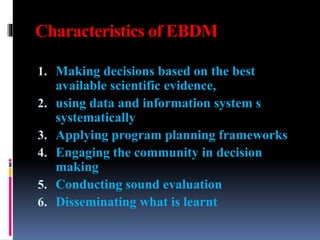
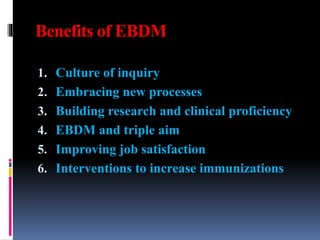
Evidence-based decision making (EBDM) is a strategic method that applies empirical research and principles to justice system decisions at various levels. It involves making decisions based on the best available scientific evidence, using data systems systematically, applying program planning frameworks, engaging the community, and conducting evaluations. There are three key components of EBDM - best available evidence, clinician knowledge and skills, and patient wants and needs. Some benefits of EBDM include cultivating a culture of inquiry, embracing new processes, building research and clinical proficiency, helping achieve better health outcomes and costs savings, and improving job satisfaction.