Download as PDF, PPTX





![:014 > 1.class
=> Fixnum
:015 > (2.2).class
=> Float
:016 > [].class
=> Array
:017 > "Politechnika Slaska".class
=> String
:018 > nil.class
=> NilClass
:019 > “abc” + “d”
=> “abcd”](https://image.slidesharecdn.com/everydayrails-150421030832-conversion-gate01/85/Everyday-Rails-16-320.jpg)

![Variables
a = 12
a.class # => Integer
a = “polsl”
a.class # => String
a = [‘a’, ‘b’, ‘c’]
a.class # => Array](https://image.slidesharecdn.com/everydayrails-150421030832-conversion-gate01/85/Everyday-Rails-18-320.jpg)
![Arrays and Hashes
a = [ 'ant', 'bee', 'cat', 'dog', 'elk' ]
a[0] # => "ant"
a[3] # => "dog"
# this is the same:
a = %w{ ant bee cat dog elk }
a[0] # => "ant"
a[3] # => "dog"](https://image.slidesharecdn.com/everydayrails-150421030832-conversion-gate01/85/Everyday-Rails-19-320.jpg)
![Arrays and Hashes
my_hash = {
building: ‘school’,
fruit: ‘orange’
}
puts my_hash[:building] # => ‘school’](https://image.slidesharecdn.com/everydayrails-150421030832-conversion-gate01/85/Everyday-Rails-20-320.jpg)
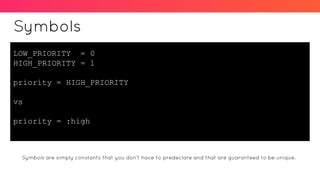
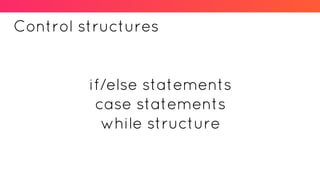



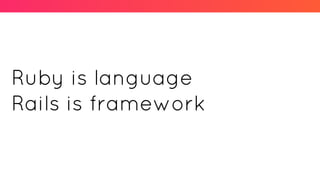



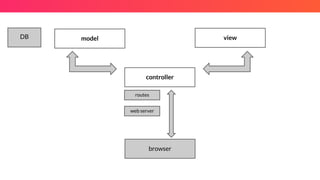

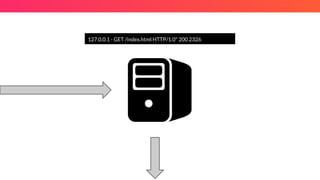
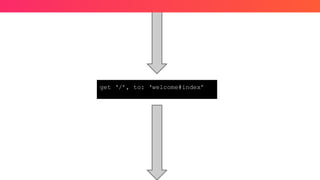
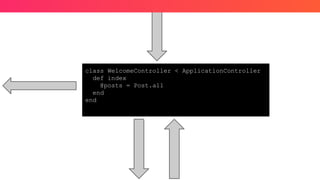
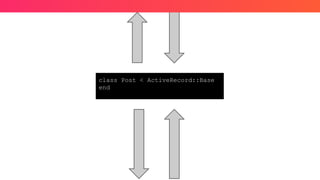




The document provides an overview of the Ruby programming language and the Ruby on Rails framework, emphasizing their dynamic and object-oriented features. It discusses key concepts such as variables, arrays, hashes, control structures, and classes, along with examples of code snippets. Additionally, it touches on Rails' structure, including MVC architecture and routing, to illustrate the framework's functionality.


