EVELINE
from “Dubliners” by James Joyce
Main elements
- a psychological dilemma included in a few pages
- Eveline has to decide to stay or to leave
- the story is divided into three sections: her background, her meeting with Frank
and then her final decision
- the objective description of reality is mingled with her impressions
Narrative technique
• Even though the novel is not told in the first
person narration, Joyce shows everything from
Eveline’s perspective. In this way the reader has
free access to Eveline’s thoughts and memories.
• Words have an allusive symbolic appealing
meaning.
• Interior monologue, free direct speech and free
indirect speech.
Setting
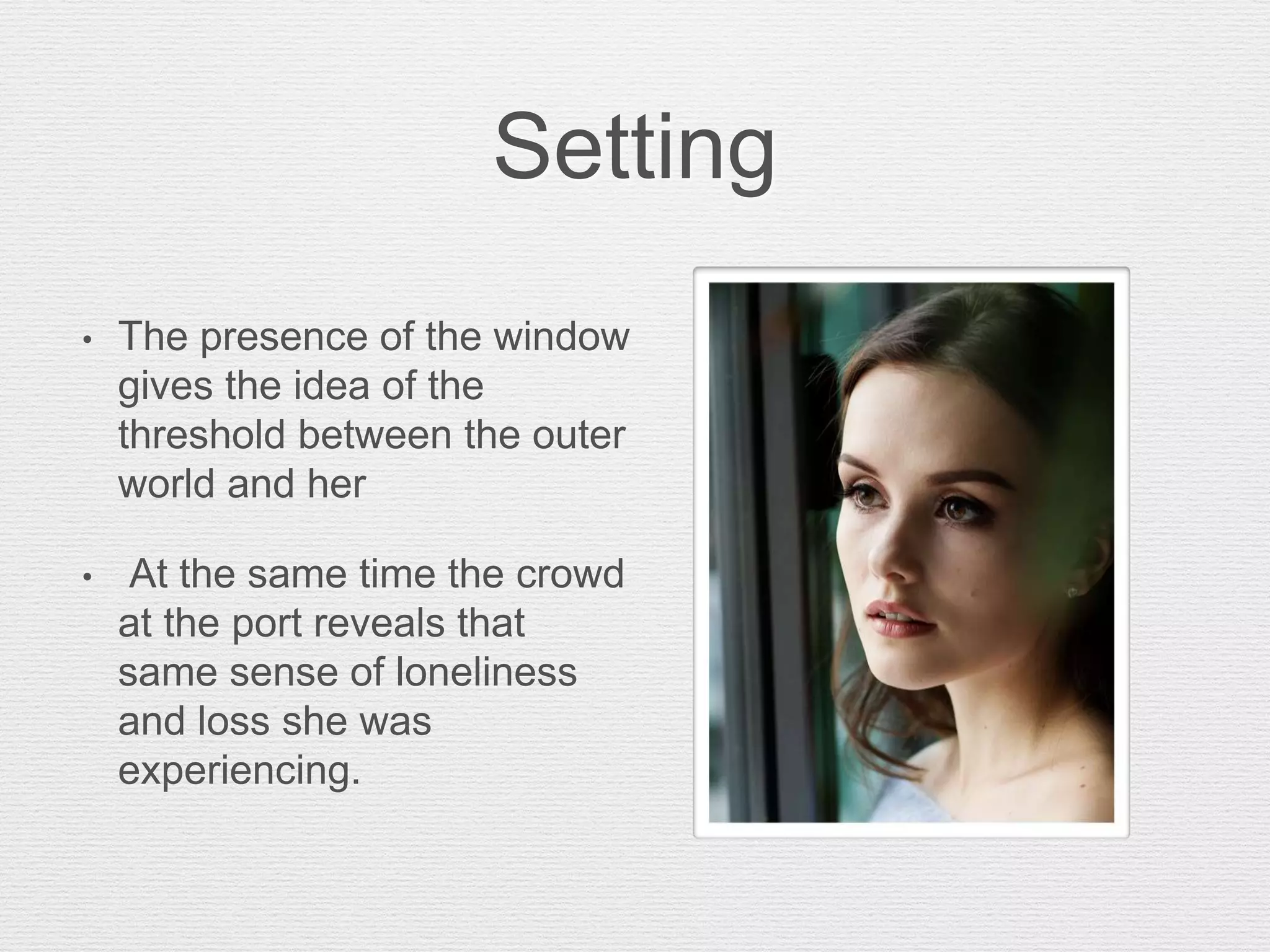
• The presence of the window
gives the idea of the
threshold between the outer
world and her
• At the same time the crowd
at the port reveals that
same sense of loneliness
and loss she was
experiencing.
CHARACTERS
• All the characters are seen through Eveline’s
eyes: her father, an abusive violent figure,
Frank, her boyfriend who is reliable, sincere, her
dead mother who is crucial and especially the
promise she made to her.
• Her mother represents the prototype of all
female characters and their sense of sacrifice to
defend their family.
THEMES
• The unpredictability of decision-
making and the epiphany at the
very end of the story.
• Paralysis vs escape: she wants
to leave but at the end she
can’t
• Eveline represents the first
woman starting a new age but
she fails: she gets an example
of the mythical method
• The burden of family
connections.

Eveline by James Joyce: an analysis

  • 1.
  • 2.
    Main elements - apsychological dilemma included in a few pages - Eveline has to decide to stay or to leave - the story is divided into three sections: her background, her meeting with Frank and then her final decision - the objective description of reality is mingled with her impressions
  • 3.
    Narrative technique • Eventhough the novel is not told in the first person narration, Joyce shows everything from Eveline’s perspective. In this way the reader has free access to Eveline’s thoughts and memories. • Words have an allusive symbolic appealing meaning. • Interior monologue, free direct speech and free indirect speech.
  • 4.
    Setting • The presenceof the window gives the idea of the threshold between the outer world and her • At the same time the crowd at the port reveals that same sense of loneliness and loss she was experiencing.
  • 5.
    CHARACTERS • All thecharacters are seen through Eveline’s eyes: her father, an abusive violent figure, Frank, her boyfriend who is reliable, sincere, her dead mother who is crucial and especially the promise she made to her. • Her mother represents the prototype of all female characters and their sense of sacrifice to defend their family.
  • 6.
    THEMES • The unpredictabilityof decision- making and the epiphany at the very end of the story. • Paralysis vs escape: she wants to leave but at the end she can’t • Eveline represents the first woman starting a new age but she fails: she gets an example of the mythical method • The burden of family connections.