Evaluation Question 1:
In what way does your media product use,
develop or challenge forms and conventions of
real media products?
Cover Page
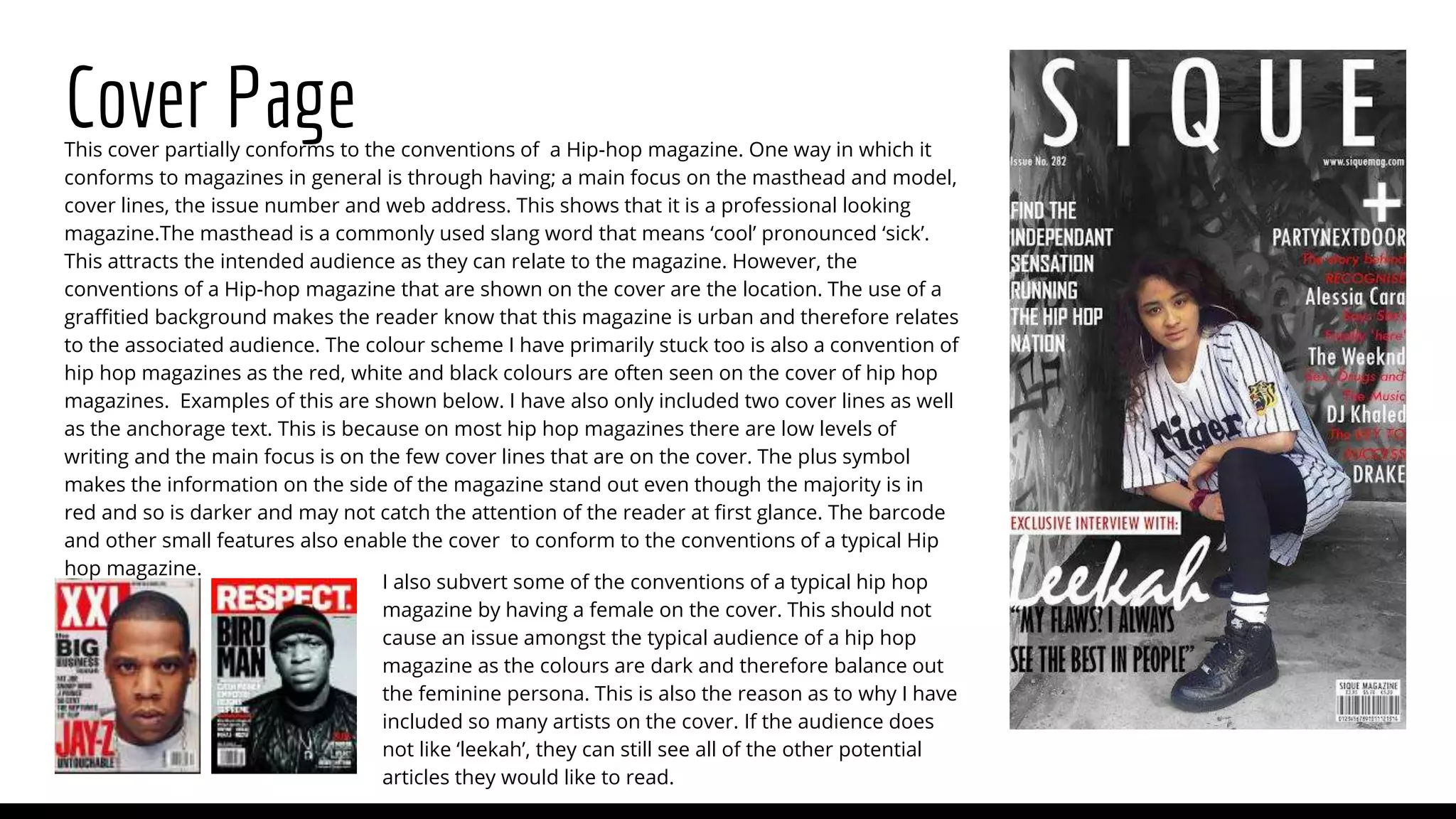
I also subvert some of the conventions of a typical hip hop
magazine by having a female on the cover. This should not
cause an issue amongst the typical audience of a hip hop
magazine as the colours are dark and therefore balance out
the feminine persona. This is also the reason as to why I have
included so many artists on the cover. If the audience does
not like ‘leekah’, they can still see all of the other potential
articles they would like to read.
This cover partially conforms to the conventions of a Hip-hop magazine. One way in which it
conforms to magazines in general is through having; a main focus on the masthead and model,
cover lines, the issue number and web address. This shows that it is a professional looking
magazine.The masthead is a commonly used slang word that means ‘cool’ pronounced ‘sick’.
This attracts the intended audience as they can relate to the magazine. However, the
conventions of a Hip-hop magazine that are shown on the cover are the location. The use of a
graffitied background makes the reader know that this magazine is urban and therefore relates
to the associated audience. The colour scheme I have primarily stuck too is also a convention of
hip hop magazines as the red, white and black colours are often seen on the cover of hip hop
magazines. Examples of this are shown below. I have also only included two cover lines as well
as the anchorage text. This is because on most hip hop magazines there are low levels of
writing and the main focus is on the few cover lines that are on the cover. The plus symbol
makes the information on the side of the magazine stand out even though the majority is in
red and so is darker and may not catch the attention of the reader at first glance. The barcode
and other small features also enable the cover to conform to the conventions of a typical Hip
hop magazine.
Contents Page
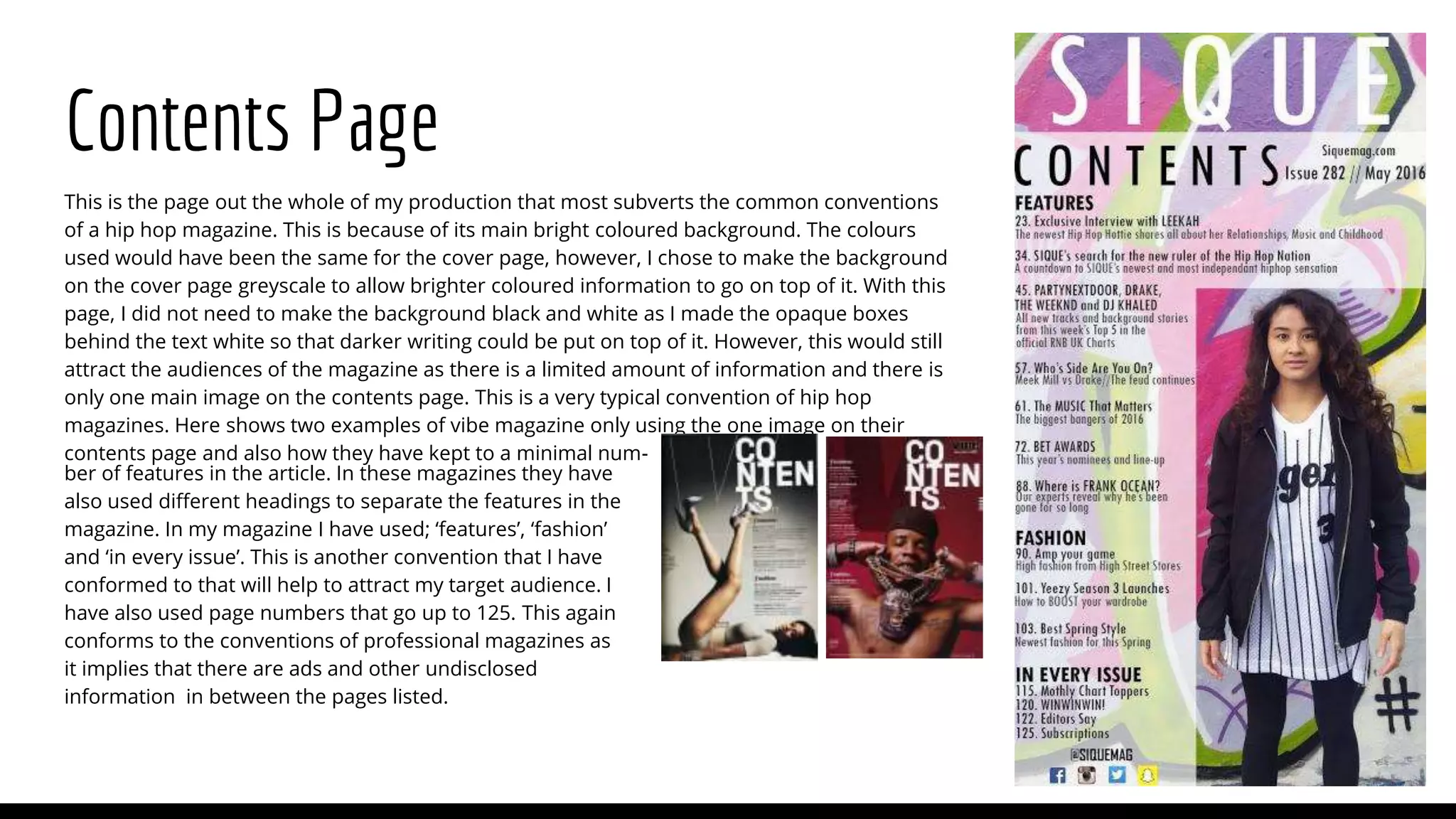
This is the page out the whole of my production that most subverts the common conventions
of a hip hop magazine. This is because of its main bright coloured background. The colours
used would have been the same for the cover page, however, I chose to make the background
on the cover page greyscale to allow brighter coloured information to go on top of it. With this
page, I did not need to make the background black and white as I made the opaque boxes
behind the text white so that darker writing could be put on top of it. However, this would still
attract the audiences of the magazine as there is a limited amount of information and there is
only one main image on the contents page. This is a very typical convention of hip hop
magazines. Here shows two examples of vibe magazine only using the one image on their
contents page and also how they have kept to a minimal num-
ber of features in the article. In these magazines they have
also used different headings to separate the features in the
magazine. In my magazine I have used; ‘features’, ‘fashion’
and ‘in every issue’. This is another convention that I have
conformed to that will help to attract my target audience. I
have also used page numbers that go up to 125. This again
conforms to the conventions of professional magazines as
it implies that there are ads and other undisclosed
information in between the pages listed.
Double Page Spread
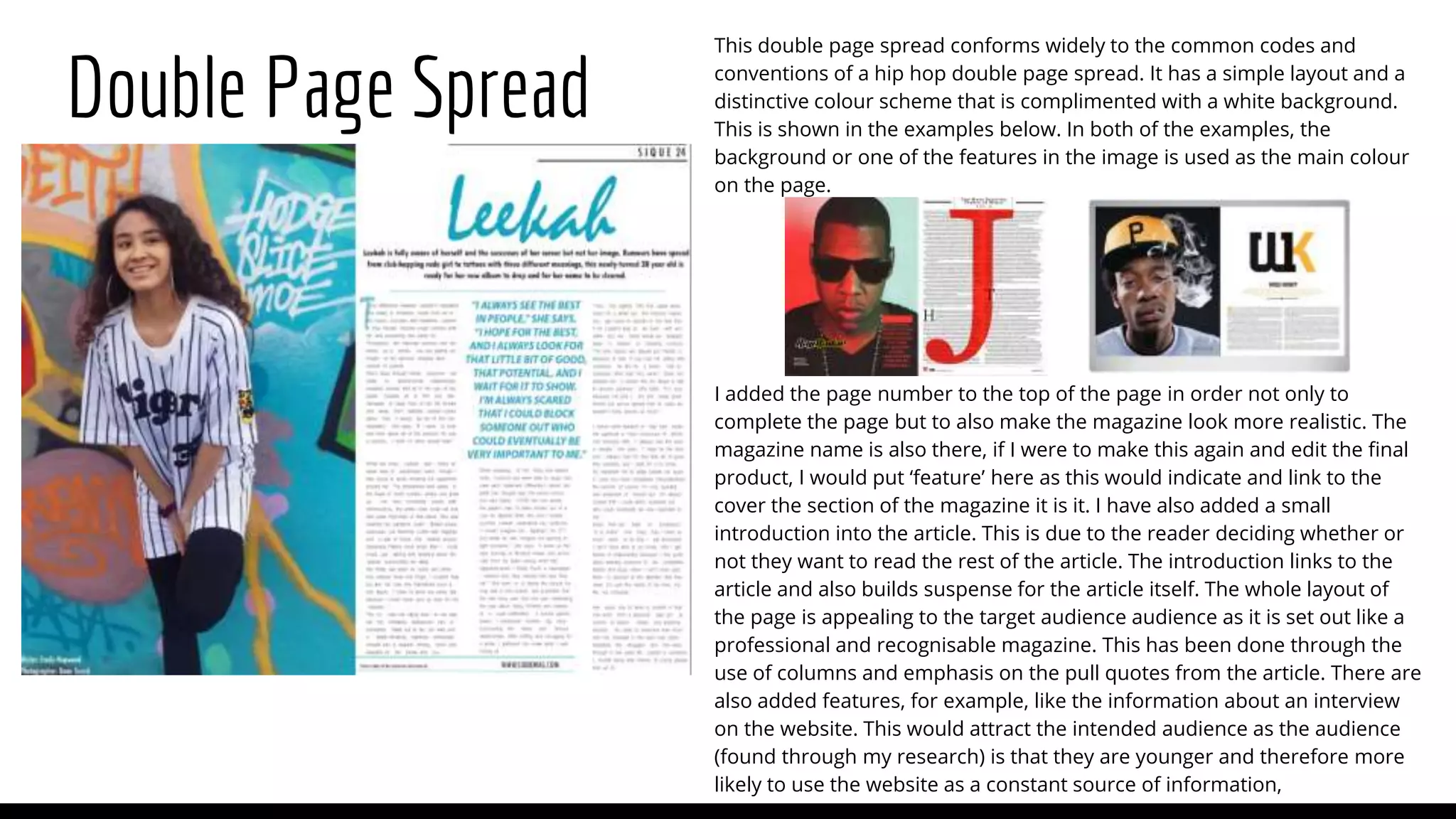
This double page spread conforms widely to the common codes and
conventions of a hip hop double page spread. It has a simple layout and a
distinctive colour scheme that is complimented with a white background.
This is shown in the examples below. In both of the examples, the
background or one of the features in the image is used as the main colour
on the page.
I added the page number to the top of the page in order not only to
complete the page but to also make the magazine look more realistic. The
magazine name is also there, if I were to make this again and edit the final
product, I would put ‘feature’ here as this would indicate and link to the
cover the section of the magazine it is it. I have also added a small
introduction into the article. This is due to the reader deciding whether or
not they want to read the rest of the article. The introduction links to the
article and also builds suspense for the article itself. The whole layout of
the page is appealing to the target audience audience as it is set out like a
professional and recognisable magazine. This has been done through the
use of columns and emphasis on the pull quotes from the article. There are
also added features, for example, like the information about an interview
on the website. This would attract the intended audience as the audience
(found through my research) is that they are younger and therefore more
likely to use the website as a constant source of information,
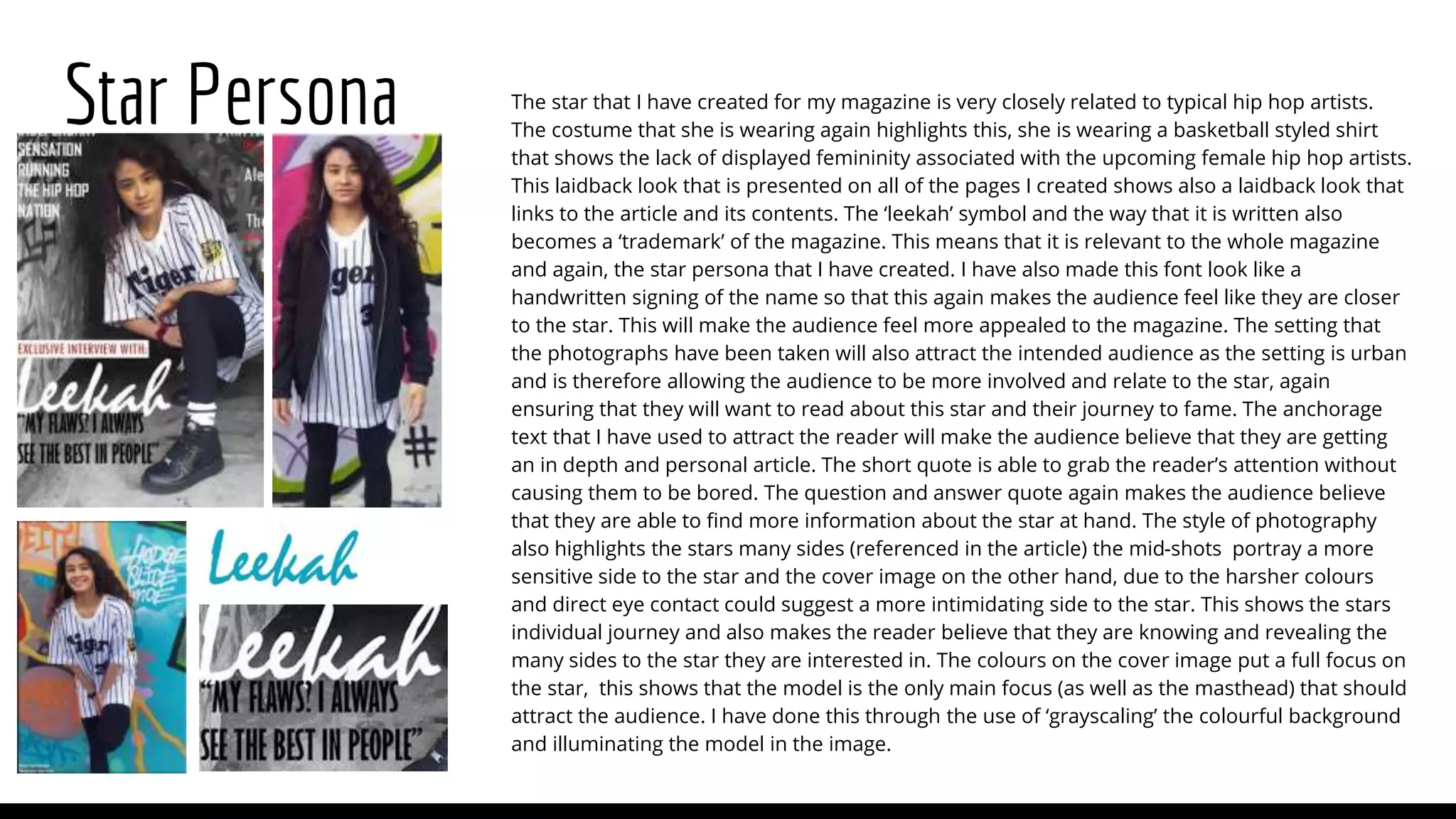
Star Persona The star that I have created for my magazine is very closely related to typical hip hop artists.
The costume that she is wearing again highlights this, she is wearing a basketball styled shirt
that shows the lack of displayed femininity associated with the upcoming female hip hop artists.
This laidback look that is presented on all of the pages I created shows also a laidback look that
links to the article and its contents. The ‘leekah’ symbol and the way that it is written also
becomes a ‘trademark’ of the magazine. This means that it is relevant to the whole magazine
and again, the star persona that I have created. I have also made this font look like a
handwritten signing of the name so that this again makes the audience feel like they are closer
to the star. This will make the audience feel more appealed to the magazine. The setting that
the photographs have been taken will also attract the intended audience as the setting is urban
and is therefore allowing the audience to be more involved and relate to the star, again
ensuring that they will want to read about this star and their journey to fame. The anchorage
text that I have used to attract the reader will make the audience believe that they are getting
an in depth and personal article. The short quote is able to grab the reader’s attention without
causing them to be bored. The question and answer quote again makes the audience believe
that they are able to find more information about the star at hand. The style of photography
also highlights the stars many sides (referenced in the article) the mid-shots portray a more
sensitive side to the star and the cover image on the other hand, due to the harsher colours
and direct eye contact could suggest a more intimidating side to the star. This shows the stars
individual journey and also makes the reader believe that they are knowing and revealing the
many sides to the star they are interested in. The colours on the cover image put a full focus on
the star, this shows that the model is the only main focus (as well as the masthead) that should
attract the audience. I have done this through the use of ‘grayscaling’ the colourful background
and illuminating the model in the image.

Evaluation question 1

  • 1.
    Evaluation Question 1: Inwhat way does your media product use, develop or challenge forms and conventions of real media products?
  • 2.
    Cover Page I alsosubvert some of the conventions of a typical hip hop magazine by having a female on the cover. This should not cause an issue amongst the typical audience of a hip hop magazine as the colours are dark and therefore balance out the feminine persona. This is also the reason as to why I have included so many artists on the cover. If the audience does not like ‘leekah’, they can still see all of the other potential articles they would like to read. This cover partially conforms to the conventions of a Hip-hop magazine. One way in which it conforms to magazines in general is through having; a main focus on the masthead and model, cover lines, the issue number and web address. This shows that it is a professional looking magazine.The masthead is a commonly used slang word that means ‘cool’ pronounced ‘sick’. This attracts the intended audience as they can relate to the magazine. However, the conventions of a Hip-hop magazine that are shown on the cover are the location. The use of a graffitied background makes the reader know that this magazine is urban and therefore relates to the associated audience. The colour scheme I have primarily stuck too is also a convention of hip hop magazines as the red, white and black colours are often seen on the cover of hip hop magazines. Examples of this are shown below. I have also only included two cover lines as well as the anchorage text. This is because on most hip hop magazines there are low levels of writing and the main focus is on the few cover lines that are on the cover. The plus symbol makes the information on the side of the magazine stand out even though the majority is in red and so is darker and may not catch the attention of the reader at first glance. The barcode and other small features also enable the cover to conform to the conventions of a typical Hip hop magazine.
  • 3.
    Contents Page This isthe page out the whole of my production that most subverts the common conventions of a hip hop magazine. This is because of its main bright coloured background. The colours used would have been the same for the cover page, however, I chose to make the background on the cover page greyscale to allow brighter coloured information to go on top of it. With this page, I did not need to make the background black and white as I made the opaque boxes behind the text white so that darker writing could be put on top of it. However, this would still attract the audiences of the magazine as there is a limited amount of information and there is only one main image on the contents page. This is a very typical convention of hip hop magazines. Here shows two examples of vibe magazine only using the one image on their contents page and also how they have kept to a minimal num- ber of features in the article. In these magazines they have also used different headings to separate the features in the magazine. In my magazine I have used; ‘features’, ‘fashion’ and ‘in every issue’. This is another convention that I have conformed to that will help to attract my target audience. I have also used page numbers that go up to 125. This again conforms to the conventions of professional magazines as it implies that there are ads and other undisclosed information in between the pages listed.
  • 4.
    Double Page Spread Thisdouble page spread conforms widely to the common codes and conventions of a hip hop double page spread. It has a simple layout and a distinctive colour scheme that is complimented with a white background. This is shown in the examples below. In both of the examples, the background or one of the features in the image is used as the main colour on the page. I added the page number to the top of the page in order not only to complete the page but to also make the magazine look more realistic. The magazine name is also there, if I were to make this again and edit the final product, I would put ‘feature’ here as this would indicate and link to the cover the section of the magazine it is it. I have also added a small introduction into the article. This is due to the reader deciding whether or not they want to read the rest of the article. The introduction links to the article and also builds suspense for the article itself. The whole layout of the page is appealing to the target audience audience as it is set out like a professional and recognisable magazine. This has been done through the use of columns and emphasis on the pull quotes from the article. There are also added features, for example, like the information about an interview on the website. This would attract the intended audience as the audience (found through my research) is that they are younger and therefore more likely to use the website as a constant source of information,
  • 5.
    Star Persona Thestar that I have created for my magazine is very closely related to typical hip hop artists. The costume that she is wearing again highlights this, she is wearing a basketball styled shirt that shows the lack of displayed femininity associated with the upcoming female hip hop artists. This laidback look that is presented on all of the pages I created shows also a laidback look that links to the article and its contents. The ‘leekah’ symbol and the way that it is written also becomes a ‘trademark’ of the magazine. This means that it is relevant to the whole magazine and again, the star persona that I have created. I have also made this font look like a handwritten signing of the name so that this again makes the audience feel like they are closer to the star. This will make the audience feel more appealed to the magazine. The setting that the photographs have been taken will also attract the intended audience as the setting is urban and is therefore allowing the audience to be more involved and relate to the star, again ensuring that they will want to read about this star and their journey to fame. The anchorage text that I have used to attract the reader will make the audience believe that they are getting an in depth and personal article. The short quote is able to grab the reader’s attention without causing them to be bored. The question and answer quote again makes the audience believe that they are able to find more information about the star at hand. The style of photography also highlights the stars many sides (referenced in the article) the mid-shots portray a more sensitive side to the star and the cover image on the other hand, due to the harsher colours and direct eye contact could suggest a more intimidating side to the star. This shows the stars individual journey and also makes the reader believe that they are knowing and revealing the many sides to the star they are interested in. The colours on the cover image put a full focus on the star, this shows that the model is the only main focus (as well as the masthead) that should attract the audience. I have done this through the use of ‘grayscaling’ the colourful background and illuminating the model in the image.