Evaluating Your Institution’s Discount Rate John W. Dysart President The Dysart Group, Inc. Douglas E. Clark Vice President for Enrollment Management Ferrum College, Ferrum, VA
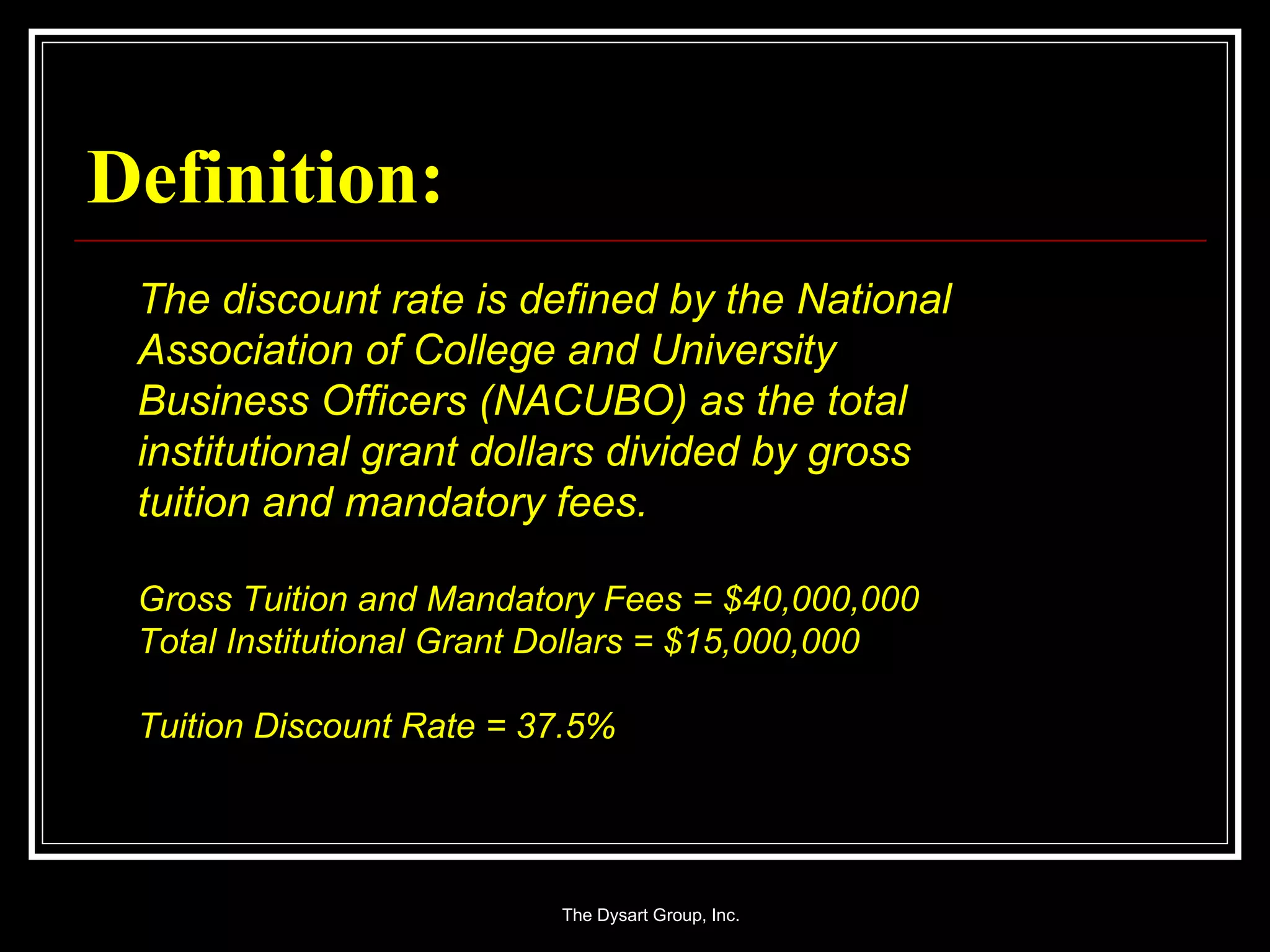
Definition: The discount rate is defined by the National Association of College and University Business Officers (NACUBO) as the total institutional grant dollars divided by gross tuition and mandatory fees. Gross Tuition and Mandatory Fees = $40,000,000 Total Institutional Grant Dollars = $15,000,000 Tuition Discount Rate = 37.5%
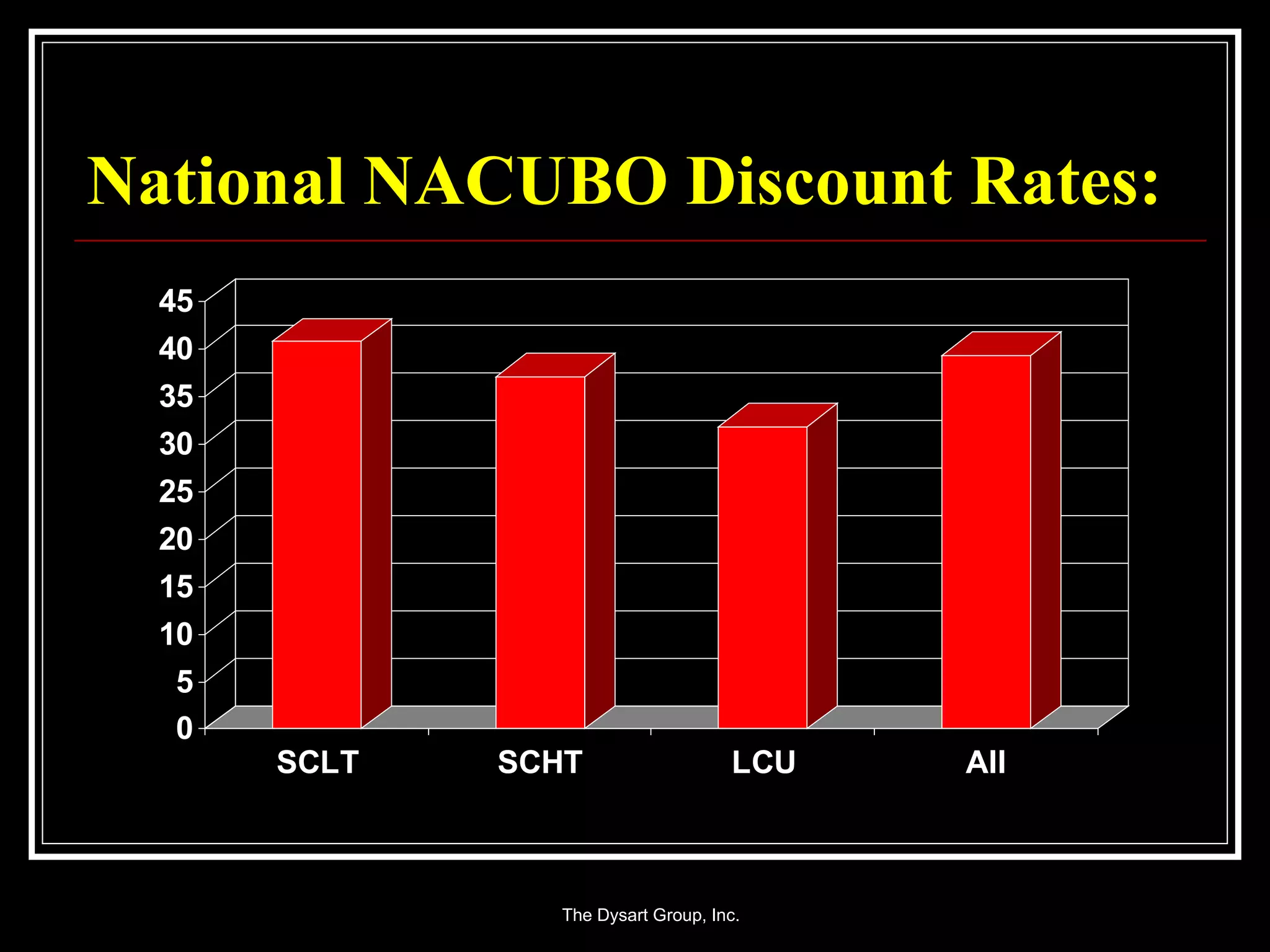
National NACUBO Discount Rates:
Accountability: While Financial Aid Officers are generally considered to be accountable for institutional discount rates, many factors serve to influence discount rates and they are often outside the control of Financial Aid Officers.
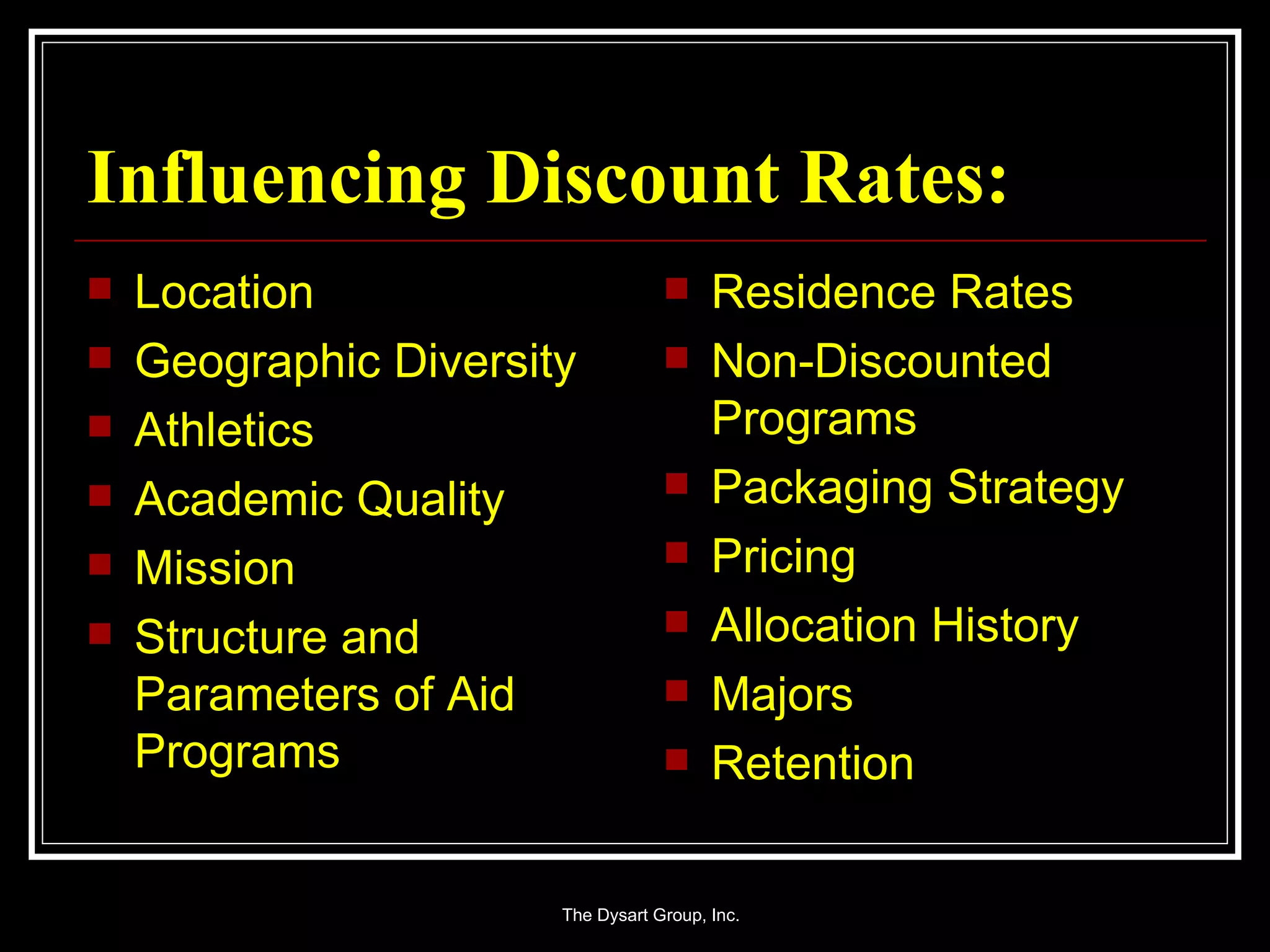
Influencing Discount Rates: Location Geographic Diversity Athletics Academic Quality Mission Structure and Parameters of Aid Programs Residence Rates Non-Discounted Programs Packaging Strategy Pricing Allocation History Majors Retention
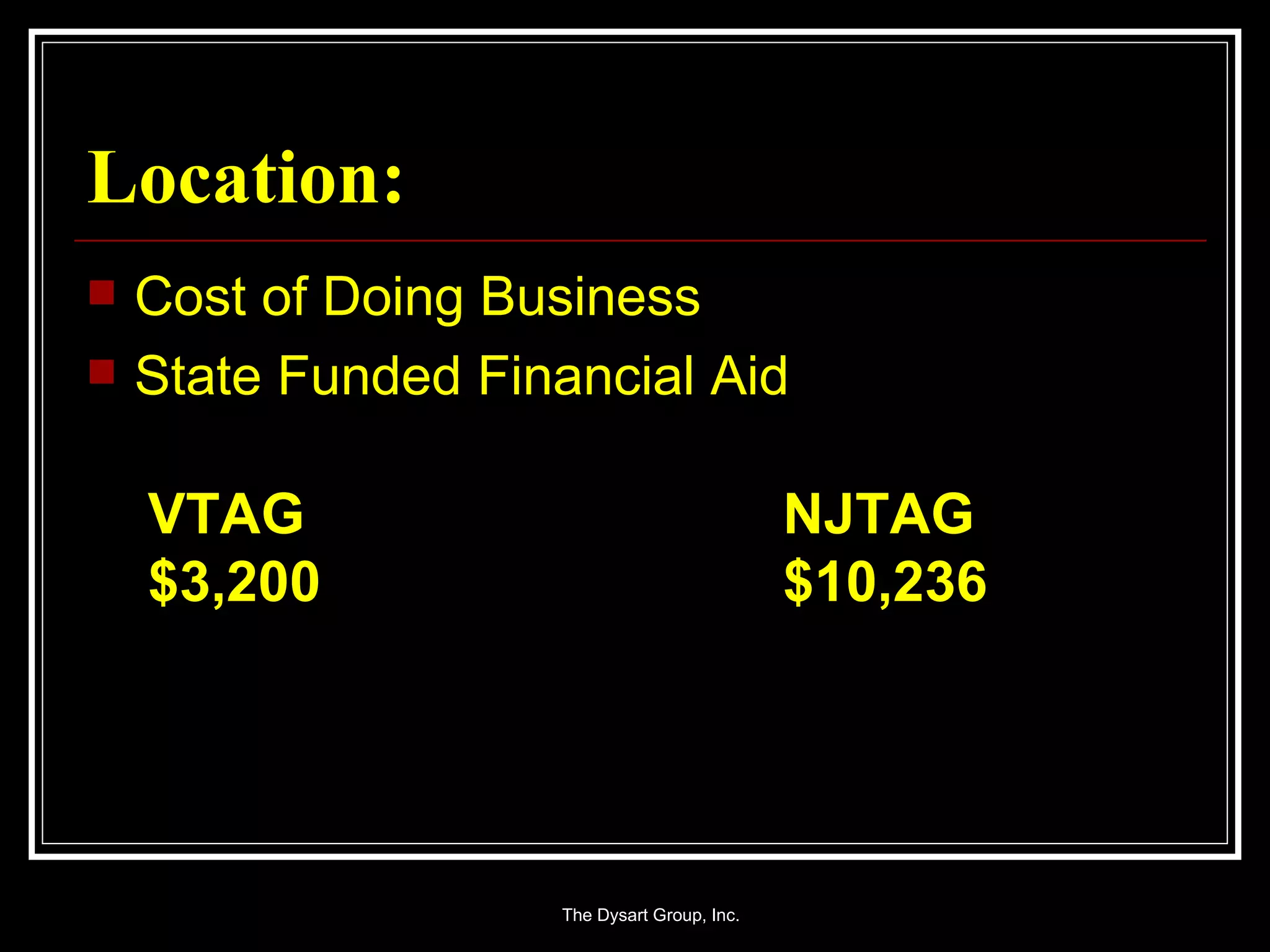
Location: Cost of Doing Business State Funded Financial Aid VTAG NJTAG $3,200 $10,236
Geographic Diversity: Tends to Increase Academic Quality Reduces Eligibility for State Scholarships and Grants More Students Living in Campus Housing
Athletic Scholarships: Colleges and universities participating in scholarship athletics will tend to have higher discount rates.  The impact on individual rates will be determined by the average athletic scholarship amount and the percentage of undergraduates participating in scholarship athletics.
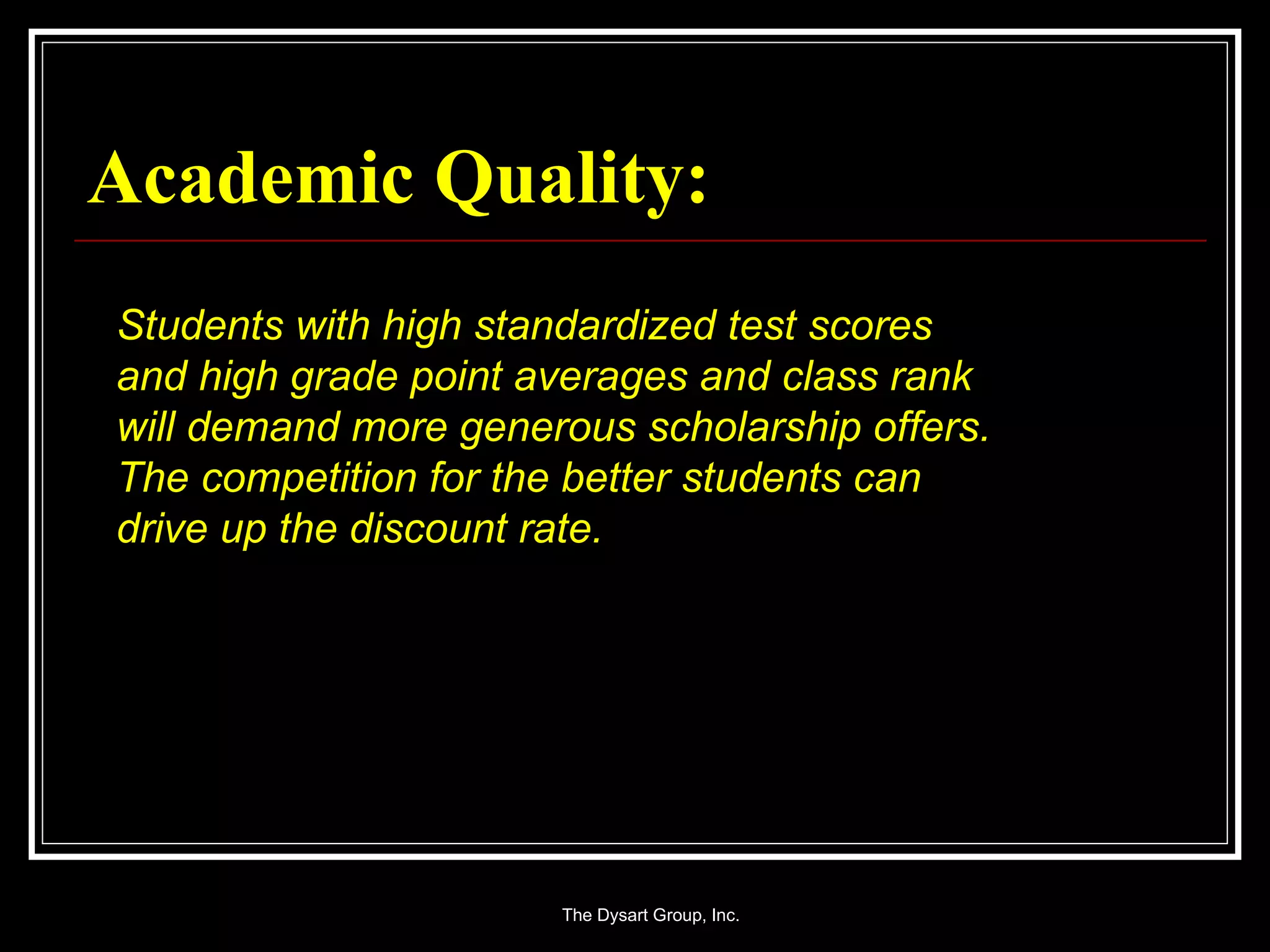
Academic Quality: Students with high standardized test scores and high grade point averages and class rank will demand more generous scholarship offers.  The competition for the better students can drive up the discount rate.
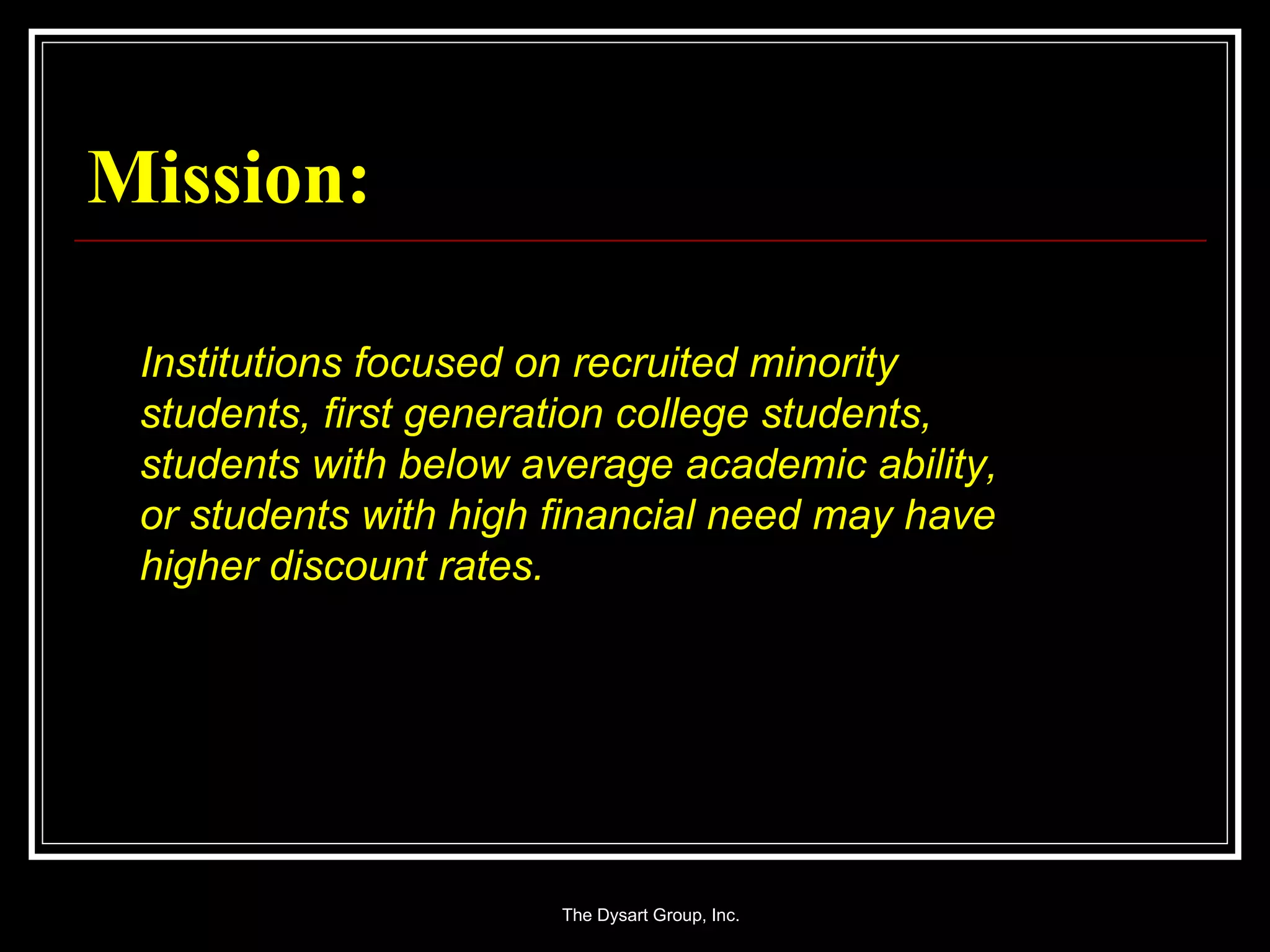
Mission: Institutions focused on recruited minority students, first generation college students, students with below average academic ability, or students with high financial need may have higher discount rates.
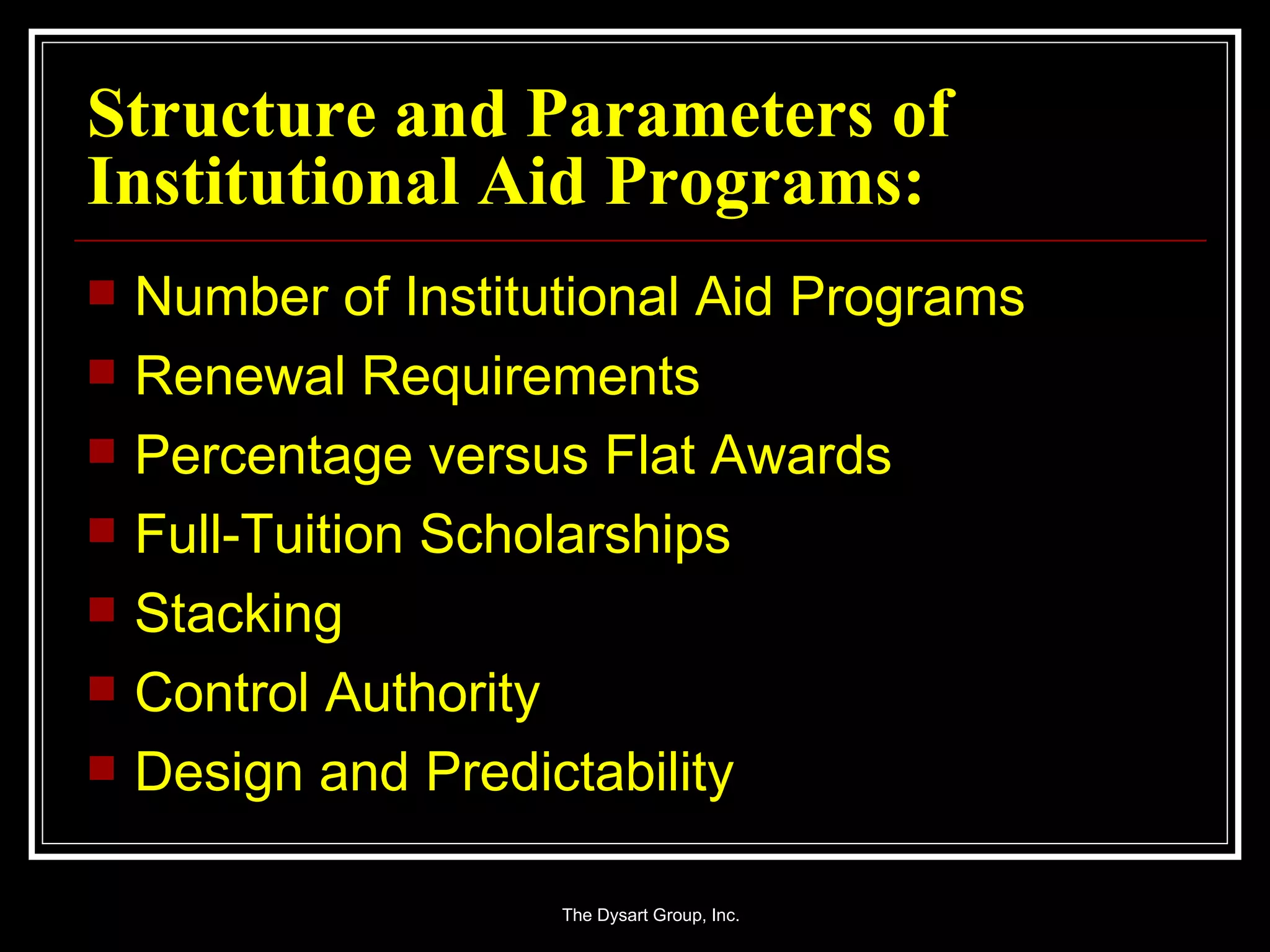
Structure and Parameters of Institutional Aid Programs: Number of Institutional Aid Programs Renewal Requirements Percentage versus Flat Awards Full-Tuition Scholarships Stacking Control Authority Design and Predictability
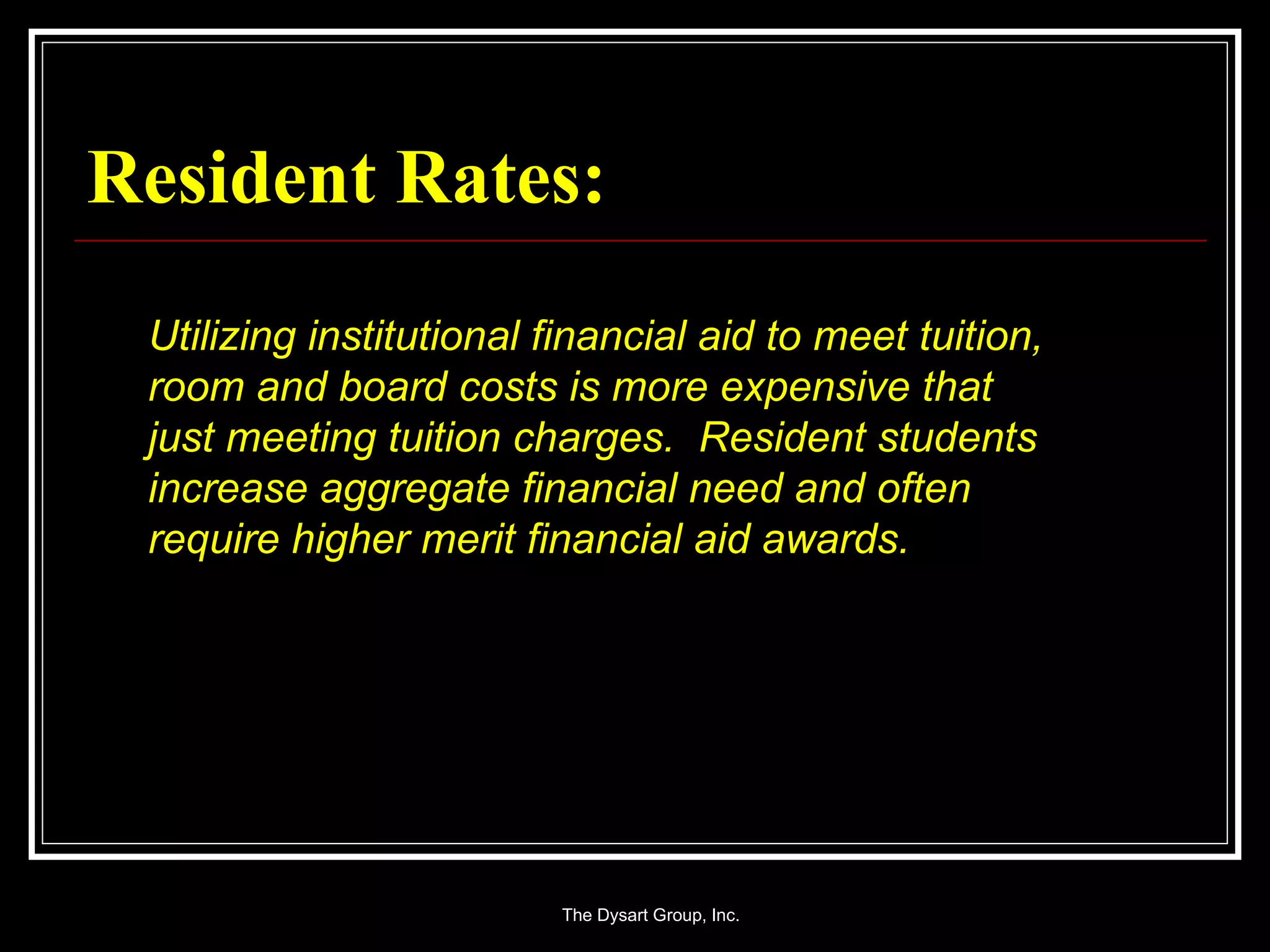
Resident Rates: Utilizing institutional financial aid to meet tuition, room and board costs is more expensive that just meeting tuition charges.  Resident students increase aggregate financial need and often require higher merit financial aid awards.
Non-Discounted Programs: Part-Time Enrollments Adult Programs Certificate Offerings Programs for Seniors Built-In Discounts (Pricing) Lon-Line/Distance Offerings
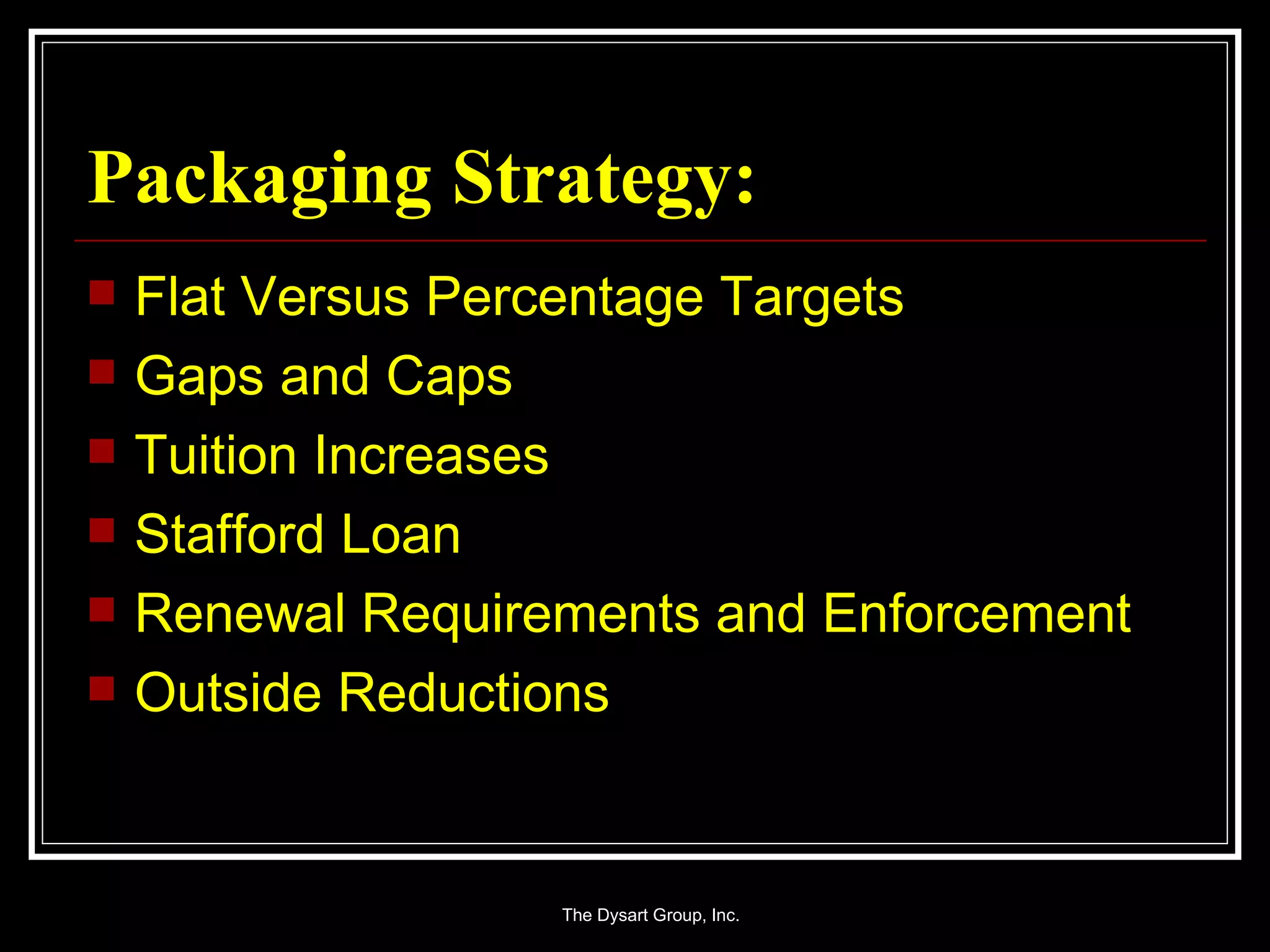
Packaging Strategy: Flat Versus Percentage Targets Gaps and Caps Tuition Increases Stafford Loan Renewal Requirements and Enforcement Outside Reductions
Pricing: Low, Moderate and High Tuition Rates Market Position Compared to “Peers”
Allocation History: Date of Participation Population Changes Enrollment Growth FISAP and Reporting Endowed Financial Aid Funds
Major Offerings: Nationally Competitive Programs Music, Art and Dance Equestrian/Aeronautics Under-Represented Majors
Retention: Students are less likely to live on campus as they progress grade levels Increases in Federal Stafford Loan Eligibility can reduce institutional aid expenditures
Manipulation/Informed Decision-Making: Tuition Versus Room and Board Increases Packaging Strategies Receivables and Collections
Educating Constituent Groups: Boards of Trustees Faculty Cabinet Members Auditors
Discussion: How do endowed scholarships distort the discount rate? Should schools report another discount rate that includes room and board? Is there too much focus on the rate in isolation? Is net revenue as important, or more important than the discount rate?

Evaluating YourDiscount Rate

  • 1.
    Evaluating Your Institution’sDiscount Rate John W. Dysart President The Dysart Group, Inc. Douglas E. Clark Vice President for Enrollment Management Ferrum College, Ferrum, VA
  • 2.
    Definition: The discountrate is defined by the National Association of College and University Business Officers (NACUBO) as the total institutional grant dollars divided by gross tuition and mandatory fees. Gross Tuition and Mandatory Fees = $40,000,000 Total Institutional Grant Dollars = $15,000,000 Tuition Discount Rate = 37.5%
  • 3.
  • 4.
    Accountability: While FinancialAid Officers are generally considered to be accountable for institutional discount rates, many factors serve to influence discount rates and they are often outside the control of Financial Aid Officers.
  • 5.
    Influencing Discount Rates:Location Geographic Diversity Athletics Academic Quality Mission Structure and Parameters of Aid Programs Residence Rates Non-Discounted Programs Packaging Strategy Pricing Allocation History Majors Retention
  • 6.
    Location: Cost ofDoing Business State Funded Financial Aid VTAG NJTAG $3,200 $10,236
  • 7.
    Geographic Diversity: Tendsto Increase Academic Quality Reduces Eligibility for State Scholarships and Grants More Students Living in Campus Housing
  • 8.
    Athletic Scholarships: Collegesand universities participating in scholarship athletics will tend to have higher discount rates. The impact on individual rates will be determined by the average athletic scholarship amount and the percentage of undergraduates participating in scholarship athletics.
  • 9.
    Academic Quality: Studentswith high standardized test scores and high grade point averages and class rank will demand more generous scholarship offers. The competition for the better students can drive up the discount rate.
  • 10.
    Mission: Institutions focusedon recruited minority students, first generation college students, students with below average academic ability, or students with high financial need may have higher discount rates.
  • 11.
    Structure and Parametersof Institutional Aid Programs: Number of Institutional Aid Programs Renewal Requirements Percentage versus Flat Awards Full-Tuition Scholarships Stacking Control Authority Design and Predictability
  • 12.
    Resident Rates: Utilizinginstitutional financial aid to meet tuition, room and board costs is more expensive that just meeting tuition charges. Resident students increase aggregate financial need and often require higher merit financial aid awards.
  • 13.
    Non-Discounted Programs: Part-TimeEnrollments Adult Programs Certificate Offerings Programs for Seniors Built-In Discounts (Pricing) Lon-Line/Distance Offerings
  • 14.
    Packaging Strategy: FlatVersus Percentage Targets Gaps and Caps Tuition Increases Stafford Loan Renewal Requirements and Enforcement Outside Reductions
  • 15.
    Pricing: Low, Moderateand High Tuition Rates Market Position Compared to “Peers”
  • 16.
    Allocation History: Dateof Participation Population Changes Enrollment Growth FISAP and Reporting Endowed Financial Aid Funds
  • 17.
    Major Offerings: NationallyCompetitive Programs Music, Art and Dance Equestrian/Aeronautics Under-Represented Majors
  • 18.
    Retention: Students areless likely to live on campus as they progress grade levels Increases in Federal Stafford Loan Eligibility can reduce institutional aid expenditures
  • 19.
    Manipulation/Informed Decision-Making: TuitionVersus Room and Board Increases Packaging Strategies Receivables and Collections
  • 20.
    Educating Constituent Groups:Boards of Trustees Faculty Cabinet Members Auditors
  • 21.
    Discussion: How doendowed scholarships distort the discount rate? Should schools report another discount rate that includes room and board? Is there too much focus on the rate in isolation? Is net revenue as important, or more important than the discount rate?