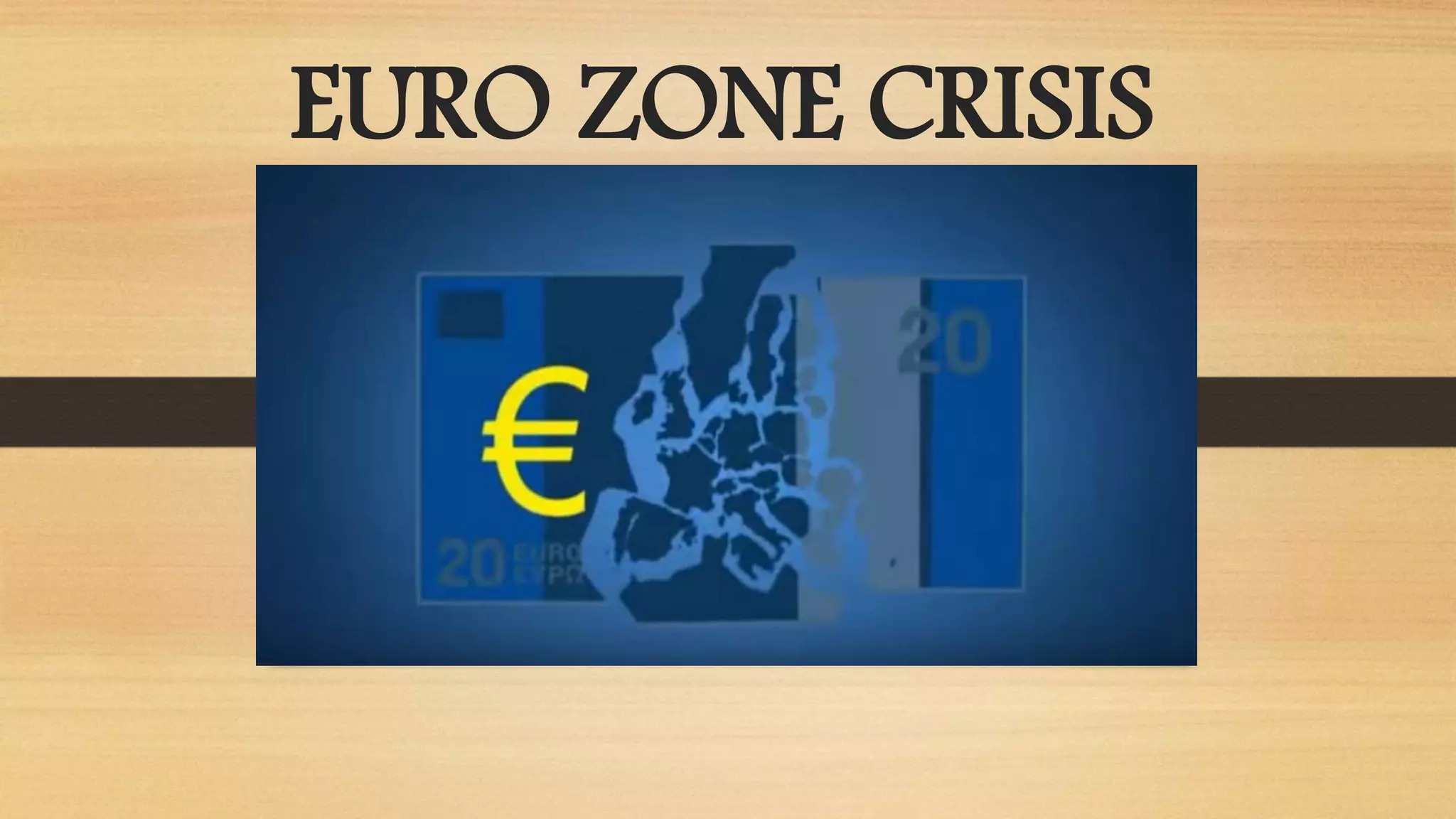
EURO ZONE CRISIS
EUROPEAN UNION
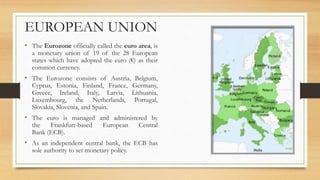
• The Eurozone officially called the euro area, is
a monetary union of 19 of the 28 European
states which have adopted the euro (€) as their
common currency.
• The Eurozone consists of Austria, Belgium,
Cyprus, Estonia, Finland, France, Germany,
Greece, Ireland, Italy, Latvia, Lithuania,
Luxembourg, the Netherlands, Portugal,
Slovakia, Slovenia, and Spain.
• The euro is managed and administered by
the Frankfurt-based European Central
Bank (ECB).
• As an independent central bank, the ECB has
sole authority to set monetary policy.
EURO ZONE CRISIS
• The European debt crisis is an ongoing financial crisis that has made it
difficult or impossible for some countries in the euro area to repay or re-
finance their government debt.
• The Eurozone debt crisis was the world's greatest threat in 2011, according
to the Organization for Economic Cooperation and Development(OECD).
• Monetary policy – how much money is there in the economy, and what are
the interest rates for borrowing the money. It is controlled by ECB in
Eurozone.
When It Started?
• The crisis started in 2009, when the world first realized Greece could default on its
debt.
• In three years, it escalated into the potential for sovereign debt defaults from
Portugal, Italy, Ireland, and Spain.
• The European Union, led by Germany and France, struggled to support these
members.
• They initiated bailouts from the ECB (European Central Bank)
and IMF(International Monetary Fund).But These measures didn't keep many from
questioning the viability of the euro itself.
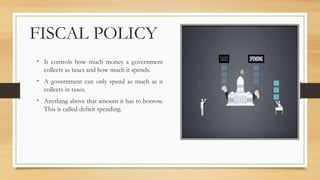
FISCAL POLICY
• It controls how much money a government
collects as taxes and how much it spends.
• A government can only spend as much as it
collects in taxes.
• Anything above that amount it has to borrow.
This is called deficit spending.
Causes
• Every country had their own fiscal policies, there were no penalties for
countries that violated the debt-to-GDP ratios set by the European Union.
• Smaller counties like Greece had access to credit like never before, because
of the same currency they can now borrow the money for low interest rates-
3% same as Germany, instead of 18%.
• Eurozone countries initially benefited from the low interest rates and
increased investment capital made possible by the euro's power.
Causes
• Public spending rose, while tax revenues fell, during the recession to pay
for unemployment and other benefits.
• Most of this flow of capital was from Germany and France to the southern
nations.
• The EU wanted to strengthen the euro's power, putting pressure on non-
Eurozone EU members, like the UK, Denmark and Sweden, to adopt it.
Impacts
• Greece is the country that has probably been the worst hit.
• A switch of currency only compounded the problem and opened the possibility of
impact on other European countries.
• Besides Greece, Ireland, Portugal, Italy and Spain are among the countries facing
financial crisis.
• The Eurozone debt crisis impacted market sentiment. Investors became wary of
putting in money into anything that seemed risky.
• Overall, European bank stocks performed badly which had a negative effect on
global markets.
Significance
• The euro zone crisis has been moving from one peripheral economy to the next,
and more recently, is affecting the core economies in the euro zone.
• The EU accounts for close to 26 per cent of the world GDP (at market exchange
rates) and the euro zone 19.4 per cent.
• The Euro area accounts for about 10 per cent of the global equity markets turnover
and the euro accounts for 26 percent of the allocated global holding of reserves.
• Thus the significance of this crisis is not merely that it comes in the aftermath of
the global crisis, but more importantly, it threatens the pace of recovery of the
global economy especially because the EU and within that, the Euro zone is a
significant market for rest of the world.
Remedial Measures
• Emergency loans have been extended as bailouts mainly by stronger
economies like France and Germany, as also by the IMF.
• The EU member states have also created the European Financial Stability
Facility (EFSF) to provide emergency loans.
• The ECB has promised to purchase government bonds, if necessary in order
to keep yields at bay.
• Austerity measures have been enforced.
Austerity Measures
• These, unfortunately, come with some harmful side-effects.
• While austerity is highly advocated for countries facing a financial crisis, the
dilemma is that slowdown of spending would adversely affect growth rates
which will also come down.
• Slow growth or negative growth in turn means shrinking incomes and jobs.
• Which in turn reduces the taxes that government collects.
• Which only go on to aggravate the crisis.
Future Implications
• The first is the route of austerity.
• The second option would be to go in for a closer fiscal union and a
substantially enlarged European budget with a limited system of fiscal
transfers from rich countries to the poor countries.
• The third option is the radical one, of peripheral economies leaving the euro
zone. A breakdown of the currency may be a very expensive proposition.
THANK YOU
Akshay Kapoor – 9
Gaurav Singh – 22
Rahul Nishad - 45

Euro crisis

  • 1.
  • 2.
    EUROPEAN UNION • TheEurozone officially called the euro area, is a monetary union of 19 of the 28 European states which have adopted the euro (€) as their common currency. • The Eurozone consists of Austria, Belgium, Cyprus, Estonia, Finland, France, Germany, Greece, Ireland, Italy, Latvia, Lithuania, Luxembourg, the Netherlands, Portugal, Slovakia, Slovenia, and Spain. • The euro is managed and administered by the Frankfurt-based European Central Bank (ECB). • As an independent central bank, the ECB has sole authority to set monetary policy.
  • 3.
    EURO ZONE CRISIS •The European debt crisis is an ongoing financial crisis that has made it difficult or impossible for some countries in the euro area to repay or re- finance their government debt. • The Eurozone debt crisis was the world's greatest threat in 2011, according to the Organization for Economic Cooperation and Development(OECD). • Monetary policy – how much money is there in the economy, and what are the interest rates for borrowing the money. It is controlled by ECB in Eurozone.
  • 4.
    When It Started? •The crisis started in 2009, when the world first realized Greece could default on its debt. • In three years, it escalated into the potential for sovereign debt defaults from Portugal, Italy, Ireland, and Spain. • The European Union, led by Germany and France, struggled to support these members. • They initiated bailouts from the ECB (European Central Bank) and IMF(International Monetary Fund).But These measures didn't keep many from questioning the viability of the euro itself.
  • 5.
    FISCAL POLICY • Itcontrols how much money a government collects as taxes and how much it spends. • A government can only spend as much as it collects in taxes. • Anything above that amount it has to borrow. This is called deficit spending.
  • 6.
    Causes • Every countryhad their own fiscal policies, there were no penalties for countries that violated the debt-to-GDP ratios set by the European Union. • Smaller counties like Greece had access to credit like never before, because of the same currency they can now borrow the money for low interest rates- 3% same as Germany, instead of 18%. • Eurozone countries initially benefited from the low interest rates and increased investment capital made possible by the euro's power.
  • 7.
    Causes • Public spendingrose, while tax revenues fell, during the recession to pay for unemployment and other benefits. • Most of this flow of capital was from Germany and France to the southern nations. • The EU wanted to strengthen the euro's power, putting pressure on non- Eurozone EU members, like the UK, Denmark and Sweden, to adopt it.
  • 8.
    Impacts • Greece isthe country that has probably been the worst hit. • A switch of currency only compounded the problem and opened the possibility of impact on other European countries. • Besides Greece, Ireland, Portugal, Italy and Spain are among the countries facing financial crisis. • The Eurozone debt crisis impacted market sentiment. Investors became wary of putting in money into anything that seemed risky. • Overall, European bank stocks performed badly which had a negative effect on global markets.
  • 9.
    Significance • The eurozone crisis has been moving from one peripheral economy to the next, and more recently, is affecting the core economies in the euro zone. • The EU accounts for close to 26 per cent of the world GDP (at market exchange rates) and the euro zone 19.4 per cent. • The Euro area accounts for about 10 per cent of the global equity markets turnover and the euro accounts for 26 percent of the allocated global holding of reserves. • Thus the significance of this crisis is not merely that it comes in the aftermath of the global crisis, but more importantly, it threatens the pace of recovery of the global economy especially because the EU and within that, the Euro zone is a significant market for rest of the world.
  • 10.
    Remedial Measures • Emergencyloans have been extended as bailouts mainly by stronger economies like France and Germany, as also by the IMF. • The EU member states have also created the European Financial Stability Facility (EFSF) to provide emergency loans. • The ECB has promised to purchase government bonds, if necessary in order to keep yields at bay. • Austerity measures have been enforced.
  • 11.
    Austerity Measures • These,unfortunately, come with some harmful side-effects. • While austerity is highly advocated for countries facing a financial crisis, the dilemma is that slowdown of spending would adversely affect growth rates which will also come down. • Slow growth or negative growth in turn means shrinking incomes and jobs. • Which in turn reduces the taxes that government collects. • Which only go on to aggravate the crisis.
  • 12.
    Future Implications • Thefirst is the route of austerity. • The second option would be to go in for a closer fiscal union and a substantially enlarged European budget with a limited system of fiscal transfers from rich countries to the poor countries. • The third option is the radical one, of peripheral economies leaving the euro zone. A breakdown of the currency may be a very expensive proposition.
  • 13.
    THANK YOU Akshay Kapoor– 9 Gaurav Singh – 22 Rahul Nishad - 45