

Samuel Gonçalves nº13  12ºE
I will explains the concept of throughput.
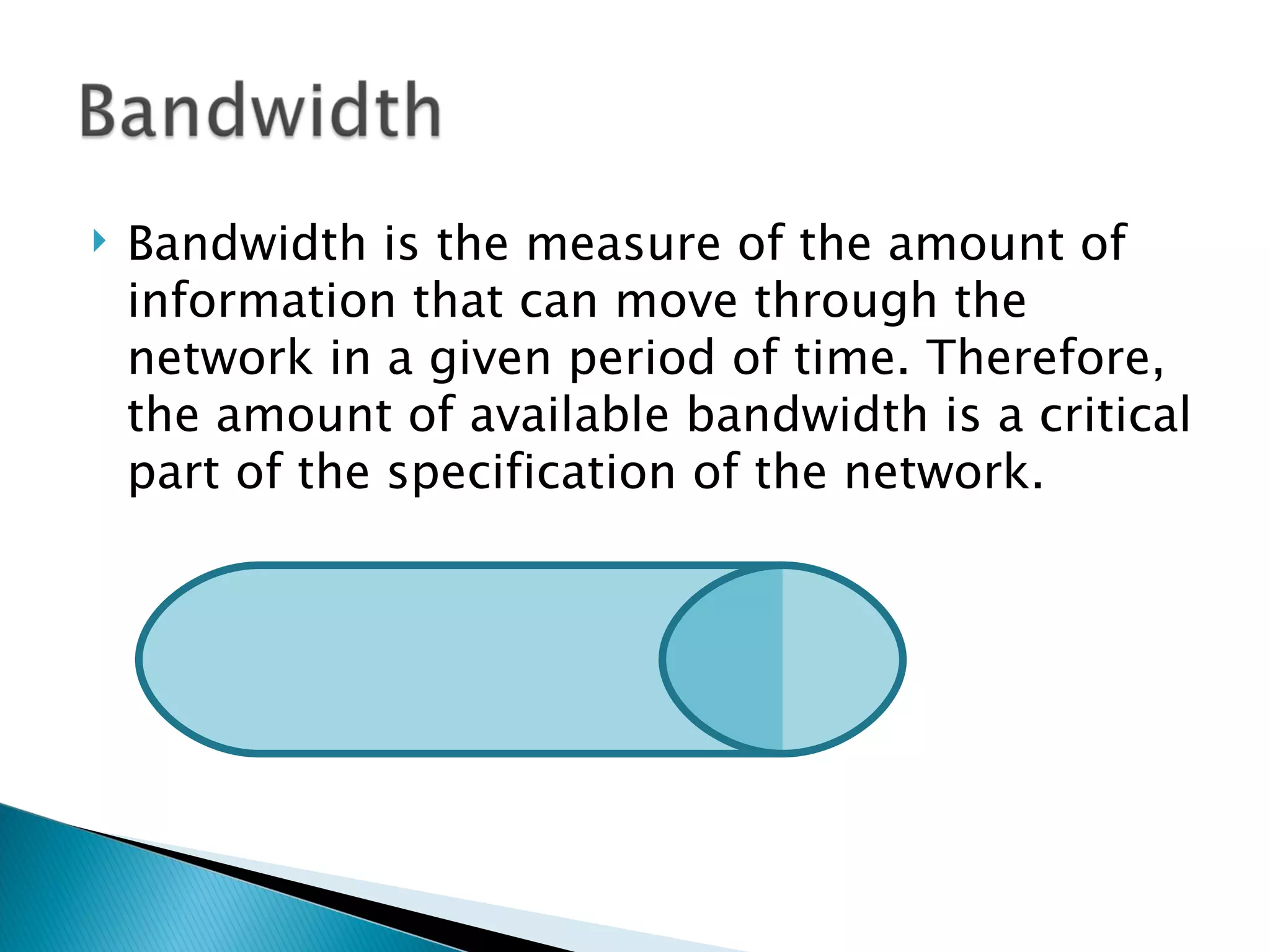
Bandwidth is the measure of the amount of information that can move through the network in a given period of time. Therefore, the amount of available bandwidth is a critical part of the specification of the network.
A typical LAN might be built to provide 100 Mbps to every desktop workstation, but this does not mean that each user is actually able to move 100 megabits of data through the network for every second of use. This would be true only under the most ideal circumstances.
Throughput refers to actual measured bandwidth, at a specific time of day, using specific Internet routes, and while a specific set of data is transmitted on the network.  Throughput is often far less than the maximum possible digital bandwidth of the medium that is being used.
The following are some of the factors that determine throughput:  Internetworking devices  Type of data being transferred  Network topology  Number of users on the network  User computer  Server computer  Power conditions
The theoretical bandwidth of a network is an important consideration in network design, because the network bandwidth will never be greater than the limits imposed by the chosen media and networking technologies.
However, it is just as important for a network designer and administrator to consider the factors that may affect actual throughput. By measuring throughput on a regular basis, a network administrator will be aware of changes in network performance and changes in the needs of network users.

eTwinning: Throughput

  • 1.
  • 2.
    I will explainsthe concept of throughput.
  • 3.
    Bandwidth is themeasure of the amount of information that can move through the network in a given period of time. Therefore, the amount of available bandwidth is a critical part of the specification of the network.
  • 4.
    A typical LANmight be built to provide 100 Mbps to every desktop workstation, but this does not mean that each user is actually able to move 100 megabits of data through the network for every second of use. This would be true only under the most ideal circumstances.
  • 5.
    Throughput refers toactual measured bandwidth, at a specific time of day, using specific Internet routes, and while a specific set of data is transmitted on the network. Throughput is often far less than the maximum possible digital bandwidth of the medium that is being used.
  • 6.
    The following aresome of the factors that determine throughput: Internetworking devices Type of data being transferred Network topology Number of users on the network User computer Server computer Power conditions
  • 7.
    The theoretical bandwidthof a network is an important consideration in network design, because the network bandwidth will never be greater than the limits imposed by the chosen media and networking technologies.
  • 8.
    However, it isjust as important for a network designer and administrator to consider the factors that may affect actual throughput. By measuring throughput on a regular basis, a network administrator will be aware of changes in network performance and changes in the needs of network users.