Mika Pajarinen, Petri Rouvinen & Pekka Ylä-Anttila
ETLA, The Research Institute of the Finnish Economy (Etlatieto Oy)
Eric Giertz & Annika Rickne
KTH, Royal Institute of Technology (INDEK)
Finland & Sweden – Incredible Success in ICT*
Assessing past achievements and future potential in ICT: A joint future for Finland and Sweden?
Finland’s Embassy in Stockholm, 19 March 2015.
* Kindly supported by VINNOVA & Tekes.
The Nordic ICT Saga – Some Historical Highlights
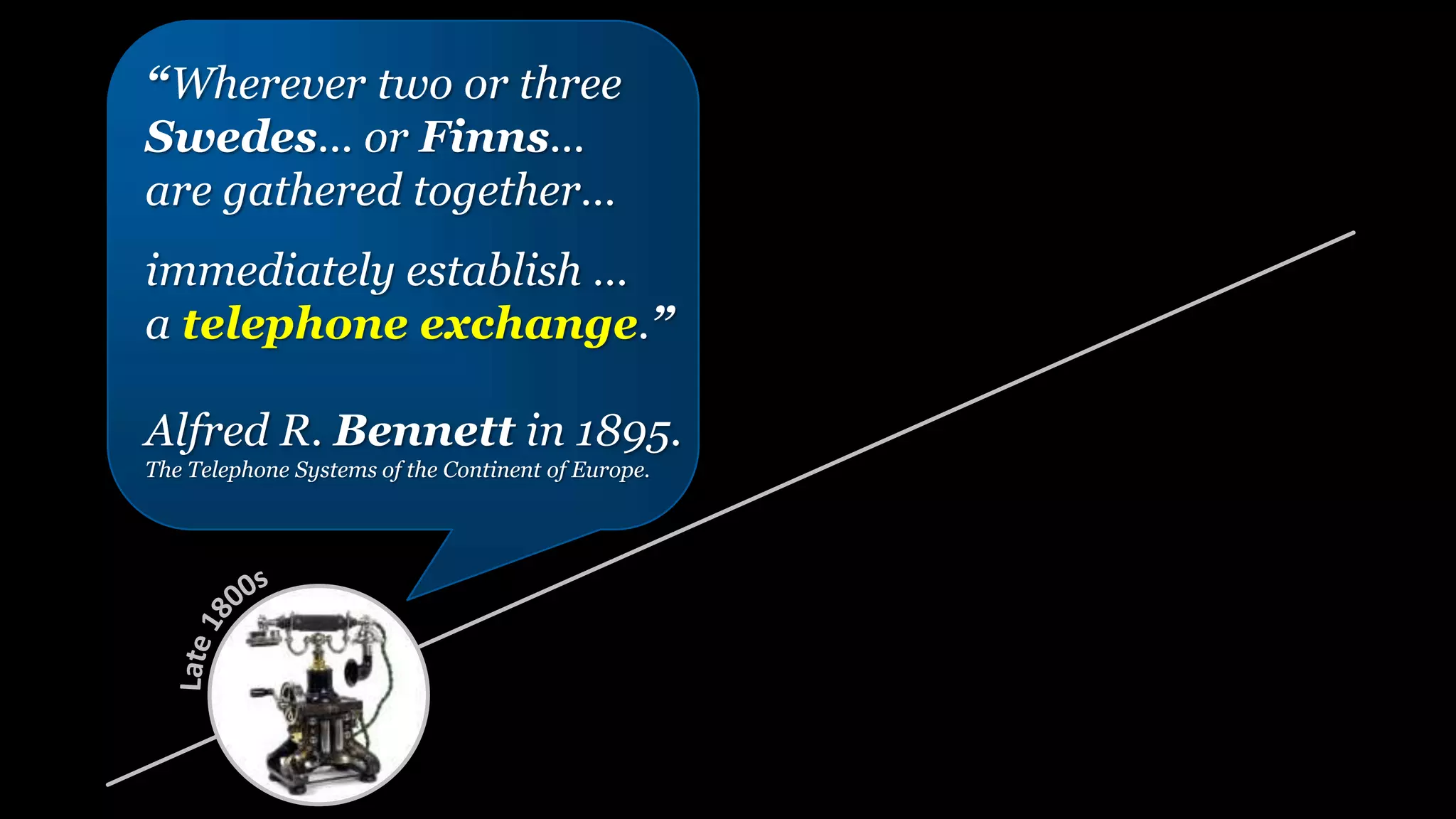
“Wherever two or three
Swedes... or Finns...
are gathered together…
immediately establish …
a telephone exchange.”
Alfred R. Bennett in 1895.
The Telephone Systems of the Continent of Europe.
Proposed by Carl-Gösta Åsdal, Televerket, 1969.
NMT, Nordisk Mobil Telefon, opens in 1981.
The largest mobile market worldwide.
Open & competitive (equipment).
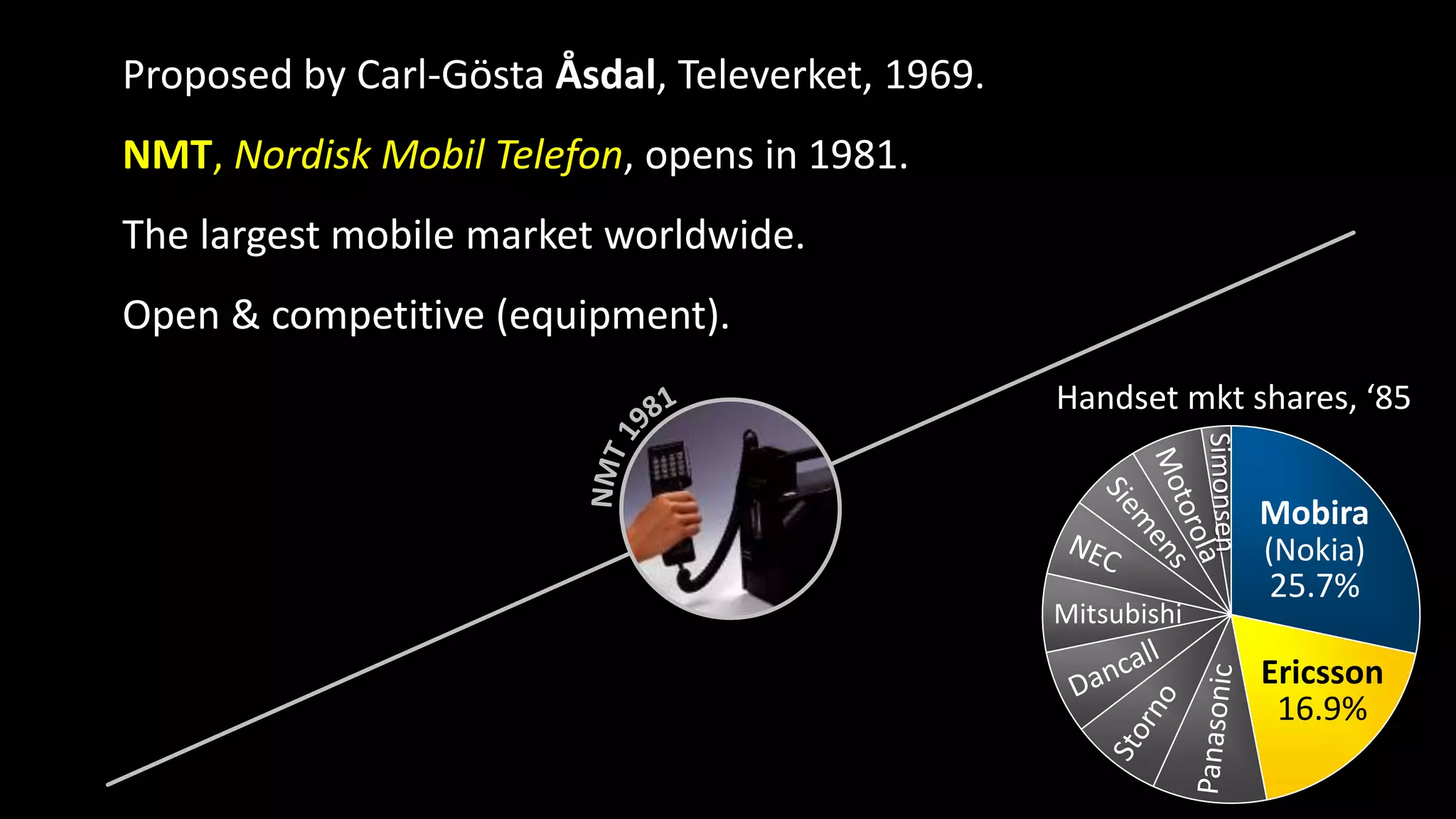
Handset mkt shares, ‘85
Mobira
(Nokia)
25.7%
Ericsson
16.9%
Mitsubishi
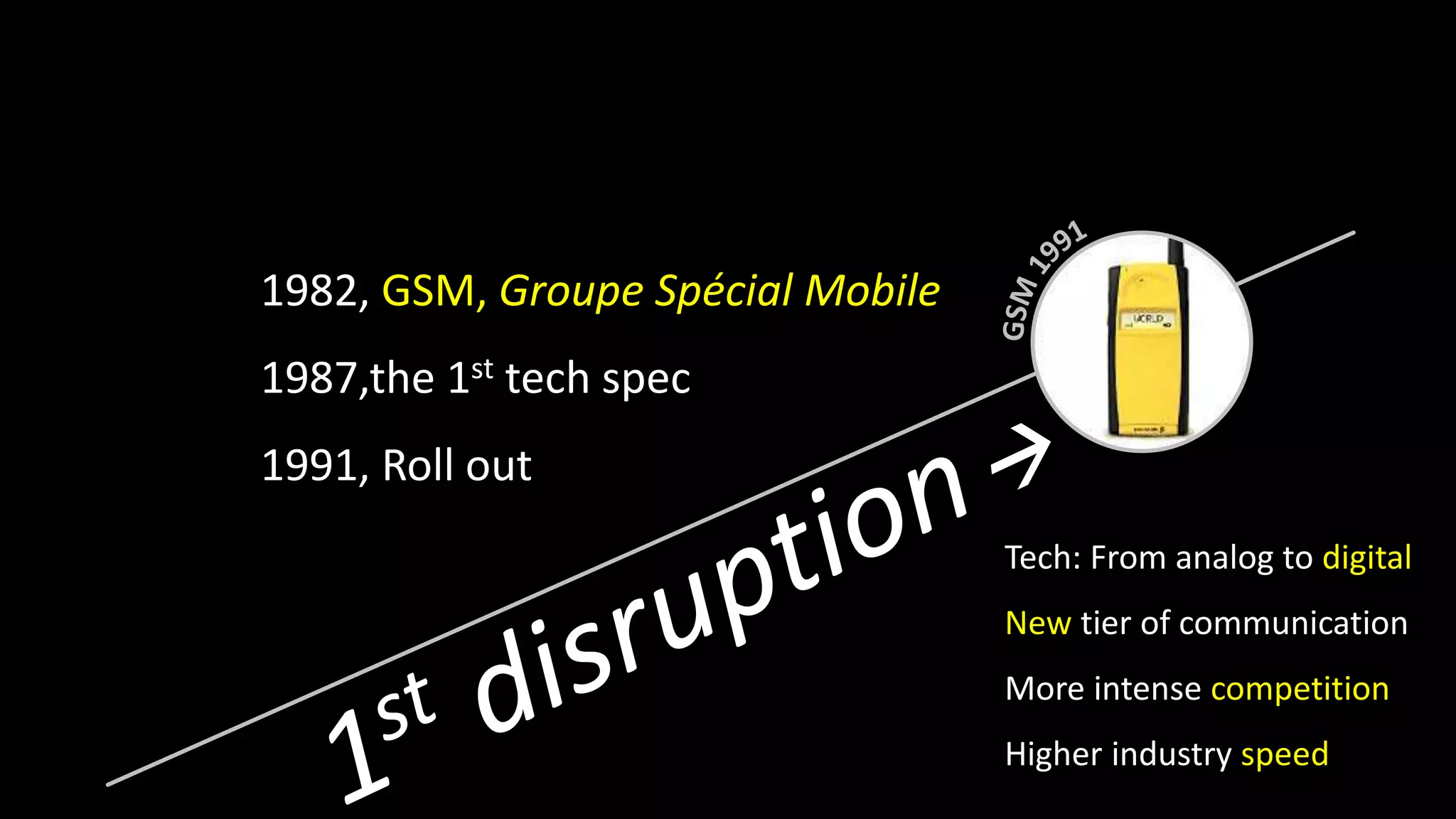
1982, GSM, Groupe Spécial Mobile
1987,the 1st tech spec
1991, Roll out
Tech: From analog to digital
New tier of communication
More intense competition
Higher industry speed
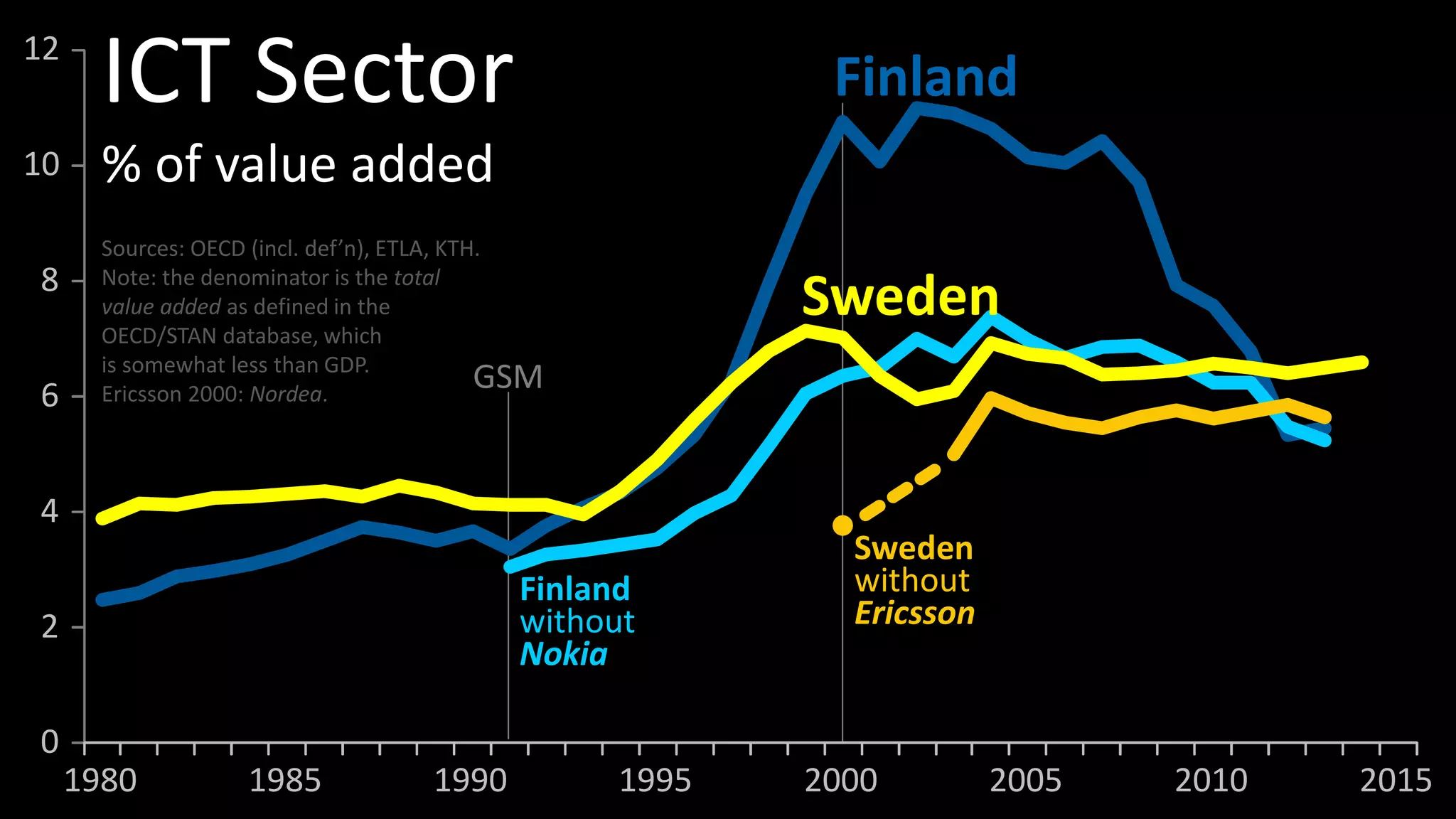
GSM
0
2
4
6
8
10
12
1980 1985 1990 1995 2000 2005 2010 2015
ICT Sector
% of value added
Sources: OECD (incl. def’n), ETLA, KTH.
Note: the denominator is the total
value added as defined in the
OECD/STAN database, which
is somewhat less than GDP.
Ericsson 2000: Nordea.
Finland
Finland
without
Nokia
Sweden
Sweden
without
Ericsson
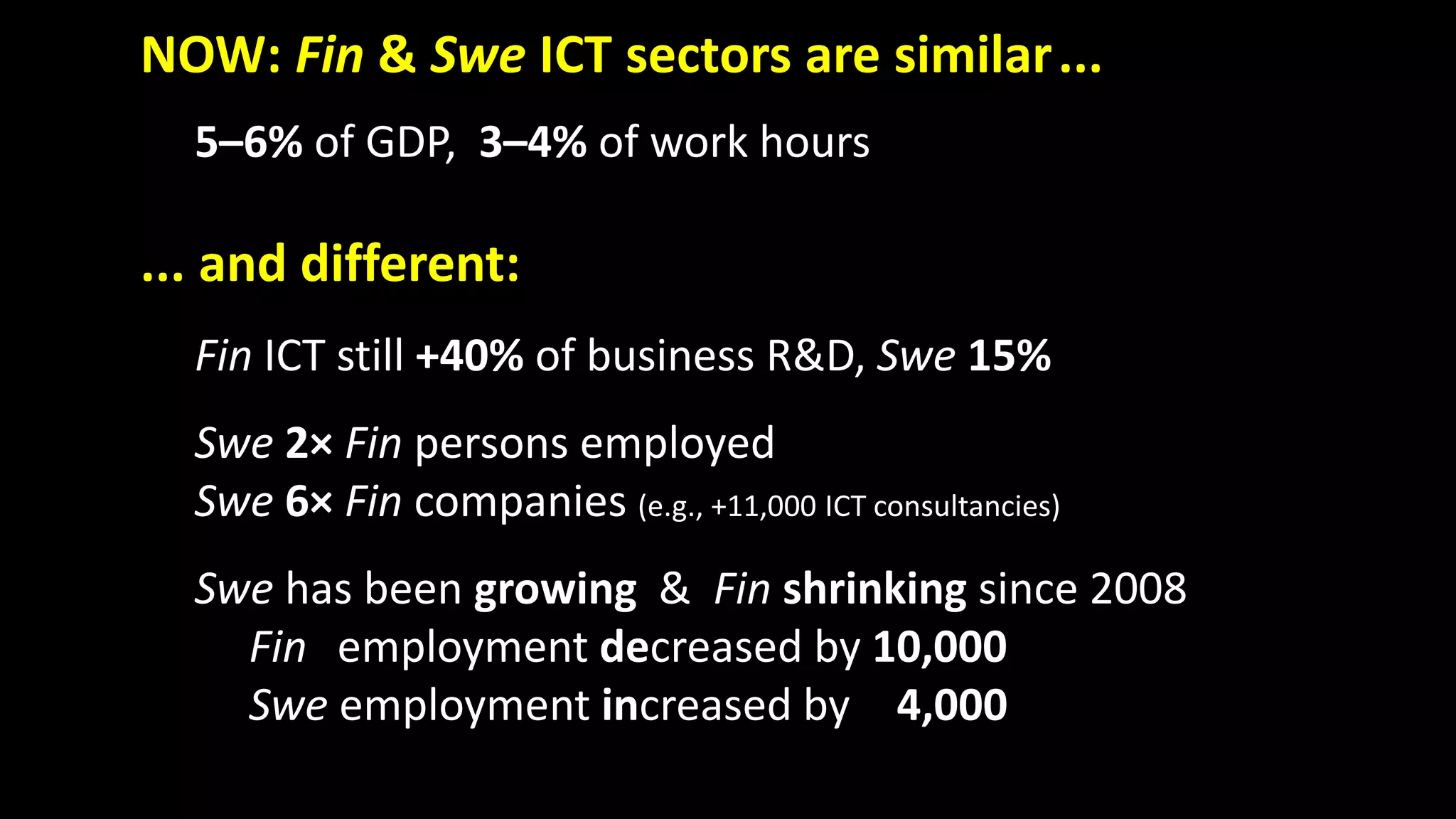
NOW: Fin & Swe ICT sectors are similar...
5–6% of GDP, 3–4% of work hours
... and different:
Fin ICT still +40% of business R&D, Swe 15%
Swe 2× Fin persons employed
Swe 6× Fin companies (e.g., +11,000 ICT consultancies)
Swe has been growing & Fin shrinking since 2008
Fin employment decreased by 10,000
Swe employment increased by 4,000
2nd disruption!?
1011
0101
1100
0010
3D
IoT
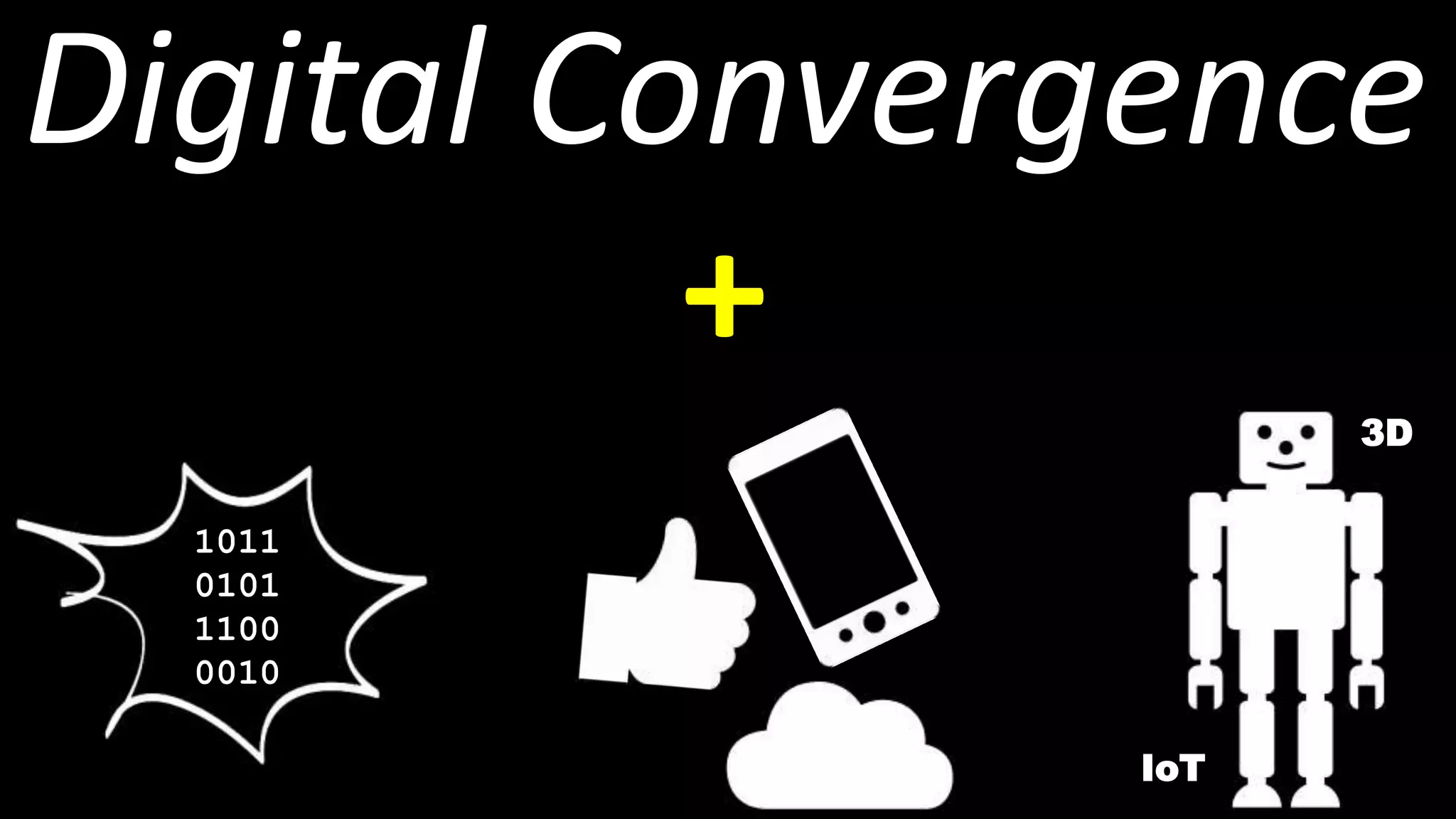
Digital Convergence
+
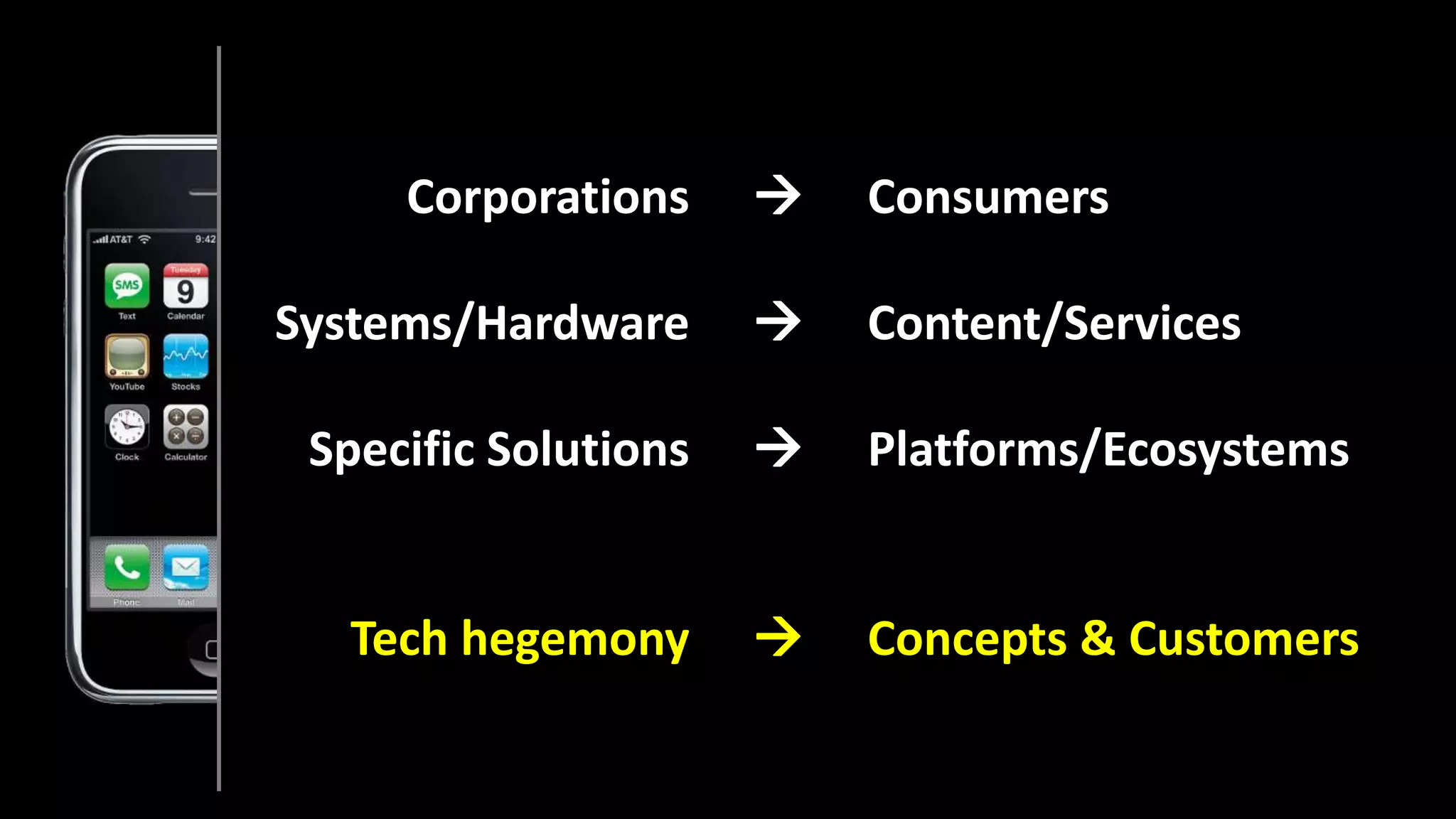
Corporations
Systems/Hardware
Specific Solutions
Tech hegemony
Consumers
Content/Services
Platforms/Ecosystems
Concepts & Customers




0
2
4
6
8
10
1980 1985 1990 1995 2000 2005 2010 2015
ICT Sector
% of value added
Finland
Finland
– Nokia
Sweden
Sweden
– Ericsson
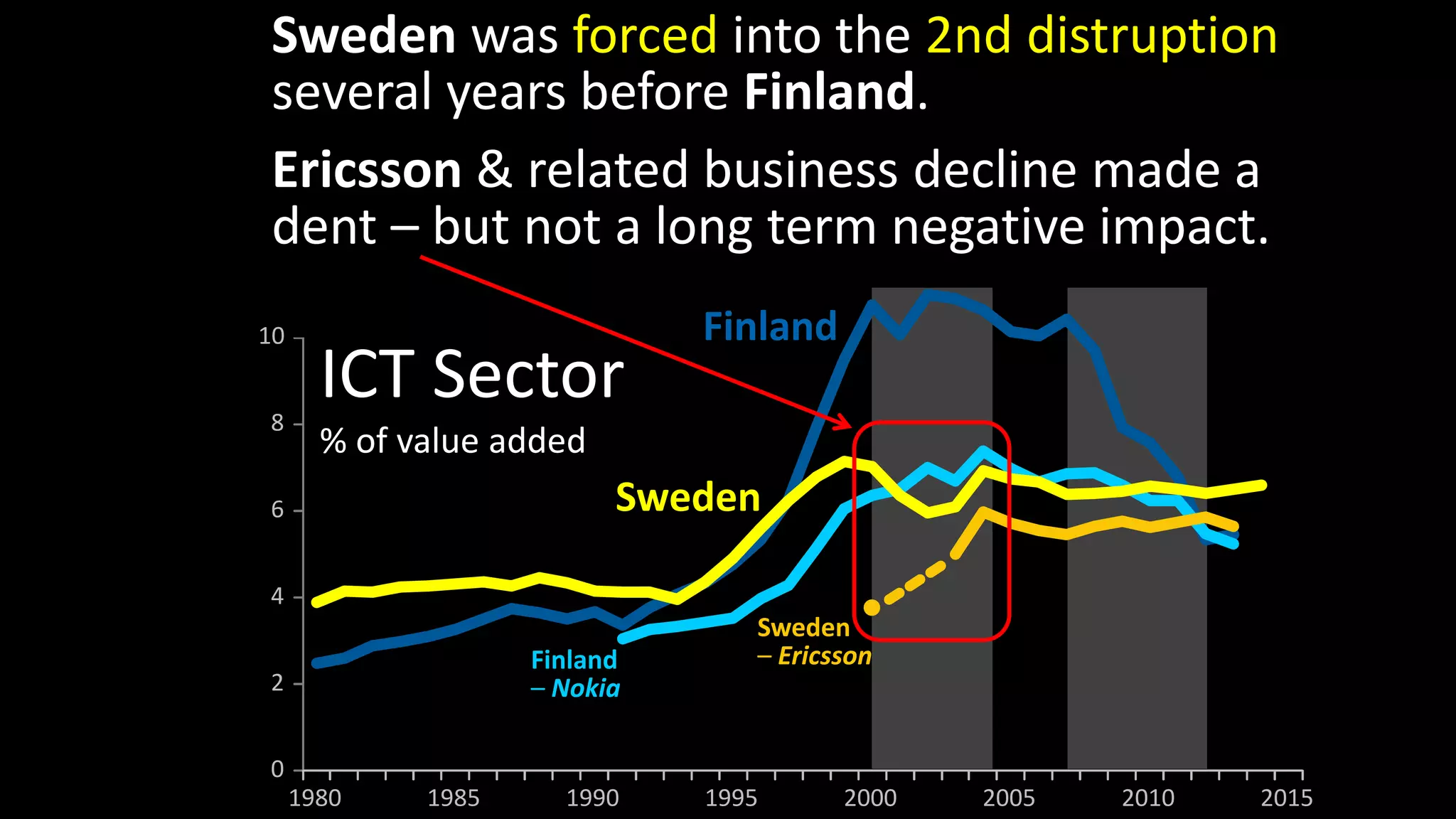
Sweden was forced into the 2nd distruption
several years before Finland.
Ericsson & related business decline made a
dent – but not a long term negative impact.
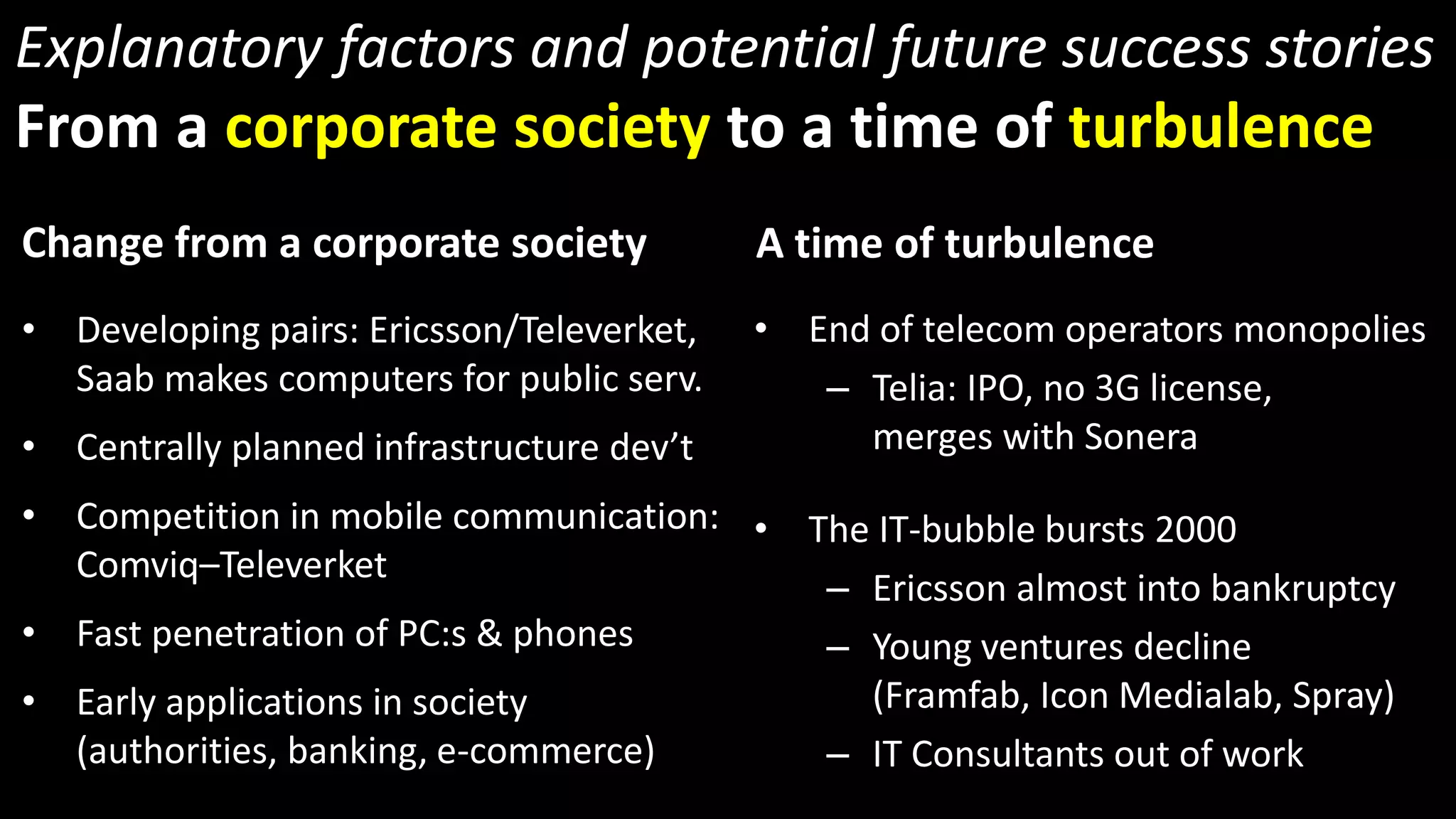
Explanatory factors and potential future success stories
From a corporate society to a time of turbulence
• Developing pairs: Ericsson/Televerket,
Saab makes computers for public serv.
• Centrally planned infrastructure dev’t
• Competition in mobile communication:
Comviq–Televerket
• Fast penetration of PC:s & phones
• Early applications in society
(authorities, banking, e-commerce)
Change from a corporate society
• End of telecom operators monopolies
– Telia: IPO, no 3G license,
merges with Sonera
• The IT-bubble bursts 2000
– Ericsson almost into bankruptcy
– Young ventures decline
(Framfab, Icon Medialab, Spray)
– IT Consultants out of work
A time of turbulence
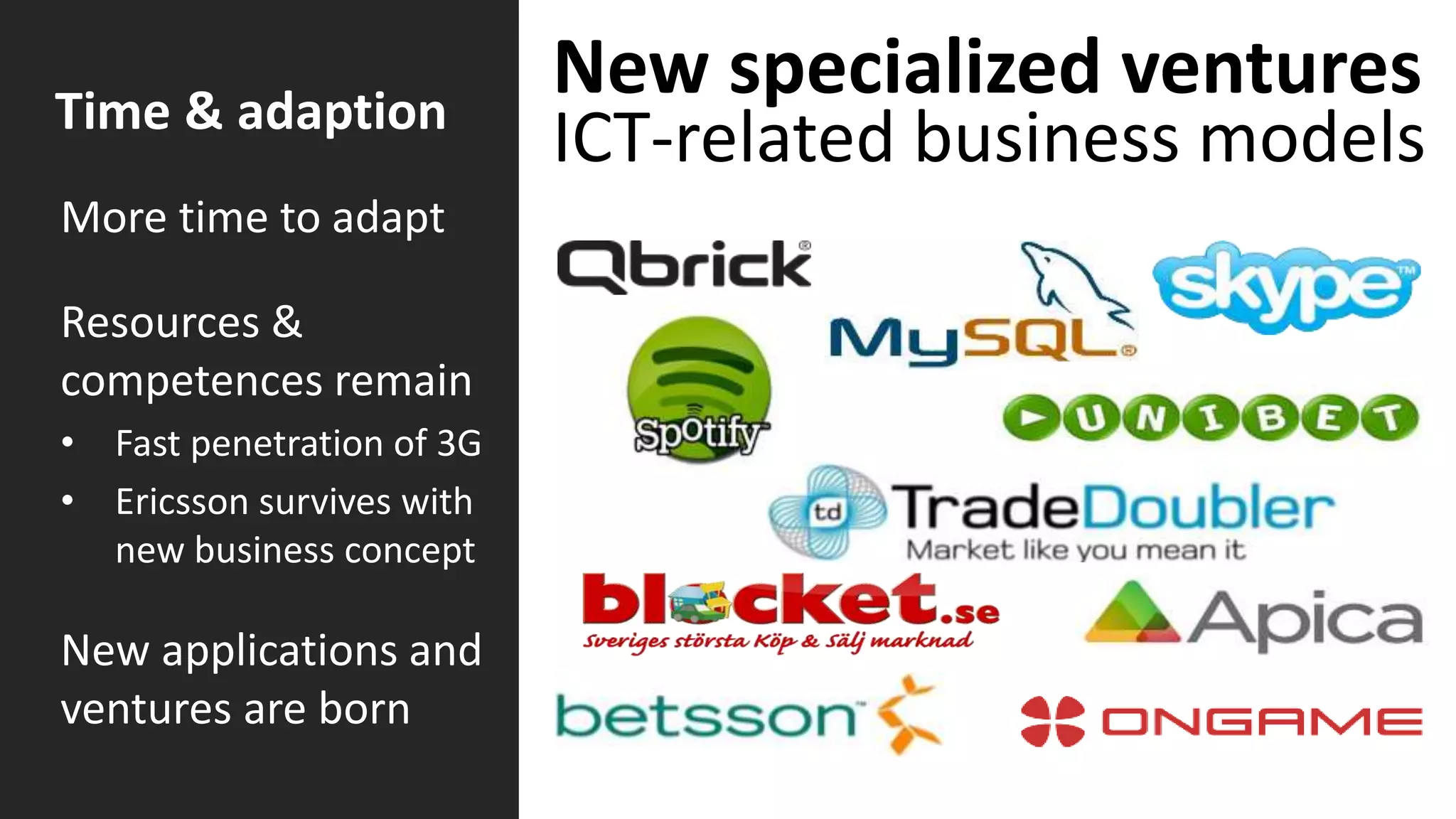
New specialized ventures
ICT-related business models
More time to adapt
Resources &
competences remain
• Fast penetration of 3G
• Ericsson survives with
new business concept
New applications and
ventures are born
Time & adaption
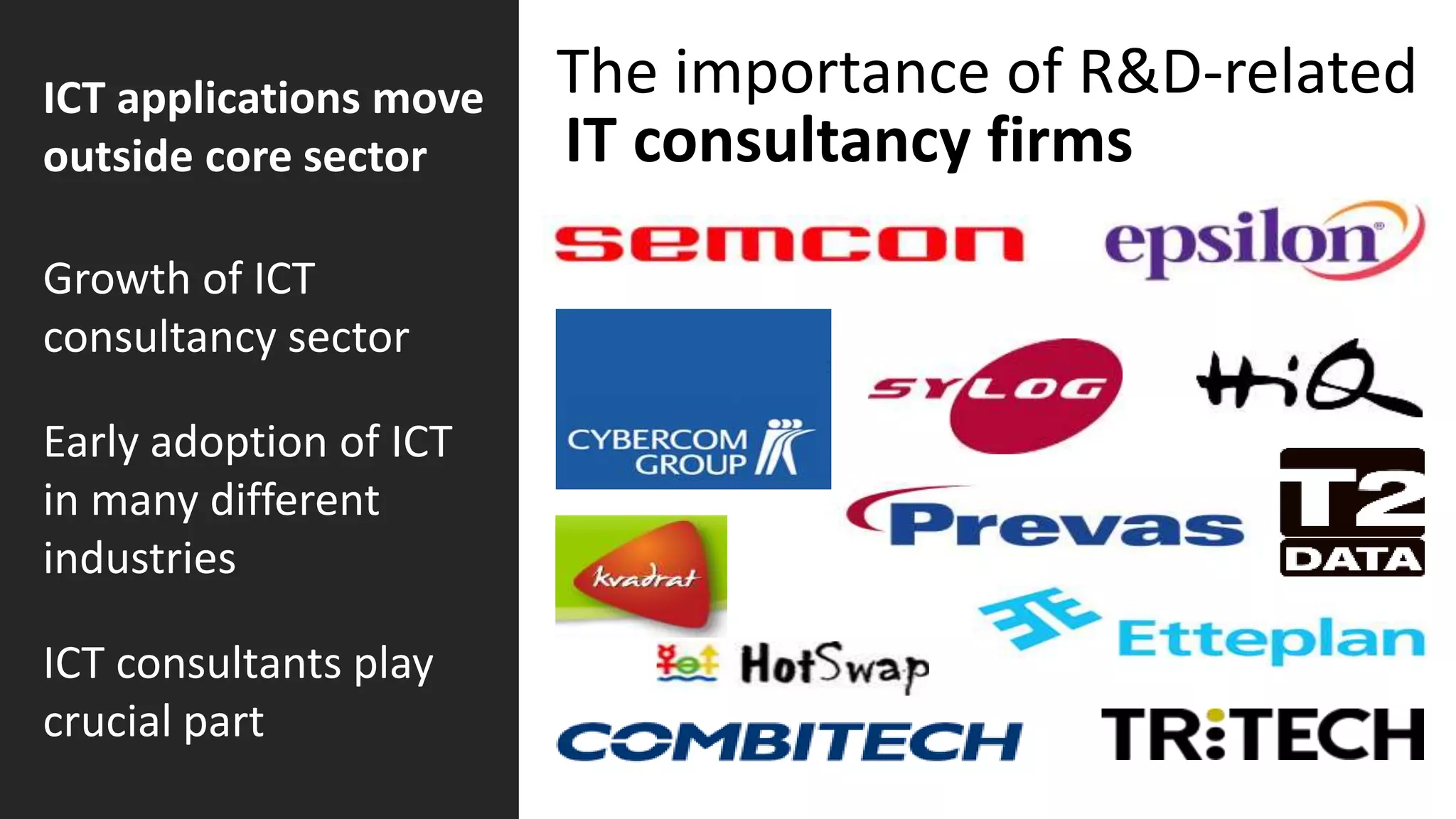
The importance of R&D-related
IT consultancy firms
ICT applications move
outside core sector
Growth of ICT
consultancy sector
Early adoption of ICT
in many different
industries
ICT consultants play
crucial part
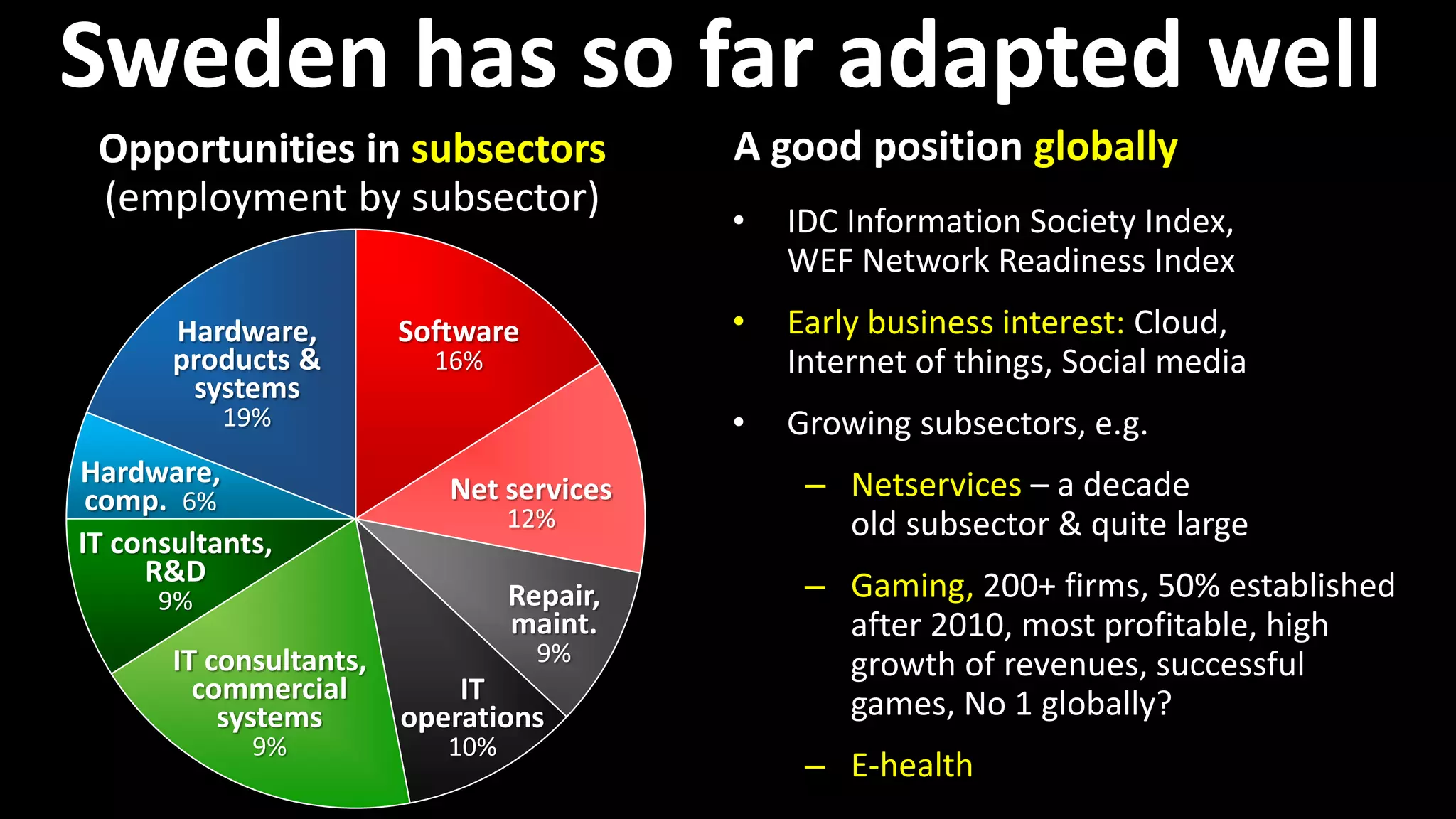
Sweden has so far adapted well
Opportunities in subsectors
(employment by subsector)
A good position globally
• IDC Information Society Index,
WEF Network Readiness Index
• Early business interest: Cloud,
Internet of things, Social media
• Growing subsectors, e.g.
– Netservices – a decade
old subsector & quite large
– Gaming, 200+ firms, 50% established
after 2010, most profitable, high
growth of revenues, successful
games, No 1 globally?
– E-health
Software
16%
Net services
12%
Repair,
maint.
9%
IT
operations
10%
Hardware,
comp. 6%
IT consultants,
commercial
systems
9%
IT consultants,
R&D
9%
Hardware,
products &
systems
19%
Up until the early 2000s, Nordic cooperation
greatly contributed to Fin & Swe ICT success
Since then, trajectories & interests departed
but, with the 2nd disruption, are again aligned
NMT/GSM per se cannot be replicated, surely
there is scope for Nordic cooperation!?
Advertisement: ETLA-KTH study on Nordic ICT in the fall

Finland & Sweden: Incredible Success in ICT

  • 1.
    Mika Pajarinen, PetriRouvinen & Pekka Ylä-Anttila ETLA, The Research Institute of the Finnish Economy (Etlatieto Oy) Eric Giertz & Annika Rickne KTH, Royal Institute of Technology (INDEK) Finland & Sweden – Incredible Success in ICT* Assessing past achievements and future potential in ICT: A joint future for Finland and Sweden? Finland’s Embassy in Stockholm, 19 March 2015. * Kindly supported by VINNOVA & Tekes.
  • 2.
    The Nordic ICTSaga – Some Historical Highlights
  • 3.
    “Wherever two orthree Swedes... or Finns... are gathered together… immediately establish … a telephone exchange.” Alfred R. Bennett in 1895. The Telephone Systems of the Continent of Europe.
  • 4.
    Proposed by Carl-GöstaÅsdal, Televerket, 1969. NMT, Nordisk Mobil Telefon, opens in 1981. The largest mobile market worldwide. Open & competitive (equipment). Handset mkt shares, ‘85 Mobira (Nokia) 25.7% Ericsson 16.9% Mitsubishi
  • 5.
    1982, GSM, GroupeSpécial Mobile 1987,the 1st tech spec 1991, Roll out Tech: From analog to digital New tier of communication More intense competition Higher industry speed
  • 6.
    GSM 0 2 4 6 8 10 12 1980 1985 19901995 2000 2005 2010 2015 ICT Sector % of value added Sources: OECD (incl. def’n), ETLA, KTH. Note: the denominator is the total value added as defined in the OECD/STAN database, which is somewhat less than GDP. Ericsson 2000: Nordea. Finland Finland without Nokia Sweden Sweden without Ericsson
  • 7.
    NOW: Fin &Swe ICT sectors are similar... 5–6% of GDP, 3–4% of work hours ... and different: Fin ICT still +40% of business R&D, Swe 15% Swe 2× Fin persons employed Swe 6× Fin companies (e.g., +11,000 ICT consultancies) Swe has been growing & Fin shrinking since 2008 Fin employment decreased by 10,000 Swe employment increased by 4,000
  • 8.
  • 9.
  • 10.
  • 11.
    0 2 4 6 8 10 1980 1985 19901995 2000 2005 2010 2015 ICT Sector % of value added Finland Finland – Nokia Sweden Sweden – Ericsson Sweden was forced into the 2nd distruption several years before Finland. Ericsson & related business decline made a dent – but not a long term negative impact.
  • 12.
    Explanatory factors andpotential future success stories From a corporate society to a time of turbulence • Developing pairs: Ericsson/Televerket, Saab makes computers for public serv. • Centrally planned infrastructure dev’t • Competition in mobile communication: Comviq–Televerket • Fast penetration of PC:s & phones • Early applications in society (authorities, banking, e-commerce) Change from a corporate society • End of telecom operators monopolies – Telia: IPO, no 3G license, merges with Sonera • The IT-bubble bursts 2000 – Ericsson almost into bankruptcy – Young ventures decline (Framfab, Icon Medialab, Spray) – IT Consultants out of work A time of turbulence
  • 13.
    New specialized ventures ICT-relatedbusiness models More time to adapt Resources & competences remain • Fast penetration of 3G • Ericsson survives with new business concept New applications and ventures are born Time & adaption
  • 14.
    The importance ofR&D-related IT consultancy firms ICT applications move outside core sector Growth of ICT consultancy sector Early adoption of ICT in many different industries ICT consultants play crucial part
  • 15.
    Sweden has sofar adapted well Opportunities in subsectors (employment by subsector) A good position globally • IDC Information Society Index, WEF Network Readiness Index • Early business interest: Cloud, Internet of things, Social media • Growing subsectors, e.g. – Netservices – a decade old subsector & quite large – Gaming, 200+ firms, 50% established after 2010, most profitable, high growth of revenues, successful games, No 1 globally? – E-health Software 16% Net services 12% Repair, maint. 9% IT operations 10% Hardware, comp. 6% IT consultants, commercial systems 9% IT consultants, R&D 9% Hardware, products & systems 19%
  • 16.
    Up until theearly 2000s, Nordic cooperation greatly contributed to Fin & Swe ICT success Since then, trajectories & interests departed but, with the 2nd disruption, are again aligned NMT/GSM per se cannot be replicated, surely there is scope for Nordic cooperation!? Advertisement: ETLA-KTH study on Nordic ICT in the fall