Introduction
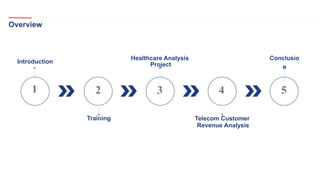
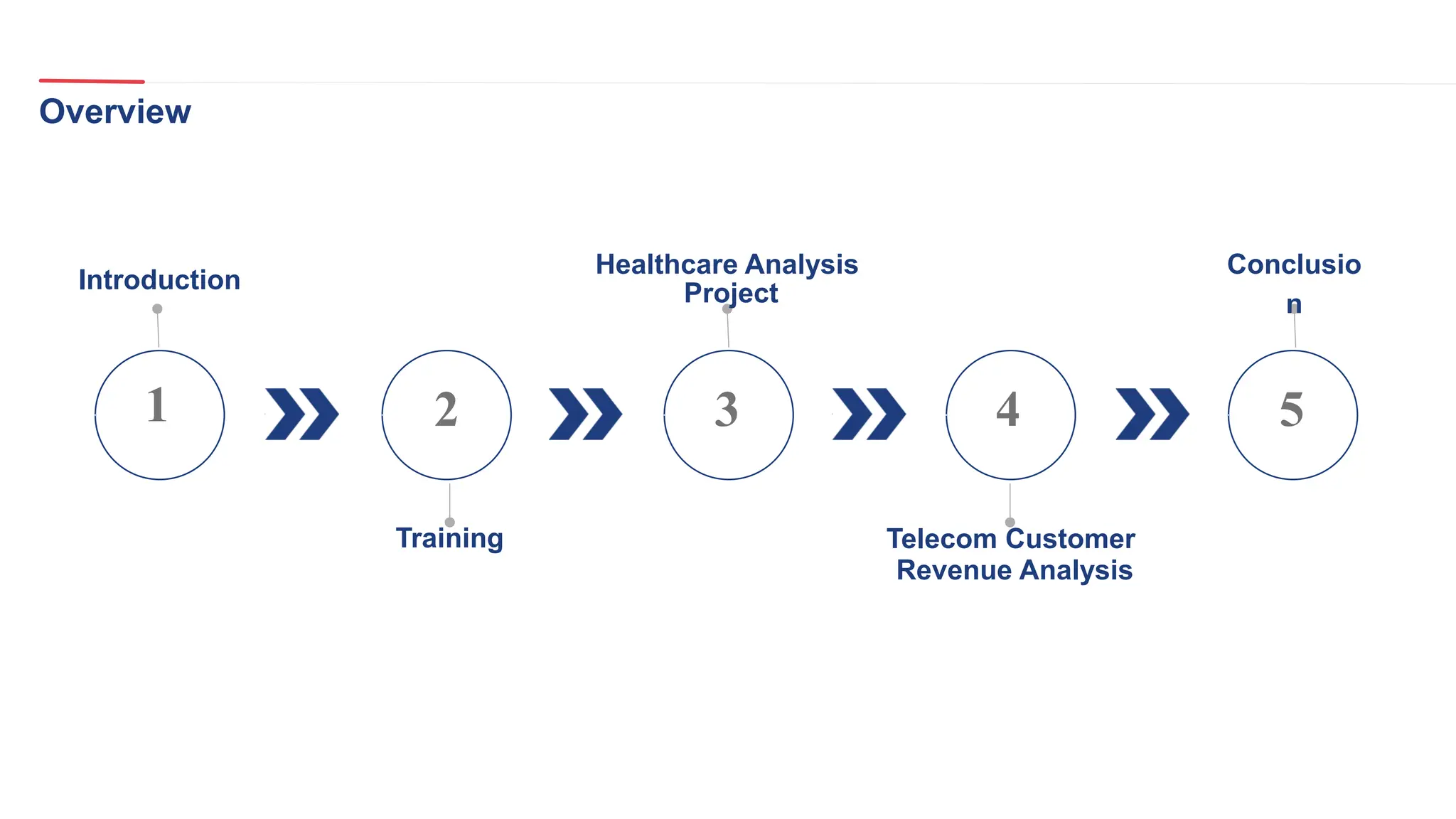
Training
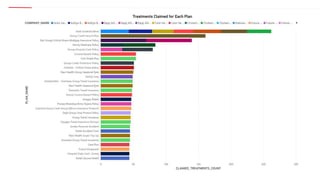
Healthcare Analysis
Project
Telecom Customer
Revenue Analysis
Conclusio
n
1 2 3 4 5
Overview
Introduction
Data engineering involves designing and maintaining systems for handling and analyzing
large volumes of data from diverse sources, crucial for enabling data-driven decision-making
across industries.
Sigmoid excels in Data Engineering and Data Science services, delivering innovative
solutions tailored to diverse industries. Leading in ML and AI, we specialize in providing top-
tier data solutions.
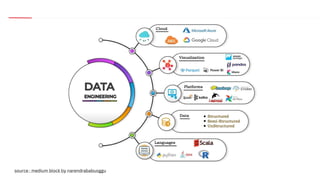
source : medium block by narendrababuoggu
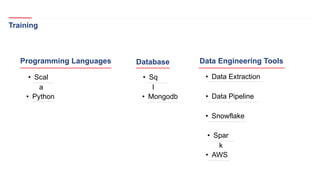
Training
• Python
• Sq
l
• Data Extraction
• AWS
• Snowflake
• Scal
a
• Data Pipeline
• Mongodb
• Spar
k
Programming Languages Database Data Engineering Tools
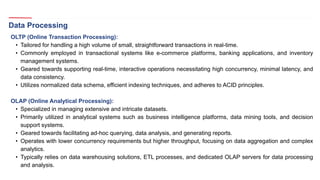
Data Processing
OLTP (Online Transaction Processing):
• Tailored for handling a high volume of small, straightforward transactions in real-time.
• Commonly employed in transactional systems like e-commerce platforms, banking applications, and inventory
management systems.
• Geared towards supporting real-time, interactive operations necessitating high concurrency, minimal latency, and
data consistency.
• Utilizes normalized data schema, efficient indexing techniques, and adheres to ACID principles.
OLAP (Online Analytical Processing):
• Specialized in managing extensive and intricate datasets.
• Primarily utilized in analytical systems such as business intelligence platforms, data mining tools, and decision
support systems.
• Geared towards facilitating ad-hoc querying, data analysis, and generating reports.
• Operates with lower concurrency requirements but higher throughput, focusing on data aggregation and complex
analytics.
• Typically relies on data warehousing solutions, ETL processes, and dedicated OLAP servers for data processing
and analysis.
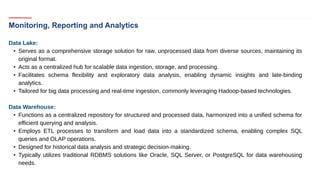
Monitoring, Reporting and Analytics
Data Lake:
• Serves as a comprehensive storage solution for raw, unprocessed data from diverse sources, maintaining its
original format.
• Acts as a centralized hub for scalable data ingestion, storage, and processing.
• Facilitates schema flexibility and exploratory data analysis, enabling dynamic insights and late-binding
analytics.
• Tailored for big data processing and real-time ingestion, commonly leveraging Hadoop-based technologies.
Data Warehouse:
• Functions as a centralized repository for structured and processed data, harmonized into a unified schema for
efficient querying and analysis.
• Employs ETL processes to transform and load data into a standardized schema, enabling complex SQL
queries and OLAP operations.
• Designed for historical data analysis and strategic decision-making.
• Typically utilizes traditional RDBMS solutions like Oracle, SQL Server, or PostgreSQL for data warehousing
needs.
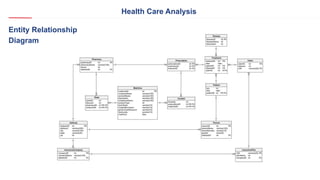
Health Care Analysis
Entity Relationship
Diagram
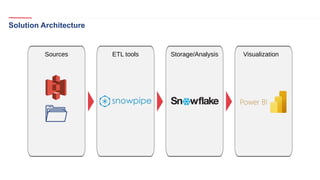
Solution Architecture
Sources ETL tools Storage/Analysis Visualization
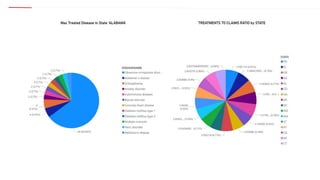
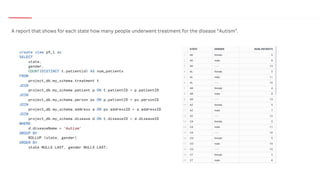
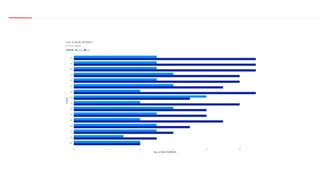
A report that shows for each state how many people underwent treatment for the disease “Autism”.
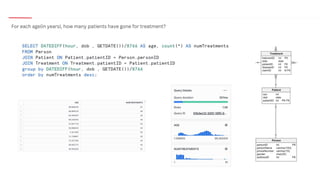
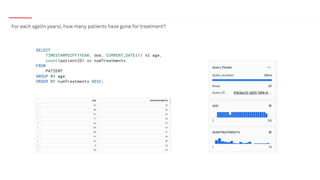
For each age(in years), how many patients have gone for treatment?
Telecom Customer Revenue Analysis Project
• This project focuses on analyzing customer behavior and revenue generation for a
telecom company.
• It involves gathering and processing data from multiple sources, including call records,
billing data, demographics, and other relevant information, which has already been
provided.
• The primary goal is to uncover patterns and trends in consumer behavior and usage,
aiming to enhance profitability and enhance customer satisfaction.
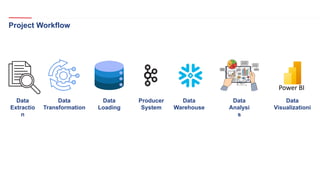
Project Workflow
Data
Extractio
n
Data
Transformation
Data
Loading
Producer
System
Data
Warehouse
Data
Analysi
s
Data
Visualizationi
Phase 1 :
Analyzing Data
Quality
Data Cleaning Upload data to
MongoDB
• Use Pandas DataFram to
identify columns with
missing values, null
values
• Fill missing values with
appropriate strategies
like mean, median,
mode, forward/backward
filling.
• Perform any additional
data cleaning tasks such
as converting data types
or removing duplicates
as needed.
• Using pymongo,
establish a connnection
with mongoDB
• Iterate through the JSON
data and insert each row
into the appropriate
MongoDB collection.
Extraction, Transform, Load
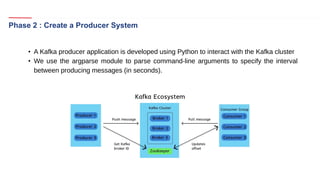
Phase 2 : Create a Producer System
• A Kafka producer application is developed using Python to interact with the Kafka cluster
• We use the argparse module to parse command-line arguments to specify the interval
between producing messages (in seconds).
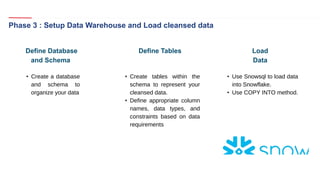
Phase 3 : Setup Data Warehouse and Load cleansed data
Define Database
and Schema
Define Tables Load
Data
• Create a database
and schema to
organize your data
• Create tables within the
schema to represent your
cleansed data.
• Define appropriate column
names, data types, and
constraints based on data
requirements
• Use Snowsql to load data
into Snowflake.
• Use COPY INTO method.
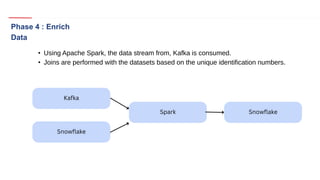
Phase 4 : Enrich
Data
• Using Apache Spark, the data stream from, Kafka is consumed.
• Joins are performed with the datasets based on the unique identification numbers.
Kafka
Snowflake
Spark Snowflake
Phase 5 : Data Analysis
• Using Snowflake to derive actionable insights and uncover meaningful patterns from the
enriched dataset.
• By aggregating and summarizing the data at different granularities, such as overall and week-
wise, comprehensive insights into customer behavior and revenue generation trends are
obtained.
• Snowflake’s ability to handle complex queries and process large volumes of data efficiently
enabled to make informed decisions regarding revenue optimization, customer retention
strategies, and service enhancements.
Phase 6 : Workflow Orchestration
• Using Airflow’s Directed Acyclic Graphs (DAGs), a series of tasks are defined to encompass the
entire data pipeline, from data ingestion to analysis and visualization.
• By defining dependencies between tasks, Airflow ensures that each step wis executed in the
correct order and that subsequent tasks are only triggered upon successful completion of
prerequisite tasks.
• Snowflake’s ability to handle complex queries and process large volumes of data efficiently
enabled to make informed decisions regarding revenue optimization, customer retention
strategies, and service enhancements.

ETL Pipeline for the snowflake problem statement

  • 1.
  • 2.
    Introduction Data engineering involvesdesigning and maintaining systems for handling and analyzing large volumes of data from diverse sources, crucial for enabling data-driven decision-making across industries. Sigmoid excels in Data Engineering and Data Science services, delivering innovative solutions tailored to diverse industries. Leading in ML and AI, we specialize in providing top- tier data solutions.
  • 3.
    source : mediumblock by narendrababuoggu
  • 4.
    Training • Python • Sq l •Data Extraction • AWS • Snowflake • Scal a • Data Pipeline • Mongodb • Spar k Programming Languages Database Data Engineering Tools
  • 5.
    Data Processing OLTP (OnlineTransaction Processing): • Tailored for handling a high volume of small, straightforward transactions in real-time. • Commonly employed in transactional systems like e-commerce platforms, banking applications, and inventory management systems. • Geared towards supporting real-time, interactive operations necessitating high concurrency, minimal latency, and data consistency. • Utilizes normalized data schema, efficient indexing techniques, and adheres to ACID principles. OLAP (Online Analytical Processing): • Specialized in managing extensive and intricate datasets. • Primarily utilized in analytical systems such as business intelligence platforms, data mining tools, and decision support systems. • Geared towards facilitating ad-hoc querying, data analysis, and generating reports. • Operates with lower concurrency requirements but higher throughput, focusing on data aggregation and complex analytics. • Typically relies on data warehousing solutions, ETL processes, and dedicated OLAP servers for data processing and analysis.
  • 6.
    Monitoring, Reporting andAnalytics Data Lake: • Serves as a comprehensive storage solution for raw, unprocessed data from diverse sources, maintaining its original format. • Acts as a centralized hub for scalable data ingestion, storage, and processing. • Facilitates schema flexibility and exploratory data analysis, enabling dynamic insights and late-binding analytics. • Tailored for big data processing and real-time ingestion, commonly leveraging Hadoop-based technologies. Data Warehouse: • Functions as a centralized repository for structured and processed data, harmonized into a unified schema for efficient querying and analysis. • Employs ETL processes to transform and load data into a standardized schema, enabling complex SQL queries and OLAP operations. • Designed for historical data analysis and strategic decision-making. • Typically utilizes traditional RDBMS solutions like Oracle, SQL Server, or PostgreSQL for data warehousing needs.
  • 7.
    Health Care Analysis EntityRelationship Diagram
  • 8.
    Solution Architecture Sources ETLtools Storage/Analysis Visualization
  • 11.
    A report thatshows for each state how many people underwent treatment for the disease “Autism”.
  • 13.
    For each age(inyears), how many patients have gone for treatment?
  • 14.
    For each age(inyears), how many patients have gone for treatment?
  • 15.
    Telecom Customer RevenueAnalysis Project • This project focuses on analyzing customer behavior and revenue generation for a telecom company. • It involves gathering and processing data from multiple sources, including call records, billing data, demographics, and other relevant information, which has already been provided. • The primary goal is to uncover patterns and trends in consumer behavior and usage, aiming to enhance profitability and enhance customer satisfaction.
  • 16.
  • 17.
    Phase 1 : AnalyzingData Quality Data Cleaning Upload data to MongoDB • Use Pandas DataFram to identify columns with missing values, null values • Fill missing values with appropriate strategies like mean, median, mode, forward/backward filling. • Perform any additional data cleaning tasks such as converting data types or removing duplicates as needed. • Using pymongo, establish a connnection with mongoDB • Iterate through the JSON data and insert each row into the appropriate MongoDB collection. Extraction, Transform, Load
  • 18.
    Phase 2 :Create a Producer System • A Kafka producer application is developed using Python to interact with the Kafka cluster • We use the argparse module to parse command-line arguments to specify the interval between producing messages (in seconds).
  • 19.
    Phase 3 :Setup Data Warehouse and Load cleansed data Define Database and Schema Define Tables Load Data • Create a database and schema to organize your data • Create tables within the schema to represent your cleansed data. • Define appropriate column names, data types, and constraints based on data requirements • Use Snowsql to load data into Snowflake. • Use COPY INTO method.
  • 20.
    Phase 4 :Enrich Data • Using Apache Spark, the data stream from, Kafka is consumed. • Joins are performed with the datasets based on the unique identification numbers. Kafka Snowflake Spark Snowflake
  • 21.
    Phase 5 :Data Analysis • Using Snowflake to derive actionable insights and uncover meaningful patterns from the enriched dataset. • By aggregating and summarizing the data at different granularities, such as overall and week- wise, comprehensive insights into customer behavior and revenue generation trends are obtained. • Snowflake’s ability to handle complex queries and process large volumes of data efficiently enabled to make informed decisions regarding revenue optimization, customer retention strategies, and service enhancements.
  • 22.
    Phase 6 :Workflow Orchestration • Using Airflow’s Directed Acyclic Graphs (DAGs), a series of tasks are defined to encompass the entire data pipeline, from data ingestion to analysis and visualization. • By defining dependencies between tasks, Airflow ensures that each step wis executed in the correct order and that subsequent tasks are only triggered upon successful completion of prerequisite tasks. • Snowflake’s ability to handle complex queries and process large volumes of data efficiently enabled to make informed decisions regarding revenue optimization, customer retention strategies, and service enhancements.