M.Waqas Khan 22-Arid-0137
Bilal Imran 22-Arid-0073
Alyan 22-Arid-0061
Talal Ahmed 22-Arid-0168
Understanding Ethical
Marketing
Ethical marketing involves promoting and selling goods or services by
focusing on honesty, fairness, and social responsibility. It prioritizes
building trust with consumers and maintaining transparency in all
marketing efforts.
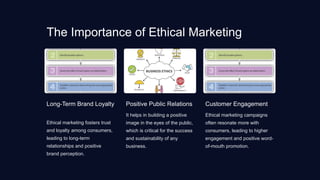
The Importance of Ethical Marketing
Long-Term Brand Loyalty
Ethical marketing fosters trust
and loyalty among consumers,
leading to long-term
relationships and positive
brand perception.
Positive Public Relations
It helps in building a positive
image in the eyes of the public,
which is critical for the success
and sustainability of any
business.
Customer Engagement
Ethical marketing campaigns
often resonate more with
consumers, leading to higher
engagement and positive word-
of-mouth promotion.
Examples of Unethical Marketing
Practices
1 Falsified
Information
Providing false or
misleading information
to consumers in
advertisements or
marketing materials.
2 Exploitative
Advertising
Using manipulative
tactics to take advantage
of vulnerable consumer
segments.
3 Deceptive Product
Labeling
Misrepresenting the
contents or benefits of a
product through
misleading labeling.
The Impact of Unethical Marketing on
Consumers
Negative Consumer Perception
Consumers may feel deceived and lose trust in
companies practicing unethical marketing.
Financial Loss
Consumers may make purchasing decisions
based on false or exaggerated claims, leading to
financial loss.
Emotional Disconnection
Unethical practices can lead to a decreased
emotional connection with brands among
consumers.
Health and Safety Risks
Consumers can be exposed to potential health
and safety risks due to false claims or
inadequate product information.
The Impact of Unethical Marketing
on Society
Distrust in Institutions
Unethical marketing can contribute to increased public skepticism towards
businesses and governing bodies.
Social Division
It can magnify societal divisions based on vulnerable consumer segments
being exploited.
Erosion of Values
Unethical marketing practices can contribute to the erosion of ethical values
within the society.
The Benefits of Ethical Marketing for
Businesses
Enhanced Brand Reputation
Ethical marketing can lead to a positive
brand reputation, distinguishing the
business in a crowded marketplace.
Increased Customer Trust
It promotes trust and confidence in the
brand, leading to higher customer
retention rates.
Competitive Advantage
Businesses practicing ethical marketing gain a competitive edge and attract socially
conscious consumers.
Ethical Marketing Guidelines and
Principles
1 Transparency
Being open, honest, and clear about the products, services, and marketing
materials.
2 Respect for Privacy
Ensuring the protection of consumer data and privacy rights in all marketing
practices.
3 Social Responsibility
Considering the impact of marketing initiatives on society and the
environment.
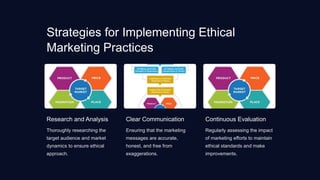
Strategies for Implementing Ethical
Marketing Practices
Research and Analysis
Thoroughly researching the
target audience and market
dynamics to ensure ethical
approach.
Clear Communication
Ensuring that the marketing
messages are accurate,
honest, and free from
exaggerations.
Continuous Evaluation
Regularly assessing the impact
of marketing efforts to maintain
ethical standards and make
improvements.
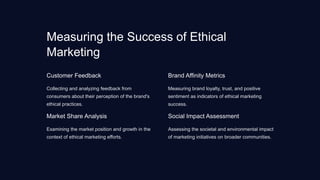
Measuring the Success of Ethical
Marketing
Customer Feedback
Collecting and analyzing feedback from
consumers about their perception of the brand's
ethical practices.
Market Share Analysis
Examining the market position and growth in the
context of ethical marketing efforts.
Brand Affinity Metrics
Measuring brand loyalty, trust, and positive
sentiment as indicators of ethical marketing
success.
Social Impact Assessment
Assessing the societal and environmental impact
of marketing initiatives on broader communities.
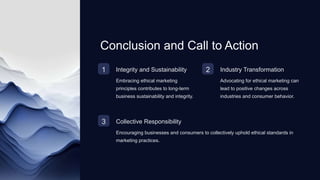
Conclusion and Call to Action
1 Integrity and Sustainability
Embracing ethical marketing
principles contributes to long-term
business sustainability and integrity.
2 Industry Transformation
Advocating for ethical marketing can
lead to positive changes across
industries and consumer behavior.
3 Collective Responsibility
Encouraging businesses and consumers to collectively uphold ethical standards in
marketing practices.

Ethical_marketing_to_view_customers.pptx

  • 1.
    M.Waqas Khan 22-Arid-0137 BilalImran 22-Arid-0073 Alyan 22-Arid-0061 Talal Ahmed 22-Arid-0168
  • 2.
    Understanding Ethical Marketing Ethical marketinginvolves promoting and selling goods or services by focusing on honesty, fairness, and social responsibility. It prioritizes building trust with consumers and maintaining transparency in all marketing efforts.
  • 3.
    The Importance ofEthical Marketing Long-Term Brand Loyalty Ethical marketing fosters trust and loyalty among consumers, leading to long-term relationships and positive brand perception. Positive Public Relations It helps in building a positive image in the eyes of the public, which is critical for the success and sustainability of any business. Customer Engagement Ethical marketing campaigns often resonate more with consumers, leading to higher engagement and positive word- of-mouth promotion.
  • 4.
    Examples of UnethicalMarketing Practices 1 Falsified Information Providing false or misleading information to consumers in advertisements or marketing materials. 2 Exploitative Advertising Using manipulative tactics to take advantage of vulnerable consumer segments. 3 Deceptive Product Labeling Misrepresenting the contents or benefits of a product through misleading labeling.
  • 5.
    The Impact ofUnethical Marketing on Consumers Negative Consumer Perception Consumers may feel deceived and lose trust in companies practicing unethical marketing. Financial Loss Consumers may make purchasing decisions based on false or exaggerated claims, leading to financial loss. Emotional Disconnection Unethical practices can lead to a decreased emotional connection with brands among consumers. Health and Safety Risks Consumers can be exposed to potential health and safety risks due to false claims or inadequate product information.
  • 6.
    The Impact ofUnethical Marketing on Society Distrust in Institutions Unethical marketing can contribute to increased public skepticism towards businesses and governing bodies. Social Division It can magnify societal divisions based on vulnerable consumer segments being exploited. Erosion of Values Unethical marketing practices can contribute to the erosion of ethical values within the society.
  • 7.
    The Benefits ofEthical Marketing for Businesses Enhanced Brand Reputation Ethical marketing can lead to a positive brand reputation, distinguishing the business in a crowded marketplace. Increased Customer Trust It promotes trust and confidence in the brand, leading to higher customer retention rates. Competitive Advantage Businesses practicing ethical marketing gain a competitive edge and attract socially conscious consumers.
  • 8.
    Ethical Marketing Guidelinesand Principles 1 Transparency Being open, honest, and clear about the products, services, and marketing materials. 2 Respect for Privacy Ensuring the protection of consumer data and privacy rights in all marketing practices. 3 Social Responsibility Considering the impact of marketing initiatives on society and the environment.
  • 9.
    Strategies for ImplementingEthical Marketing Practices Research and Analysis Thoroughly researching the target audience and market dynamics to ensure ethical approach. Clear Communication Ensuring that the marketing messages are accurate, honest, and free from exaggerations. Continuous Evaluation Regularly assessing the impact of marketing efforts to maintain ethical standards and make improvements.
  • 10.
    Measuring the Successof Ethical Marketing Customer Feedback Collecting and analyzing feedback from consumers about their perception of the brand's ethical practices. Market Share Analysis Examining the market position and growth in the context of ethical marketing efforts. Brand Affinity Metrics Measuring brand loyalty, trust, and positive sentiment as indicators of ethical marketing success. Social Impact Assessment Assessing the societal and environmental impact of marketing initiatives on broader communities.
  • 11.
    Conclusion and Callto Action 1 Integrity and Sustainability Embracing ethical marketing principles contributes to long-term business sustainability and integrity. 2 Industry Transformation Advocating for ethical marketing can lead to positive changes across industries and consumer behavior. 3 Collective Responsibility Encouraging businesses and consumers to collectively uphold ethical standards in marketing practices.