
Ethical Issues in Social Media

by Josh King
Avvo, Inc.

Avvo, Inc. ©2014
. . . or Why You Should Worry Less and
Engage More
by Josh King
Avvo, Inc.
Introduction

Josh King
General Counsel &
Vice President, Business Development
Avvo, Inc.
Twitter:

@joshuamking

Email:

josh@avvo.com

Avvo, Inc. © 2014
Why Use Social Media?

• Stay Informed & Inform
• Expand Referral Network
Social

• Be Discovered
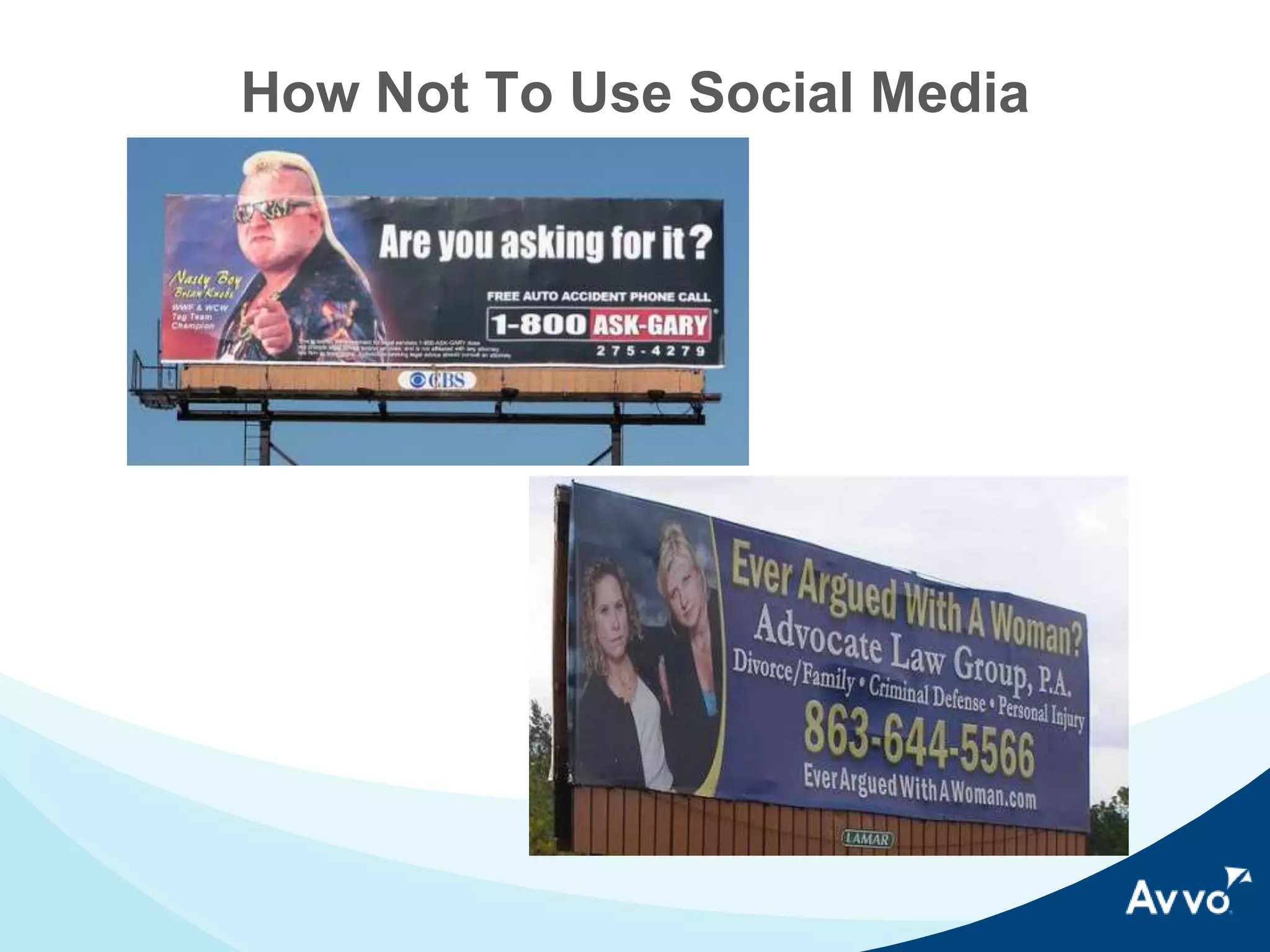
How Not To Use Social Media
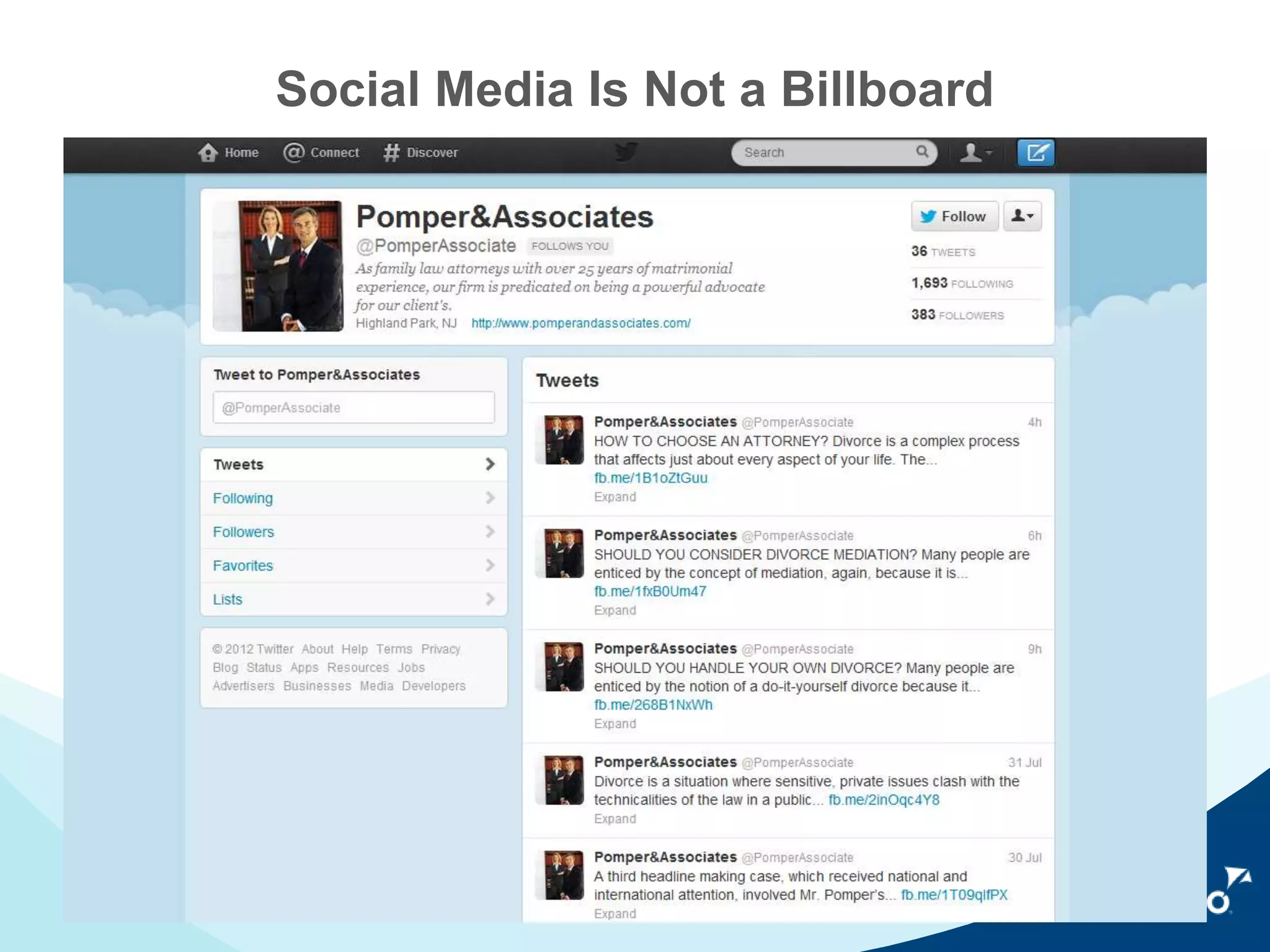
Social Media Is Not a Billboard

Social
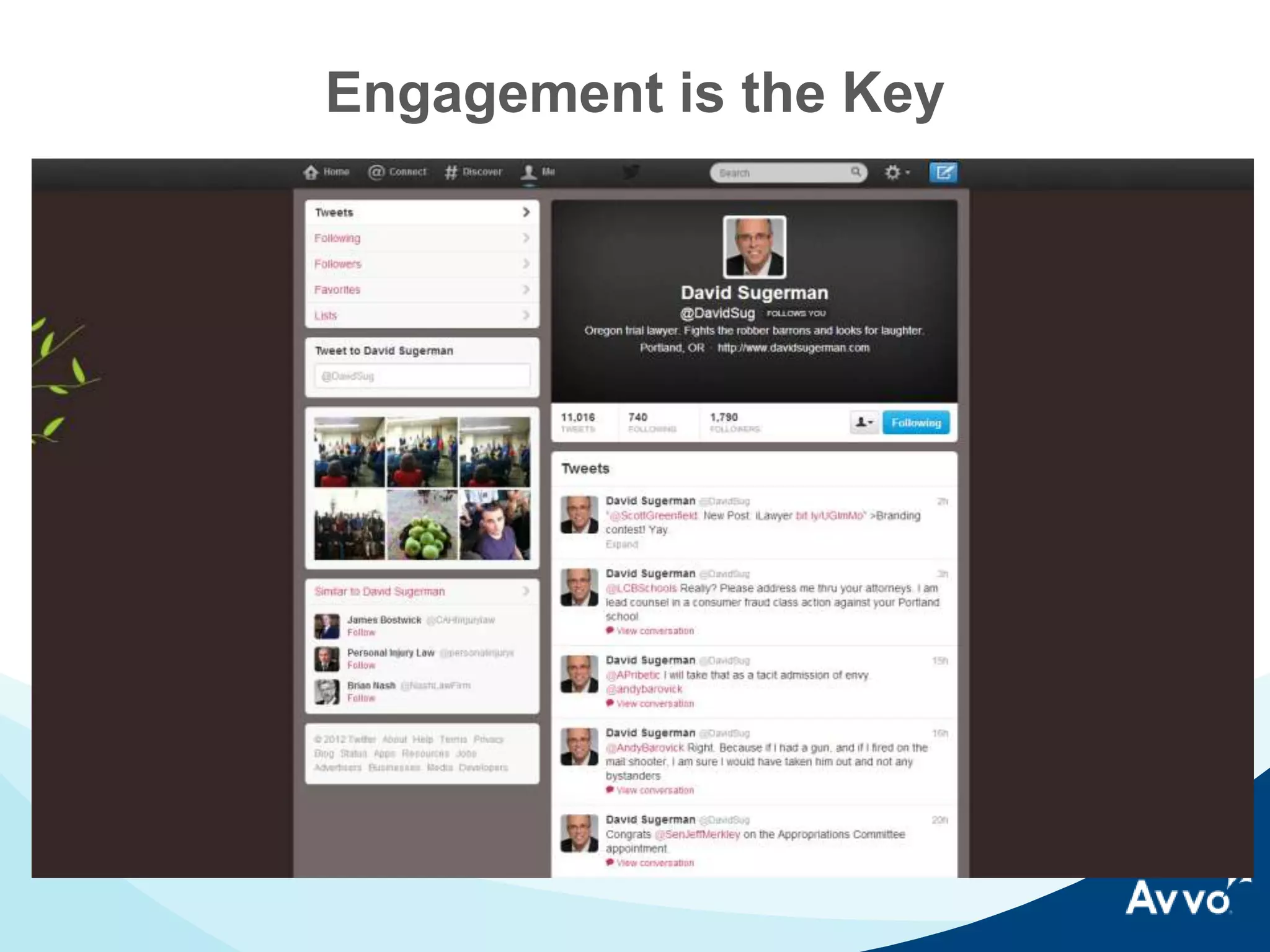
Engagement is the Key
Why Do Lawyers Worry
About Social Media?

Avvo, Inc. © 2014
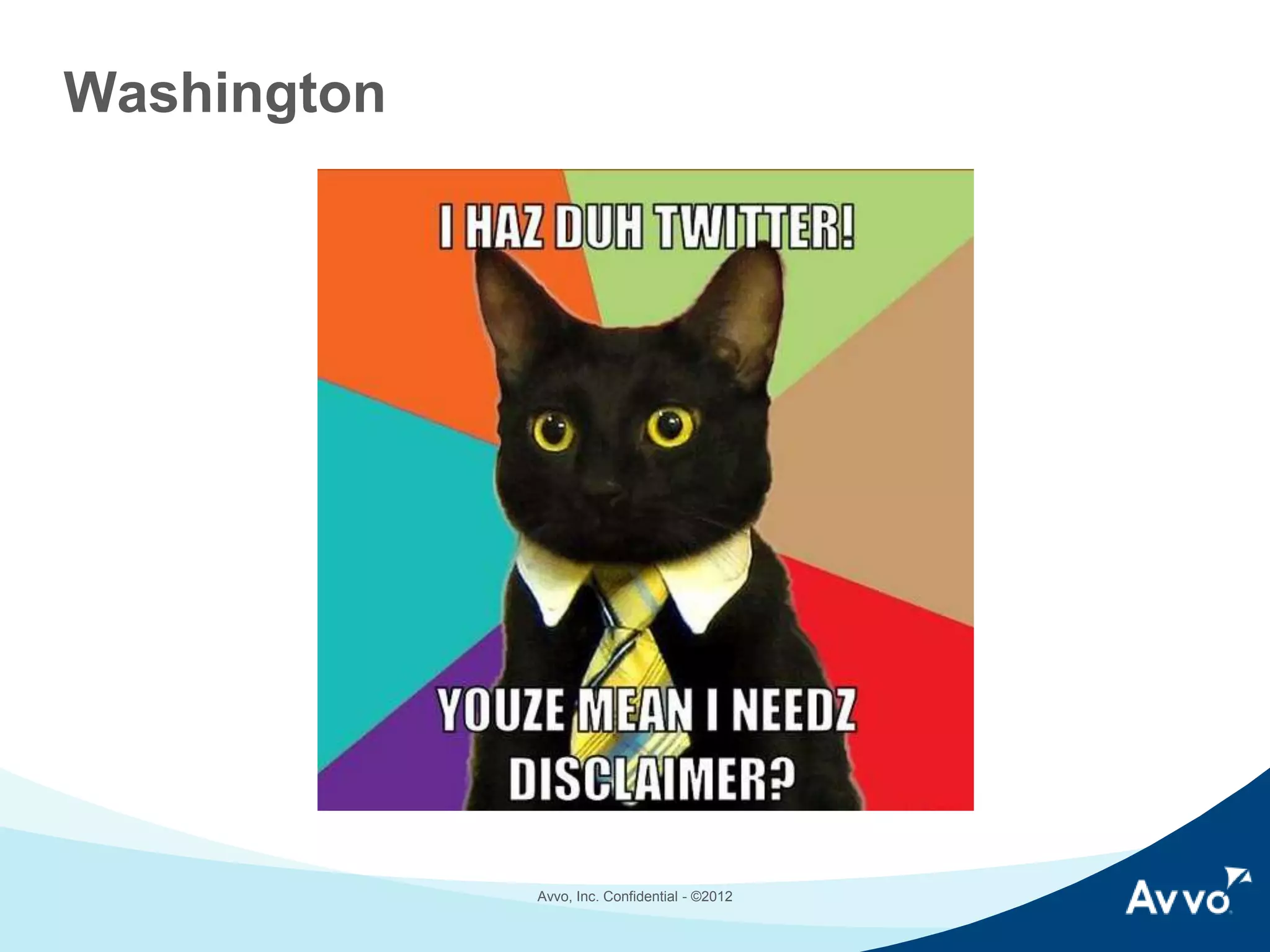
Washington

Avvo, Inc. © 2014
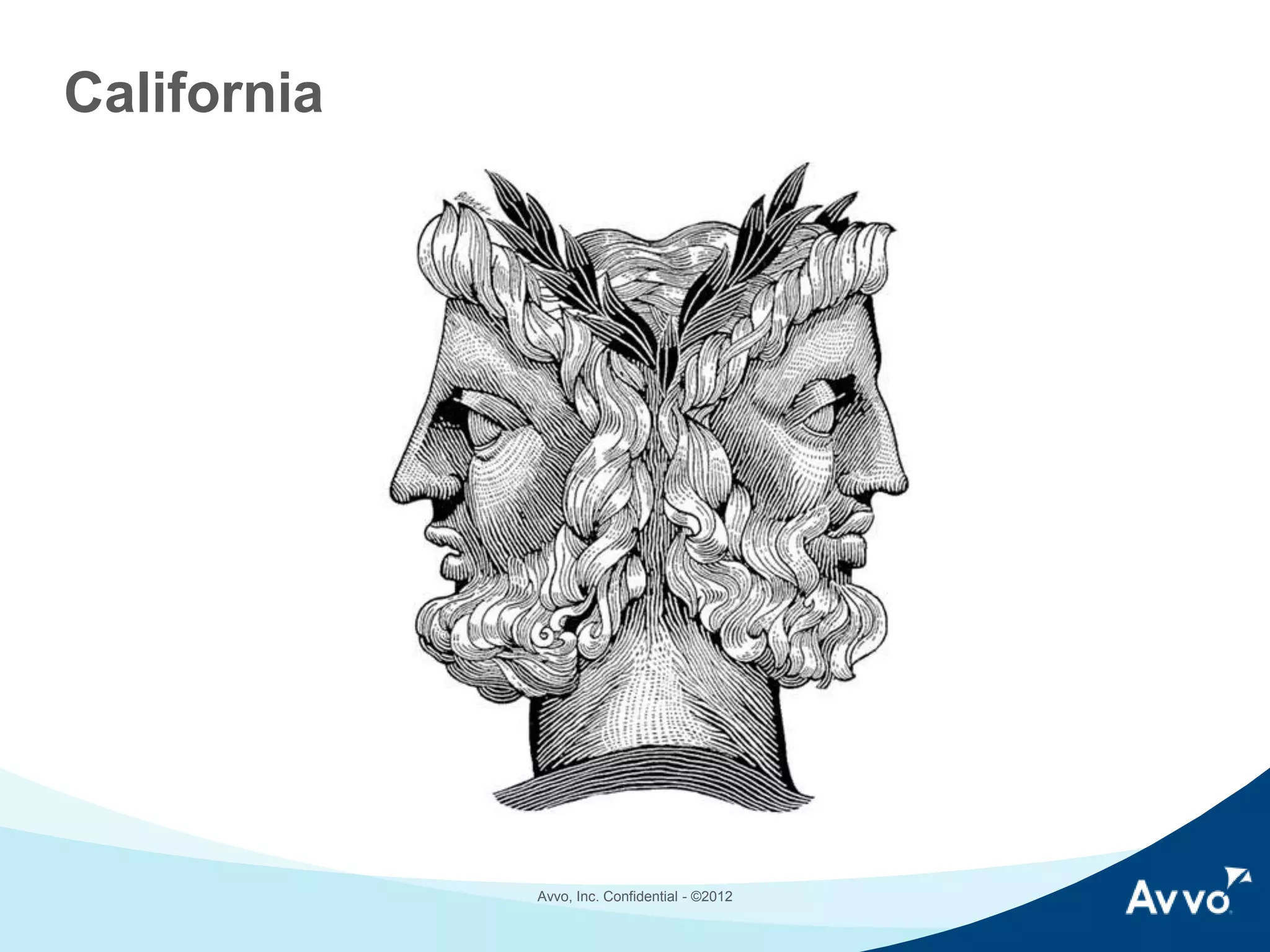
California

Avvo, Inc. © 2014
New York

Avvo, Inc. © 2014
Florida

Avvo, Inc. © 2014
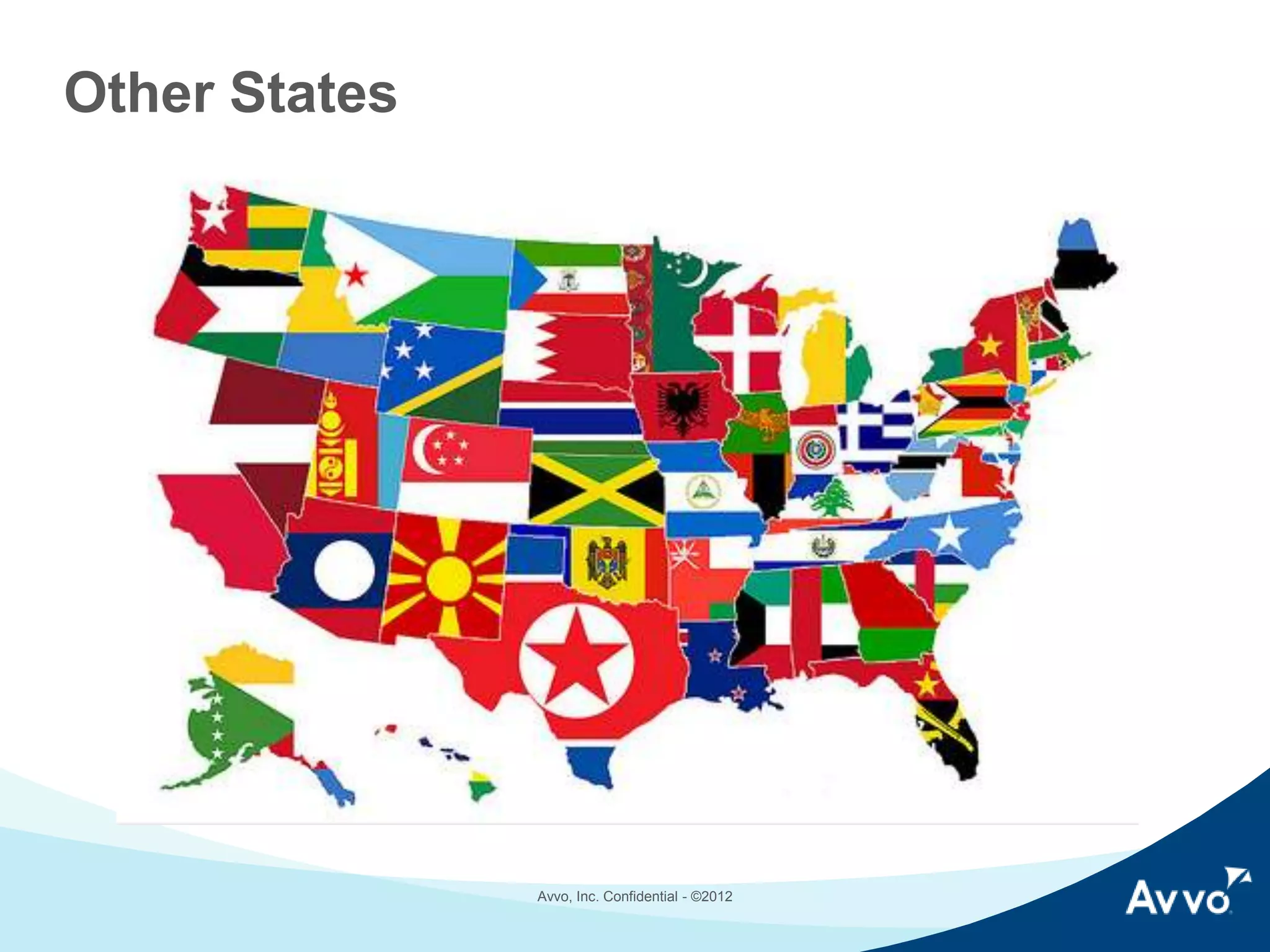
Other States

Avvo, Inc. © 2014
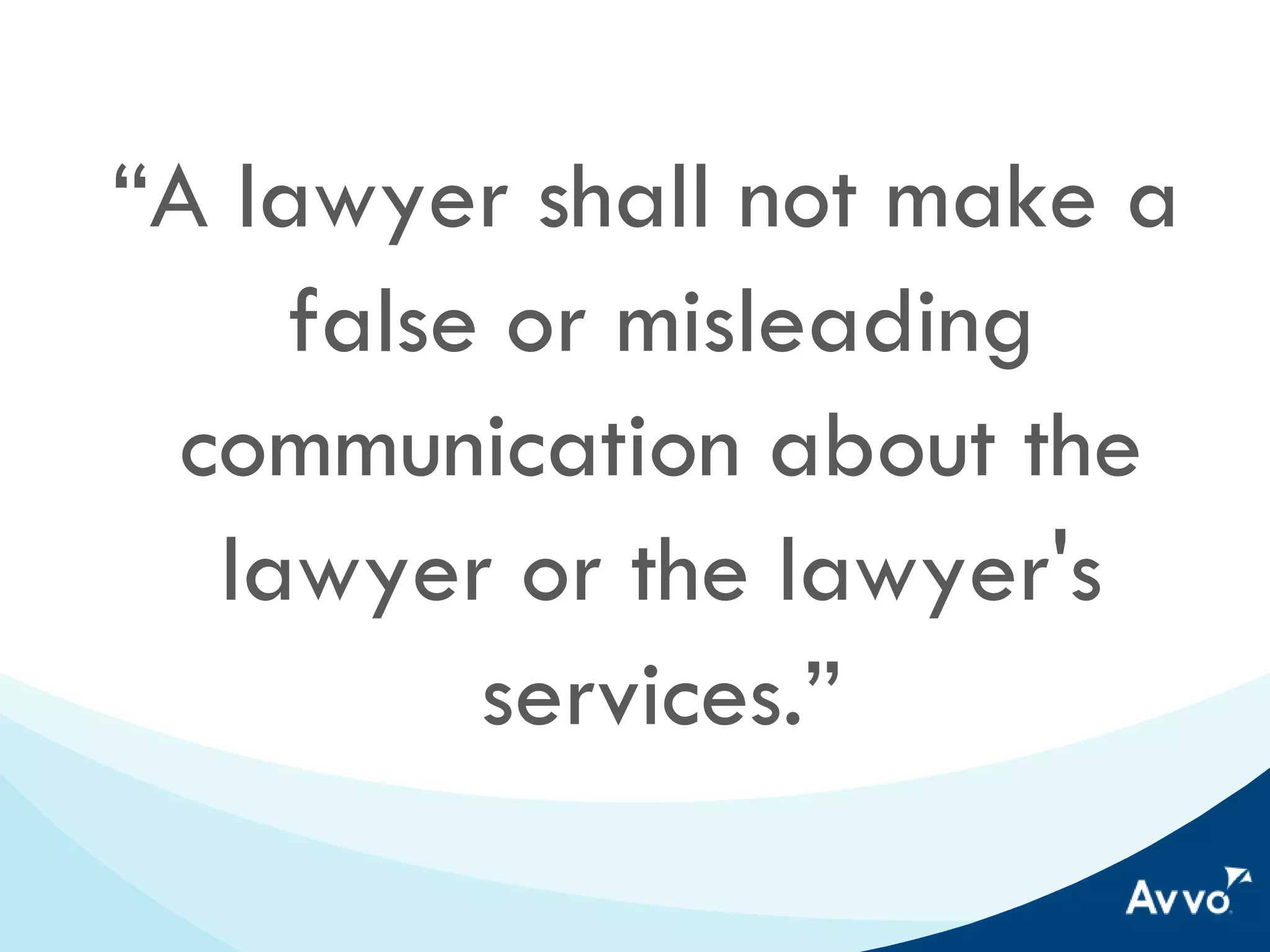
“A lawyer shall not make
a false or misleading
communication about the
lawyer or the lawyer's
services.”
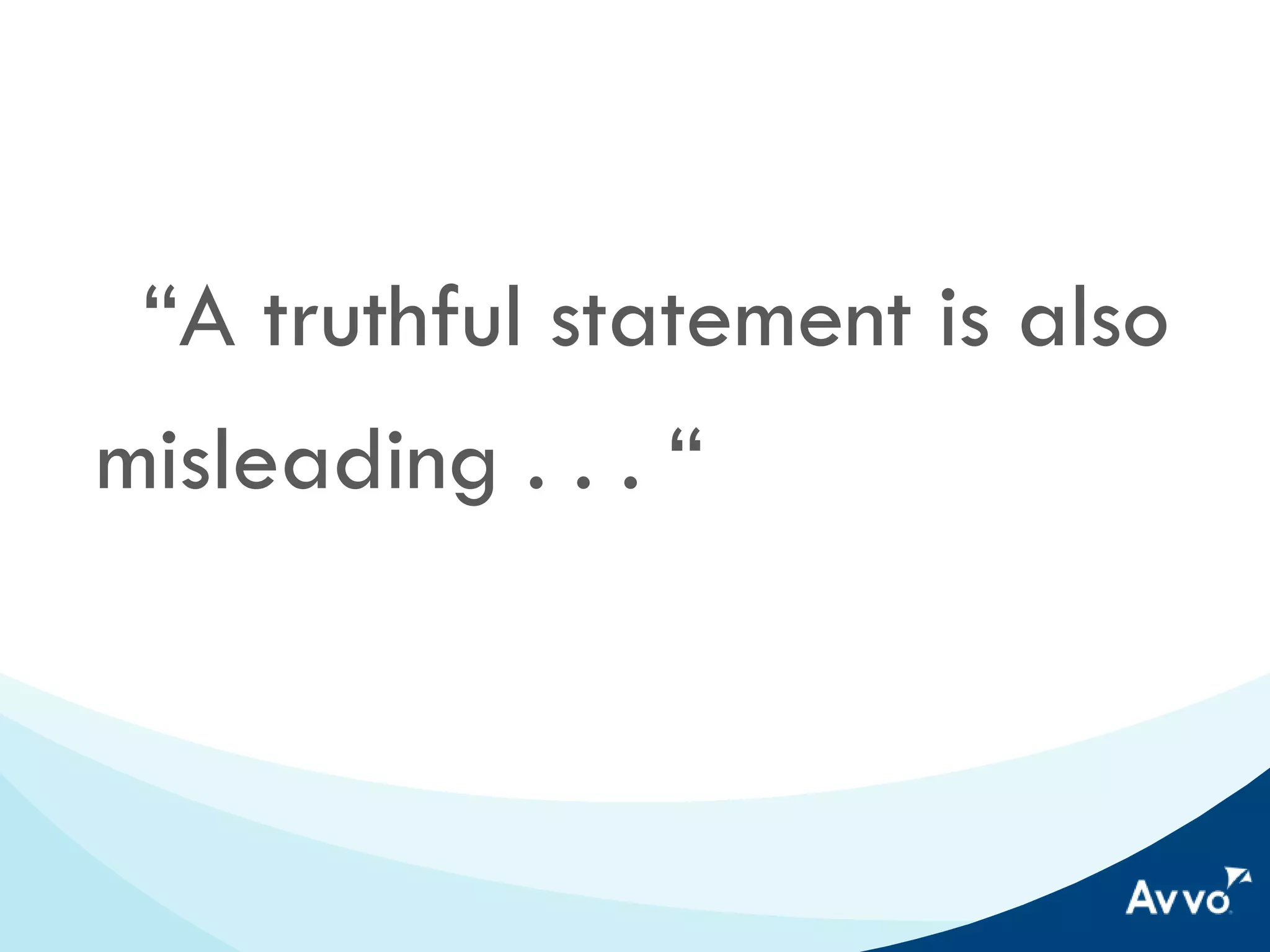
“A truthful statement is
also misleading . . . “
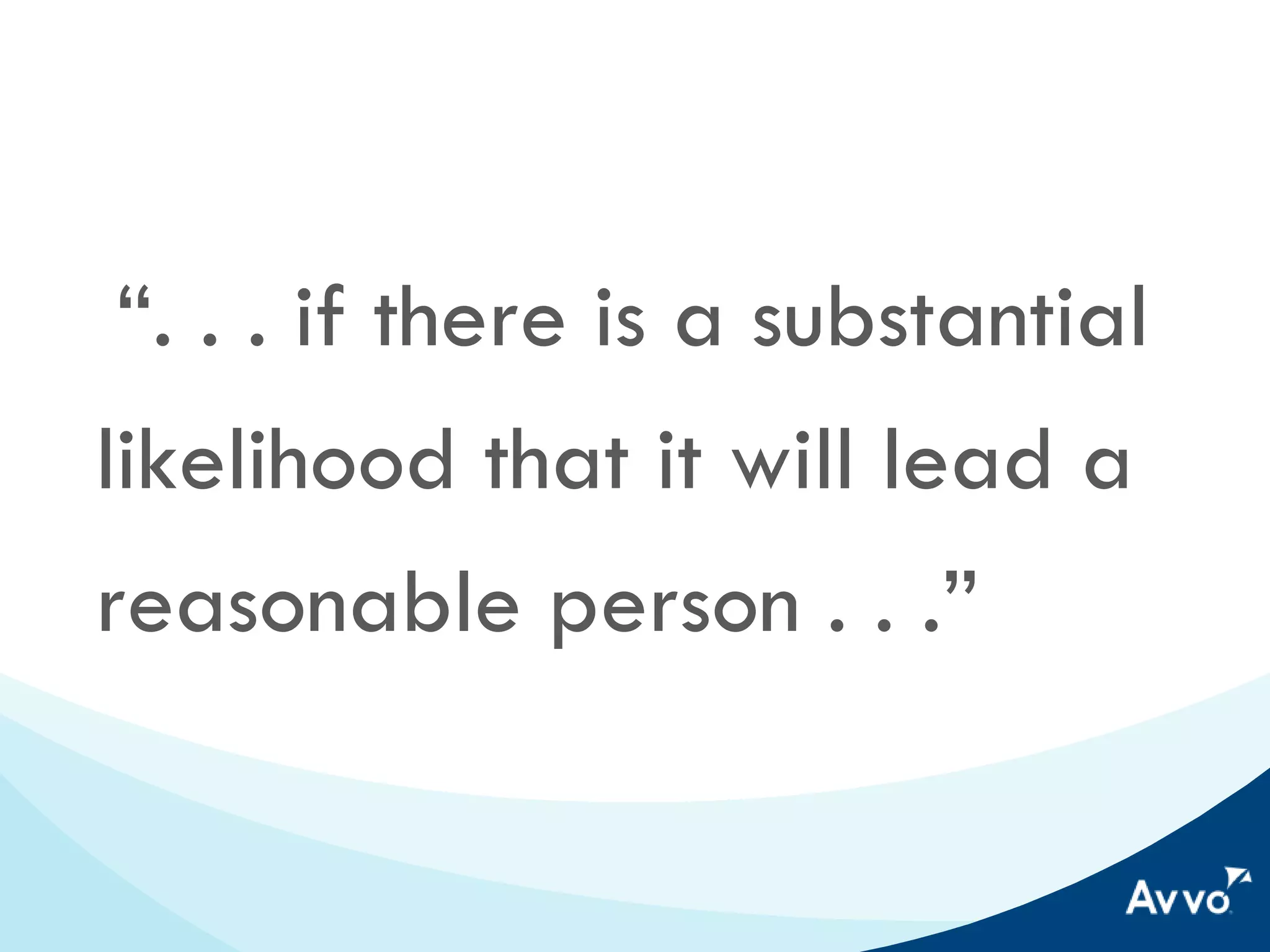
“. . . if there is a
substantial likelihood that
it will lead a reasonable
person . . .”
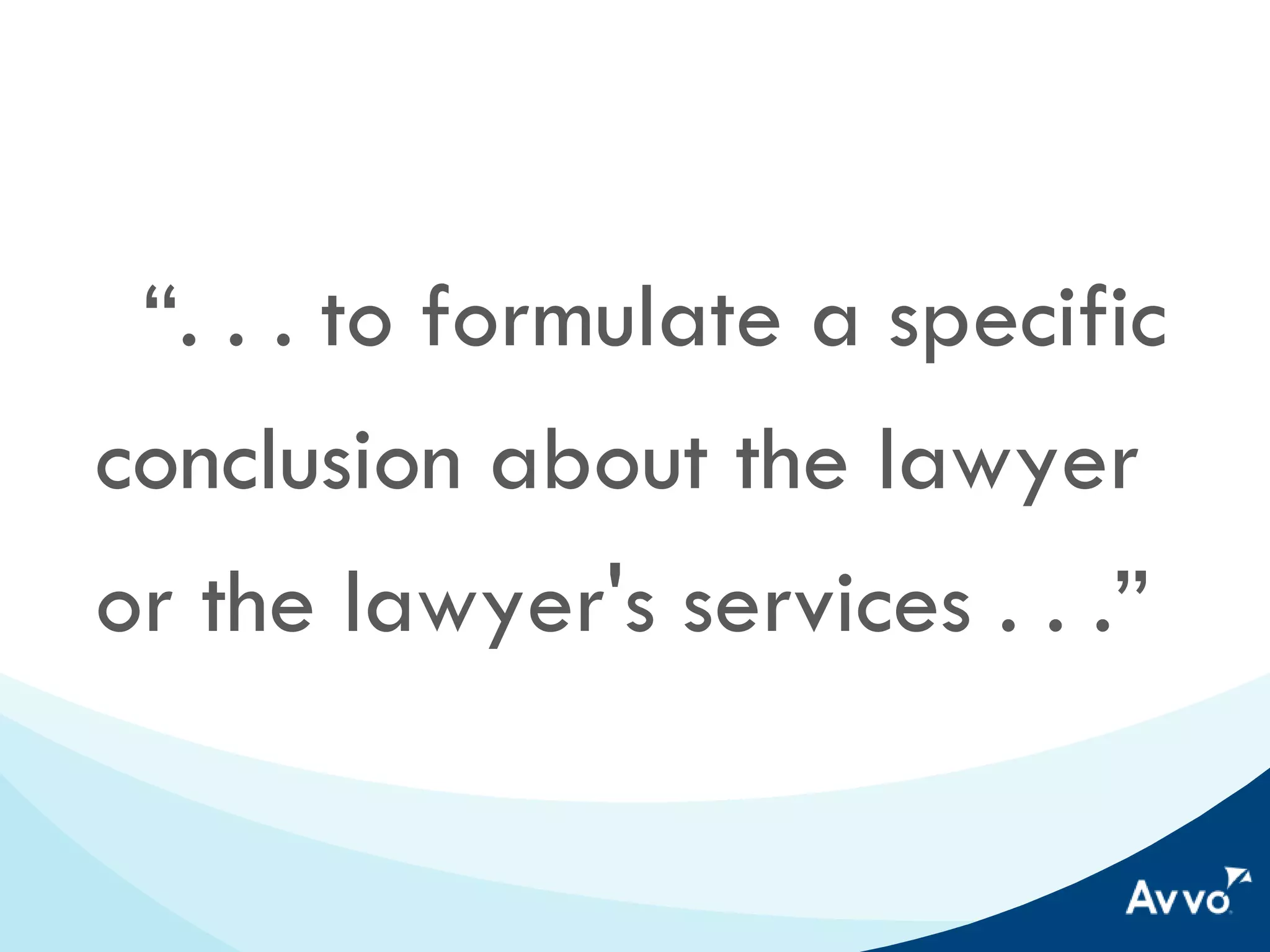
“. . . to formulate a
specific conclusion about
the lawyer or the lawyer's
services . . .”
“. . . for which there is no
reasonable factual
foundation.”
“Communication about a lawyer
or a lawyer’s services”

Avvo, Inc. © 2014
Avvo, Inc. © 2014
Avvo, Inc. © 2014
Avvo, Inc. © 2014
Avvo, Inc. © 2014
Avvo, Inc. © 2014
Avvo, Inc. © 2014
Avvo, Inc. © 2014
Avvo, Inc. © 2014
Avvo, Inc. © 2014
Avvo, Inc. © 2014
Avvo, Inc. - Copyright
2010

Avvo, Inc. © 2014
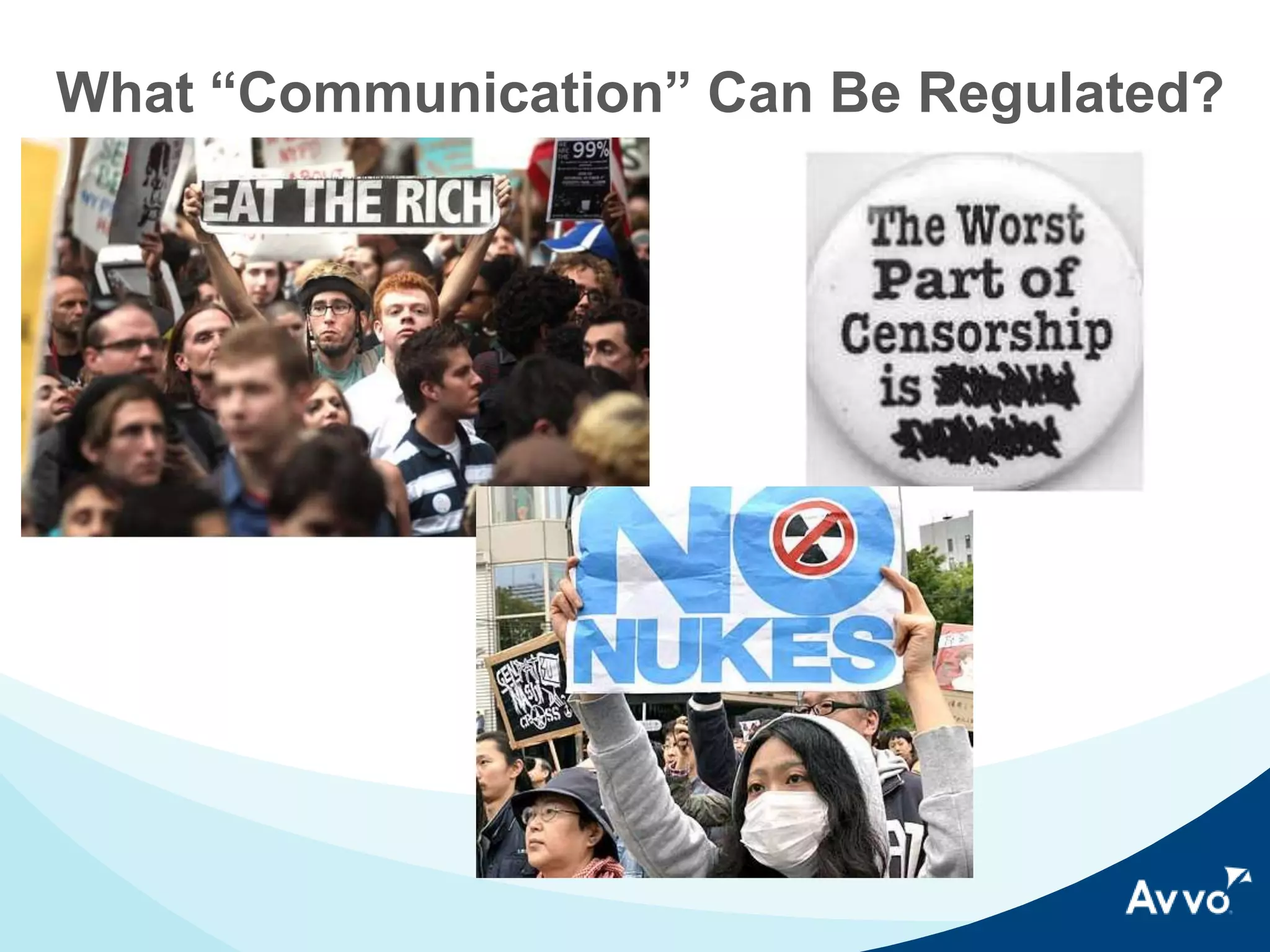
What “Communication” Can Be Regulated?
Regulation of
“Commercial Speech”
Central Hudson Gas &
Electric Corp. v Public
Service Commission
(1980)
“Commercial speech”
defined
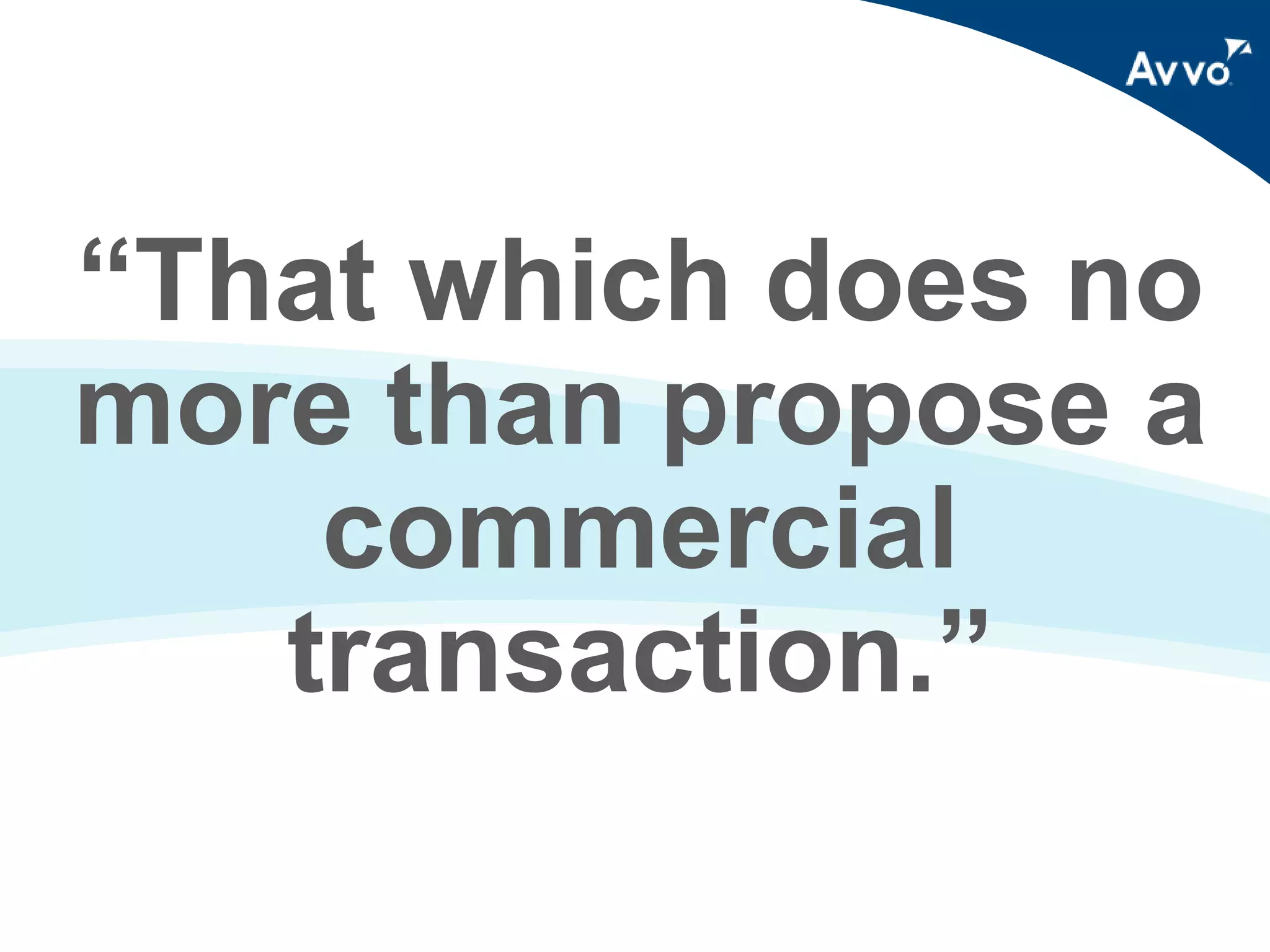
“That which does no
more than propose a
commercial
transaction.”
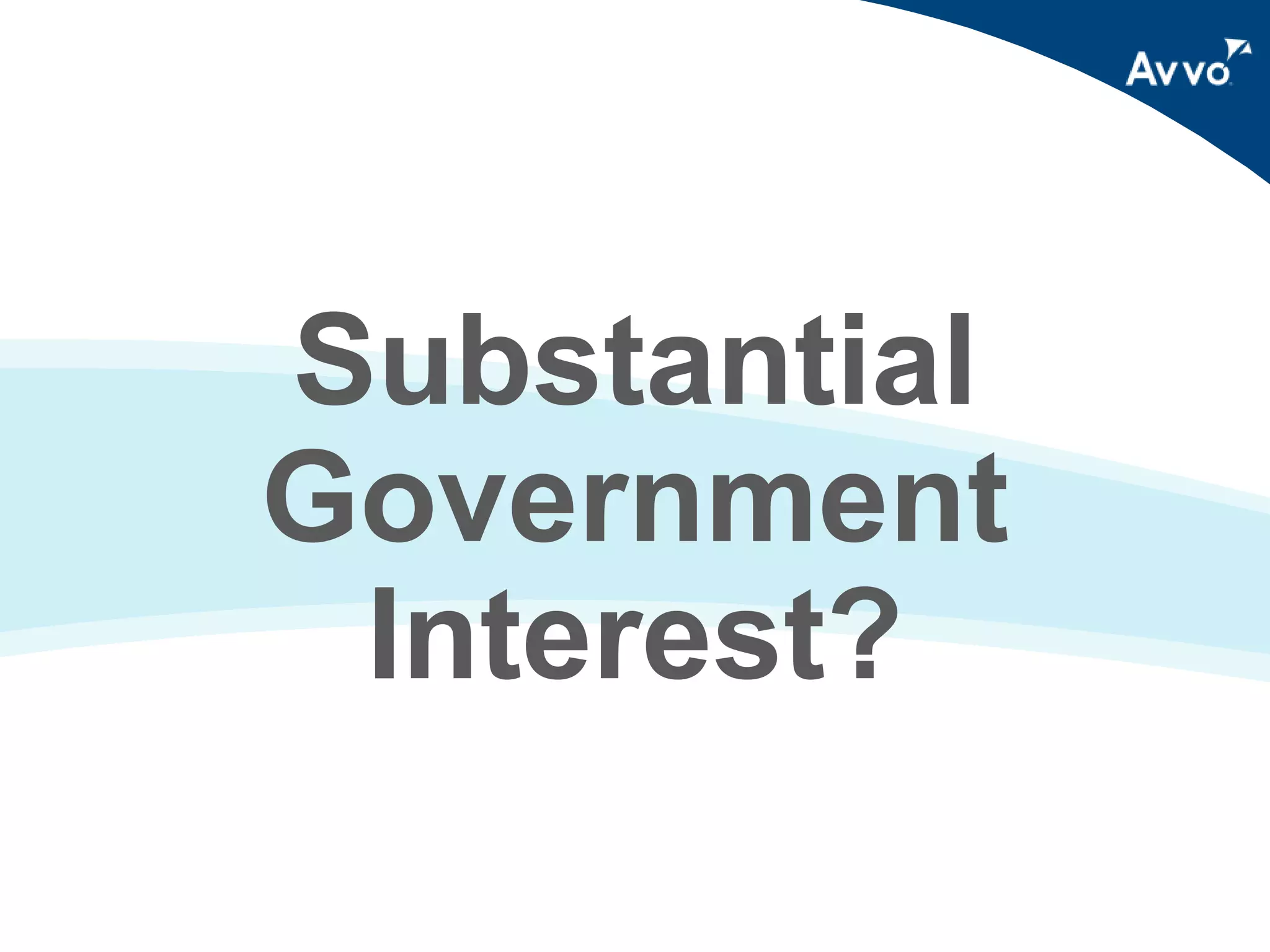
Substantial
Government
Interest?
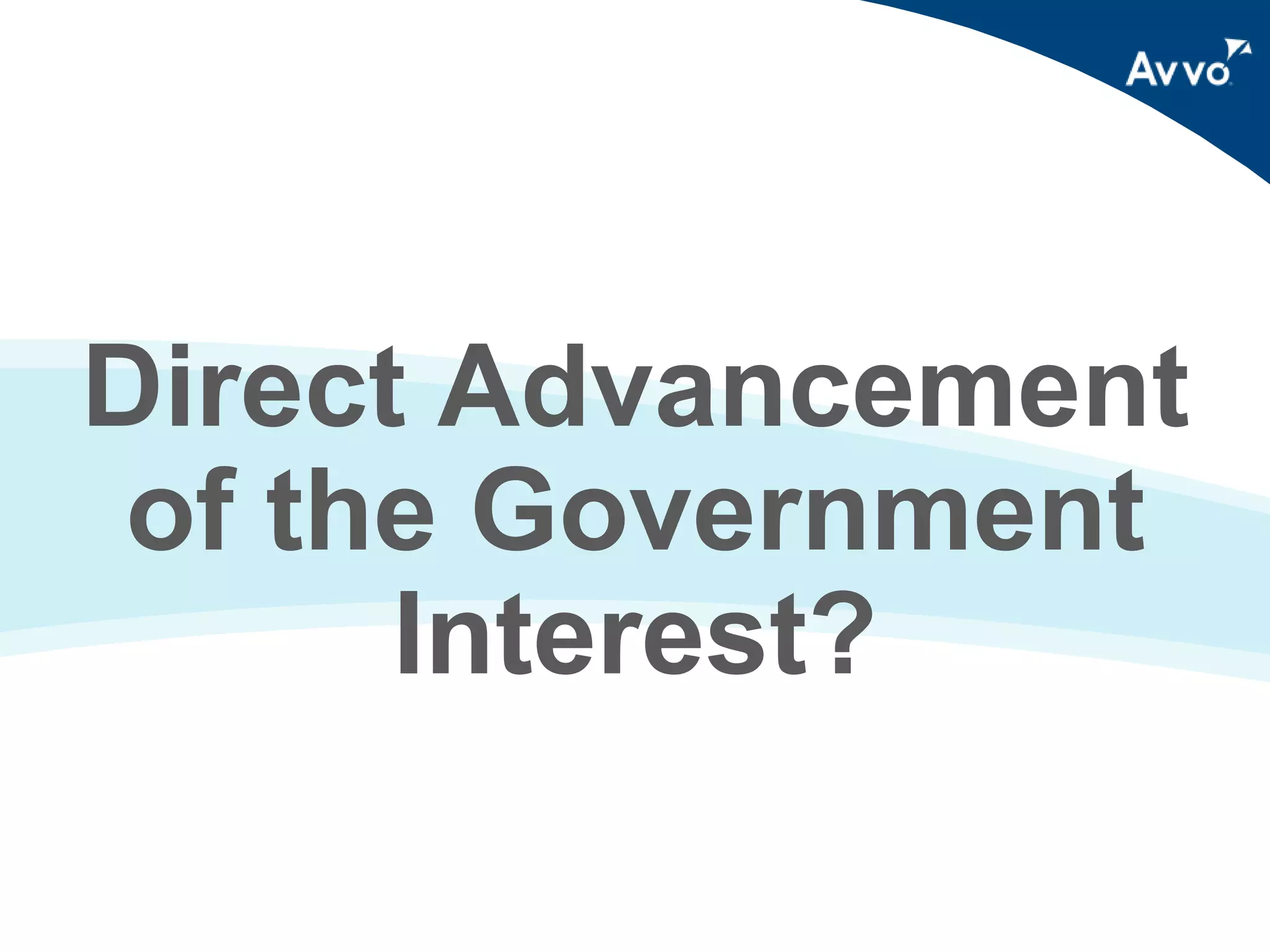
Direct Advancement
of the Government
Interest?
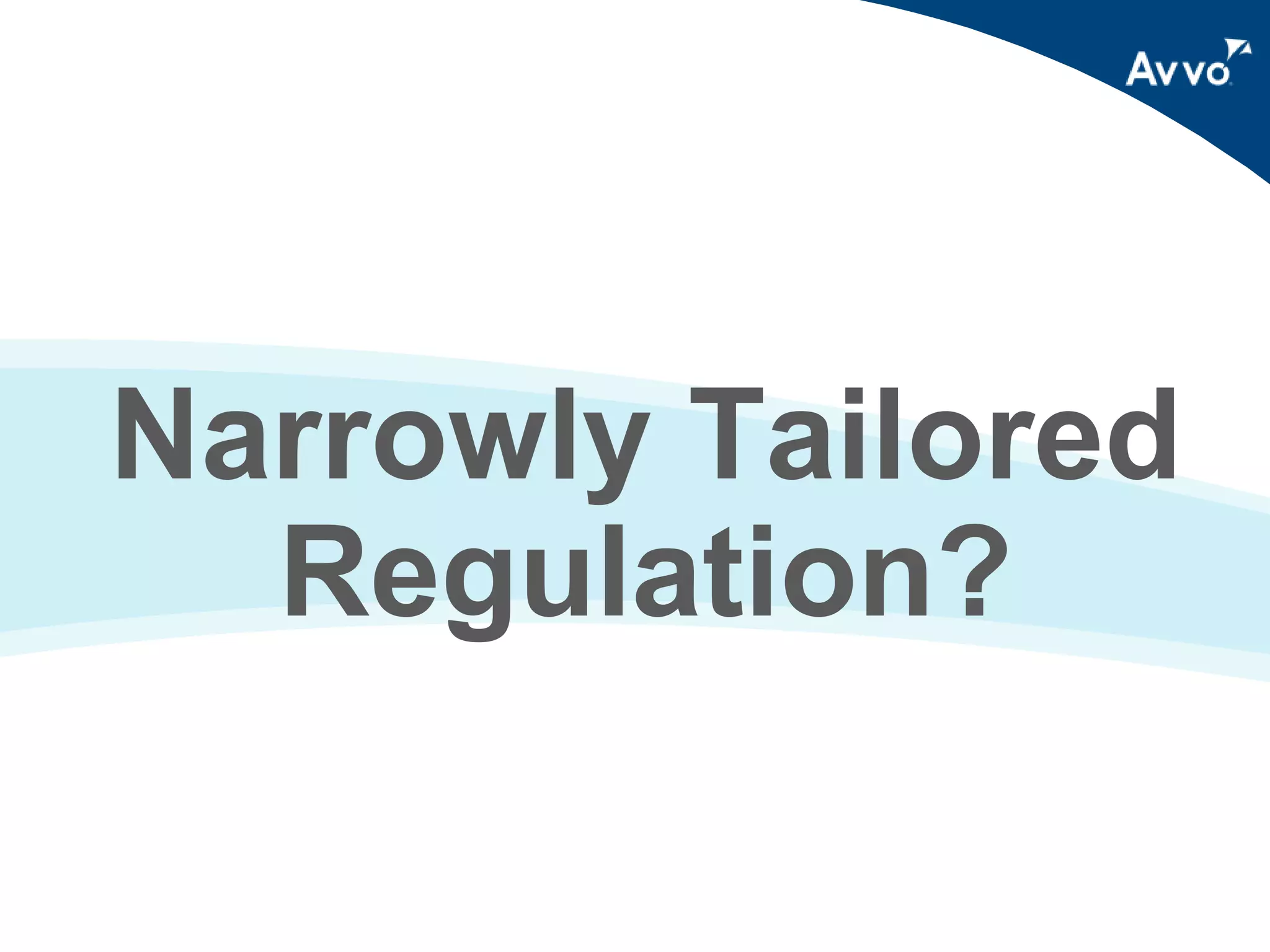
Narrowly Tailored
Regulation?
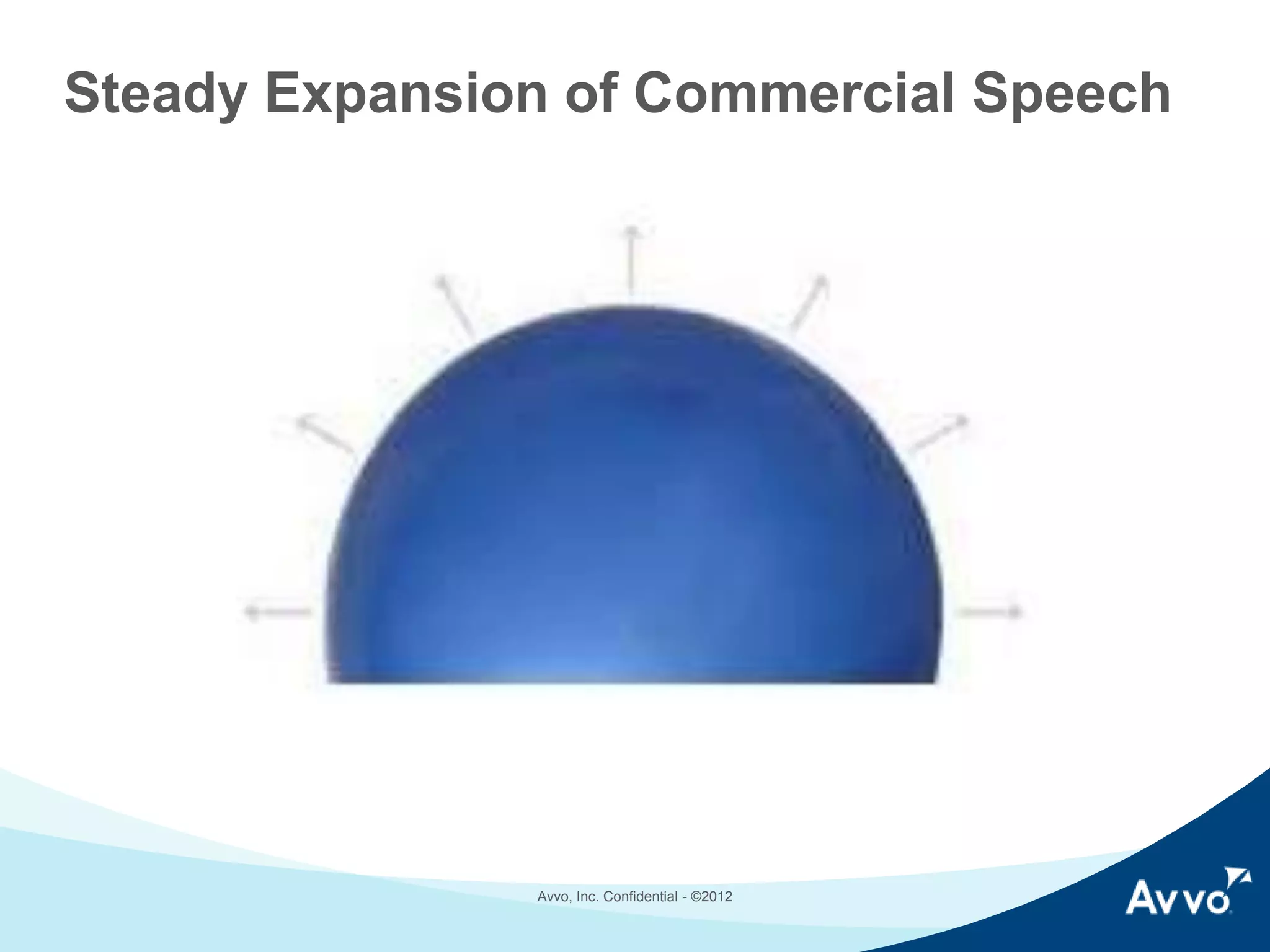
Steady Expansion of Commercial Speech

Avvo, Inc. © 2014
Specific Areas to Pay
Attention To

Avvo, Inc. © 2014
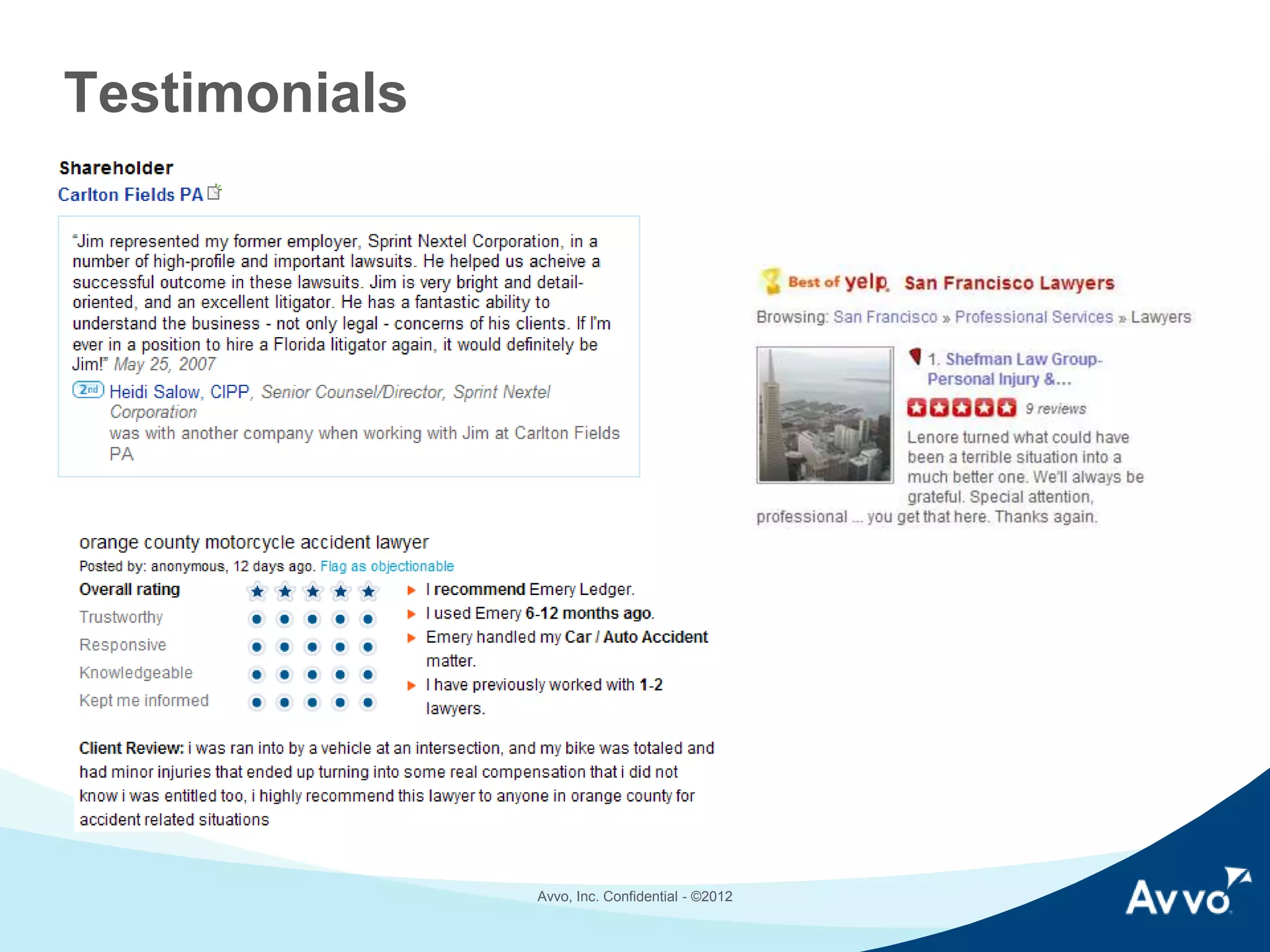
Testimonials

Avvo, Inc. © 2014
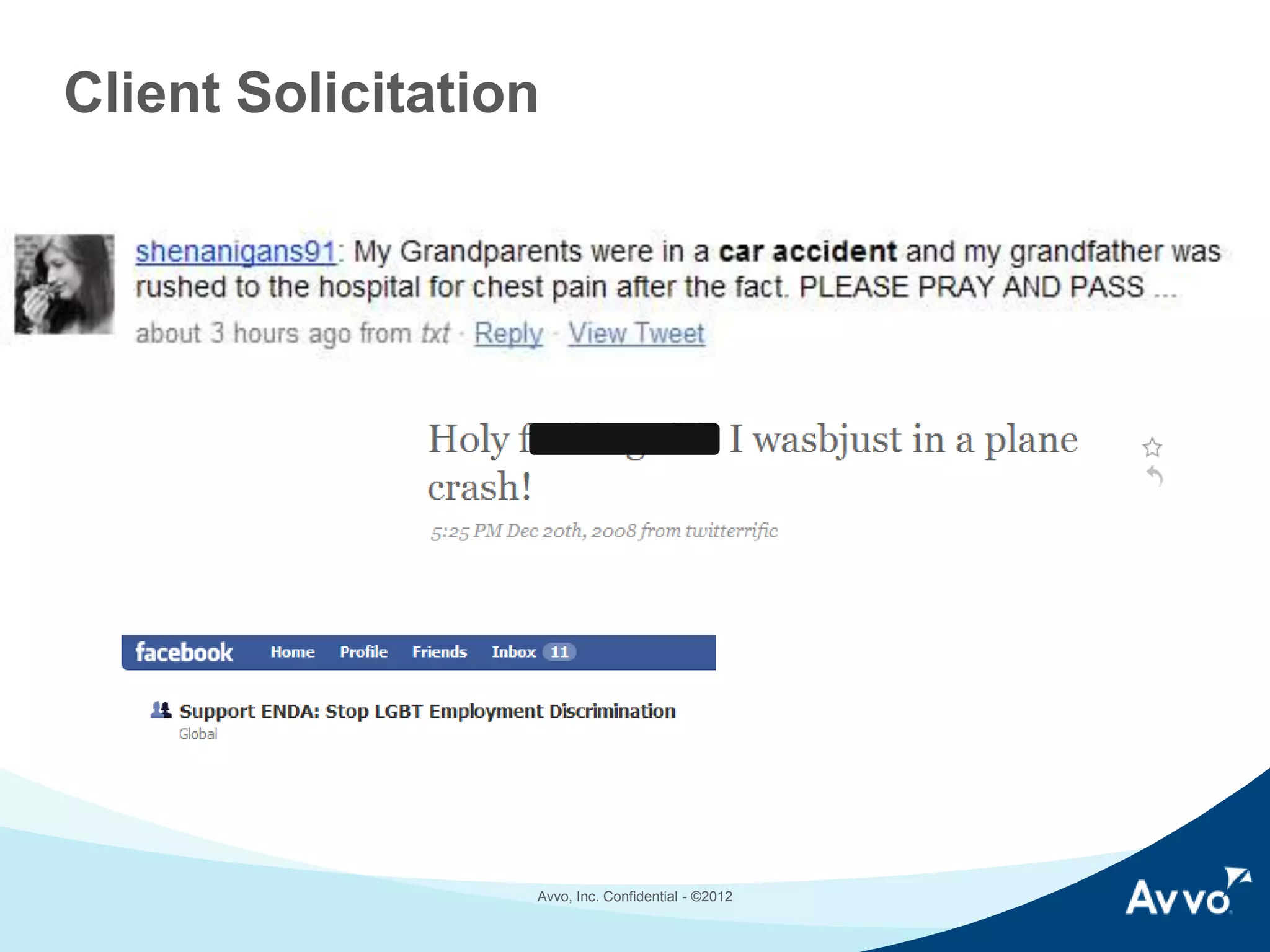
Client Solicitation

Avvo, Inc. © 2014
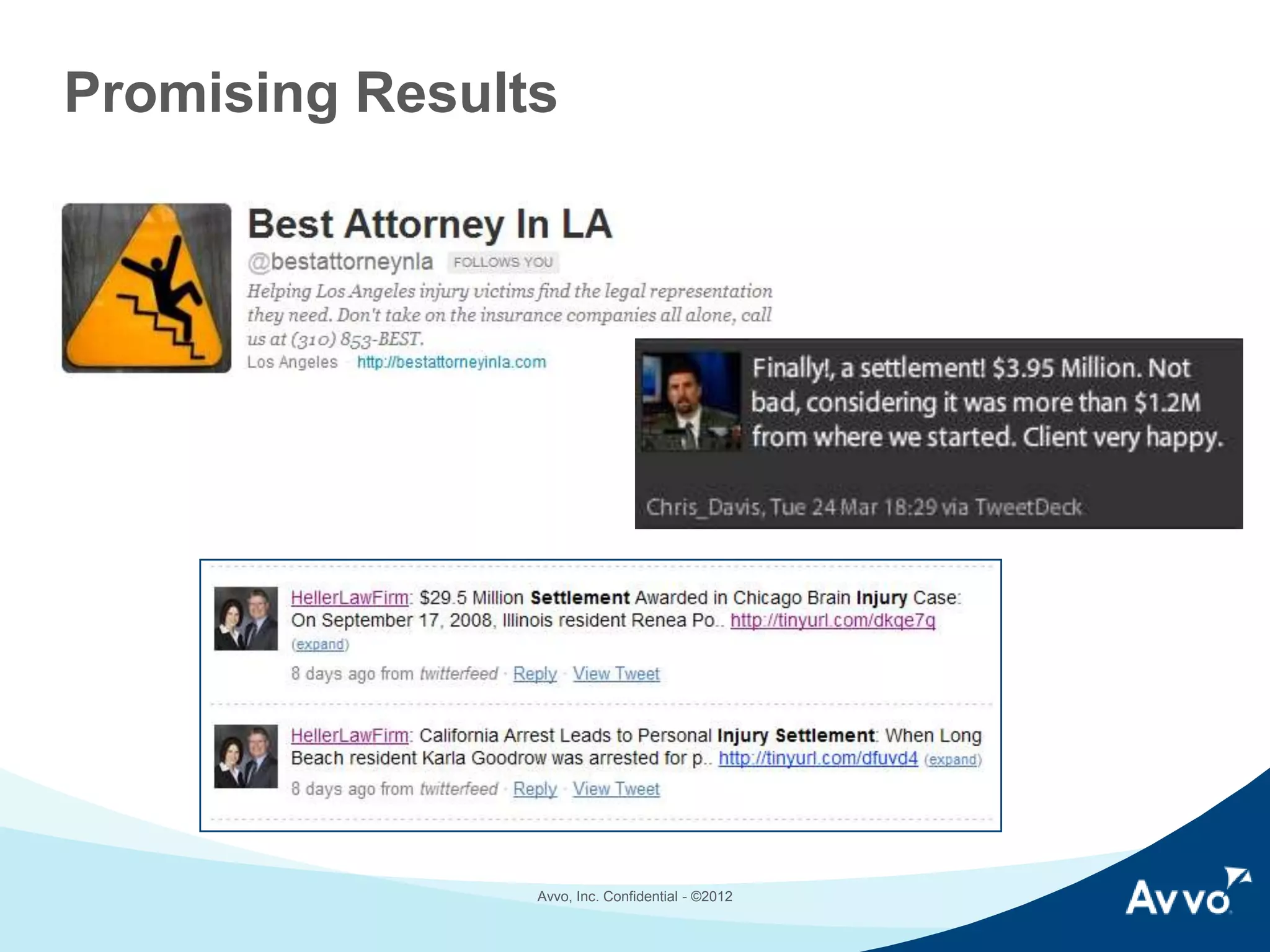
Promising Results

Avvo, Inc. © 2014
Using Social Media to Advertise
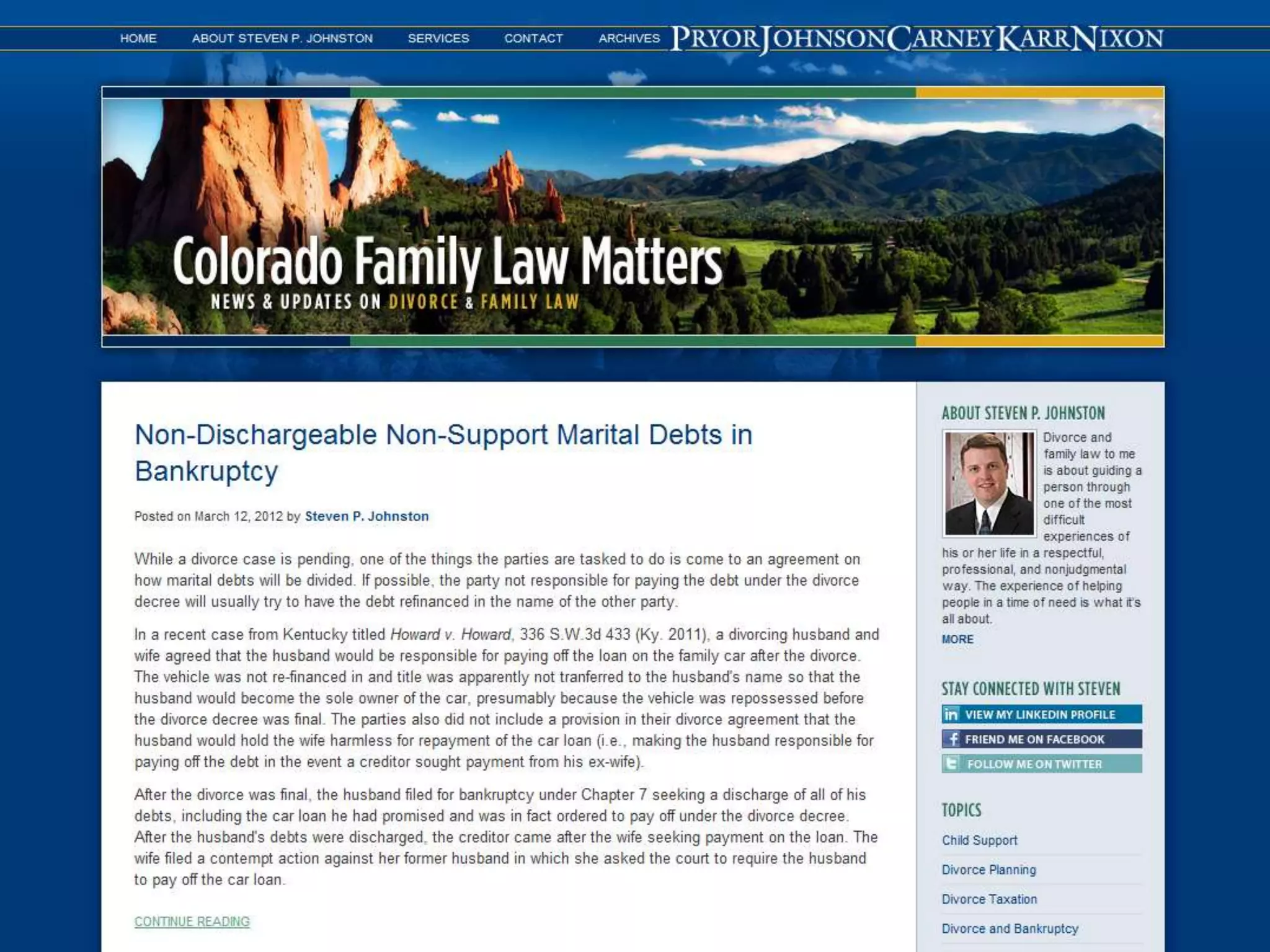
Blogging About Clients

Avvo, Inc. © 2014
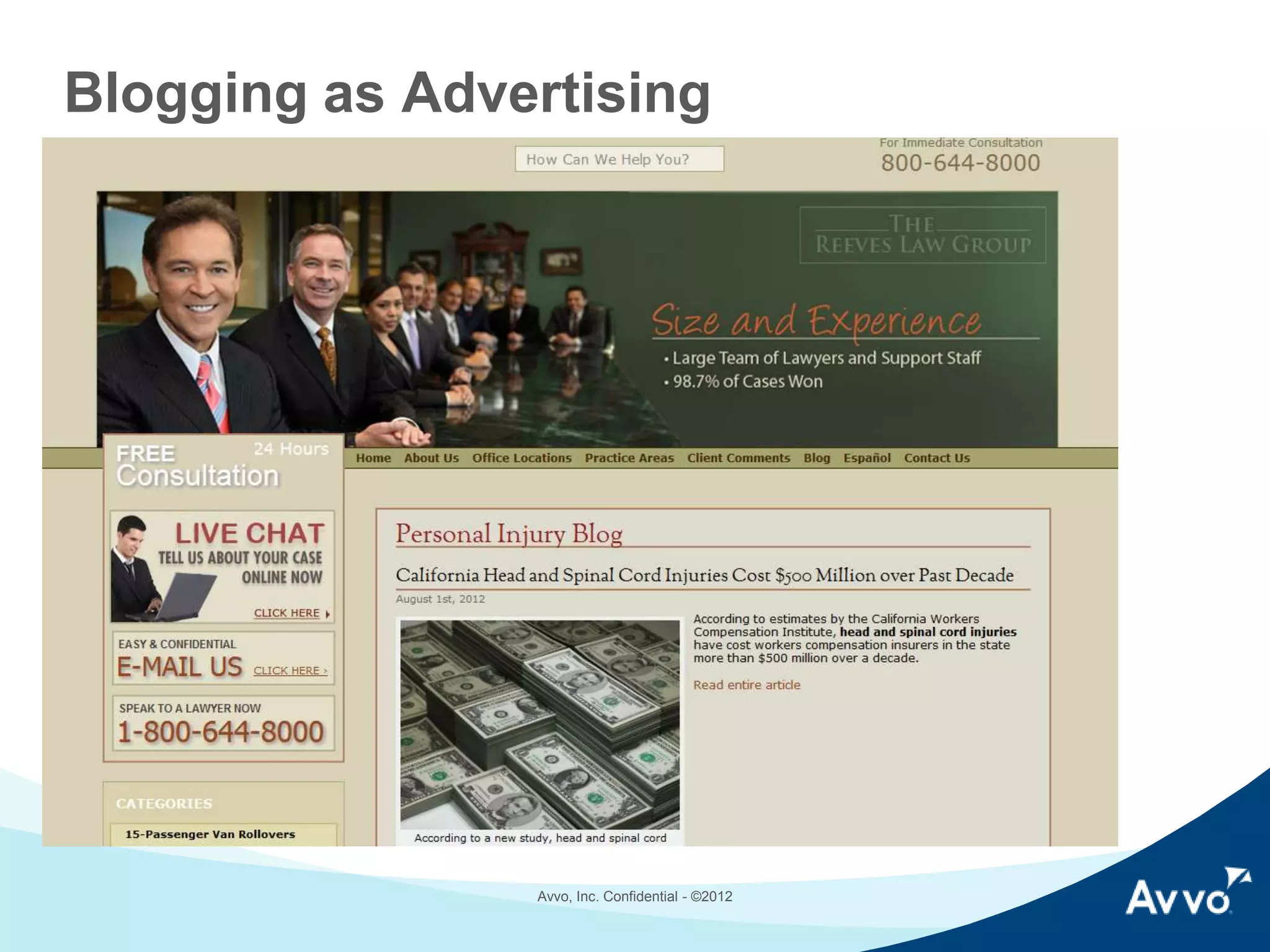
Blogging as Advertising

Avvo, Inc. © 2014
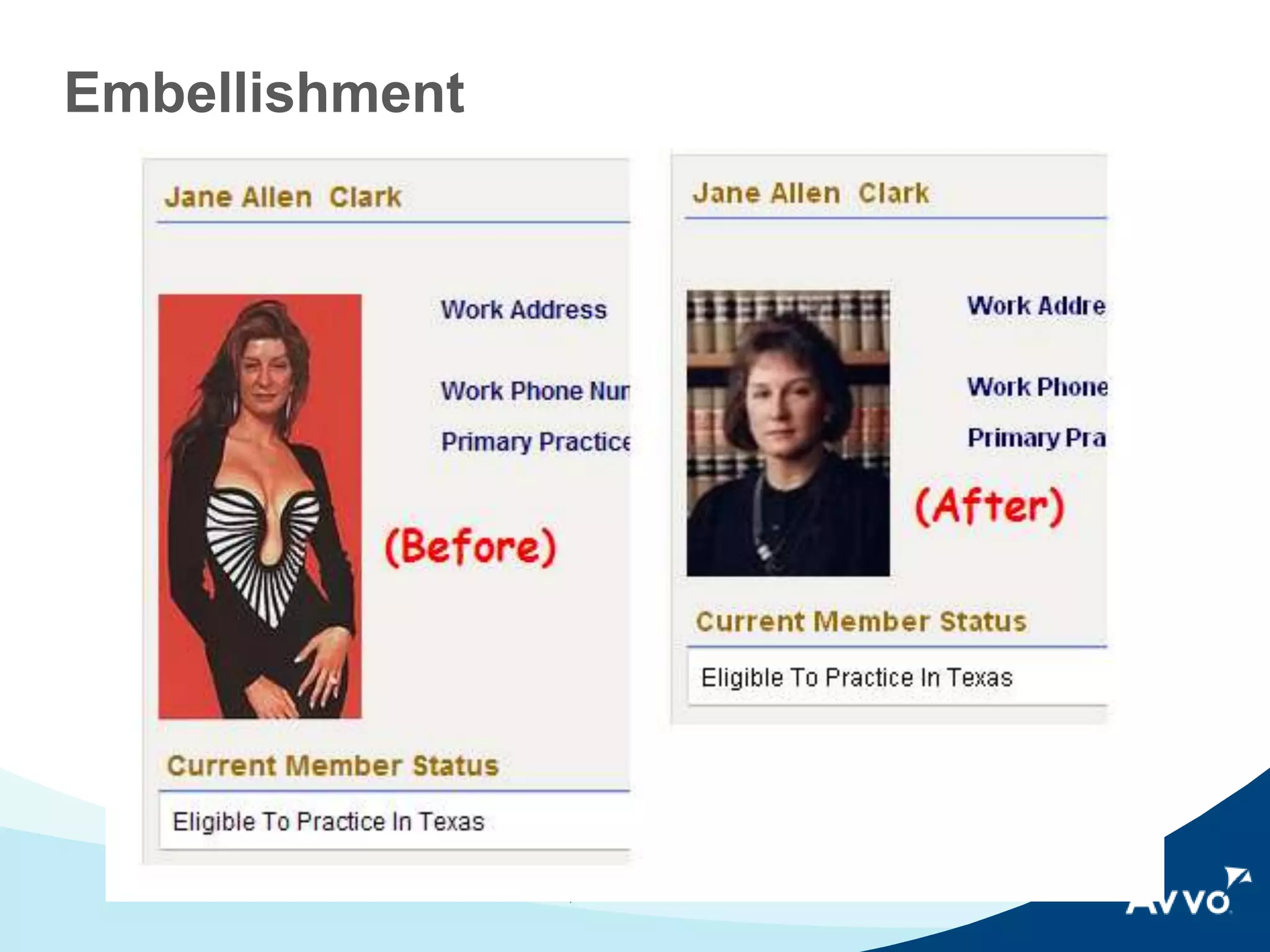
Embellishment

Avvo, Inc. © 2014
Misrepresentation

Avvo, Inc. © 2014
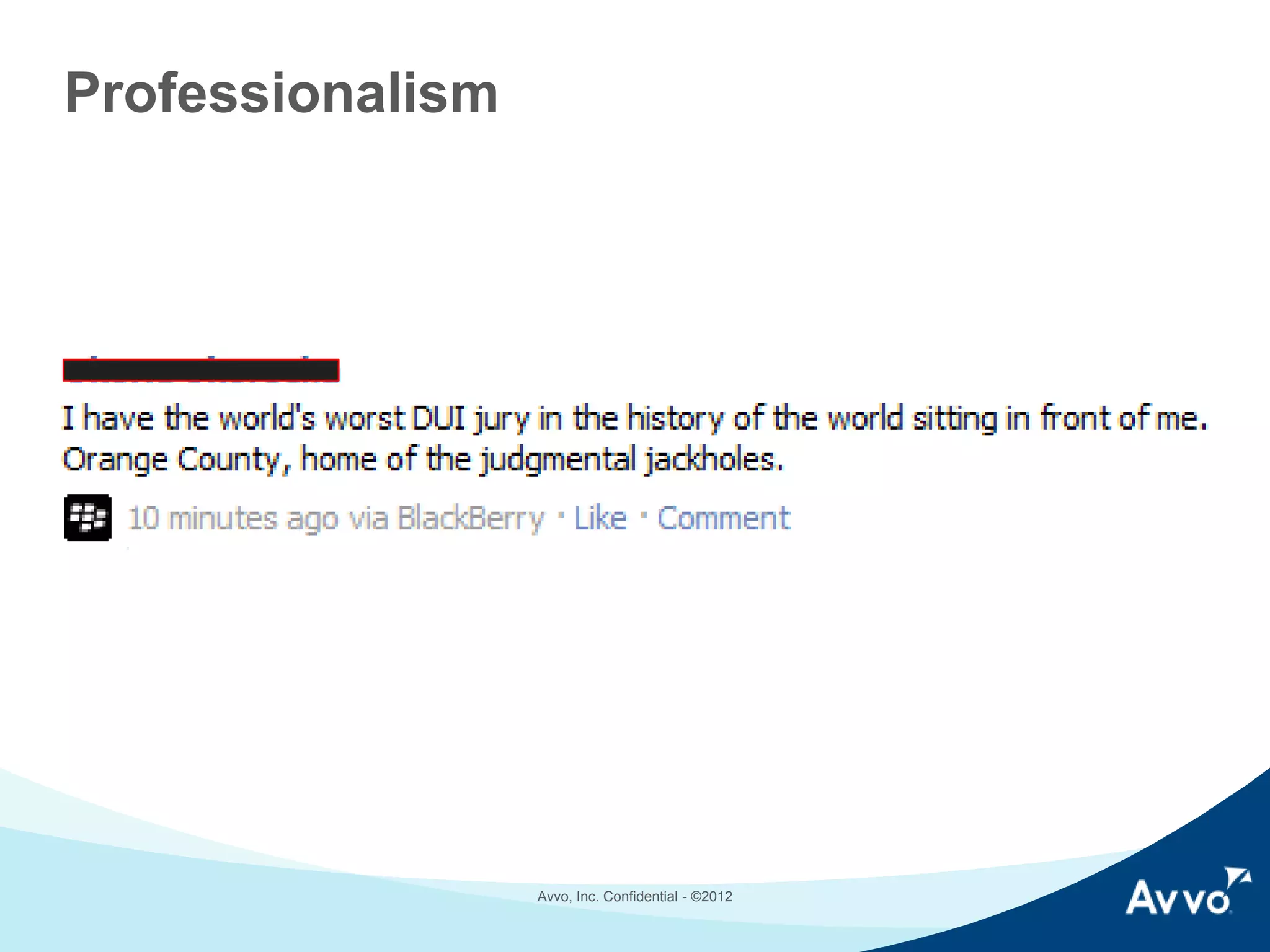
Professionalism

Avvo, Inc. © 2014
Questions?

Josh King
General Counsel &
Vice President, Business Development
Avvo, Inc.
Twitter:

@joshuamking

Email:

josh@avvo.com

Stay up to date on
developments in the law of
social media – and get
notification of upcoming
free Avvo CLE webinars –
with my new monthly email
newsletter:

“Socially Awkward – Where
Social Media Meets the
Practice of Law”
Email “subscribe” to
josh@avvo.com

Avvo, Inc. © 2014

Ethical issues in social media

Editor's Notes

  • #5 “Stay informed & inform”: Raises few issues (except with respect to solicitation). “Expand Referral Network”: For corporate counsel, this means expanding the network of potential employers, employees or business partners.“Increase Online Footprint”: Important for reasons related to expanding your referral network, but also for reputation management.
  • #7 “Stay informed & inform”: Raises few issues (except with respect to solicitation). “Expand Referral Network”: For corporate counsel, this means expanding the network of potential employers, employees or business partners.“Increase Online Footprint”: Important for reasons related to expanding your referral network, but also for reputation management.
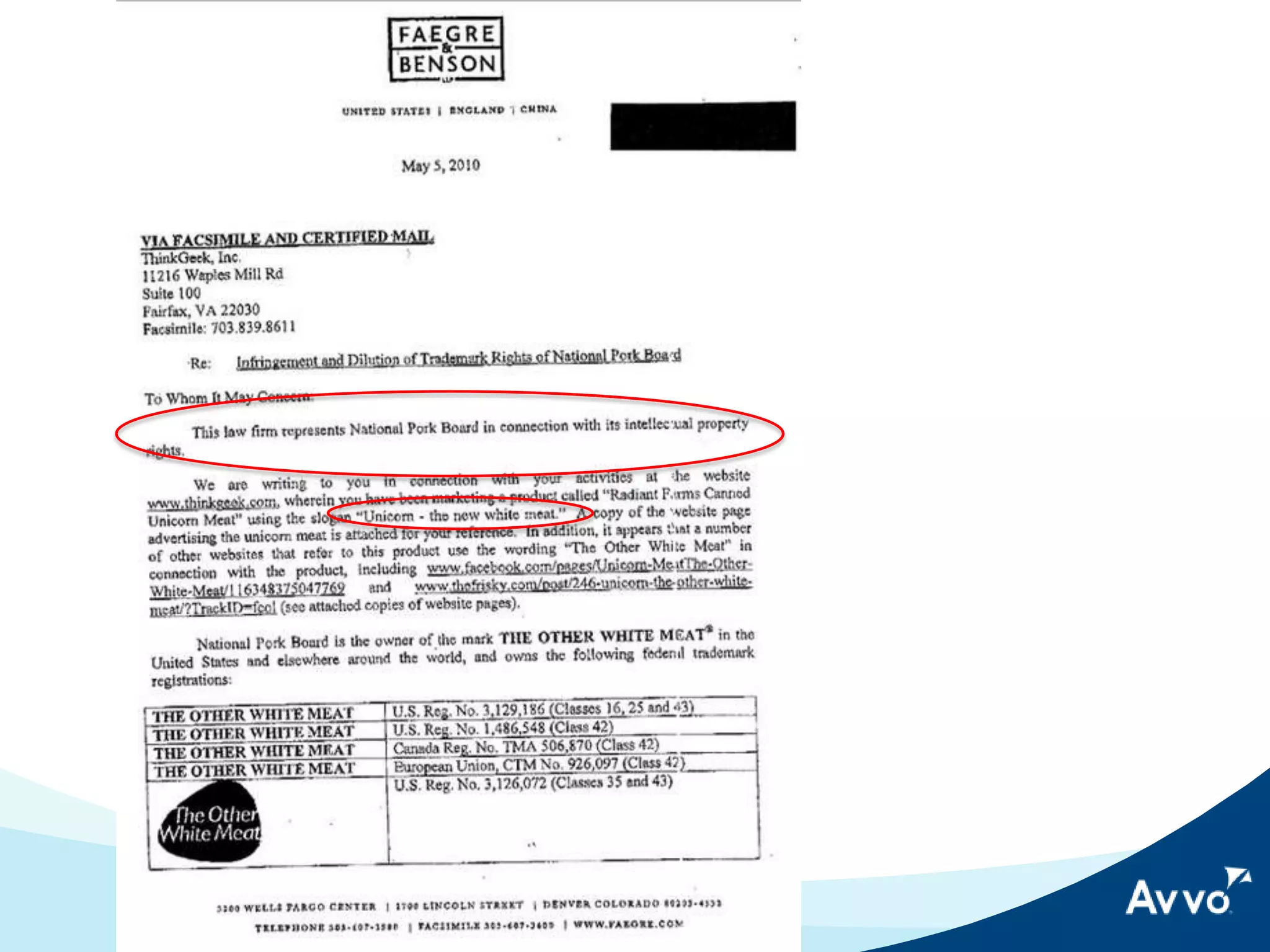
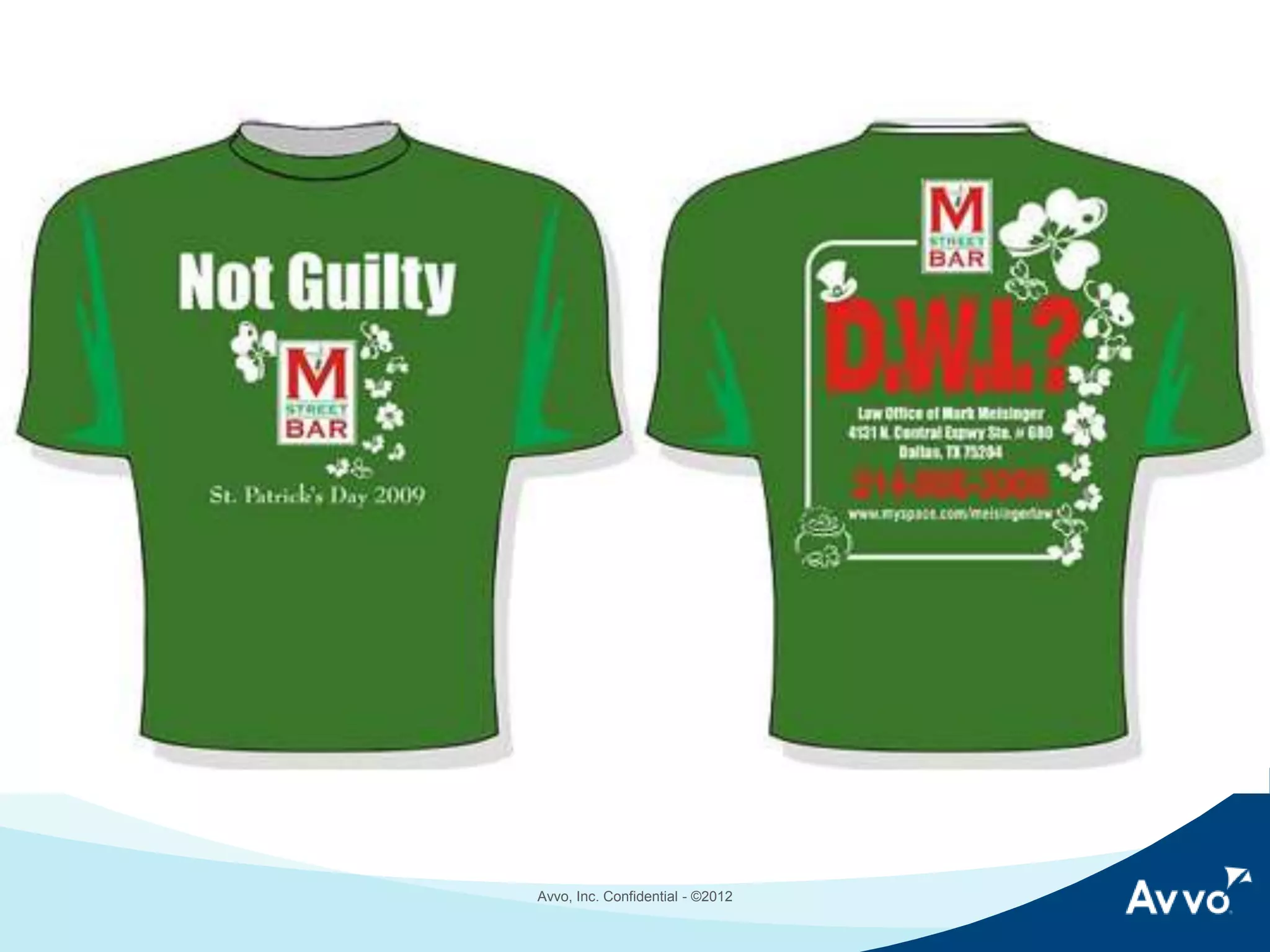
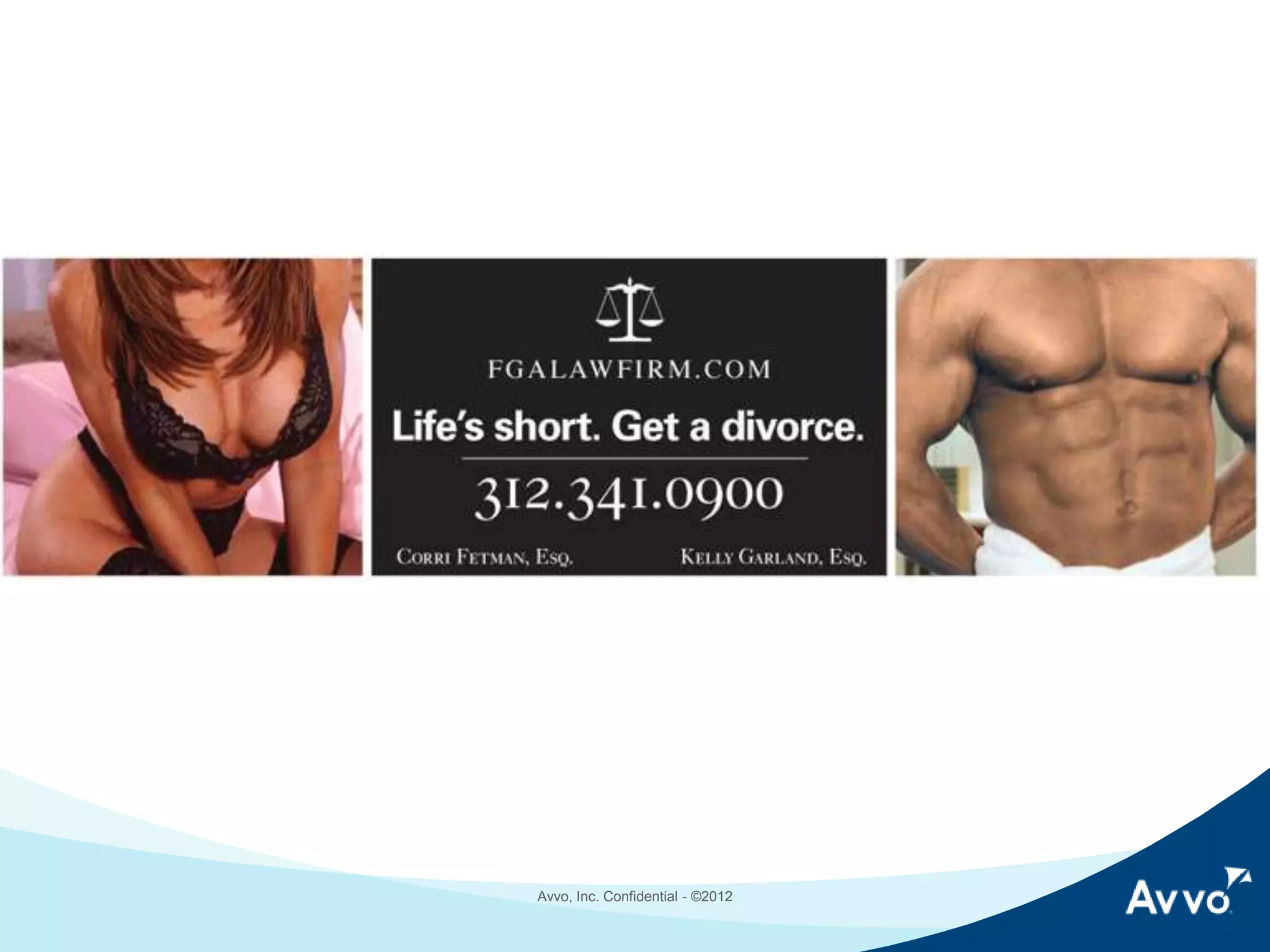
  • #9 Because rules are over-broad and hard to apply to new forms of communication. Post-Bates, many rules remain. Look at some state examples:
  • #13 Overreaching rules, aggressive enforcement. Pre-screening for approval.
  • #15 Start with one fundamental issue – the breadth of the rules governing attorney advertising.
  • #20 LOTS of things lawyers write are, in effect, “communication about a lawyer or a lawyer’s services.”
  • #21 We know this “communication” isn’t commercial speech . . .
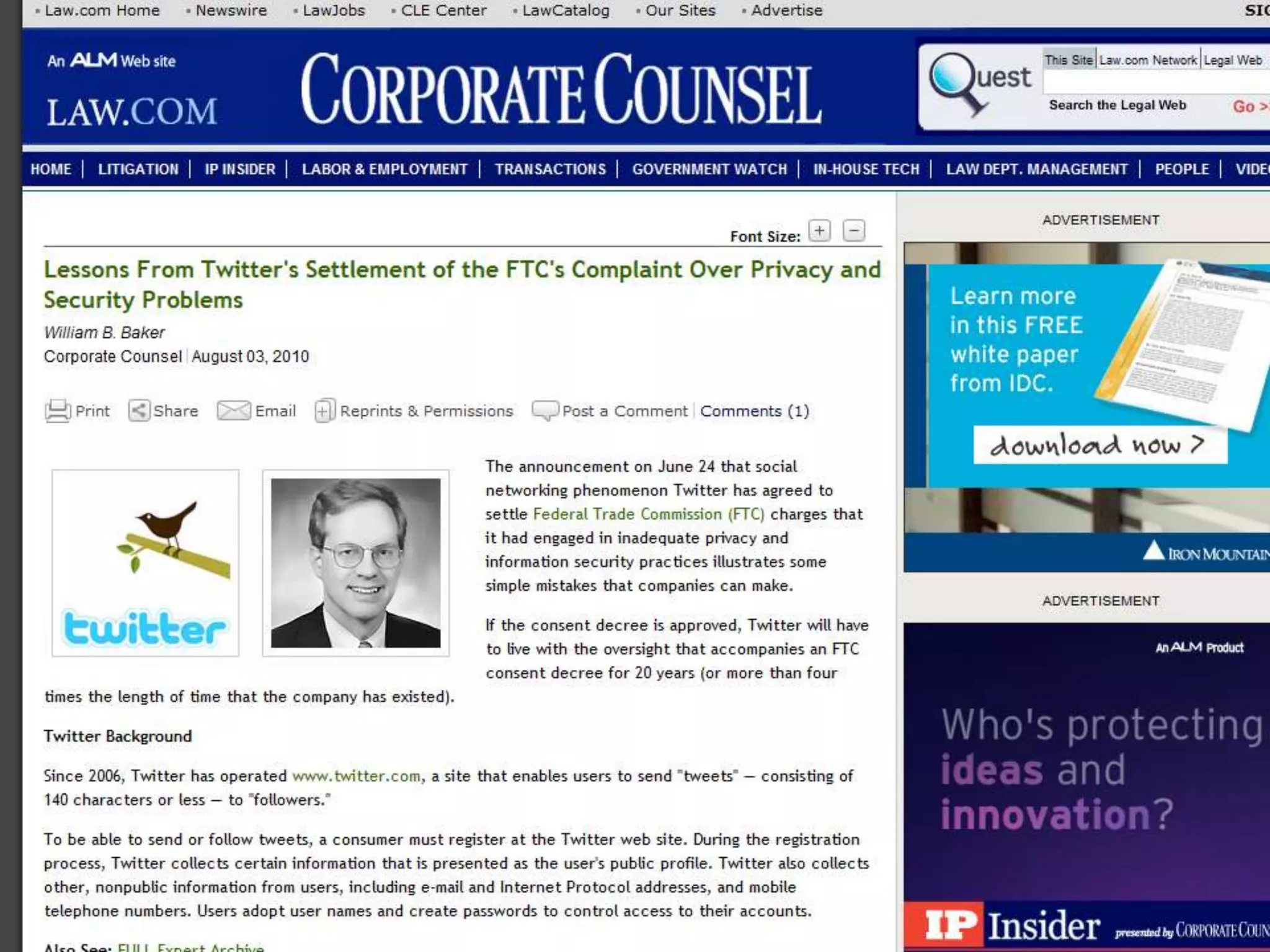
  • #25 William Baker – Wiley Rein partner
  • #27 But what about blogging?
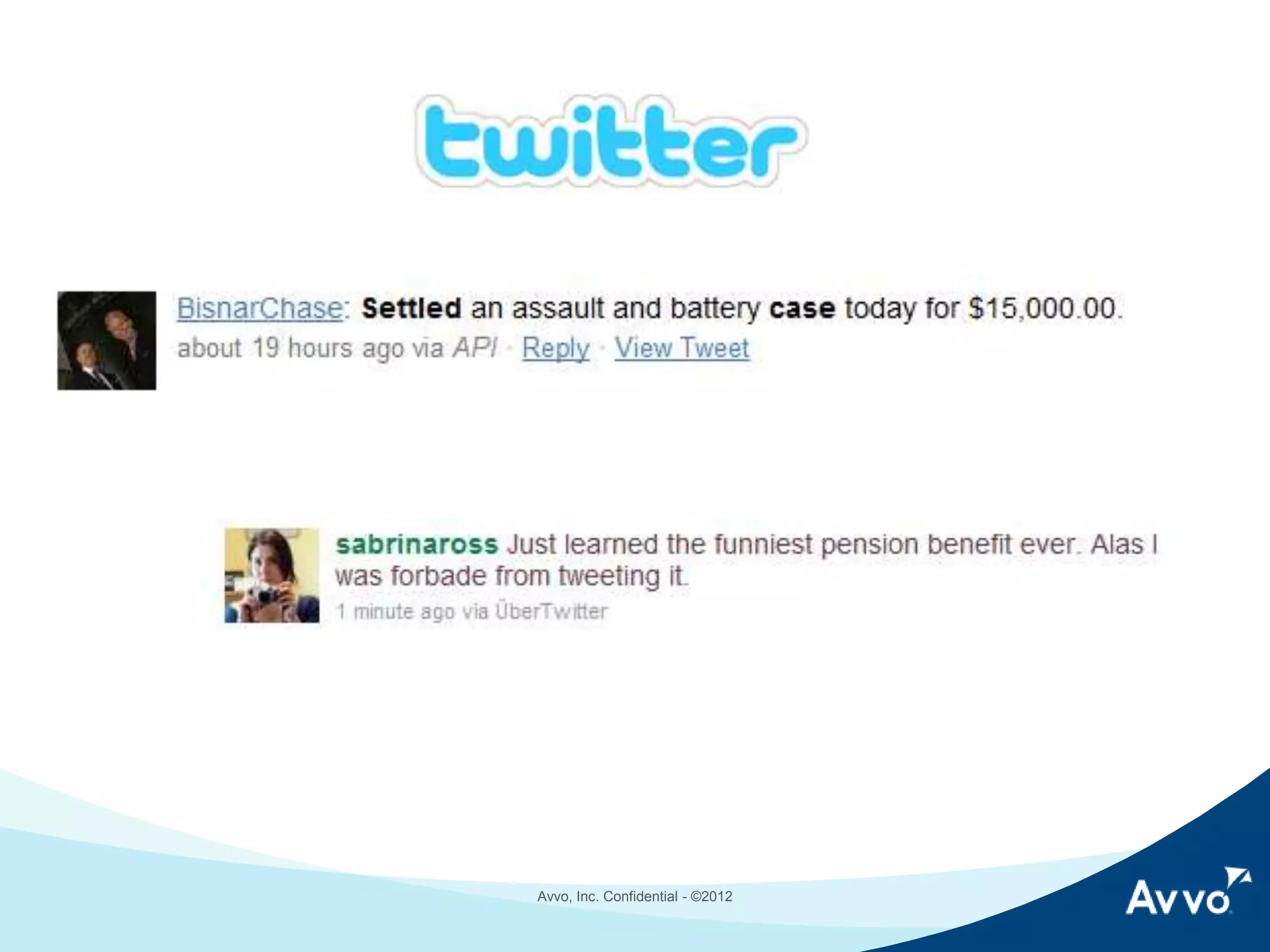
  • #28 Twitter?
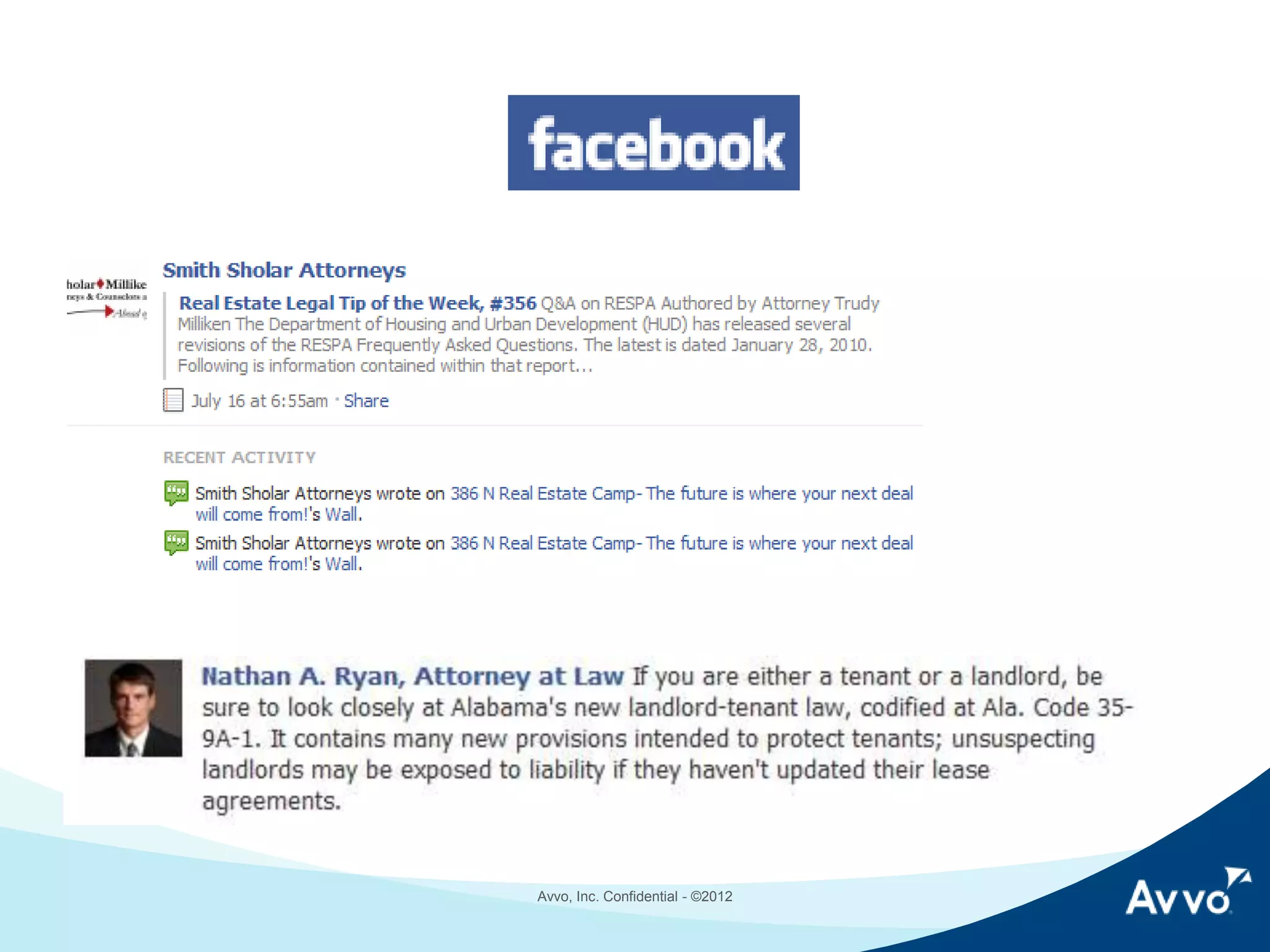
  • #29 Facebook?
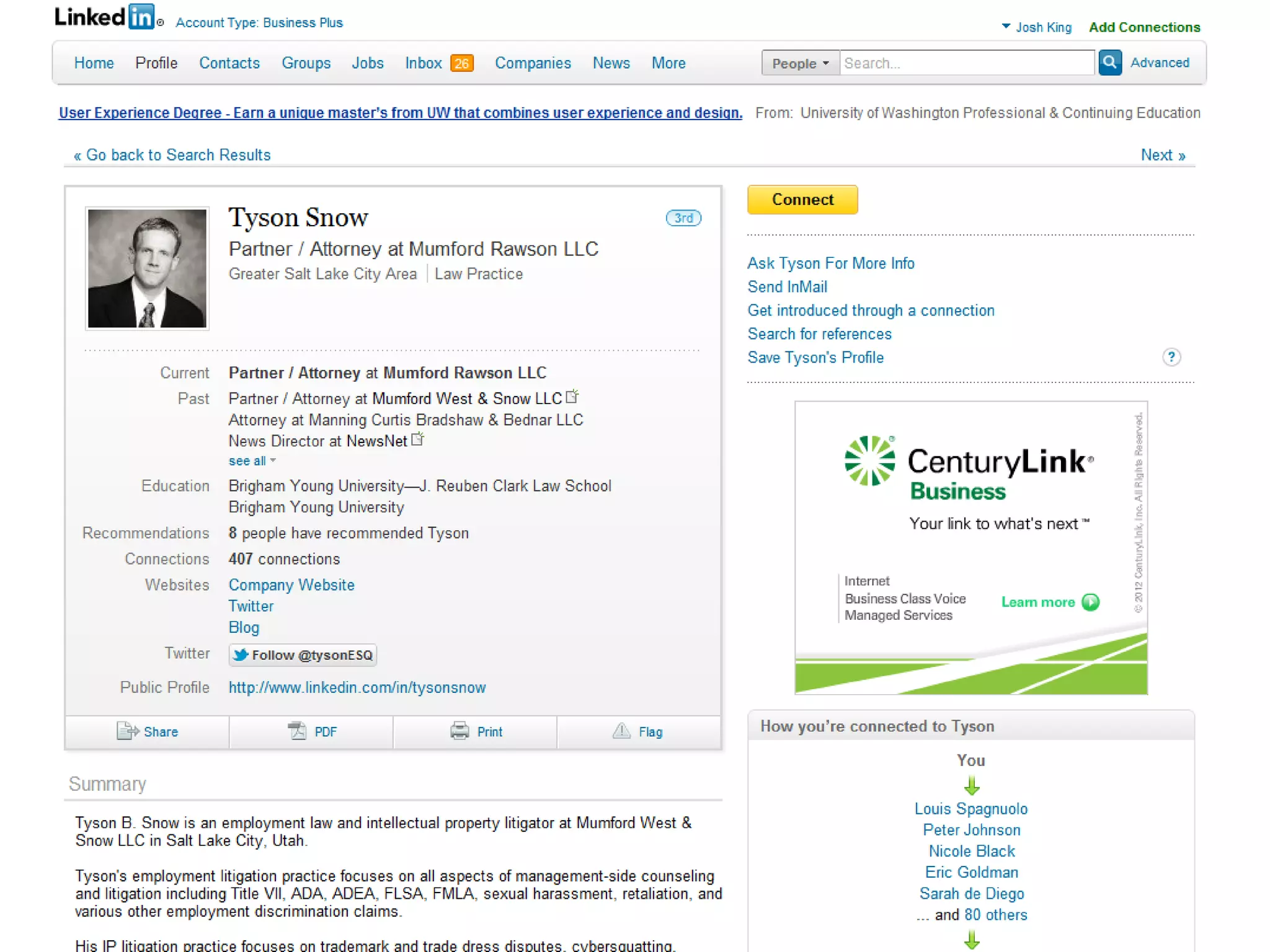
  • #30 LinkedIn?
  • #31 Avvo?
  • #32 Content-based restrictions on speech are subject to “strict scrutiny.” Government carries burden of proving that restrictions are necessary to meet a compelling state interest . . . which is why so many of these restrictions are stricken.
  • #33 Commercial speech, is subject to the lesser “intermediate scrutiny” standard. Government still carries the burden.
  • #36 Bolger v Young's Drug Products Corp., (1983)
  • #37 “Substantial Government Interest.” Rarely contested. Bar authorities will point to importance of protecting the public, guarding the integrity of the profession and promoting the pursuit of justice. Supreme Court has found all of these to be substantial state interests (Goldfarb v. Virginia State Bar, (1975); Florida Bar v. Went for It, Inc. (1995) – upholding 30 day ban on targeted direct mail solicitations).
  • #38 “Direct and Material Advancement.” Must target an identifiable harm and mitigate against that harm in a direct and effective manner. “A state cannot satisfy its burden . . . by the rote invocation of the words ‘potentially misleading.’” (Mason v. Florida Bar (11th Cir 2000).“A governmental body seeking to sustain a restriction on commercial speech must demonstrate that the . . . rule at issue . . . targets a concrete, nonspeculative harm.”, Florida Bar v. Went for It 515 U.S. 618, 629 (1995) “the court has declined to uphold regulations that only indirectly advance the state interest involved.” (e.g., restricting ads in the interest of protecting the quality of a lawyer’s work, or barring advertising prices in the interest of protecting the ethical or professional standards of lawyers)
  • #39 “Narrow tailoring” Most important prong; most often used to strike down advertising regulations. If the government can achieve its interest in a manner that doesn’t restrict speech – or that restricts less speech – it must do so.Regulators must “carefully calculate” the burdens imposed by its regulations and that those burdens are justified in the light of the weight of the government’s objectives. SUNY v. Fox (1989)“Our recent decisions involving commercial speech have been grounded inthe faith that the free flow of commercial information is valuable enough to justify imposing on would-be regulators the costs of distinguishing the truthful from the false, the helpful from the misleading, and the harmless from the harmful.” Zauderer, 471 U.S. at 646.
  • #41 Because rules are over-broad and hard to apply to new forms of communication. Post-Bates, many rules remain. Look at some state examples:
  • #45 Watch out for social media updates involving your “availability for professional employment.”
  • #46 Could be considered “promising results”; require disclaimer. Possible divulging client confidences.