P R E S E N T E D B Y :
V . S U H A S I N I
M - P H A R M
D E P A R T M E N T O F P H A R M A C E U T I C S
ESSENTIAL COMMODITIES
ACT
INTRODUCTION
Commodities:
 The term ‘commodity’ use in the 15th century, which
means to benefit or profit.
 The Essential Commodities Act is an act of
Parliament of India which was established to ensure
the delivery of certain commodities or products
 the supply of which if hoarding or blackmarketing
would affect the normal life of the people. This
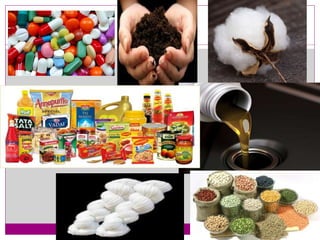
includes foodstuff, drugs, fuel (petroleum products)
etc.
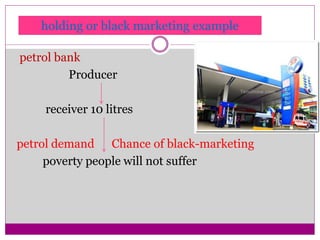
petrol bank
Producer
receiver 10 litres
petrol demand Chance of black-marketing
poverty people will not suffer
holding or black marketing example
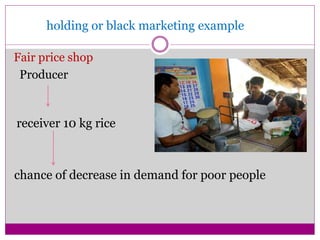
Fair price shop
Producer
receiver 10 kg rice
chance of decrease in demand for poor people
holding or black marketing example
Purpose of the act
 Passed on April 1 , 1955
 The main purpose of this Act was to control the
production, distribution and supply of these
commodities
production, distribution and supply
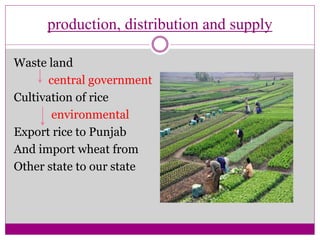
Waste land
central government
Cultivation of rice
environmental
Export rice to Punjab
And import wheat from
Other state to our state
production, distribution and supply
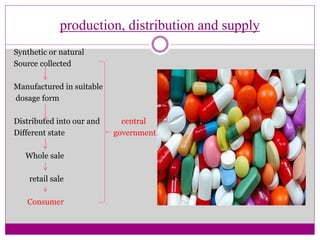
Synthetic or natural
Source collected
Manufactured in suitable
dosage form
Distributed into our and central
Different state government
Whole sale
retail sale
Consumer
History of act
 The central government has listed a number of
commodities as essential commodities
-In 1989, 70 essential commodities were listed
under the act and presently only 7 commodities are
listed
 From February 2002, 11 commodities were
removed
 31 march 2004 , 50 commodities removed
ESSENTIAL COMMODITIES
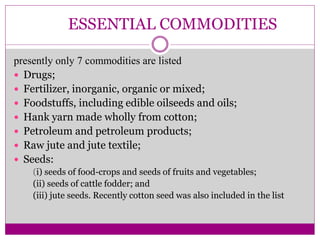
presently only 7 commodities are listed
 Drugs;
 Fertilizer, inorganic, organic or mixed;
 Foodstuffs, including edible oilseeds and oils;
 Hank yarn made wholly from cotton;
 Petroleum and petroleum products;
 Raw jute and jute textile;
 Seeds:
(i) seeds of food-crops and seeds of fruits and vegetables;
(ii) seeds of cattle fodder; and
(iii) jute seeds. Recently cotton seed was also included in the list
Major amendments
 1997 – oil seed storage control order
 1980 – prevention of black marketing
 1981 -Special provision (food material) act
 1995 – drug price order
 2001 – restriction like license requirement
 2005 – consumer affair
 1995 – interest amount reduced farmers
 1993 – kerosene price control
 2000 – regulate supply and distribution petroleum
 2010 – sugar price control
Function of essential commodities
 To ensure the easy availability of essential
commodities to consumers
 Regulate production and manufacturing
 fair price central government can declare it essential
commodity
 increasing suppliesr
 Manufacture good quality of the product
Function of essential commodities
 Maintaining proper financial transaction
 Maintain records and documents
 Implemented by the State Governments –
Delegated Powers under the Act.
example : food product we need more
means government will be increase
cultivation
ACT – CHECKING
 State Governments/ Union Territories
1. Himachal Pradesh
2. Bihar
3. Maharashtra
4. Uttar Pradesh, etc
 Impose stock or turnover limits for various commodities
 Penalize those who hold in excess of the limit.
 Act fixed the fair price . Everyone are following or not they
will check
POWERS UNDER THE ACT
 Section 3 – Power of Central Government
 Regulate or prohibit the production, supply and
distribution, trade and commerce of any essential
commodity
 regulate by licenses, permits or otherwise:
the production or manufacture of any essential
commodity
storage, transport, distribution, disposal, acquisition,
consumption
 Cultivate food crops on any waste land
POWERS UNDER THE ACT
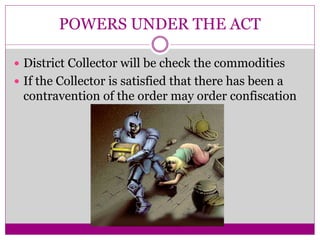
 District Collector will be check the commodities
 If the Collector is satisfied that there has been a
contravention of the order may order confiscation
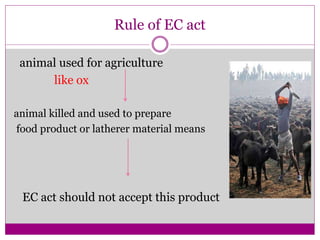
Rule of EC act
animal used for agriculture
like ox
animal killed and used to prepare
food product or latherer material means
EC act should not accept this product
PENALTIES and OFFENCES
 imprisonment for 3 to 7 year
 any property in respect of which the order has been
contravened shall be forfeited to the Government
 which the property is found and any animal,
vehicle or other conveyance used in carrying the
property shall, if the court so orders, be forfeited to
the Government.
 All offences are cognizable and non- bailable
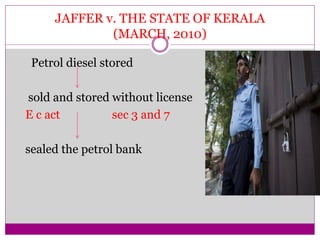
JAFFER v. THE STATE OF KERALA
(MARCH, 2010)
Petrol diesel stored
sold and stored without license
E c act sec 3 and 7
sealed the petrol bank
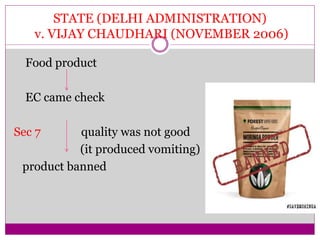
STATE (DELHI ADMINISTRATION)
v. VIJAY CHAUDHARI (NOVEMBER 2006)
Food product
EC came check
Sec 7 quality was not good
(it produced vomiting)
product banned
REFERENCES
 EC-Act-1955-with-Amendments pdf
 Dr . S .palanichamy Pharmaceutical jurisprudence
jai publishers
 EC Act – 1995 with amendments pdf
 EC act – 2010 with amendment pdf
Essential commodity act ppt

Essential commodity act ppt

  • 1.
    P R ES E N T E D B Y : V . S U H A S I N I M - P H A R M D E P A R T M E N T O F P H A R M A C E U T I C S ESSENTIAL COMMODITIES ACT
  • 2.
    INTRODUCTION Commodities:  The term‘commodity’ use in the 15th century, which means to benefit or profit.  The Essential Commodities Act is an act of Parliament of India which was established to ensure the delivery of certain commodities or products  the supply of which if hoarding or blackmarketing would affect the normal life of the people. This includes foodstuff, drugs, fuel (petroleum products) etc.
  • 3.
    petrol bank Producer receiver 10litres petrol demand Chance of black-marketing poverty people will not suffer holding or black marketing example
  • 4.
    Fair price shop Producer receiver10 kg rice chance of decrease in demand for poor people holding or black marketing example
  • 5.
    Purpose of theact  Passed on April 1 , 1955  The main purpose of this Act was to control the production, distribution and supply of these commodities
  • 6.
    production, distribution andsupply Waste land central government Cultivation of rice environmental Export rice to Punjab And import wheat from Other state to our state
  • 7.
    production, distribution andsupply Synthetic or natural Source collected Manufactured in suitable dosage form Distributed into our and central Different state government Whole sale retail sale Consumer
  • 8.
    History of act The central government has listed a number of commodities as essential commodities -In 1989, 70 essential commodities were listed under the act and presently only 7 commodities are listed  From February 2002, 11 commodities were removed  31 march 2004 , 50 commodities removed
  • 10.
    ESSENTIAL COMMODITIES presently only7 commodities are listed  Drugs;  Fertilizer, inorganic, organic or mixed;  Foodstuffs, including edible oilseeds and oils;  Hank yarn made wholly from cotton;  Petroleum and petroleum products;  Raw jute and jute textile;  Seeds: (i) seeds of food-crops and seeds of fruits and vegetables; (ii) seeds of cattle fodder; and (iii) jute seeds. Recently cotton seed was also included in the list
  • 11.
    Major amendments  1997– oil seed storage control order  1980 – prevention of black marketing  1981 -Special provision (food material) act  1995 – drug price order  2001 – restriction like license requirement  2005 – consumer affair  1995 – interest amount reduced farmers  1993 – kerosene price control  2000 – regulate supply and distribution petroleum  2010 – sugar price control
  • 12.
    Function of essentialcommodities  To ensure the easy availability of essential commodities to consumers  Regulate production and manufacturing  fair price central government can declare it essential commodity  increasing suppliesr  Manufacture good quality of the product
  • 13.
    Function of essentialcommodities  Maintaining proper financial transaction  Maintain records and documents  Implemented by the State Governments – Delegated Powers under the Act. example : food product we need more means government will be increase cultivation
  • 14.
    ACT – CHECKING State Governments/ Union Territories 1. Himachal Pradesh 2. Bihar 3. Maharashtra 4. Uttar Pradesh, etc  Impose stock or turnover limits for various commodities  Penalize those who hold in excess of the limit.  Act fixed the fair price . Everyone are following or not they will check
  • 15.
    POWERS UNDER THEACT  Section 3 – Power of Central Government  Regulate or prohibit the production, supply and distribution, trade and commerce of any essential commodity  regulate by licenses, permits or otherwise: the production or manufacture of any essential commodity storage, transport, distribution, disposal, acquisition, consumption  Cultivate food crops on any waste land
  • 16.
    POWERS UNDER THEACT  District Collector will be check the commodities  If the Collector is satisfied that there has been a contravention of the order may order confiscation
  • 17.
    Rule of ECact animal used for agriculture like ox animal killed and used to prepare food product or latherer material means EC act should not accept this product
  • 18.
    PENALTIES and OFFENCES imprisonment for 3 to 7 year  any property in respect of which the order has been contravened shall be forfeited to the Government  which the property is found and any animal, vehicle or other conveyance used in carrying the property shall, if the court so orders, be forfeited to the Government.  All offences are cognizable and non- bailable
  • 19.
    JAFFER v. THESTATE OF KERALA (MARCH, 2010) Petrol diesel stored sold and stored without license E c act sec 3 and 7 sealed the petrol bank
  • 20.
    STATE (DELHI ADMINISTRATION) v.VIJAY CHAUDHARI (NOVEMBER 2006) Food product EC came check Sec 7 quality was not good (it produced vomiting) product banned
  • 21.
    REFERENCES  EC-Act-1955-with-Amendments pdf Dr . S .palanichamy Pharmaceutical jurisprudence jai publishers  EC Act – 1995 with amendments pdf  EC act – 2010 with amendment pdf