Dialogue
Tone in dialogue

Dialogue can develop character, shape
plot, clarify setting and convey theme. The
tone of dialogue needs to match the character
and the plot point where it is being
incorporated.
Tone is created by careful consideration of
grammar, vocabulary, sentence type and
modality.
Task: Identify the tone of the following
examples of dialogue:


 “Put your hands in the air and drop to your knees.”

 “We know the Japs are up there somewhere. We move
slowly. We play it by the book.”
 “It‟s tough luck, but it has to be done. We‟ve got no
choice.”
Authenticity in Dialogue

 Avoid cliches
 Listen to the way people actually speak to each other
 Avoid melodrama
 Use emotion (or the absence of emotion)
purposefully
 Vary sentence length and choose sentence type
deliberately (simple, compound, complex)
Writing Task:

 Write an authentic piece of dialogue between a
mother and her 19 year old son, as leaves to go to the
Vietnam War as a conscript.
Punctuation in Dialogue


 The first word of direct speech starts with a CAPITAL
LETTER, whether that word is at the beginning or in the
middle of a sentence.

 Place a comma at the end of direct speech if the sentence
is not finished. Sometimes a question mark may replace
the comma.

 Place a COMMA before direct speech if the sentence is
not finished.
 Use ? Or ! if the tone of the speech suggests this.
Punctuation in Dialogue
 If direct speech is broken COMMAS, before and
up, use
after the break. Take care you don‟t use a capital letter to
begin the broken bit!

 Place a COMMA before the PERSON ADDRESSED.
 When lots of sentences are spoken together, use only one
set of quotation marks. It would look messy if you used
quotation marks around each sentence.
 Begin a new line with each new speaker or change in
speaker.
 VARY your sentences and use words other than „said‟
Task: Punctuate the following dialogue
between a soldier and Sargeant



You there. Don‟t just bloody well stand there gawping.
Get that rifle up; shoot the bloody Hun. Shouted
Sargeant Corley, angered at the soldier‟s inability to
respond. Recognition of the soldier filled the Sargeant
with more fire. Where have you been, man?
Deserter, eh? No Sir answered Jack I was on
reconnaissance. A convenient excuse replied the
Sargeant but there‟s no time to explain now.
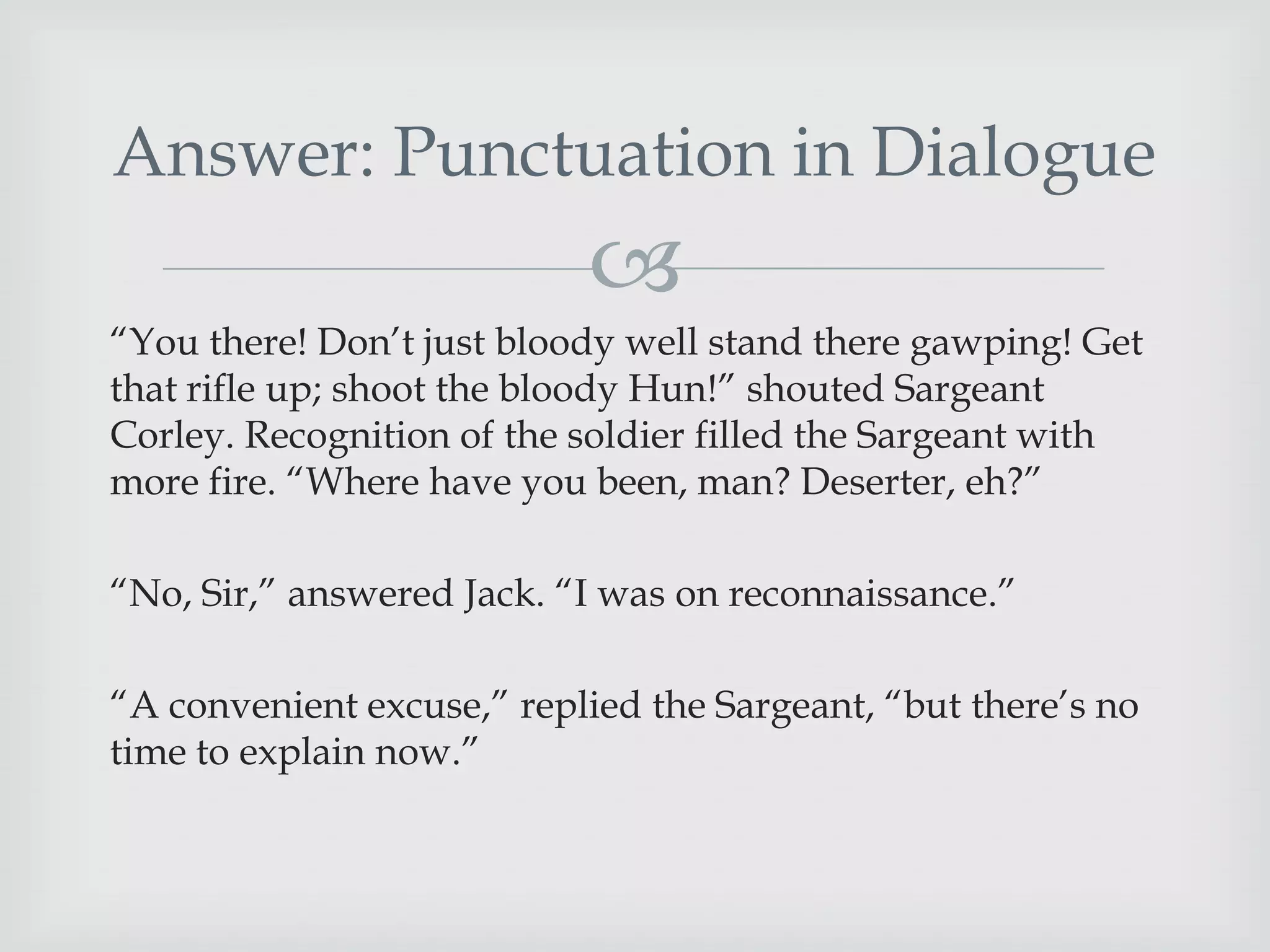
Answer: Punctuation in Dialogue


“You there! Don‟t just bloody well stand there gawping! Get
that rifle up; shoot the bloody Hun!” shouted Sargeant
Corley. Recognition of the soldier filled the Sargeant with
more fire. “Where have you been, man? Deserter, eh?”
“No, Sir,” answered Jack. “I was on reconnaissance.”
“A convenient excuse,” replied the Sargeant, “but there‟s no
time to explain now.”
Task

 Proofread your dialogue between the mother and
her son. Make any necessary changes to the dialogue
punctuation.

Dialogue language features

  • 1.
  • 2.
    Tone in dialogue  Dialoguecan develop character, shape plot, clarify setting and convey theme. The tone of dialogue needs to match the character and the plot point where it is being incorporated. Tone is created by careful consideration of grammar, vocabulary, sentence type and modality.
  • 3.
    Task: Identify thetone of the following examples of dialogue:   “Put your hands in the air and drop to your knees.”  “We know the Japs are up there somewhere. We move slowly. We play it by the book.”  “It‟s tough luck, but it has to be done. We‟ve got no choice.”
  • 4.
    Authenticity in Dialogue  Avoid cliches  Listen to the way people actually speak to each other  Avoid melodrama  Use emotion (or the absence of emotion) purposefully  Vary sentence length and choose sentence type deliberately (simple, compound, complex)
  • 5.
    Writing Task:   Writean authentic piece of dialogue between a mother and her 19 year old son, as leaves to go to the Vietnam War as a conscript.
  • 6.
    Punctuation in Dialogue  The first word of direct speech starts with a CAPITAL LETTER, whether that word is at the beginning or in the middle of a sentence.  Place a comma at the end of direct speech if the sentence is not finished. Sometimes a question mark may replace the comma.  Place a COMMA before direct speech if the sentence is not finished.  Use ? Or ! if the tone of the speech suggests this.
  • 7.
    Punctuation in Dialogue If direct speech is broken COMMAS, before and up, use after the break. Take care you don‟t use a capital letter to begin the broken bit!  Place a COMMA before the PERSON ADDRESSED.  When lots of sentences are spoken together, use only one set of quotation marks. It would look messy if you used quotation marks around each sentence.  Begin a new line with each new speaker or change in speaker.  VARY your sentences and use words other than „said‟
  • 8.
    Task: Punctuate thefollowing dialogue between a soldier and Sargeant  You there. Don‟t just bloody well stand there gawping. Get that rifle up; shoot the bloody Hun. Shouted Sargeant Corley, angered at the soldier‟s inability to respond. Recognition of the soldier filled the Sargeant with more fire. Where have you been, man? Deserter, eh? No Sir answered Jack I was on reconnaissance. A convenient excuse replied the Sargeant but there‟s no time to explain now.
  • 9.
    Answer: Punctuation inDialogue  “You there! Don‟t just bloody well stand there gawping! Get that rifle up; shoot the bloody Hun!” shouted Sargeant Corley. Recognition of the soldier filled the Sargeant with more fire. “Where have you been, man? Deserter, eh?” “No, Sir,” answered Jack. “I was on reconnaissance.” “A convenient excuse,” replied the Sargeant, “but there‟s no time to explain now.”
  • 10.
    Task   Proofread yourdialogue between the mother and her son. Make any necessary changes to the dialogue punctuation.