The nervous system. 
The locomotor system. 
The cardiorespiratory system.
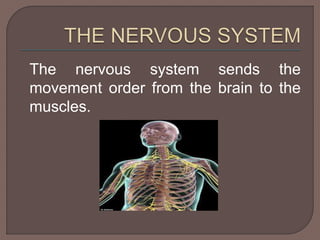
The nervous system sends the 
movement order from the brain to the 
muscles.
The main structures of the nervous 
system that play an important rol in the 
movement are these three: 
The brain. 
The spinal cord. 
The nerves.
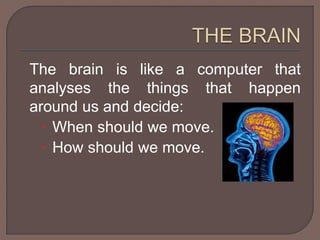
The brain is like a computer that 
analyses the things that happen 
around us and decide: 
 When should we move. 
 How should we move.
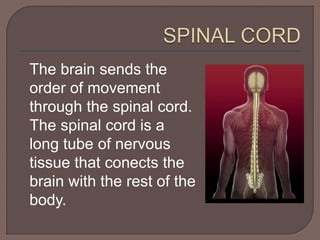
The brain sends the 
order of movement 
through the spinal cord. 
The spinal cord is a 
long tube of nervous 
tissue that conects the 
brain with the rest of the 
body.
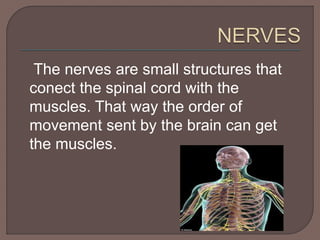
The nerves are small structures that 
conect the spinal cord with the 
muscles. That way the order of 
movement sent by the brain can get 
the muscles.
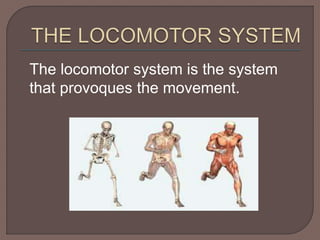
The locomotor system is the system 
that provoques the movement.
The locomotos system can by divided 
into two parts: 
Skeleton. 
Muscles.
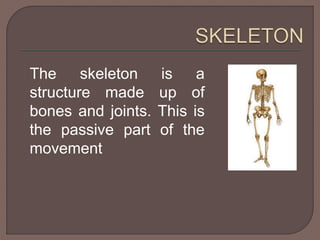
The skeleton is a 
structure made up of 
bones and joints. This is 
the passive part of the 
movement
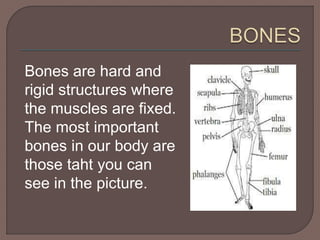
Bones are hard and 
rigid structures where 
the muscles are fixed. 
The most important 
bones in our body are 
those taht you can 
see in the picture.
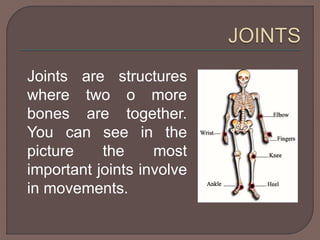
Joints are structures 
where two o more 
bones are together. 
You can see in the 
picture the most 
important joints involve 
in movements.
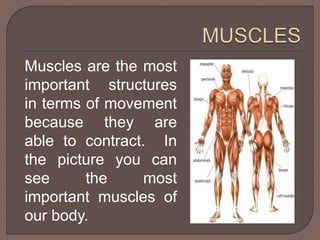
Muscles are the most 
important structures 
in terms of movement 
because they are 
able to contract. In 
the picture you can 
see the most 
important muscles of 
our body.
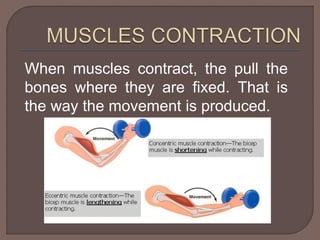
When muscles contract, the pull the 
bones where they are fixed. That is 
the way the movement is produced.
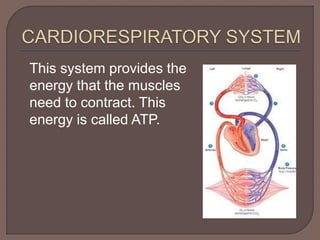
This system provides the 
energy that the muscles 
need to contract. This 
energy is called ATP.
This system is the result of the 
interaction between two systems: 
Cardiac system. 
Respiratory system.
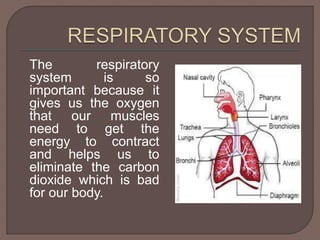
The respiratory 
system is so 
important because it 
gives us the oxygen 
that our muscles 
need to get the 
energy to contract 
and helps us to 
eliminate the carbon 
dioxide which is bad 
for our body.
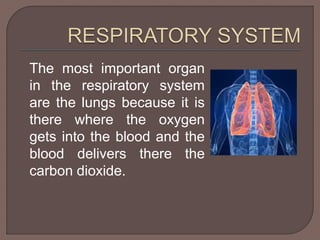
The most important organ 
in the respiratory system 
are the lungs because it is 
there where the oxygen 
gets into the blood and the 
blood delivers there the 
carbon dioxide.
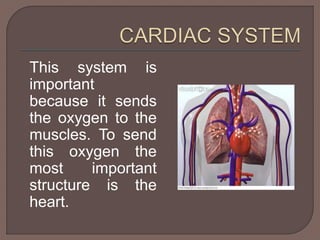
This system is 
important 
because it sends 
the oxygen to the 
muscles. To send 
this oxygen the 
most important 
structure is the 
heart.
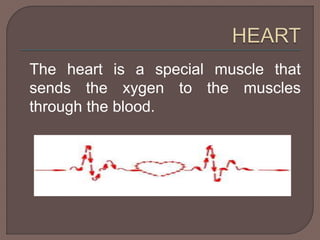
The heart is a special muscle that 
sends the xygen to the muscles 
through the blood.
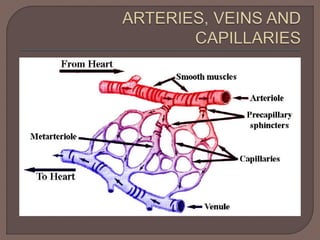
The blood travels from the heart to the 
muscles through the arteries and 
capillaries and comes back to the heart 
through the capillaries and veins. 
When the blood goes from the heart to the 
muscles it has oxygen and nutrients and 
when it comes back to the heart from the 
muscles it has carbon dioxide and rubish.
NERVOUS SYSTEM: 
SENDS THE ORDER OF 
MOVEMENT.
LOCOMOTOR SYSTEM: 
PRODUCES THE 
MOVEMENT.
CARDIORESPIRATORY SYSTEM: 
GIVES THE ENERGY 
FOR THE MOVEMENT 
(ATP).
Here you have some videos that are 
usefull for you to understand this unit. 
These videos have much more information 
than you need for the exam. 
 http://www.youtube.com/watch?v=1-wsFt2UmoM 
 http://www.youtube.com/watch?v=uPFHH2U5F2A 
 http://www.youtube.com/watch?v=TsdnDXF0qes
Consejo para el examen: 
• No aprender de memoria las diapositivas (solo las 
de músculos, huesos y articulaciones). Leerlas, 
entenderlas y si tenéis alguna duda mandarme un 
email y os las resolveré.

ESQUEMA GENERAL DEL MOVIMIENTO

  • 2.
    The nervous system. The locomotor system. The cardiorespiratory system.
  • 3.
    The nervous systemsends the movement order from the brain to the muscles.
  • 4.
    The main structuresof the nervous system that play an important rol in the movement are these three: The brain. The spinal cord. The nerves.
  • 5.
    The brain islike a computer that analyses the things that happen around us and decide:  When should we move.  How should we move.
  • 6.
    The brain sendsthe order of movement through the spinal cord. The spinal cord is a long tube of nervous tissue that conects the brain with the rest of the body.
  • 7.
    The nerves aresmall structures that conect the spinal cord with the muscles. That way the order of movement sent by the brain can get the muscles.
  • 8.
    The locomotor systemis the system that provoques the movement.
  • 9.
    The locomotos systemcan by divided into two parts: Skeleton. Muscles.
  • 10.
    The skeleton isa structure made up of bones and joints. This is the passive part of the movement
  • 11.
    Bones are hardand rigid structures where the muscles are fixed. The most important bones in our body are those taht you can see in the picture.
  • 12.
    Joints are structures where two o more bones are together. You can see in the picture the most important joints involve in movements.
  • 13.
    Muscles are themost important structures in terms of movement because they are able to contract. In the picture you can see the most important muscles of our body.
  • 14.
    When muscles contract,the pull the bones where they are fixed. That is the way the movement is produced.
  • 15.
    This system providesthe energy that the muscles need to contract. This energy is called ATP.
  • 16.
    This system isthe result of the interaction between two systems: Cardiac system. Respiratory system.
  • 17.
    The respiratory systemis so important because it gives us the oxygen that our muscles need to get the energy to contract and helps us to eliminate the carbon dioxide which is bad for our body.
  • 18.
    The most importantorgan in the respiratory system are the lungs because it is there where the oxygen gets into the blood and the blood delivers there the carbon dioxide.
  • 20.
    This system is important because it sends the oxygen to the muscles. To send this oxygen the most important structure is the heart.
  • 21.
    The heart isa special muscle that sends the xygen to the muscles through the blood.
  • 22.
    The blood travelsfrom the heart to the muscles through the arteries and capillaries and comes back to the heart through the capillaries and veins. When the blood goes from the heart to the muscles it has oxygen and nutrients and when it comes back to the heart from the muscles it has carbon dioxide and rubish.
  • 24.
    NERVOUS SYSTEM: SENDSTHE ORDER OF MOVEMENT.
  • 25.
  • 26.
    CARDIORESPIRATORY SYSTEM: GIVESTHE ENERGY FOR THE MOVEMENT (ATP).
  • 27.
    Here you havesome videos that are usefull for you to understand this unit. These videos have much more information than you need for the exam.  http://www.youtube.com/watch?v=1-wsFt2UmoM  http://www.youtube.com/watch?v=uPFHH2U5F2A  http://www.youtube.com/watch?v=TsdnDXF0qes
  • 28.
    Consejo para elexamen: • No aprender de memoria las diapositivas (solo las de músculos, huesos y articulaciones). Leerlas, entenderlas y si tenéis alguna duda mandarme un email y os las resolveré.