Instructor: Dr. MOHAMMED ABDUL AMEER ALHUMAIRI
MISAN UNIVERSITY
COLLEGE OF ENGINEERING – PETROLEUM DEPARTMENT
PRODUCTION ENGINEERING II
dr.alhumairi@uomisan.edu.iq
Electrical Submersible Pump
ESP
A submersible pump (or sub pump, electric submersible pump (ESP)) is a
device which has a hermetically sealed motor close - attached to
the pump body. The whole assembly is submerged in the fluid to be
pumped.
Electrical Submersible Pump ESP
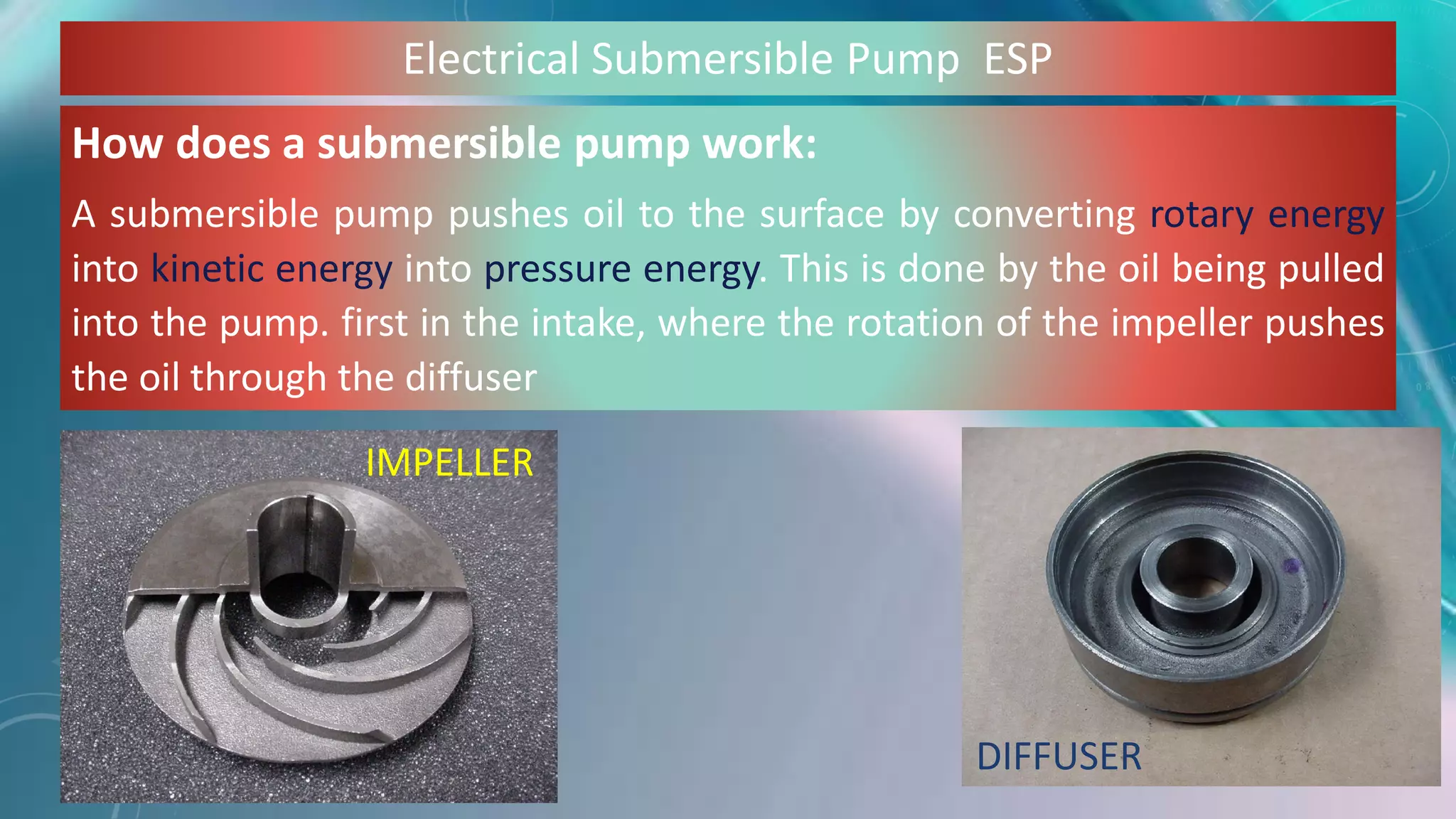
How does a submersible pump work:
A submersible pump pushes oil to the surface by converting rotary energy
into kinetic energy into pressure energy. This is done by the oil being pulled
into the pump. first in the intake, where the rotation of the impeller pushes
the oil through the diffuser
Electrical Submersible Pump ESP
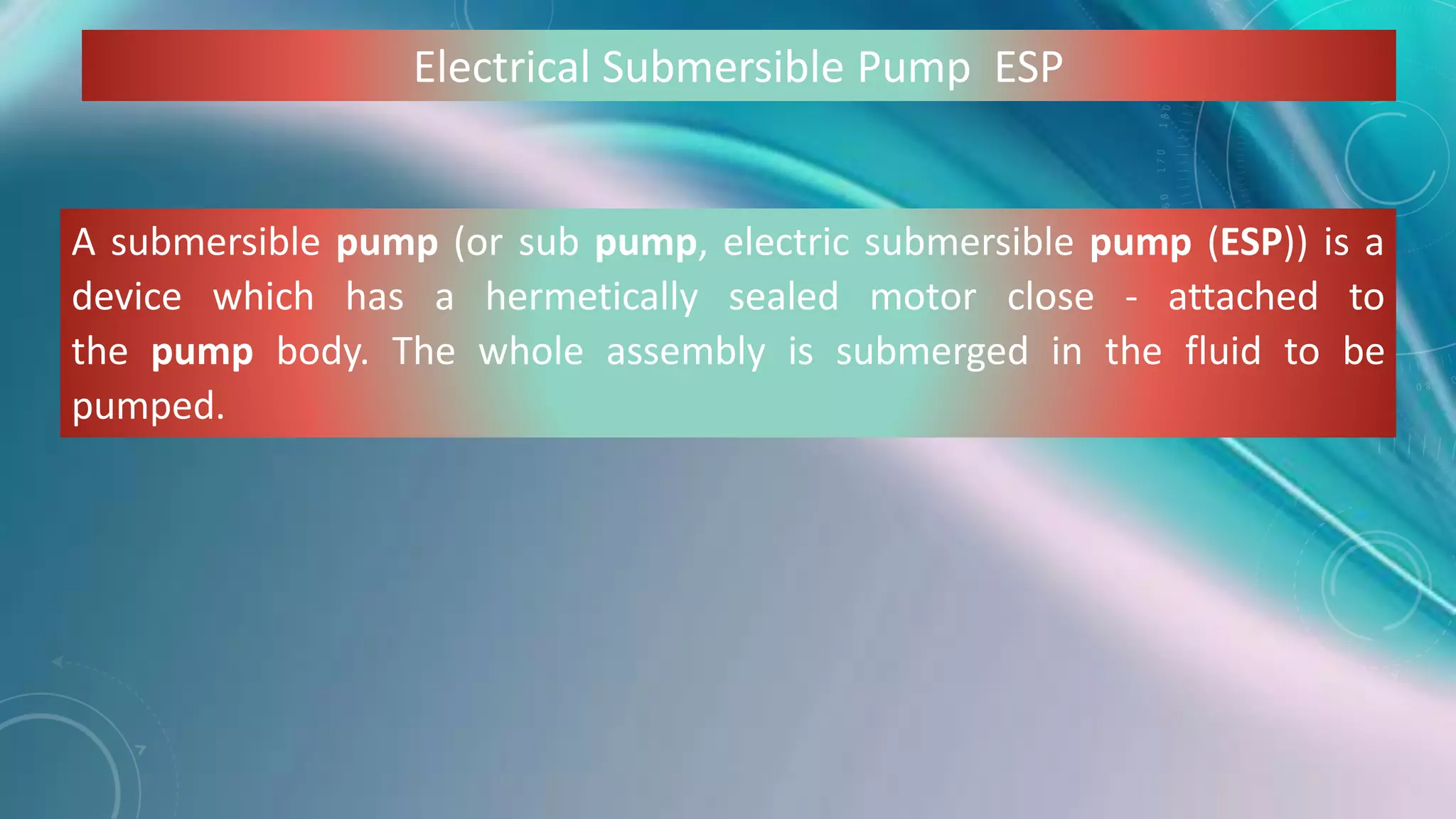
IMPELLER
DIFFUSER
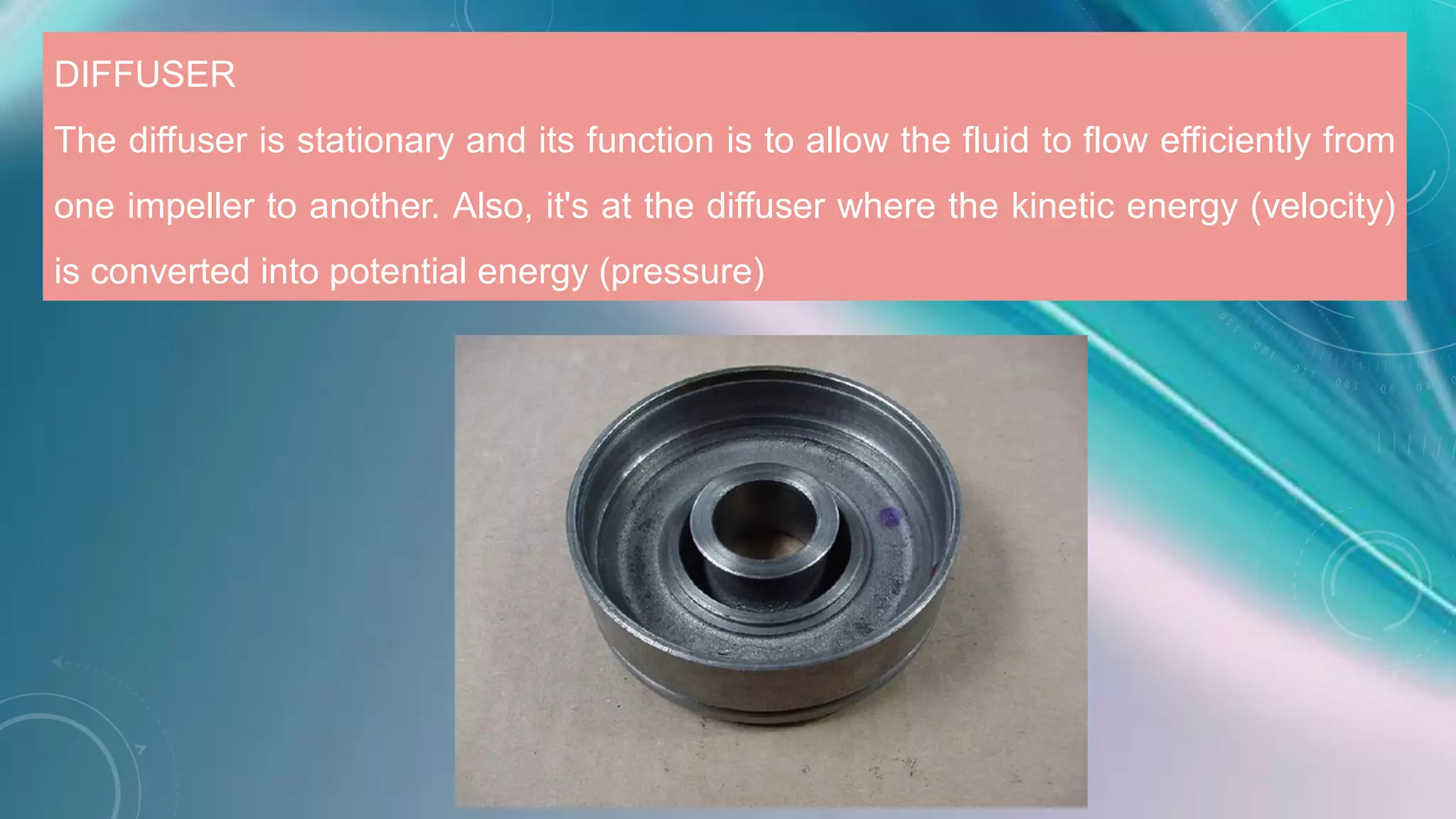
DIFFUSER
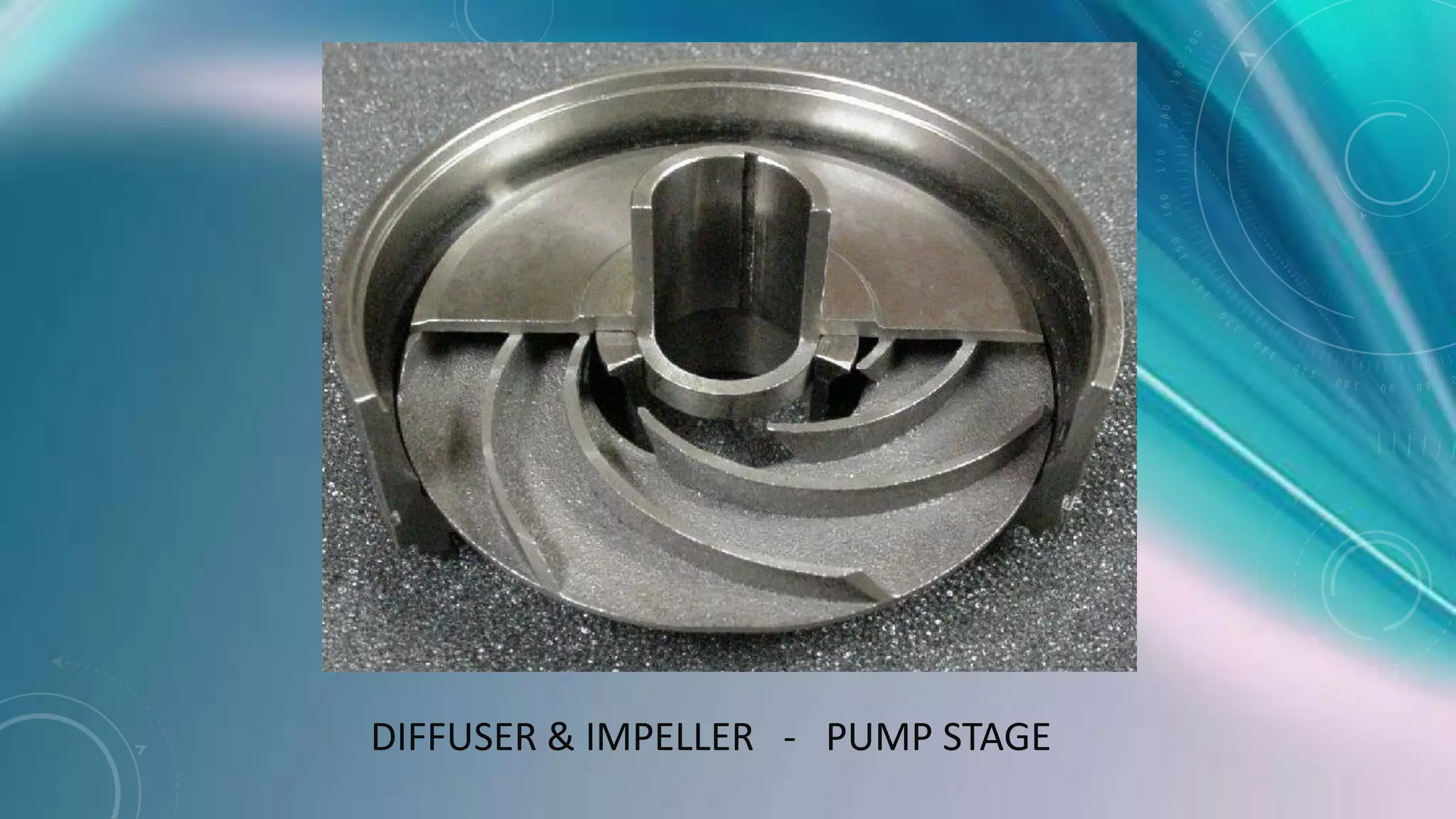
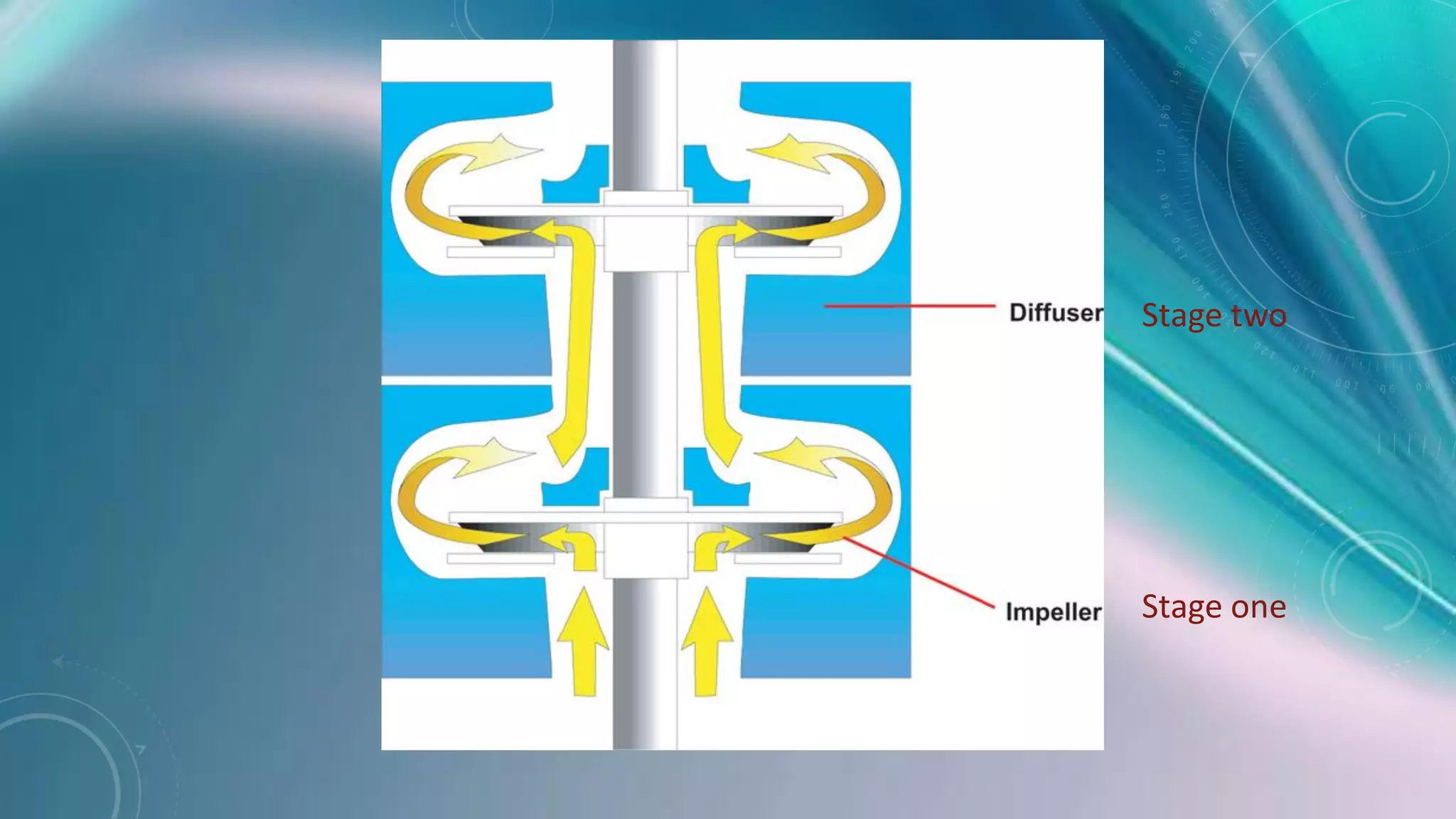
The diffuser is stationary and its function is to allow the fluid to flow efficiently from
one impeller to another. Also, it's at the diffuser where the kinetic energy (velocity)
is converted into potential energy (pressure)
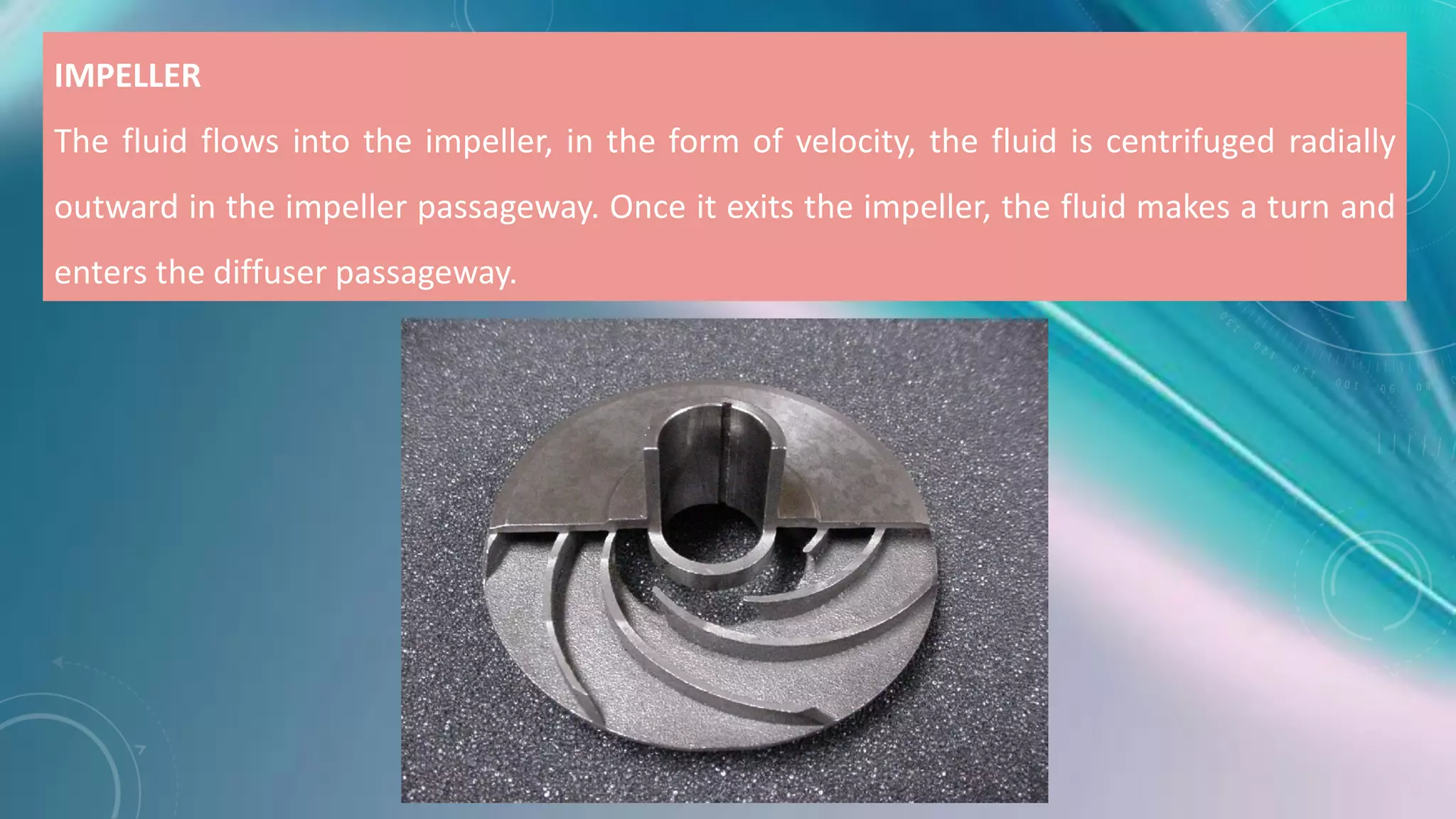
IMPELLER
The fluid flows into the impeller, in the form of velocity, the fluid is centrifuged radially
outward in the impeller passageway. Once it exits the impeller, the fluid makes a turn and
enters the diffuser passageway.
DIFFUSER & IMPELLER - PUMP STAGE
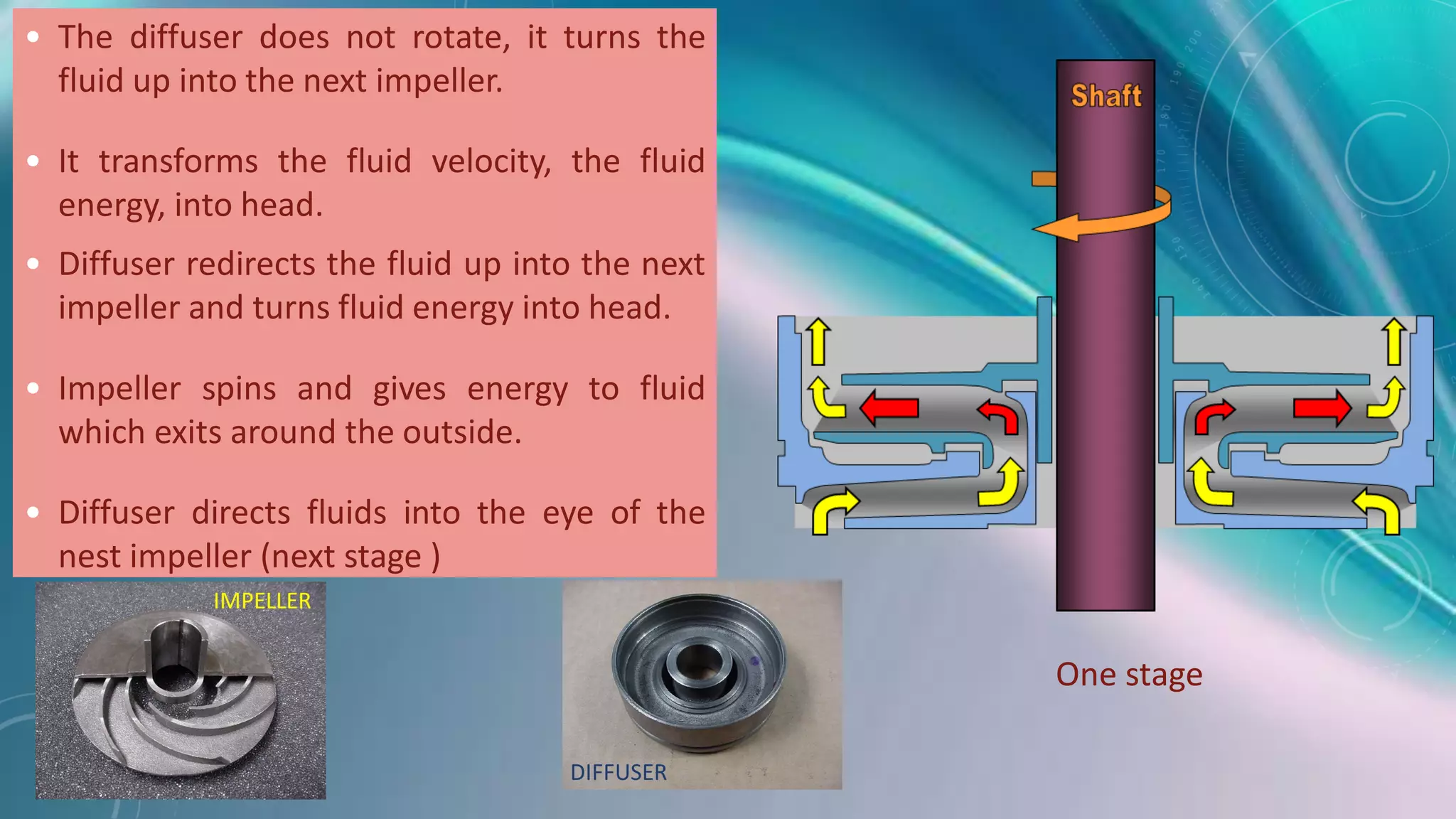
• The diffuser does not rotate, it turns the
fluid up into the next impeller.
• It transforms the fluid velocity, the fluid
energy, into head.
• Diffuser redirects the fluid up into the next
impeller and turns fluid energy into head.
• Impeller spins and gives energy to fluid
which exits around the outside.
• Diffuser directs fluids into the eye of the
nest impeller (next stage )
One stage
Electrical Submersible Pump ESP
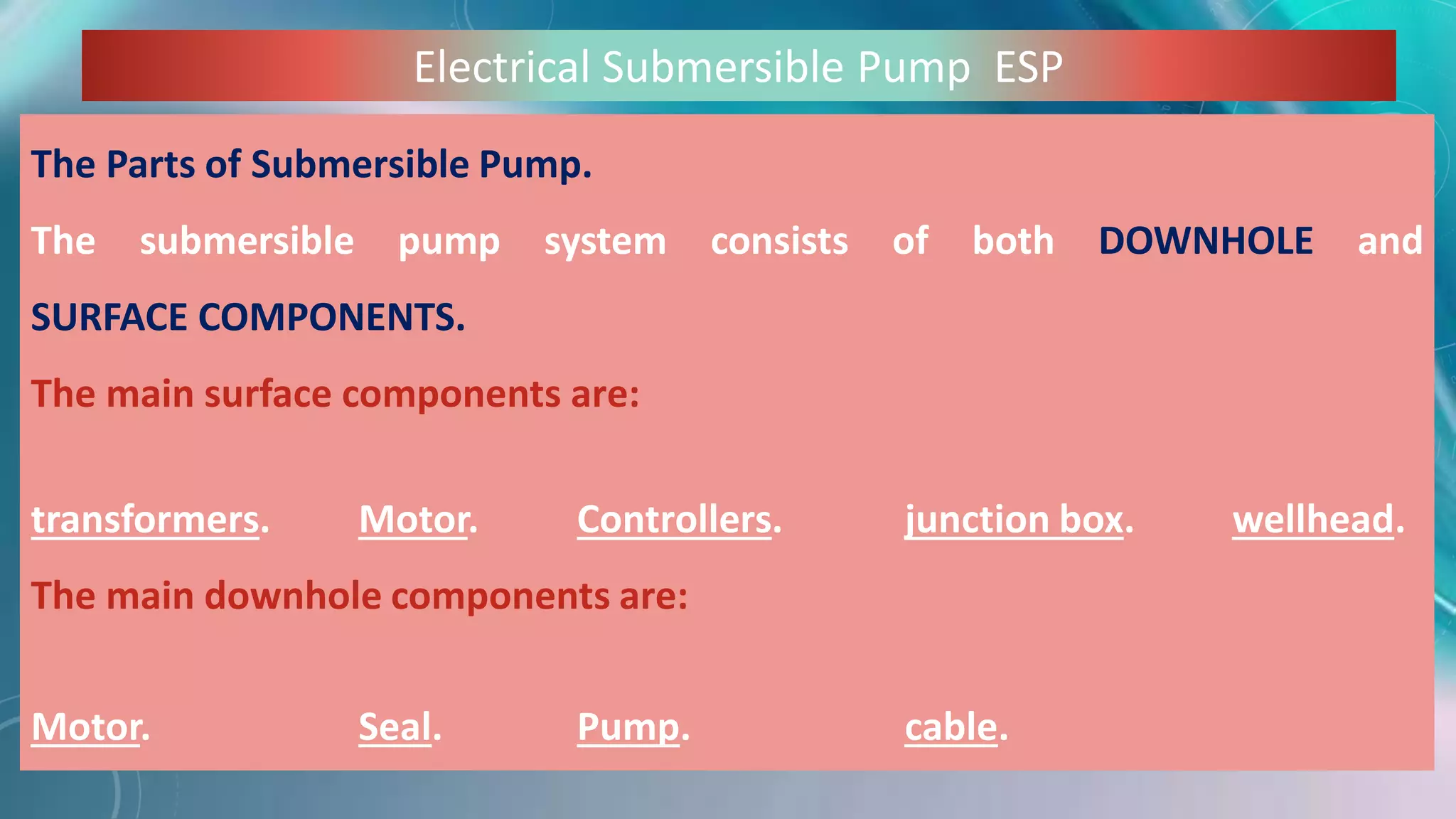
The Parts of Submersible Pump.
The submersible pump system consists of both DOWNHOLE and
SURFACE COMPONENTS.
The main surface components are:
transformers. Motor. Controllers. junction box. wellhead.
The main downhole components are:
Motor. Seal. Pump. cable.
Stage two
Stage one
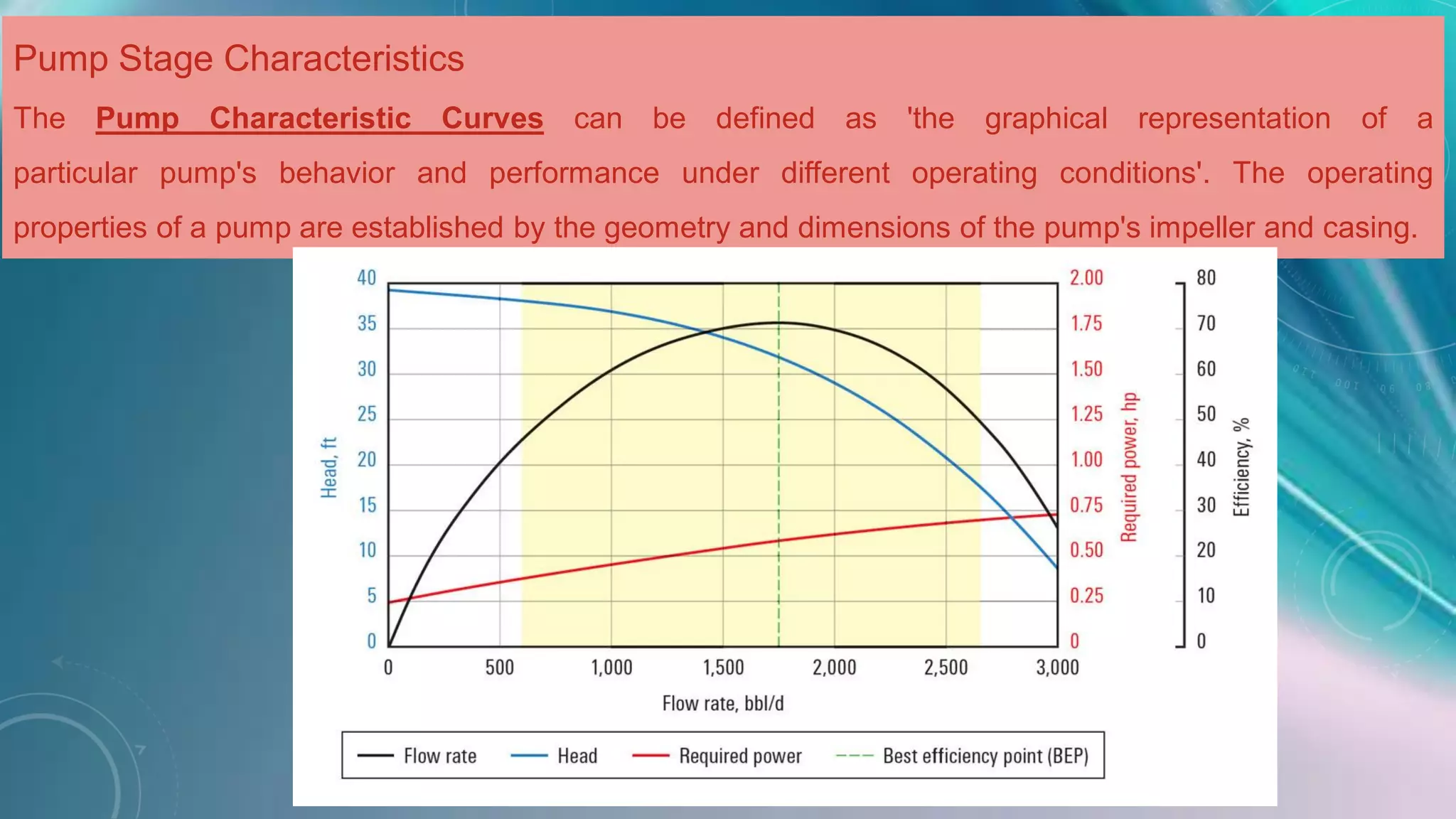
Pump Stage Characteristics
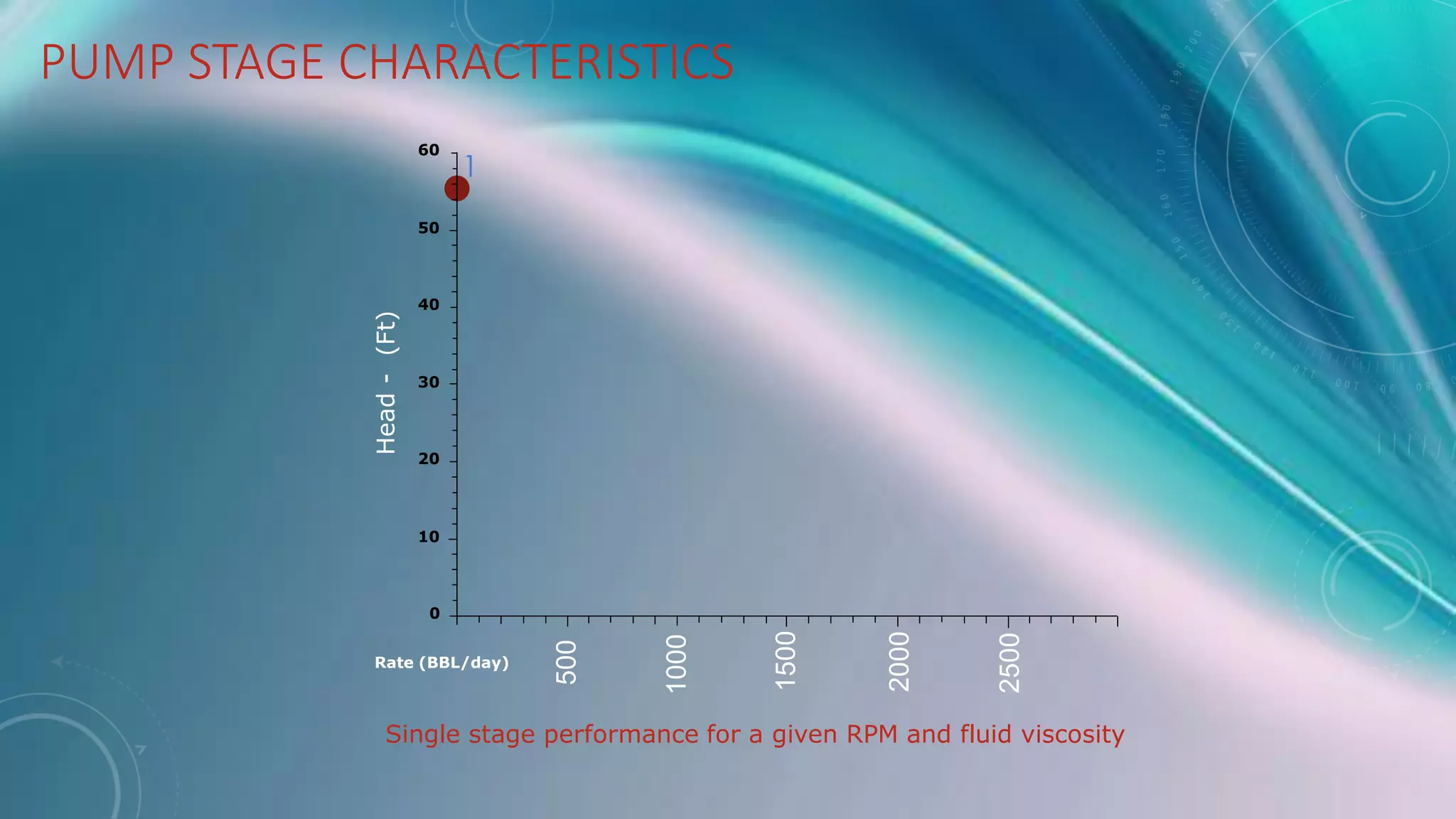
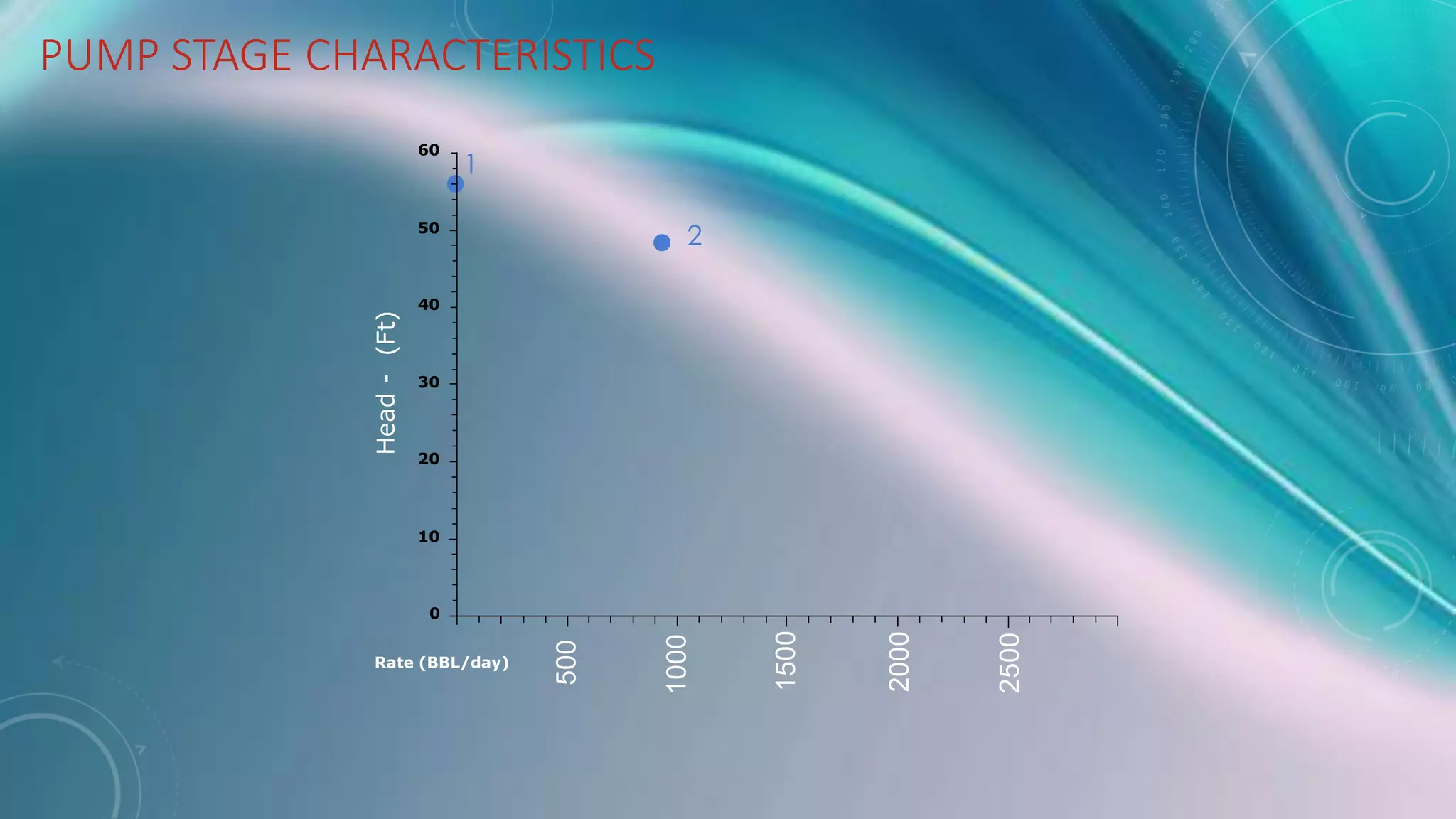
The Pump Characteristic Curves can be defined as 'the graphical representation of a
particular pump's behavior and performance under different operating conditions'. The operating
properties of a pump are established by the geometry and dimensions of the pump's impeller and casing.
What is pump characteristic curve?
The pump characteristic curves can be defined as “ The graphical representation of
a particular pump's behavior and performance under different operating conditions”.
The operating properties of a pump are established by the geometry and
dimensions of the pump's impeller and casing.
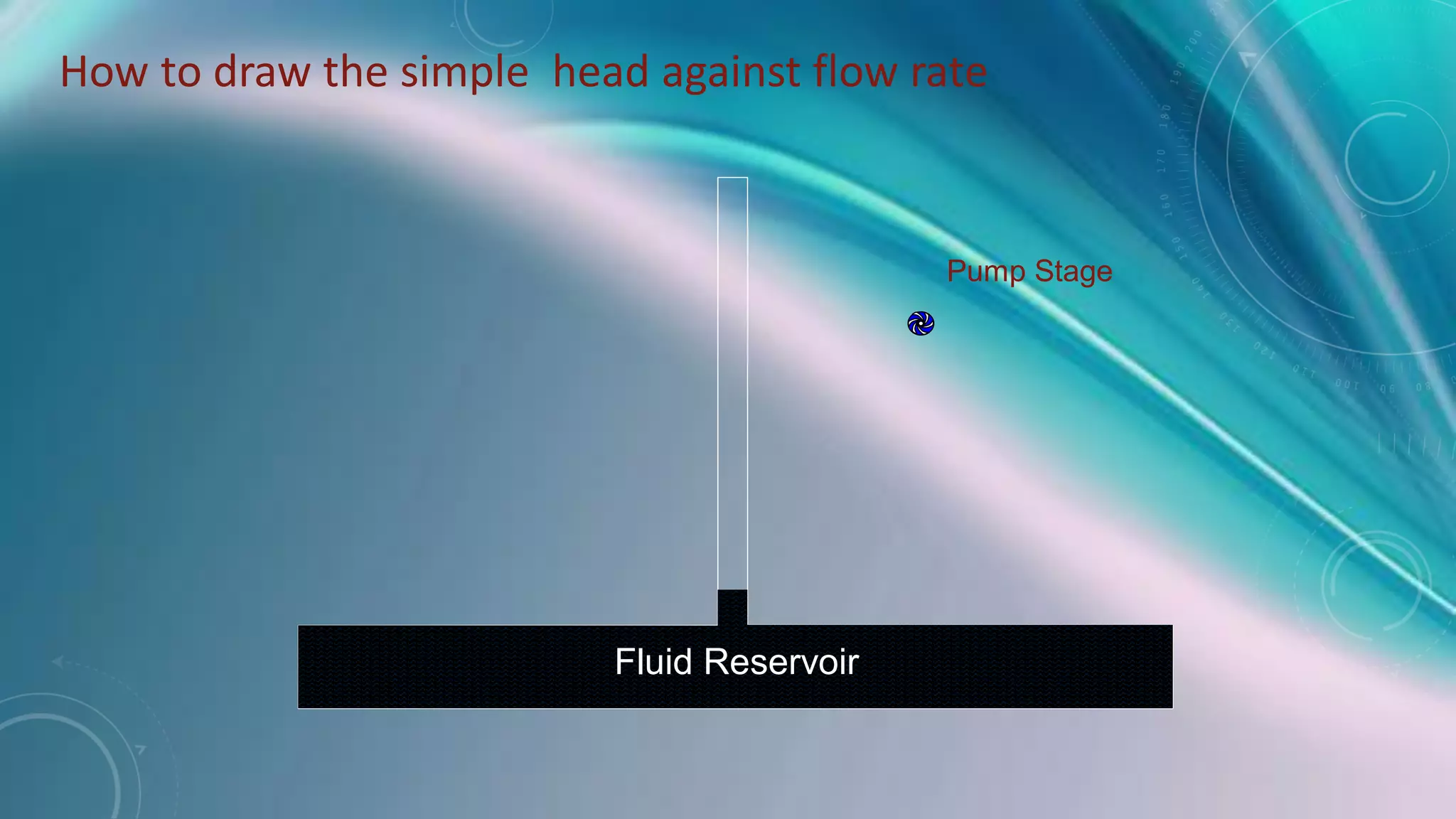
Pump Stage
Fluid Reservoir
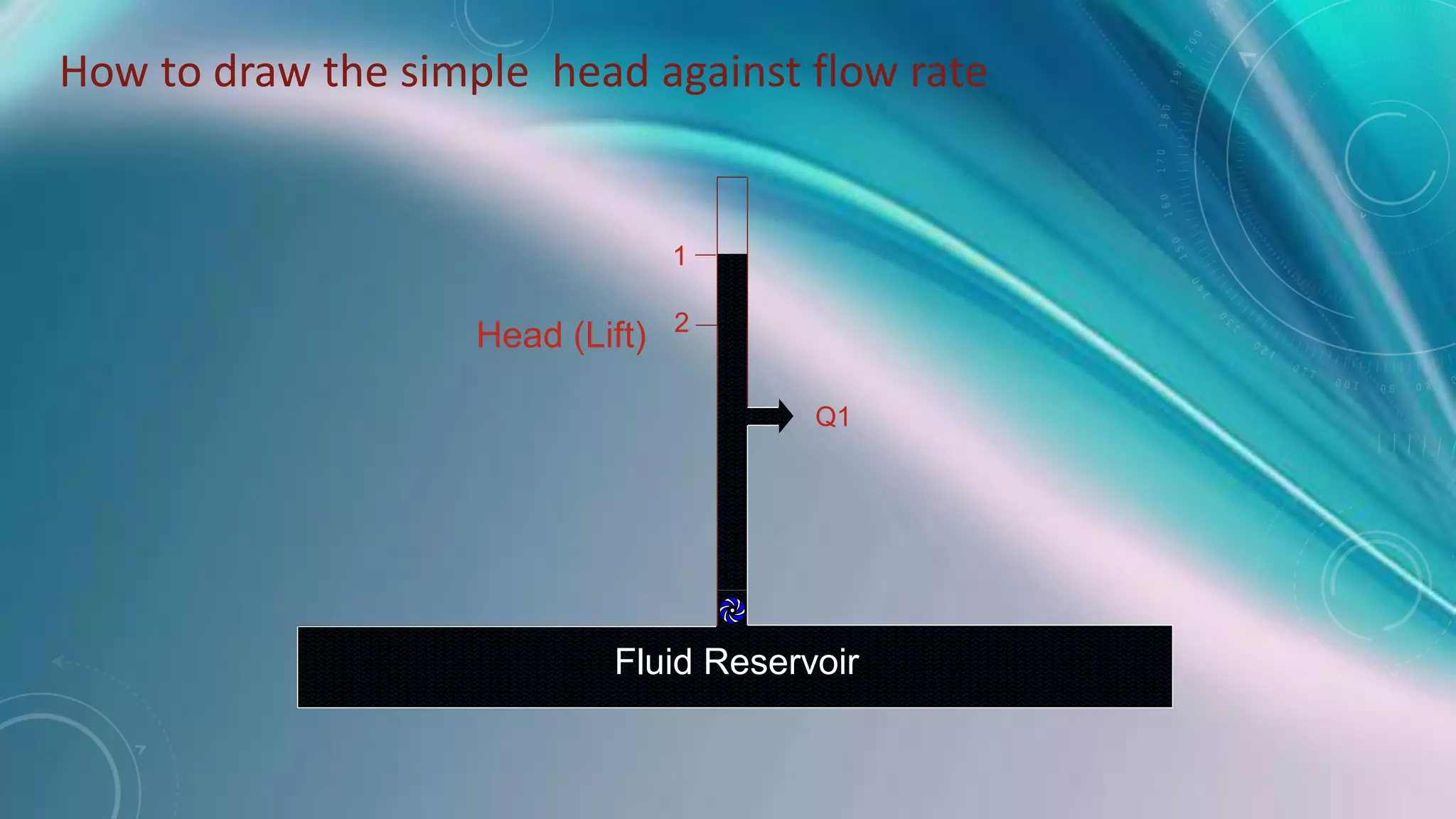
How to draw the simple head against flow rate
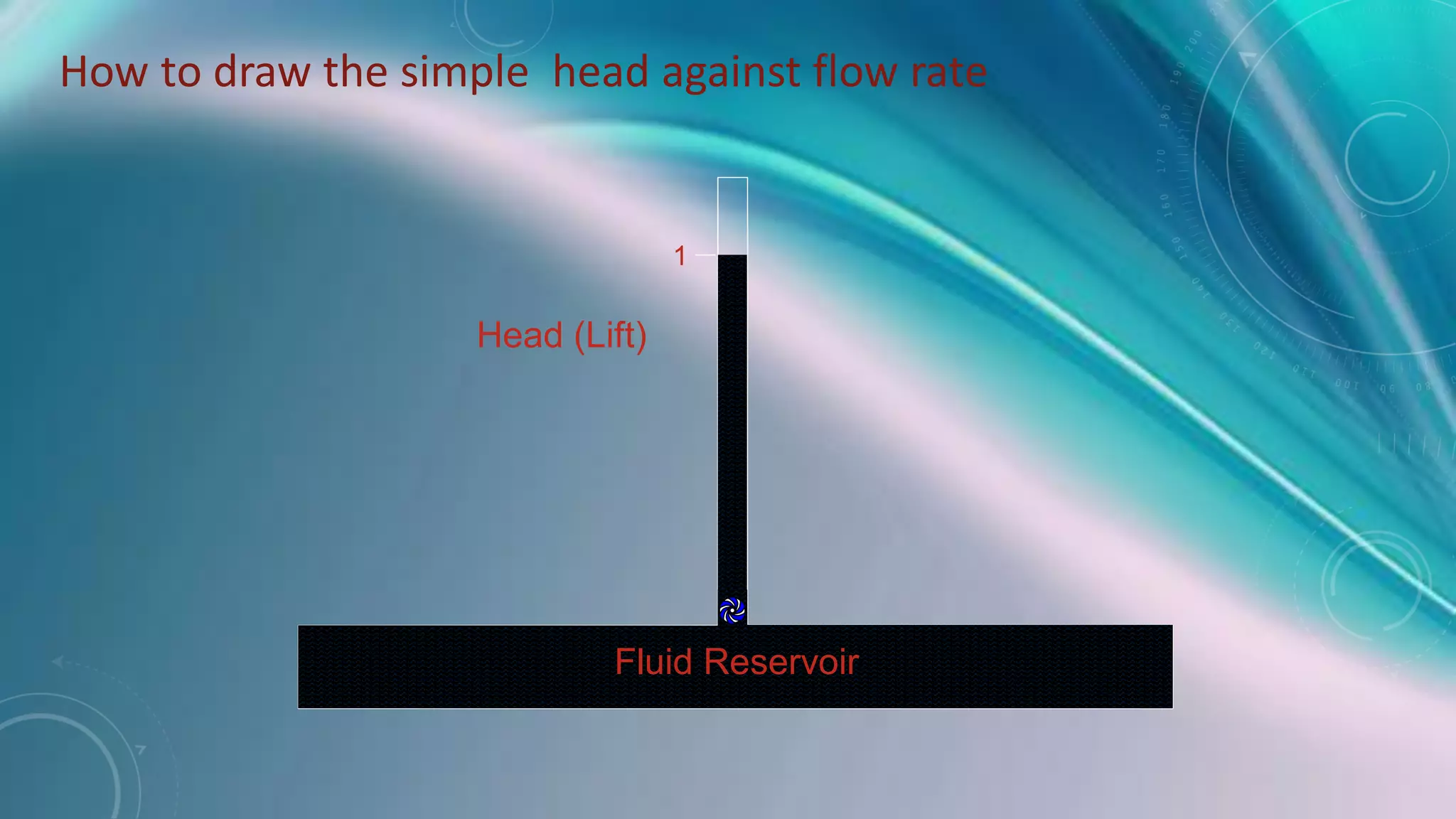
Fluid Reservoir
Head (Lift)
1
How to draw the simple head against flow rate
PUMP STAGE CHARACTERISTICS
Head
-
(Ft)
0
10
20
30
40
50
60
1
Rate (BBL/day)
Single stage performance for a given RPM and fluid viscosity
500
1000
1500
2000
2500
Fluid Reservoir
Head (Lift)
1
2
Q1
How to draw the simple head against flow rate
1
PUMP STAGE CHARACTERISTICS
Head
-
(Ft)
0
10
20
30
40
50
60
Rate (BBL/day)
500
1000
1500
2000
2500
2
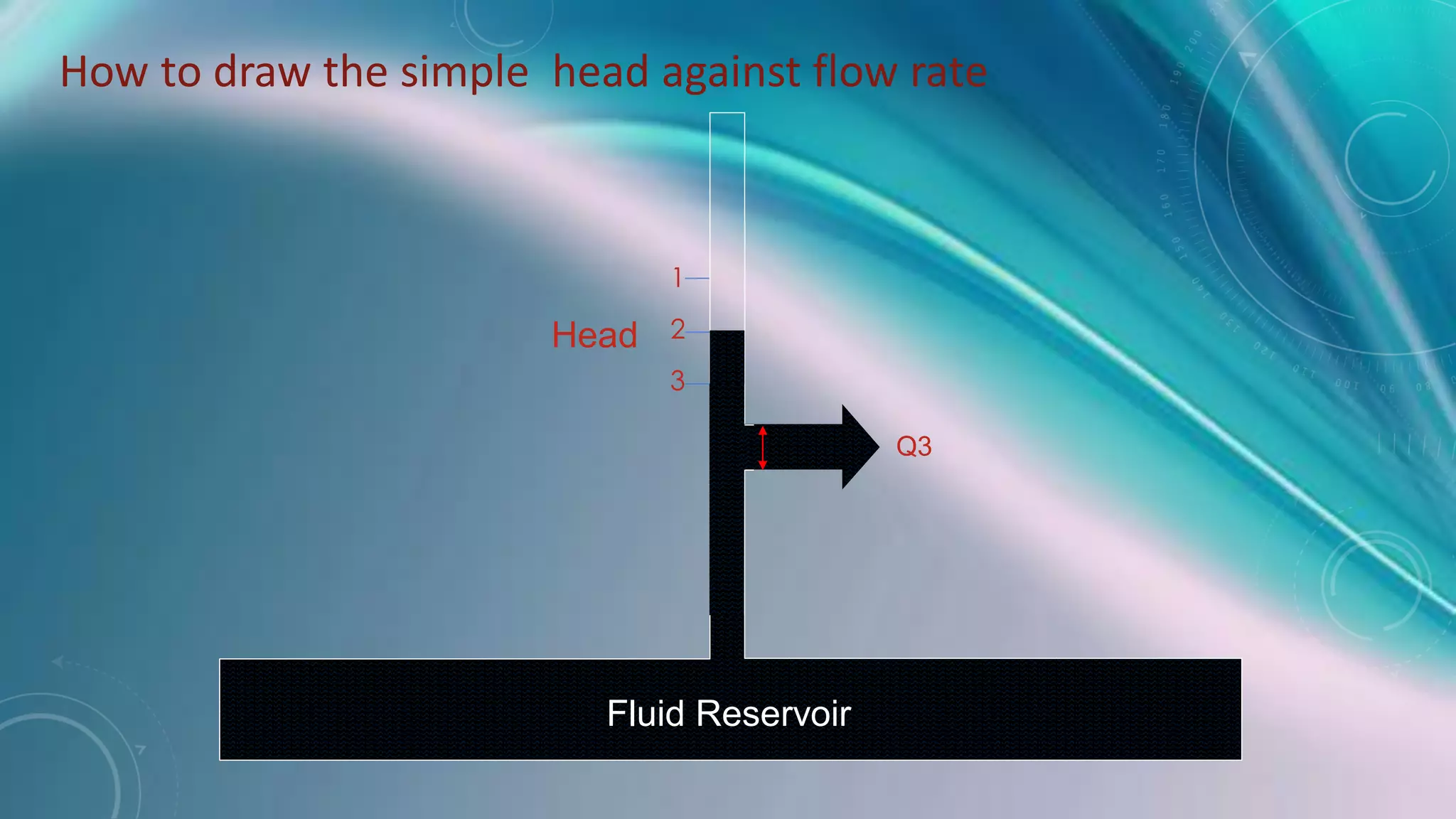
Head
1
2
3
Fluid Reservoir
Q3
How to draw the simple head against flow rate
1
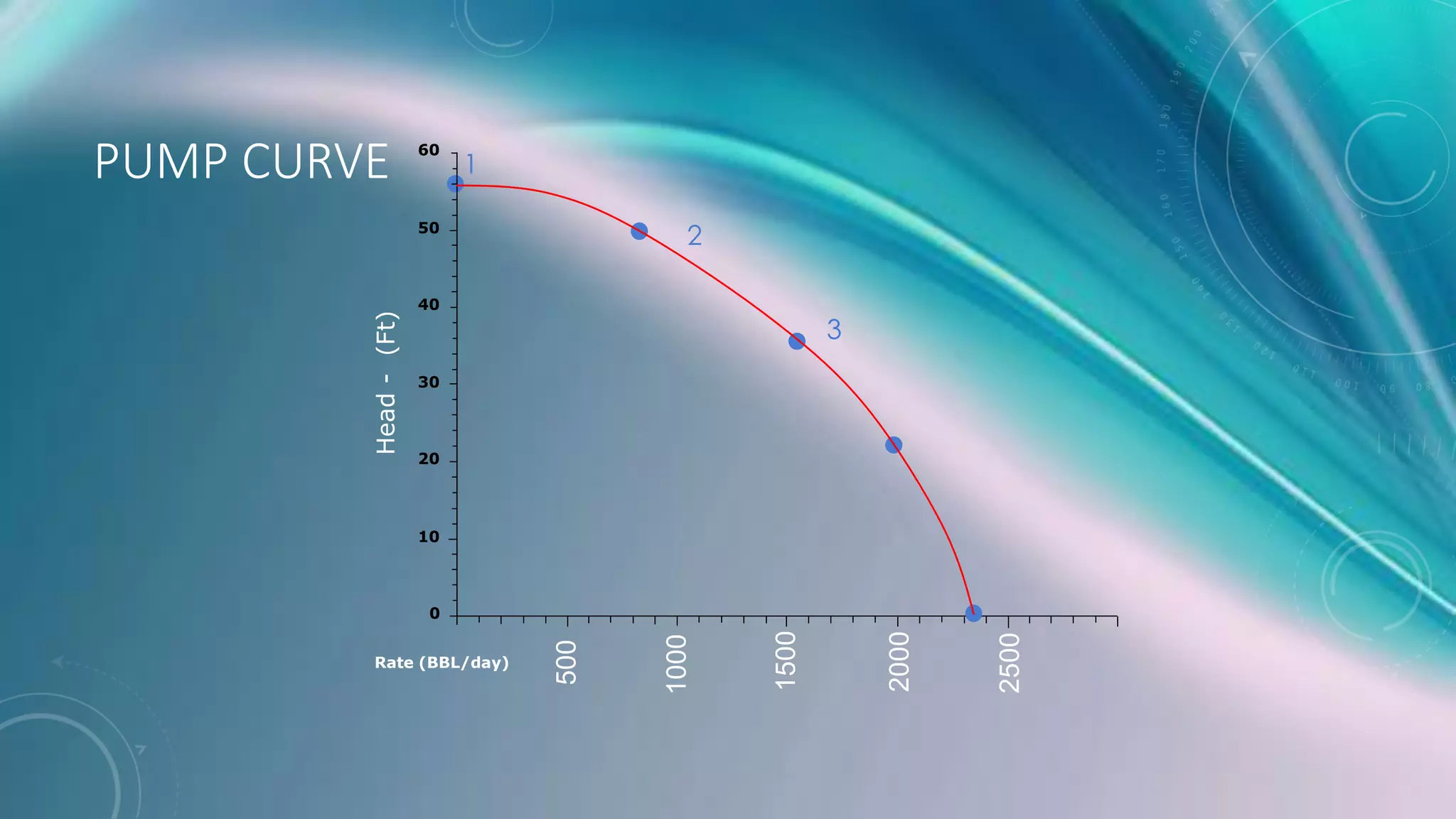
PUMP CURVE
Head
-
(Ft)
0
10
20
30
40
50
60
Rate (BBL/day)
500
1000
1500
2000
2500
2
3
Fluid Reservoir
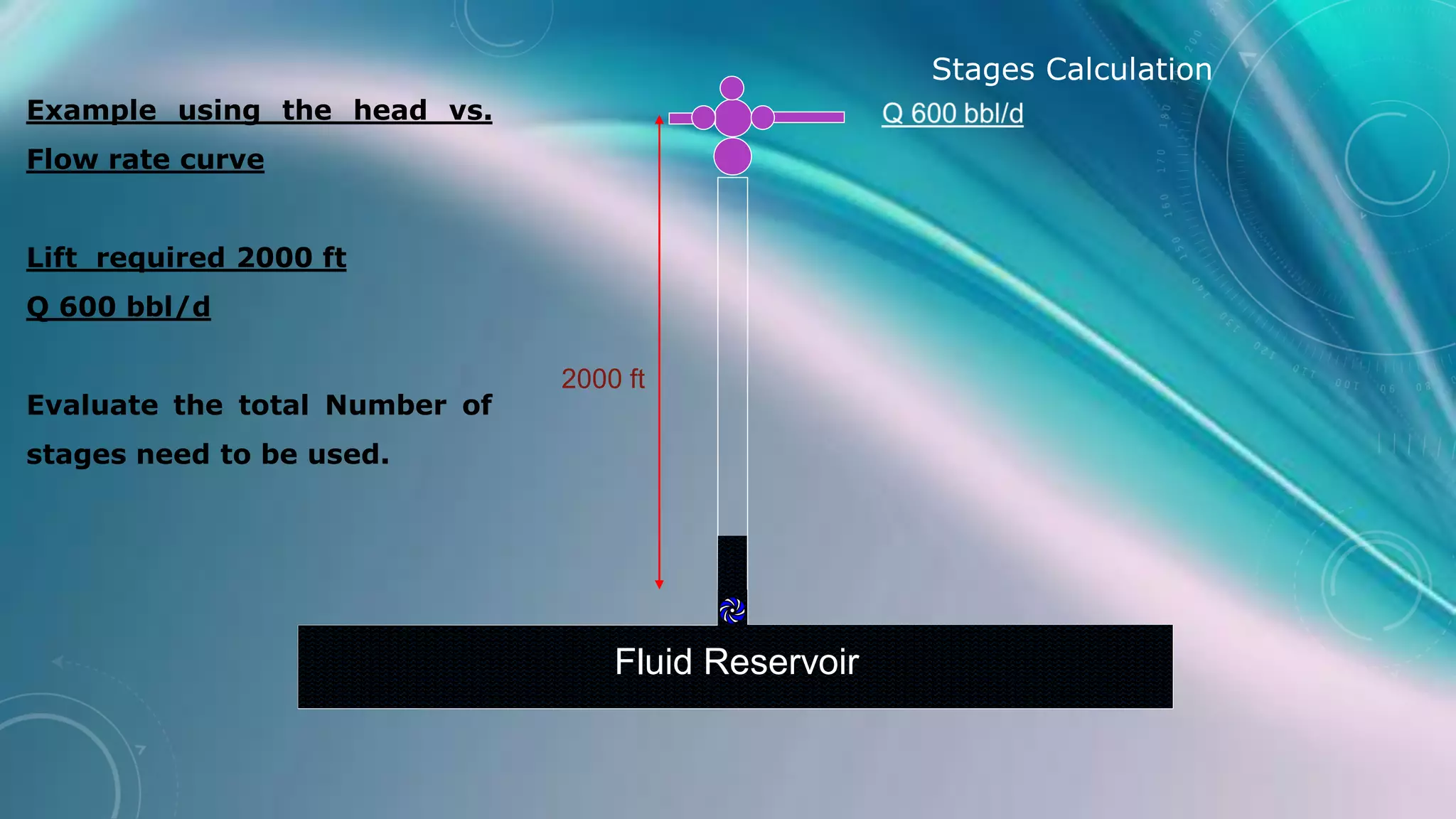
Stages Calculation
2000 ft
Example using the head vs.
Flow rate curve
Lift required 2000 ft
Q 600 bbl/d
Evaluate the total Number of
stages need to be used.
STAGE PERFORMANCE CURVE
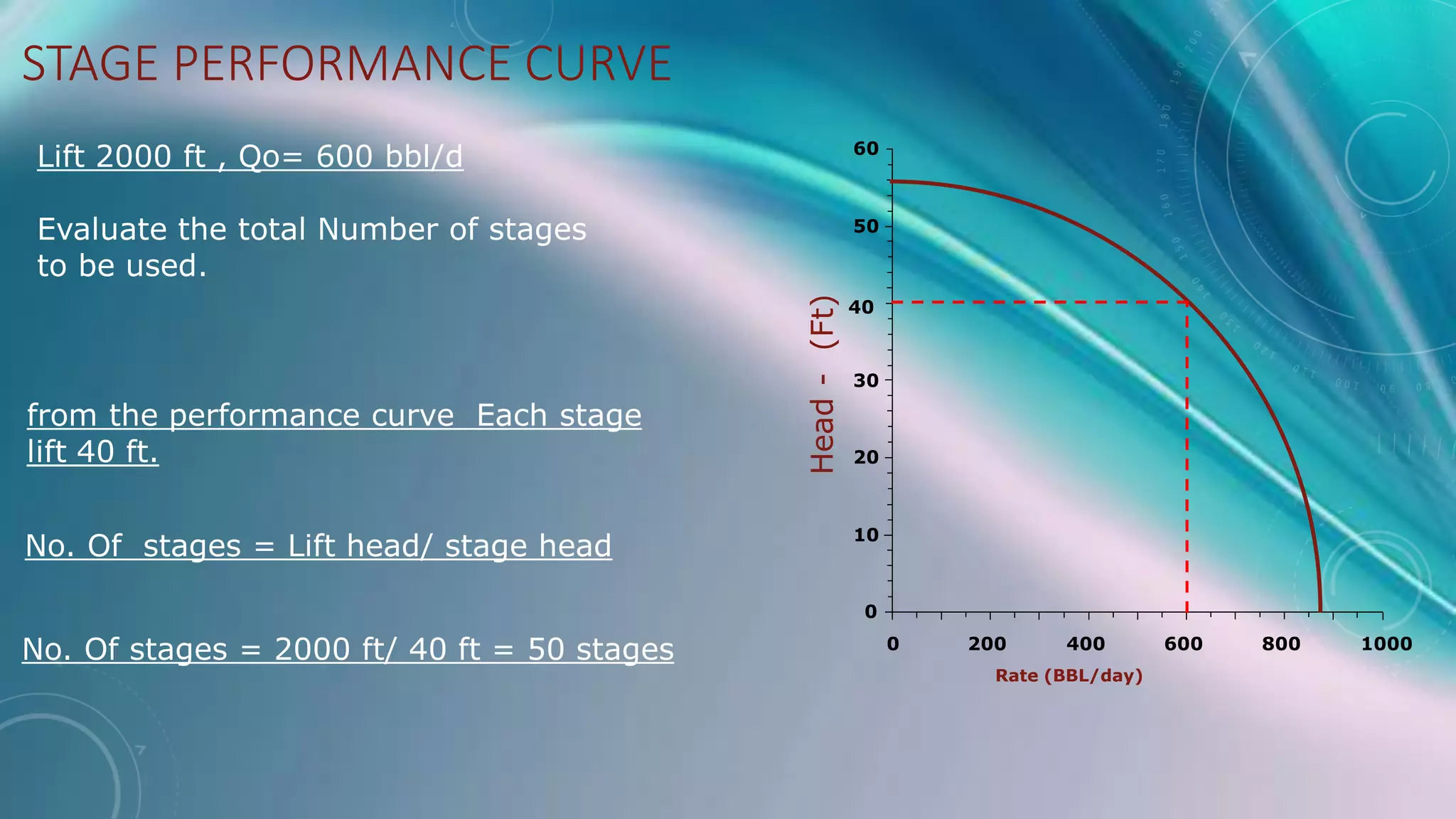
Lift 2000 ft , Qo= 600 bbl/d
Evaluate the total Number of stages
to be used.
from the performance curve Each stage
lift 40 ft.
0
10
20
30
50
60
0 200 400 600 800 1000
40
Head
-
(Ft)
Rate (BBL/day)
No. Of stages = Lift head/ stage head
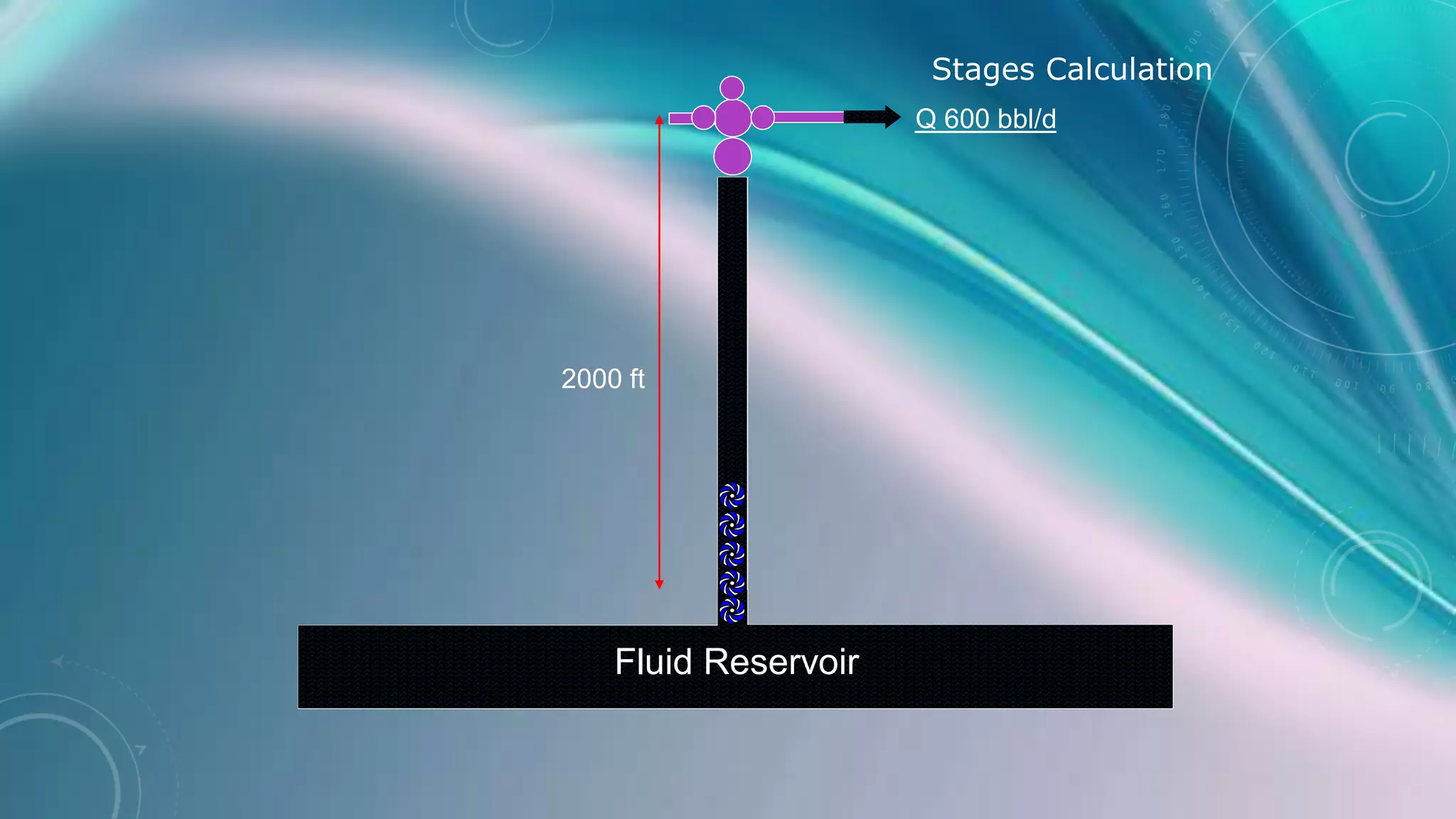
No. Of stages = 2000 ft/ 40 ft = 50 stages
Fluid Reservoir
Stages Calculation
2000 ft
Q 600 bbl/d
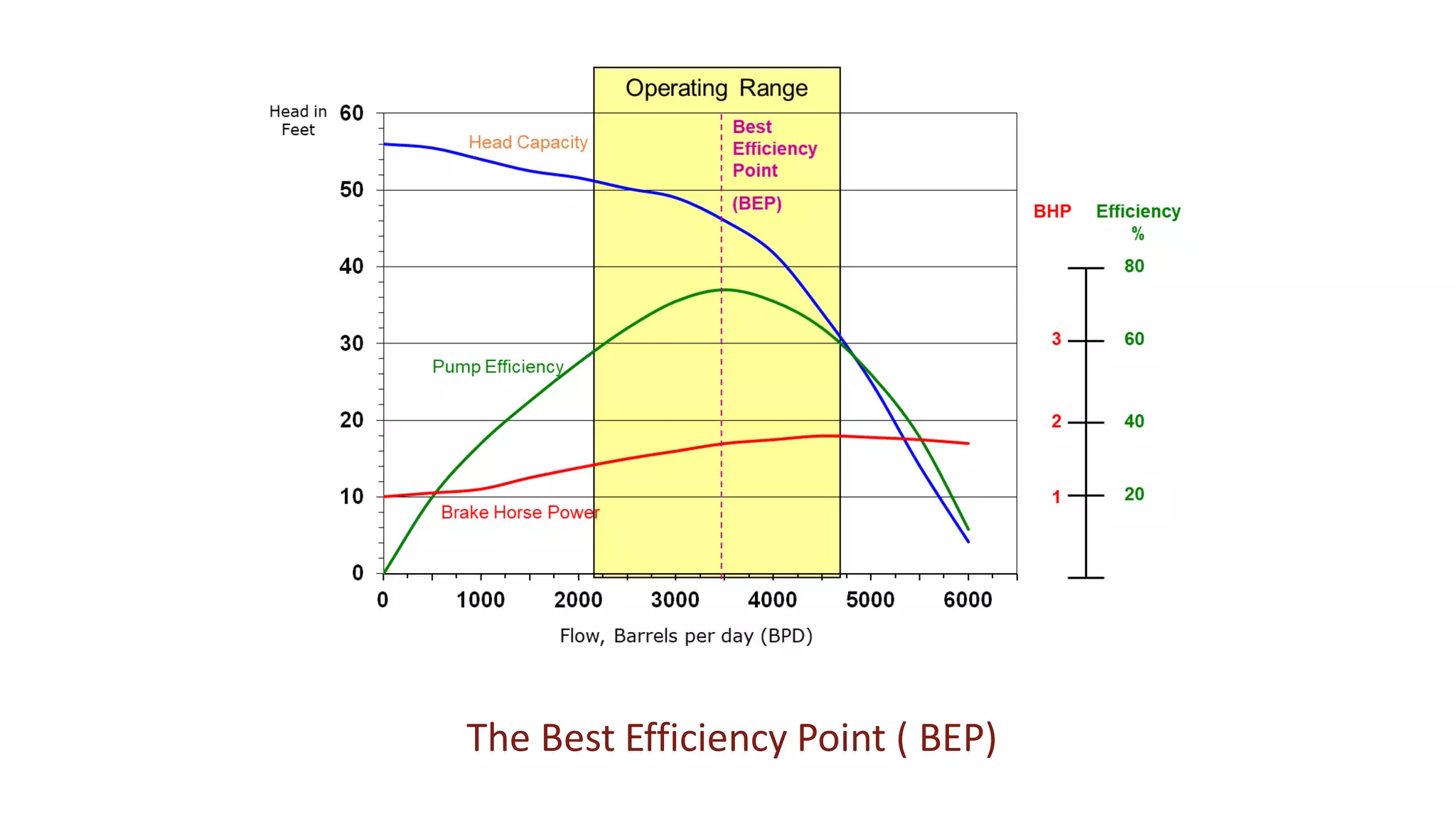
The Best Efficiency Point ( BEP)
END

ESP lecture #1.pdf

  • 1.
    Instructor: Dr. MOHAMMEDABDUL AMEER ALHUMAIRI MISAN UNIVERSITY COLLEGE OF ENGINEERING – PETROLEUM DEPARTMENT PRODUCTION ENGINEERING II dr.alhumairi@uomisan.edu.iq
  • 2.
  • 3.
    A submersible pump(or sub pump, electric submersible pump (ESP)) is a device which has a hermetically sealed motor close - attached to the pump body. The whole assembly is submerged in the fluid to be pumped. Electrical Submersible Pump ESP
  • 4.
    How does asubmersible pump work: A submersible pump pushes oil to the surface by converting rotary energy into kinetic energy into pressure energy. This is done by the oil being pulled into the pump. first in the intake, where the rotation of the impeller pushes the oil through the diffuser Electrical Submersible Pump ESP IMPELLER DIFFUSER
  • 5.
    DIFFUSER The diffuser isstationary and its function is to allow the fluid to flow efficiently from one impeller to another. Also, it's at the diffuser where the kinetic energy (velocity) is converted into potential energy (pressure)
  • 6.
    IMPELLER The fluid flowsinto the impeller, in the form of velocity, the fluid is centrifuged radially outward in the impeller passageway. Once it exits the impeller, the fluid makes a turn and enters the diffuser passageway.
  • 7.
    DIFFUSER & IMPELLER- PUMP STAGE
  • 8.
    • The diffuserdoes not rotate, it turns the fluid up into the next impeller. • It transforms the fluid velocity, the fluid energy, into head. • Diffuser redirects the fluid up into the next impeller and turns fluid energy into head. • Impeller spins and gives energy to fluid which exits around the outside. • Diffuser directs fluids into the eye of the nest impeller (next stage ) One stage
  • 9.
    Electrical Submersible PumpESP The Parts of Submersible Pump. The submersible pump system consists of both DOWNHOLE and SURFACE COMPONENTS. The main surface components are: transformers. Motor. Controllers. junction box. wellhead. The main downhole components are: Motor. Seal. Pump. cable.
  • 10.
  • 11.
    Pump Stage Characteristics ThePump Characteristic Curves can be defined as 'the graphical representation of a particular pump's behavior and performance under different operating conditions'. The operating properties of a pump are established by the geometry and dimensions of the pump's impeller and casing.
  • 12.
    What is pumpcharacteristic curve? The pump characteristic curves can be defined as “ The graphical representation of a particular pump's behavior and performance under different operating conditions”. The operating properties of a pump are established by the geometry and dimensions of the pump's impeller and casing.
  • 13.
    Pump Stage Fluid Reservoir Howto draw the simple head against flow rate
  • 14.
    Fluid Reservoir Head (Lift) 1 Howto draw the simple head against flow rate
  • 15.
    PUMP STAGE CHARACTERISTICS Head - (Ft) 0 10 20 30 40 50 60 1 Rate(BBL/day) Single stage performance for a given RPM and fluid viscosity 500 1000 1500 2000 2500
  • 16.
    Fluid Reservoir Head (Lift) 1 2 Q1 Howto draw the simple head against flow rate
  • 17.
  • 18.
    Head 1 2 3 Fluid Reservoir Q3 How todraw the simple head against flow rate
  • 19.
  • 20.
    Fluid Reservoir Stages Calculation 2000ft Example using the head vs. Flow rate curve Lift required 2000 ft Q 600 bbl/d Evaluate the total Number of stages need to be used.
  • 21.
    STAGE PERFORMANCE CURVE Lift2000 ft , Qo= 600 bbl/d Evaluate the total Number of stages to be used. from the performance curve Each stage lift 40 ft. 0 10 20 30 50 60 0 200 400 600 800 1000 40 Head - (Ft) Rate (BBL/day) No. Of stages = Lift head/ stage head No. Of stages = 2000 ft/ 40 ft = 50 stages
  • 22.
  • 23.
    The Best EfficiencyPoint ( BEP)
  • 24.