mHealth in cancer supportive care
How eSMART can improve quality of life?
Kathi Apostolidis-Vice President
ECPC-European Cancer Patient Coalition
Milano, 4.04.2014
What is ECPC-European Cancer Patient Coalition
Cancer patient experience of chemotherapy
mhealth and cancer patients
eSMART project in supportive cancer care
Cancer patients’ expectations from the introduction
of mhealth in cancer supportive care
ECPC: "Nothing about us, without us
• Representing 341 cancer patient groups in 45 countries
• All cancers – common and rare
• Run and governed by patients
• Promoting timely access to appropriate prevention, screening, early
diagnosis, treatment and care for all cancer patients
• Reducing disparity and inequity across the EU
• Encouraging the advance of cancer research & innovation
• Increasing cancer patients' influence over European health and
research policy
• High visibility with EU Commission, EU Parliament (MEP MAC), EMA
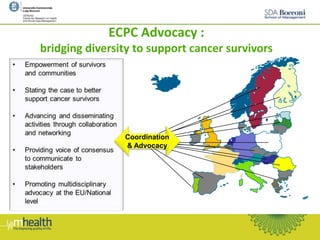
ECPC Advocacy :
bridging diversity to support cancer survivors
Coordination
& Advocacy
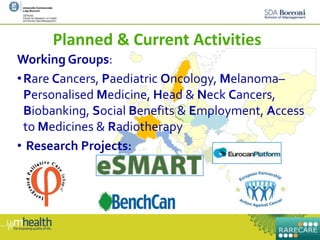
Planned & Current Activities
Working Groups:
•Rare Cancers, Paediatric Oncology, Melanoma–
Personalised Medicine, Head & Neck Cancers,
Biobanking, Social Benefits & Employment, Access
to Medicines & Radiotherapy
• Research Projects:
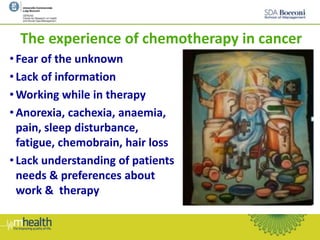
The experience of chemotherapy in cancer
• Fear of the unknown
• Lack of information
• Working while in therapy
• Anorexia, cachexia, anaemia,
pain, sleep disturbance,
fatigue, chemobrain, hair loss
• Lack understanding of patients
needs & preferences about
work & therapy
Keys to Better Cancer
Patient Experience
• Compassion
• Communication
• Personal
• Practical
• Access to Patient
Records
• Cancer Patients often
travel to seek for better
or expert care
Who holds the keys?
 The physician
 The nurses
 The family
 Other patients
 The internet & social
media
Survivorship
• Not one meaning for “survivor”
• Transition from intensive care to health
care follow-up
• Difficulties of resuming normal life
• Rehabilitation services
• Return to work
• Where to turn for health care after the
initial follow-up period?
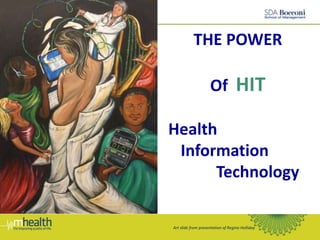
THE POWER
Of HIT
Health
Information
Technology
Art slide from presentation of Regina Holliday
Patients and mHealth
 Promotes patient engagement->self-management
 Provides educational resources for health & cancer care
 Improves doctor-patient relationship
 Supports caregivers’ mission
 Creates personalization of healthcare -> better following
of instructions - better outcomes
 Convergence of many technologies -> simplification,
convenience
 Connects patients to their physicians & other patients
 Applications specific for the needs of cancer patients
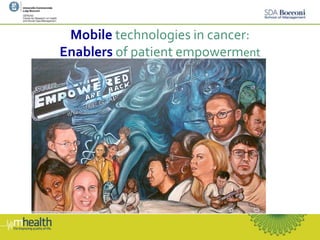
Mobile technologies in cancer:
Enablers of patient empowerment
Barriers to Adoption of mHealth
• Nebulous regulatory guidance
• Lack of reliability, security/privacy
• Lack of mobile strategy by providers
• Lack of smart phones by older patients
• High cost of mobile internet
• Low digital & health literacy in patients
over 50years of age
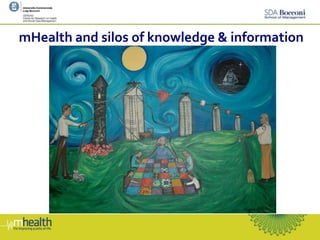
mHealth and silos of knowledge & information
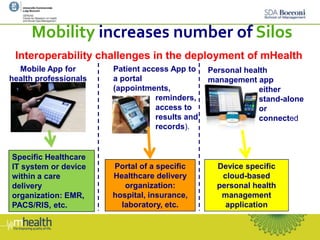
Mobility increases number of Silos
Mobile App for
health professionals
Patient access App to
a portal
(appointments,
reminders,
access to
results and
records).
Device specific
cloud-based
personal health
management
application
Interoperability challenges in the deployment of mHealth
Specific Healthcare
IT system or device
within a care
delivery
organization: EMR,
PACS/RIS, etc.
Portal of a specific
Healthcare delivery
organization:
hospital, insurance,
laboratory, etc.
Personal health
management app
either
stand-alone
or
connected
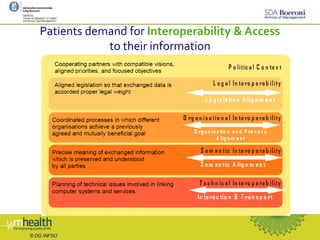
Patients demand for Interoperability & Access
to their information
© DG INFSO
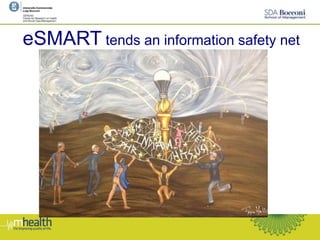
eSMART tends an information safety net
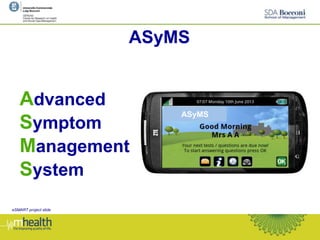
Advanced
Symptom
Management
System
ASyMS
ASyMS
eSMART project slide
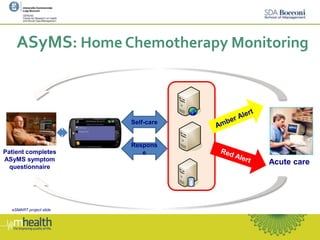
ASyMS: Home Chemotherapy Monitoring
Self-care
Respons
e
Acute care
Patient completes
ASyMS symptom
questionnaire
eSMART project slide
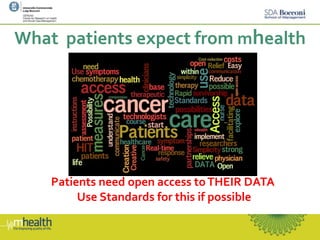
What patients expect from mhealth
Patients need open access toTHEIR DATA
Use Standards for this if possible
(change footnote using Menu "View > Change
headline/footnote")
Thank you for your attention
Website : www.ecpc.org
Twitter: @cancereu
Facebook: European Cancer Patient Coalition
YouTube: ecpcTV
email: info@ecpc.org
Artwork graciously borrowed from Art Cancer Advocate Regina Holliday
http://reginaholliday.blogspot.com #TheWalkingGallery
CHAMPIONING THE INTERESTS OF EUROPEAN CANCER PATIENTS

mhealth in cancer supportive care - how eSMART can improve quality of life

  • 1.
    mHealth in cancersupportive care How eSMART can improve quality of life? Kathi Apostolidis-Vice President ECPC-European Cancer Patient Coalition Milano, 4.04.2014
  • 2.
    What is ECPC-EuropeanCancer Patient Coalition Cancer patient experience of chemotherapy mhealth and cancer patients eSMART project in supportive cancer care Cancer patients’ expectations from the introduction of mhealth in cancer supportive care
  • 3.
    ECPC: "Nothing aboutus, without us • Representing 341 cancer patient groups in 45 countries • All cancers – common and rare • Run and governed by patients • Promoting timely access to appropriate prevention, screening, early diagnosis, treatment and care for all cancer patients • Reducing disparity and inequity across the EU • Encouraging the advance of cancer research & innovation • Increasing cancer patients' influence over European health and research policy • High visibility with EU Commission, EU Parliament (MEP MAC), EMA
  • 4.
    ECPC Advocacy : bridgingdiversity to support cancer survivors Coordination & Advocacy
  • 5.
    Planned & CurrentActivities Working Groups: •Rare Cancers, Paediatric Oncology, Melanoma– Personalised Medicine, Head & Neck Cancers, Biobanking, Social Benefits & Employment, Access to Medicines & Radiotherapy • Research Projects:
  • 6.
    The experience ofchemotherapy in cancer • Fear of the unknown • Lack of information • Working while in therapy • Anorexia, cachexia, anaemia, pain, sleep disturbance, fatigue, chemobrain, hair loss • Lack understanding of patients needs & preferences about work & therapy
  • 7.
    Keys to BetterCancer Patient Experience • Compassion • Communication • Personal • Practical • Access to Patient Records • Cancer Patients often travel to seek for better or expert care Who holds the keys?  The physician  The nurses  The family  Other patients  The internet & social media
  • 8.
    Survivorship • Not onemeaning for “survivor” • Transition from intensive care to health care follow-up • Difficulties of resuming normal life • Rehabilitation services • Return to work • Where to turn for health care after the initial follow-up period?
  • 10.
    THE POWER Of HIT Health Information Technology Artslide from presentation of Regina Holliday
  • 11.
    Patients and mHealth Promotes patient engagement->self-management  Provides educational resources for health & cancer care  Improves doctor-patient relationship  Supports caregivers’ mission  Creates personalization of healthcare -> better following of instructions - better outcomes  Convergence of many technologies -> simplification, convenience  Connects patients to their physicians & other patients  Applications specific for the needs of cancer patients
  • 12.
    Mobile technologies incancer: Enablers of patient empowerment
  • 13.
    Barriers to Adoptionof mHealth • Nebulous regulatory guidance • Lack of reliability, security/privacy • Lack of mobile strategy by providers • Lack of smart phones by older patients • High cost of mobile internet • Low digital & health literacy in patients over 50years of age
  • 14.
    mHealth and silosof knowledge & information
  • 15.
    Mobility increases numberof Silos Mobile App for health professionals Patient access App to a portal (appointments, reminders, access to results and records). Device specific cloud-based personal health management application Interoperability challenges in the deployment of mHealth Specific Healthcare IT system or device within a care delivery organization: EMR, PACS/RIS, etc. Portal of a specific Healthcare delivery organization: hospital, insurance, laboratory, etc. Personal health management app either stand-alone or connected
  • 16.
    Patients demand forInteroperability & Access to their information © DG INFSO
  • 17.
    eSMART tends aninformation safety net
  • 18.
  • 19.
    ASyMS: Home ChemotherapyMonitoring Self-care Respons e Acute care Patient completes ASyMS symptom questionnaire eSMART project slide
  • 20.
    What patients expectfrom mhealth Patients need open access toTHEIR DATA Use Standards for this if possible
  • 21.
    (change footnote usingMenu "View > Change headline/footnote") Thank you for your attention Website : www.ecpc.org Twitter: @cancereu Facebook: European Cancer Patient Coalition YouTube: ecpcTV email: info@ecpc.org Artwork graciously borrowed from Art Cancer Advocate Regina Holliday http://reginaholliday.blogspot.com #TheWalkingGallery CHAMPIONING THE INTERESTS OF EUROPEAN CANCER PATIENTS

Editor's Notes

  • #16 Is however mobility the solution to unite silos of information or will it create new?
  • #17 What do patients want from information technology? safely accessible and transferrable health care data everywhere
  • #18 We, at ECPC see the possibilities offered by eSMART as an information safety net that will help patients avoid painful falls due to adverse events of their treatment. If eSMART proves what it promises, it will offer great help and assistance to distressed patients. Chemotherapy adverse events need prompt attention and no other means has the flexibility and the possibilities of mobile telephone. Besides, the project will collect data on real life adverse events that will constitute a data base of symptoms and relief measures.
  • #19 The Advanced Symptom Management System allows patients to record their symptoms on a mobile telephone user friendly interface which are received by nurse who either alerts a physician if symptoms are serious or directs patient to information enabling him/her to take care of self.
  • #20 This slide explains how Asyms will work