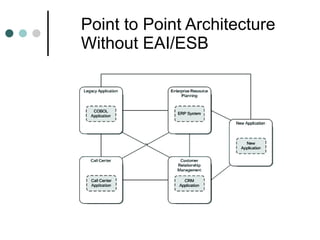
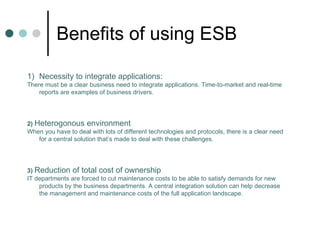
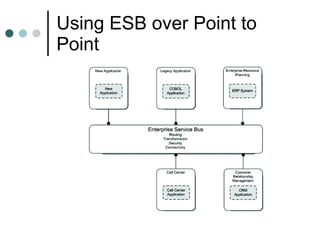
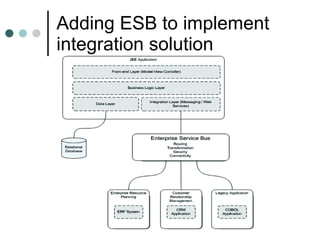
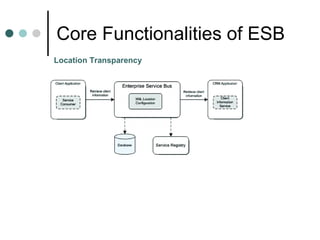
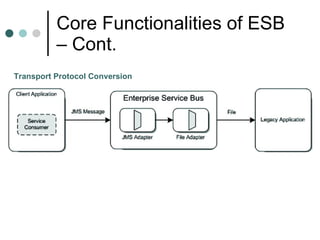
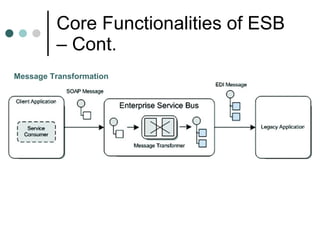
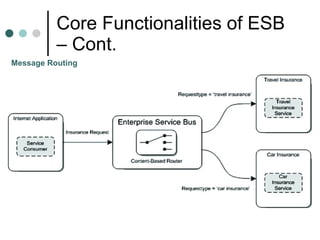
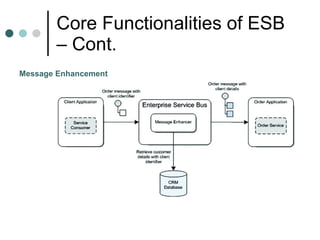
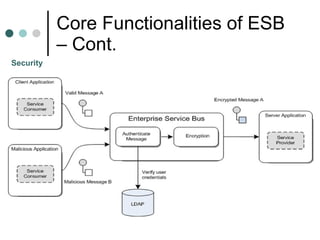
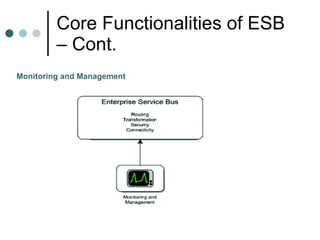
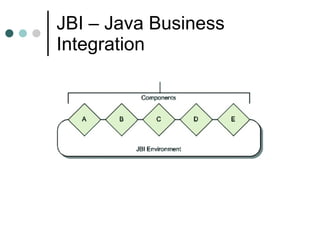
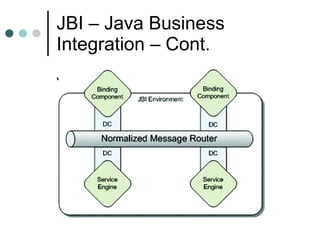
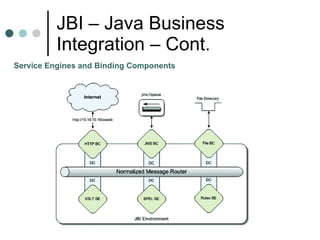
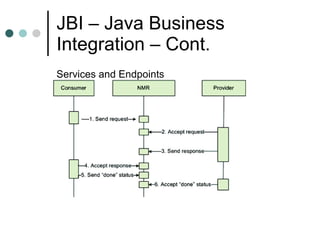
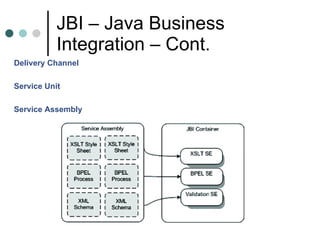
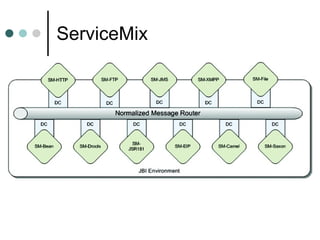
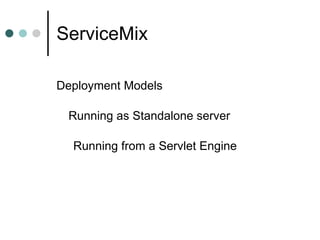
This document discusses the need for an enterprise service bus (ESB) and its core functionalities. An ESB is necessary to integrate heterogeneous applications and reduce costs associated with point-to-point integration. It provides location transparency, protocol conversion, message transformation, routing, enhancement, security, and monitoring capabilities. The document also describes Java Business Integration and how it uses a container, service engines, and other components to implement an ESB using services, endpoints, and a normalized message router. ServiceMix is presented as an open source ESB that can run as a standalone server or from a servlet engine.




![Service Oriented Architecture (SOA) [2/5] : Enterprise Service Bus](https://cdn.slidesharecdn.com/ss_thumbnails/soa-chapter2-130103220817-phpapp02-thumbnail.jpg?width=640&height=640&fit=bounds)


